
“The Shivering Tor for to describe
The Ballads & Songs of Derbyshire (1867) – attributed to James Bannard
Is far beyond my skill.
Now from this mount I do descend
Into the vale below,
From whence the River Wye doth spring,
And sweetly on doth flow.
For to describe the beauties all,
Display’d in Derbyshire;
Instead of musing for one day,
Methinks ‘twould take a year.”
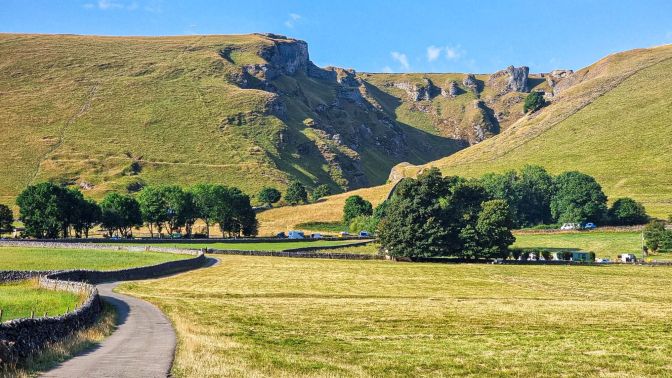
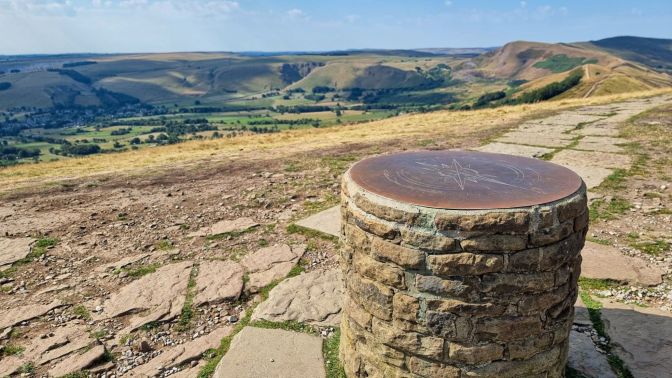
If there is a mountain in the Peak District which attracts the most visitors, by my count, it would be Mam Tor. Winnats Pass, passing over the shoulder of Mam Tor, is lined with parking giving access to the peak of Mam Tor without having to hike up from the valley. It is the one place during my Week in the Peak that I encountered bus groups of visitors with fancy hats and impractical attire clogging up some of the views while jockeying for selfies. But this access explains why in July 2017, as my daughter and I were driving from Stratford-Upon-Avon to York, I found myself compelled to pull over and explore the scenery at this precise location. My memory is foggy on the details, but the name Mam Tor stuck with me. While planning my hikes during the summer of 2026, I asked my daughter if she remembered a place called Mam Tor. The name did not ring a bell. She remembers getting out of the car and a flat area of stones. Fortunately, I discovered that it was one of the first hikes I ever recorded with Komoot. It wasn’t just a stop to stretch our legs; it was a 13km hike, and by jove she was right about the stones. Once I made the connection, hiking to Mam Tor in August 2026 took on a whole new significance.
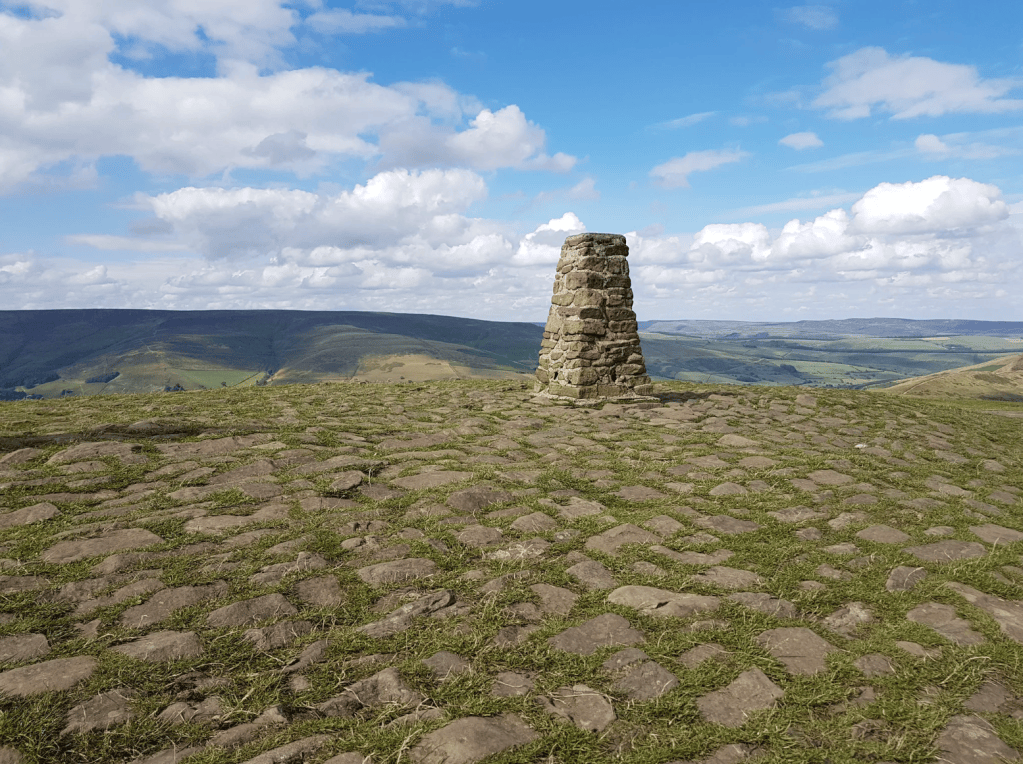
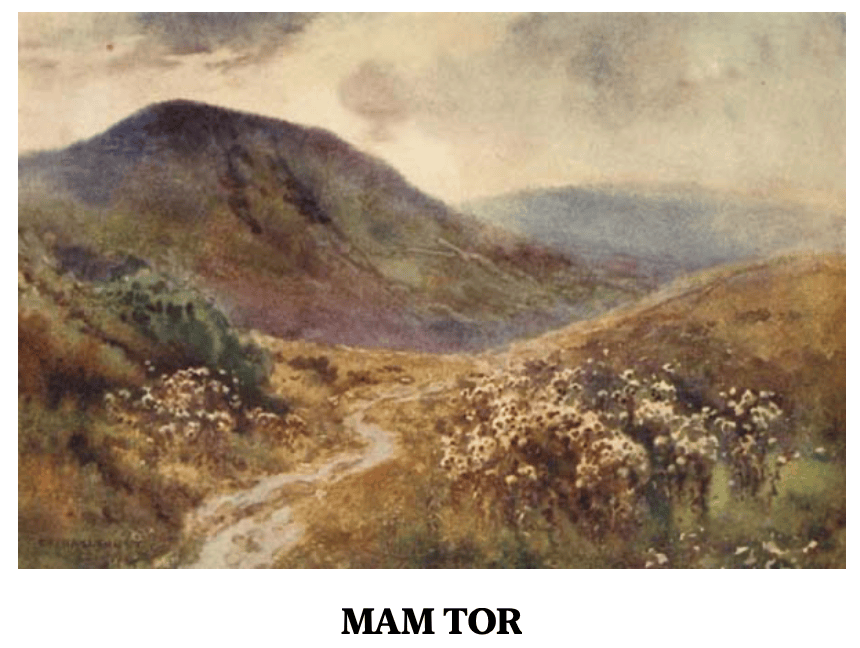
The Shivering Mountain
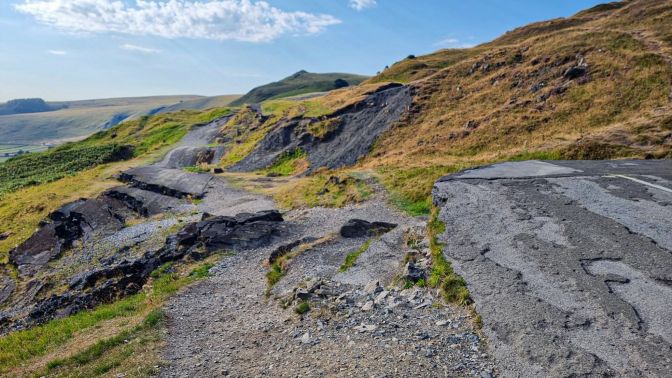
In each classic travel book I consulted, Mam Tor was always referred to as the Shivering Tor or Shivering Mountain for the way the side of it would crumble each winter due to the alternating layers of shale and grit1. In 1934’s Tramping in Derbyshire, author William T. Palmer describes how the “streams of rubble and scree imperil the new road which winds up from Castleton“. Eventually this road was forced to be closed down in 1979, and the dramatic remnants are still visible today. Much of the former road is still part of a hiking route which you can take from Castleton; making this a more impressive way to ascend Mam Tor than parking along the ‘old’ road of Winnats Pass.
The hike that I would follow starts in the main parking lot of Castleton, a wonderful village full of the typical high quality pubs for the region, ascends via the Broken Road, takes in the Lord’s Seat (called the Rushup Edge in old texts) before climbing the steep stairs to Mam Tor, crossing the ridge to Lose Hill, and looping back to Castleton for a late lunch and a mini pub crawl.
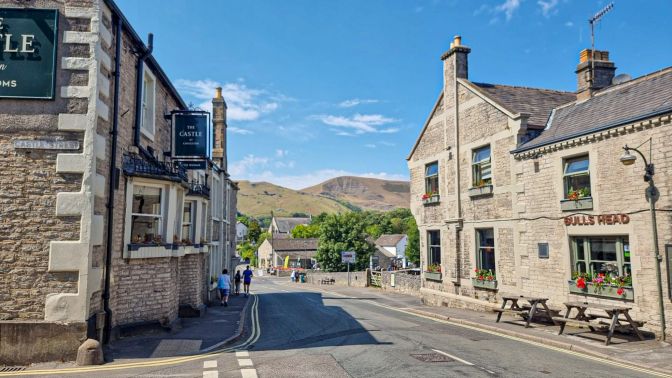
Hike Details
| 📍 Starting Point | Castleton Car Park |
| 🥾 Distance | 14.1 km |
| 🍺 Beer Highlights | Ye Olde Cheshire Cheese Inn (+ lunch) The Peak Hotel The George |
It’s Not Just a Beer, It’s a Journey
“Castleton stands facing the steep side of Mam Tor, one of the most marked eminences of the Peak.”
Derbyshire by A.R. Hope Moncrief (1927)
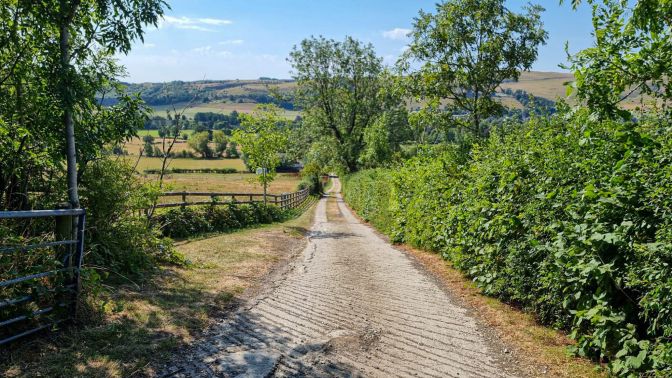
It was a beautiful day for a hike. Visibility was perfect in all directions which sacrificed atmosphere for uninterrupted appreciation of the graceful charm of this corner of England. Mam Tor is not the most impressive looking mountain, and thus I couldn’t help but project a humble persona to it; like a mountain fully aware that it’s local fame far outshines its place amongst the Pantheon of mountains. But the surroundings were a rambler’s dream. There would be nothing technically challenging about this hike; just pure immersion into the beloved hills and dales of the Peak District.
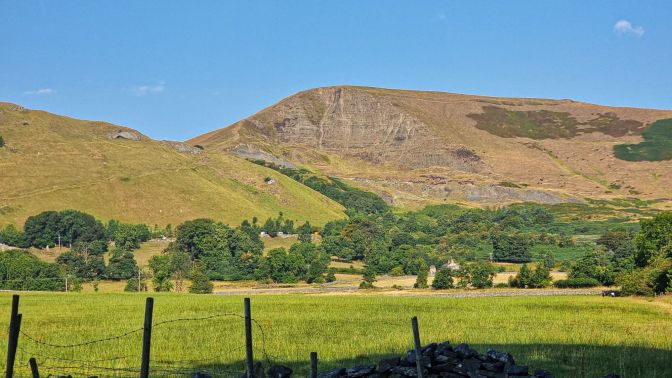
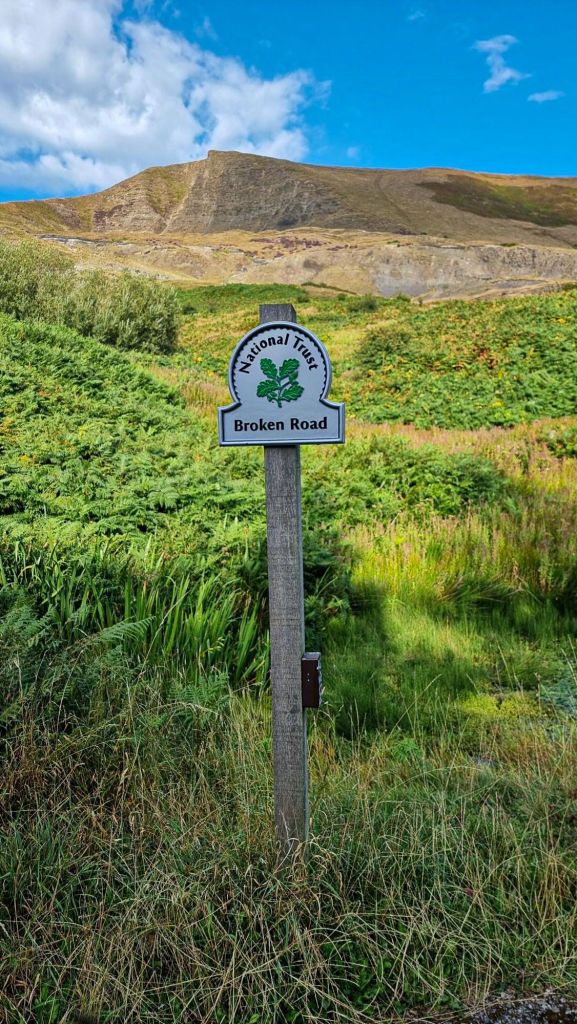
The Broken Road was started in 1802 to provide an alternative route around Mam Tor with an easier gradient than Winnats Pass. It suffered several landslides over the years, with perhaps the most devastating in 1977 driving home the last nail in its coffin.
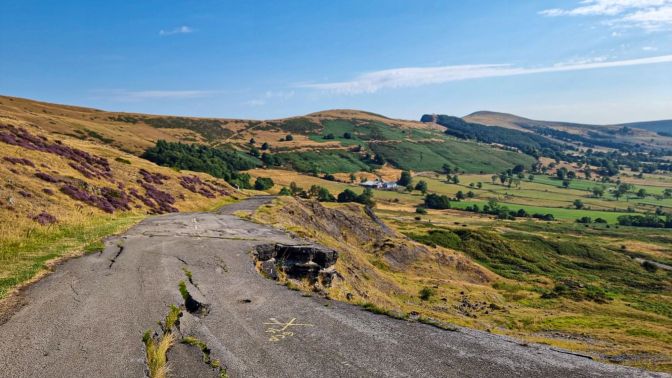
Wherever you are in this neck of the woods, there is always one peak which stands out the most on the horizon. As I was ascending the Broken Road, I stopped a local couple and asked them what it was called. This pimple shaped peak is called Win Hill. I would later discover that it was referred to as the King of the Peak in the past. I made a mental note to look it up later. Three days later I would hike it.
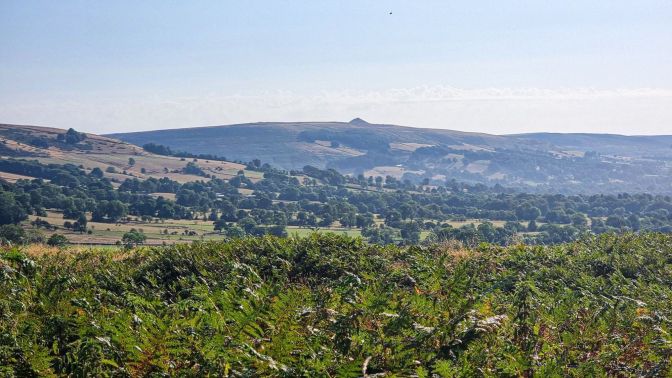
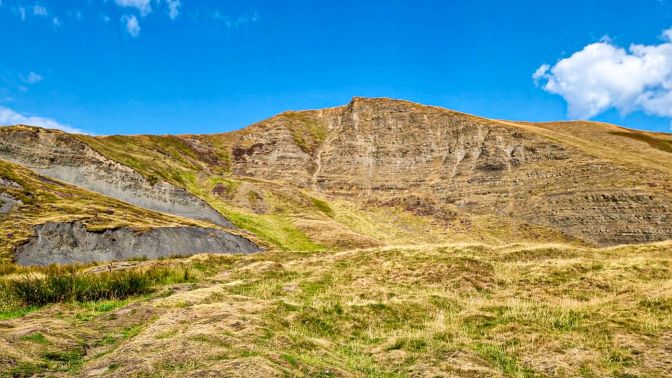
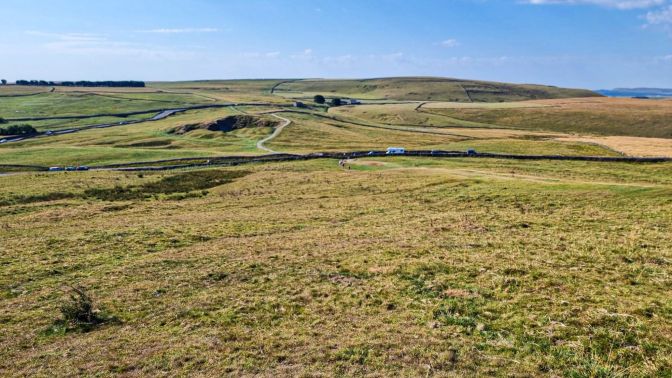
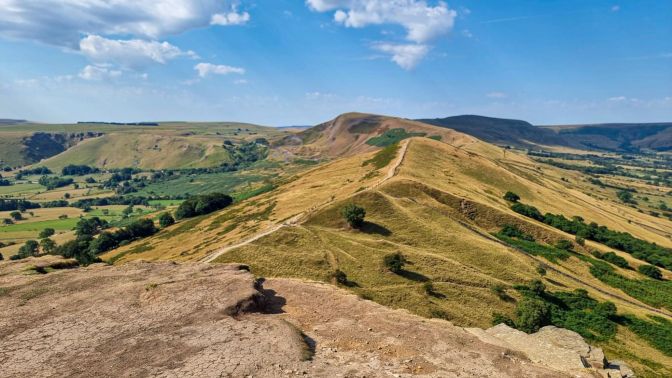
The Lord’s Seat can be skipped on this hike, but if you are only doing one hike to this ridge, including it is quite easy. It is actually 43m higher than Mam Tor and an unexcavated barrow sits on top of it. Lord’s Seat is ideal for the views towards Kinder Scout and the ridge of Mam Tor and Lose Hill.
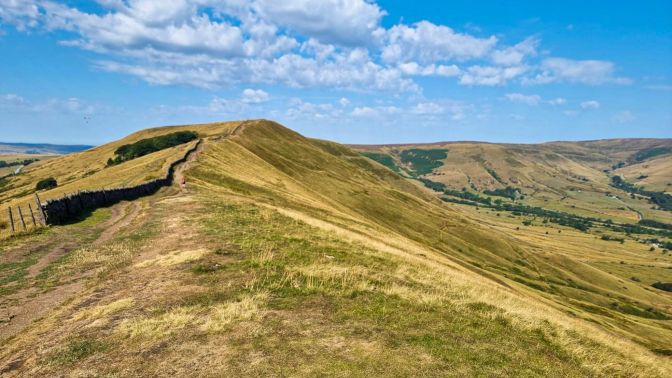
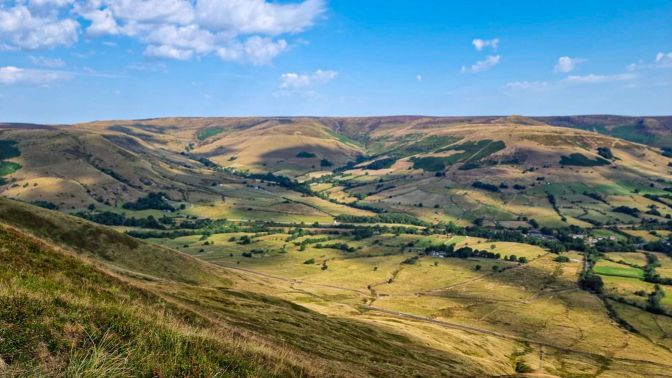
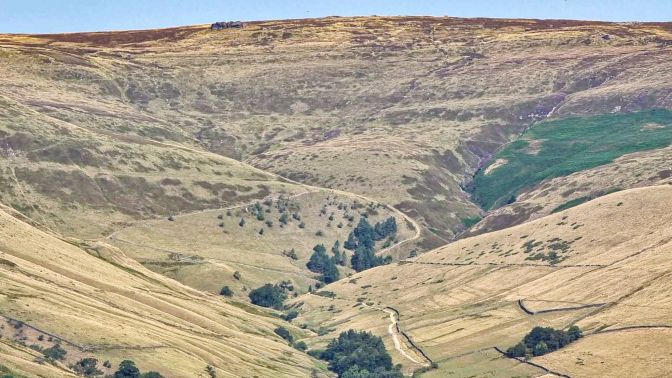

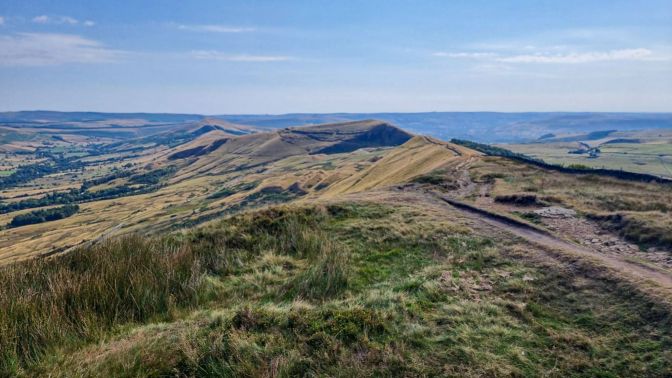
The steepest part of the hike is the stone path up to Mam Tor.
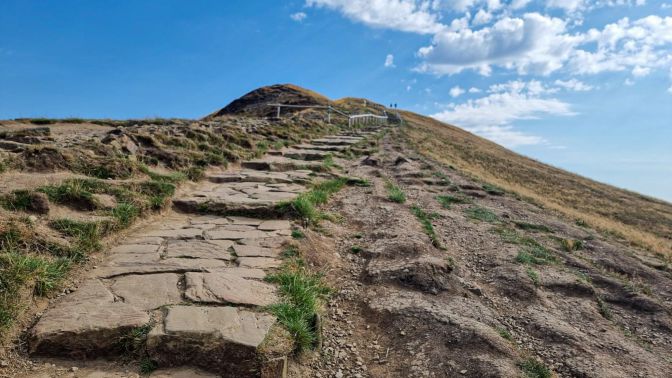
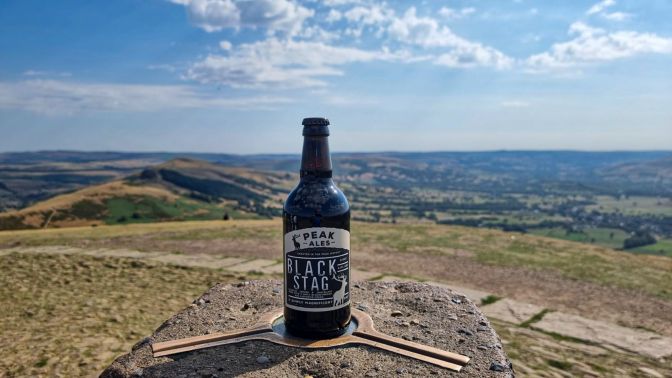
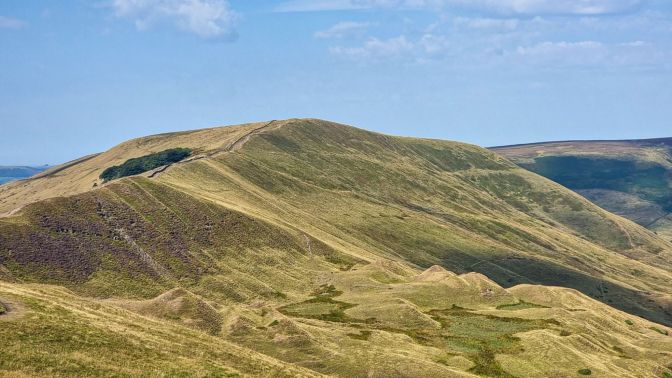
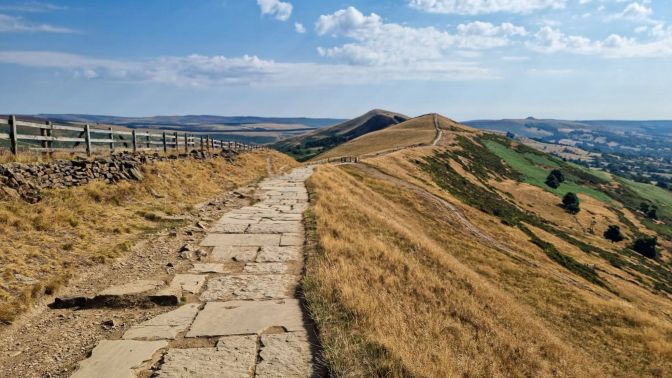
The ridge walk from Mam Tor to Lose Hill is a delightful stroll with some up and down but nothing too challenging.
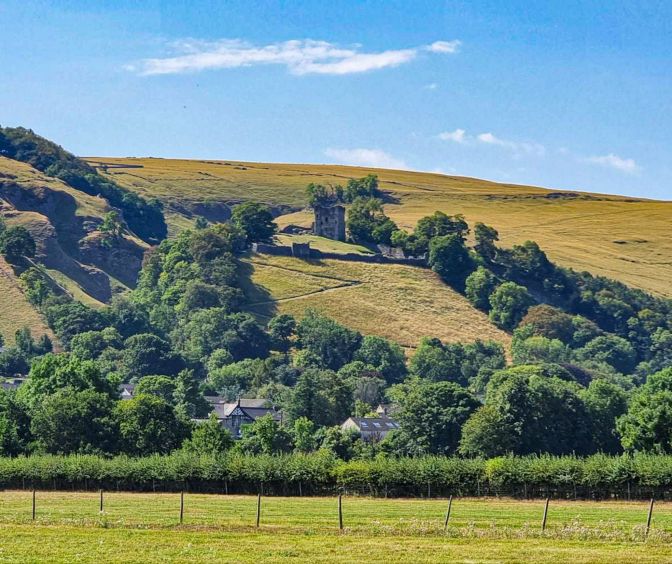
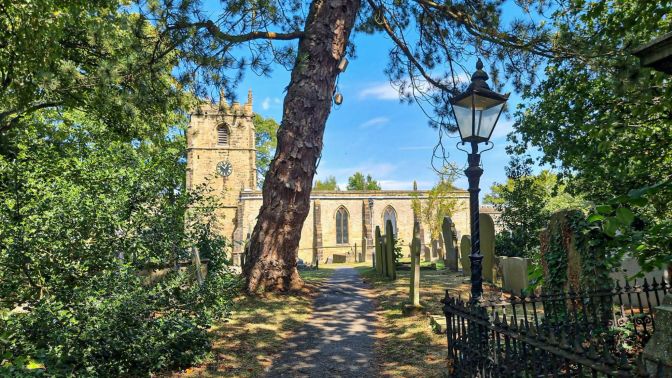
“The ruins of Peveril Castle, and the fine old Norman arch in Castleton church are both very interesting to the archæologist. The position of the former is most curious, the castle seeming from the foot of the hill to stand upon a simple slope of turf, whereas in reality just behind it there is an impassable abyss.”
Country Rambles, and Manchester Walks and Wild Flowers by Leo Grindon (1882)
Peveril Castle dates from the 11th century and was built by William Peveril the Younger on land gifted from William the Conqueror for helping to support the Norman Conquest.
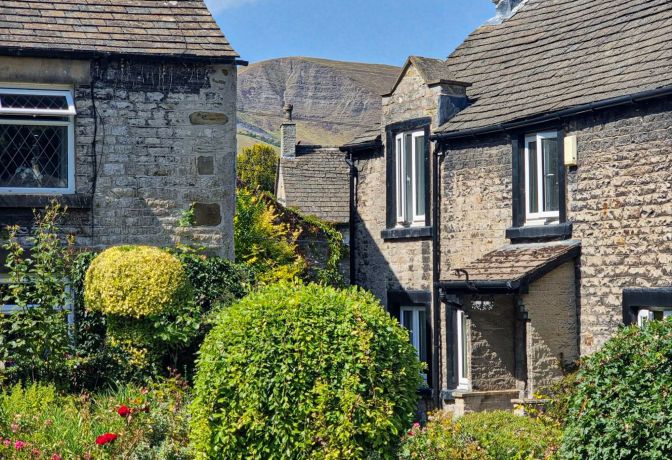
“At the foot of the hill is the charming village to which the castle gave a name, stone-built, all twists and turns…”
The King’s England: Derbyshire by Arthur Mee (1937)
Castleton
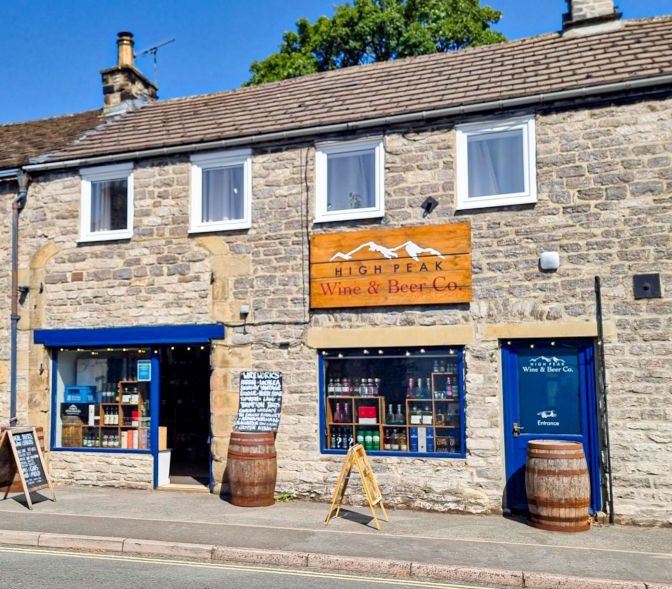
High Peak Wine & Beer Co.
Across from Ye Olde Cheshire Cheese Inn is this shop with an impressive selection of local beers. Naturally, I stuffed my backpack with several temptations to enjoy in my Airbnb.
Ye Olde Cheshire Cheese Inn
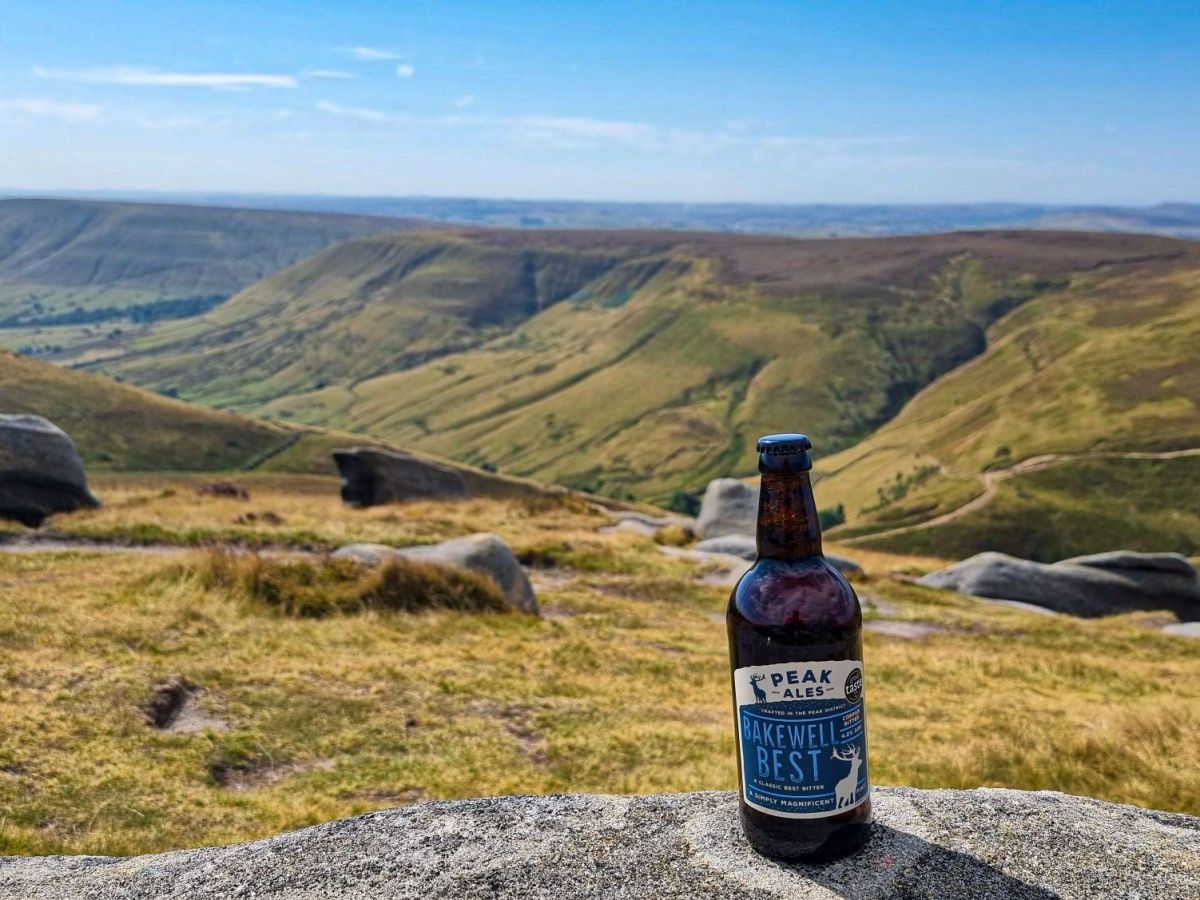
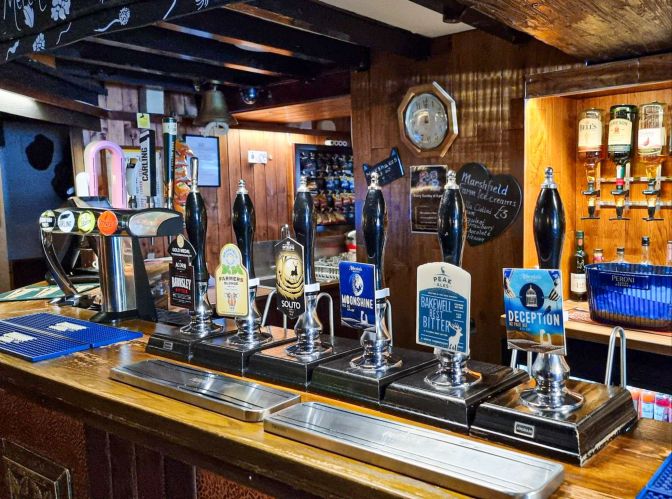
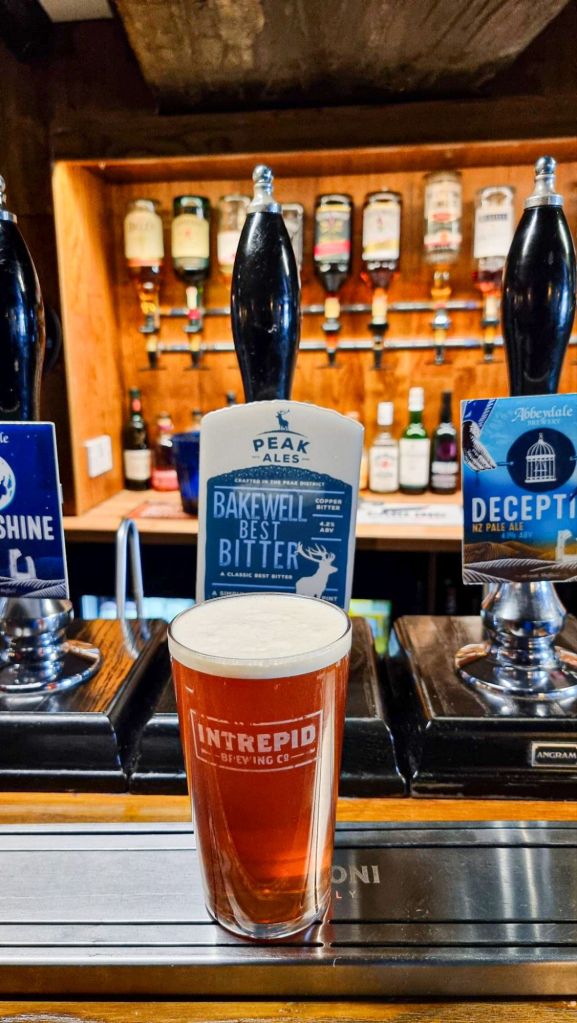
One of several great pubs in the small town of Castleton. Of them, this is the most Shakespearean looking with its half timber and Ye Olde moniker. It lived up to its aesthetics with a fine selection on tap including the local Bakewell Best Bitter by Peak Ales, a brewery from nearby Bakewell which I would briefly visit on a scenic drive a few days later.
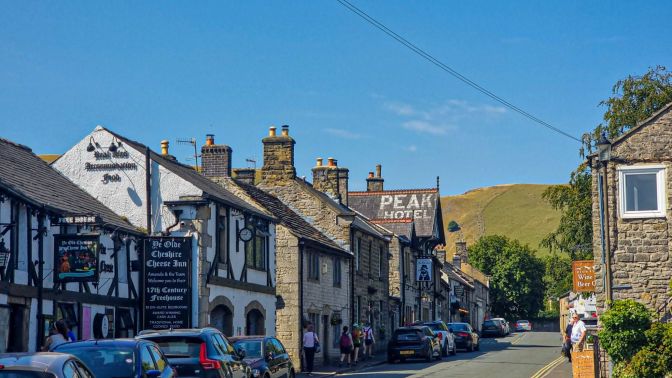
The Peak Hotel
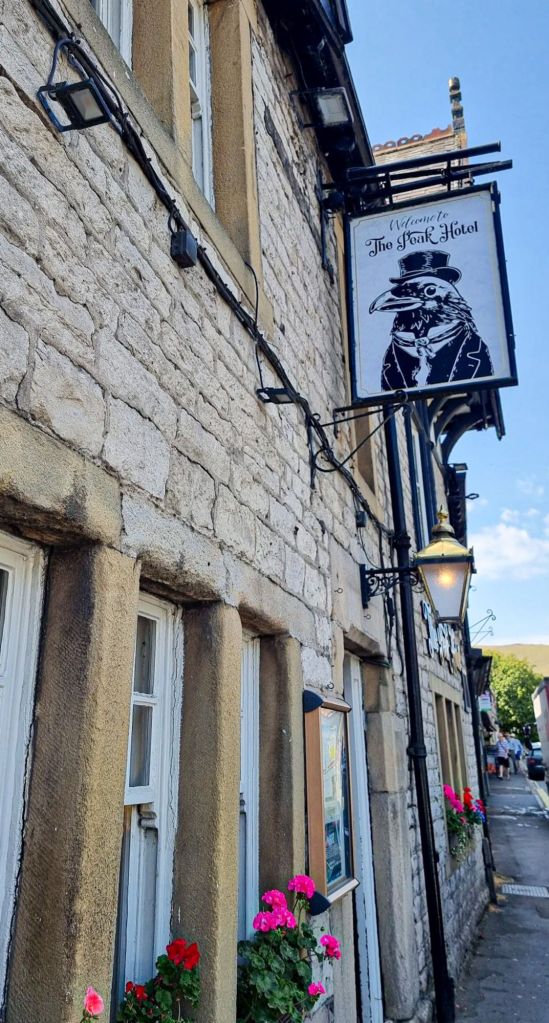
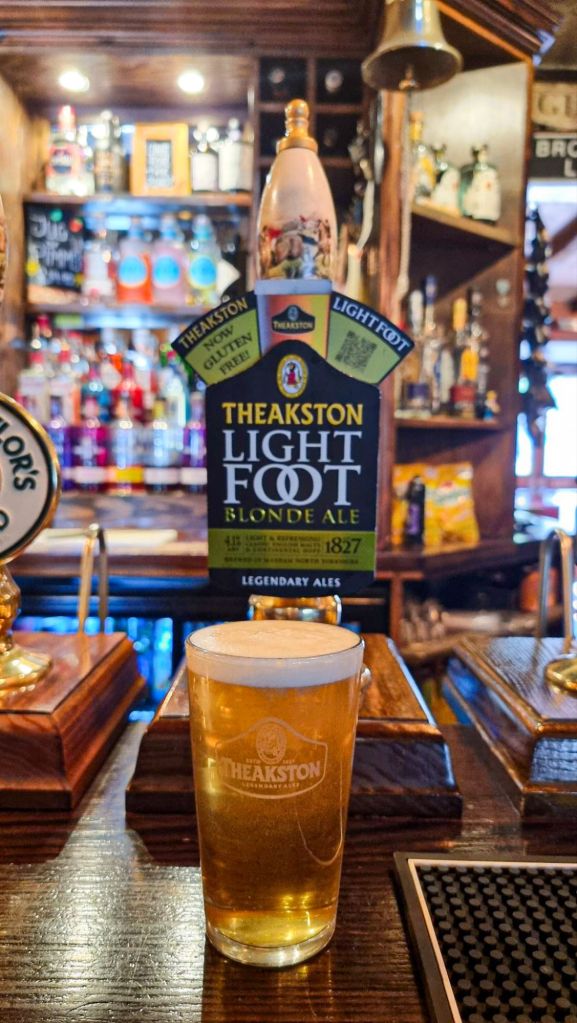
The Peak Hotel seems to be the pub with the most direct lineage to its past, having been the only pub/hotel mentioned by name in any of the old texts I found, specifically in Memorials of Old Derbyshire from 1907. The tap selection was less impressive than Cheshire Cheese but the Theakston’s Light Foot was something new.
The George
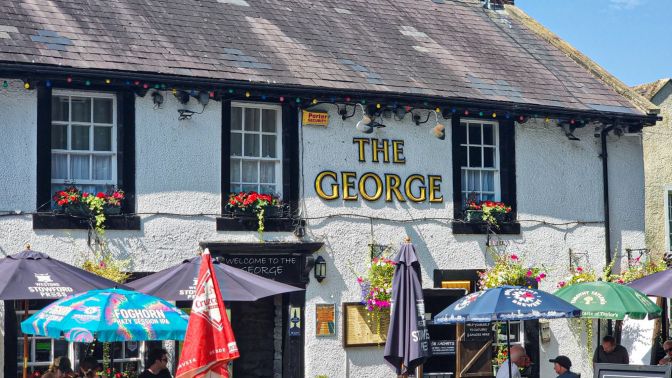
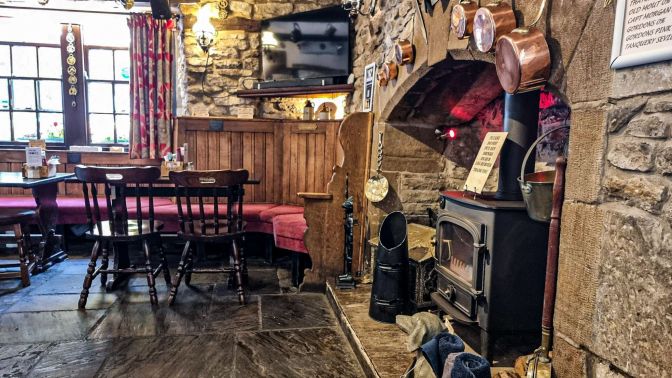
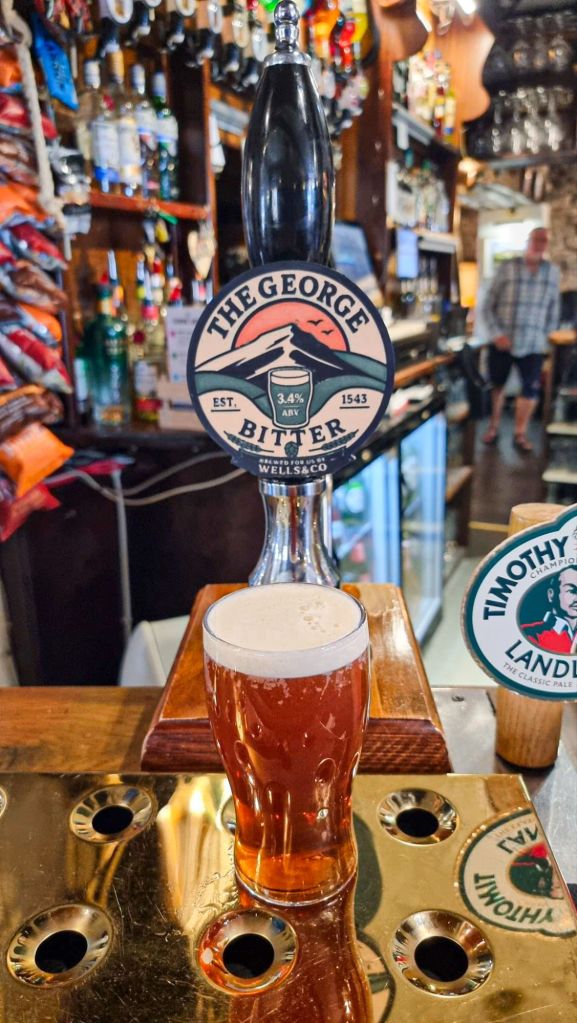
The George seems to be the most lively of the pubs, being a favorite of cyclists. The interior was cozy and old-timey while outside, several umbrella-ed tables gave respite from the summer sun. I was ecstatic to finally find a pub with its own house beer, the George Bitter.
Final Remarks
Of the five hikes I did in the Peak District on this trip, this was probably my favorite, much in part to the nostalgia and great pub atmosphere in Castleton. Castleton is quite busy with tourists, but there is much there worthy of savoring longer than I was able to. I preferred my little retreat in quiet Great Hucklow, but I could imagine staying in Castleton in the future. After two great hikes, I was already starting to get the impression that there was something special about this area for those who love to combine hiking with great beer experiences. The British pub is perhaps the peak of the beer-drinking establishment, and the next hike would bring me to three more of them.

- Derbyshire by A.R. Hope Moncrief (1927) ↩︎


