“Once upon the summit, the reward is ample, alike in the magnificent scenery, rich with distant purple shadows, and in the inspiring atmosphere.”
Country Rambles, and Manchester Walks and Wild Flowers by Leo H. Grindon (1882)
Ask the average person if the scenery of Ireland, Wales, or Scotland is beautiful, and I doubt there would be any hesitation. One hardly has to wait for the brain synapses to formulate the image of their natural beauty. Ask the same about England, and I feel quite sure the answer will be preceded by a pause. It will ultimately be yes, but most likely the affirmative had to filter through a momentary confusion, as if one doubts for a split second that England actually has scenery. When you think of England, a handful of things will come to mind first. London, the pomp and circumstance of the royal family, half-timber houses, Shakespearean images, Victorian images. Thinking of Ireland or Scotland will most likely invoke rugged landscapes long before giving way to Dublin or Edinburgh. Even if my own blog has featured the beautiful nature of England several times, I feel I have not effectively eliminated this mental bias.
Situated a mere one-hour drive from the city of Manchester is a land of dramatic hills, lush moors, and captivating villages that would challenge this impression. Once there, it embraces you in its peaceful existence, each winding road seemingly bringing you further away from the fear-mongering modern world. Dotting it’s charming but challenging network of country roads are some of the warmest, coziest pubs you can imagine. Many of them would feature a delicacy which became a highlight of my visit. Steak & Ale Pie. This alluring land is called the Peak District, located in the county of Derbyshire. For one week, I made my home base in a miniscule village called Great Hucklow. Even the village name sounds cozy. The Peak District would forever re-define my notion of England.
Despite the name, the Peak District (shortened to The Peak by the locals) does not consist of majestic mountain peaks. The highest mountains in England sit an hour and a half north of Manchester in the Lake District. Early travel writers described the region as “a region of lofty moorland, bleak and uninviting”1, “high plateau… grooved with dales and water-courses”2, “trackless waste and many a waterfall”3. The highest point in the Peak District, Kinder Scout, is the embodiment of these descriptions. Although sometimes referred to as a mountain, the actual peak or highest point is almost an arbitrary spot in the middle of vast moorland.
Scene of Many Unknown Tragedies
“I do not deny that there has been a toll of death on tramps in wildest Derbyshire, particularly about Kinder Scout.”
Tramping in Derbyshire by W.T. Palmer (1934)
In 1934, the esteemed tramp William T. Palmer lamented that “a large part of the Peak country is not accessible“. At that time, it was due to greedy landowners exploiting either the mining resources or protecting their land for hunting grouse. Long networks of fences were put up to prevent hikers from exploring the area. As there was no official network of trails, hikers would attempt to cross the moors using nothing more than their moxie and instinct. The landowners would employ keepers whose responsibility was to deter any hikers. In worst case, they would have to take charge of locating any hikers that didn’t manage to survive their trespass.
“The earth seems blacker than elsewhere, the rank grass less fresh and green. The tracks thread mosses of extreme danger—I myself have seen a brave man well-nigh swallowed by the thick and evil-smelling mud. Doubtless through the centuries Kinderscout has been the scene of many unknown tragedies.”
The Peak District by Murray Gilchrist (1911)
Frustrated with the restrictions imposed by the landowners, in 1932, approximately 400 hikers attempted a mass trespass as a protest. This event, which had severe consequences for the organizers, would eventually become a big step toward the relaxation of right of passage laws. As a result, official trails, such as the Pennine Way, were established. Previously, hikers would come from either Hayfield, a town on the western edge of the Peak or from an old inn along a route to the east called the Snake Inn, which sadly closed down in 2019. Today, the prime location to start a hike to Kinder Scout is the village of Edale which is the official start of the Pennine Way.
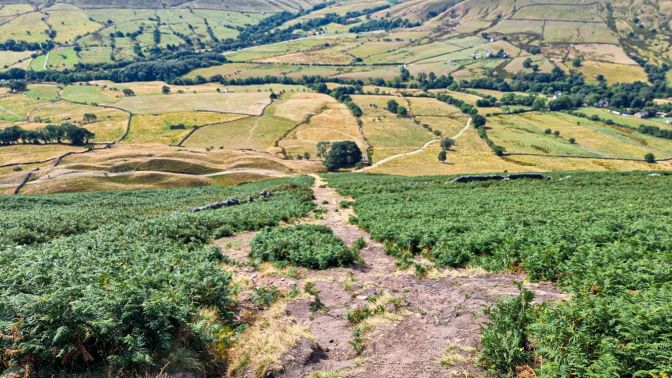
My hike would ascend via Jacob’s Ladder and descend over Grindslow Knoll and down the steep side of Broadlee Bank Tor. There are two fantastic pubs in Edale serving as a double reward at the end.
Hike Details
| 🚗 Starting Point | Edale parking lot |
| 🥾 Distance | 14.5km |
| 🍺 Beer Highlights | The Old Nag’s Head, The Rambler Inn |
It’s Not Just a Beer, It’s a Journey
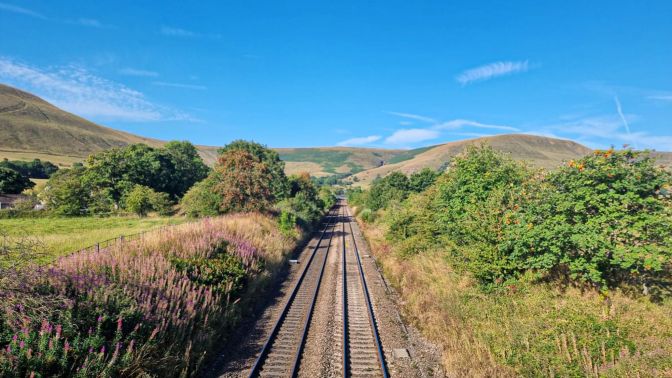
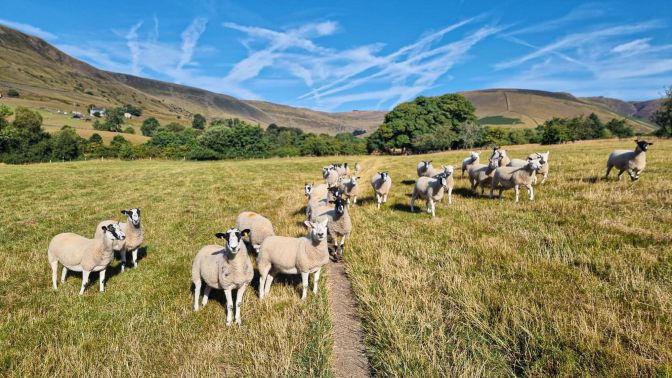
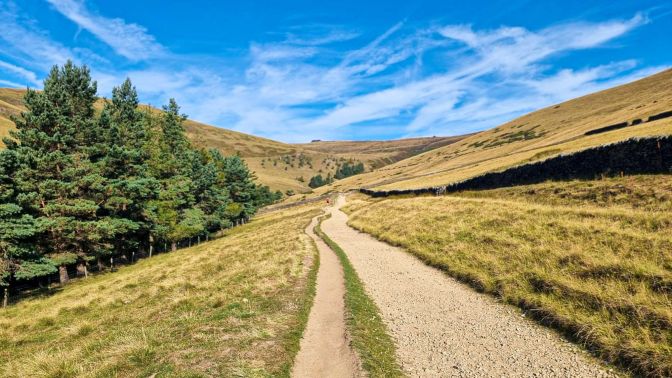
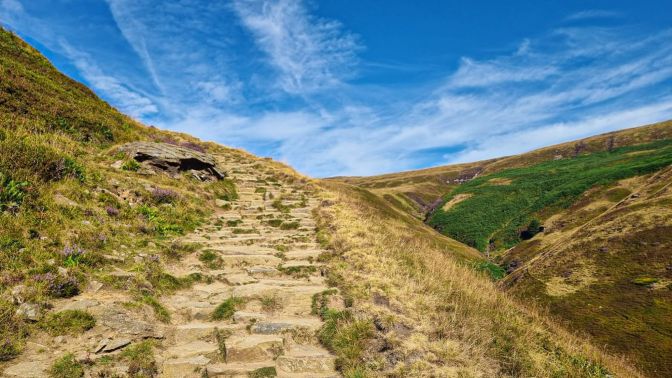
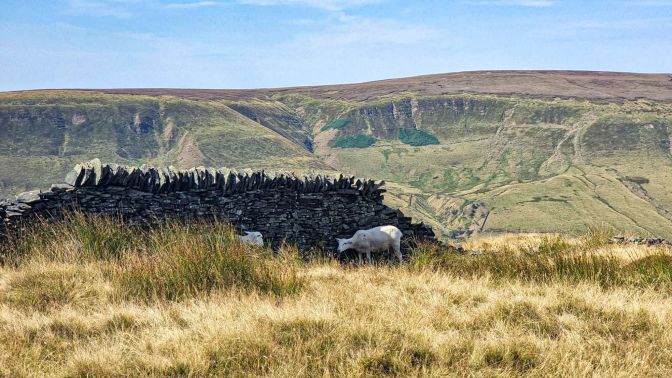
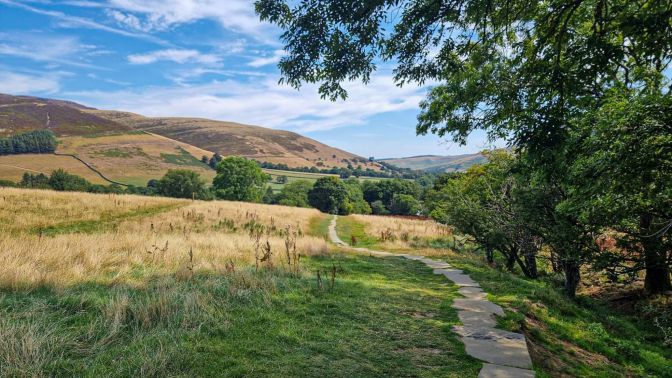
The hike starts on the low route which criss-crosses the train tracks a couple times. When it turns north towards Jacob’s Ladder, it is a delightful hike through the River Noe valley across several fields, some of which are occupied by sheep. I happened to pass through a rather aggressive flock, aggressive by sheep standards that is. They surrounded me, gave way, and then followed me the entire way across the field, filling the air with a chorus of bleating. Eventually, I stood at the foot of Jacob’s Ladder, a steep stairway of stone.
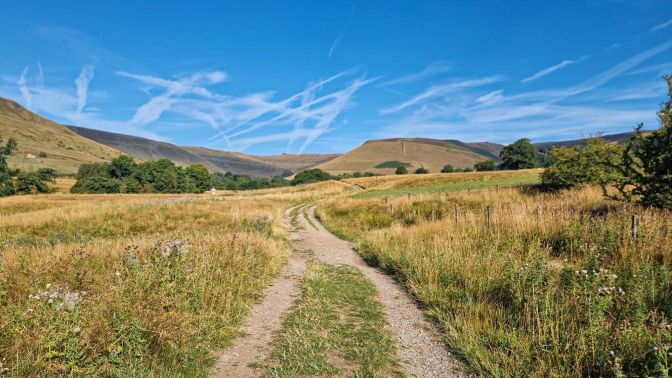
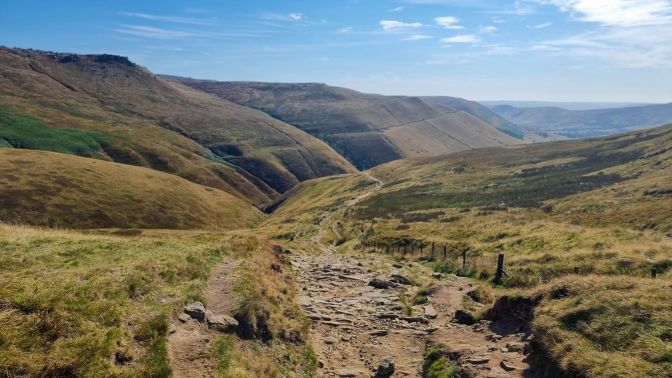
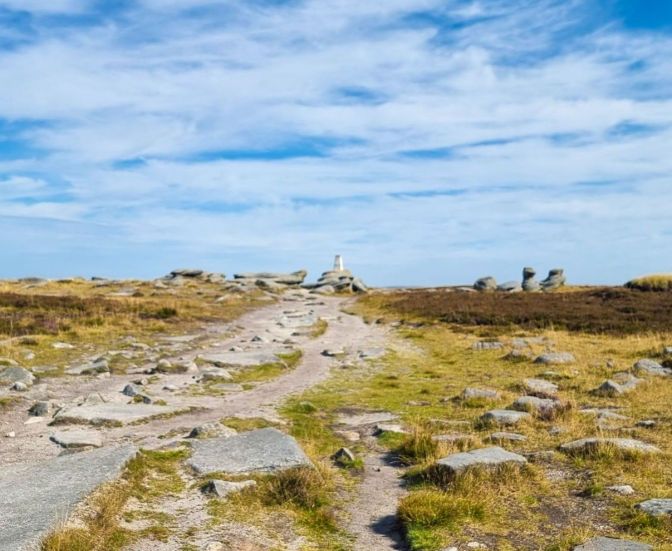
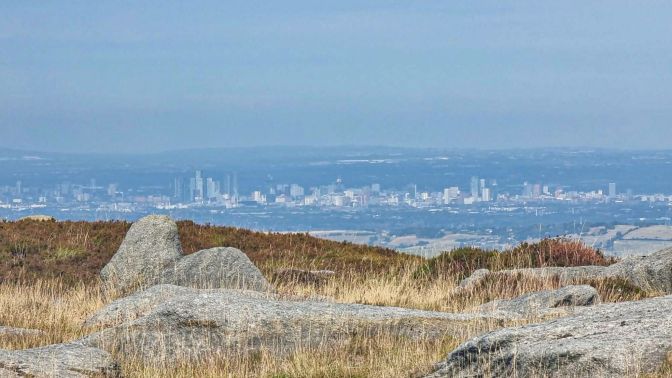
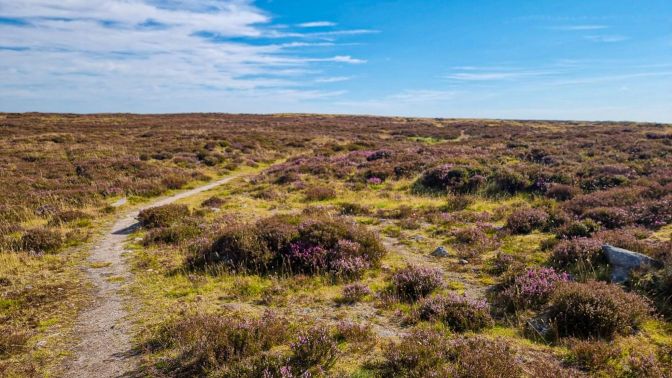
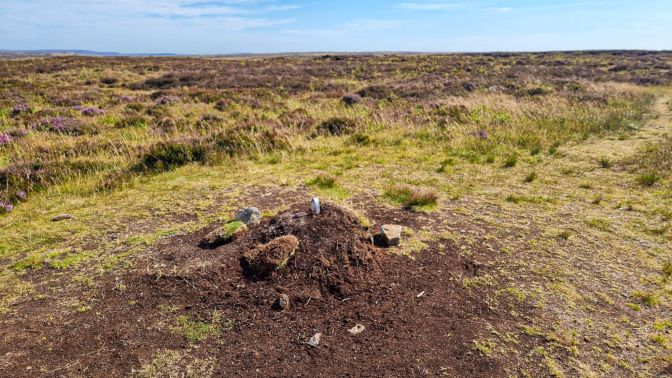
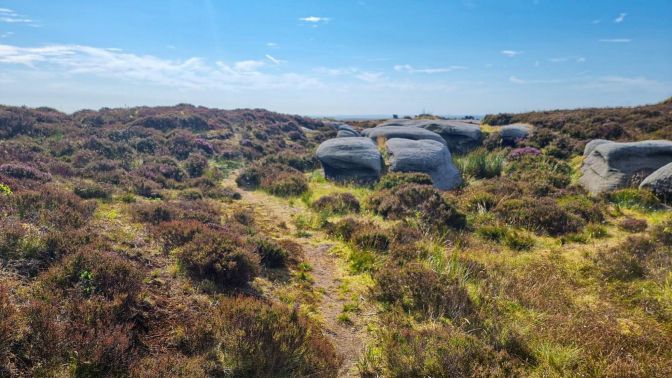
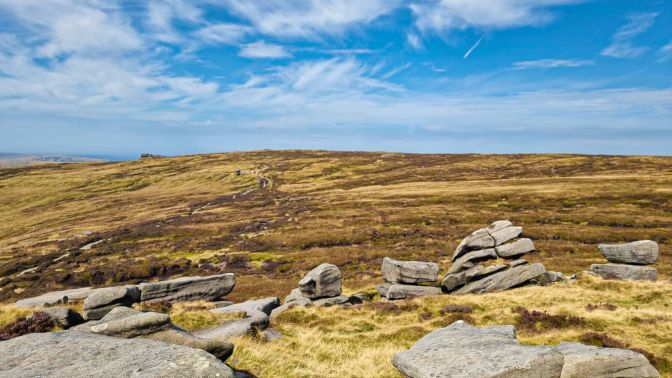
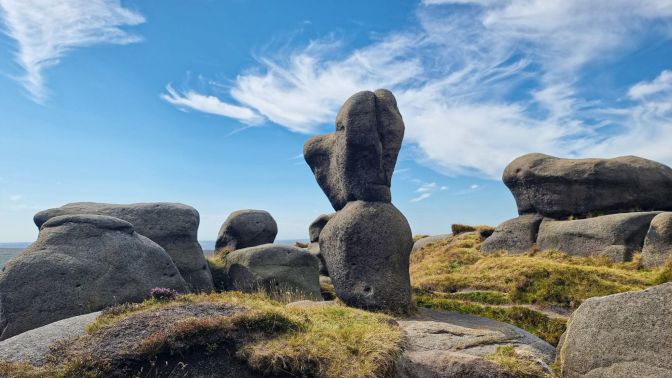
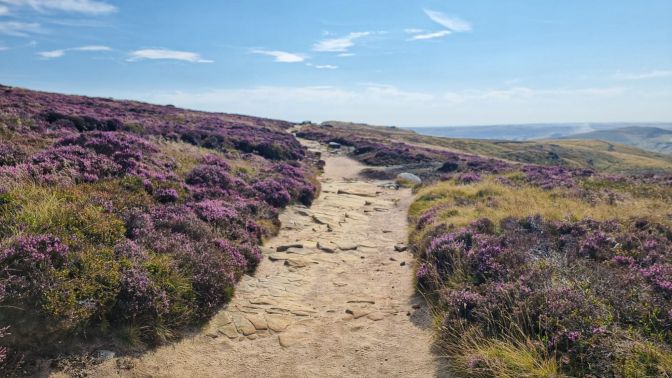
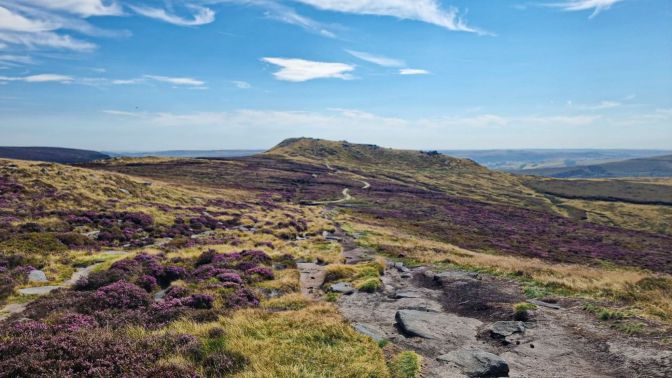
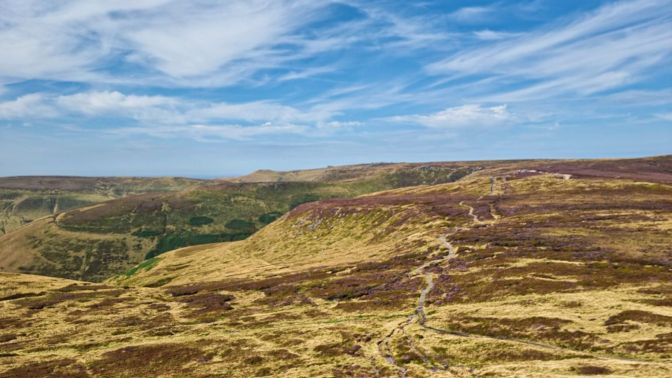
At the top, the only marker of any kind is placed at Kinder Low which is a couple meters lower than Kinder Scout. The expanse of the moors on a bright, hot sunny day tames the moor’s ruggedness and neutralizes the threat that you read about in the old guides. Trails spider-web everywhere but a trail map like Komoot is useless. Only GPS tracking is useful here. I took the opportunity to find my way out of the moors quite easily with the perfect visibility. The ground was dry, and it was hard to imagine hikers getting swallowed up by the mud.
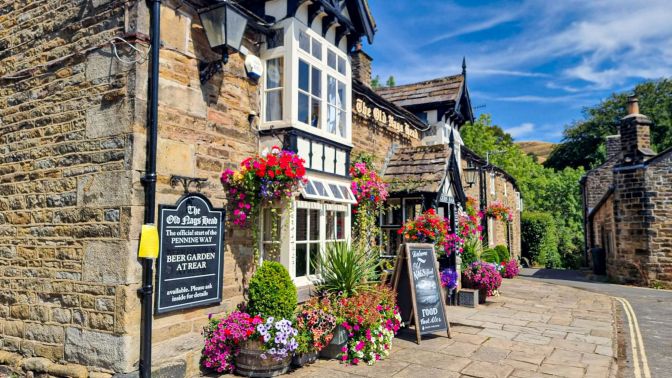
The Old Nag’s Head
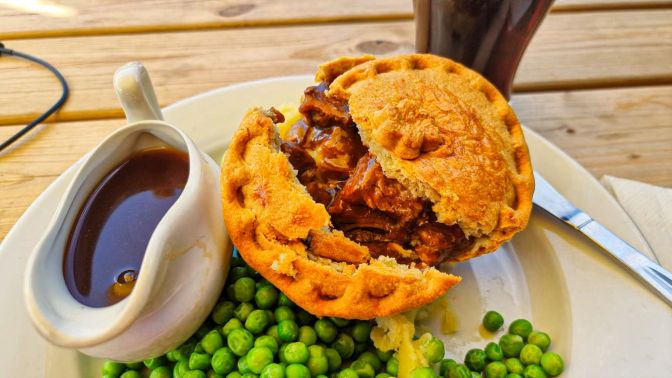
This is a fantastic pub with several unique cask ales on tap. I had to settle for two pints to go along with my succulent steak & ale pie. This would be the first of many I would order over the next week. One of the aspects I enjoyed most was how none of them was the same. There were variations in crust type and ingredients, some with carrots and peas, others including pieces of roasted potato or mushrooms, and all with juicy lean pieces of roast beef. They are almost always served with a healthy portion of vegetables to ease my vegetable cravings.
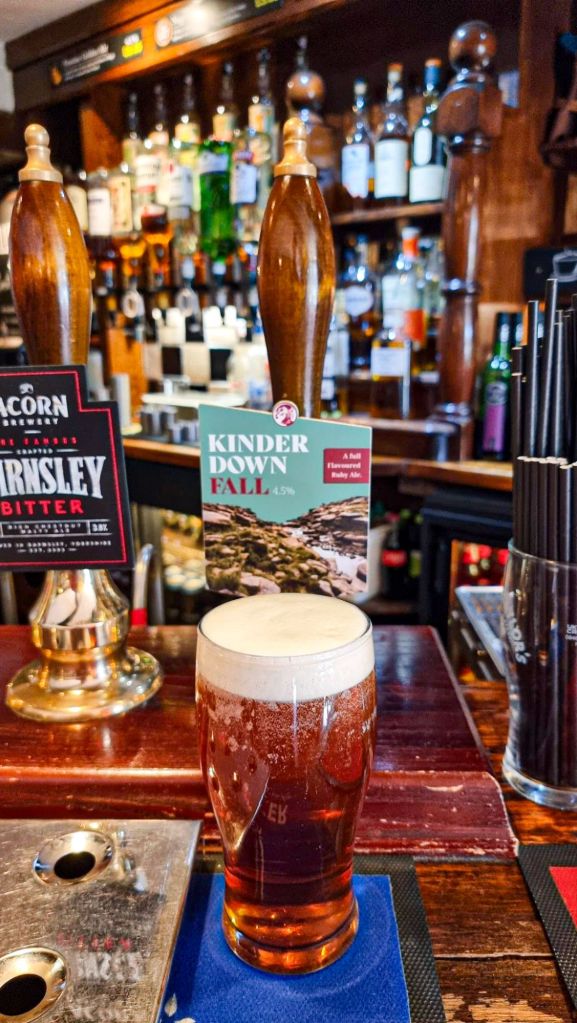
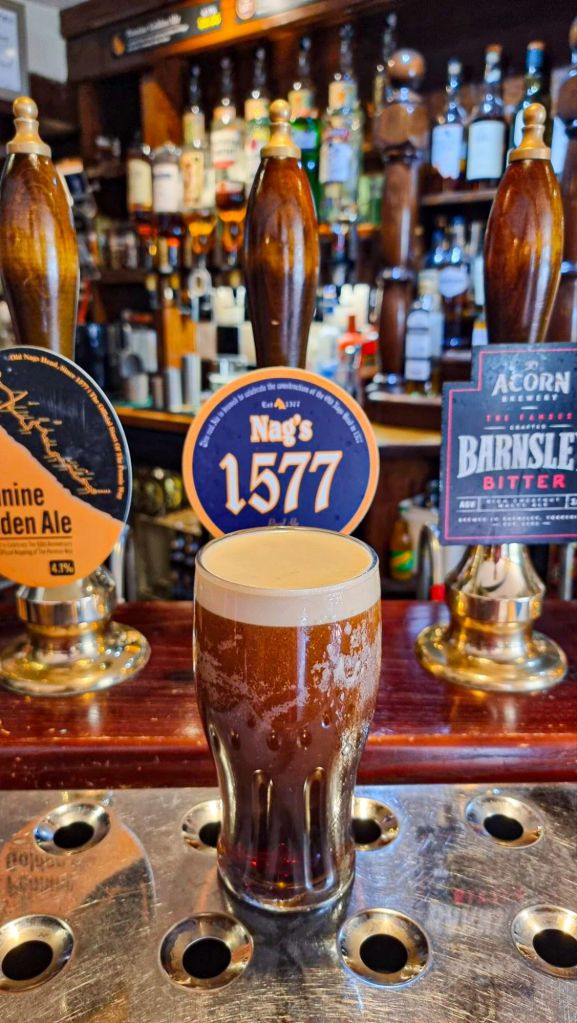
The Rambler Inn
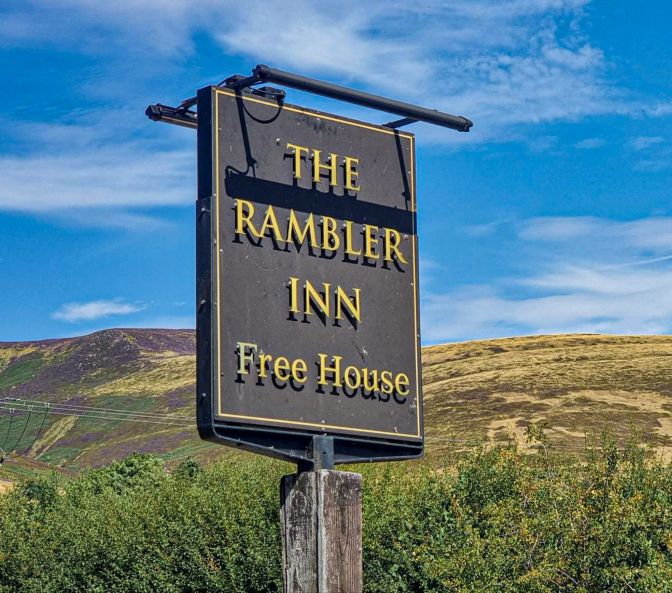
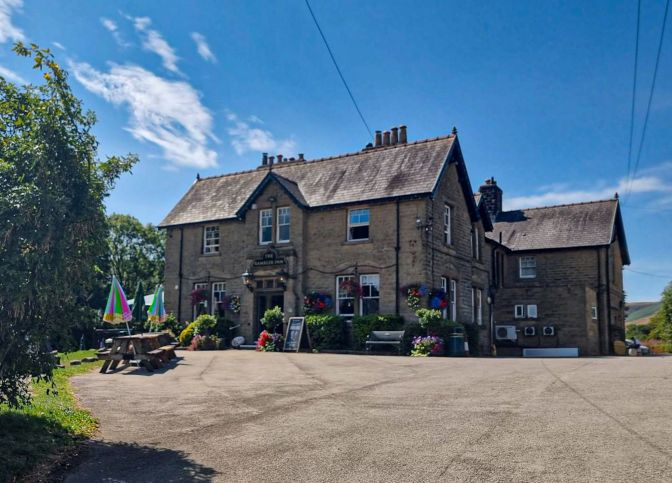
The Rambler Inn is another great pub with a less flashy exterior but a wonderful expansive garden area. I grabbed a final half pint and enjoyed the views towards Mam Tor and Lose Hill, which would be the next day’s hike.
Final Remarks
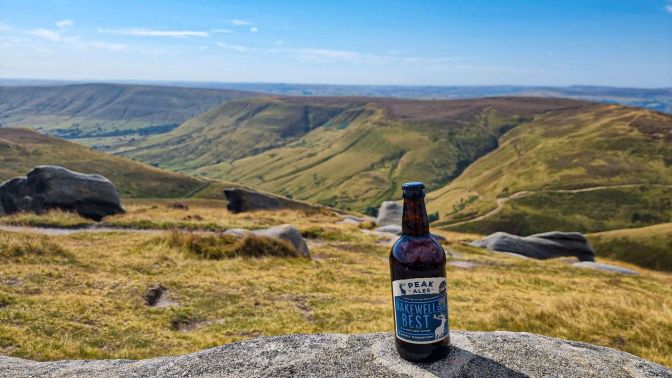
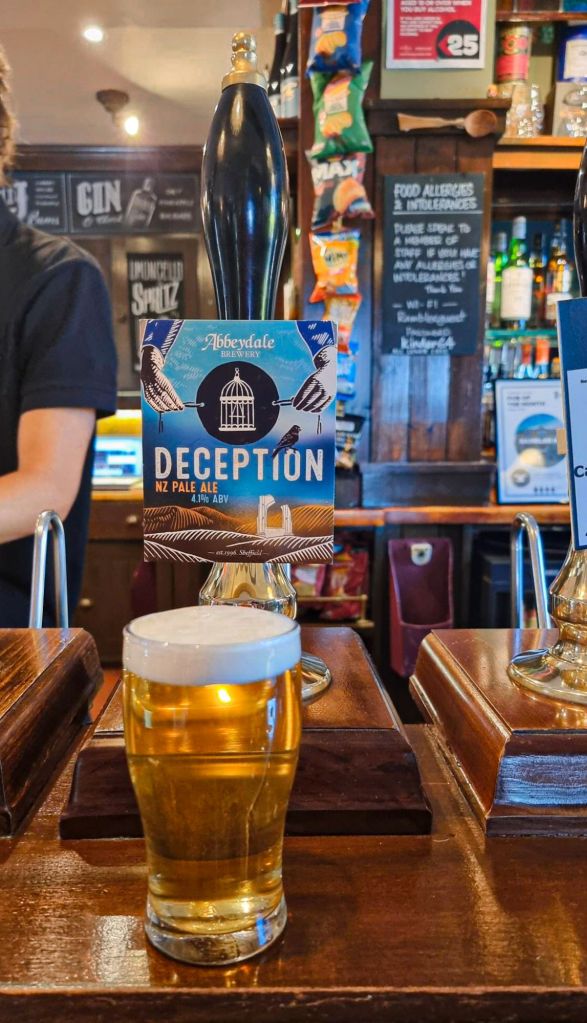
During the hike, I encountered a young university-age lad who seemed to be confused. His eyes shifted from the map on his phone to the surrounding landscape. He walked 50 meters down the trail, stopped, started to come back towards me, paused, looked around, walked 10 meters the other way, and then finally came back in my direction. “Where do I find Kinder Scout?” he asked. I turned and pointed to the horizon of muted violet behind me. “All of that is Kinder Scout“, I replied. Like me, he was expecting a mountain top with some type of crest or cairn. Despite my explanation on the joys of wandering across the moors, I could sense his reservation to do so. I guessed it was not out of fear of getting swallowed up in the mud, but due to the lack of a definitive and effective location to take a selfie, something that would impress his friends. Meanwhile, I was in the process of setting up the beer photo from the beginning of this post. He continued to pace a couple times more along the path before continuing on his way, skipping Kinder Scout altogether. This encounter revealed how Kinder Scout remains somewhat of an enigma. 100 years ago, only the hardiest of tramps and ramblers could write about the beauty of this land. A few less lucky would either be turned back by the keepers or die in the process of trying to avoid detection by traversing the remotest part of the moors during poor weather. Today, anyone can visit it, yet its appeal may be only for the discerning, to those who carry the spirit of the tramps of yore. What isn’t subtle is the surrounding beauty. It is breathtaking. There are hints of the Scottish highlands there, but the scenery is more accessible; and even better, always seemingly within reach of a village pub. This is the England that I want to think of.