
Binn Hanrai, Binn Meanach and Binn Diarmada.
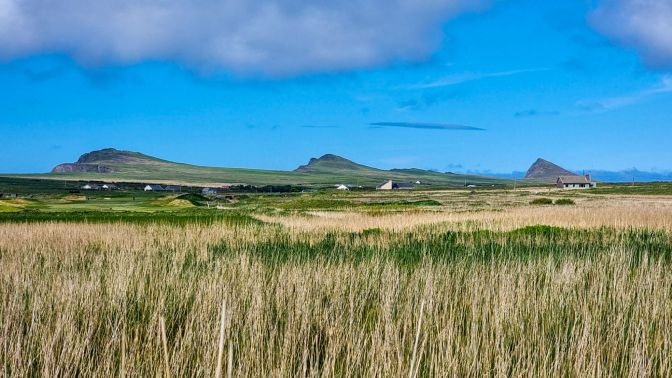
In the far northwest tip of Ireland’s Dingle Peninsula, the coastline forms three low mountain peaks which appear like three waves about to crash into the North Atlantic; perhaps symbolic of how some sailors vanished into the sea leaving three mourning widows in a petrified state; their graceful shawls facing inland and their craggy weather-beaten faces forever gazing with false hope into the blue depths of the Atlantic horizon. The individual Gaelic names they were given, incidentally, are akin to having sisters named Bill, Steve, and Frank. That should not detract, however, from their poetic beauty. To most of the world, they are the Three Sisters. Few would ever be able to pronounce their names, let alone detect their masculine form.
A great jumping off point for a hike to the Three Sisters is the quaint village of Ballyferriter. With two great pubs and a hotel bar-restaurant, it has plenty to offer a thirsty (and hungry) traveller. I was staying above the Tigh Uí Chatháin pub with its great view of the Three Sisters from the pub’s rear terrace.
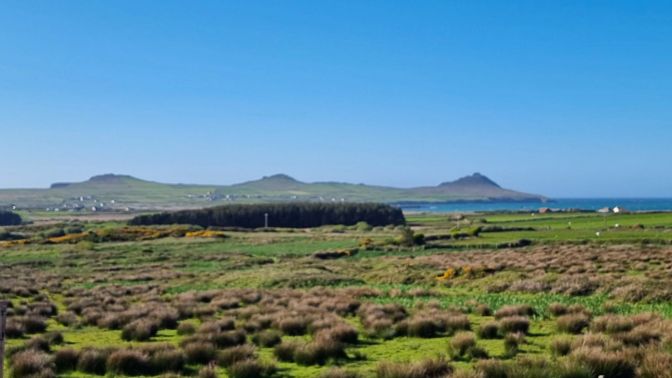
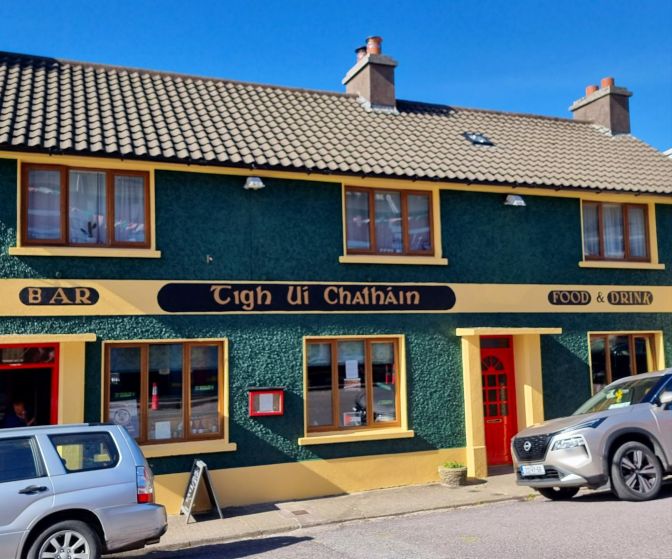
One would think that such a beautiful landmark which is recognizable from all over the peninsula would be a required hiking destination with a well-trodden route. However, planning a hike to the Three Sisters was fraught with questions, mainly about its legality. Komoot showed a photo of a No Hiking sign on a gate along the eastern trail. Meanwhile, a couple of websites indicated there was a particularly cranky farmer giving trouble to hikers wanting to take the path along the western coastline. How could such a beautiful landscape be held hostage and forbidden for honest avid hikers to enjoy? I could not fathom it. Consulting with some locals, including the pub owner where I was staying, revealed that the cranky farmer was not a Gaelic myth. However, hiking the Three Sisters is practically a rite of passage for the locals, and as long as I stuck to the trail, they assured me that I’d be fine. They strongly encouraged me to do the hike. I didn’t question them about the No Hiking sign along the eastern route, so I originally planned to go up and back along the western ridge. As you can see in the map below, I changed my mind. To make a long story short, the entire hike is doable with a few minor buts which I will explain later. I still cannot say whether it is entirely legal, but with the proper respect and behavior, I cannot imagine anyone being forbidden passage.
Hike Details
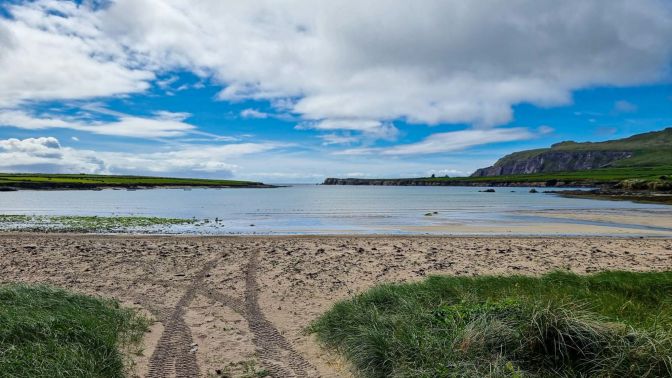
| Starting Point | I found a little parking spot by Ferriter’s Cove on a sandy bank nestled among some tall grass. |
| Beer Highlights | One of the pubs in Ballyferriter after the hike |
It’s Not Just a Beer, It’s a Journey
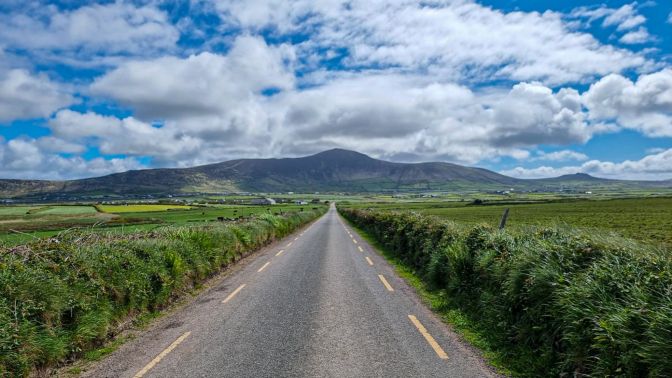
Early on, the weather looked like it wasn’t going to cooperate, but it made for very atmospheric views. I passed by the local golf course and through a quiet farming village where I reached the fields leading up to the western ridge. It is here at the base of the hill where a farmer sat in his souped-up golf cart like a sentinel. I wondered if this was the ogre I’d been warned about. I casually waved as I tried to pass him like I was oblivious to any knowable wrong-doing.
“Going up to the tower, are ya?” He said in his thick Irish accent. I stopped in my tracks and turned around.
The grizzled-looking man looked at me through the steely slits of his weathered eyes, his right arm resting over his steering wheel. What transpired though was a pleasant enough conversation.
“Where ya from?“
“Philadelphia.” That is my stock answer when I’m abroad despite not being quite true.
He proceeded to tell me about some relatives in California or somewhere in the far western United States like they might have bumped into somebody I might know in Philadelphia. As the small talk went on, the weather grew worse. It was difficult to disquise my anxiousness to move on as the clouds grew darker, and I kept waiting for the hammer to fall. As nonchalantly as I could muster, I said something like “It was nice chatting with you.” and I made sure to slip the word hike in there somewhere to make sure he was aware of my intentions. If there was a moment to give me a warning, that was it. But he just slowly nodded, his ever-so-slight smirk not betraying any of his thoughts. I turned and started up the hill. When I got about 100m, I took a peek over my shoulder. The quasi-golf cart was driving back towards the village.
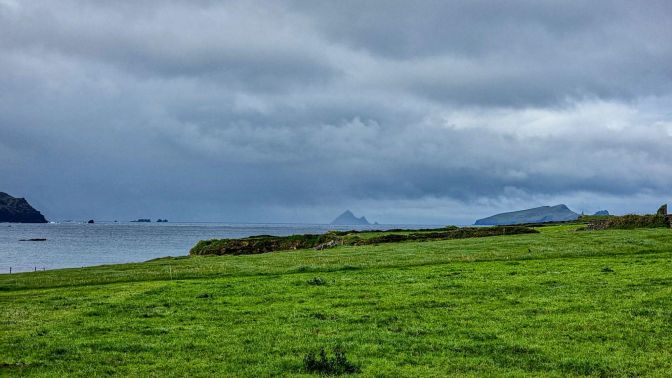
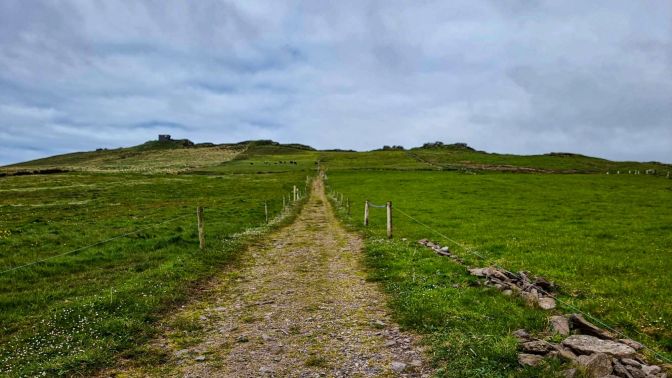
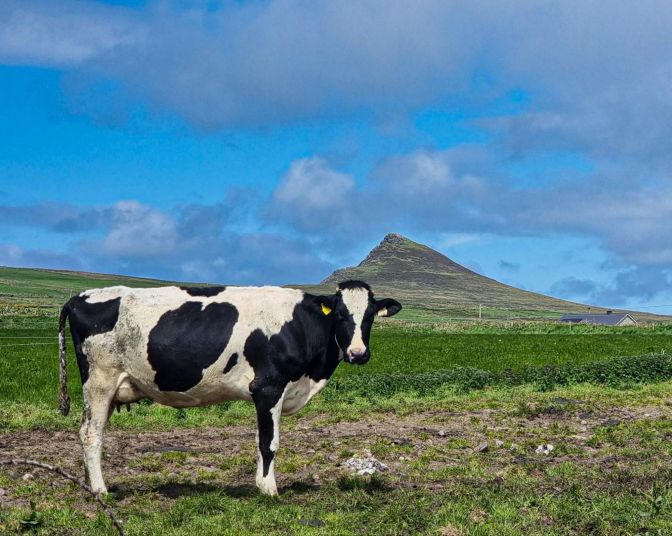
It was clear the farmer made sure not to advertise how to get across his field. It was completely wired off with some wire that looked like it could be electric or intended to look like it was. It took me some time of wandering around to the staring amusement of the grazing cattle to finally find a viable route. It amounted to a gully between two adjacent fields, probably for drainage. So it was quite overgrown and wet. It was a plodding workout, but it got the job done. At the top, I felt victorious like Rocky running up the art museum steps. Somewhere, the ghoul farmer was picking his teeth with the bones of the shipwrecked and renewing his vows of eternal damnation. But at least he was leaving me alone.
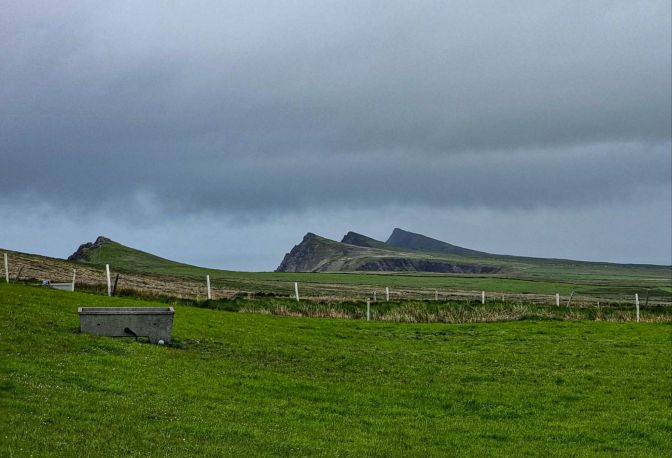
At the top, the views are breathtaking. After a brief spurt of rain, the sky started to clear with the right mixture of clouds to texture the sky spectacularly.
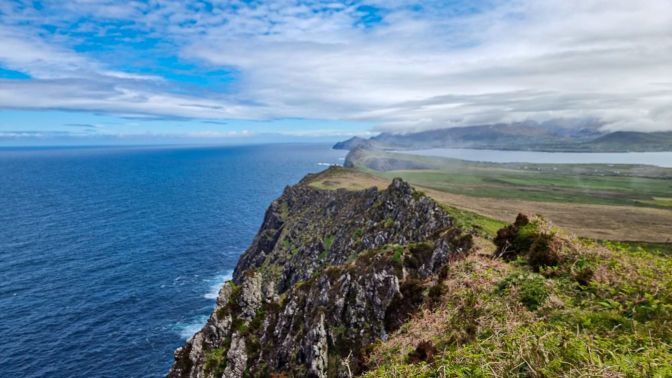
Built around 1804, the tower at Sybil Head was part of a series of defenses built by the British.
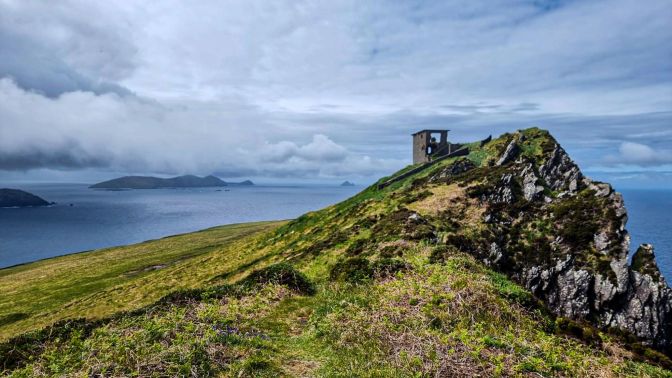
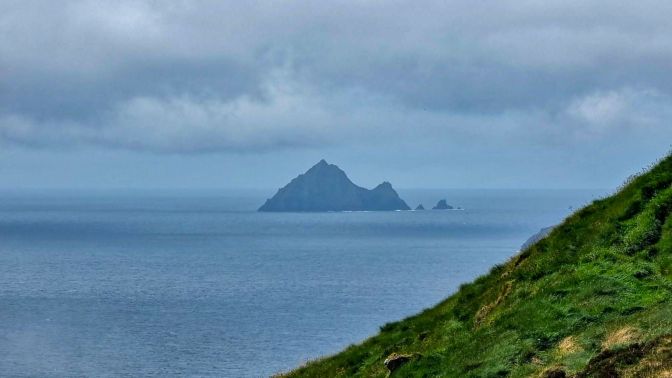
One of the Blasket Islands visible on the horizon is Inis Tuaisceart which houses the 10th century monastic site, Teampall Bréanainn Oratory.
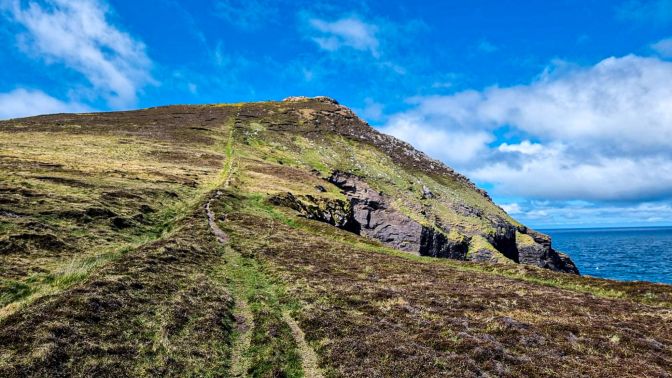
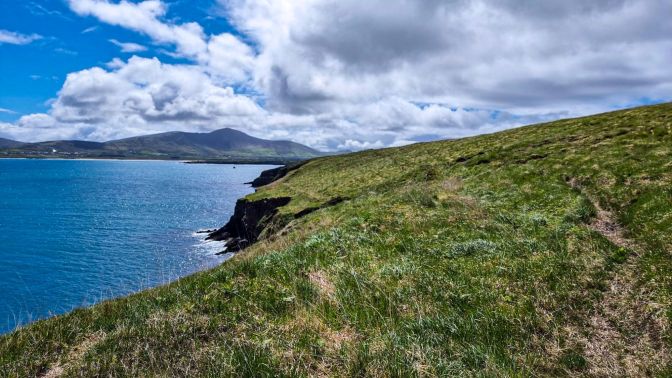
Leaving Sybil Head behind and heading north, the evil scheme of the farmer is evident as he has situated his barbed-wire fence to give just enough room to walk one foot in front of the other through a thorny trench-like path. Long pants are essential. Some sections are better than others, but you rarely can stop paying attention to where you are putting your feet. At one point, probably where his land ends and the next farmer’s begins, there is a barbed-wire fence blocking your path which is going right to the edge of the cliff (didn’t take a photo). Here, you have to do your best to straddle it. Just remember that plenty before you have made it. After a careful examination of my crotch afterwards, I was quite satisfied with the quality of my hiking pants. I proceeded onwards.
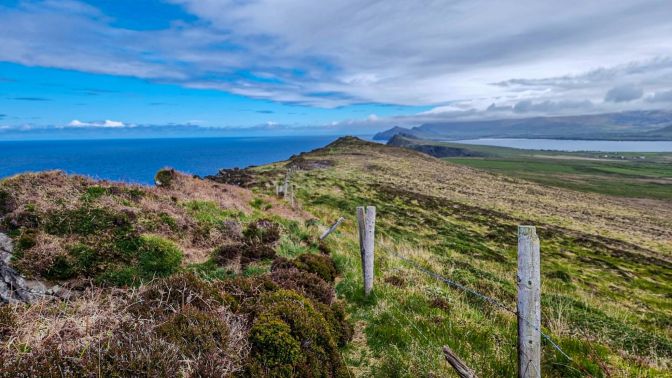
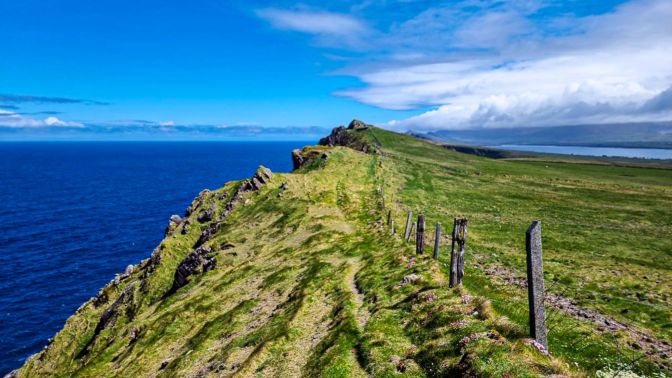
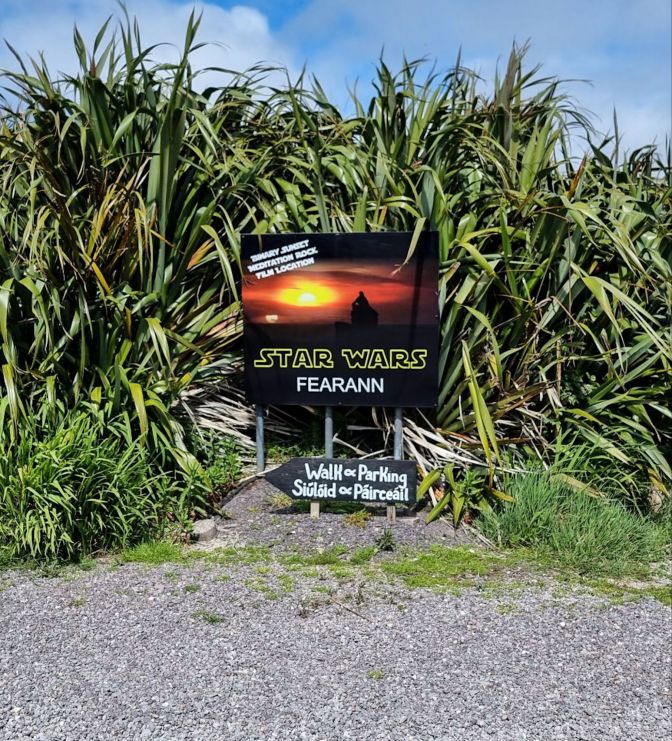
As you come to the first Sister, you start to encounter sections where the only safe route is on the farmer’s side of the fence. Before you get to the first Sister, the path leads right into a series of crevasses. The only way around them is across a farmer’s land. The first Sister was the scene where Luke Skywalker meditates to try and reconnect with the Force in The Last Jedi. The stone seat is still there.
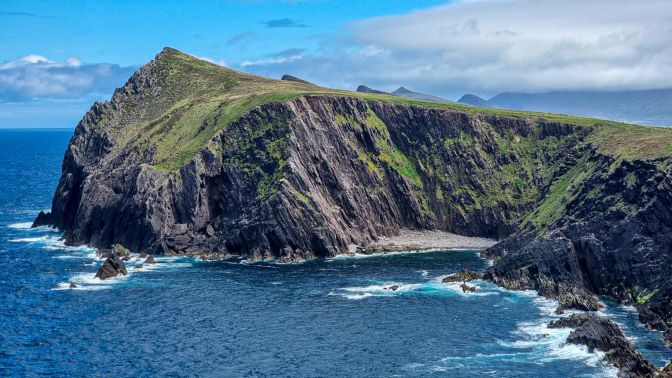
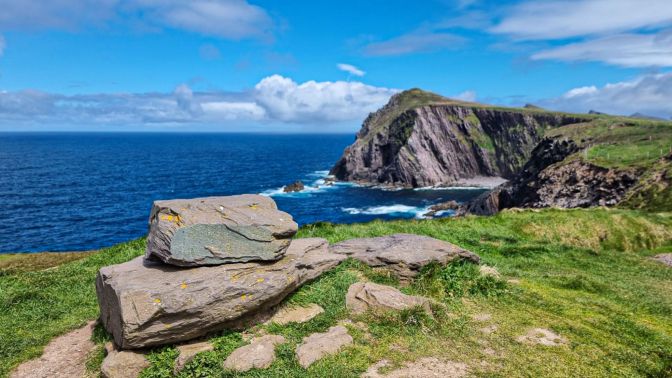
To get to the first Sister, you need to continue through the farmer’s property as the fence in this section is right up against the cliff. There is a visible trail. Just stay on it.
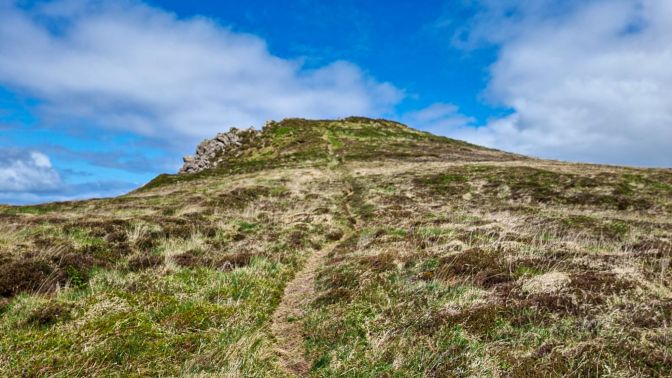
For the remainder of the hike to the final Sister, the trail can alternate between both sides of the fence. Unlike the barbed-wire encounter earlier in the hike, any time you need to pass over a fence from that point on, there is an obvious place to do it safely. However, nothing is marked. You just have to scan the fence to find the depression in the barbed-wire.
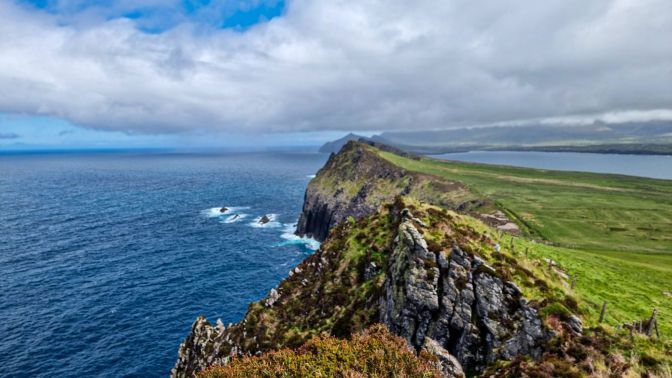
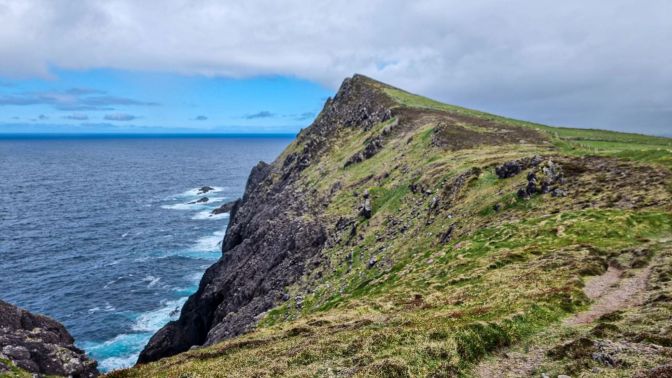
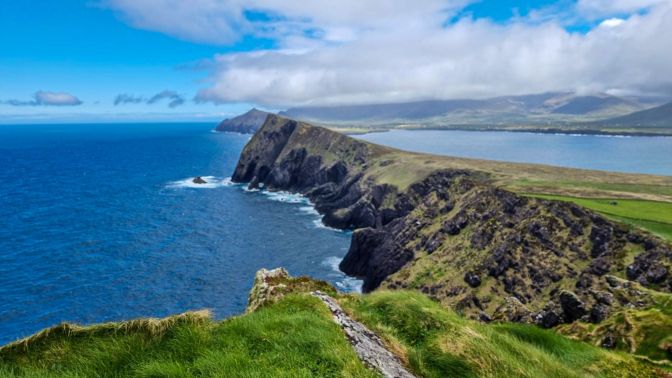
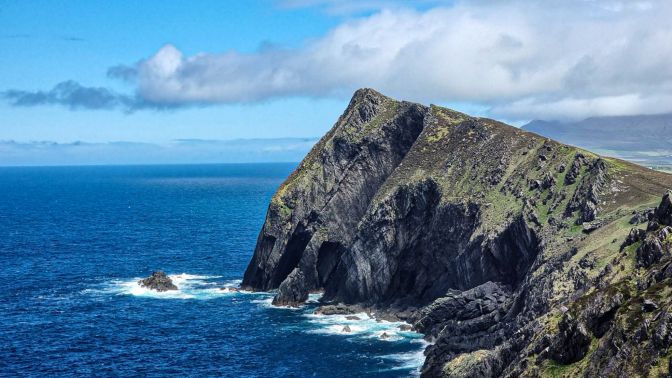
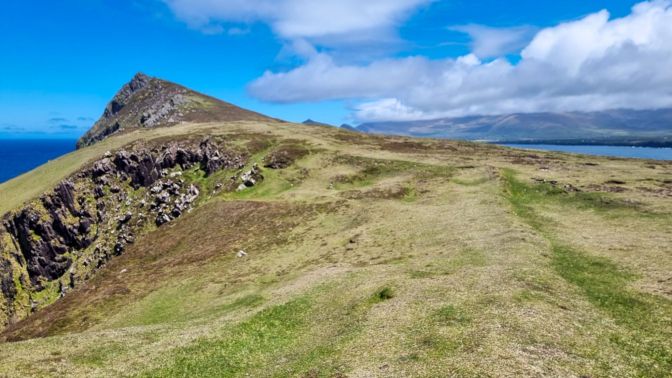
At the summit of the third Sister, I had my lunch and spent a good 20-30 minutes soaking in the views. The weather was perfect. One of life’s moments to slow down and savor.
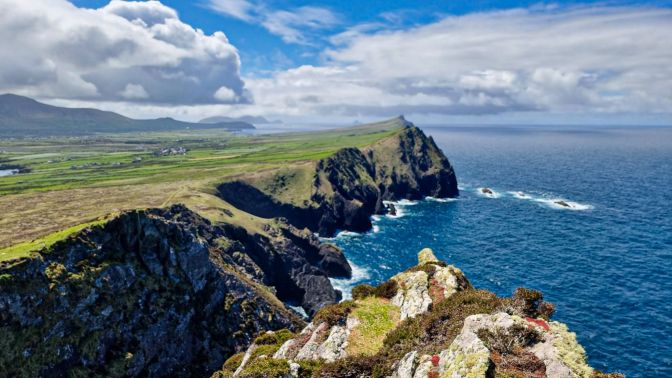
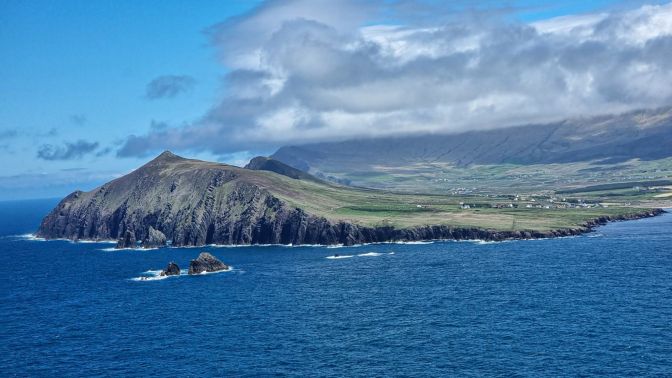
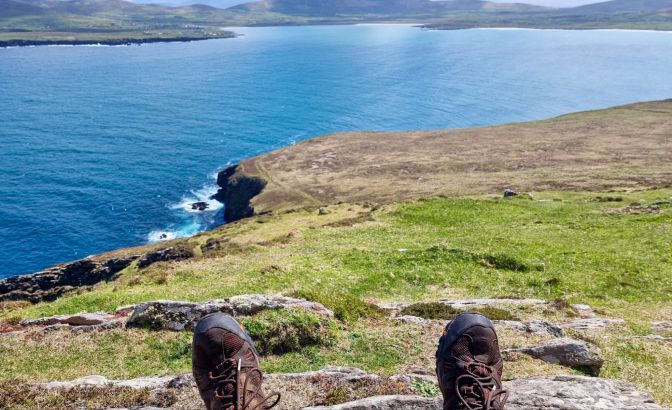
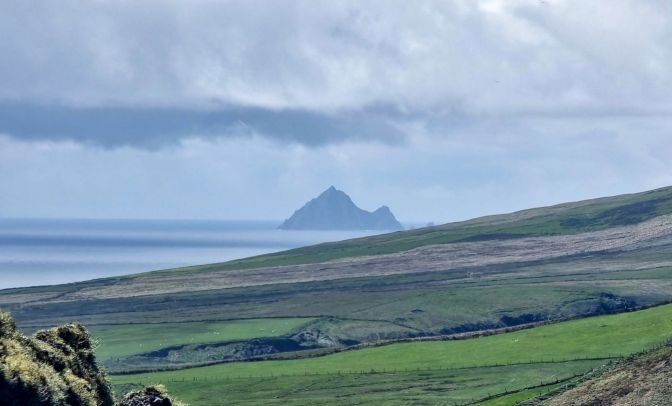
In the distance, I could see Mount Eagle (the further of the two peaks) and Croaghmarhin. Mount Eagle was on the agenda for the next day.
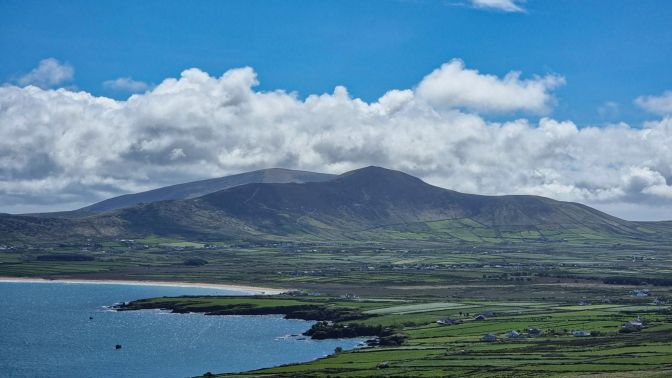
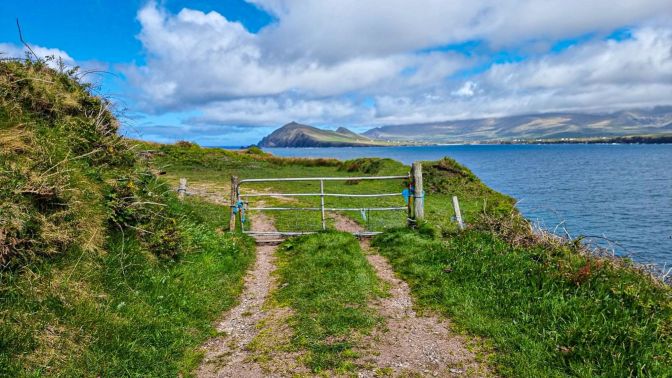
When I arrived at the third Sister, I was still planning to backtrack. The thought of crossing all of those fences and dealing with the thorny heather closer to Sybil Head didn’t excite me. Looking down the hill, there was a visible path. I recalled the picture I saw on Komoot which showed the sign facing south. I would be coming from the north. I prepared a Mock Apology of The Unwary Happy Tourist and headed down the hill. There was no way I wasn’t taking that trail.
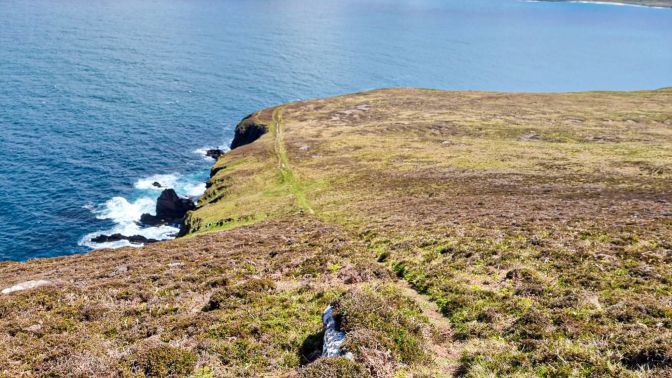
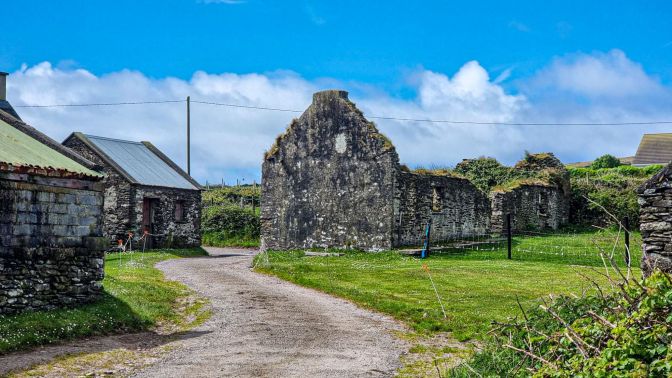
At the infamous gate, I found the sign missing. Common sense seems to have overruled. It was still necessary to climb over it, however, as it was locked and flanked by more barbed-wire. But after that, it was clear sailing though a couple of farm villages back to the starting point.
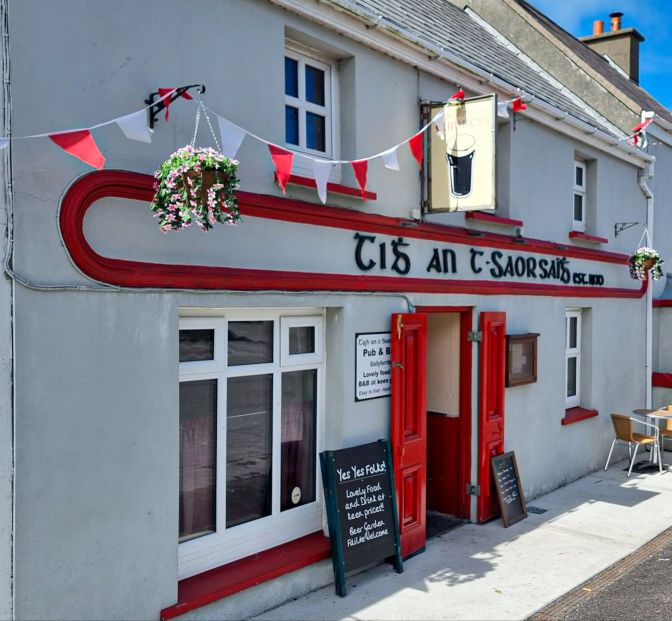
Tigh an tSaorsaigh
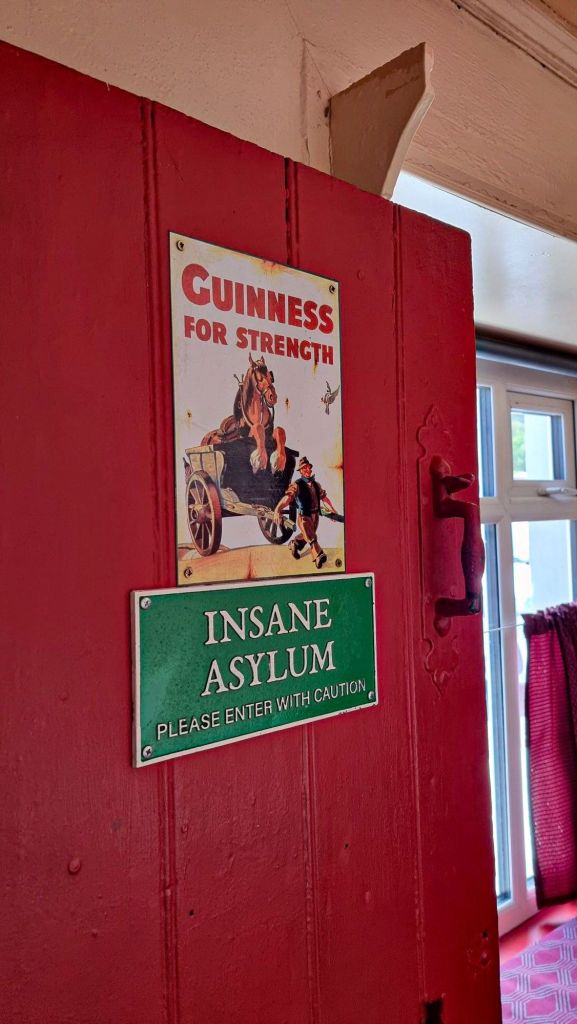
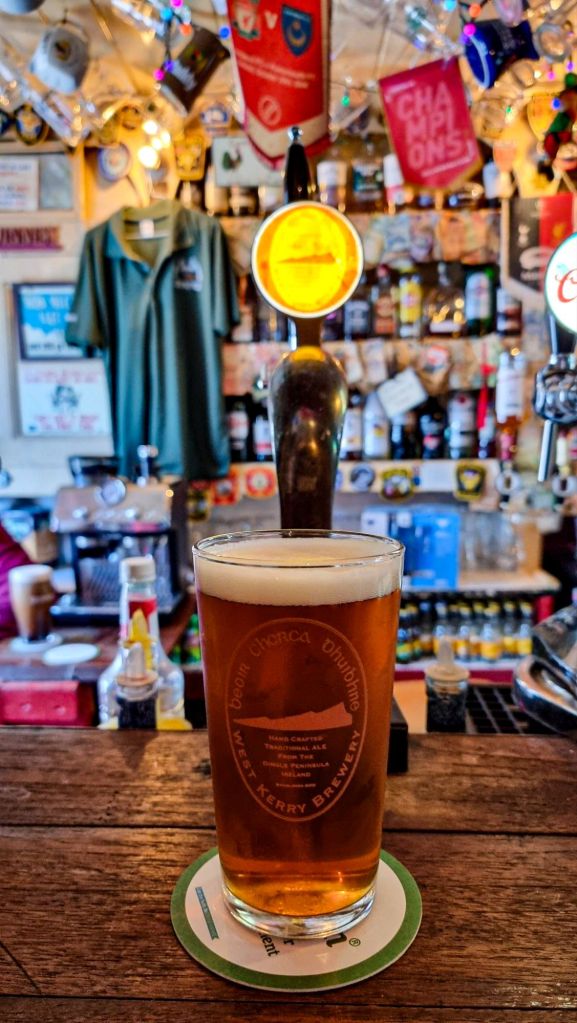
Back in Ballyferriter, I had my celebratory beer at the other pub in town, Tigh an t’Saorsaigh. It is a cozy pub with a cool little Insane Asylum seating area at the front of the pub for the diehard locals. They served up a blonde ale from the West Kerry Brewery just a few kilometers down the road. The pub also serves food but usually from 5pm. Make sure to check with the bartender since the opening of the kitchen was not always reliable when I stopped by.
Final Remarks
In the unlikely event any of the farmers along the route of the Three Sisters read this, I would like to give my heartfelt appreciation for the gift of passage over their lands. I did not leave any trace and only took with me superb memories. In my estimation, if there is one hike you should do when visiting Dingle, it is this one. However, just because I lived to tell the tale doesn’t mean you should just charge up the hill and do it. I would still consider stopping in one of the Ballyferriter pubs and ask the locals if the Demon Farmer of Sybil Head still haunts the tower. Most likely, they will give you their blessing and tell you they just did it themselves a couple weeks ago. Then at least you can do the hike carrying with you a well-stocked supply of good cheer and local hospitality, something there is no shortage of in Dingle. And when you do, say hello to Bill, Steve, and Frank for me. I am already missing those gals.



Excellent write-up. Thanks for all the LOL’s!
LikeLike