
On December 5, 1944, Corporal Richard Brookins was in Wiltz castle dressing up in a priest’s robe, bishop’s hat, and Bishop’s miter provided by the resident nuns of the castle convent. For he and the rest of his comrades of the 28th Infantry Division stationed in the war-torn city of Wiltz, Luxembourg, the horrors of the Hürtgen Forest were behind them. Most had expected to be home by Christmas, but those hopes had died in the blood-soaked soil of the Hürtgen. Lining the streets of Wiltz, hundreds of women and children waited anxiously, allowing themselves a fragile moment of hope; most of the men had been executed, taken away to camps, or conscripted forcefully into the German Army. A nervous murmur transformed into an eruption of cheers as a jeep carrying Brookins dressed as St. Nick drove through the streets. It was a festive day whose reverberations can still be felt today. Less than two weeks from this joyous moment, the residents would be forced to take to their cellars as Wiltz would again come under German occupation during the Battle of the Bulge.
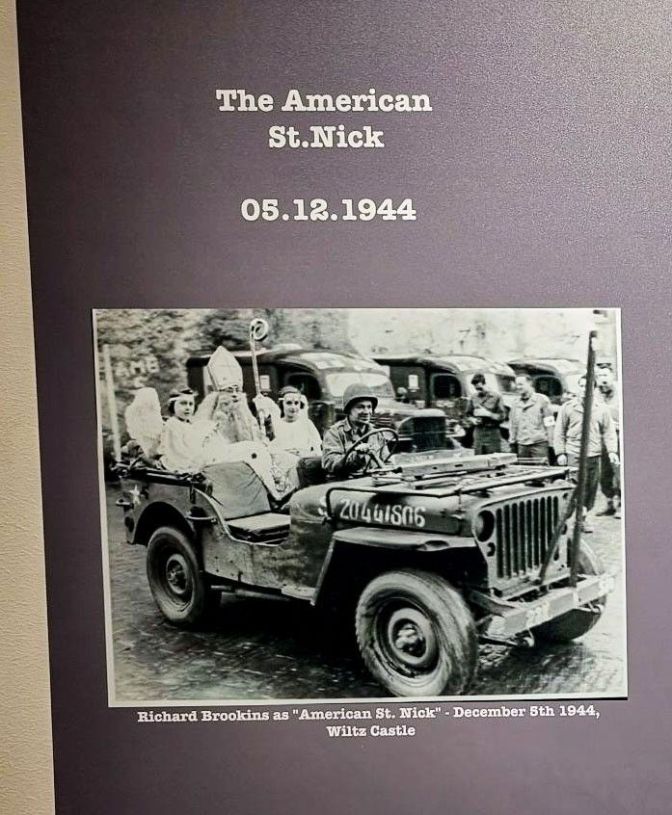
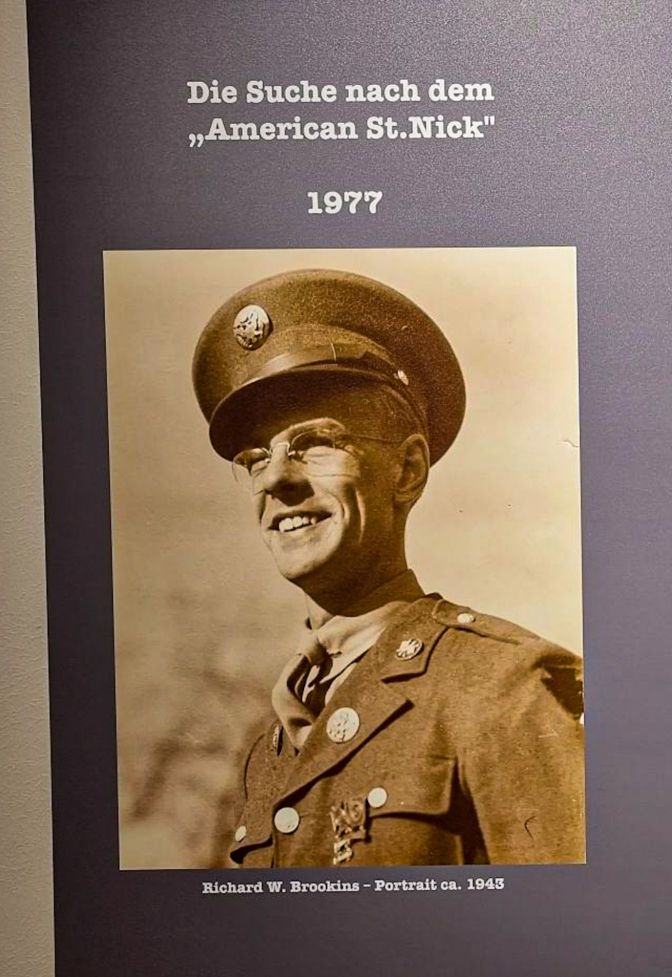
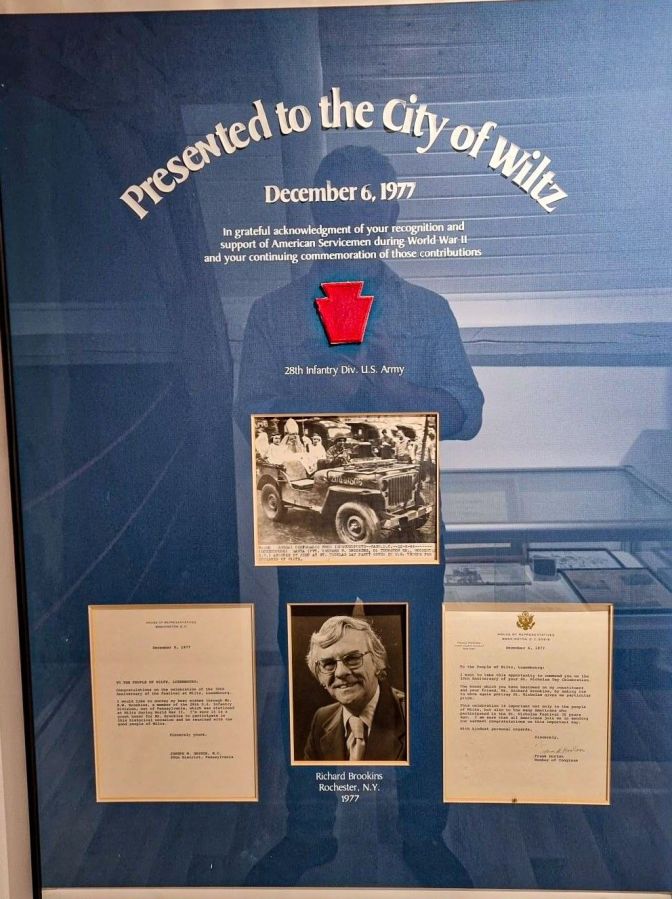
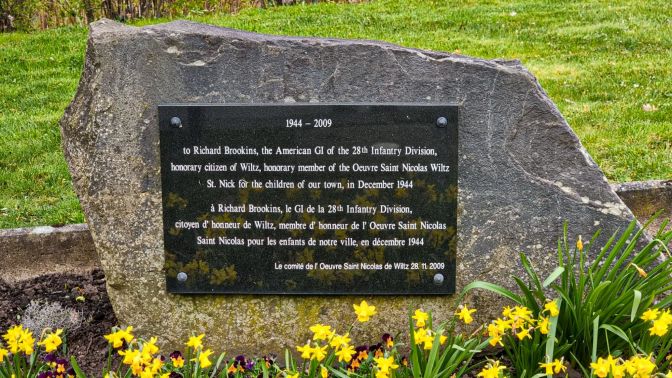
One of the great joys of my recent adventures has been repeatedly encountering a division of soldiers originating primarily from my birthplace in Pennsylvania. The stories of the 28th Infantry Division, nicknamed the Keystone Division after the keystone emblem on the Pennsylvania state flag, are written all over the villages of eastern Belgium, Luxembourg, and along the western frontier of Germany. In April 2026, I visited Wiltz which became one of the many towns referred to as the Alamo in the Ardennes; towns where the 28th had to make a desperate stand against overwhelming odds. These stands would almost purely be about survival, but in the process, they significantly slowed down the German advance, particularly towards Bastogne. Wiltz was the 28th’s Command Post and from December 16 to December 19, elements of the 28th defended it before finally having to evacuate, leaving what was left of the beleaguered residents of Wiltz, with the American St. Nick still fresh in their minds, at the mercy of the 5th Panzer Army.
From Wiltz, I planned a hike which would start from Wiltz Castle and head into the forest to the west where a network of trails commemorates the battles that took place there as the Americans counterattacked on their way to liberate Wiltz. This is the forest near Schumannseck, a vital crossroads with a link to Bastogne. To appreciate a hike in Wiltz, it helps to revisit the 28th’s story so far.
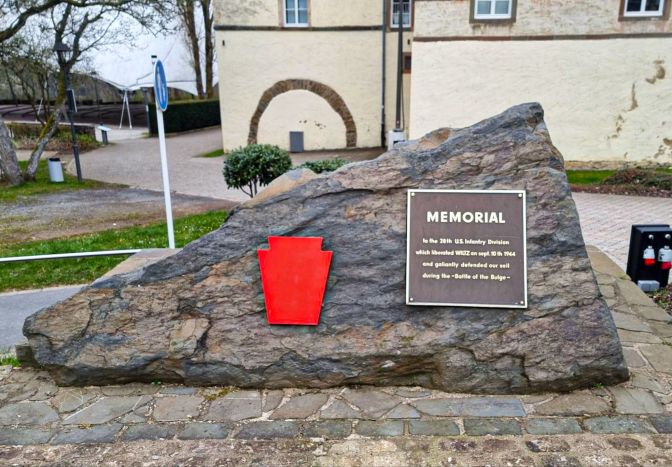
The US 28th Infantry Division before Wiltz
The 28th will never get the recognition of the famous Airborne divisions or other infantry divisions, such as the 1st Infantry (a.k.a. The Big Red One), but their plight is no less harrowing or heroic. They got off to a rather inconspicuous start, arriving to the shores of Normandy seven weeks after D-Day. Within a month, however, they found themselves thrust into the spotlight of the Liberation of Paris in August 1944. One can only imagine a collection of inexperienced 20-year olds going from that euphoria to what would come next.
Vossenack-Schmidt: A Battle of the Hürtgen Forest Hike
Part 2 of following in the tank tracks of my great uncle.
Continue reading Vossenack-Schmidt: A Battle of the Hürtgen Forest Hike

The 28th Infantry Division would go from the cheers of the Champs-Elysées to the nightmare of the Hürtgen Forest. In November 1944, they were ordered to take the town of Schmidt and ultimately the Schwammenauel Dam.
“The church in Hürtgen was used as a first-aid station. You could not count the number of Keystone Division helmets that were stacked up in the basement.”
The Bloody Forest by Gerald Astor (2000, Presidio Press)
The 28th suffered mightily during the battle and were sent to the Ghost Front in Belgium and Luxembourg for the war equivalent of R&R. Here, their recovery would come to a sudden halt on the morning of December 16, 1944. Some of the first to experience the German offensive were guarding the Our River in the neighborhood at the Belgian village of Ouren and the confluence of Belgium, Germany, and Luxembourg. The 28th Infantry, especially the 110th Regiment, continued to mount severe losses, but managed to frustrate the German advance towards Clervaux.
Beer & The Bulge: Ouren & Three Country Hike
What do Pennsylvania and the Our River Valley have in common?
Continue reading Beer & The Bulge: Ouren & Three Country Hike
The town of Clervaux was perhaps the most ‘official’ of the Ardennes Alamos, being coined this by Col. Hurley Fuller of the 28th Infantry 110th Regiment, who was stationed in Clervaux when the Germans attacked. He famously escaped out a 3rd floor window fire escape of his command station in the Hotel Claravallis and managed to evade the Germans briefly before getting captured a few days later. Most that managed to escape tried to head to Wiltz.
Beer & Hike: Clervaux & Brauerei Ourdaller
Beer and Battle of the Bulge, Luxembourg style
Continue reading Beer & Hike: Clervaux & Brauerei Ourdaller
Wiltz
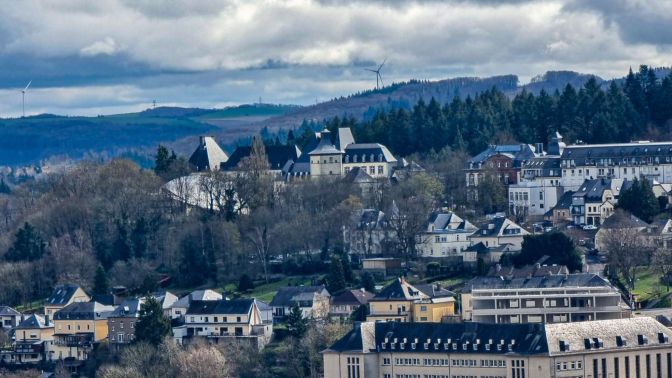
Wiltz is situated on a steep hillside along the banks of the winding Wolz River with its lower more industrial part along the river and the upper town capped by the Chateau Wiltz. Small cities in Luxembourg (referred to officially as communes) have a special character. From a distance, they give the impression of having an Old Europe character usually thanks to the presence of a chateau in the skyline. But up close, this impression will quickly fade. The general look of a Luxembourg commune is unremarkable, as if after World War II, they took a pragmatic approach to rebuilding; like getting up for work, washing your face, and deciding that was enough to get the job done. Wiltz is no different. Stand at the entrance to the castle and do a 360. That is as much of a time warp as you will get here. Combined with the fact that the pub culture here is perhaps as sterile as any country on Earth, and you may wonder what it is that keeps drawing me back to Luxembourg.
The feeling of isolation and uniqueness is a big part of it. I always feel far from the problems of the world here. And while the architecture is less attractive than other countries, I enjoy how it feels off-the-beaten path. It is not over-saturated by tourism. That gives it a charm difficult to quantify. The country also has beautiful scenery and is well-designed for hiking. And of course, it has a deep link to World War II.
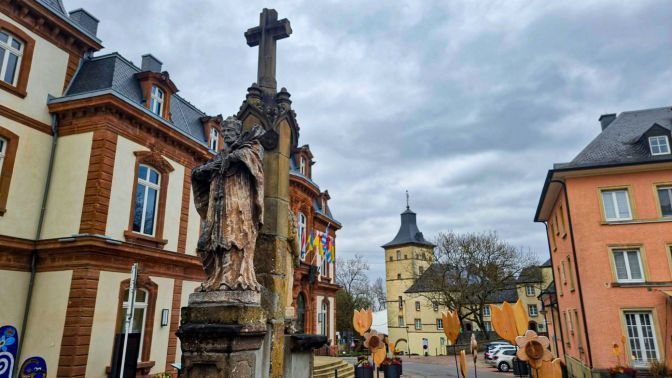
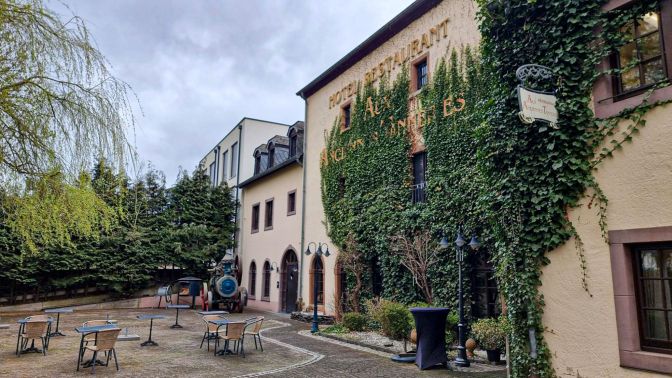
I stayed in the Hotel Restaurant Beim Schlass which puts you right in that one sweet spot of Wiltz next to the castle. I didn’t eat at the restaurant, preferring to explore the commune. Don’t expect a plethora of restaurant choices, but I can highly recommend Aux Tanneries de Wiltz along the river. There was one Portugeuse eatery near the hotel (a fair portion of the population of Wiltz seems to be Portugeuse) which looked interesting, but passing by there always felt like interrupting a family gathering.
Aux Tanneries de Wiltz
Wiltz was at one time known for its leather tanneries and this excellent restaurant is located in what was once one of them.
Hike Details
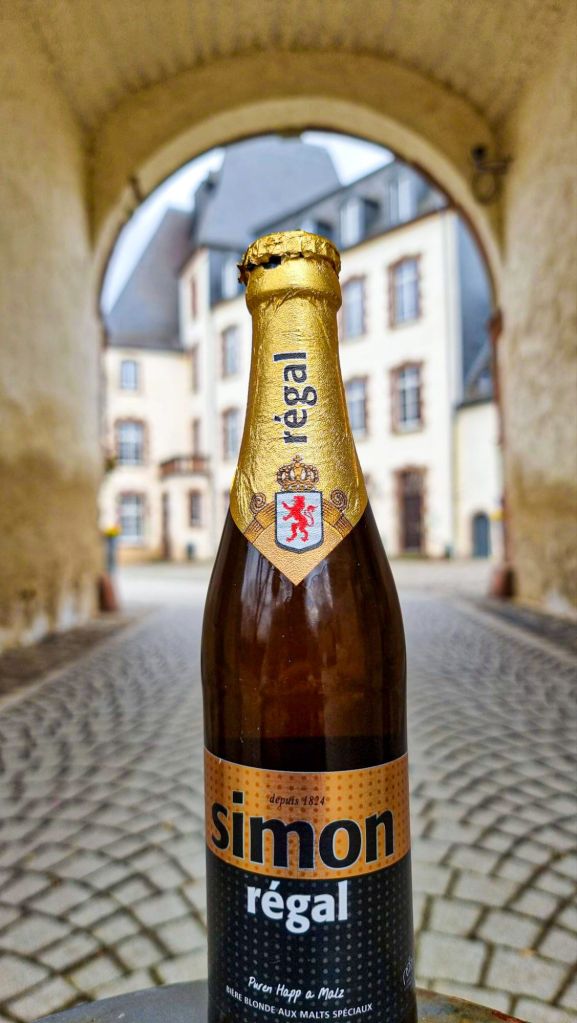
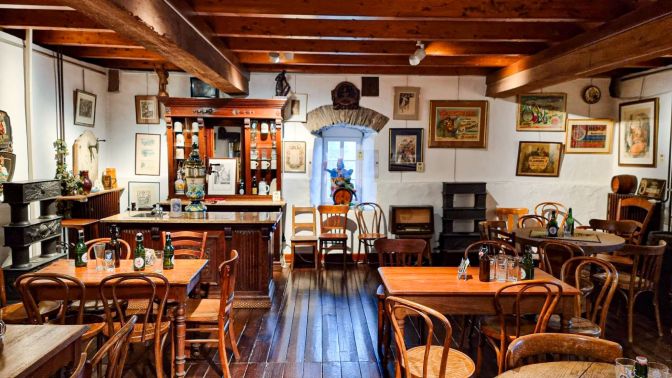
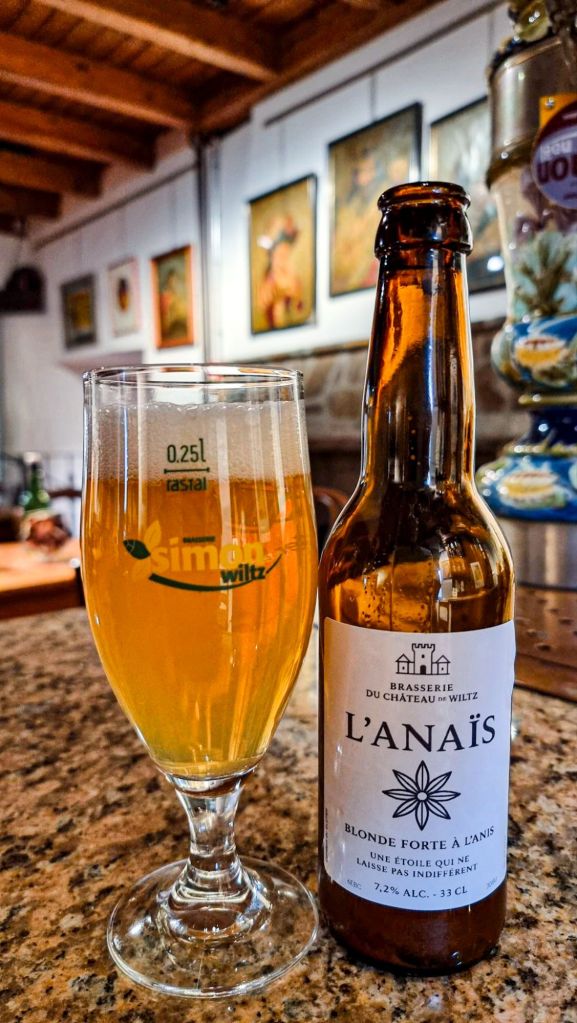
The beer highlight of this hike is the Chateau Wiltz itself which houses its own microbrewery and museum full of artifacts covering the history of beer brewing in Luxembourg. It is not a pub, so it is necessary to buy an entrance ticket to the museum in order to drink the beer.
It’s Not Just a Beer, It’s a Journey
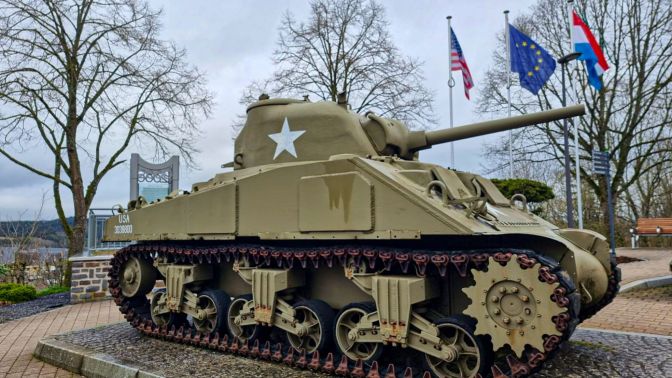
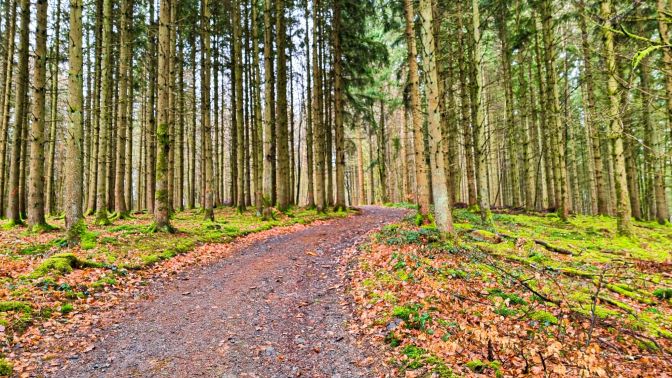
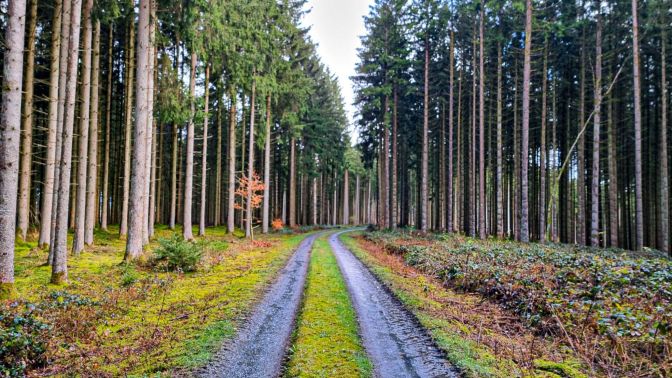
The hike starts from the chateau courtyard and takes a brief detour to a Sherman tank overlooking the city before heading off towards Schumannseck. It was early April so the trees were still bare.
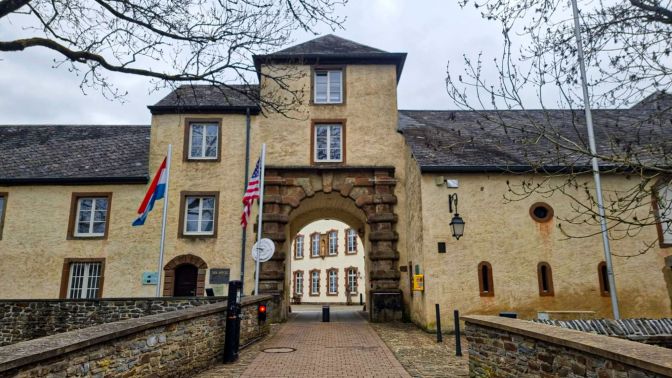
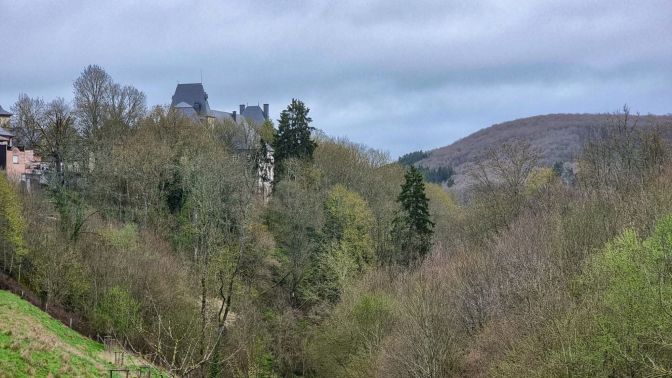
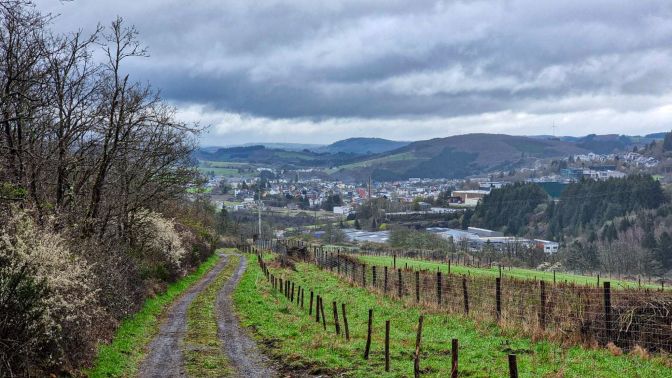
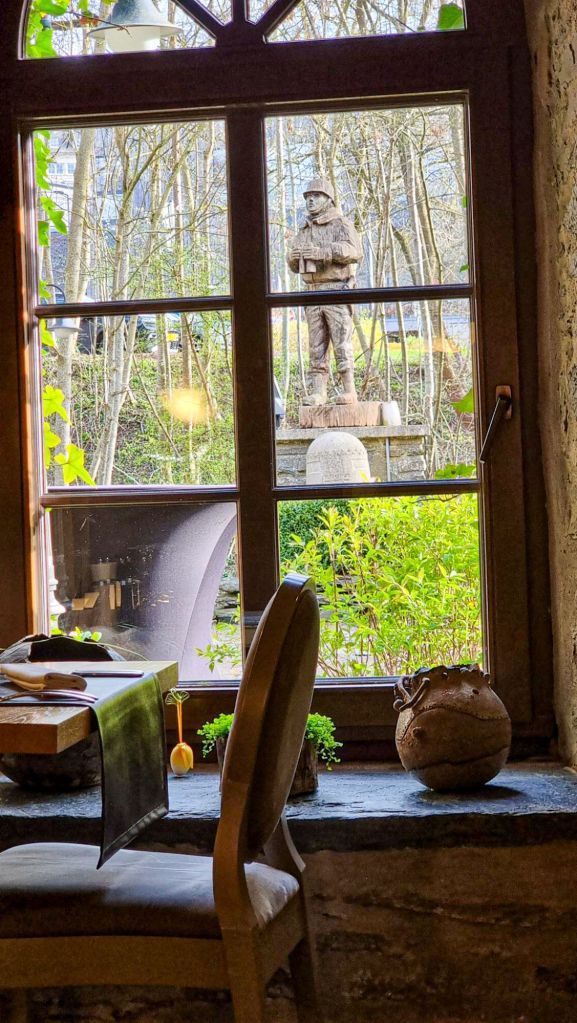
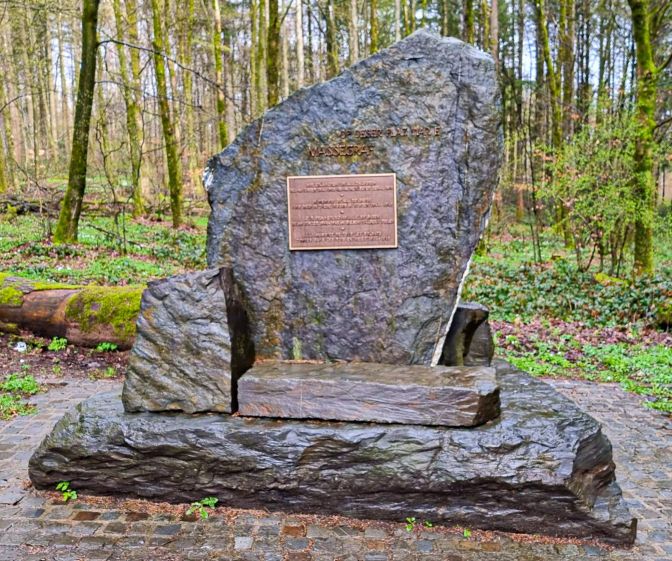
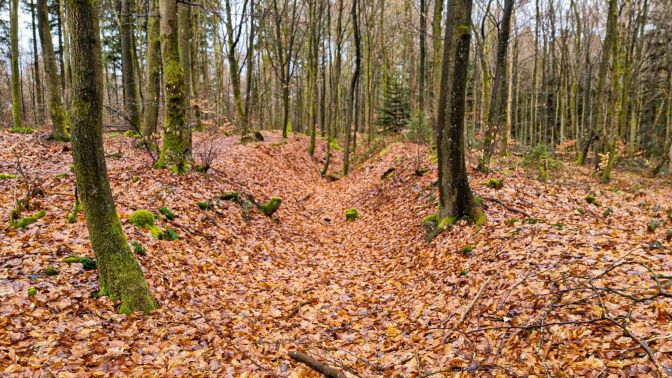
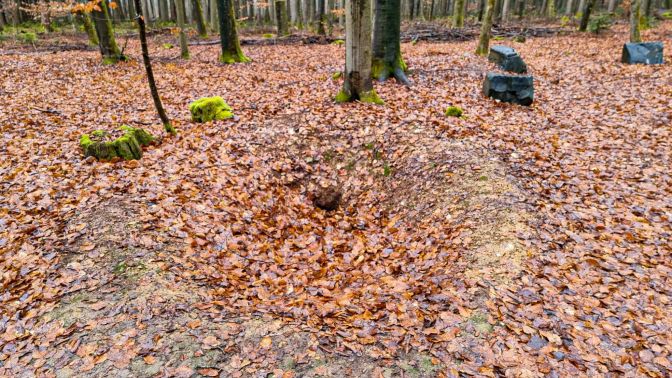
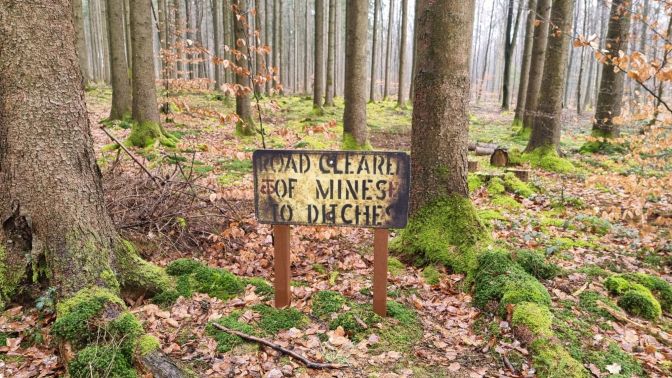
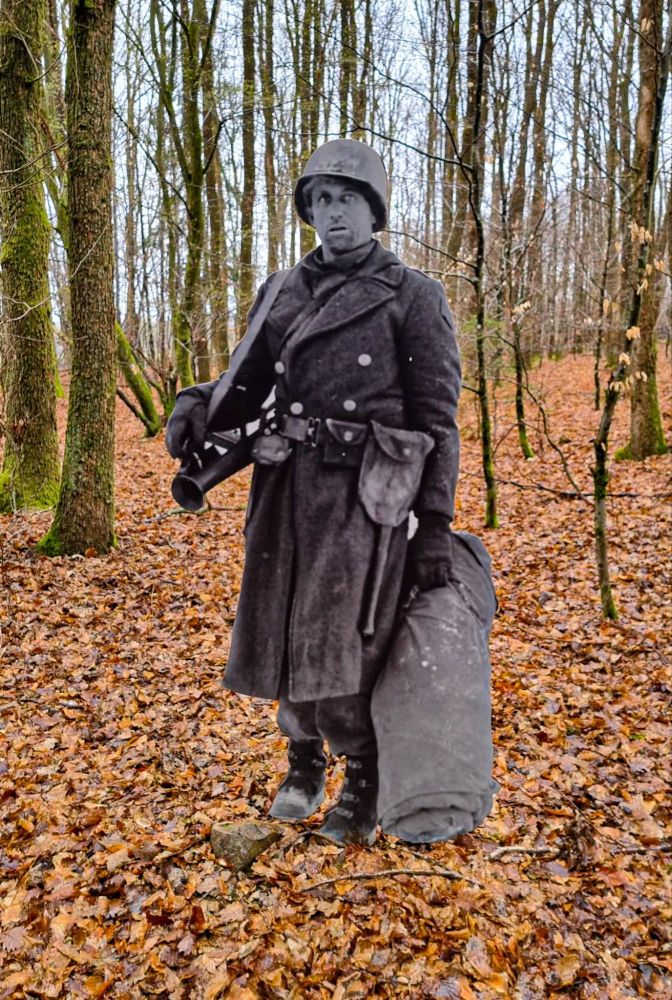
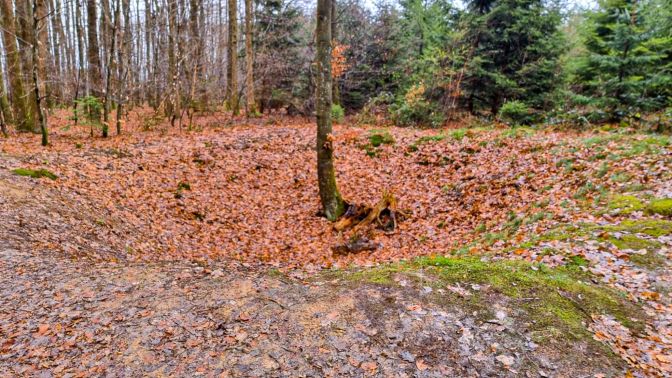
The entrance to the Trail of Remembrance at Schumannseck is the memorial to the mass grave where approximately 160 bodies of German and American soldiers had been buried. All over this forest are remnants of bomb craters and foxholes. Images of soldiers and information panels are placed around the trail to give some impression of what it would have been like during that frigid winter.
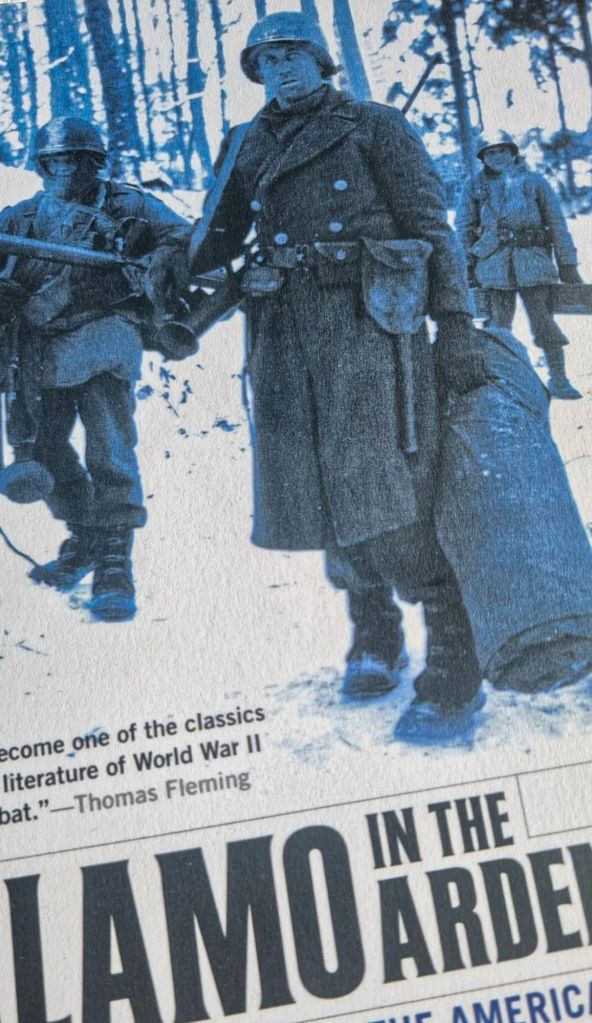
One of the soldier images caught my attention. It was the same image on the cover of the book I was reading, Alamo in the Ardennes. Unfortunately, the book only mentions that the image comes from the National Archives and not the name of this soldier. Attempts to find it so far have come up empty.
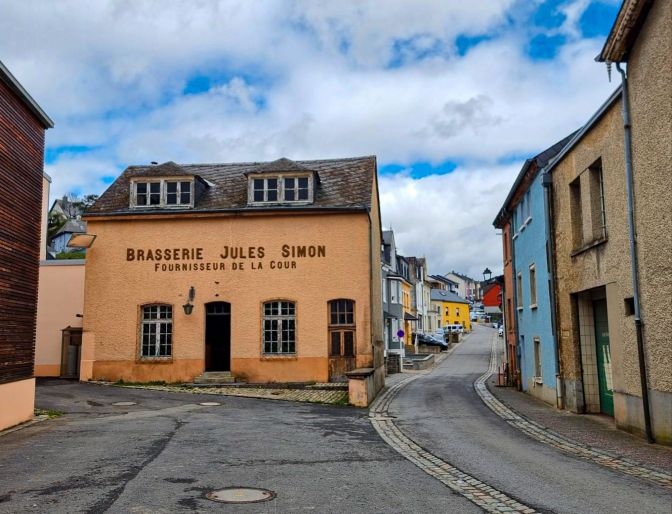
Brasserie Simon
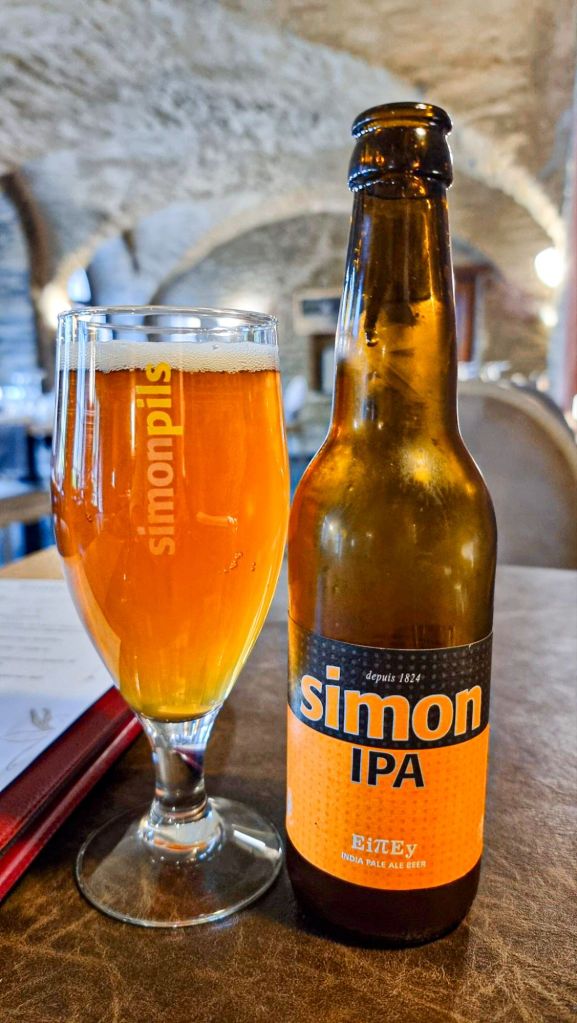
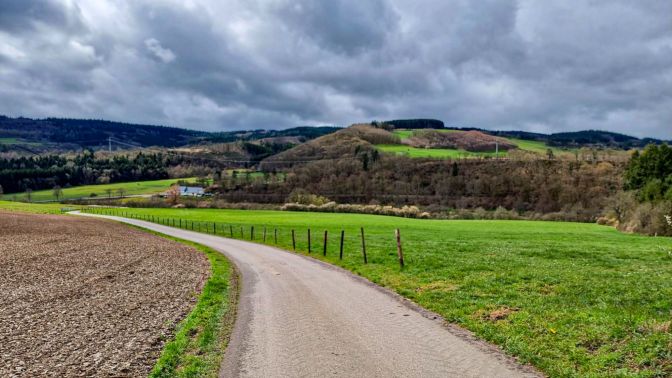
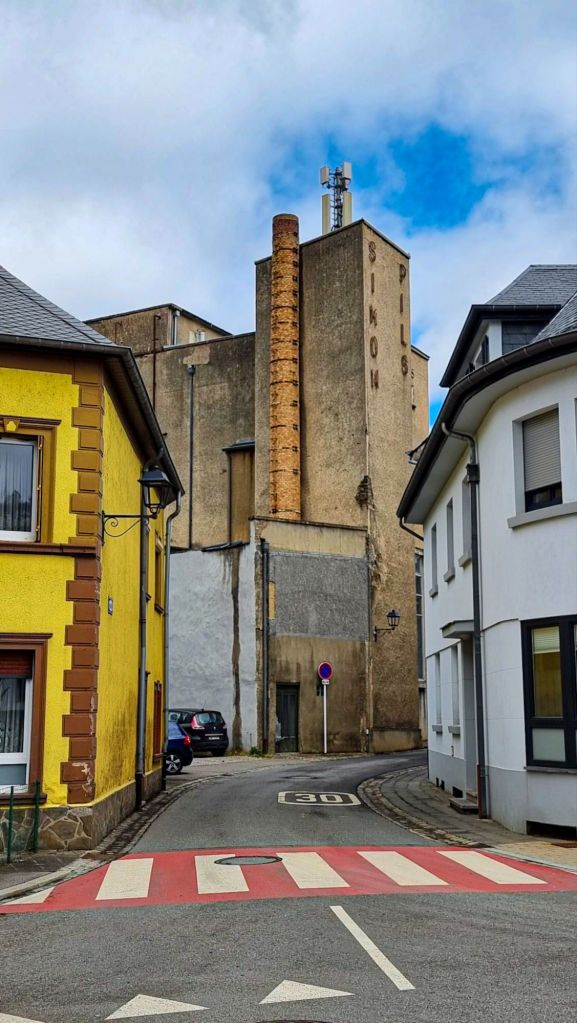
Arriving back to Wiltz on the west side of the Wolz River brings you to the Brasserie Simon brewery. There is a very nice pub/tasting room, but it seems only to be open during the week and not on the weekend..
Brasserie du Chateau de Wiltz
Back at the chateau, it was time to wrap up the hike with a beer from the microbrewery and a tour of the museum. It is an impressive museum with several artifacts sharing the legacy of the 28th Infantry Division and the lasting impression their efforts made on the commune.
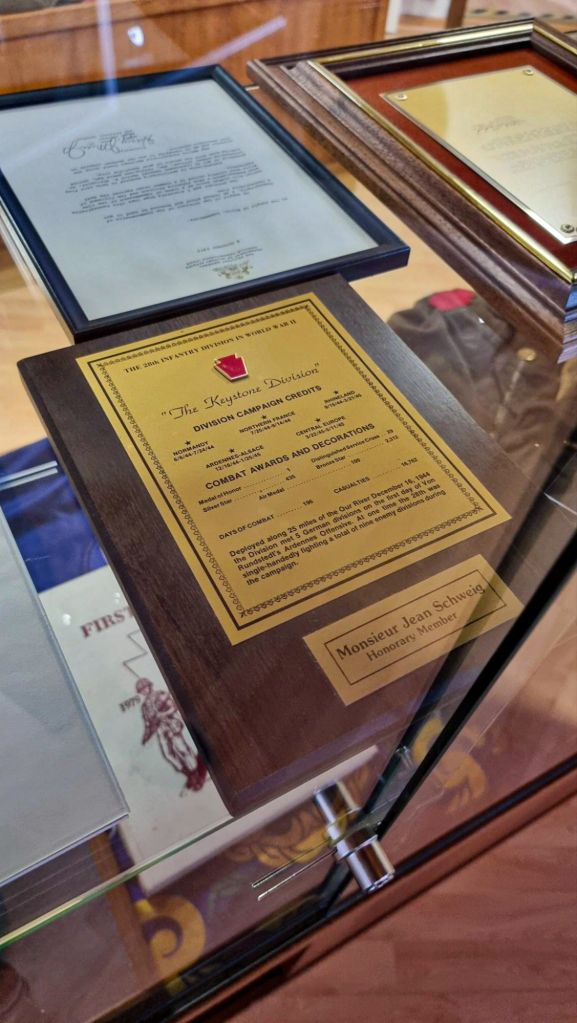
Final Remarks
One doesn’t have to imagine too hard the devastation Wiltz suffered during World War II to earn the nickname the Cité Martyre. Liberation finally came on January 21, 1945 but not without a cost. To drive the Germans out, American bombers destroyed or severely damaged about a third of the houses which were still standing at that point. Roughly 2000 citizens had been hiding in their basements during the five weeks that the Battle of the Bulge raged on here1. Meanwhile, it was the 26th Infantry (and other elements) which arrived to liberate and secure Wiltz. By then the 28th had regrouped and moved south to the Colmar region of France. Today the quiet commune has a population of roughly 8500. In one tiny corner of it, the name Eisenhower is given to the square. Here, the legend of the American St. Nick lives on and the emblem of my home state proudly gives Pennsylvania some notoriety in Europe other than being where Philadelphia is, which people here only know because of Rocky and from the name of a certain sitcom.

- The Unknown Dead by Peter Schrijvers (2005, The University Press of Kentucky) ↩︎


