
“Je suis en ce moment dans les vieilles villes les plus jolies, les plus honnêtes et les plus inconnues du monde.”
— I am currently surrounded by the most beautiful, honest, yet unknown old towns in the world.
Le Rhin by Victor Hugo (1840)
The Romantic Rhine is no stranger to this blog. The stretch of river between Koblenz and Rüdesheim in Germany is a nautical boulevard of Old Europe studded with castles and steeped in legends. I have spent one of my favorite days there riding the majority of its 65km length by bike, and over the years, it has lured me several times to its banks like the call of the Lorelei.
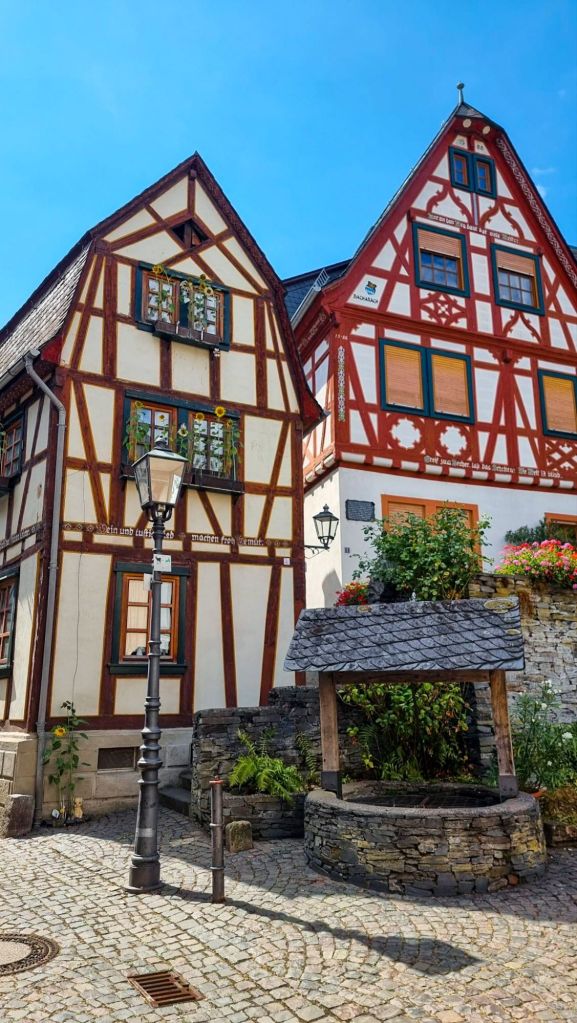
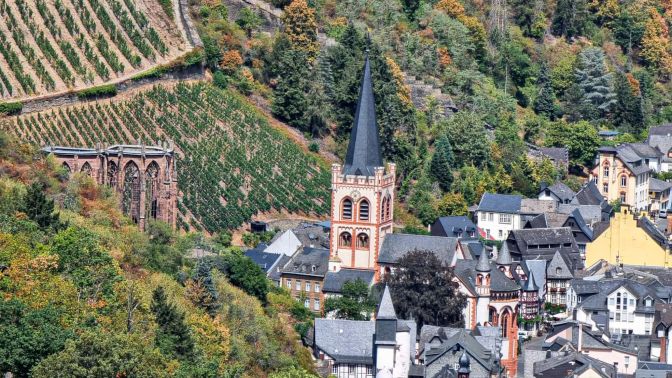
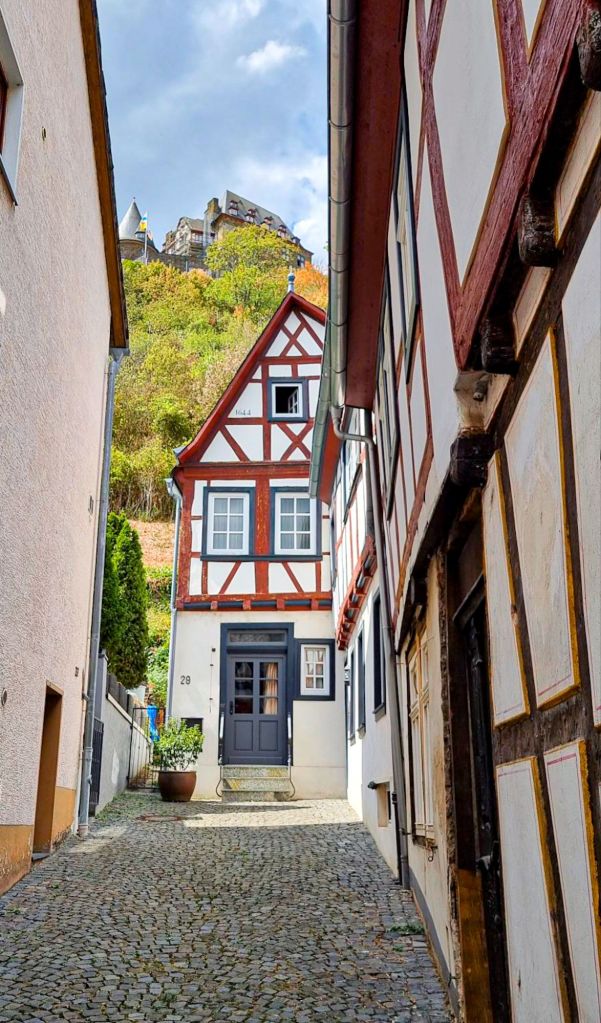
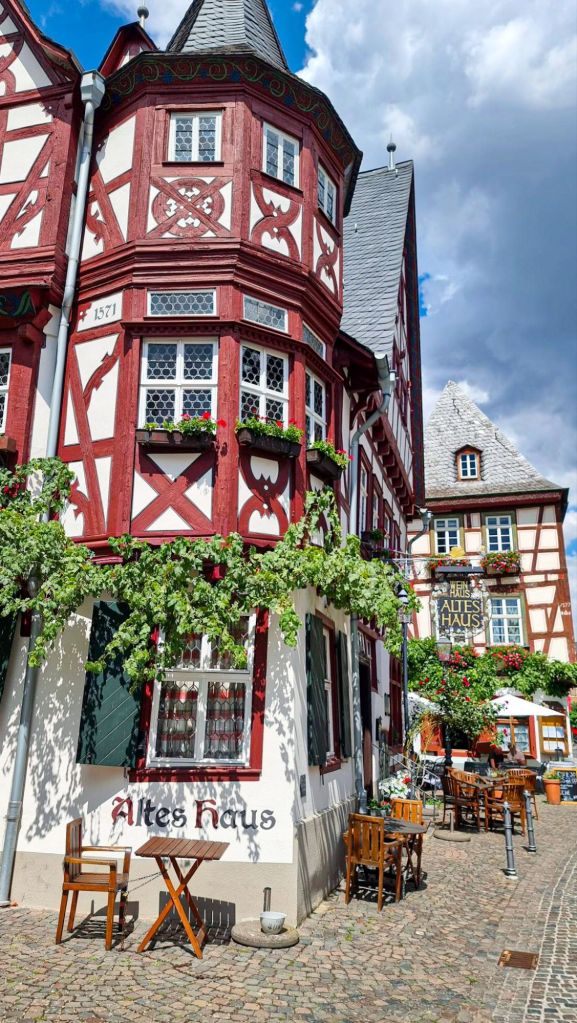
The region inspired two blog posts written several years ago before you-know-what happened. Featured in both of those blog posts is the town of Bacharach, a place of half-timber beauty and whimsically-leaning façades. When it comes to a place like Bacharach, it doesn’t matter whether you write about it in 2019 or 1819. The enchantment of Bacharach is not a modern phenomenon. 184 years ago, Victor Hugo referred to Bacharach as Ce vieux bourg-fée, où fourmillent les contes et les légendes1 or This old town out of a faery tale. Hugo’s description of Bacharach could still be applied today. “The shadows of the turrets and weathervanes sketch out a thousand bizarre, angular shapes. Flowers — there are flowers everywhere.“2
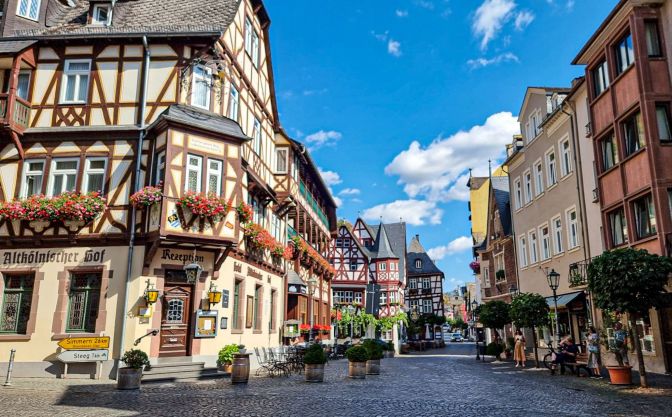
Some things have changed, though, since Hugo’s day. In Bacharach, a visitor is no longer un phénomène. Bacharach is a bonafide tourist town. It’s charms are no longer exclusive to world renowned authors. You also won’t find it patrolled by Prussian sergeants or populated by “ugly women with goitre”.
Besides it’s enshrinement in the mystique and appeal of the Romantic Rhine, what makes Bacharach particularly special to me is that it has something you won’t find anywhere else between Koblenz and Rüdesheim, a brewery.
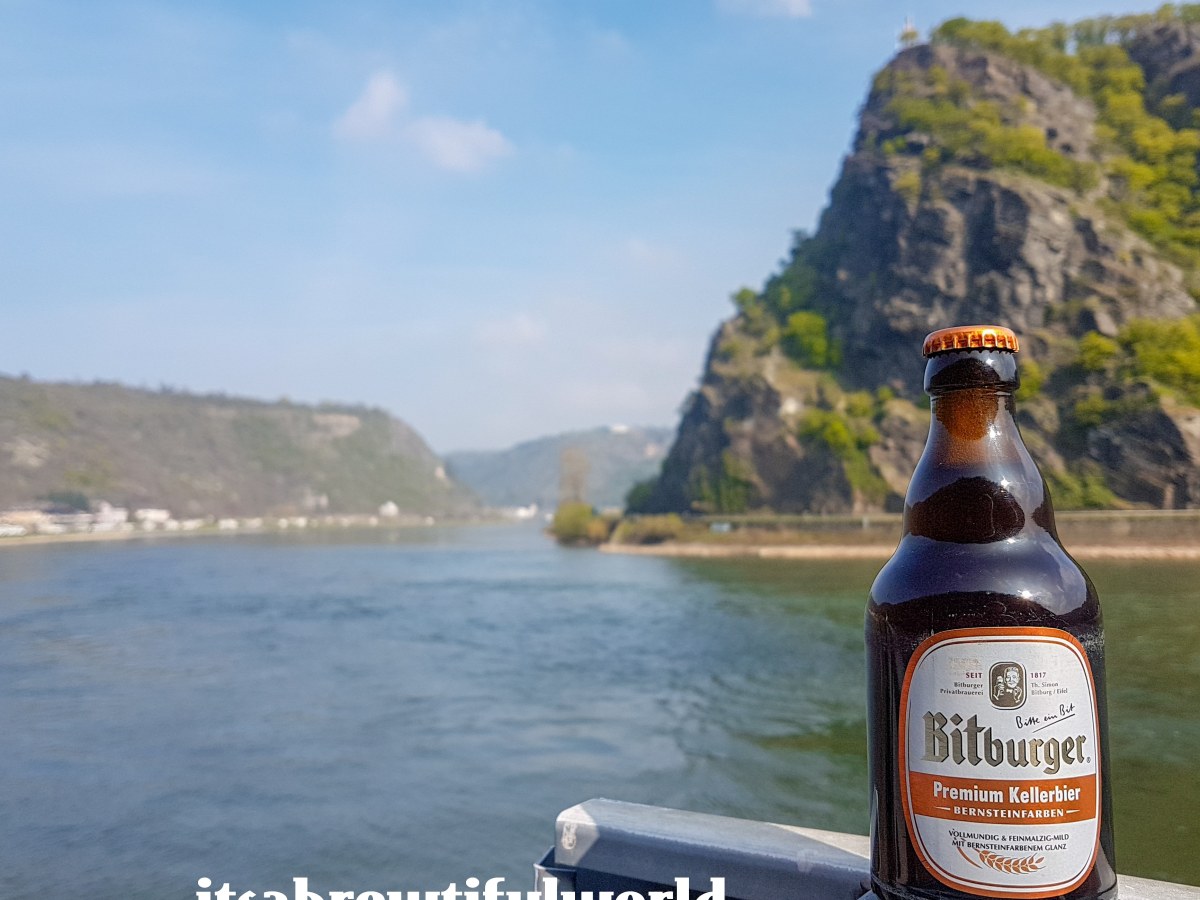
Beer & Bike: Romantic Rhine
Biking the Romantic Rhine, fulfilling a dream, and indulging in regional myths with a couple classic travel writers.
Continue reading Beer & Bike: Romantic Rhine

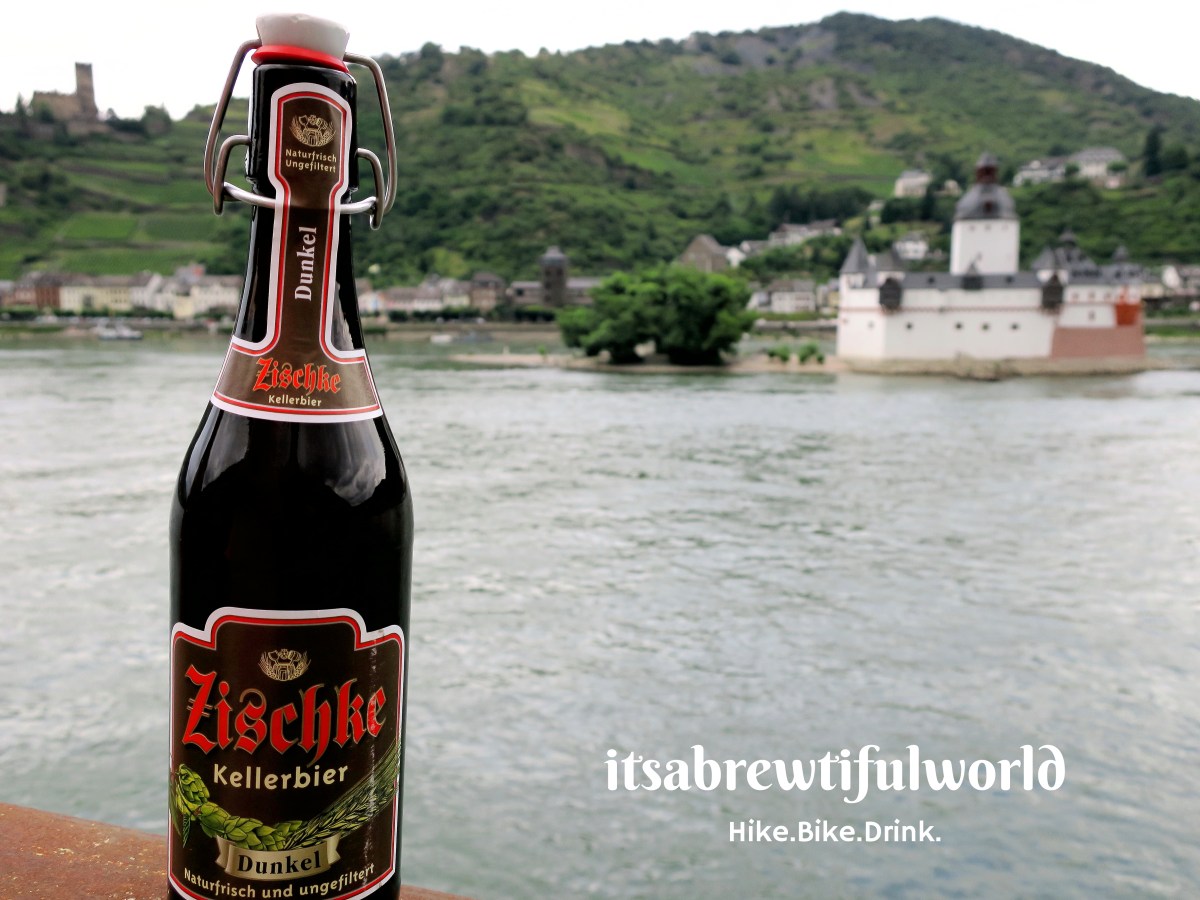
Romantic Rhine and the Most Surreal Beer Festival Ever
One of Germany’s beautiful wine regions, but it was a beer festival which gave me the fondest memory.
Continue reading Romantic Rhine and the Most Surreal Beer Festival Ever
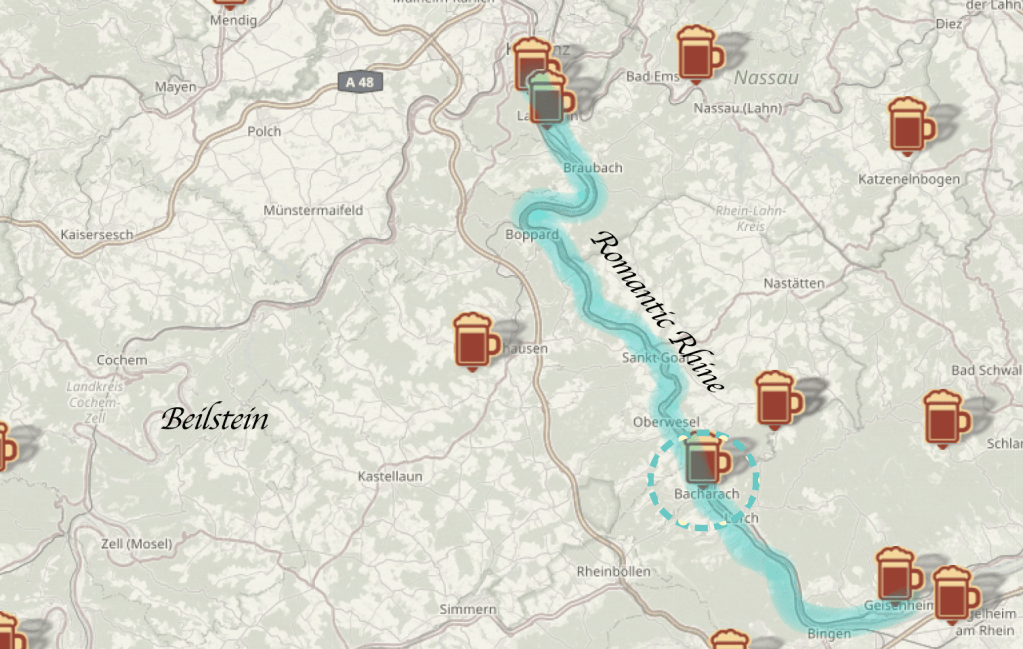
Like the Mosel River part of Germany, the Romantic Rhine is wine country. While staying in Beilstein along the Mosel during the summer of 2026, I decided to take a break from the Reisling and get re-acquainted with Bacharach for a Beer & Hike change of pace. The hike would be my first along the Romantic Rhine and would show a different side to this picturesque region. I would follow parts of the Eselspfad or Donkey Path which traverses the forest above Bacharach. These paths were used long ago to haul wine barrels by donkey carts, and today much of them seem little used, even for hiking; in some places overgrown. Just a short walk from the center of Bacharach, these woods almost feel forgotten.
Hike Details
Bacharach offers convenient parking along the riverfront, but the pay machines did not accept non-German cards. I received no fine, so either I was lucky or I happened to park on a free day.
It’s Not Just a Beer, It’s a Journey
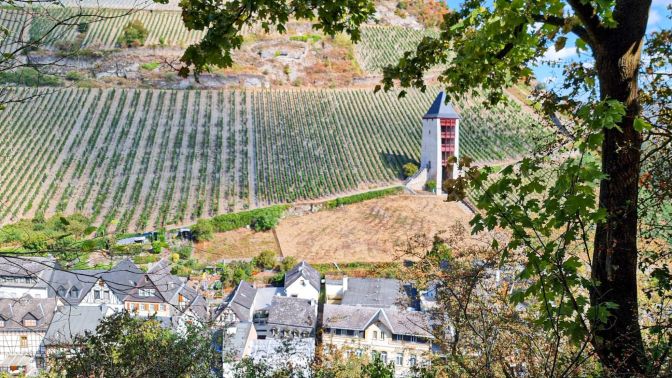
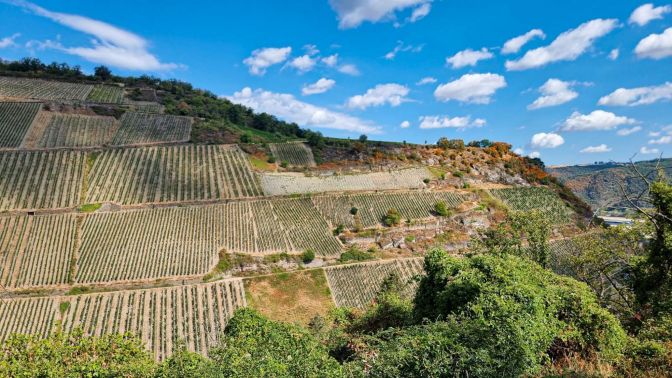
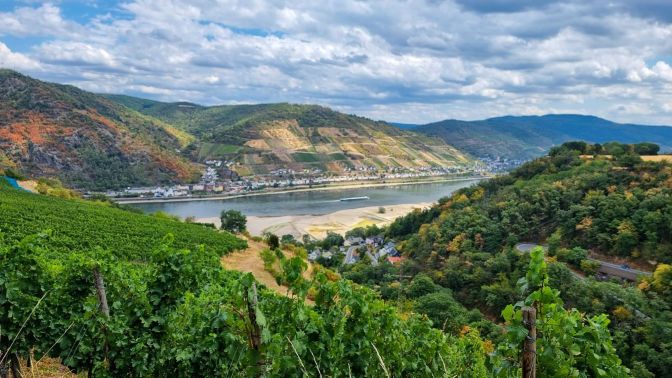
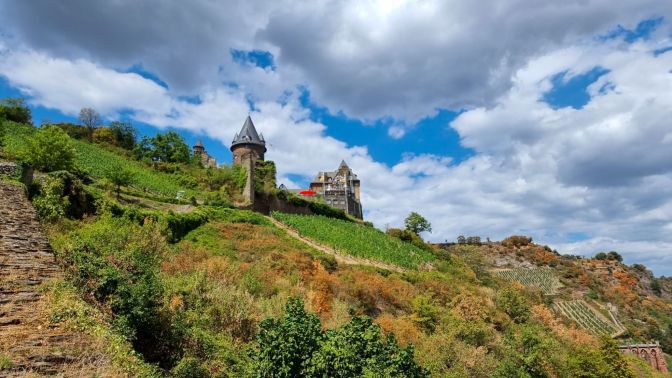
One of the great things about visiting both the Mosel and Rhine wine regions is that they are not carbon copies of each other. Each gives its own version of rugged scenery and picturesque vineyards. The ones on the slopes of Bacharach demonstrate a remarkable precision which I don’t recall along the Mosel. Even the earth seems a different color.
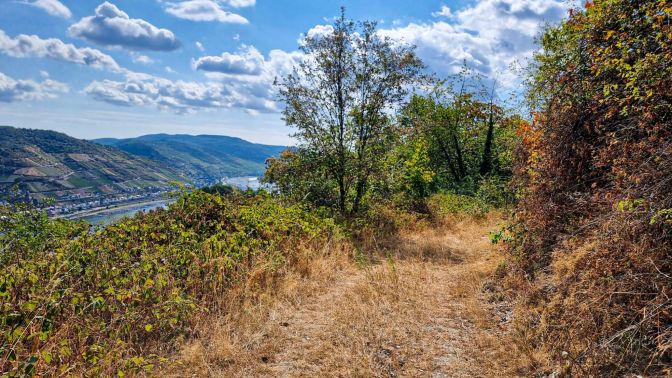
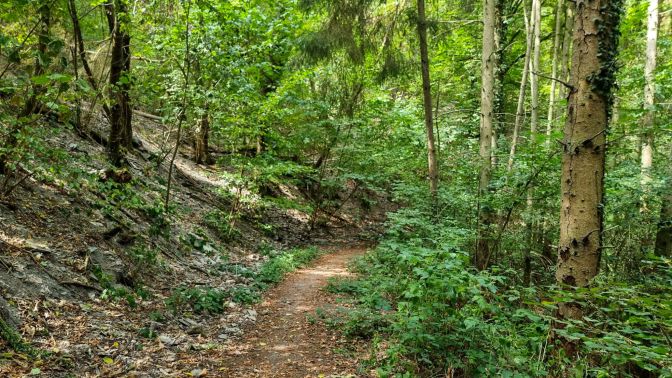
The Eselspfad is a little rough around the edges. While it is marked with signposts along the way to establish it as an authentic hiking trail, it appears neglected. This detracts somewhat from the aesthetics but enhances the feeling of adventure. I passed no one during the entire hike until near the end. Be careful using Komoot as some of the paths which seem more direct are overgrown and impassable. Also, Komoot’s feature of indicating peaks led me on an obsessive compulsive bushwhack. If you follow in my footsteps, you’ll bag two of them.
The first peak is Kühlberg. It is a bit prickly getting there and there is nothing to see, but it goes gleefully into my Komoot statistics.
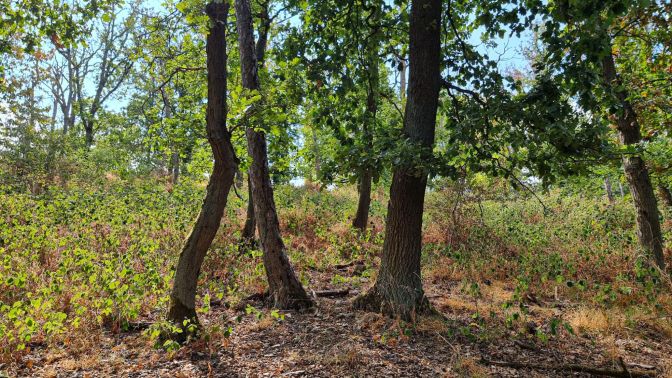
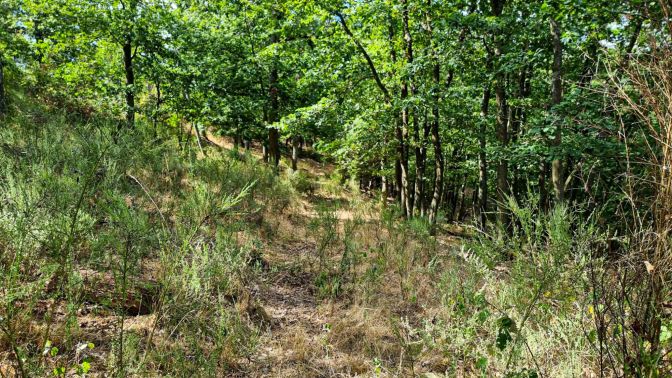
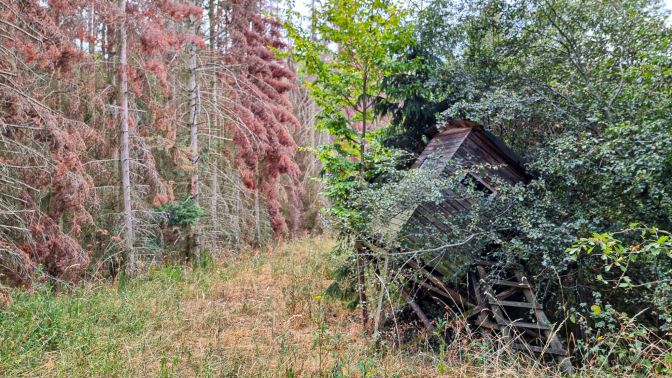
One example of the feeling of being on a trail which time forgot is this remote corner of the Eselspfad where a hunting blind is being swallowed up by nature like something out of a folk horror.
The second peak is called Rabenkopf or Raven’s Head. It is essentially a pimple at the top of a massive field of hay.
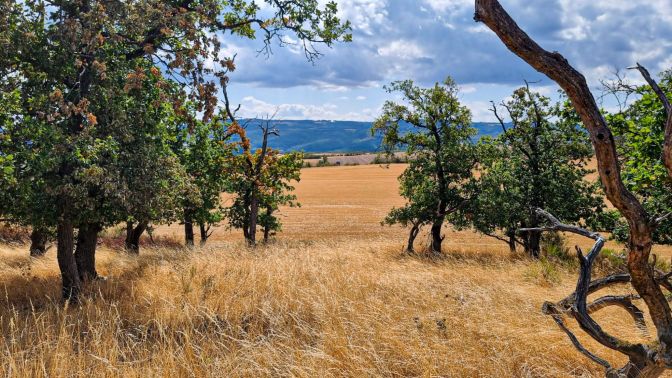
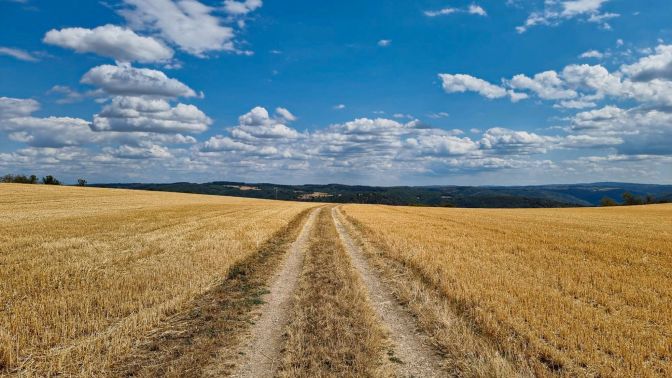
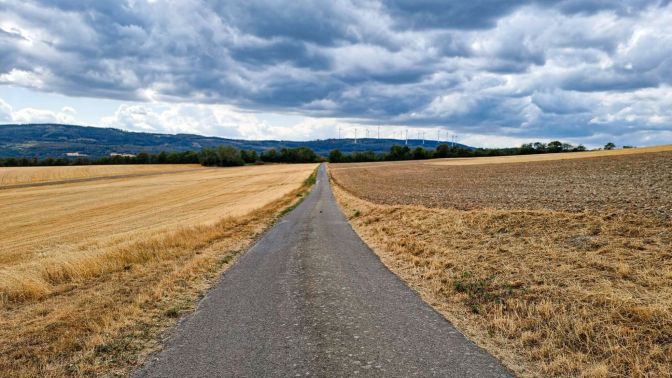
The upper part of the hike follows the plateau before heading back in the direction of Bacharach.
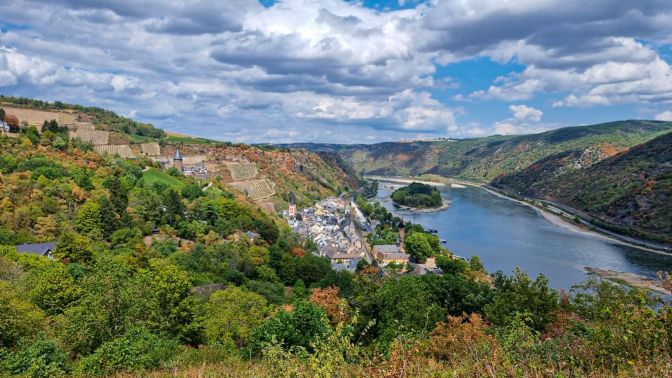
The return hike follows a more commonly used scenic path called the Rheinsteig.
“Perhaps the greatest charm of the Rhine is in the notable variety and changes of the scenery along its banks.”
The Banks of the Rhine by F. Williamson (1894)
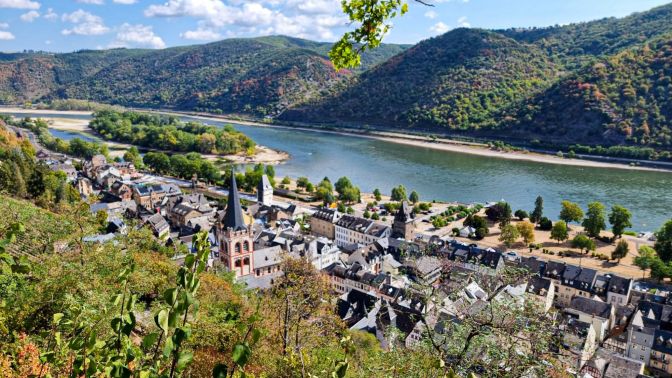
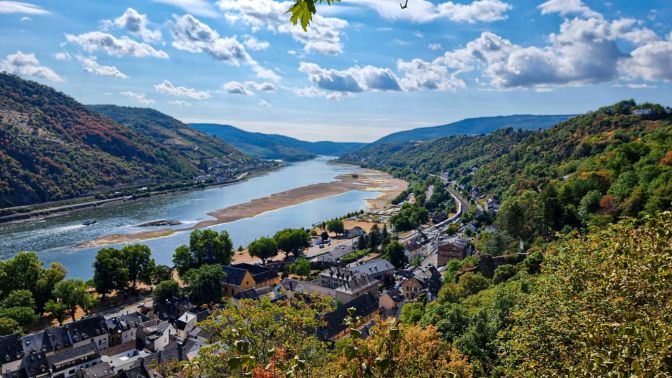
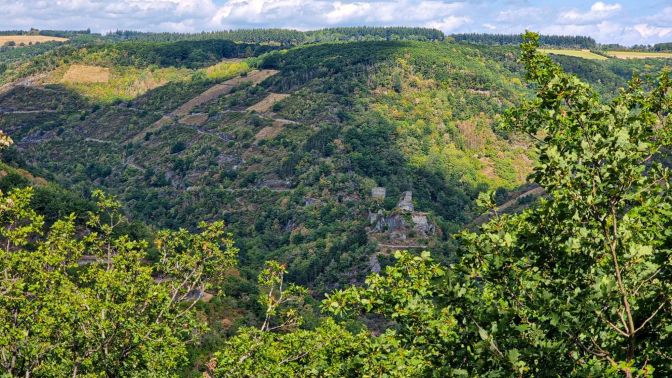
The way back provides some excellent views of the Rhine landscape. During this visit, the hills along the Rhine, despite the hot dry summer, were still showing a lush tapestry of colors, unlike the sun-bleached hills along the Mosel.
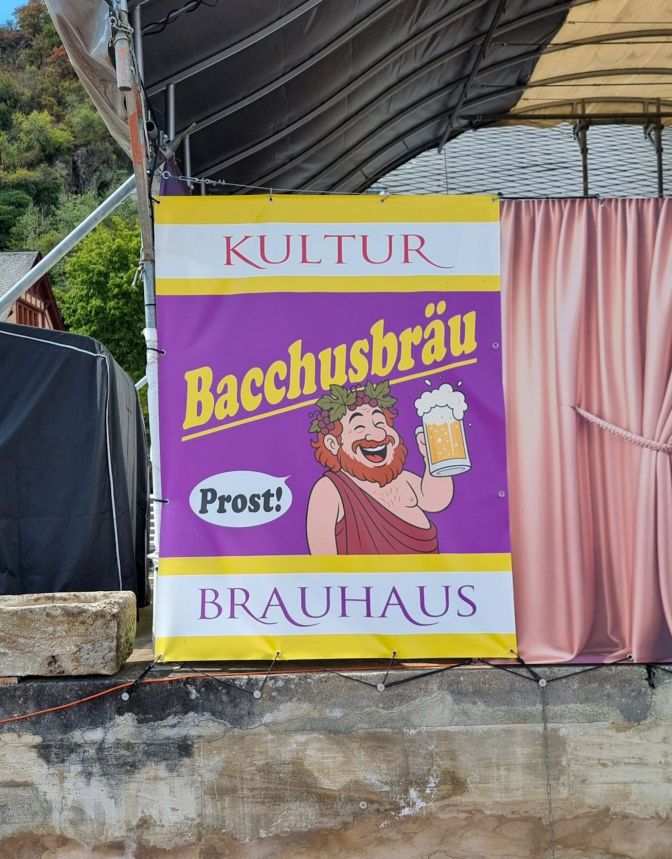
Bacchusbräu
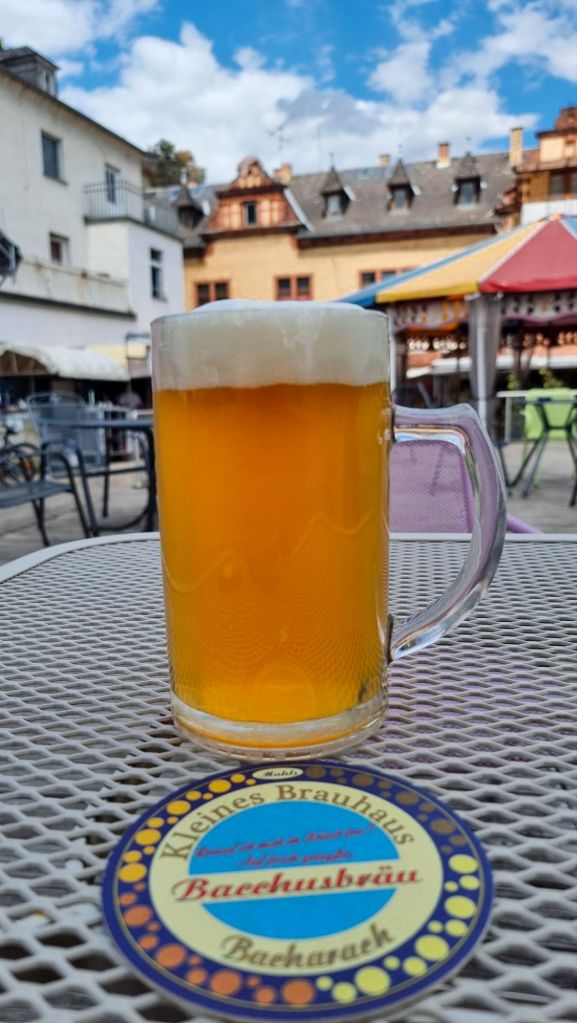
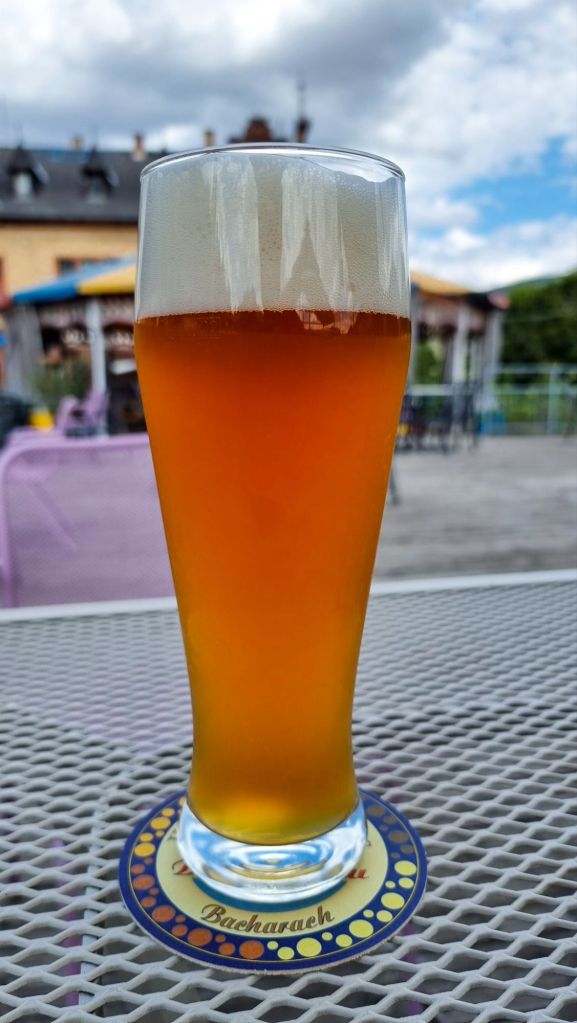
Bacchusbräu is a craft brewery which shares space with the Rheintheater. The biergarten has a carousel-like tent space and large open area which on this day was perfect for a late lunch and a couple of beers. I had the Loreley pilsner and the Bacchusweizen. I rated the hefeweizen much higher, but both were a satisfying reward and diversion from the local Reislings. Here’s hoping Bacchusbräu remains a beacon for beer lovers for years to come.
Final Remarks
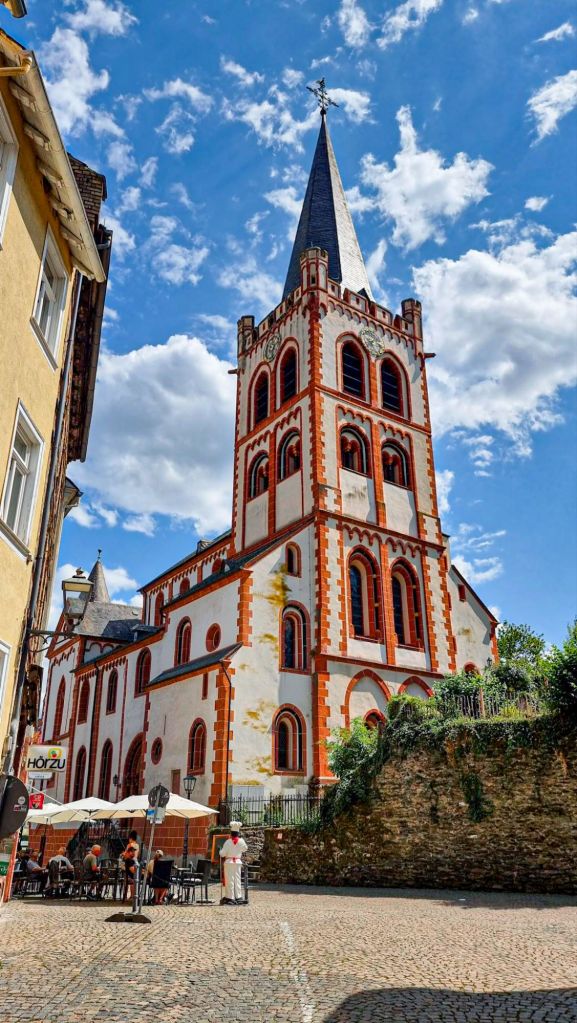
Despite visiting many times, the Romantic Rhine remains somewhat mysterious to me, like a collection of random memories. Everywhere you look, there is something interesting to see, a castle peeking out of the trees, a castle sitting in the middle of the river, a ruin of a city fortification, a colorful church tower, a half-timber village square, a rugged cliff, a dramatic bend in the river. It is a place that can be tempting to consume quickly; to scroll through it like your Instagram feed. This can leave you with a lot of visuals but lacking a true foothold in the real soul of a place. Re-reading my previous blogs, I feel like I was once starting to have a deep connection with it, what I like to call a home away from home. Something has shrouded it, perhaps the Lorelei hardened by my long absence. There is something still there silently waiting in the trees, in the shadows of its towers, or behind the curtain of a flower-boxed window. I can’t put my finger on it, but this was a great hike to take the next step on my journey to find it.



I briefly spent time in Bacharach but didn’t get to hike. Thanks for bringing back fond memories for me as well as showing some of the surrounding area!
LikeLiked by 1 person
Thank you, Diana! Most of my visits were also very brief. It is not a place you go to hike judging from the condition of the trails, but it is a place that should inspire a longer stay one of these days. Happy travels!
LikeLiked by 1 person