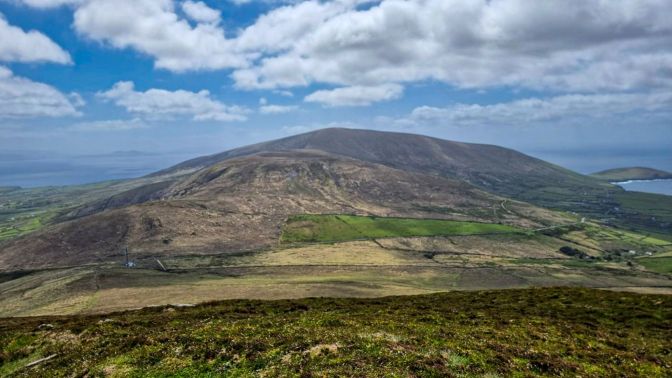
Rising above the southwestern tip of the Dingle Peninsula is the bald dome of Sliabh an Iolair or Mountain of the Eagle. Wherever you are along the coastal route in this part of Dingle, Mount Eagle seems to be there guarding your back, supported from the north by its pointy-headed sidekick, Croaghmarhin (which means the Peak of someone named Mharthain). Together they dominate the interior landscape west of Mount Brandon. According to Professor Wikipedia, Mount Eagle was the first European landmark noted by Charles Lindburgh on his 1927 intercontinental flight (which interestingly is referencing a Rick Steves guide as the source of this tidbit. Good ol’ Rick Steves.).
While the hike is titled Mount Eagle & Croaghmarhin, it is essentially three hikes rolled into one:
- Hike up Mount Eagle from the designated parking area on Mám Clasach road.
- Croaghmarhin circuit hike from Kruger’s Bar
- Coastal hike from Clogher Head to Kruger’s Bar and back
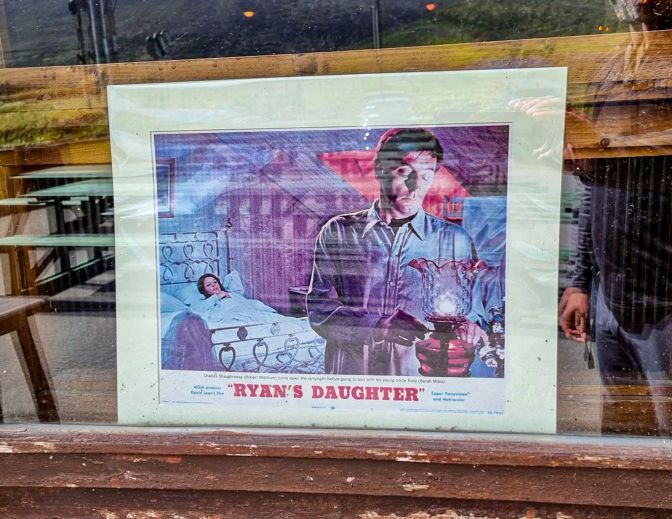
Any one of the three is recommended, but the sum total of them made for an epic day hike with Kruger’s Bar being a crucial refreshment stop along the way. For extra cultural enhancement, it is recommended to watch the classic movie Ryan’s Daughter, preferably immediately after. It is not a movie that will be memorable for its acting or plot (it was quite universally panned when it was released), but as with any David Lean movie, it looks stunning and visually holds up very well. The movie sweeps you into early 20th century Ireland post World War I with a realistic bleakness, sense of rural poverty, and atmosphere of political turmoil. And much of it was filmed in the vicinity of this hike. If you watch the movie afterward, you will enjoy recognizing so many of the beautiful natural landmarks along the hike. And like it did for me, it may reveal the origins of some interesting feature you saw along the way.
Hike Details
| Starting Point | Clogher Head parking area |
| Beer Highlights | Kruger’s Bar |
It’s Not Just a Beer, It’s a Journey
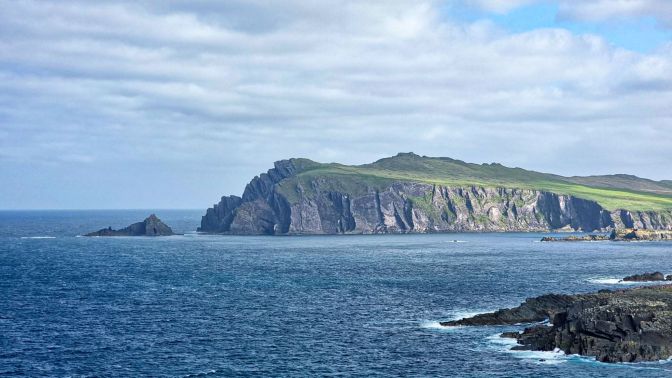
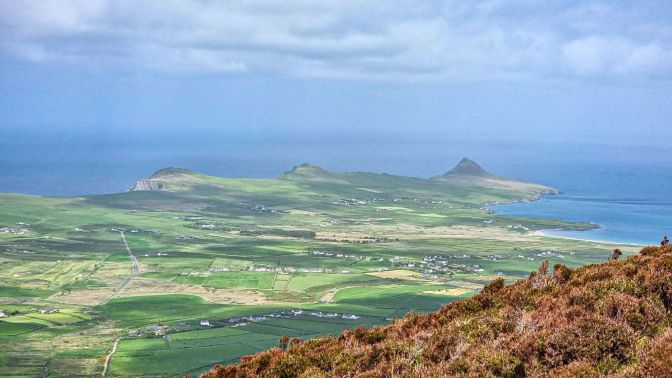
The parking along the road next to Clogher Head is a popular spot for viewing Ceann Sibeal or Sybil’s Head which was part of my Three Sisters hike.
The Three Sisters (Dingle)
Three dudes posing as sisters and a cranky farmer.
Continue reading The Three Sisters (Dingle)

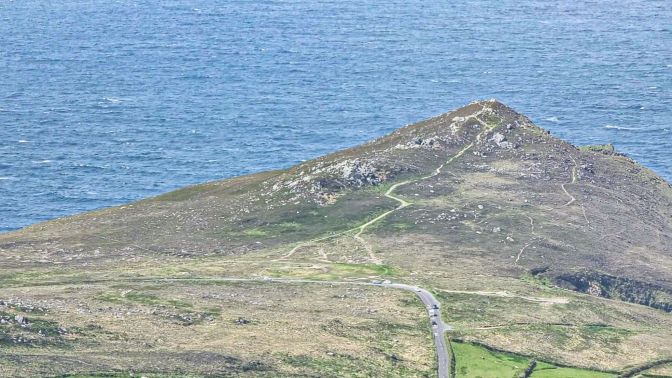
Clogher Head is a small coastal peak which is one of the best spots for viewing a sunset. Several years ago, I spent a wonderful evening sitting in a hidden spot on the opposite side of this hill just enjoying the views until sunset.
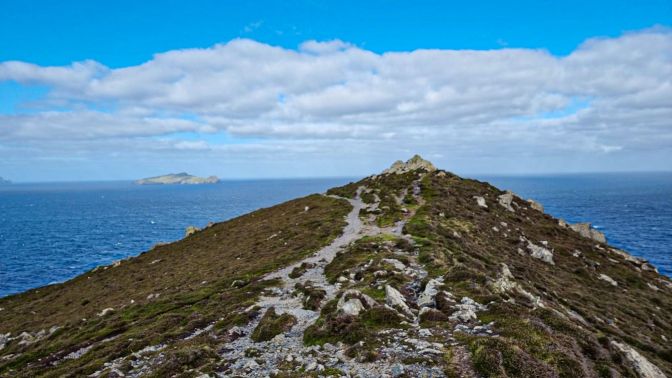
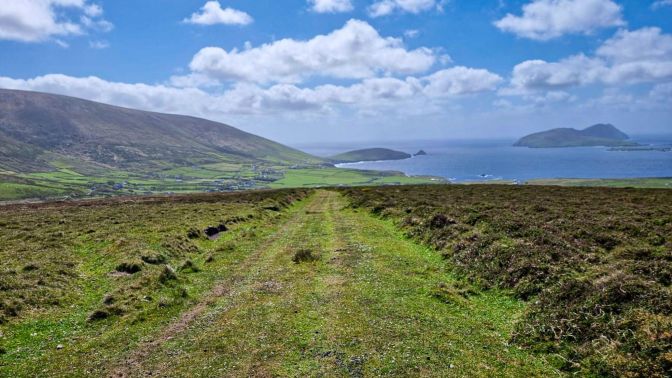
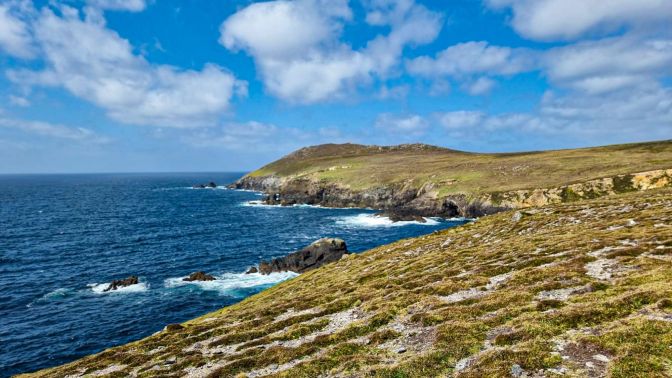
From Clogher Head, it is an easygoing scenic walk along the coast. Mount Eagle stands prominently in the distance. You cannot miss it in this part of Dingle.
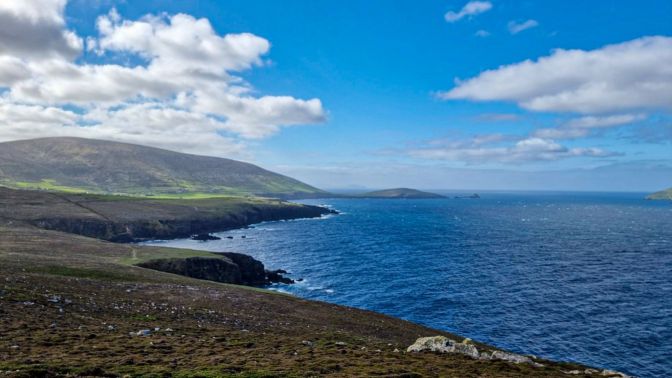
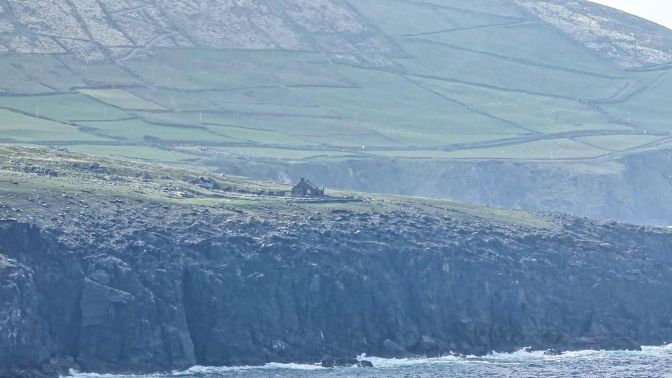
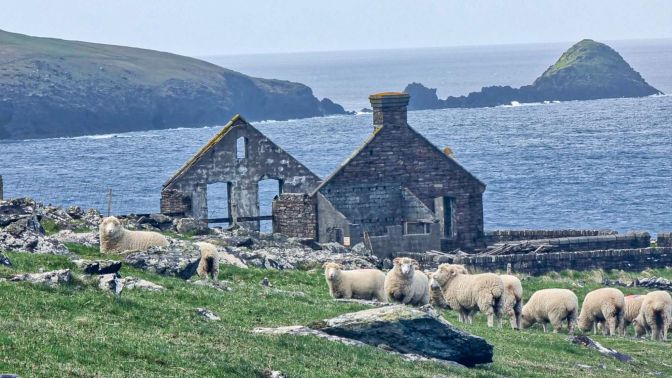
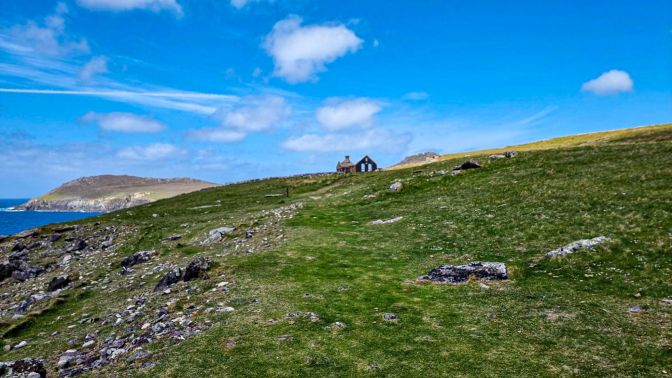
Along the coast is the most famous of the Ryan’s Daughter connections to Dingle, the former schoolhouse set from the movie. Only the frame remains, but it fits right into the stark, craggy coastline.
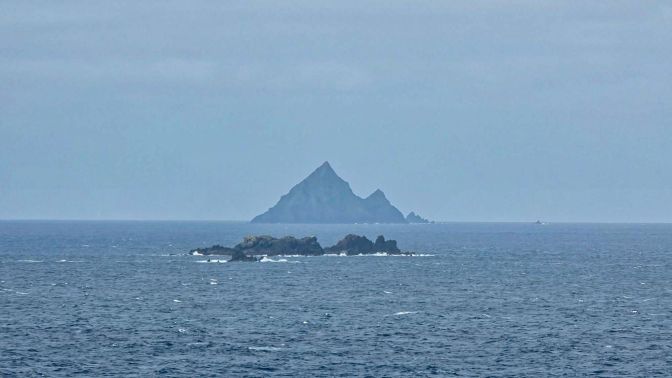
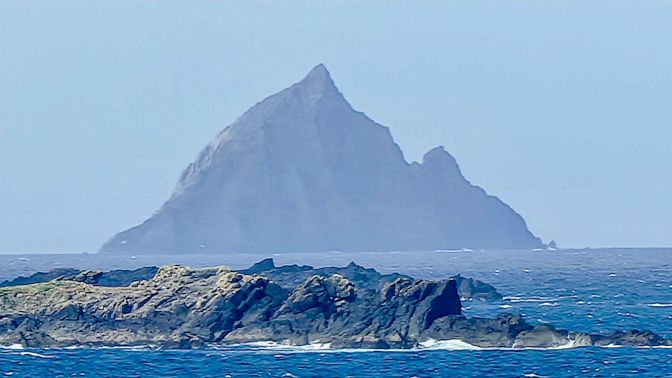
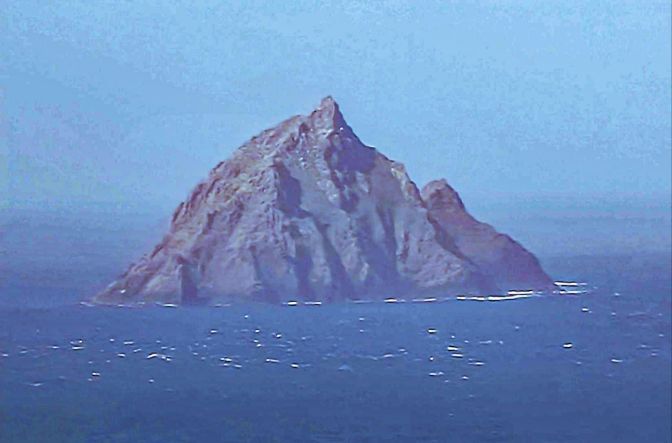
Along the way, I continued to be fascinated by the small Blasket Island, Inis Tuaisceart.
Upon reaching the Blasket Centre, the hike heads inland towards Mount Eagle.
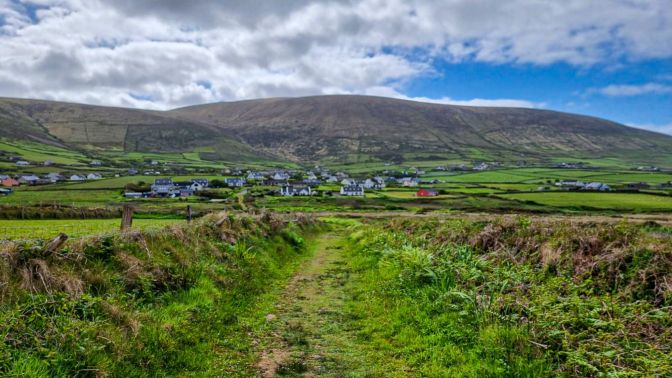
Getting to the starting point of the Mount Eagle part of the hike does require walking along a road with little to no shoulder. But you usually can see the vehicles coming from a long distance.
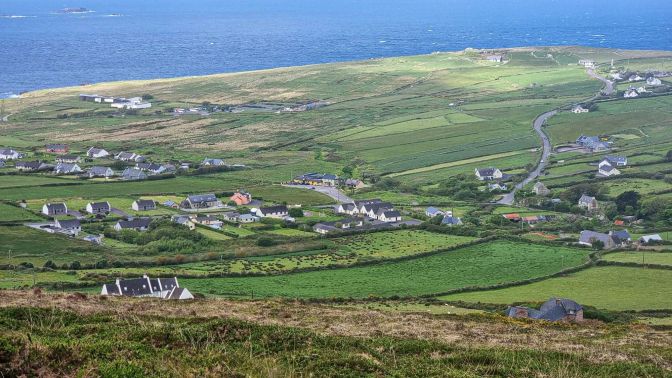
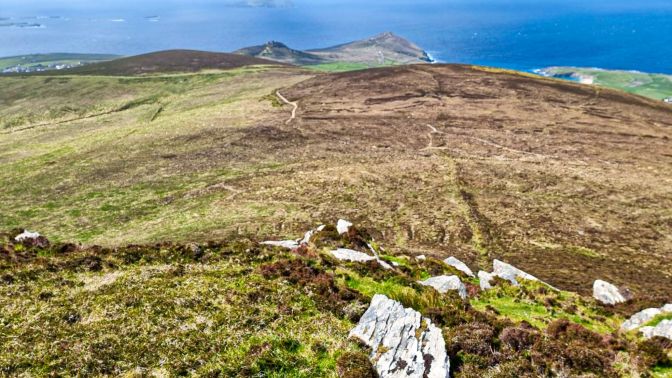
Ascending Mount Eagle is a pretty basic zig zag up to the lower hump and then straight on to the peak. The views along the way are astounding.
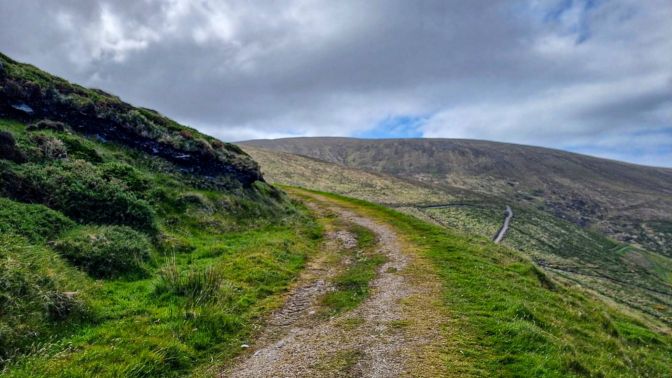
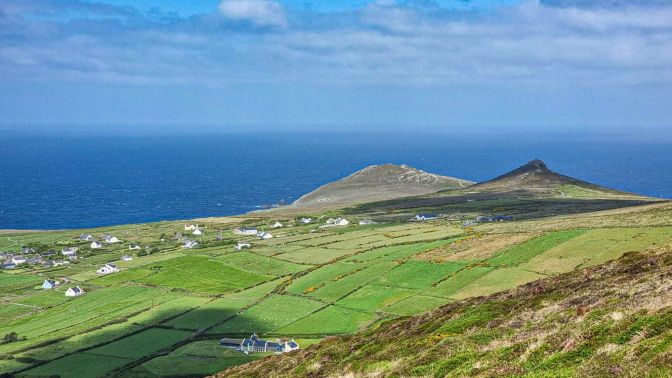
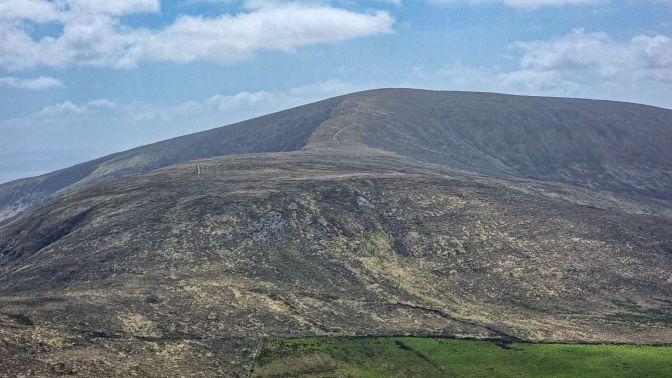
Initially, I was only planning to hike Mount Eagle, but when the back side of Croaghmarhin came into view, it’s contour and that well-defined spine were too irresistable. As I gazed over at it, the internal debate was very short.
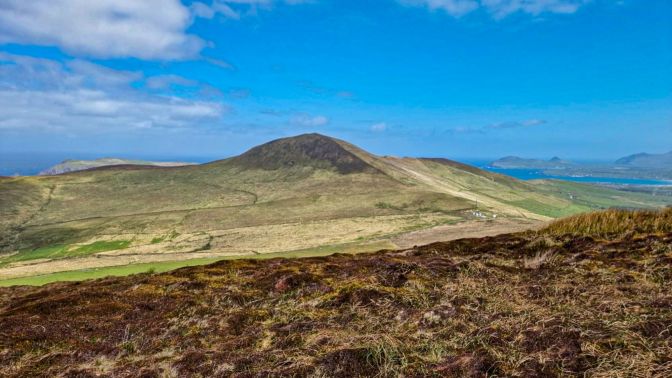
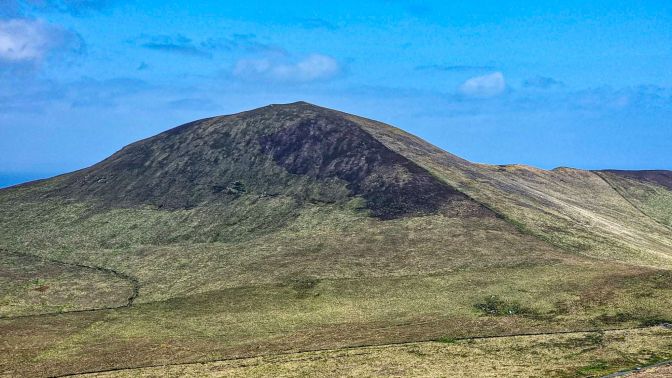
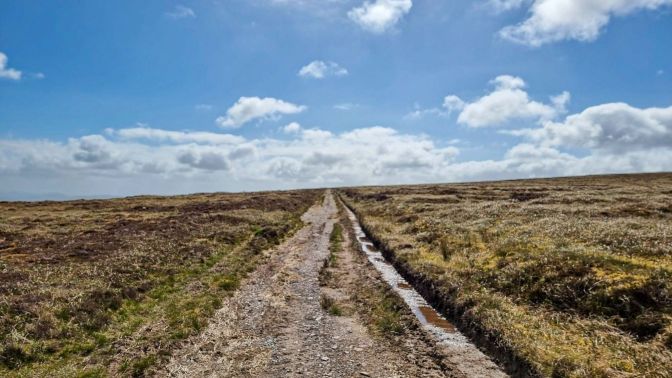
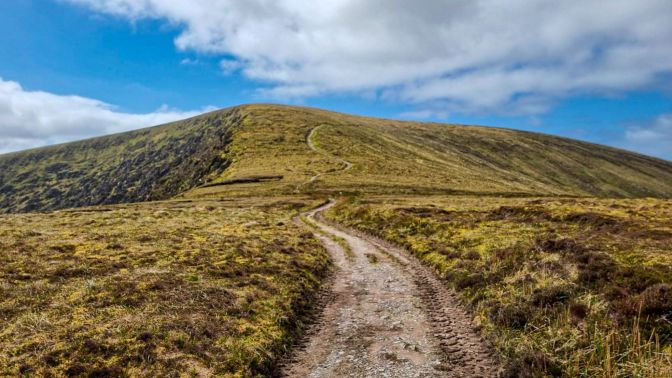
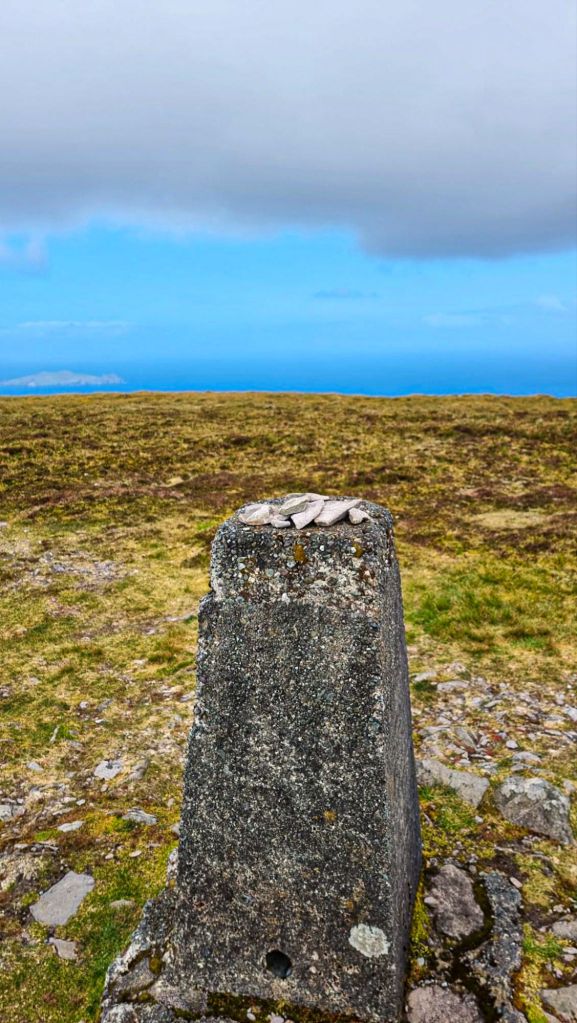
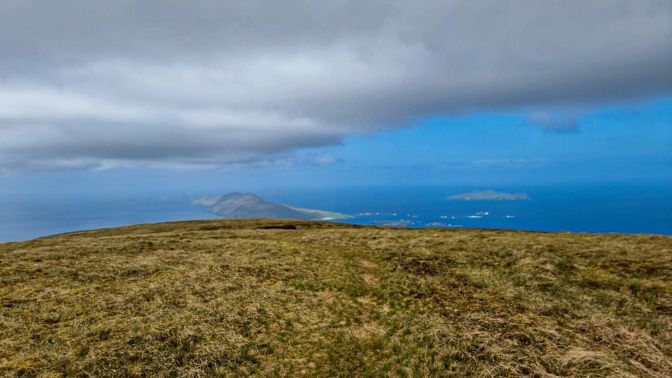
The top of Mount Eagle looks very much like you’d expect from observing the mountain from below. It is just an open rounded top, spread out enough to obscure the views from the peak marker. My arrival to the peak triggered a batch of bad weather. Light rain, high winds, and very cold temperatures made it a rather unpleasant few minutes. As soon as I started to descend, it passed.
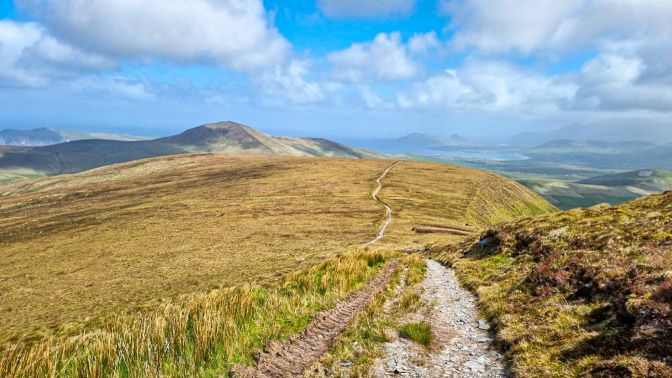
The spine that is seen from afar is a natural ridge enhanced by a fence running its entire length. The hike runs straight up the hill making a nice no-frills workout.
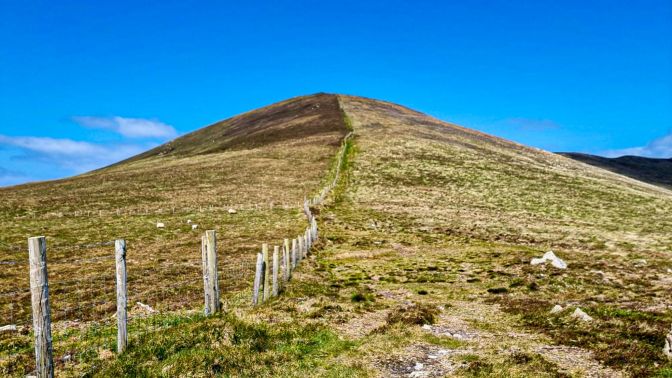
At the summit, the entirety of the mass of Mount Eagle is visible.
In the distance from Croaghmarhin, there is a nice view of Clogher Head and the bend in Slea Head Drive where my rental car was parked.
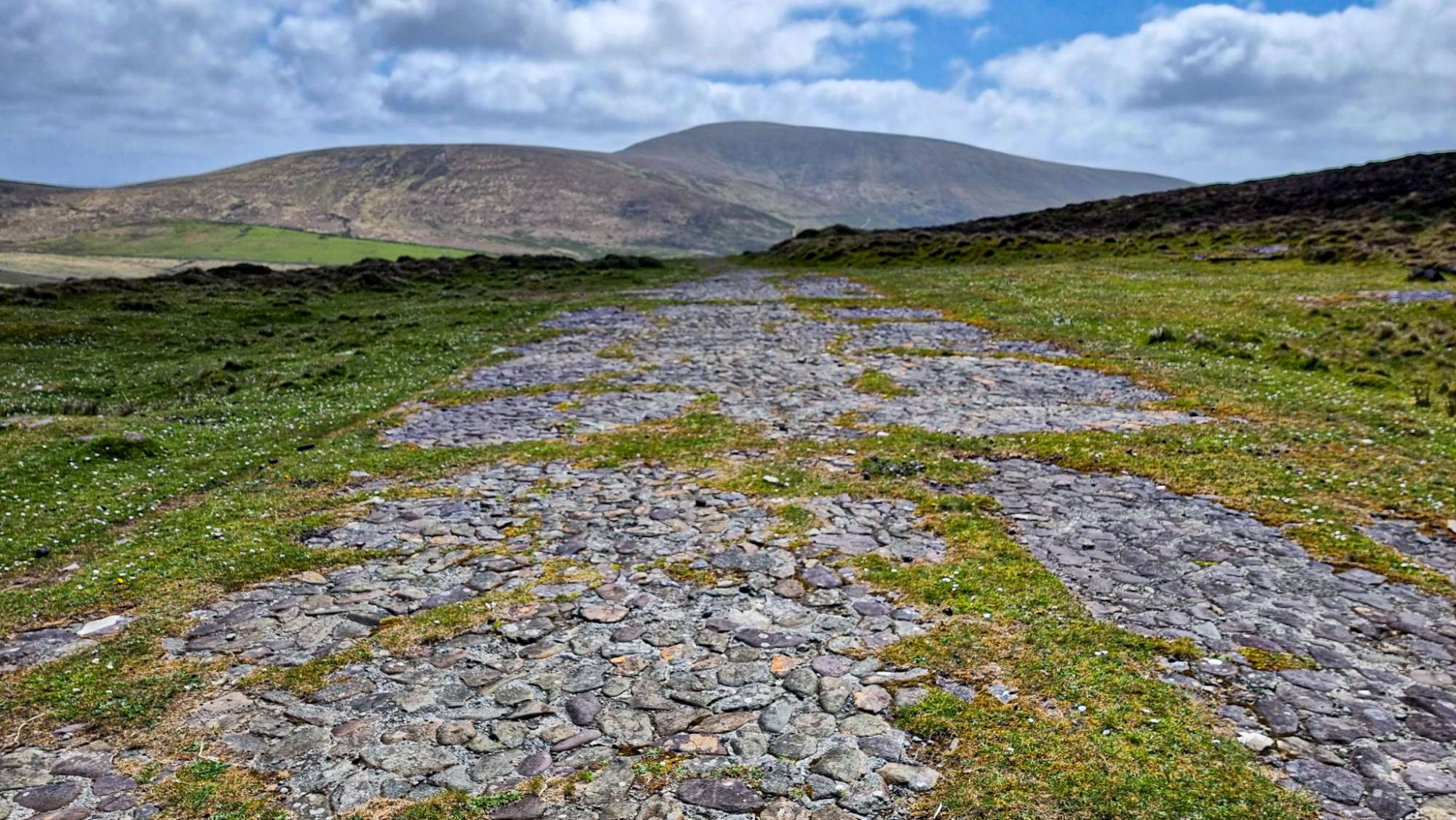
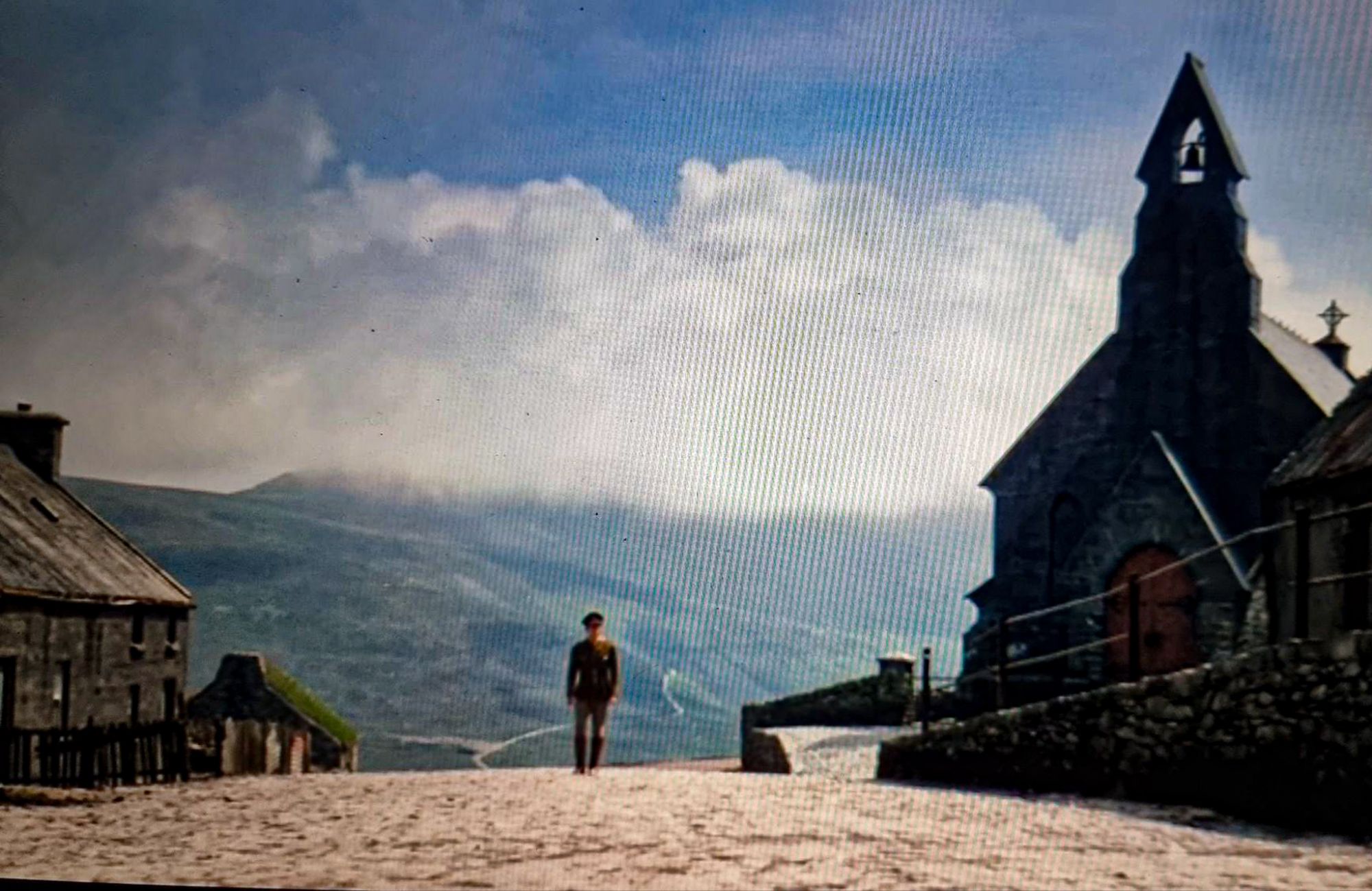
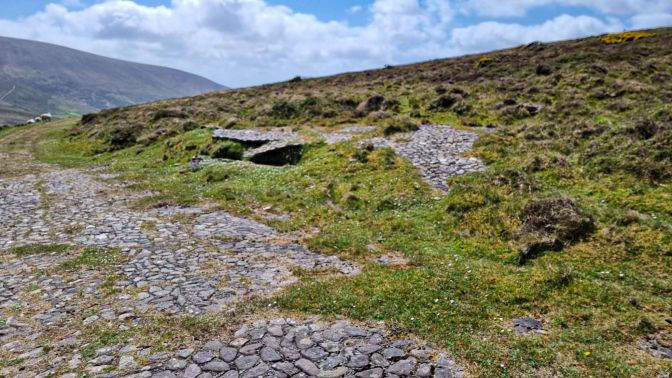
After descending Croaghmarhin, I arrived to a flat area where there was a curious road made up of what looks like irregular slate cobblestones. Not having seen any such road like this anywhere else on my hikes, I opened Google Maps to see if there was any marker identifying what this was. Google Maps revealed nothing. Along the sides of this road looked like the ruins of old foundations. This cobblestone was deep into sheep grazing land and there was no explicable reason for it to be there. It wasn’t until I watched Ryan’s Daughter later that evening that a particular scene caught my attention. This was where they built the set of the village from the movie. After some research, I discovered that the filmmakers offered to leave the set standing to become a tourist attraction in what was still an impoverished region of Ireland, but it straddled the land of two particularly hard-headed farmers who could not agree on a deal, so it was dismantled. What is it with Dingle farmers?
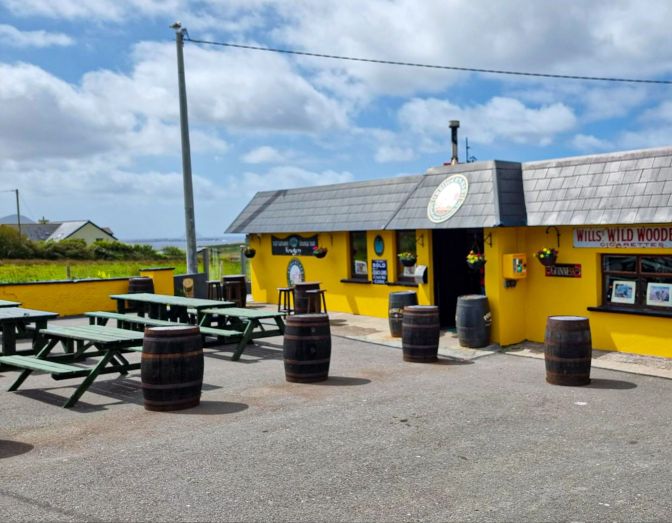
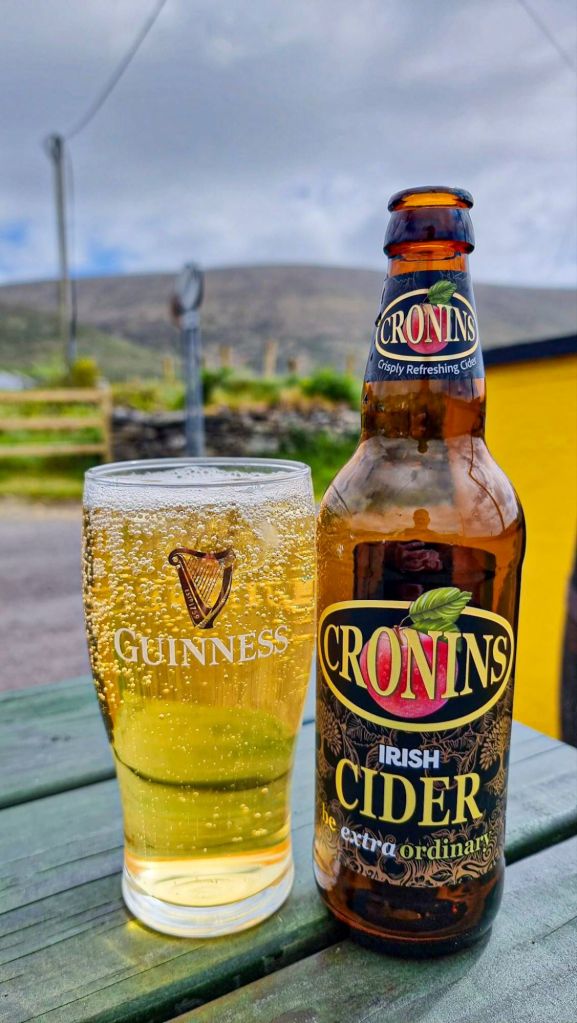
After a long stretch of trying to tiptoe around sheep droppings, I was greeted by the merciful haven of Kruger’s Bar and the refreshing taste of a Cronin’s cider.
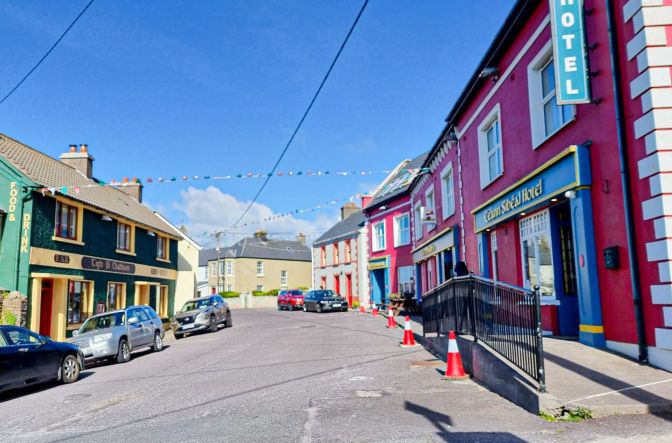
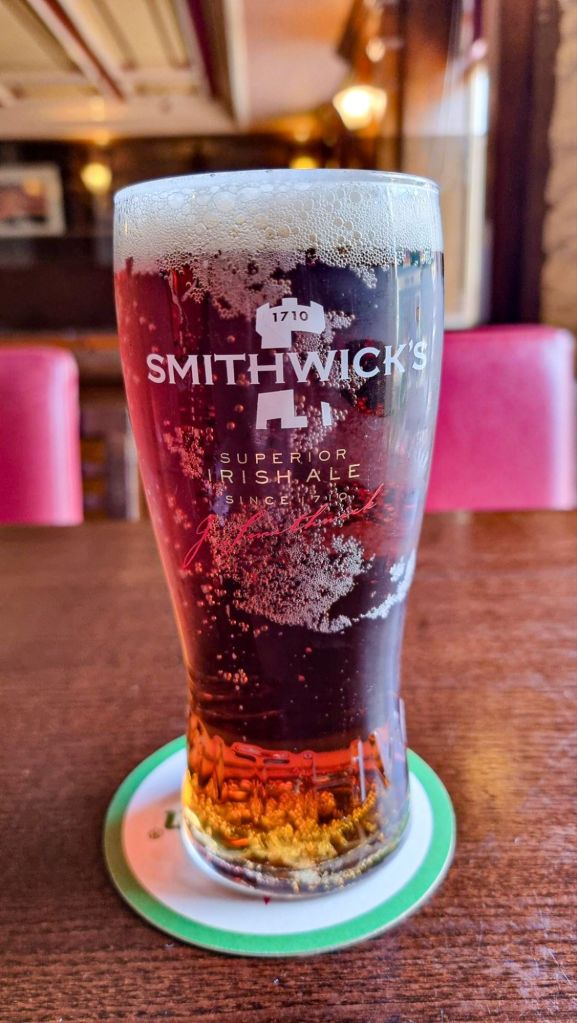
After peacefully backtracking along the coast to Crogher Head, I returned to Ballyferriter and went to the Ceann Sibeal hotel for my celebratory beer. I proudly ordered a Smitticks (the pronunciation for Smithwick’s). The waiter looked at me funny. A Smitticks please! I happily repeated my request. Again, I was met with a blank stare.
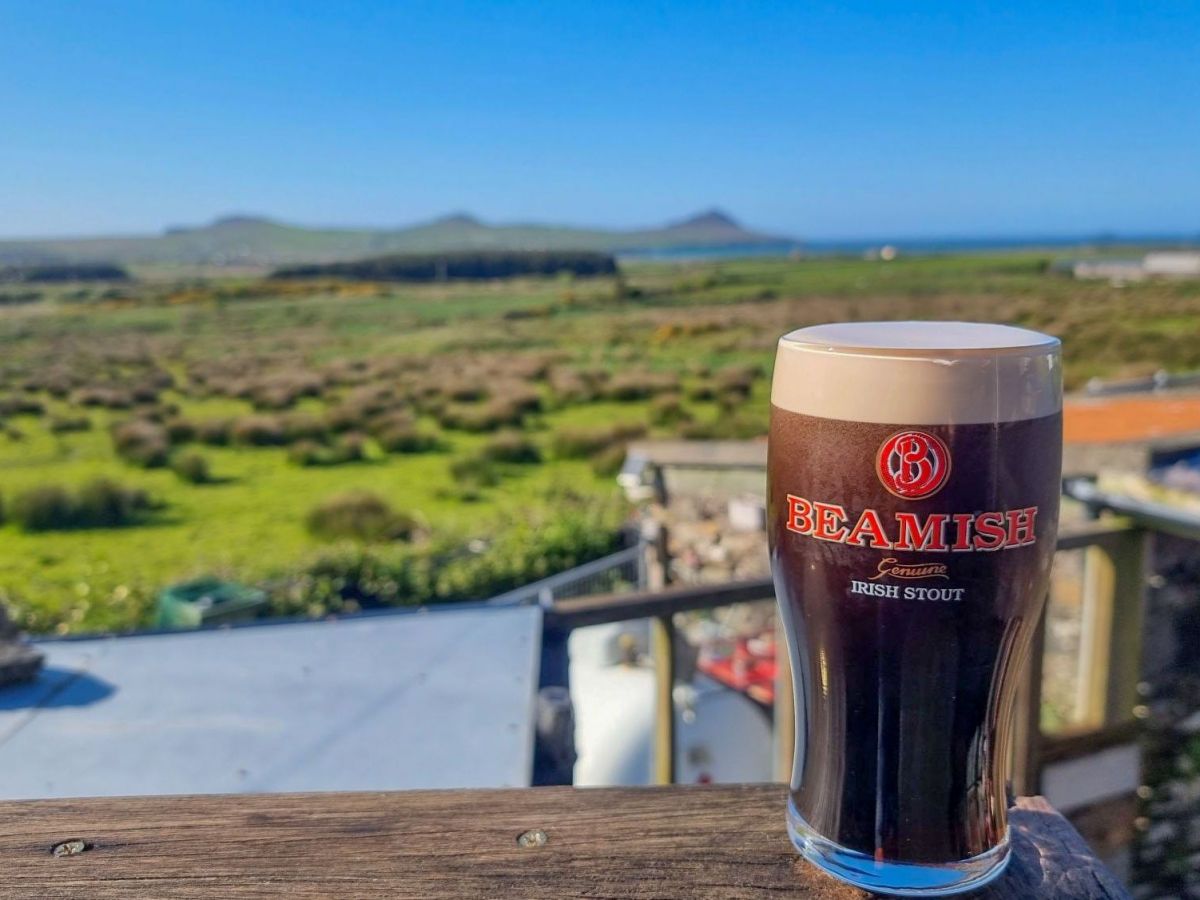
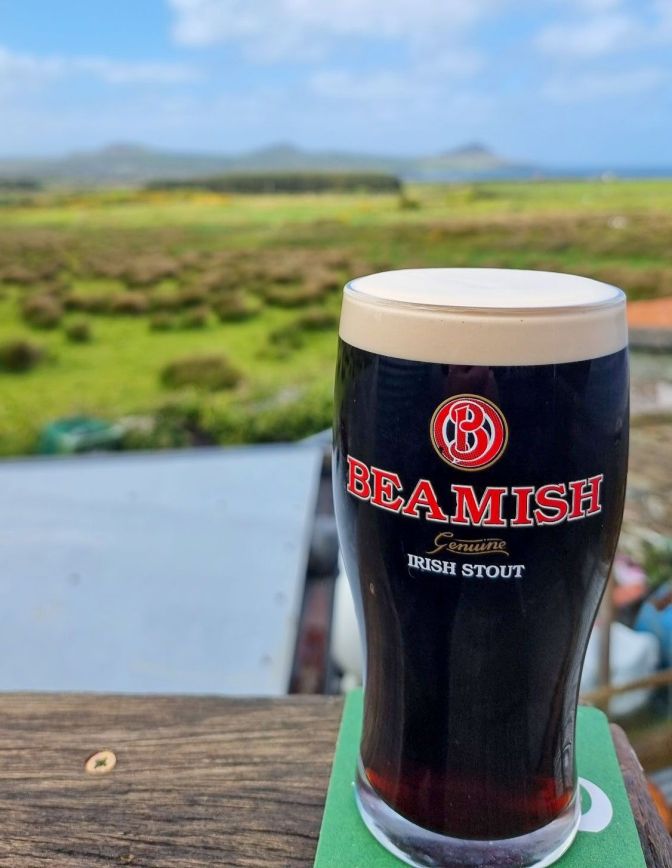
Detecting a hint of un-Irish origin in my slightly embarrassed waiter, I unravelled my brain to take a phonetic approach. I would like a SMITH-wicks, please, really driving my tongue through my front teeth to emphasize the THHH part. I pointed to a coaster with the word on it. He finally got my point and headed to the bar. The amateurish nature of this beer experience was further enhanced when the ale arrived full of bubbles which form when you pour the ale into a wet freshly-washed glass, detracting from its normally smooth red caramelly appearance. I swallowed back my quibbles and enjoyed my reward. Afterwards, I headed across the street to Tigh Uí Chatháin for one of their tasty Beamishes, a more suitable ending to an amazing hike.
Final Remarks
The filmography of David Lean is like a Hall-of-Fame of movies, Lawrence of Arabia, Dr. Zhivago, The Bridge Over the River Kwai. So many brilliant movies which are known not only for the stories and acting, but also for their lush colors, costumes, and sets and musical scores that are instantly recognizable; melodies that have become part of the fabric of the universe. Since it has been a while that I made any Charles Dickens references, it is a good time to shoehorn one in right now. David Lean also directed the quintessential version of Charles Dickens’ Great Expectations in 1946. I remember my excitement visiting the St. James Church in Cooling, England which inspired the church and churchyard in the opening scene of both the book and the movie. When a place can maintain a connection to a film or book, and it can be done tastefully without detracting from the surroundings, it does add an extra layer of traveling inspiration. As much as I would have enjoyed to stumble upon an entire movie village set rather than just a slowly decaying cobblestone street, I doubt it would have retained its rural charm all these years later. It would have been a delightful curiosity at first, but maintenance costs would eventually have made it as commercially unsuccessful as the film was. We will never know. So as the cobblestones gradually give way to time and layers of sheep dip, I am sure the sheep don’t mind the way things turned out.