
“Upstream from Cochem is the quaintest of all Mosel towns.”
Rick Steves Germany, Austria & Switzerland (2003 Avalon Travel Publishing)
Preface
In November 2002, an episode of Rick Steves’ Europe aired on American public television which completely captured my imagination. Back then, you had to catch his shows when they were aired during the channel’s fund-raising season. If you missed them, you had no idea when you would see them again. This heightened their effect. When they aired, it was an event for me. I didn’t just watch them, I immersed myself in them. At some point, he would release his shows on DVD in box sets. I eventually splurged on them, and I still remember putting in Germany’s Romantic Rhine and Rothenburg in my DVD player. When the familiar jingle of the show emerged from my speakers, I sat there in awe when it sunk in that I could watch it any time I wanted. Little did I know at the time that many years later I would be able to visit those places whenever I wanted.
One of the scenes from this episode which has lingered with me all these years is a 1-minute segment starting at time stamp 16:27. Here we are introduced to the village of Beilstein along the Mosel. As soon as this segment begins, whimsical piano music kicks in and gives you the feeling of being dropped into an authentic experience; one without the trappings of touristic commercialism. If only all European experiences could be accompanied by music like this. He spends half the time discussing his hotel, but it leaves you wanting more. The final impression he gives is that in Beilstein, not only do you stay in a postcard village, but you become a bystander in the lives of real Germans, sipping wine and taking life as slowly as a barge navigating a bend in the Mosel River. It is an intoxicating scene. You can’t appear more authentic than having a close-up of a guy with a kaiser-stache sipping a glass of white wine. I have been to all of the places in the video, but the one I had never savored for more than a cup of coffee was Beilstein. This summer, I decided to finally rectify that.
Beilstein
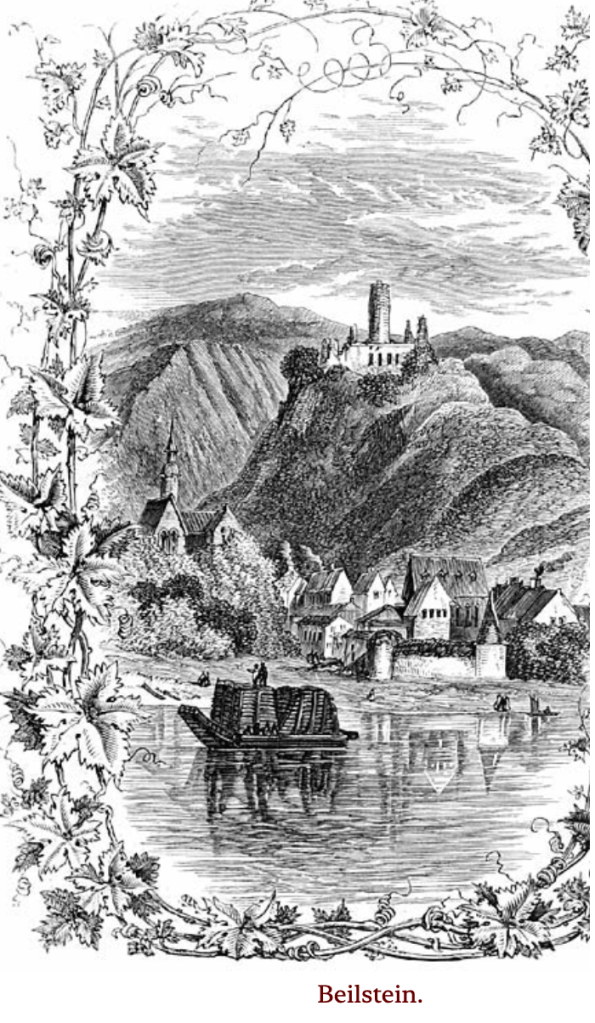
Still to this day, I struggle with remembering the pronunciation of this town. Note to self, it’s Bile-shtein, not Beel-shtein. On more than one occasion when someone asked me where I was staying I felt a sudden paralysis in my skills at word formation as my mind prepared to decide which one to start with. Beilstein is one of many towns along both sides of the Mosel River between Koblenz and Trier. The towns along this stretch either fall under the category of a busy tourist destination full of boat passengers and cars and motorcycles jockeying for parking spaces or a peaceful gem frequented mainly by passing bicyclists or those seeking a quieter homebase. Beilstein is definitely the former. Everyday, boats carrying tourists up and down the Mosel stop at Beilstein bringing with them the masses. If you decide you are going to spend the day reading a book at a cafe sipping wine, it will not be a tranquil experience. But by 6pm, the last boat will have removed the rabble-rousers, and whoever is left, while still plenty, are the ones staying in town. Then the village appears in its quaintest, purest form. Pick any of the many restaurants for dinner and soak up the charm.
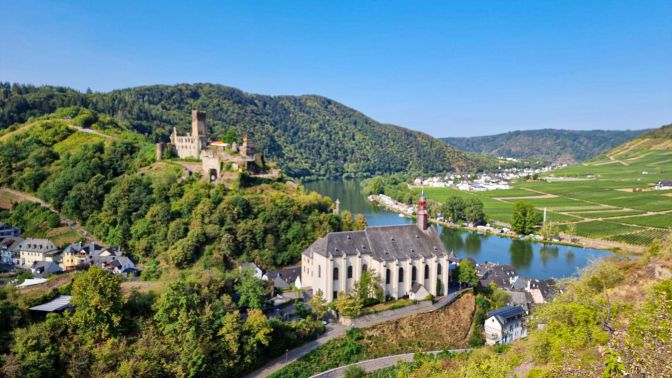
In this part of Germany, you don’t come for the beer. All you will find mainly are the common beers like Bitburger and Benediktiner. This is white wine country, home of the Reisling, among others. There aren’t really mountains here, but the Mosel has carved strikingly steep hillsides into the surrounding landscape which offer the prospects of a wonderful hiking experience. I have hiked here a little bit in the past, but this would be my first full-on hiking trip to the Mosel region. Combining the unique landscape with the local wine culture resulted in a week of special and memorable hiking.
The first hike that I did would take me to the villages of Ernst and Bruttig-Fankel. I would discover the local culinary delight of the season, pfifferlinge, a type of mushroom, and stop by a weingut I had stayed at for one night many years ago with my daughter. The end result was a superb hike to kick off my holidays.
It’s Not Just a Wine, It’s a Journey
“…it (Beilstein) is the essence of picturesqueness.”
The Life of the Moselle by Octavius Rooke (1858)
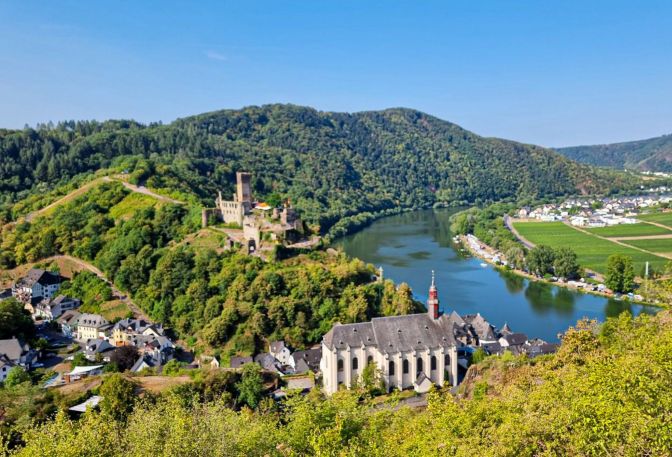
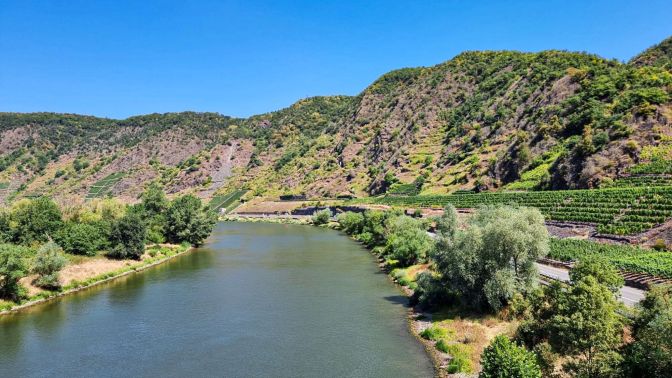
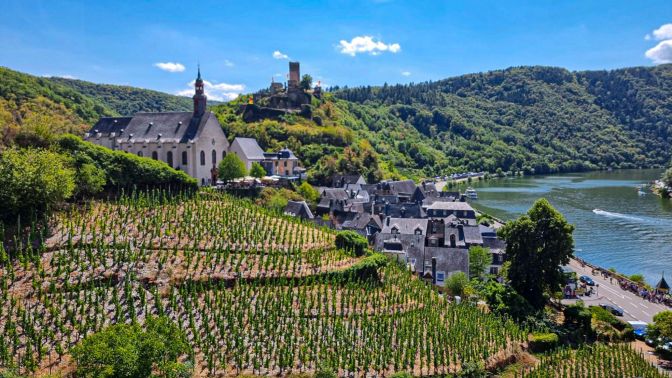
The morning of the hike was already starting to bake in the hot dry European summer of 2026. The foliage exhibited muted colors rather than the lush green seen in the Rick Steves episode. It was going to get into the mid-30’s (Celcius) by the afternoon, and I was already looking forward to the shade of the tree cover. The ascent winds up from the center of Beilstein through vineyards, some well-manicured and others which have been left to the whims of mother nature.
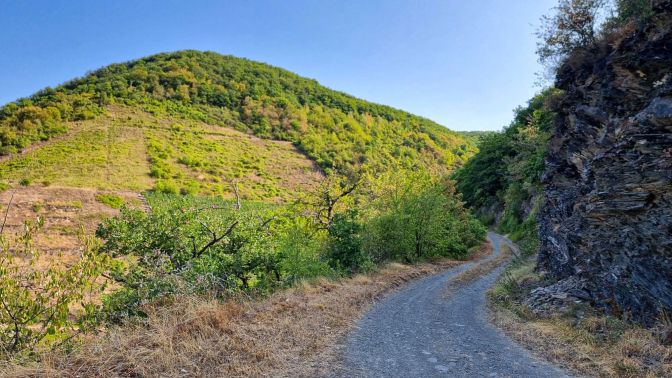
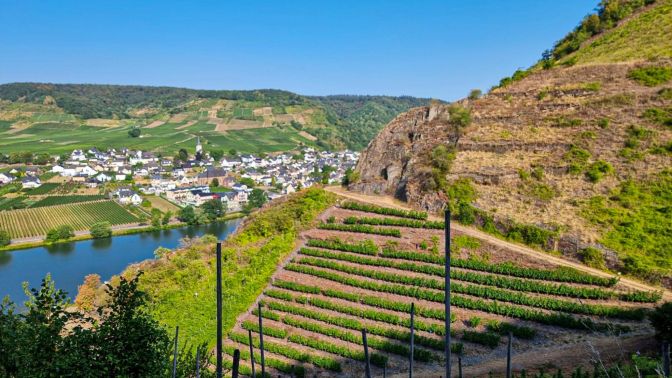
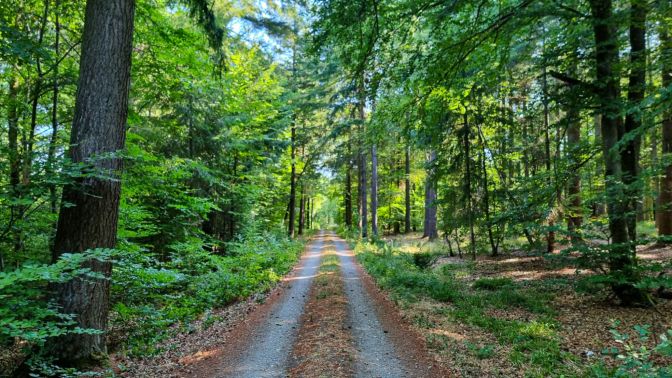
Initially, the vegetation felt like something you would find in the south of France or Spain, scrubby and sun-bleached. But eventually, a pine forest gives some welcome shelter and that fresh aroma of years of recycled pine needles.
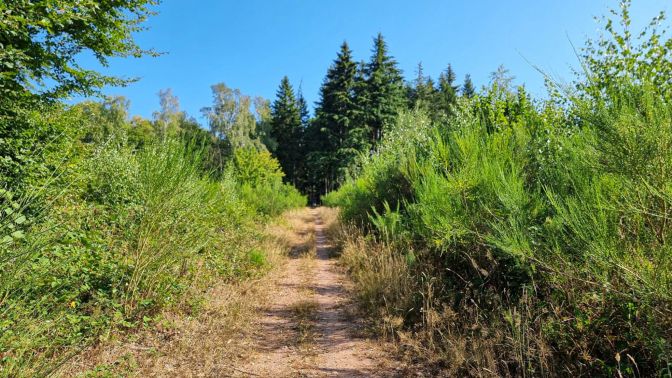
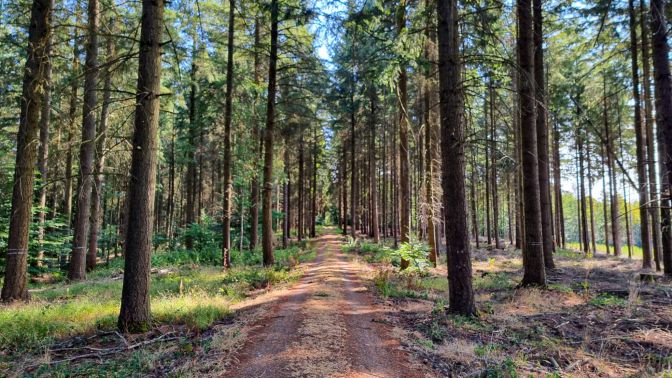
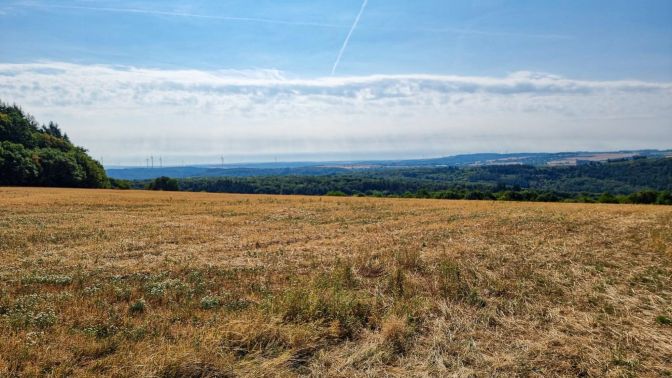
The first half of the route is fairly cruise control. There is one road crossing, but otherwise you are heading straight forward through mostly forest. At some point there are signs indicating archeological sites where there are ancient burial mounds. These, however, have been swallowed up by the forest and don’t offer much to see.
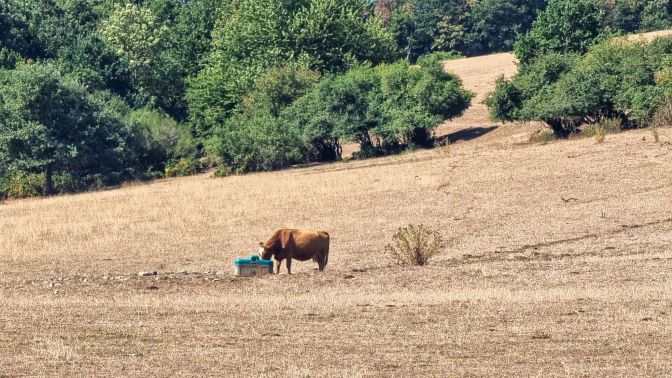
Once you cross over another road and pass the Birkenhof farm, you reach a popular trail called the Wanderweg Kabeiner-Bachtal. This attractive trail follows a ravine down to the river. This is the only segment of the entire hike (outside of the towns) which I passed other hikers.
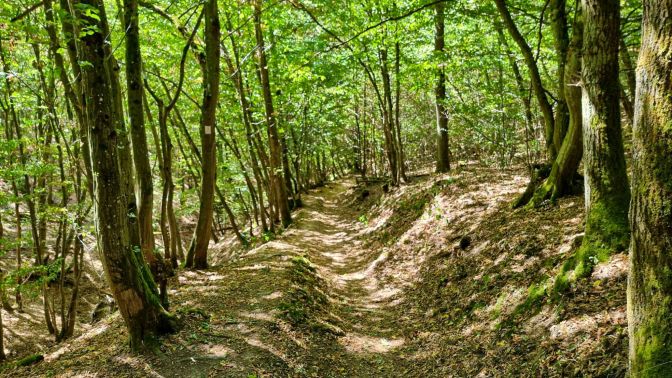
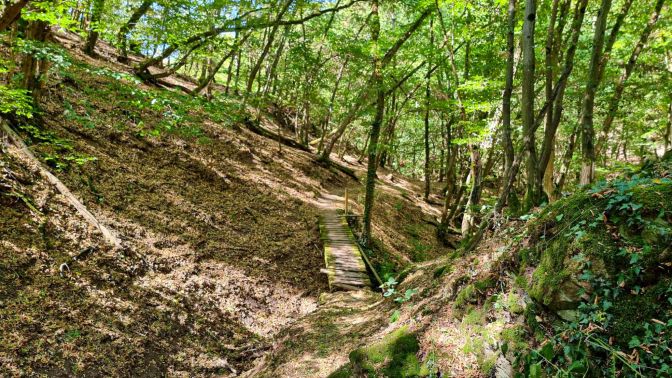

“The scenery from Beilstein to Cochem is not to be surpassed on our
The Life of the Moselle by Octavius Rooke (1858)
river. There are mountains, beautiful churches and villages, trees,
rocks, and water…”
Bridges are few and far between along the river. The one at Bruttig allows the hike to extend over to Ernst where I was hoping to find a good place to have lunch.
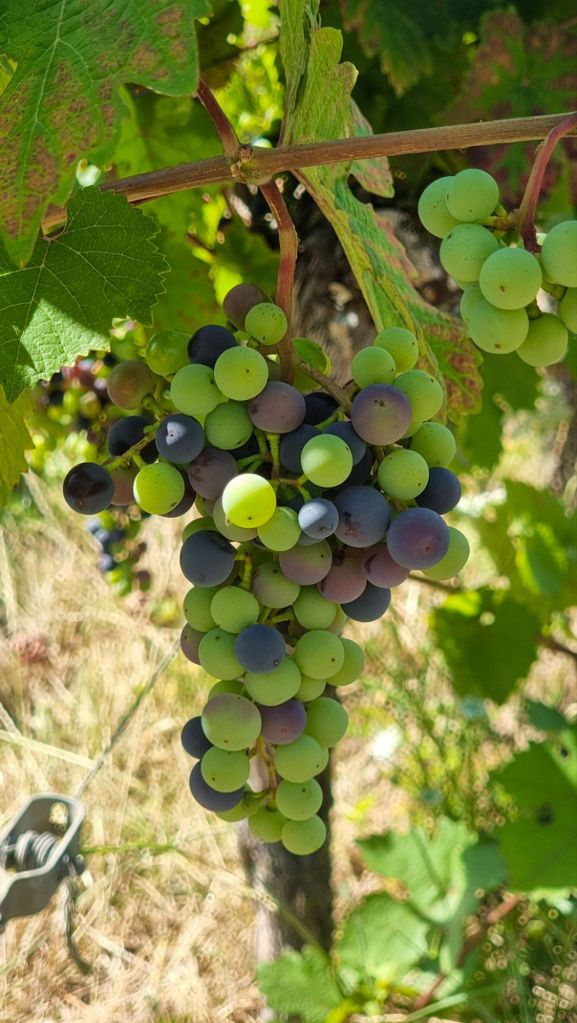
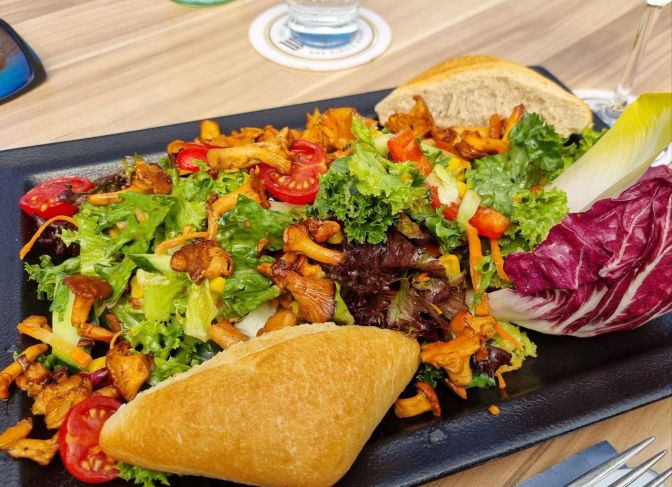
As I emerged from the vineyards of Ernst, I was brought immediately to the Restaurant Mosella Schinkenstube, which by the name indicates they specialize in dishes with ham. On a hot day, I had a craving for something a bit lighter and decided to try a salad with sauteed pfifferlinge. I was not disappointed.
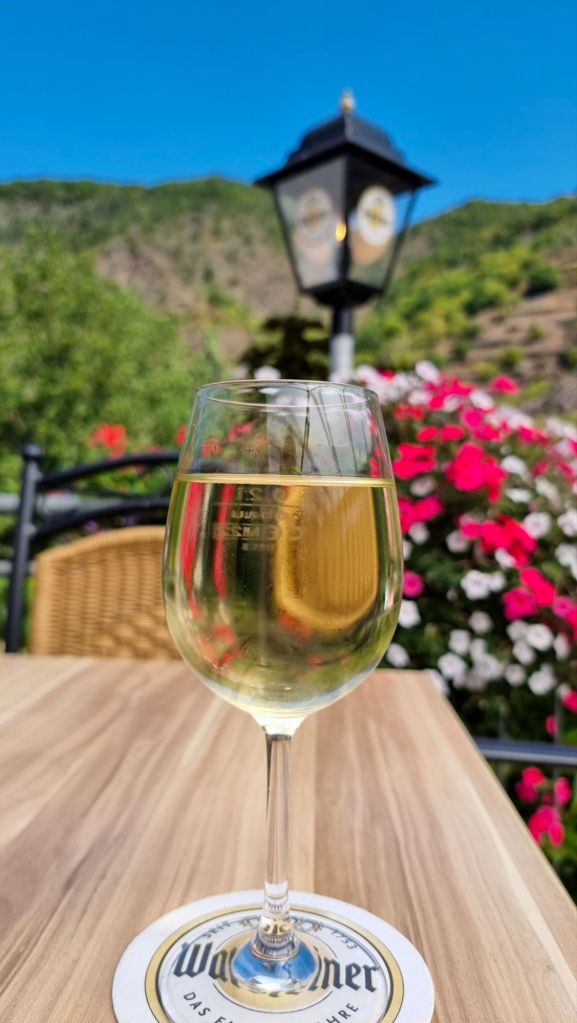
I walked briefly around Ernst which falls into the quiet category of Mosel villages. Hardly anything or anyone was stirring. I rang the doorbell of one of its more welcoming weinguts and purchased a bottle of Reisling (always trocken or dry for me).
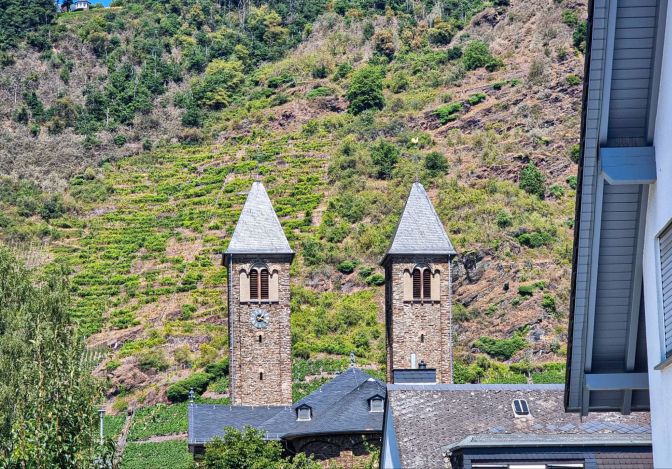
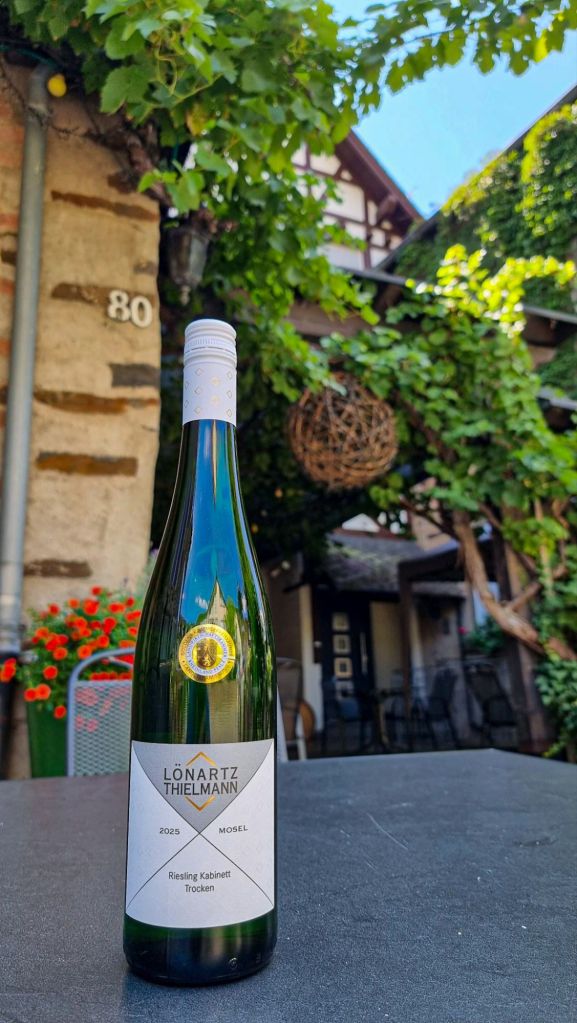
Back across the bridge, I entered Bruttig-Fankel which has an interesting character. Where it faces the river, it is quite busy with wine gardens and a grassy bank filled with picnickers and bicyclists taking a break. Then there are the backstreets which wind into the adjacent vineyards and beneath its old aqueduct. Nestled along one of these backstreets and butting up against the aqueduct is Weingut Klein-Götz. I discovered this place many years ago and booked a one-night stay on a drive back from Switzerland. I had a great evening sitting in the wine garden trying different wines and playing card games with my daughter. On this hike though, it was early afternoon and the wine garden sat silent. Old memories stirred in my mind as I approached the door. After ringing the doorbell, I was greeted by a lady who very well could have been here years ago. I bought another bottle of Reisling trocken and continued on my way.
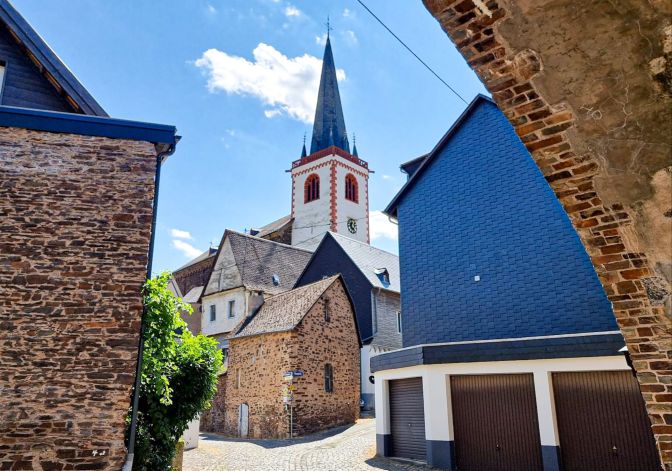
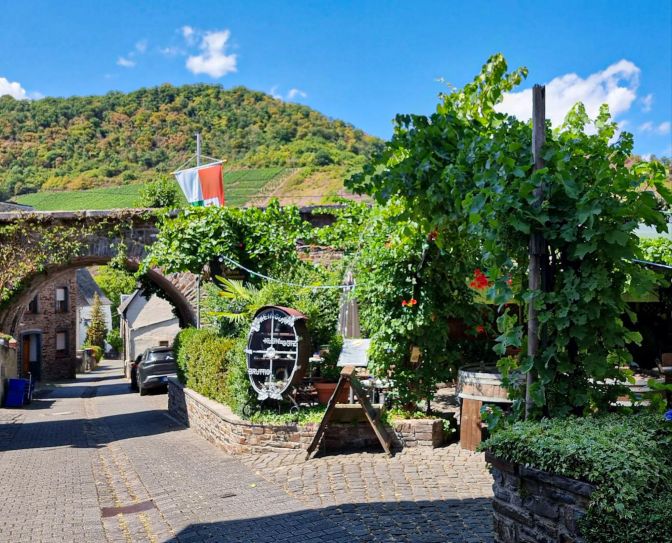
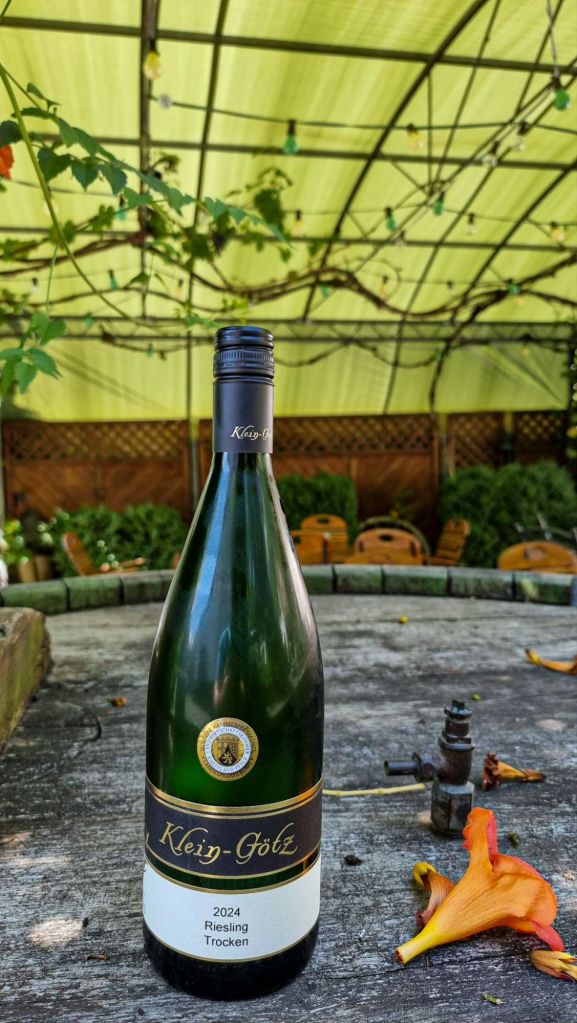
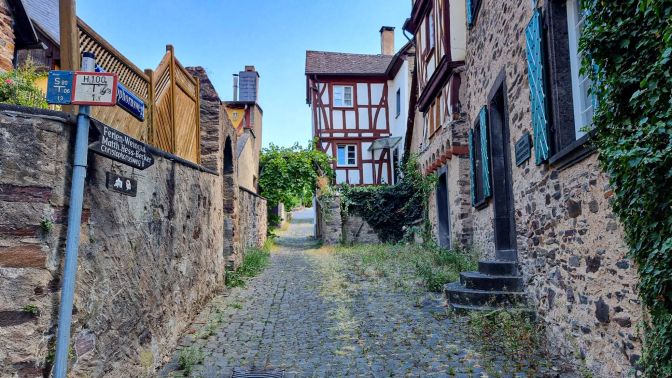
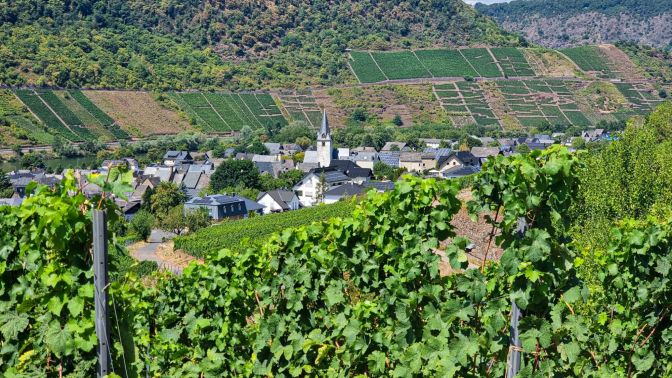
The best part of this hike is the upper vineyard path from Bruttig-Fankel to Beilstein. It is a narrow path crawling along the steep hillside, often more exposed than it seems. Along most of this route, you have spectacular views of the river.
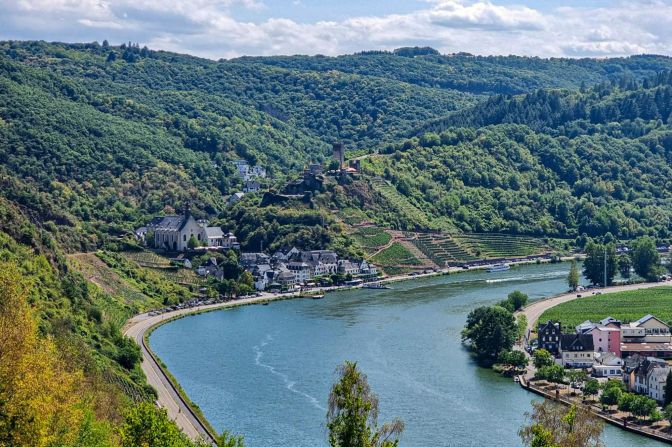
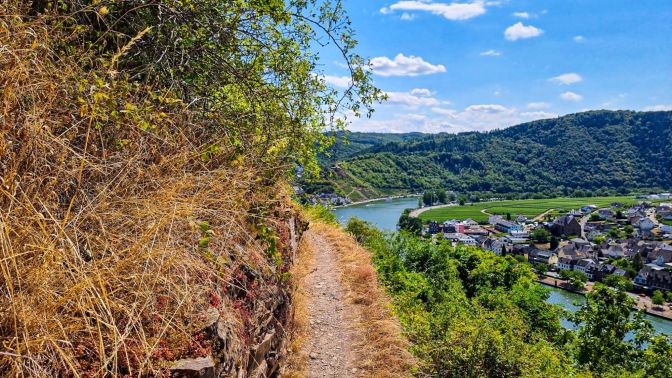
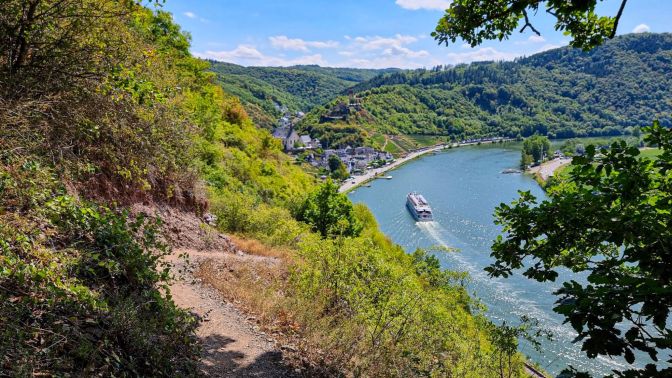
I arrived back into Beilstein to find it buzzing with tourists. Every outdoor table was occupied and the gelato stand was doing good business. It was time though to reward myself with a glass of wine in one of the wine cellars. A very nice one is Otto Görgen. I ducked through the door, found a table and enjoyed a celebratory Reisling. That’s right, trocken.
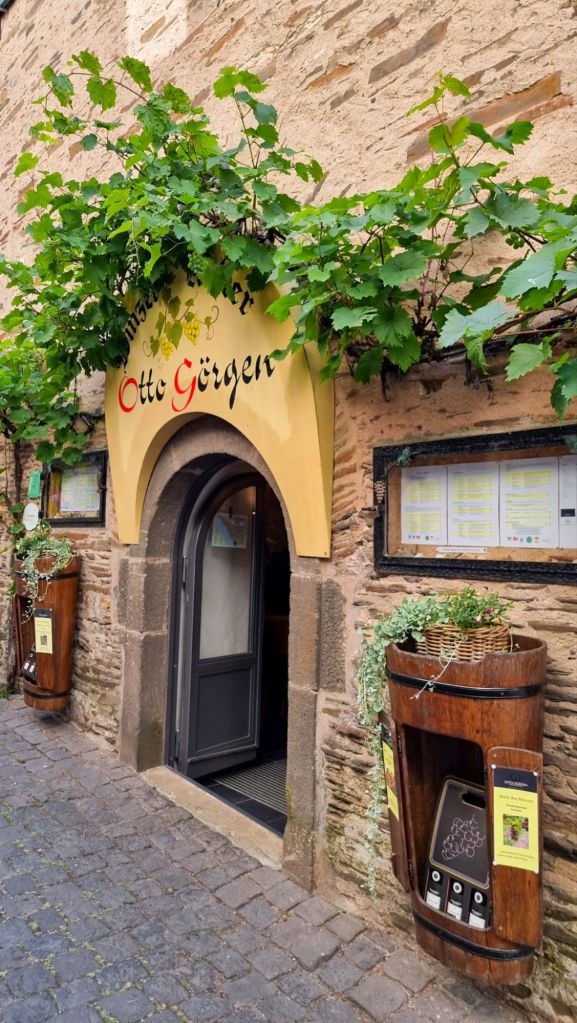
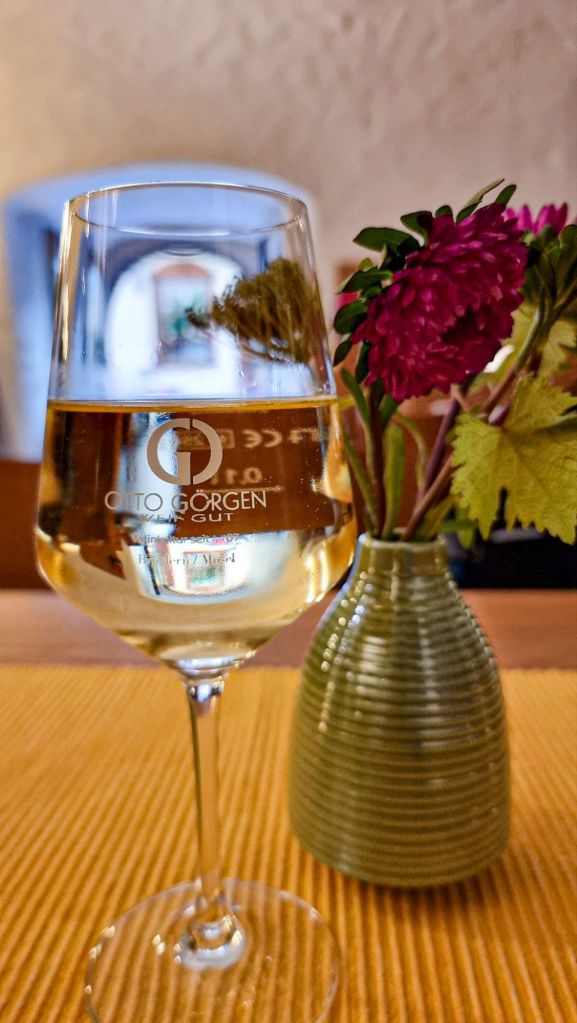
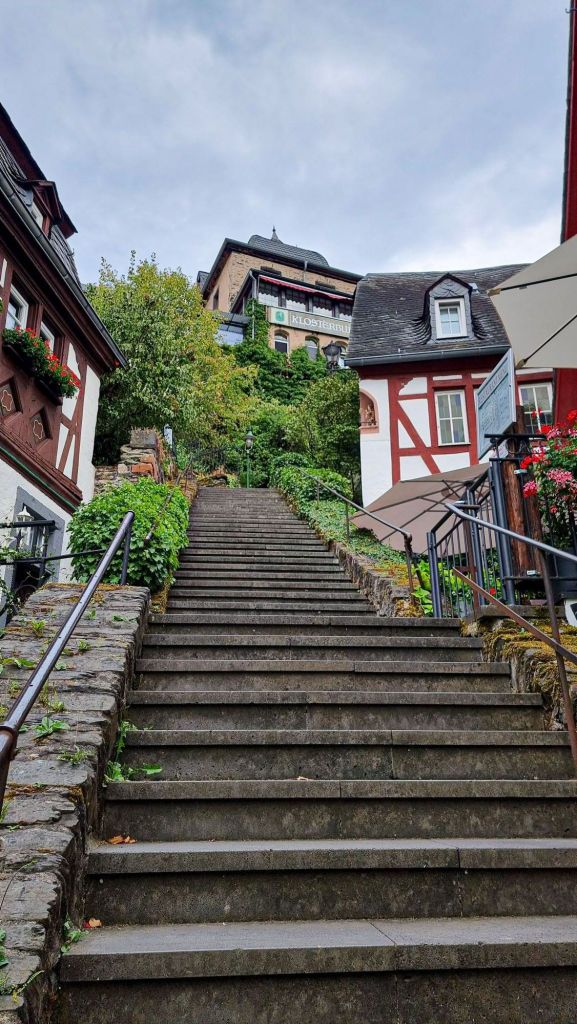
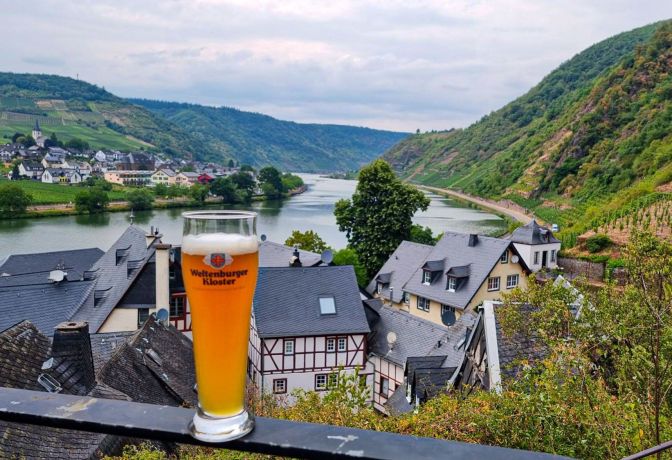
For dinner, I climbed the steep steps to the Kloster-Restaurant which has the best dinner views in the city. The restaurant occupies part of a monastery which enlists one monk to run the spiritual side of things. Adjacent to the restaurant is the entrance to St. Josef’s church which dominates the Beilstein skyline along with the ruins of Burg Metternich.
Final Remarks
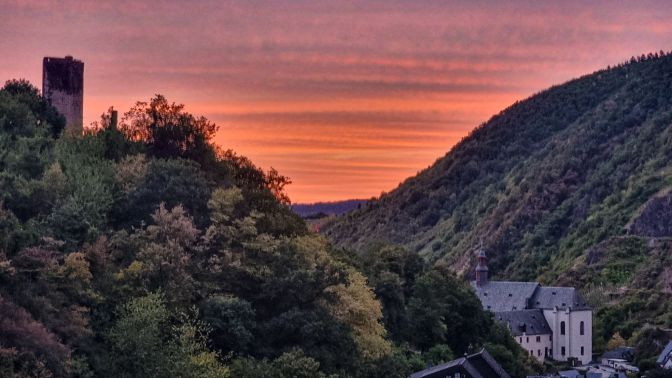
My first day in Beilstein exceeded all of my expectations. Without the background music from the video though, it was a little more challenging to filter out the cacophony of tourism, but by the end of the evening, the charm of Beilstein was overwhelmingly victorious. The hike also surpassed what I had envisioned it would be. Biking, of course, is the activity of choice here and the easiest way to get to other villages along the river. But thanks to the bends in the river, taking to the hills and getting to the neighboring villages by foot as the crow flies is quite easy and an enjoyable way to combine weinguts with hiking. This was essentially the birth of the Wine & Hike in my hobby. Beilstein would offer a couple more opportunities to build on this new (to me) genre. As far as it being the “quaintest of Mosel towns”, I think Bernkastel-Kues has something to say about that. But that first night as I watched the sunset paint the sky over the castle tower and the see the lights dim as Beilstein fell into a brief slumber, I was hardly in a position to propose a compelling argument. Instead, I felt the satisfaction of an evening that was 24 years in the making.



What a beautiful place! I can see why it captured your imagination all those years ago and I’m glad to hear it lived up to your expectations.
LikeLike