
Bruges is the city of the dead, of still life, of stagnant waters, of mouldering walls and melancholy streets… Ghent, on the other hand, is active, bustling, prosperous.
Belgium by G.W.T. Omond (1908)
If there were two cities on Earth which remain perpetually bonded by history and have a distaste for each other like two irascible brothers, it is Bruges and Ghent. Both stalwarts in Flemish history along with the underrated Ypres, but it was Ghent who was “famous for their turbulent spirit and love of independence”1 and for not being an “easy task to rule them.”1 Today, the competitiveness still exists on the football pitch and I am sure in many other places. One place where the competition is artificially created is in the minds of visitors. Who among us has never been asked the question “Which do you prefer, Bruges or Ghent?” Getting asked this as an outsider is as inevitable as eating a bad hamburger in a Belgian restaurant. Many people throw Antwerp into the mix too, and that’s fair. Antwerp likes to imagine herself as a Flemish city, but in reality, she is more of a cosmopolitan city, and that always complicates the question. Antwerp seems to have existed on her own parallel timeline, while Bruges and Ghent’s are interwoven like the woolen threads of the tapestries and cloth they are famous for. The real debate is between Bruges and Ghent.
Which is most Brewtiful?
Brewtiful Gent (a.k.a. Getting the Noose in Ghent)
Karolus, Carolus, and Karel As a lover of Belgian beer, I am continually reminded never to take the names of the beers for granted. I am sure that every beer maker puts some thought behind… Continue reading Brewtiful Gent (a.k.a. Getting the Noose in Ghent)
Keep reading

Brewtiful Bruges
Sitting down to write a blog on the subject of Bruges for the very first time would seem to be an easy task for those who know me. For over a decade, I have been… Continue reading Brewtiful Bruges
Keep reading
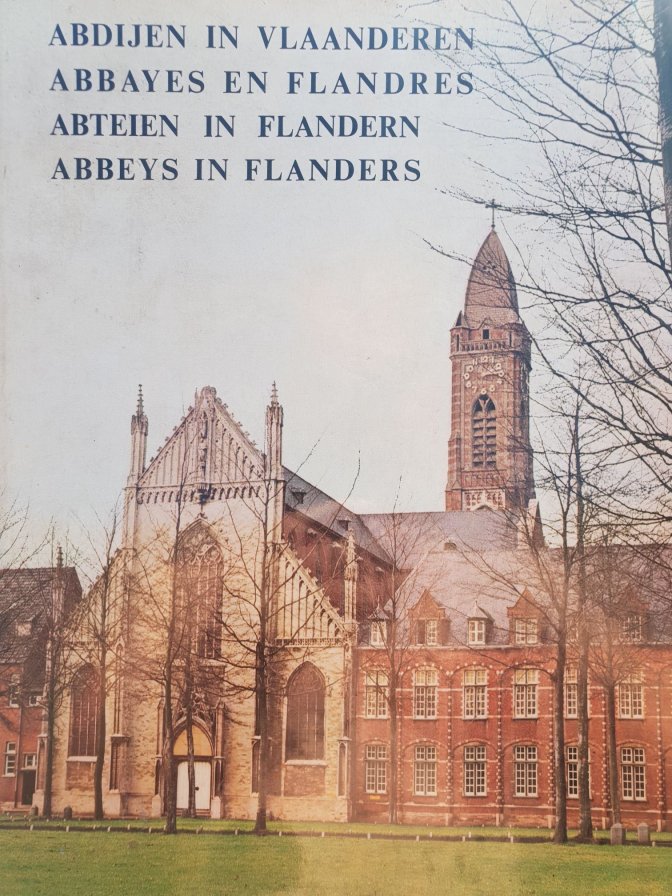
My latest attempt to search for a definitive answer to that debate led me back to Ghent, sparked by a used book I picked up at a charity book fair recently called Abbeys In Flanders, published in 1973. A map in the book showed a particularly dense population of these abbeys in and around Ghent. I noticed, in fact, four of them were within a reasonable walking distance from each other. My eyes lit up and a Beer & Hike was born.
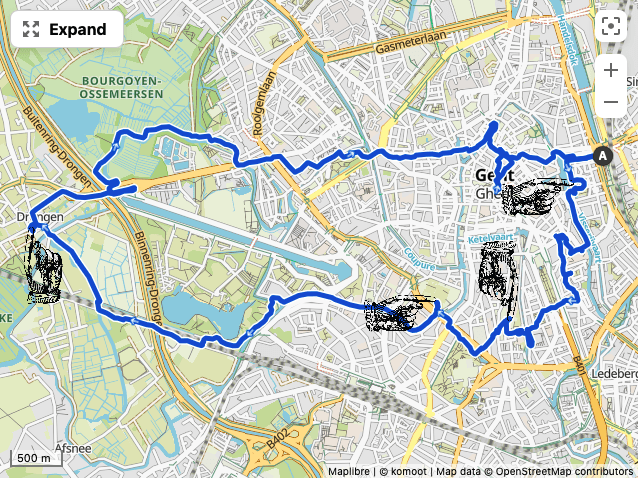
Hike Details
| Starting/Ending Point | Gent Dampoort Station |
| Distance | 19.8km |
| My Moving Time | 3h 44m |
It’s Not Just a Beer, It’s a Journey
When I emerged from the Gent Dampoort train station, I didn’t realize that I was about to embark on a journey through roughly 900 years in Ghent’s history. Perhaps no single hike that I have done has led to such a treasure trove of historical nuggets as this one. And it all started within a couple hundred meters from the station, where the very first abbey set the tone for the story about to unfold.
St. Bavo’s Abbey
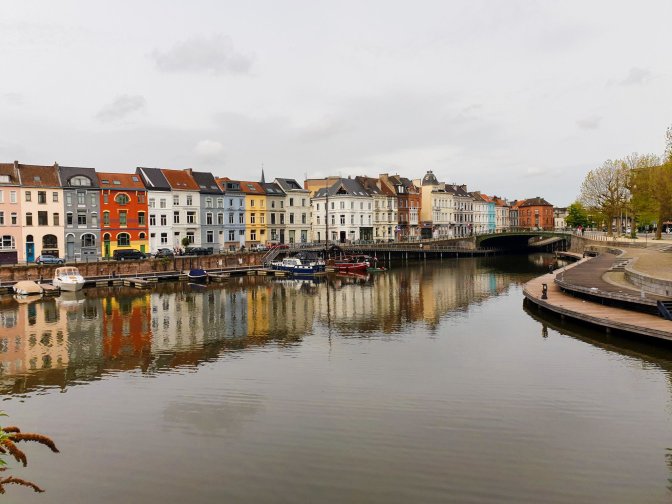
St. Bavo’s Abbey sits on the east side of Gent across from what I call The Venice of Ghent, a series of colorful houses lining the Portus Ganda. If you are in the habit of disembarking at Gent Sint-Pieters station, you may be unfamiliar with this abbey, and if you prefer Gent Dampoort like I do, you probably discovered the abbey by accident like I did trying to find a shortcut back to the station. The abbey has been sitting in ruins since the late 1500’s. It’s story though starts in the 7th century with its foundation by St. Amand, a missionary sent to preach to the local Pagans, and named after St. Bavo, a contemporary of St. Amand. The abbey carried on with its modest existence, once barely recovering from an attempt by Normans to destroy it, until the pivotal year of 1340, when St. Bavo’s history book moment arrived.
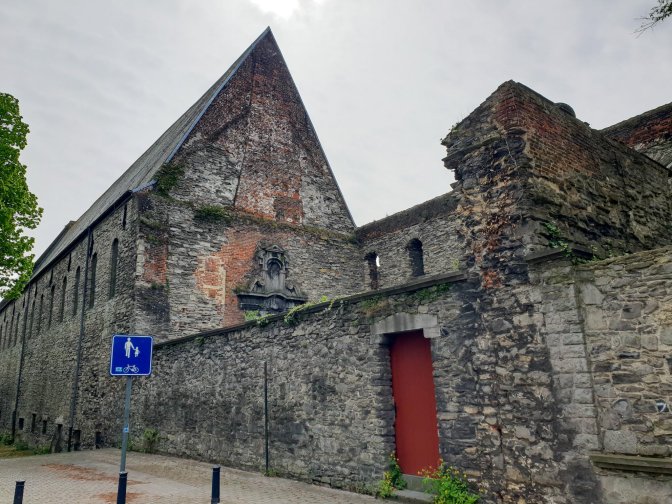
King Edward III of England had just declared himself King of France while visiting Ghent. The Hundred Years War between England and France was currently a Three Years War. Hidden away in St. Bavo’s Abbey were Edward III’s pregnant wife Queen Philippa and their children, hostages for the money Edward III had borrowed from Ghent to fund the war efforts. In March of 1340, Philippa gave birth to John of Gaunt (a.k.a. Ghent). This infant whose cries would have echoed throughout the abbey would grow up to become the father of King Henry IV, and all English monarchs since have descended from him2.
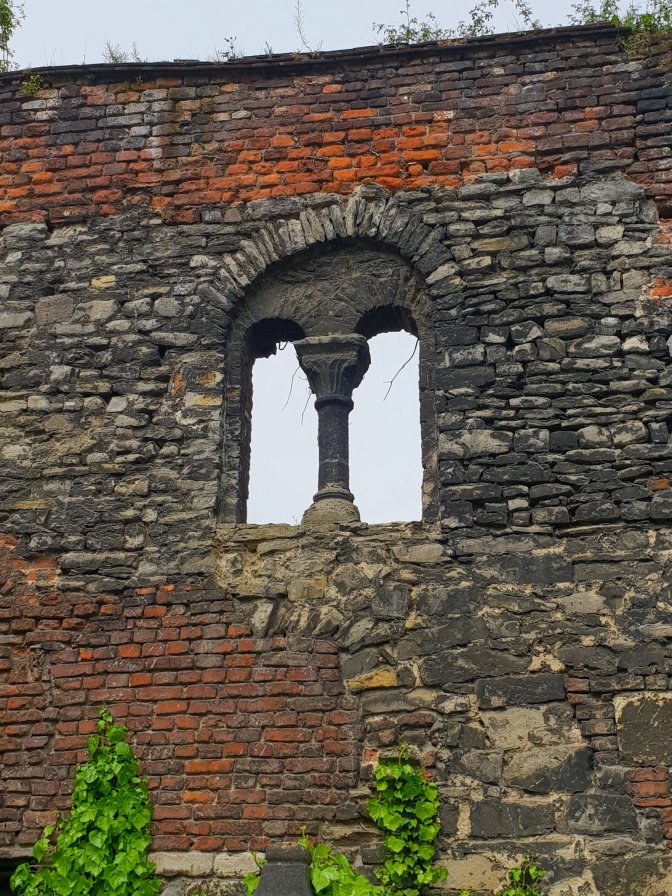
By 1369, 32 years into the Hundred Years War, Flanders was back under French control. To further this alignment, a wedding was hosted by St. Bavo’s Abbey. The brother of the real King of France was wed to 19-year old Countess Margaret of Flanders. His name was Philip the Bold, Duke of Burgundy; thus bringing Flanders under the influence of the Burgundians. Anyone who has visited Bruges has seen the word Bourgogne seemingly everywhere from the Bourgogne des Flandres brewery to the Hotel ducs de Bourgogne. The Burgundians are a large part of the identity of both Bruges and Ghent.
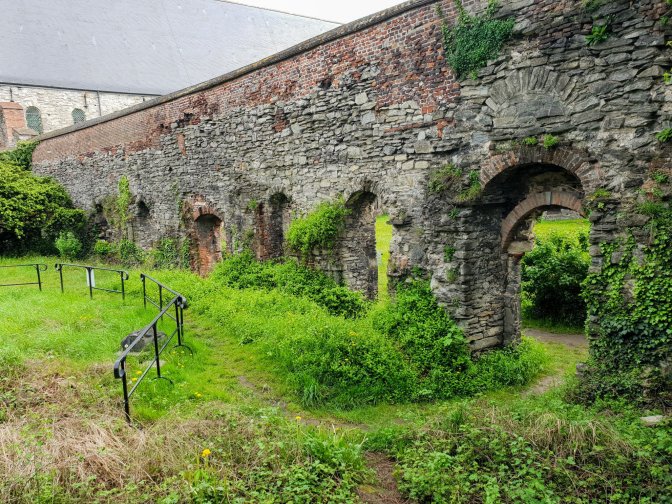
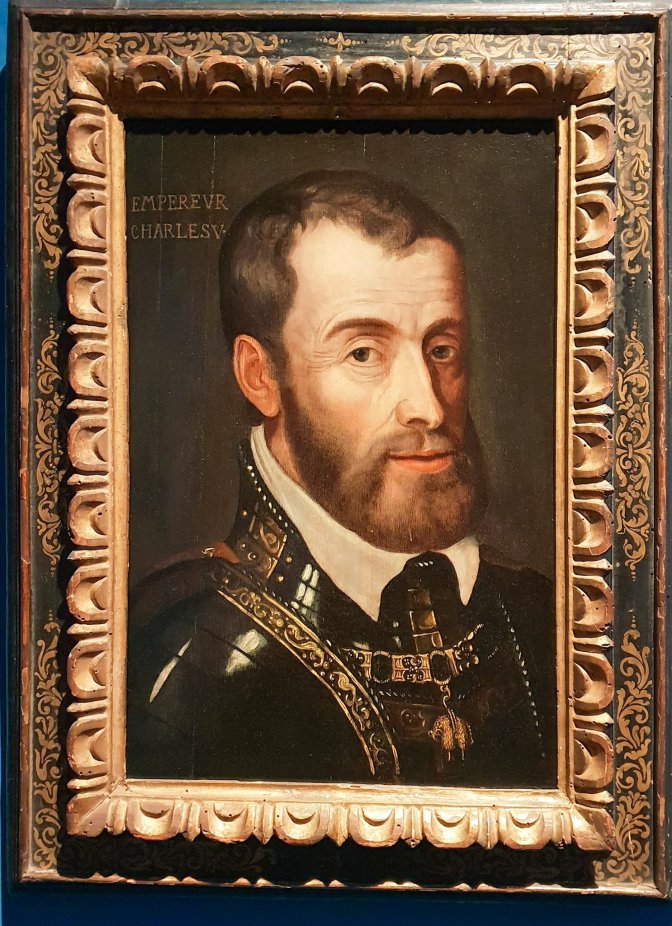
In 1540, the citizens of Ghent were still living up to their reputation for giving rulers a difficult time. This time it was the Belgian beer Holy Roman Emperor himself, Charles V. He decided it was time to intimidate the locals with a brand new castle, called the Castle of the Spaniards. Rather than breaking new ground, an existing site was chosen. St. Bavo’s Abbey. The next time you drink a Gouden Carolus, think of Charles V evicting the sad-faced Benedictine monks of St. Bavo for the final time.
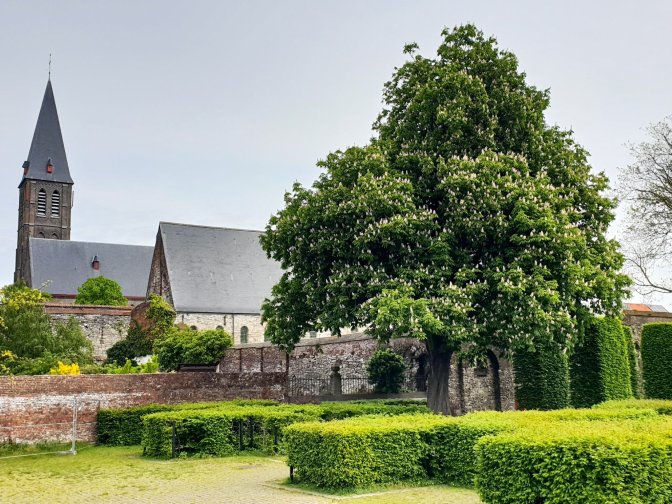
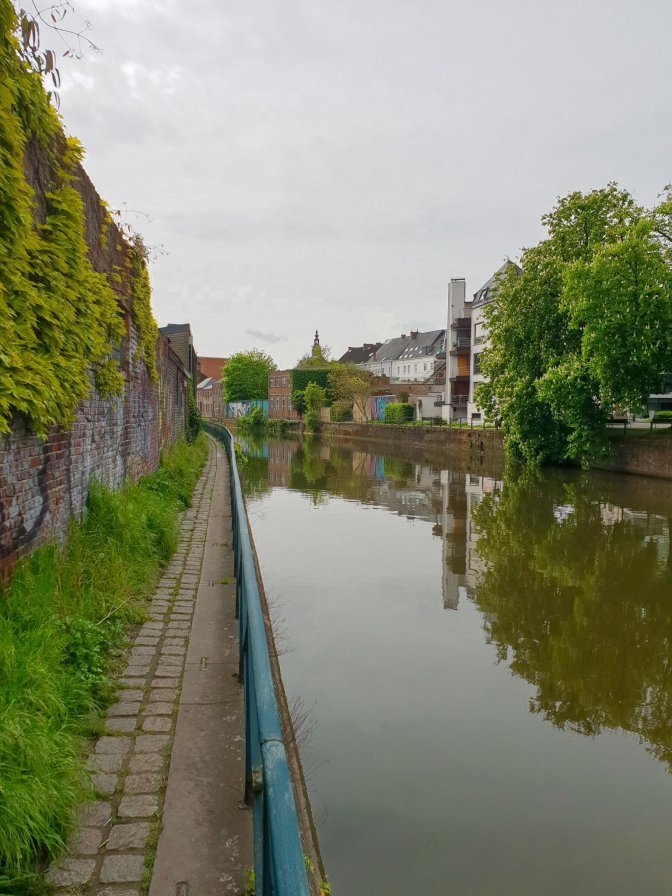
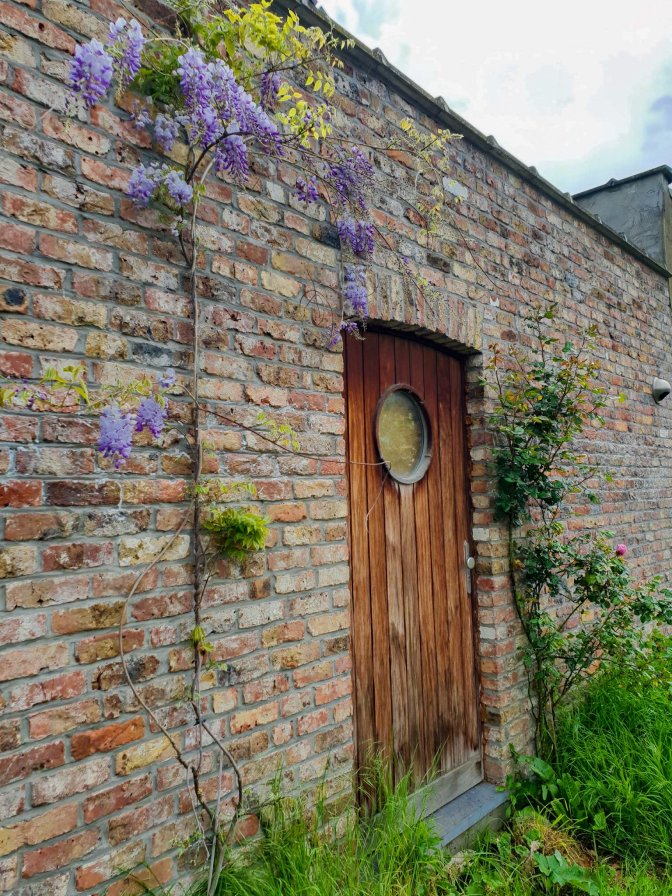
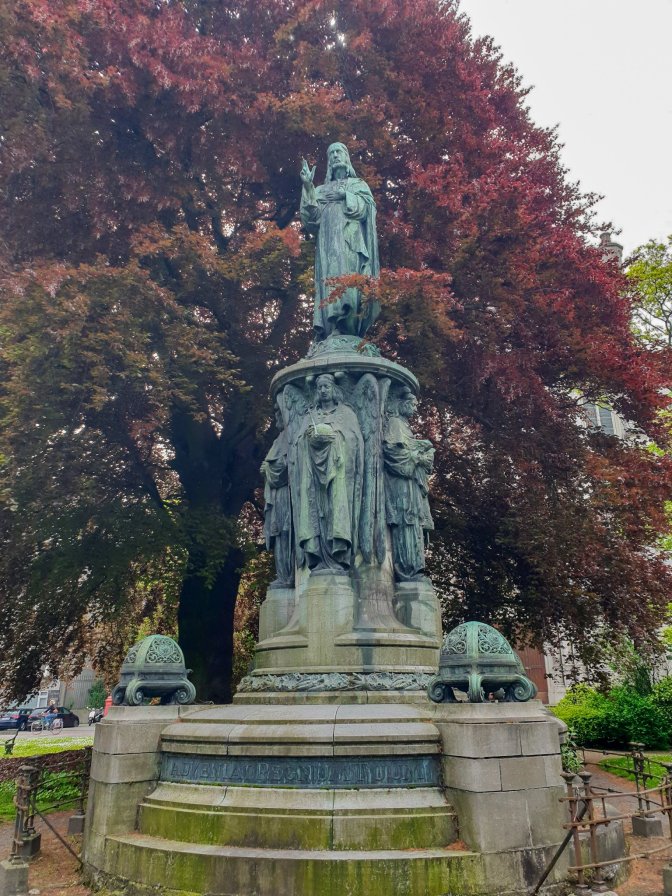
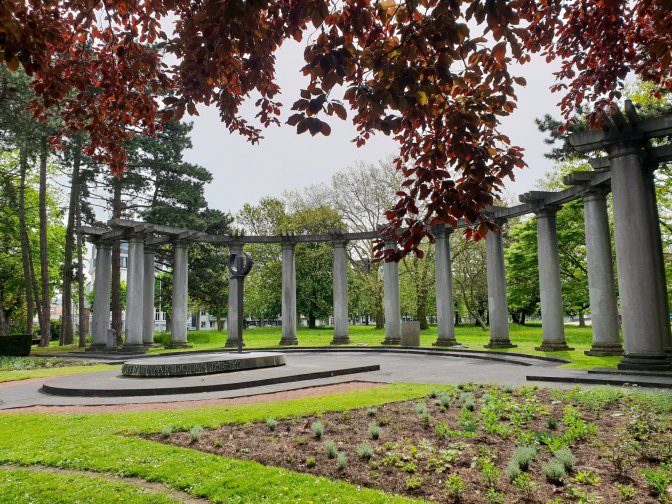
Leaving St. Bavo behind, the hike meanders thru the cityscape, past the Begijnhof, a war memorial, and a few interesting bars which were either not open or too early for drinking.
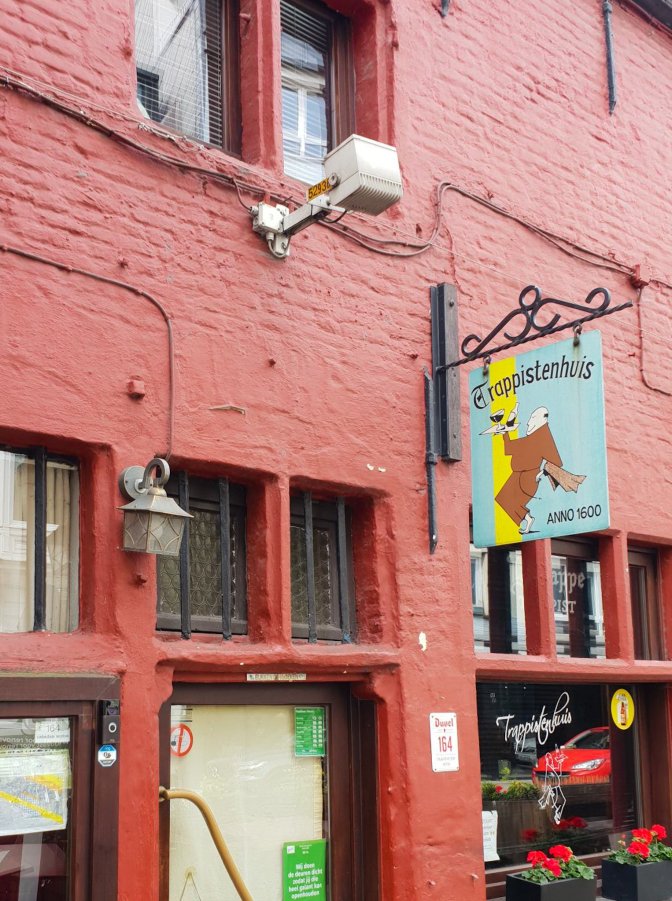
Trappistenhuis
A cool-looking bar near the Sint Annaplein which was closed during this part of the walk. One to come back to another time.
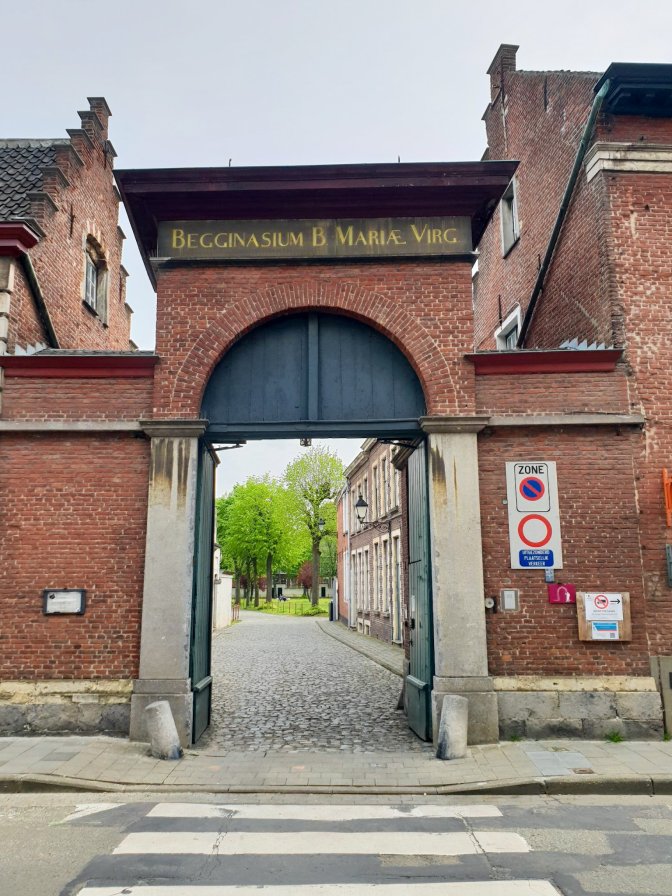
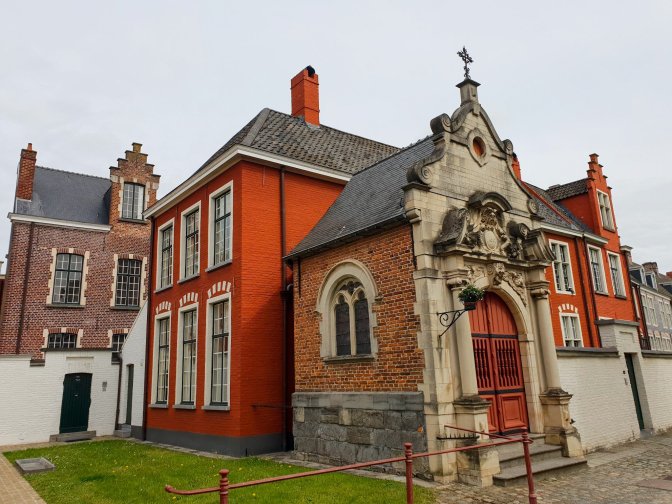
Klein Begijnhof
Make sure to take a quick peek and stroll through this hidden picturesque begijnhof.
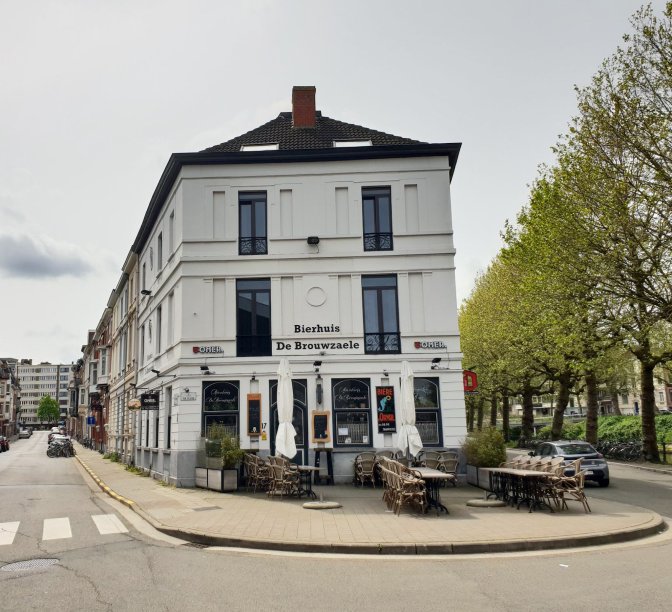
Bierhuis Be Brouwzaele
Kaffee de Planck
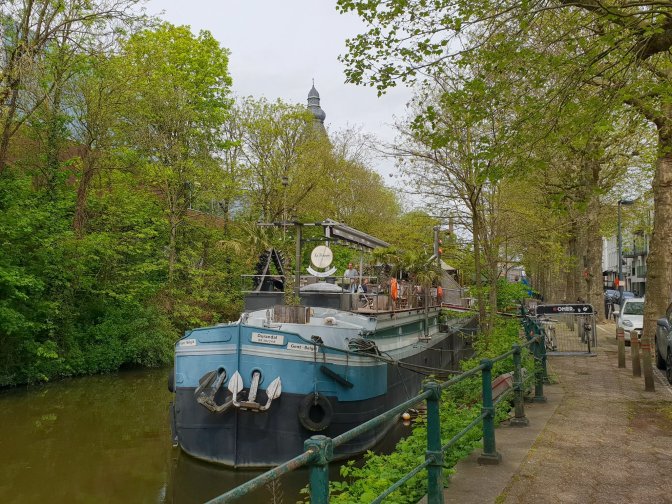
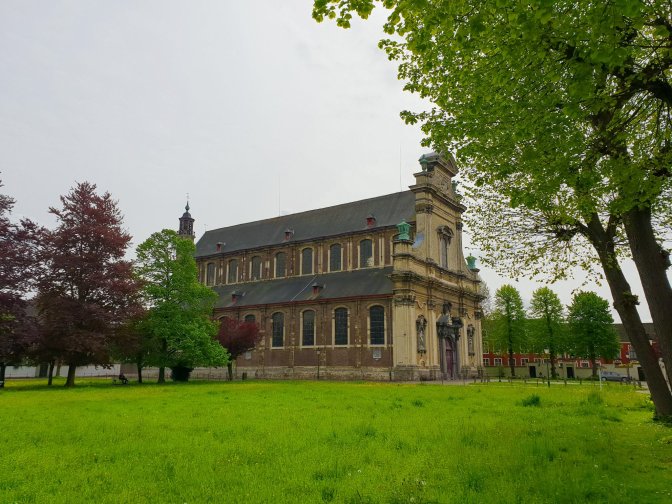
A short distance away from the above two interesting beer spots was the second abbey, another from the industrious St. Amand.
St. Peter’s Abbey
St. Peter’s has a much less colorful history. It was founded at the same time as St. Bavo’s and essentially the city of Ghent grew up around these two abbeys3. Several Counts of Flanders are buried here.
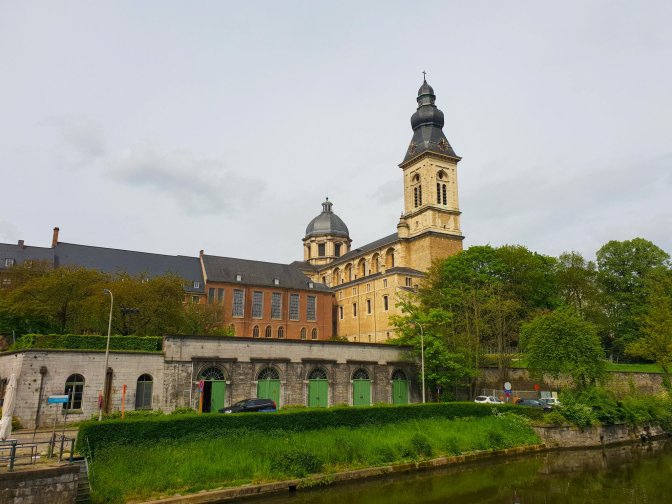
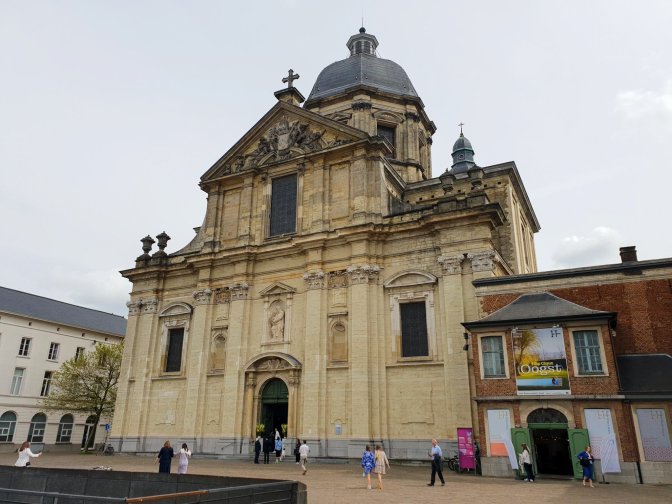

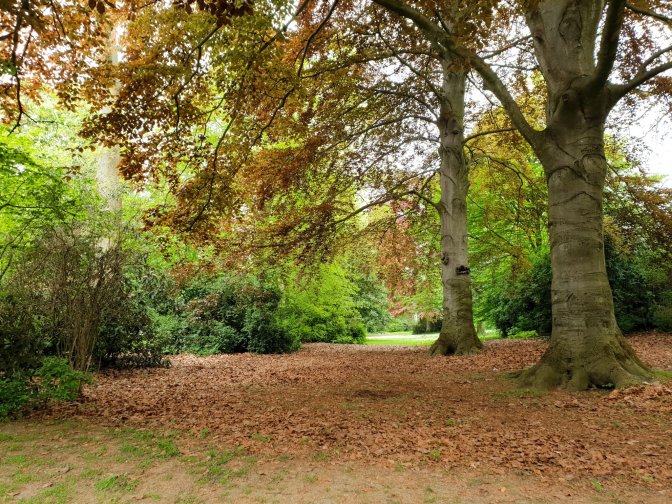
After St. Peter’s there is a small section of Citadel Park before reaching the next abbey site.
Bijloke Abbey
The site was both an abbey for Cistercian nuns and a hospital. Today it is the Ghent City Museum (STAM).
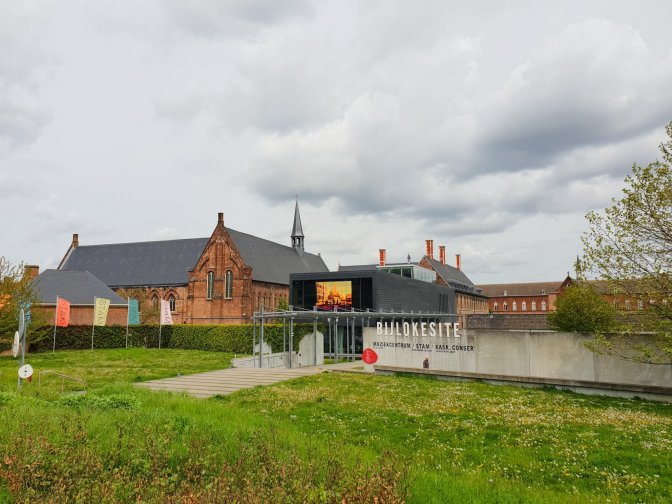
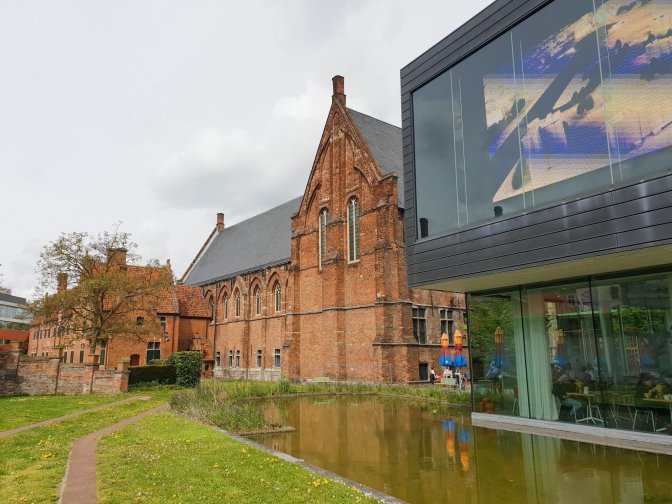
From Bijloke, it is a scenic hike to Drongen.

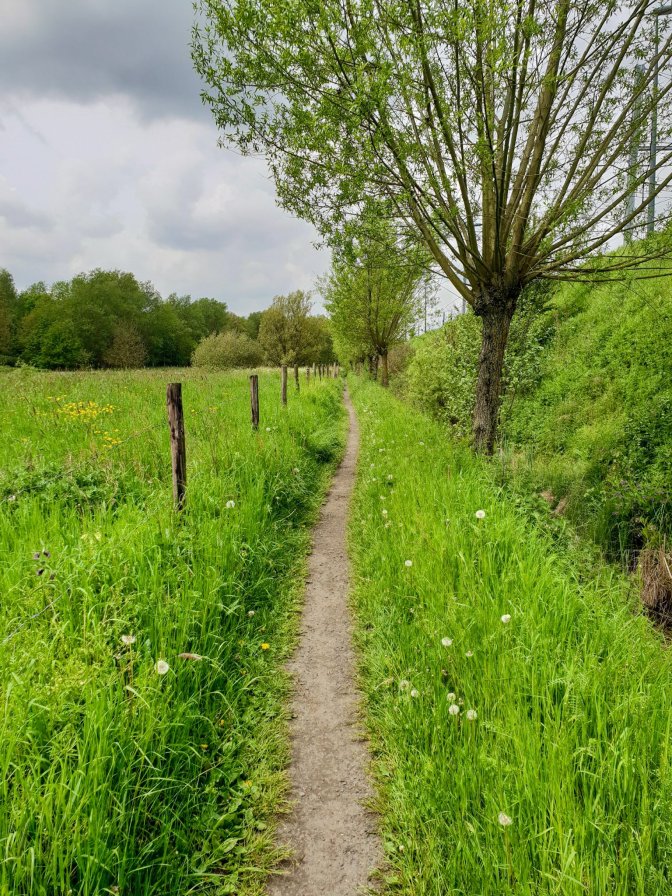
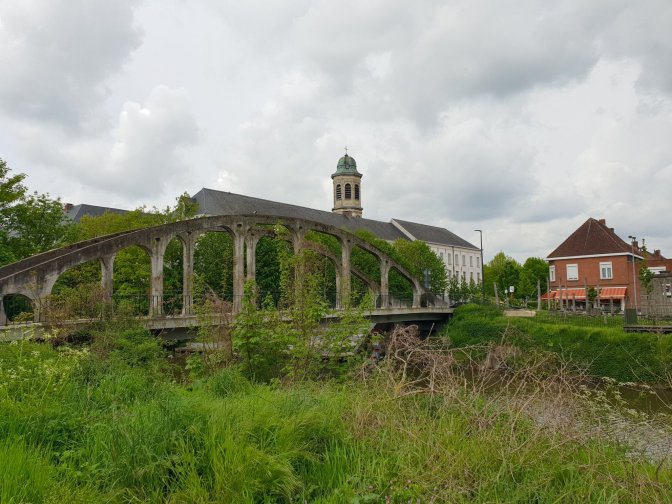
Drongen Abbey
Busy St. Amand gets credit for building this abbey as well.
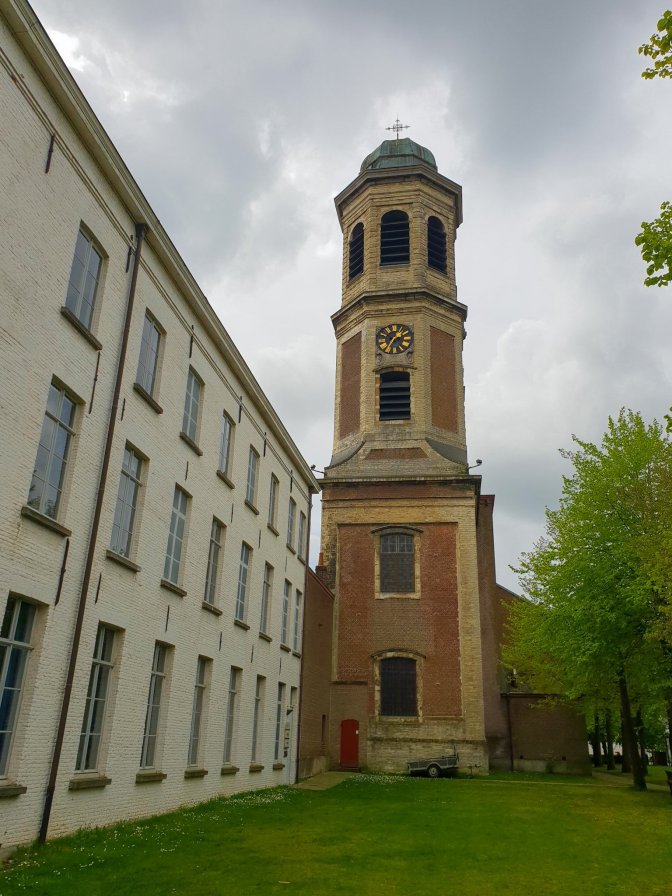
Reaching the half-way point, it was time for the first beer of the hike. Drongen’s pub is the unspectacular Grand Cafe. No special beers, so I had a Roman pils in the shadow of the abbey.

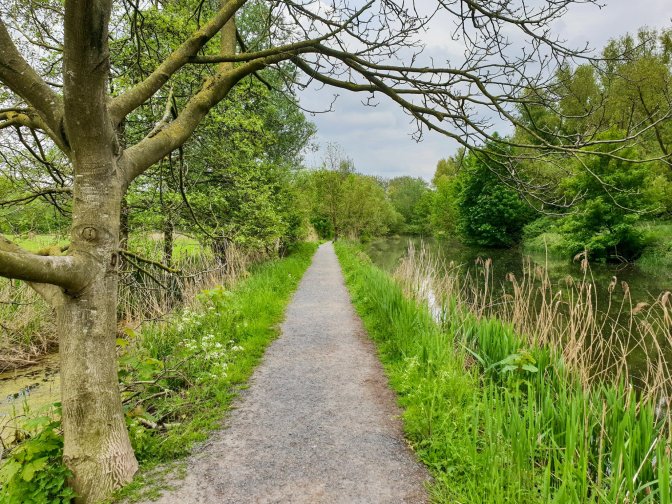
The hike then heads back into nature through the Stedelijk Natuurreservaat Bourgoyen-Ossermeersen.
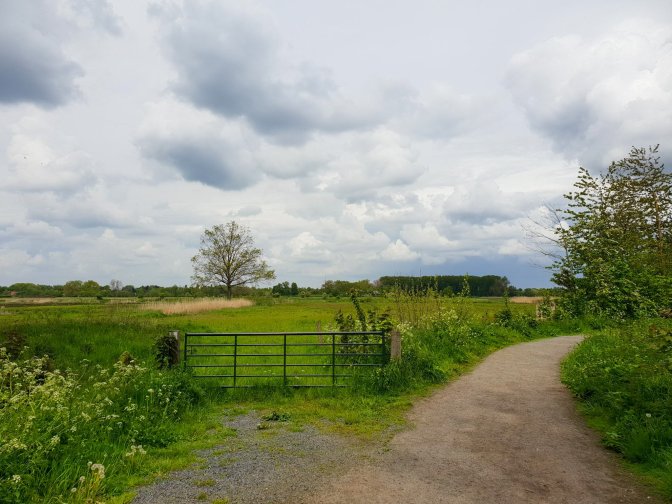
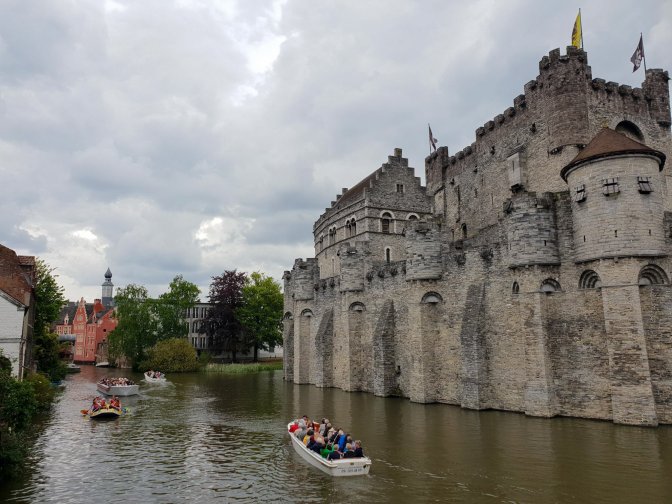
Approaching the city from a direction I had never come before, I arrived at the Castle of the Counts.
Gravensteen
The Castle of the Counts was the residence of the Counts of Flanders. The Counts of Flanders ruled Flanders up until the aforementioned marriage of Philip the Bold to Margeret of Flanders. Afterwards, the title of Count of Flanders was diminished or superceded by the Duke of Burgundy.
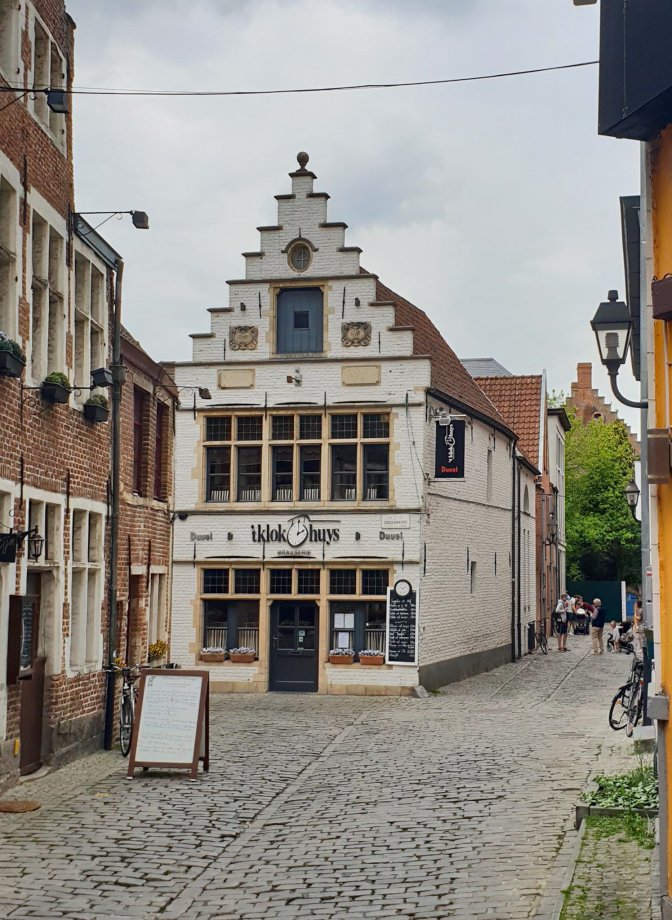
‘t Klok Huys
Another interesting pub worth checking out next time.
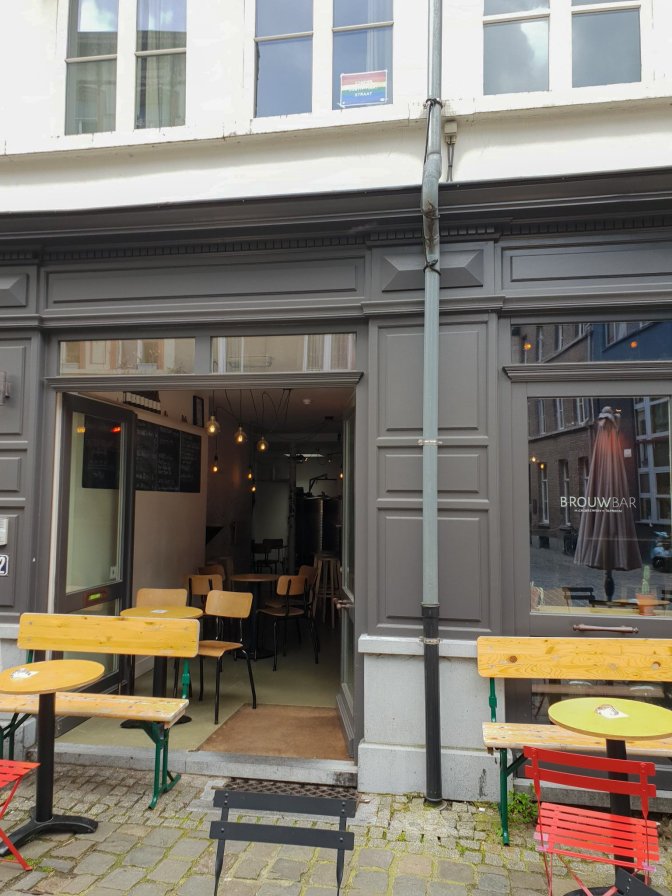
With the hike essentially over, it was time for some serious beer.
Brouwbar
This uninspiring-named microbrewery sat on the busy Oudeburg. Unfortunately, the brewery and it’s delicious Double New England IPA are now permanently closed.
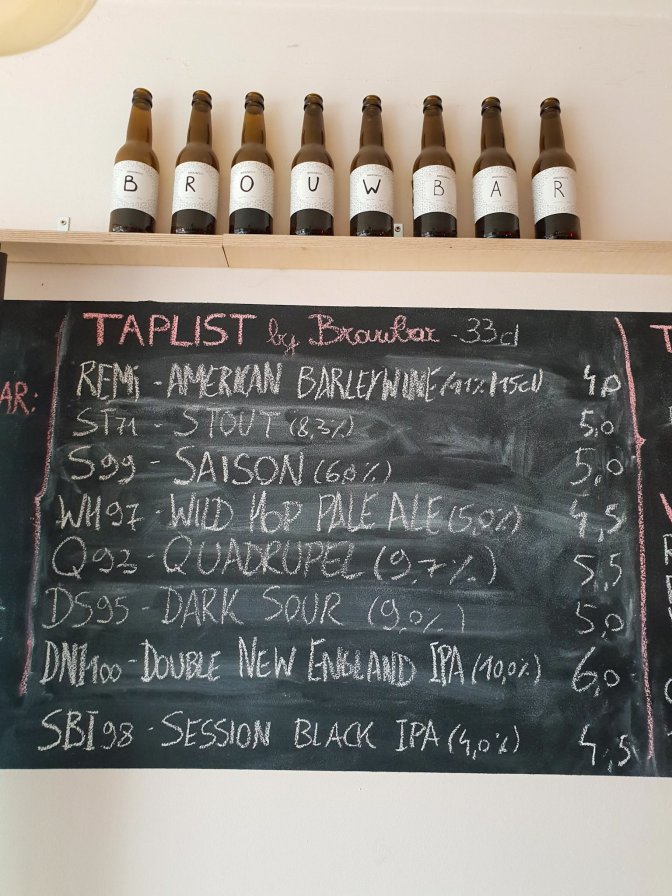
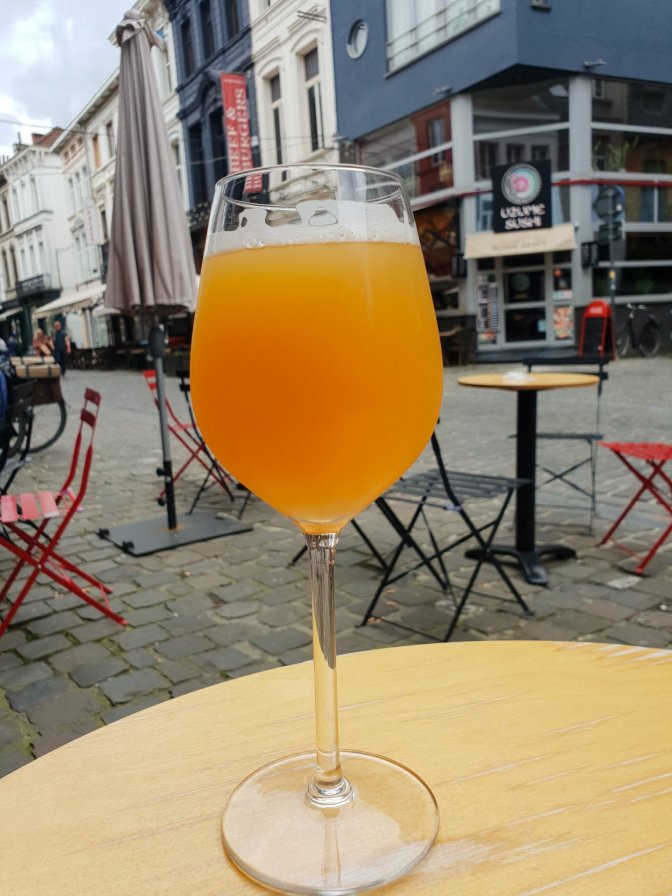
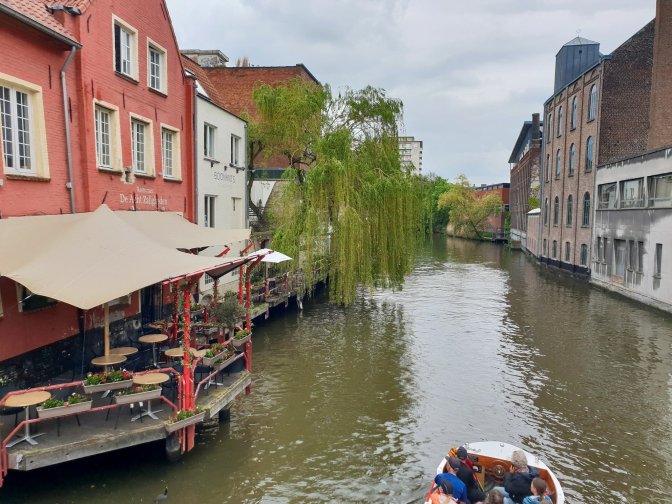
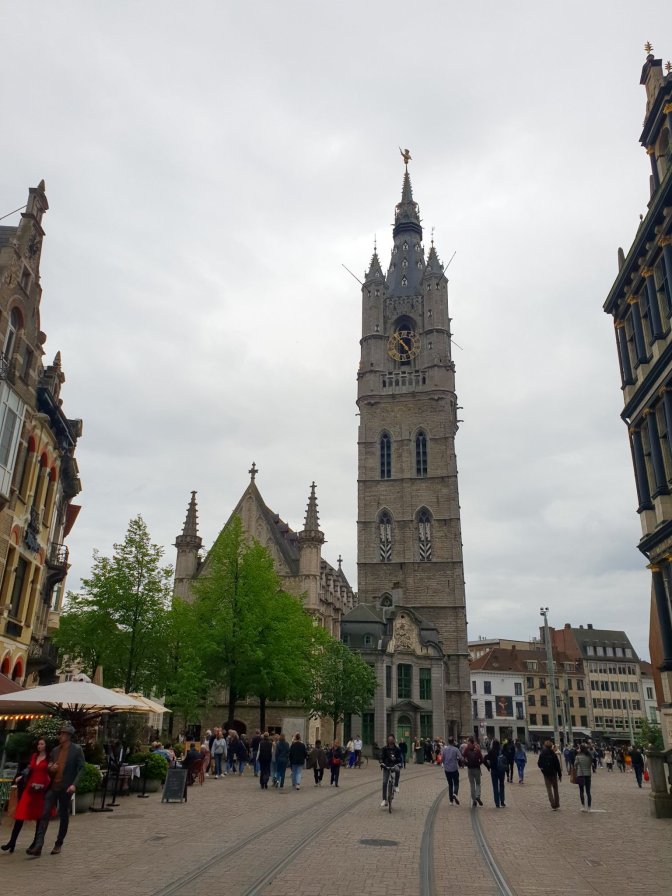
The pinnacle of the hike was the new Stadsbrouwerij Artevelde.
Artevelde Brouwerij
Opened in 2022, this glossy new addition to the city’s already vibrant beer culture is an example of how Belgians ingeniously mix history and beer. I didn’t find the beer to be memorable but the marketing is perfect.
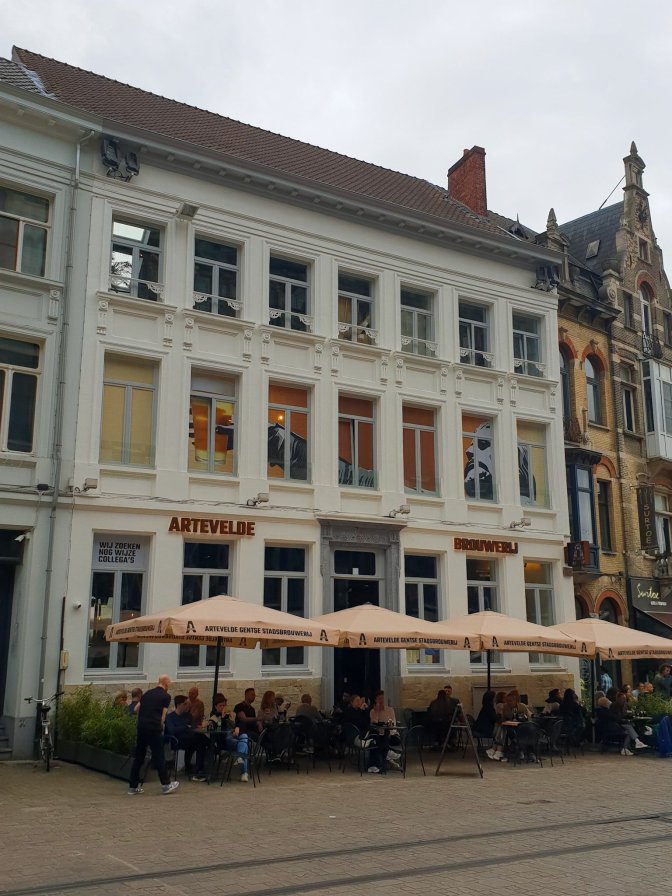

So who is Artevelde? Well, if you visit Ghent, you will pass by him on the Vrijdagmarkt. That is Jacob Van Artevelde. Artevelde was a wealthy businessman in the weaving industry who was also part of the Brewers Guild and became known as the Brewer of Ghent. It is Artevelde who loaned the money to Edward III mentioned earlier in this post. This was not strictly a favor but because England had put an embargo on shipping wool to Flanders, grinding the weaving industry to a halt. Artevelde temporarily saved the day. But this arrangement with England at this early stage of the Hundred Years War led to France putting an embargo on shipping grain to Flanders4. This and the rumor that Artevelde was going to appoint Edward III’s son Edward the Black Prince as the next Count of Flanders led to a posse of local citizens stalking Artevelde and murdering him with an axe to the head. Medieval justice.

Final Words
Bruges or Ghent? As I visit these cities more, the answer to that question becomes more difficult to answer. At many points in my life, I would have answered Bruges without hesitation. If your mind can filter out the hordes of tourists in Bruges, you are left with a pastoral paradise of cobblestone and quiet lanes. In Ghent, the pastoral needle trends down compared to Bruges, but the history needle has reached the point where it has surpassed Bruges and shows no sign of waning. In one hike, St. Amand, Jacob Van Artevelde, Edward III, the Hundred Years War, the Burgundians, and Charles V came together in their own tapestry of color making Ghent more tangible and connected than it ever has been before. Like being caught in the loom, history weaved right before my eyes.

Postscript
In 1567, two Catholic Dutch noblemen, Egmont and Horn, were imprisoned in the castle which Charles V built upon the ruins of St. Bavo Abbey in Ghent. They were under arrest by the Spanish Inquisition in a plot by Philip II of Spain, son of Charles V, to destroy Dutch nobles in order to subdue the Dutch provinces5. This was the time of the religious conflicts between Catholics and Protestants. Belgium was part of the Spanish Netherlands along with what is today the Netherlands and parts of France and Germany. The two noblemen were taken to the Grand Place in Brussels and beheaded.
This event caused horror in the Dutch part of the Spanish Netherlands and helped changed the course of Dutch history, rallying them over the next few years to fight the Spanish invasion. In 1576, the Dutch laid siege to Ghent and the Castle of the Spaniards to force the Spanish into signing a treaty known as the Pacification of Ghent. This was just the start of a long, bloody process of unifying the Dutch provinces which was still yet to come. Meanwhile, Charles V’s Castle of the Spaniards was razed to the ground, although it would not be completely demolished until the 19th century. Today only the ruins of old St. Bavo’s Abbey remain. The leader of the Dutch army in the siege? William of Orange, who would become the Father of the Netherlands. Little did I know during my hike that a few weeks later, I would be standing in a stairwell in William’s former palace on the very spot where he would be murdered 8 years later.
References
- Belgium by G.W.T. Omond (1908)
- https://en.wikipedia.org/wiki/John_of_Gaunt
- The Spell of Flanders by Edward Vose (1915)
- The Burgundians by Bart Van Loo (2019)


Wow, as always great post and pictures, great hike! 👏👏👏
Bruges or Ghent? Difficult, lately my preference is Ghent, too many tourists in Bruges.
Thanks for sharing, Matthew! 🔝
LikeLiked by 1 person
Thank you, Patricia! 😊😊
LikeLiked by 1 person
You poured a whole lot of history-rich brew into this mug, Matthew. Thank you.
LikeLiked by 1 person
Thanks Dad… and it took many pours to put all that history together and I have barely scratched the surface. 😁
LikeLiked by 1 person
Great informative post. I had no idea the early part of the Hundred Years War was financed by a Flemish brewery!
LikeLike