
“And now I'm drinking wine in France,
The helpless child of circumstance.
To-morrow will be loud with war,
How will I be accounted for?

It is too late now to retrieve
A fallen dream, too late to grieve
A name unmade, but not too late
To thank the gods for what is great;
A keen-edged sword, a soldier's heart,
Is greater than a poet's art.
And greater than a poet's fame
A little grave that has no name.”

Francis Ledwidge - Irish Poet and soldier, December 29, 1916
If there is one Beer & Bike ride which immerses you vividly into history, war, and a bygone age, it is a ride through the ghosts of one of World War I’s epicenters, the Ypres Salient. From the moment I arrived in Belgium in 2011, Ypres has beckoned me to return to it time and time again to tell and re-tell the stories of its tragedies, heroism, suffering, and rebirth. I have done some variation of an Ypres Beer & Bike ride three times in the past and in March 2025, I felt the call to do another.

Beer & Bike: Ypres Salient and Westvleteren
The best Belgian Beer & Bike ride brings you in touch with Belgium’s WWI past, teaches you the origin of the Remembrance Poppy, and let’s you drink the “Best Beer in the World”.
Continue reading Beer & Bike: Ypres Salient and Westvleteren

Every time I compose this ride, I feel like I have created the definitive version of it. This year was no exception. Unlike previous versions though, I decided to simplify it and leave out the extra 15-20km needed to include a stop at the Sint-Sixtus Abdij in Westvleteren. This time, in its place, I have added a pub stop which should be a pre-requisite for any bike ride in this region. As such, this is the more chill version of this ride which allows more time and energy to absorb it along the way.
While it covers much the same ground and sites as previous versions, I am always discovering something new; some new angle with which to appreciate the experience. In this case, I couldn’t help but notice a recurring theme as I stopped to read several of the memorial plaques. Four were dedicated to poets who had been swept up in the war. It was a keen reminder of the status that poets could have 100 years ago and how precious they were to society as they conveyed the emotions of the battlefield. A simple search on the web reveals just how intertwined poetry is with World War I. These four monuments are a mere fragment of a much more fascinating story.
Ride Details
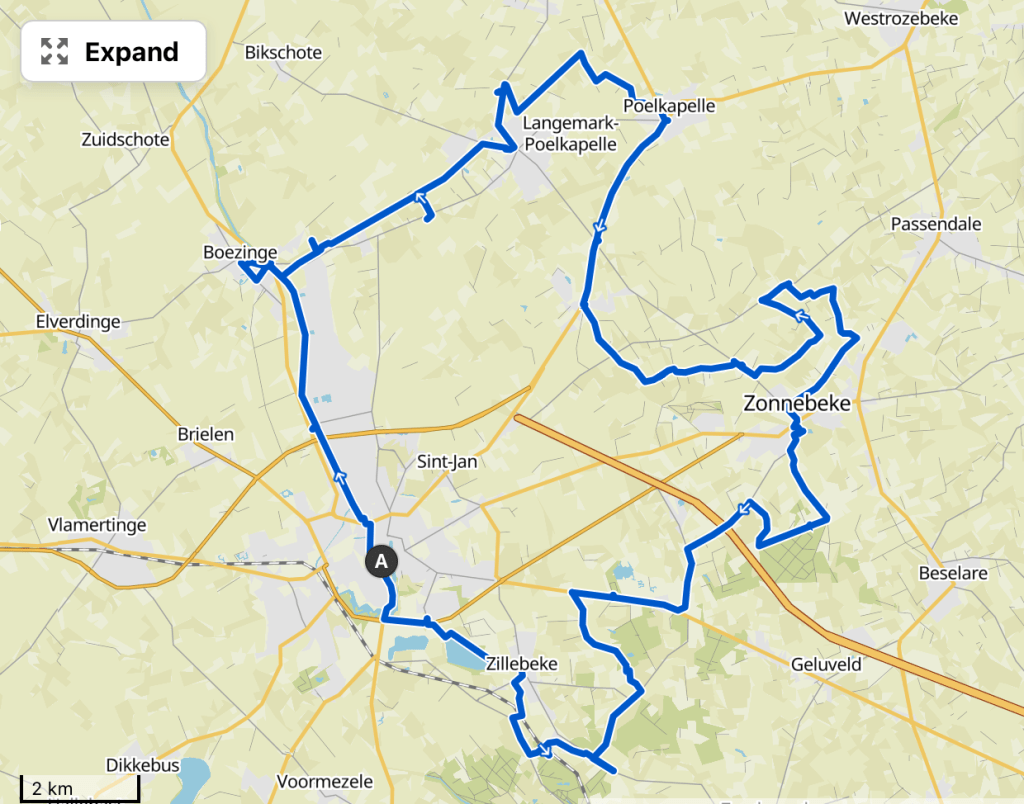
The ride starts from the center of Ypres and follows a clockwise direction. I rented a bike from Biking Box, a nice combo bar & bike rental place.
| Starting/Ending Point | Ypres Cloth Hall |
| Distance | 54.7km |
| My Moving Time | 3h 4m |
It’s Not Just a Beer, It’s a Journey
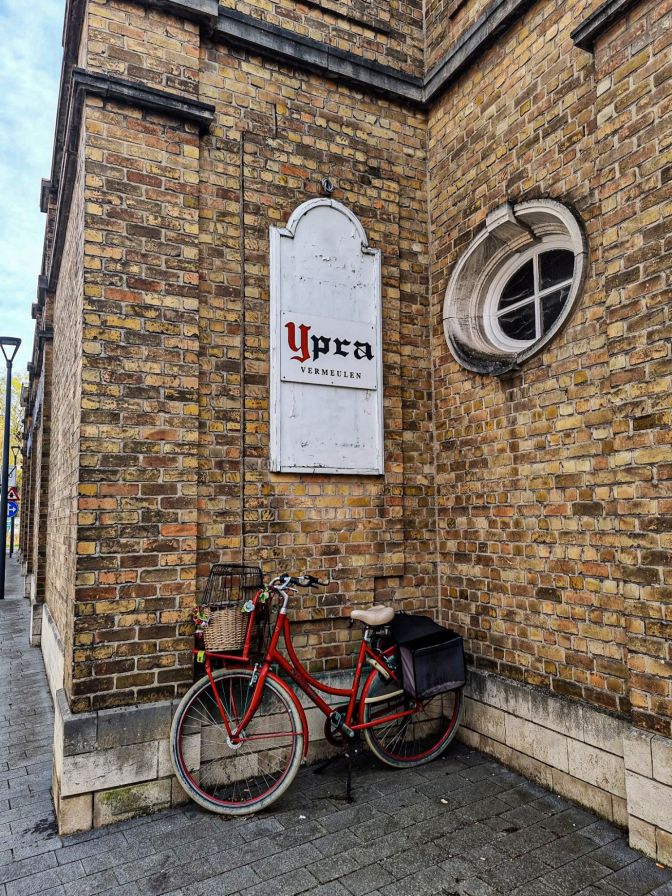
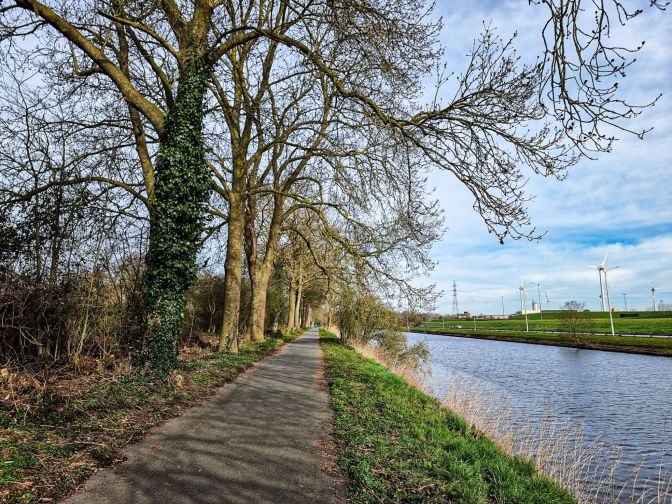
The beginning of the journey passes by the former Brouwerij Vermeulen who brewed the Ypra beer up until 1978. Today Ypra is brewed by the Omer-Vanderghinste brewery. From here, you head north and then follow the canal on the left bank.
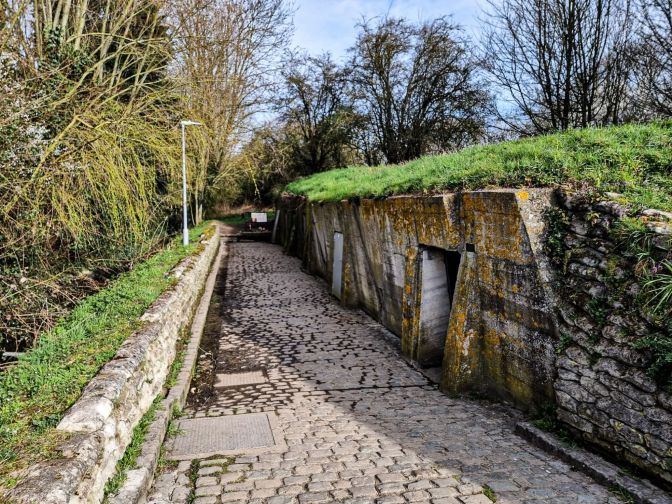
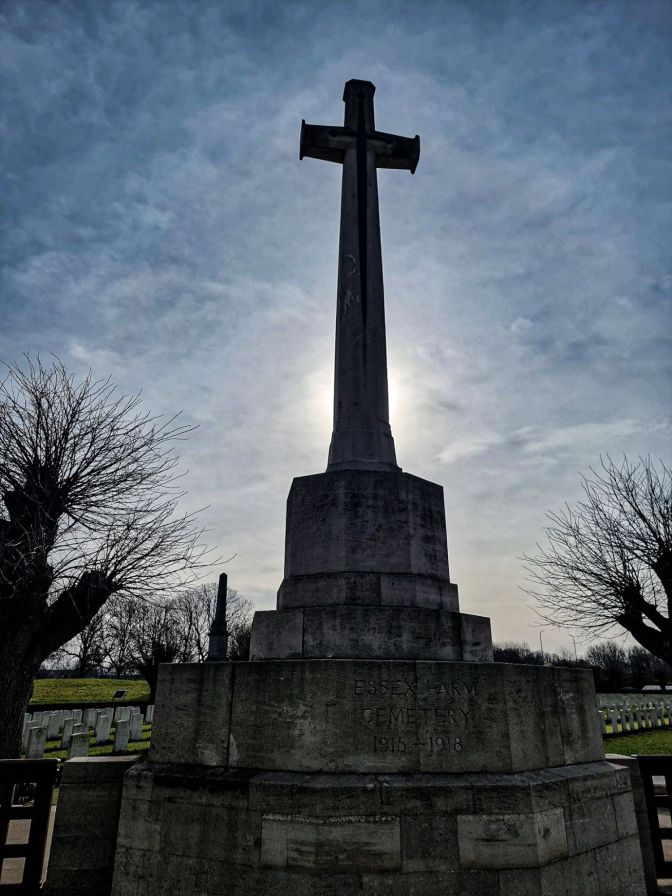
John McCrae’s Dressing Station / Essex Farm Cemetery
About halfway to the village of Boezinge along the canal is this medical dressing station used during the war. One of the doctors stationed here was Canadian John McCrae, who was also a poet. The dead from the station would be buried in the neighboring Essex Farm Cemetery where McCrae noted during a funeral service how quickly red poppies would grow over the graves. Sitting in the back of an ambulance next to the dressing station in May 1915, he wrote the most famous poem of World War I, In Flanders Fields.
“In Flanders fields the poppies blow
          Between the crosses, row on row,
           That mark our place; and in the sky
           The larks, still bravely singing, fly
          Scarce heard amid the guns below.”

Excerpt From In Flanders Fields, and Other Poems, John McCrae
McCrae died of pneumonia in January 1918 while serving at a hospital in Boulogne-sur-Mer, France.
Boezinge & Brouwerij Leroy
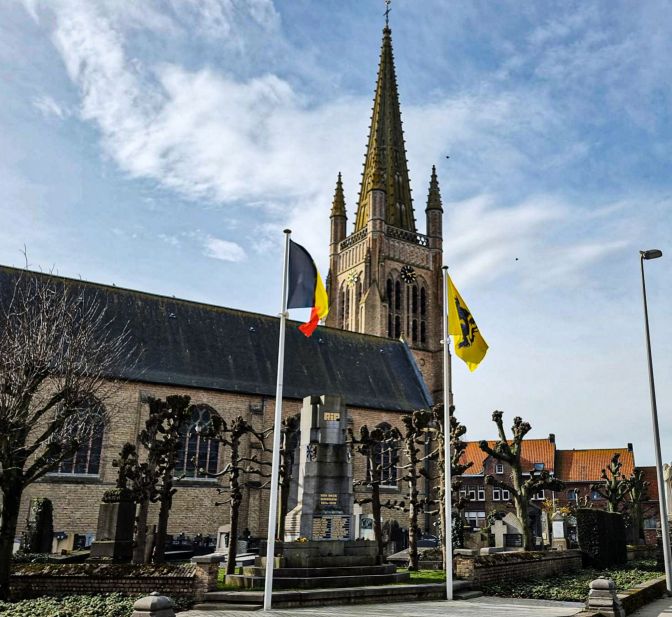
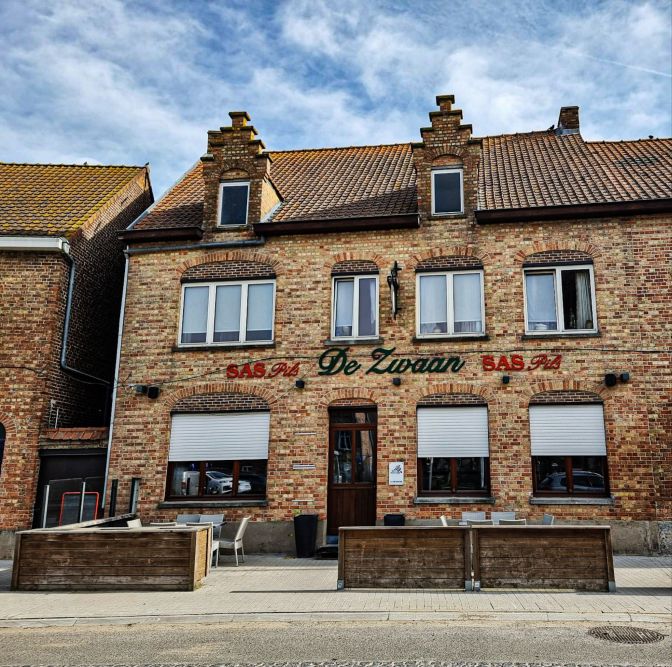
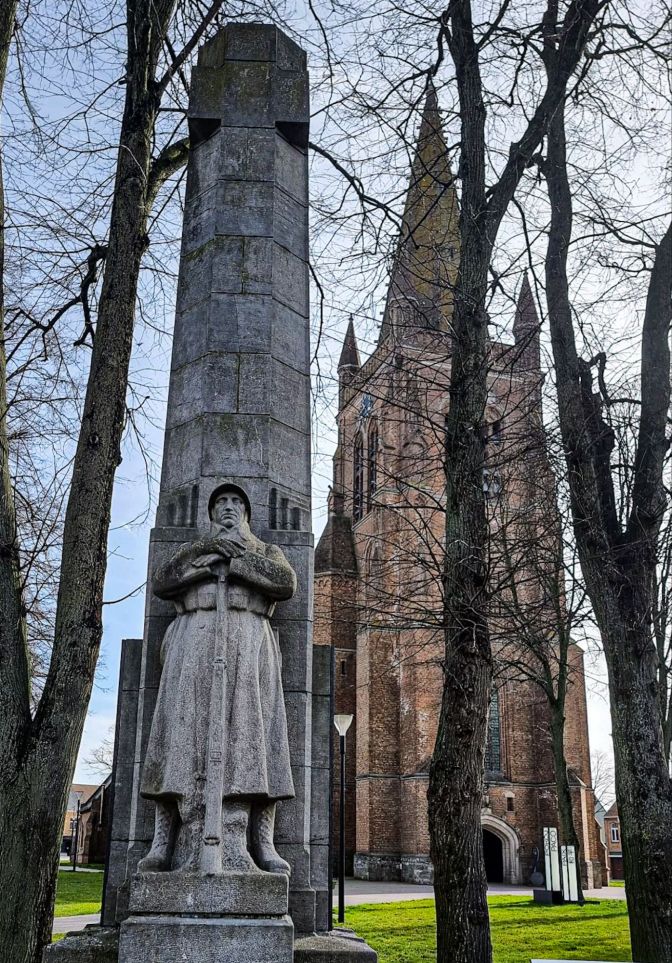
This quiet village marks the pivot point of the ride as it turns east from here. It has all the earmarks of a small West Flanders village. The customary look of its spire, war memorial, and amber-bricked houses including the De Zwaan pub which was still slumbering during my morning visit. There is no visitor center at the brewery. It brews the Sas Pils served at many of the region’s pubs.

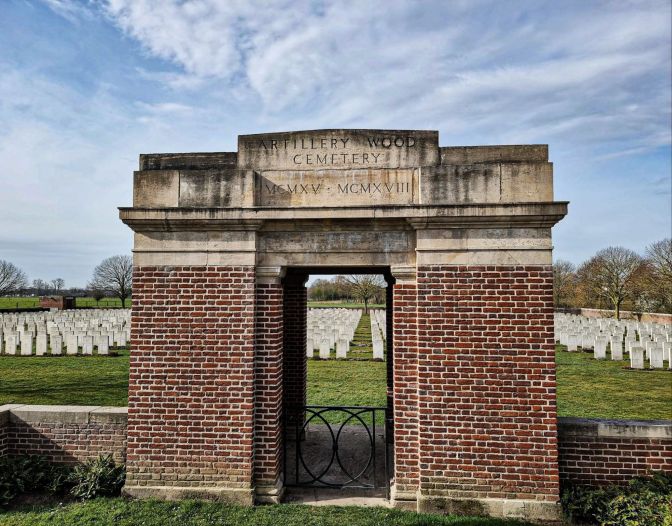
Artillery Wood Cemetery
With over 1300 grave sites, this British cemetery contains the graves of the next two poets that I would encounter. One of them has a memorial nearby the cemetery.
Francis Ledwidge Memorial
Ledwidge was an Irish poet who was killed in action here on this spot during the opening salvo of the Battle of Passchendaele called the Battle of Pilckem Ridge in July 1917. His childhood home in Slane, County Meath, Ireland is today a museum dedicated to his memory. The poem at the beginning of this blog post gives a heart-wrenching look at the mind of someone coming to terms with dying in battle, which would come for him 7 months later.
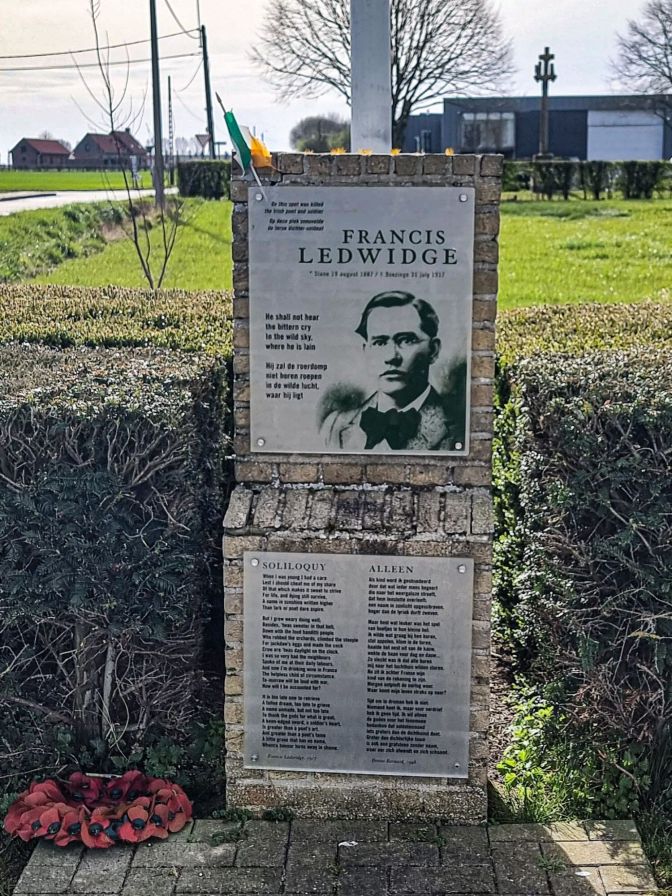
In November 1916, he wrote this short touching poem.
“AT A POET'S GRAVE

When I leave down this pipe my friend
And sleep with flowers I loved, apart,
My songs shall rise in wilding things
Whose roots are in my heart.

And here where that sweet poet sleeps
I hear the songs he left unsung,
When winds are fluttering the flowers
And summer-bells are rung."

Excerpt From The Complete Poems of Francis Ledwidge,
Francis Ledwidge
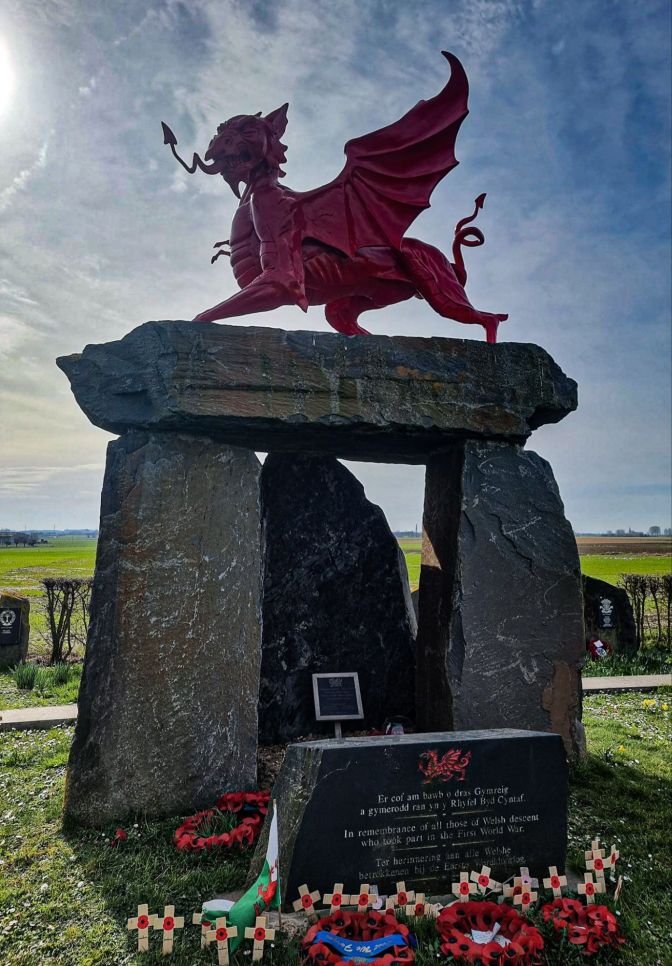
Welsh Memorial
This memorial stands for all the Welsh who fought in the war. The location is along the ridge where the Battle of Pilckem Ridge took place. Nearby is a memorial to a Welsh poet who was killed near this spot.
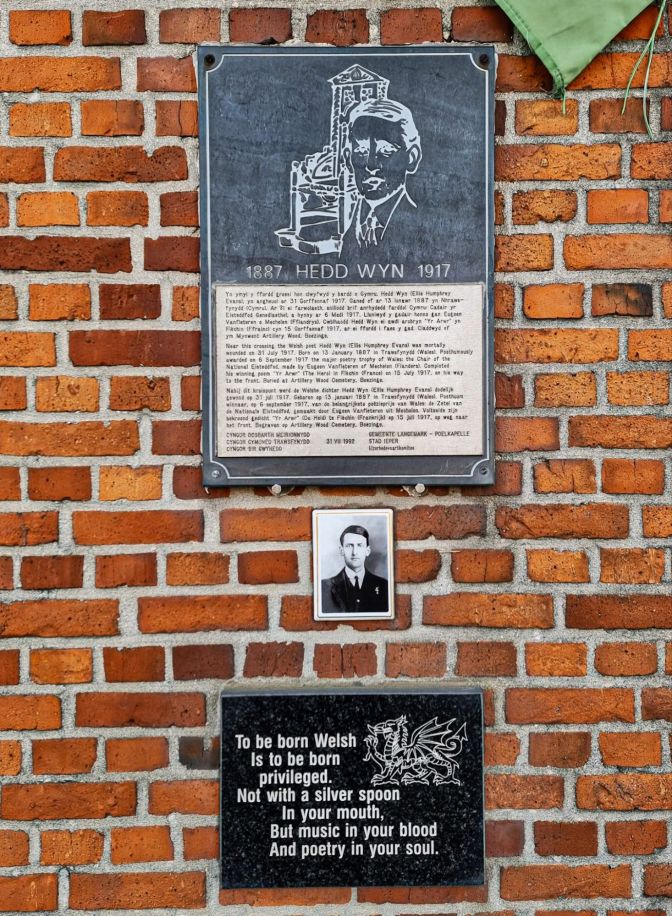
Memorial to Welsh Poet Hedd Wyn
Both Hedd Wyn and Francis Ledwidge lost their lives on the same day, July 31, 1917, during the same battle. Wyn is considered one of Wales’ most beloved poets. He was awarded a bard’s chair posthumously six weeks after his death. The chair was designed by Eugene Vanfleteren of Mechelen, Belgium. A biopic was also made about him in 1992. Wyn wrote his poetry in Welsh and perhaps his most famous work is called Rhyfel which means War. A translation of the poem can be found here.
From Hedd Wyn’s memorial, it is a relaxing ride towards the village of Langemark.
Langemark
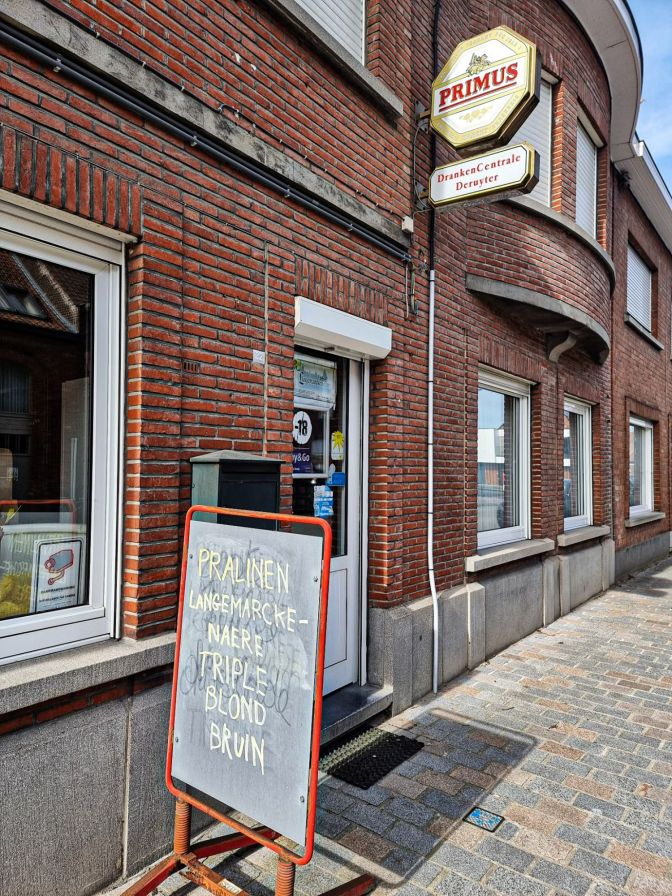
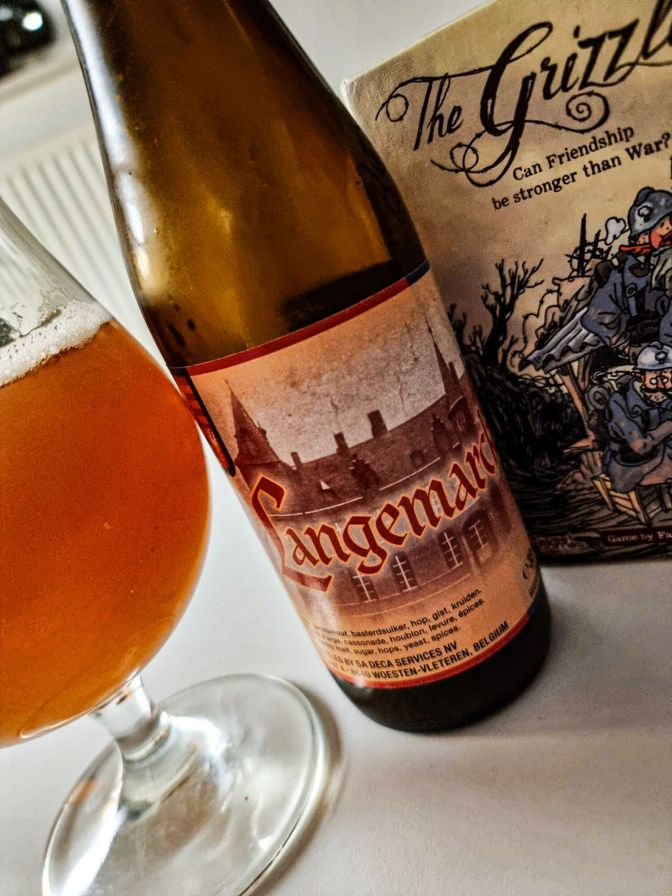
The ride briefly diverts through the village of Langemark which has a nice little shop selling the town-inspired Langemarckenaere beer. So I picked up a couple bottles to take home with me.
Langemark German Cemetery
Over 44,000 Germans are buried here, many of them in mass graves.
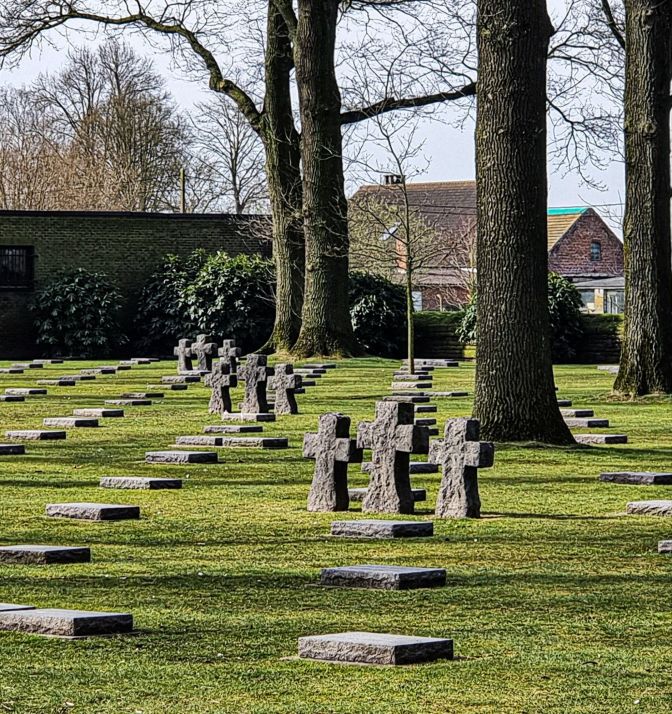
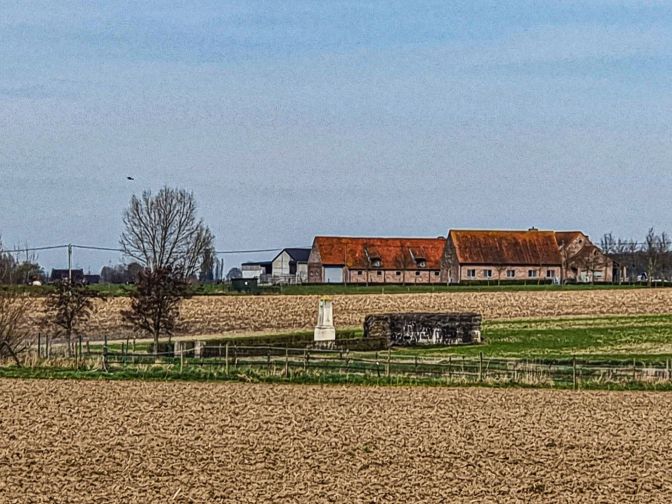
In the distance from the cemetery, one can see a German bunker. The landscape is replete with these type of small reminders of the war.
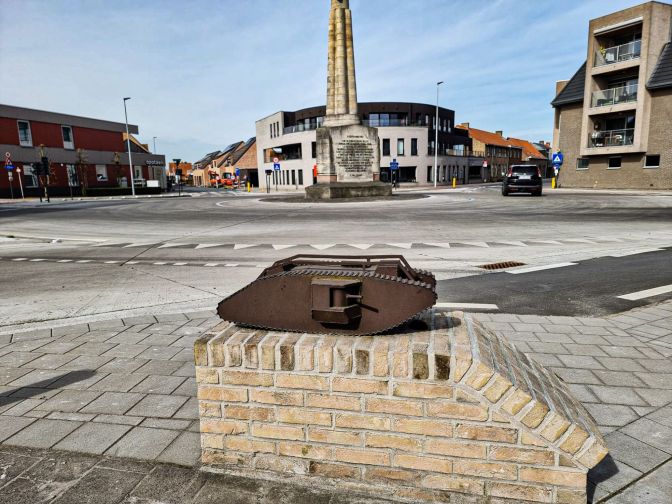
Poelkapelle Tank Memorial
At the end of WWI, a British MKIV tank was left behind in Poelkapelle and became a local landmark. A memorial was erected here to commemorate the British tank battalions that helped liberate Poelkapelle. The real tank was removed for restoration and replaced with a replica.

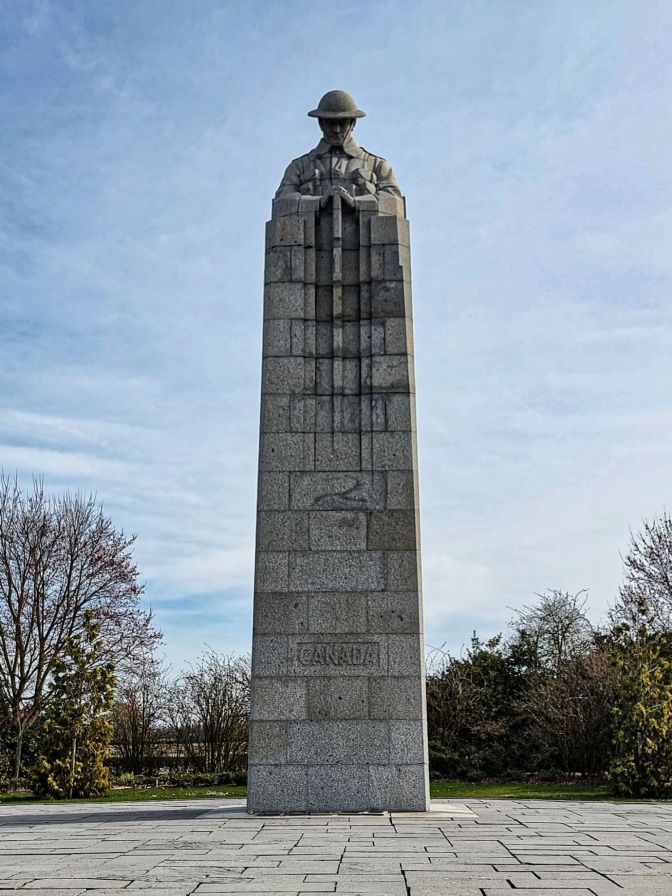
The Brooding Soldier
This iconic monument is the St. Julien Canadian Memorial.
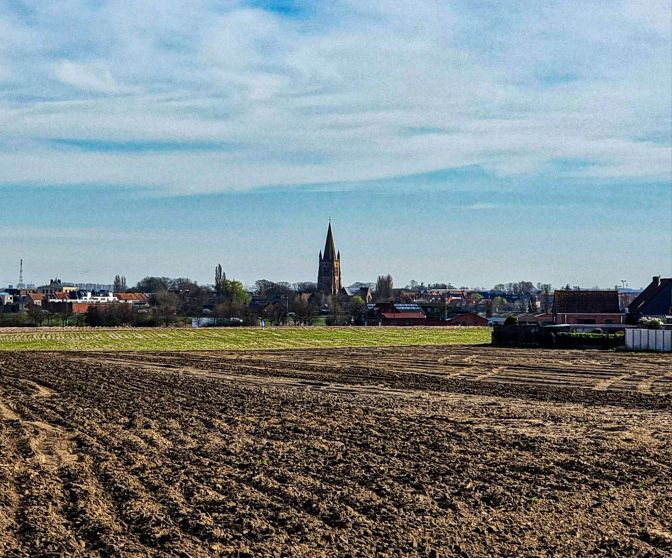
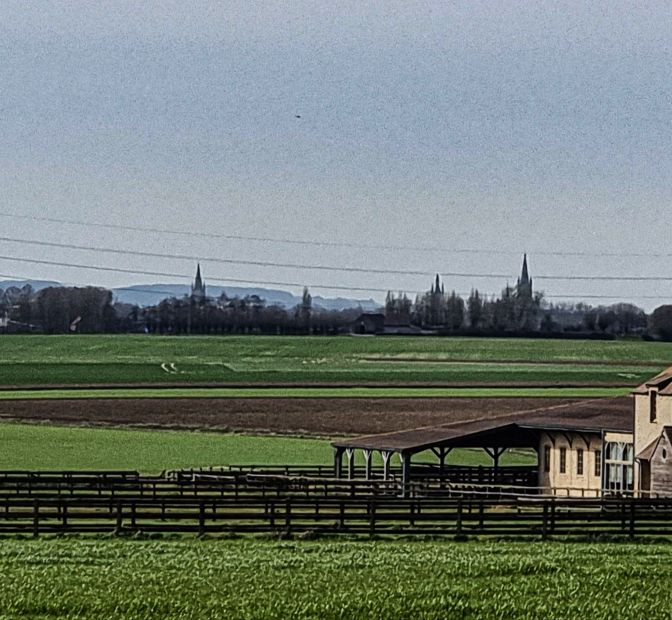
The ride is not known for its dramatic scenery but there are a few spots along different backroads where you catch a glimpse of a charming West Flanders village skyline.
Poet Ivor Gurney Memorial
On this spot in September 1917, Gurney, an English poet, was the victim of a German mustard gas attack. Of the four poets mentioned in this post, he was the only one to survive the war. Gurney is listed among the Great War Poets in Westminster Abbey’s Poet’s Corner.
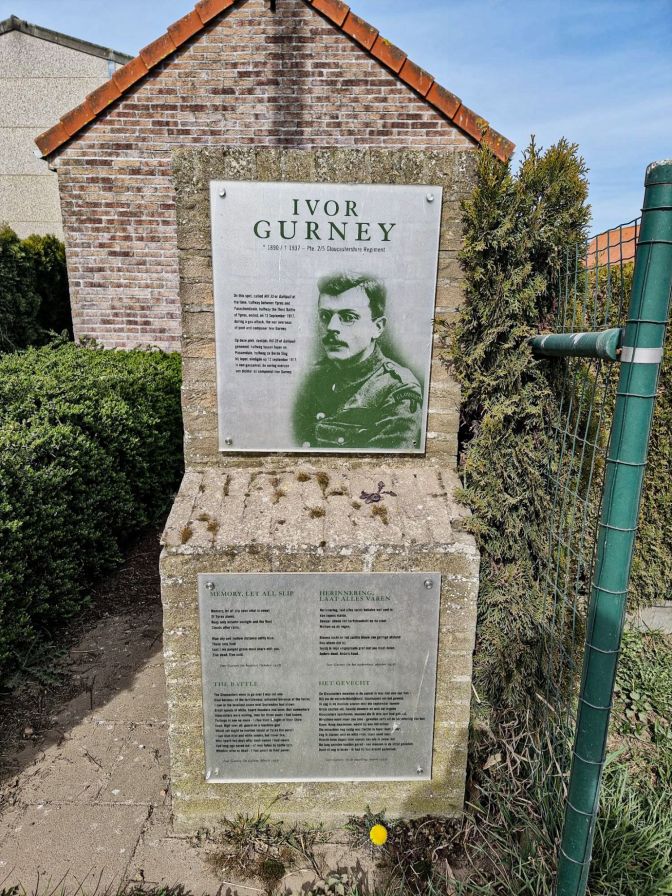
While serving in World War I, Gurney managed to get a book published called Severn & Somme, which includes the following composition of someone who has clearly witnessed the horrors of the war.
“PAIN

Pain, pain continual; pain unending;
Hard even to the roughest, but to those
Hungry for beauty.... Not the wisest knows,
Nor most pitiful-hearted, what the wending
Of one hour’s way meant. Grey monotony lending
Weight to the grey skies, grey mud where goes
An army of grey bedrenched scarecrows in rows
Careless at last of cruellest Fate-sending.
Seeing the pitiful eyes of men foredone,
Or horses shot, too tired merely to stir,
Dying in shell-holes both, slain by the mud.
Men broken, shrieking even to hear a gun.—
Till pain grinds down, or lethargy numbs her,
The amazed heart cries angrily out on God.”

Excerpt From Severn & Somme, Ivor Gurney
Dochy Farm New British Cemetery
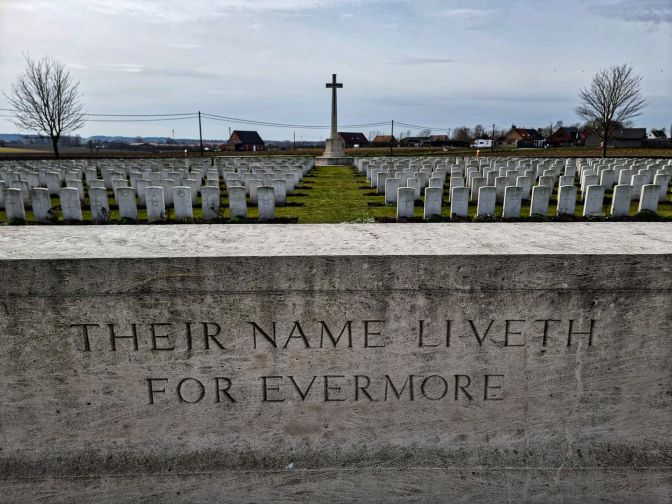
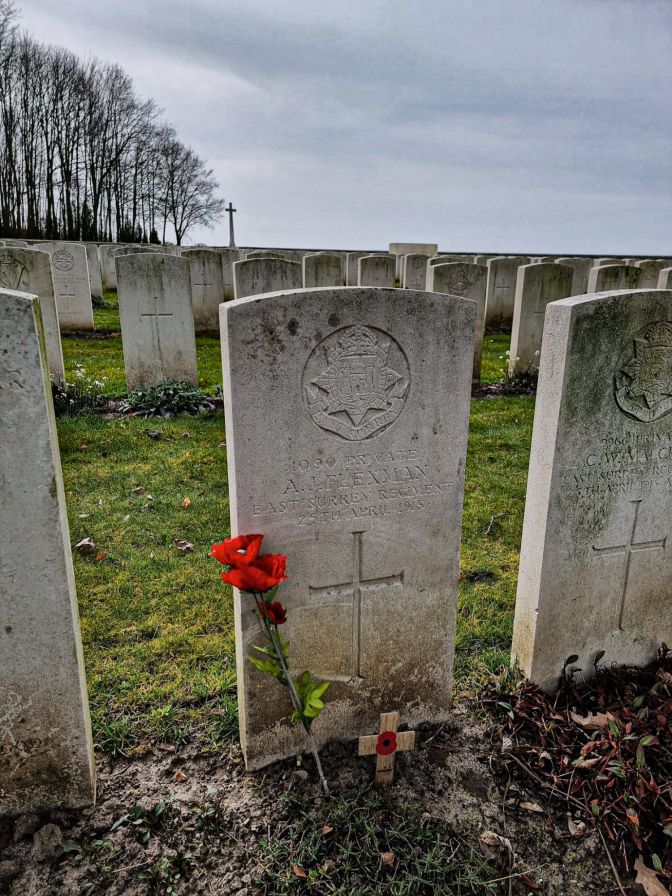
One of many cemeteries you will see on this ride. 487 are buried here.
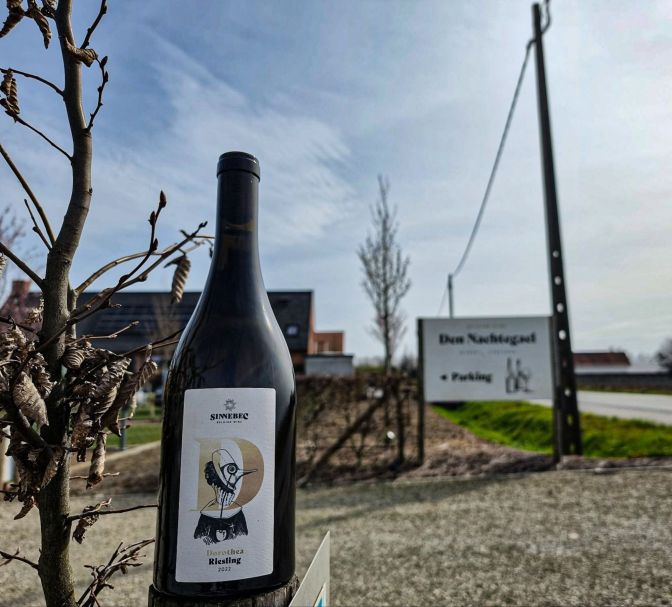
Den Nachtegael Winery
This was completely a serendipitous stop on the journey. It was not on my agenda. Den Nachtegael is a small vineyard with a tasting room where you can try their wines and a selection of local craft beers. I picked up a bottle of Riesling to add to the two bottles of beer already stowed away in my backpack.
De Oude Kaasmakerij
Normally a place I would stop for a Passendale beer and cheese croquettes, but I skipped it to save my energy for a pub I would stop at later on. You can see pictures in my Beer & Bike Ypres Salient & Westvleteren post.
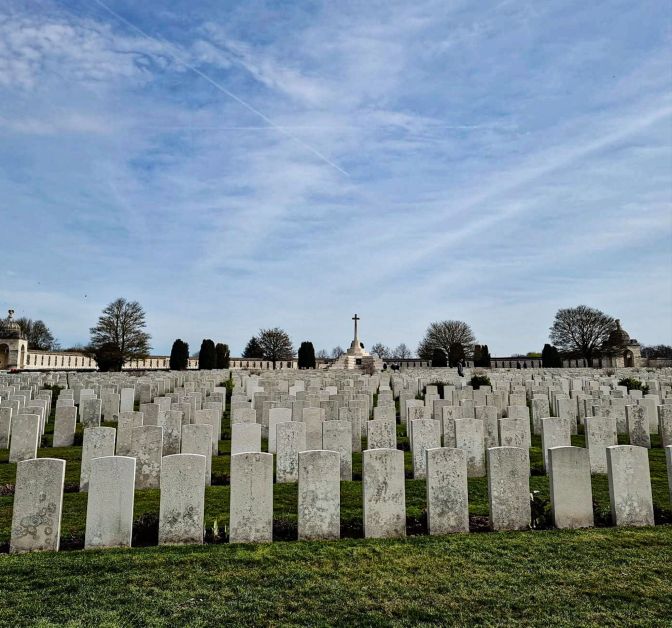
Tyne Cot Cemetery
This is the largest Commonwealth cemetery in the world with close to 12,000 buried.
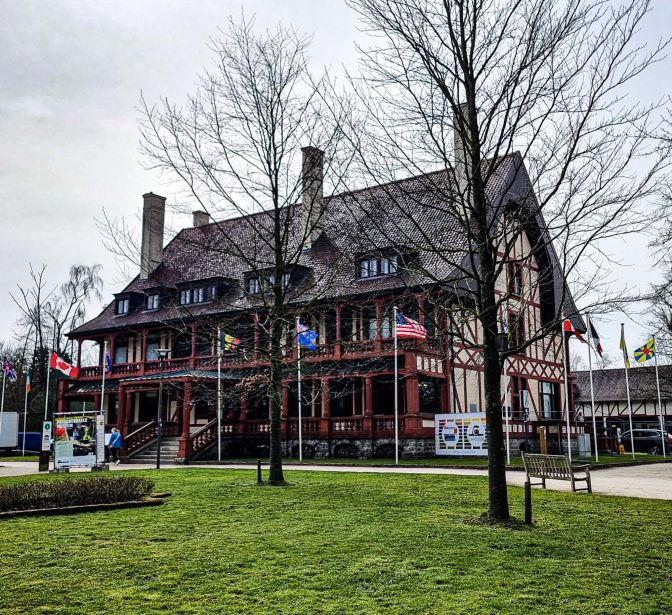
Passchendaele Museum
If there is one museum on this journey which is worth taking an hour break to visit, it is the Passchendaele Museum. It has room after room of interesting artifacts.
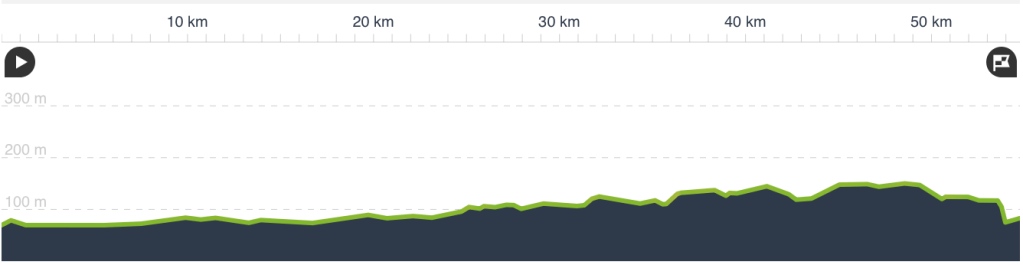
Getting from the museum to the next two cemeteries is probably the hardest segment of the bike ride. If you look at the elevation profile, right around the 43km-mark reveals the longest climb of the ride.
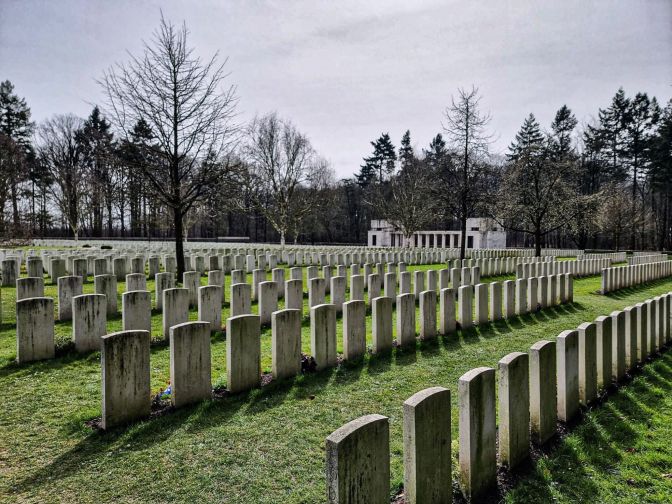
Buttes and Polygon Wood Cemetery
These two Commonwealth cemeteries sit across from each other and combine about 2500 burials.

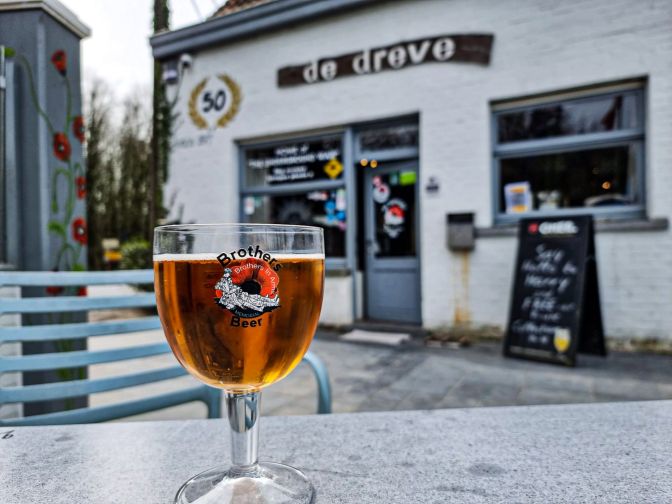
De Dreve
De Dreve is the quintessential pub of the Ypres Salient. Besides having their own Brothers In Arms beer, there is a mini-museum upstairs. Across the street is also the Brothers In Arms Memorial Park. This is one of those places that define Beer & Bike rides.
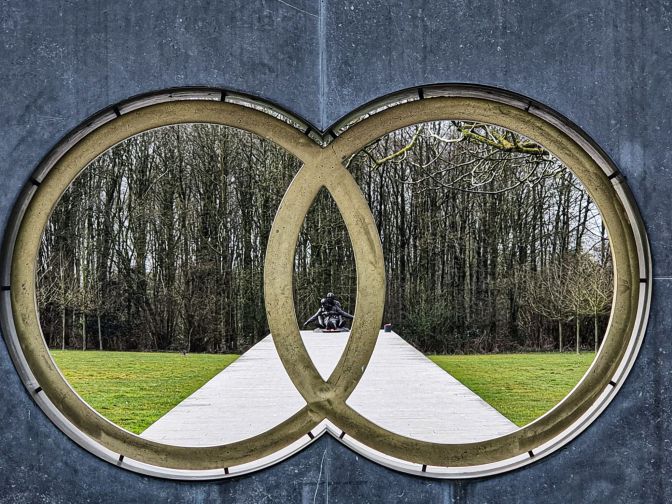
Hooge Crater
Museum and cafe for the Hooge Crater. It is a nice museum which I have visited in the past. I skipped it today, but it is a good place to stop for a bite to eat and drink as well.

Sanctuary Wood Cemetery
A Commonwealth cemetery of about 3000 burials.
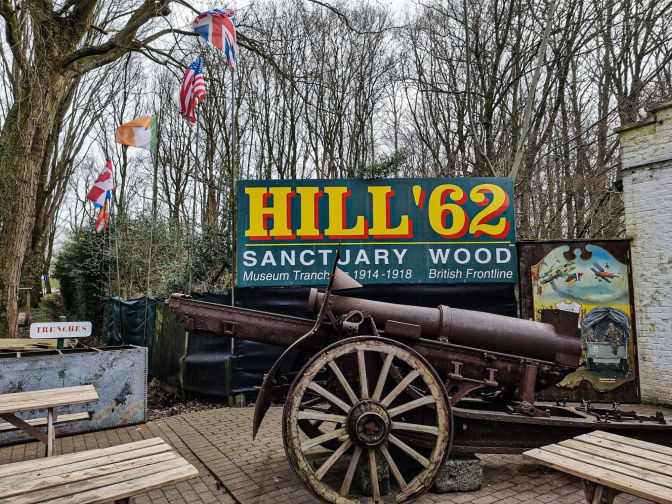
Sanctuary Wood Hill ’62 Museum & Hill ’62
Hill ’62 was a high ground defended by Canadians. The museum and cafe look charming from the outside, but it has never fit into my Beer & Bike schedule.
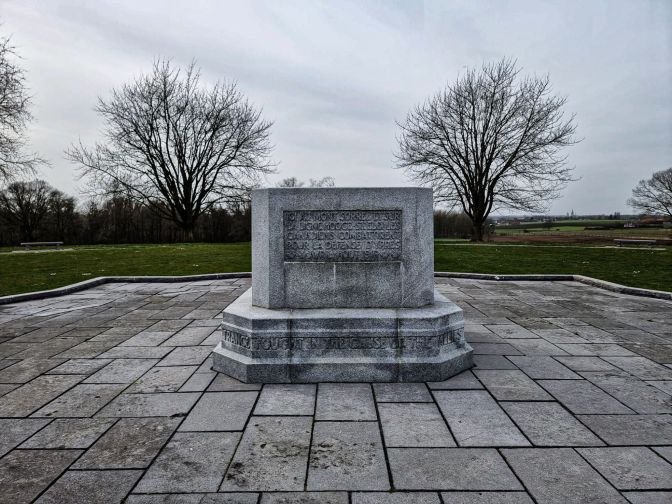
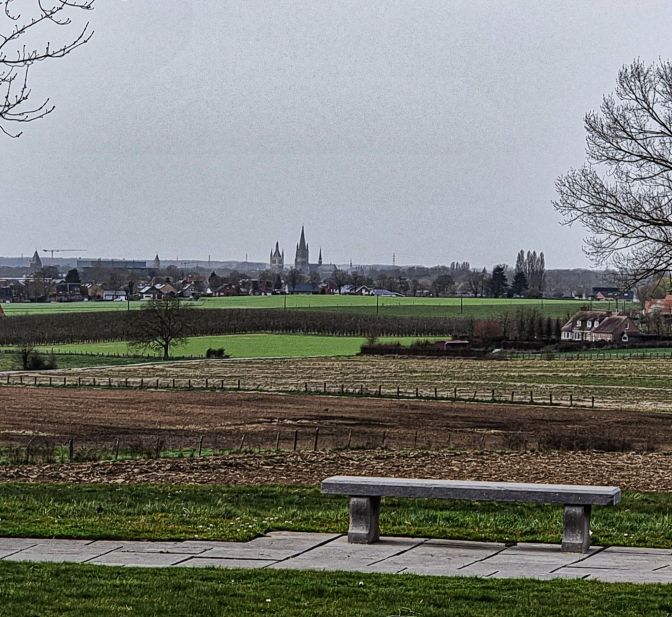
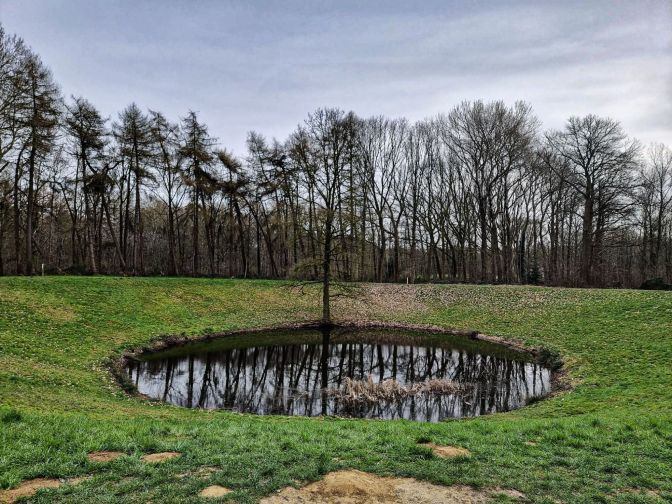
Caterpillar Crater
A crater formed during the Battle of Messines (1917).
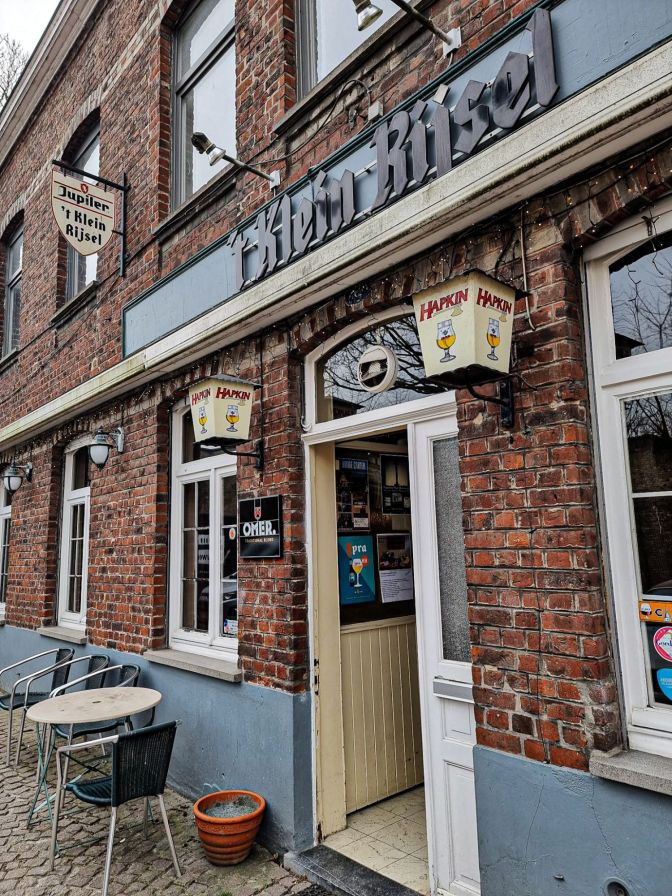
‘t Klein Rijsel
‘t Klein Rijsel is a classic pub of Ypres, but unfortunately it has succombed to time, change of ownership and changing economic landscapes. Gone are the WWI museum (everything was sold to a collector) and the house beer served in a ceramic mug decorated with a poppy. This is something which is becoming far too regular now with private war museums in Belgium. We need to cherish them while we can. To reminisce about the old ‘t Klein Rijsel, you will have to read my old blog post. That is not to say it isn’t a good pub anymore, but it’s just not the war icon it once was. Sad.
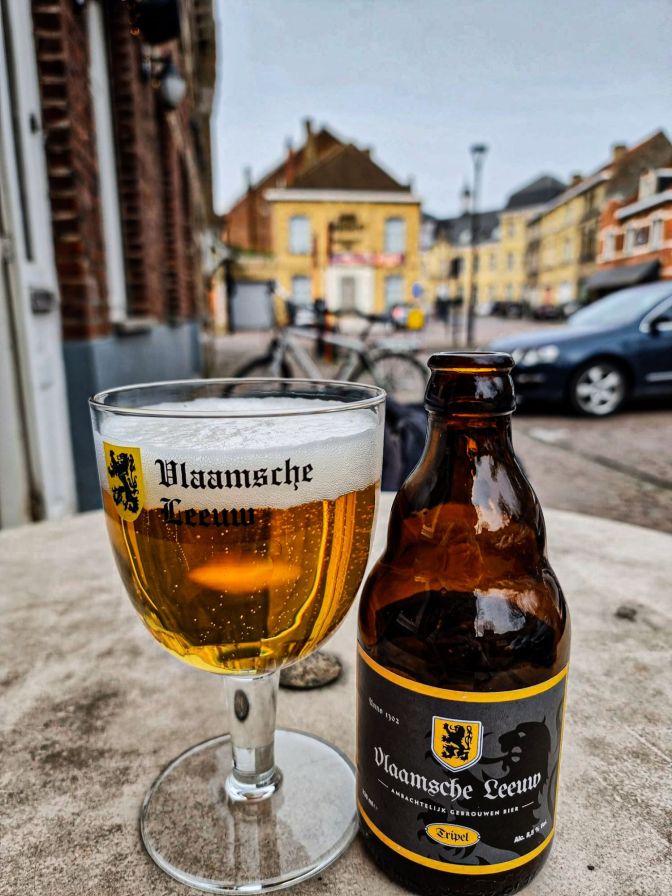
Biking Box Cafe
To cap off a fantastic Beer & Bike ride, I enjoyed a beer at the bike rental cafe; appropriately called Cyclist. The Biking Box cafe is not only highly recommended for renting a bike or joining a bike tour, it is a pub with an impressive selection of local beers and a very friendly owner who made sure I got a beginner’s education in the cycling culture of Belgium.

Final Thoughts
This ride is elegant. Thought-provoking. It never clashes harshly with the modern world. The Ypres Salient is a place which in many ways is frozen in time, as stationary as the white headstones and monuments which dot its landscape. There is a risk that after a while though, you become immune to the ghosts of the past with each passing cemetery. Yet there is a grace, a geometric splendor which will continually spark your interest; and, as I would find out, there is a poetry to this region. Scattered among the thousands of graves were men and women whose passion was to use language and words to create emotion; whose lives were suddenly thrust into our worst nightmares.
“But out of the dark came many voices, voices of lamentation, of home and love and hope and heroism and loftiest ideality, of romance, of strange comedy.”
“Poets great and poets minor followed the war or fought in it, and expressed its spirit with a personal, passionate fidelity impossible to historians.”
Great Poems of the World War edited by W.D. Eaton (1922)
In my opinion, World War I marked a turning point in writing. While I cannot speak of poetry, to me pre-WWI was the golden era of travel writing. Travel writers needed to compose descriptions of places to fill their readers with wonder; readers who couldn’t as easily travel to these places as we do today or look them up on the internet. It was all up to words which were sometimes accompanied by watercolor sketches. Cities in Europe hadn’t yet been reduced to rubble. There was a passionate awe mixed with an unwary arrogance or confidence to their writing. Then World War I came. Some of these books were describing things that had been destroyed by the time the book was going to print, forcing the author to add a preface lamenting the current state of Belgium and the loss of its landmarks. The combination of this Golden Era composition style and first-person perspective of the war made these books so vivid and fascinating. But did World War I diminish the romanticism of travel writing? Certainly war, time, and modern technology all played a part, but for sure when I browse my collection, there is nothing post-WWI that really comes close to matching the romance and passion of the writing that came before. Europe would take years to rebuild and then when things were starting to get back to normal, it would start all over again with World War II. By then, there was a new generation, new styles, new fashions. By this time, film had risen in prominence. Poetry also must have changed after World War I. To what degree remains for me to find out.
In conclusion, I have passed these poet memorials before. And only now on my fourth ride have their significance stood out to me. They have sparked a new curiosity to include their particular perspective and vision into future journeys. Already I have located the former home of Welsh poet Hedd Wyn to visit this Summer during my trip to Wales. And as sure as I am writing these words, there will be a fifth ride in the Ypres Salient or In Flanders Fields to see what new inspirations are waiting to be discovered.


 itsabrewtifulworld
“And now I’m drinking wine in France,
The helpless child of circumstance…”
You couldn’t have started on a more salient note (so to say). As one who served, not in battle but in a Vietnam-era army, I sometimes felt the helpless child of circumstances even drinking Heineken in Indianapolis. At 21, I was technically not a child. But when your life is tied to the military whims of your nation, there is a helplessness in that.
Thanks for this quiet, moody beer and bike and all its echoes. Ride safe!
LikeLiked by 1 person