
“Caernarvon is an ancient borough town, a favourite watering place”
G.N. Wright. “Scenes in North Wales” (1833)
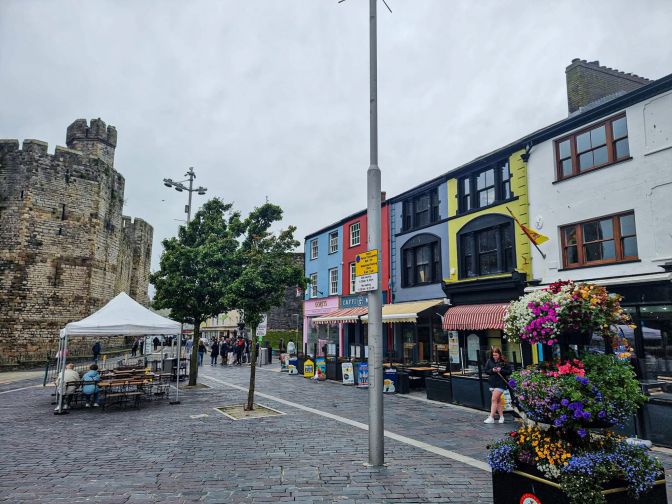
What better way to revive one’s hiking legs after three consecutive days of Snowdonia hiking than filling them with ale from the best watering places in Caernarfon. The day after reaching the top of Yr Wyddfa was typically gloomy, casting a pall over Castle Square whose colors struggled against the muting grey skies. The city was hushed for an August summer day. No noisy bus groups, only locals going about their daily lives. There wasn’t yet an energy on the streets, but the list of pubs looked promising. Before one gets to the drinking, one cannot possibly ignore the main feature of Castle Square, which is not, in fact, a pub.
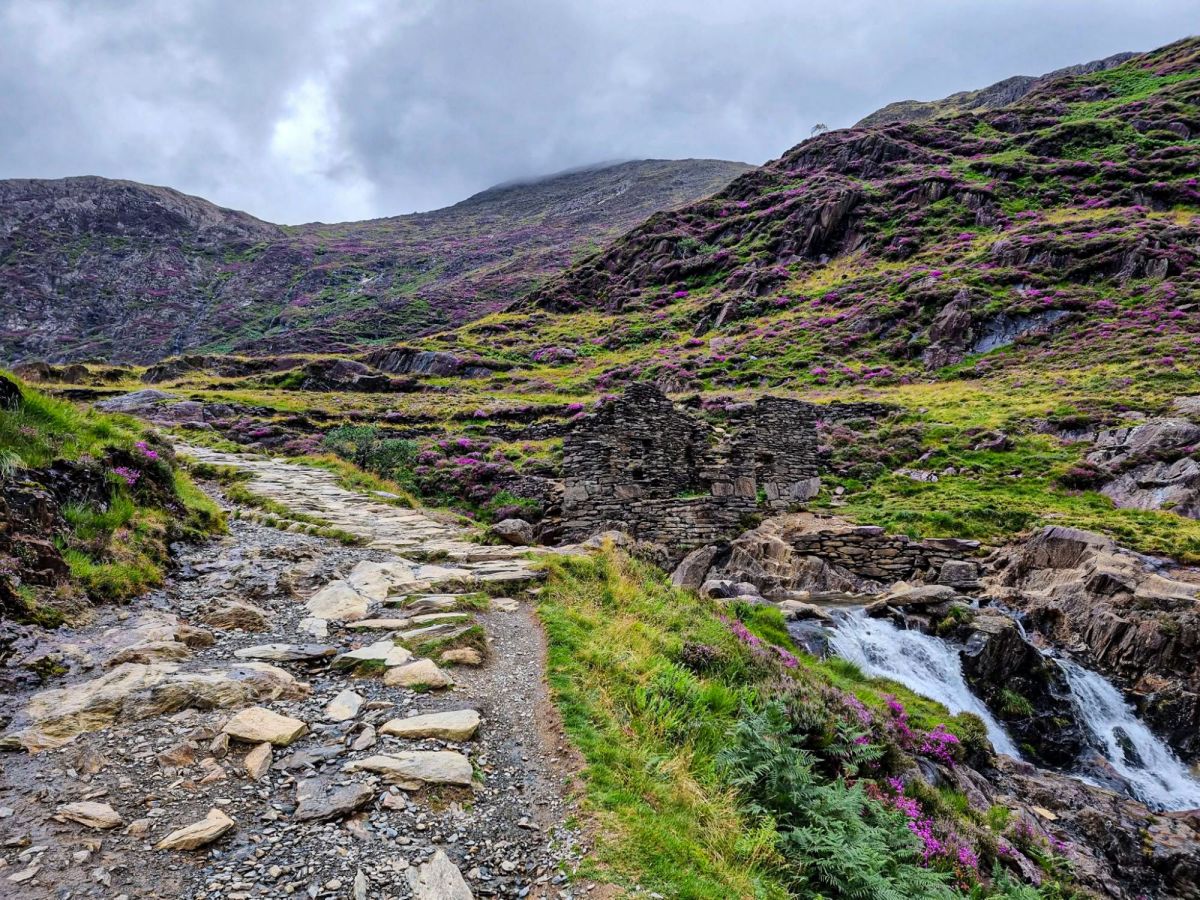
Mt. Snowdon (Yr Wyddfa) Watkin Path
Following in the footsteps of King Arthur’s fateful end.
Continue reading Mt. Snowdon (Yr Wyddfa) Watkin Path

Caernarfon or Caernarvon or Carnarfon or Carnarvon has been spelled so many ways over the years that it does not require ale to make one already feel tipsy. But each variation means the same thing… Citadel (or Fort or Fortress) in Arfon. The city has Roman origins but it’s infamy rests in its fate as first a Norman outpost to subjugate the Welsh by William the Conqueror in 1066 and then an English outpost to subjugate the Welsh by Edward I in 1284.
“”The most magnificent badge of our subjugation,” an old Welsh antiquary calls Carnarvon Castle…”
Highways & Byways in North Wales by Arthur G. Bradley (1898)
Caernarfon Castle
The castle built by Edward I in 1284 was meant to look this imposing and strike fear into the heart of any Welshman daring to sip a beer in the adjacent square. It is here that Edward I and Queen Eleanor played a “grim practical joke upon the Welsh”1 by giving birth to the future Edward II within its walls and proclaiming him as “the Prince of Wales who could speak no English.”2 One source refers to this moment as the “the second wily stratagem practised upon the obstinate Welshmen by King Edward. His first attempt to render their fetters less galling, was made by assimilating the form of the fortifications of Conwy and Caernarvon, which were actually species of state prisons, to the likeness and disposition of the arms of a harp”3; satirizing the Celtic origins of the Welsh.
As such, Caernarfon had quite a long run of being filled with non-Welsh officials and soldiers there for the purpose of subjugating. This made it a frequent target of Welsh rebellion including around 1404 when it was besieged by the great Welsh rebel Owain Glyndwr before he had to retreat into hiding in a cave on Moel yr Ogof near Beddgelert.
“Why the Welsh revolutionary leaders so constantly burnt their own towns, monasteries, and even cathedrals, would be ill saying.”
In Praise of North Wales by A.G. Bradley (1925)
The harp-shaped Caernarfon Castle is today a well-manicured ruin where heirs to the throne of Great Britain are still endowed with the official title of Prince of Wales. These days, Caernarfon is no longer an English outpost but luckily “supremely Welsh”4.
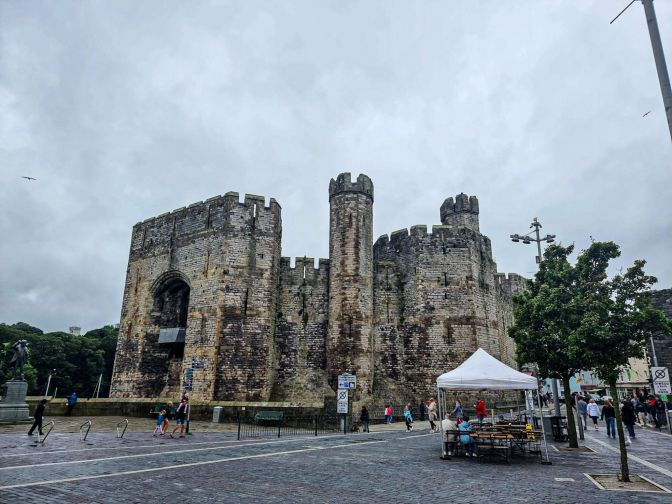

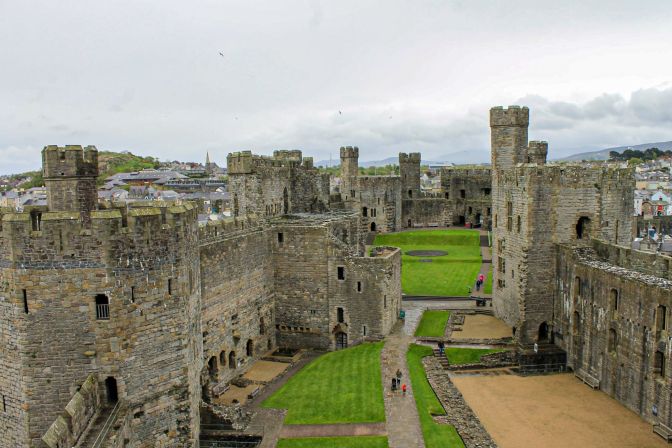
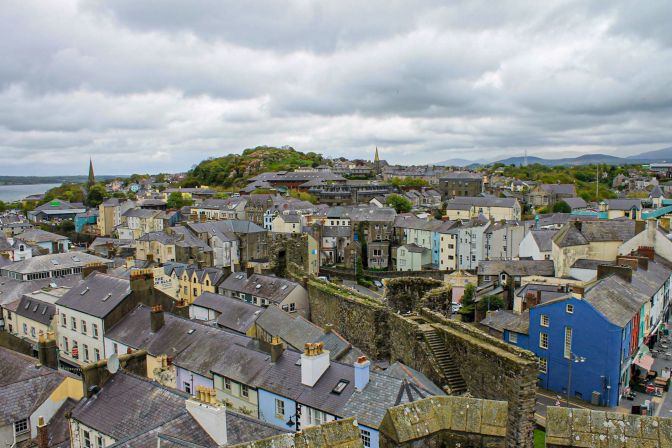
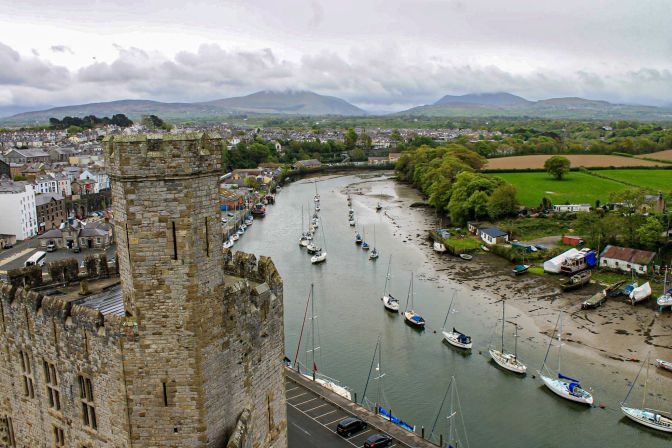
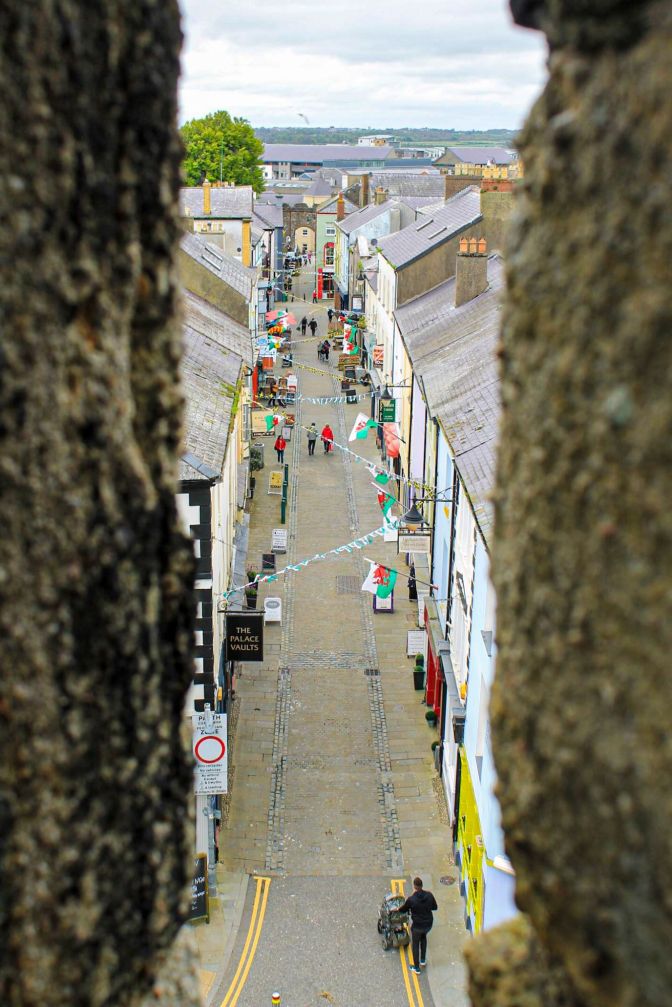
After a worthwhile visit to the castle, it was time to take to the streets and start working through my long list of pubs, and drink to Welsh resilience.
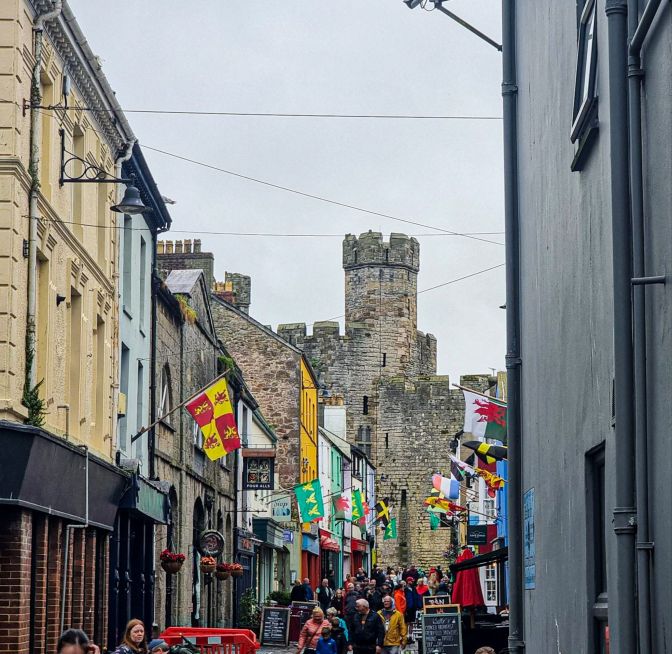
The Morgan Lloyd
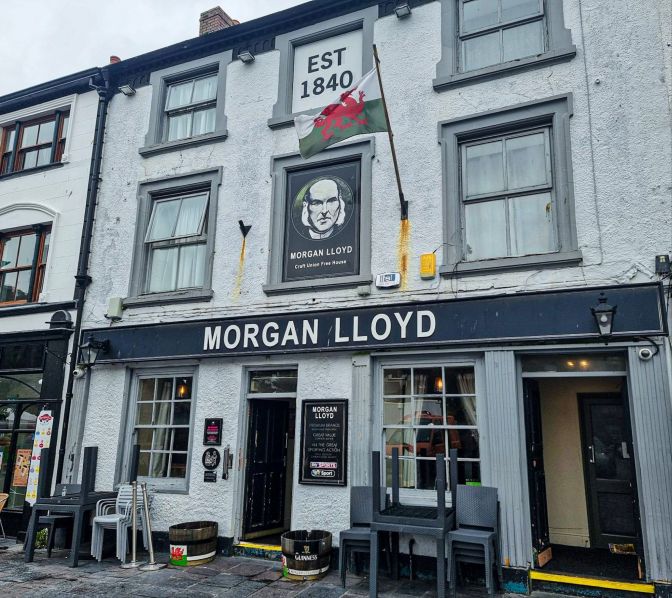
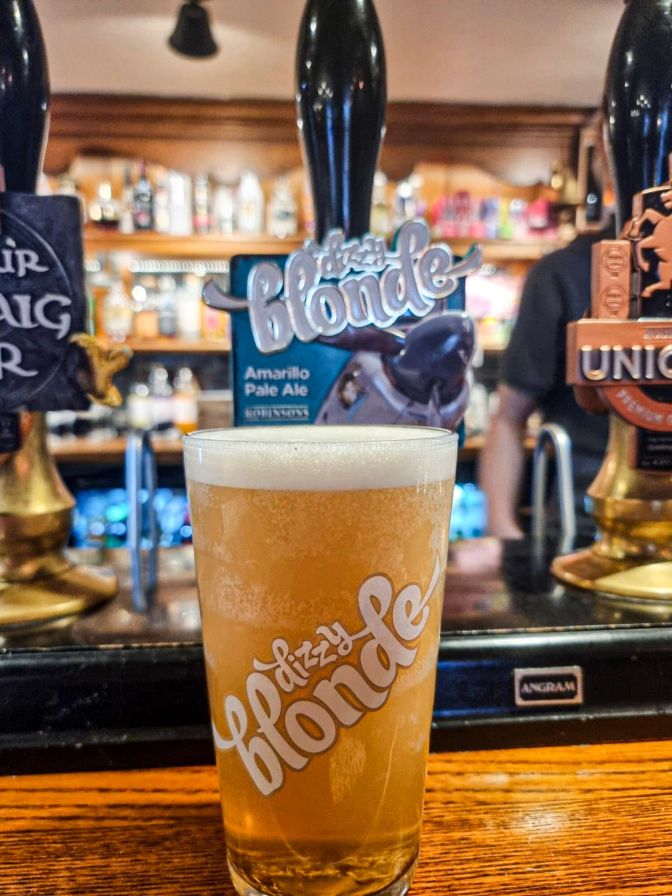
The obvious place to start is the Morgan Lloyd which sits on Castle Square. This is a fine but unremarkable meat-and-potatoes pub named after a Welsh politician from the 1800’s. They had a nice selection on tap to get the day started right. I can imagine my impression of the place would have been much higher on a sunny day with outdoor seating where you could sip your beer in full view of the castle.
The Palace Vaults
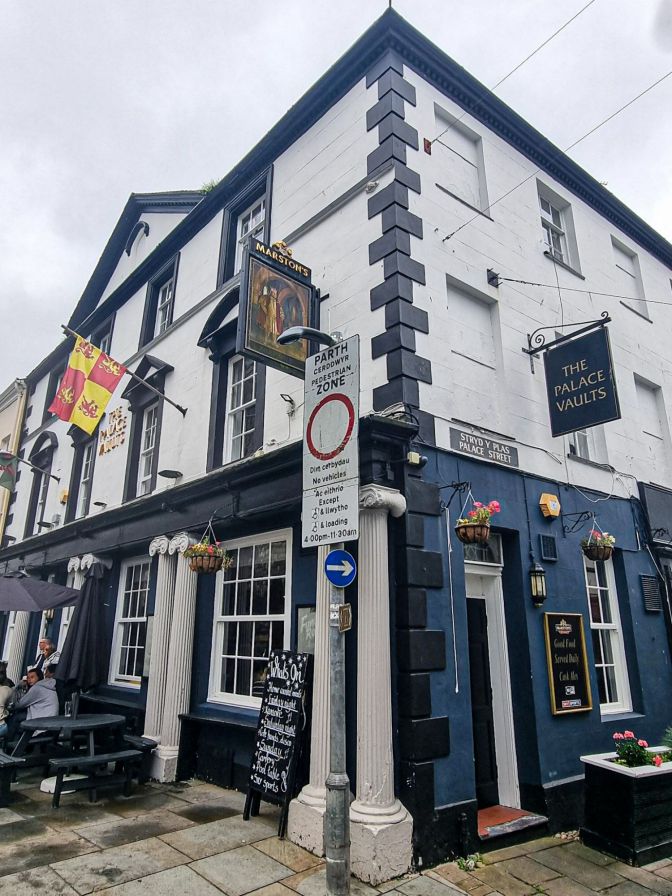
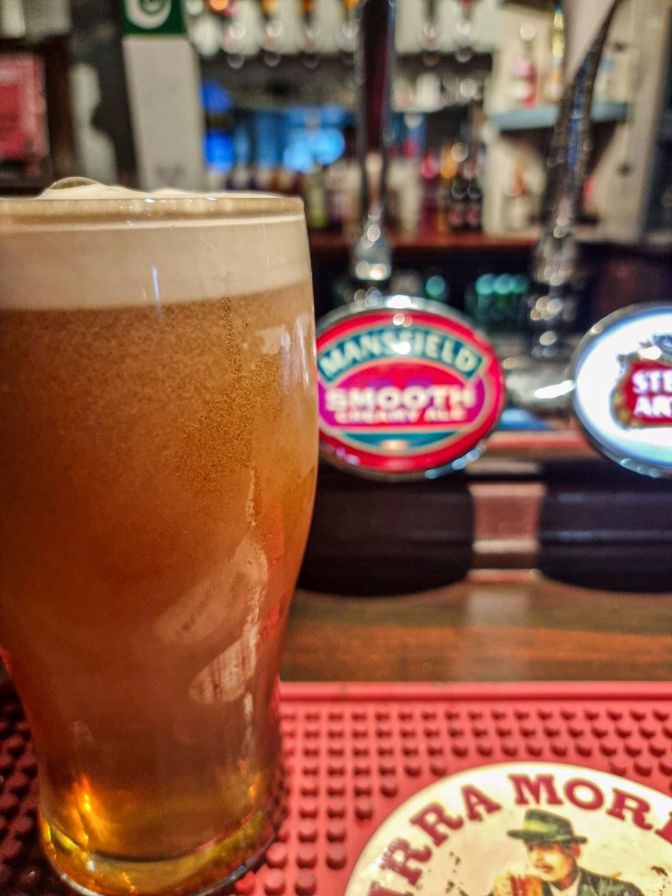
Just a few doors down, The Palace Vaults is a more preened version of the Morgan Lloyd. It is a solid pub which also has some prime outdoor seating better suited for a sunny day. I don’t remember being blown away though by the ale selection as indicated by my choice of the Mansfield Cream Ale. If I choose a Cream Ale, it is generally a last resort.
The Four Alls
The Four Alls has more of a commercial pub/restaurant feel than the previous two pubs. It was lively with the lunch crowd and had a good selection of beers. I went with the Robinson’s Smooth bitter and took a spot by the window to people watch on the colorful Palace Street.
The name “Four Alls” comes from a famous tavern sign which depicts four characters (as also seen in the pub’s modern sign), each one captioned with a different phrase; “I Govern All”, “I Pray for All”, “I Fight for All”, and “I Pay for All.”

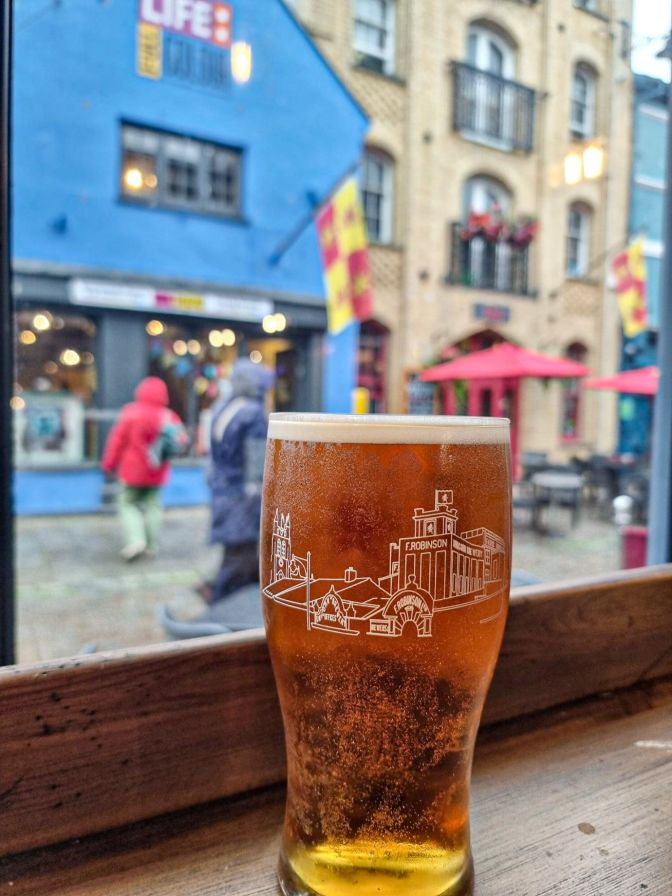
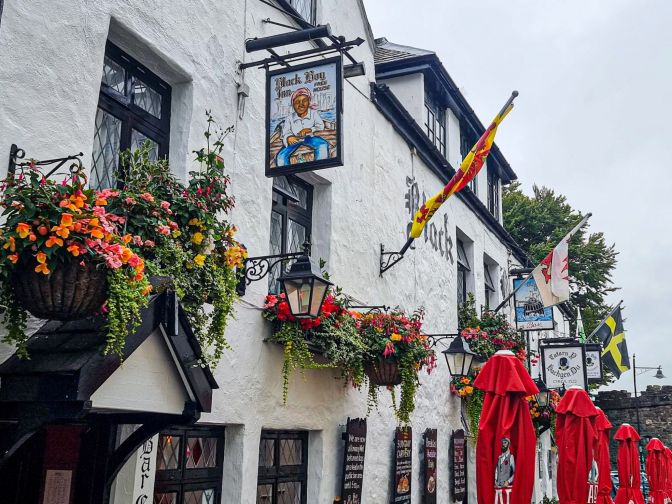
The Black Boy Inn
Of all the pubs in Caernarfon, the one that has the most medieval splendor is the Black Boy Inn. After three pubs, I regrettably decided to skip it in favor of strolling around the city.
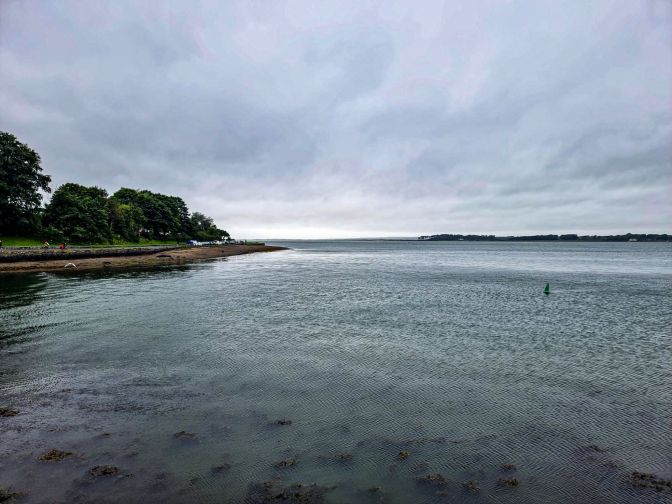
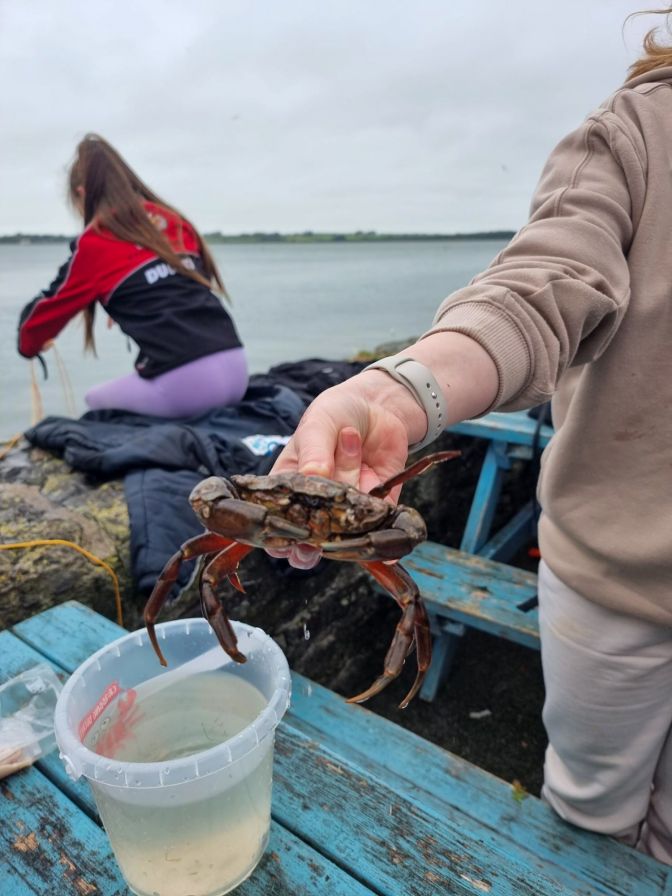
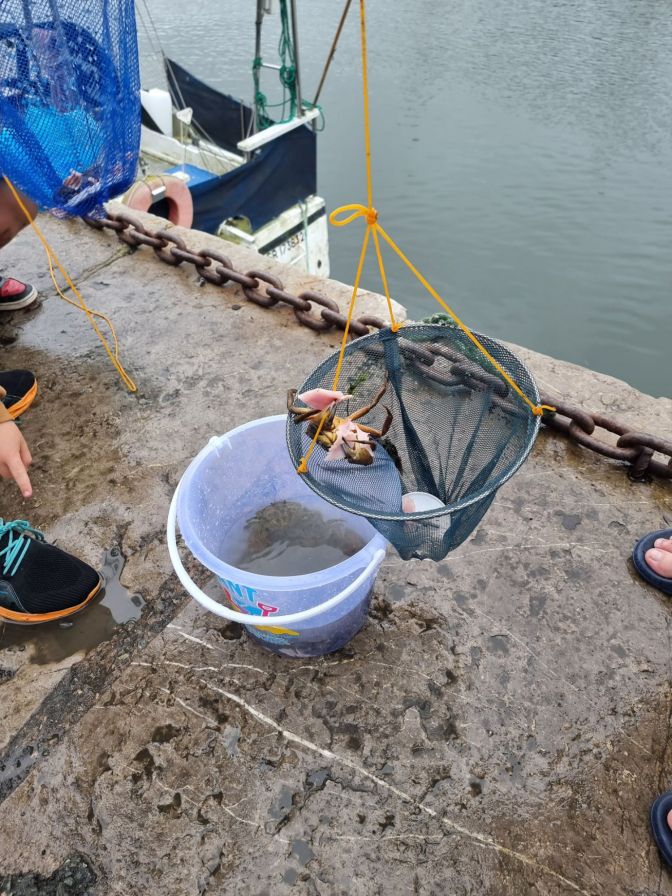
My stroll took me to the waterfront where the Afon Seiont river meets the Menai Straits which separates the Welsh mainland from Anglesey island. Here, I was introduced to the hobby of crab fishing. A wad of bacon is placed in a net and lowered into the water trying to lure the crustaceous critters. It is all about the contest for the biggest. At the end of the day, all the crabs are returned to the water.
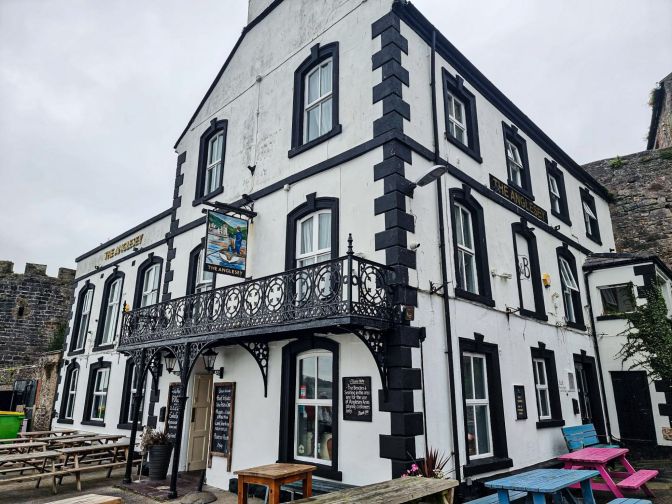
The Anglesey Arms
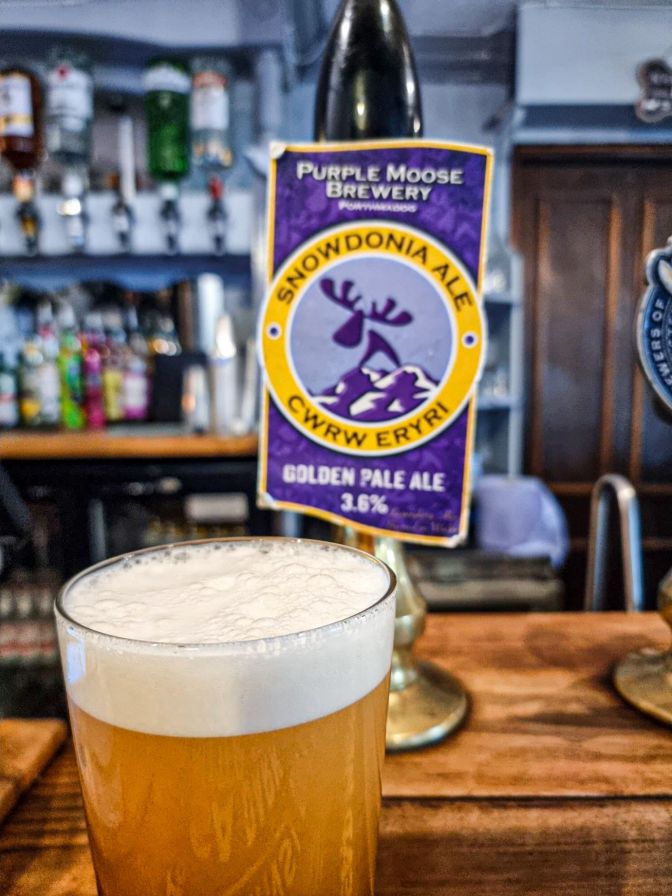
Along the waterfront sits this nice pub which boasts views of both the water and the rear of the castle. This prime real estate probably makes it my favorite pub in Caernarfon. It also has a nice selection of ales including the Snowdonia Ale from Purple Moose Brewery in Porthmadog.
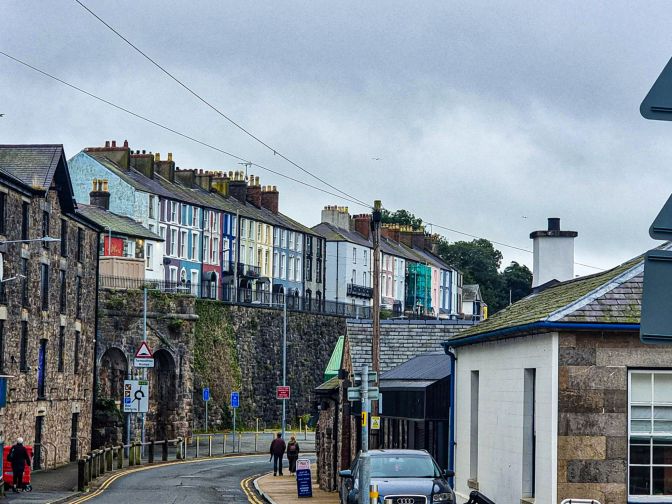
After the Anglesey Arms, I took in the charm of the city’s riverfront.

Bar Bach
The self-proclaimed “smallest bar in Wales” is indeed quaint and where I had my first encounter with other tourists. Despite lacking a colorful tavern sign or pub name, this is a gem of a place and highlight of the pub crawl.

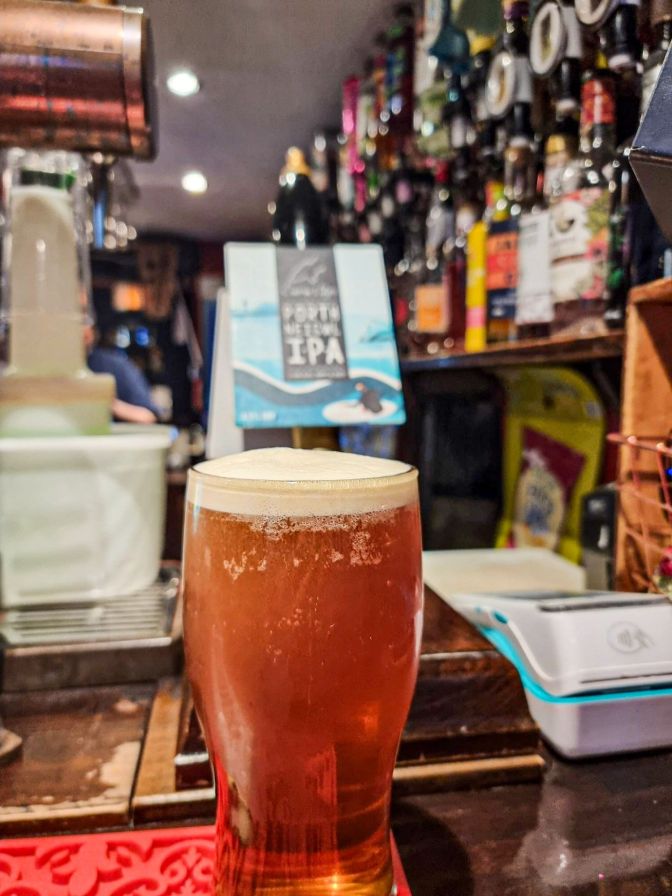
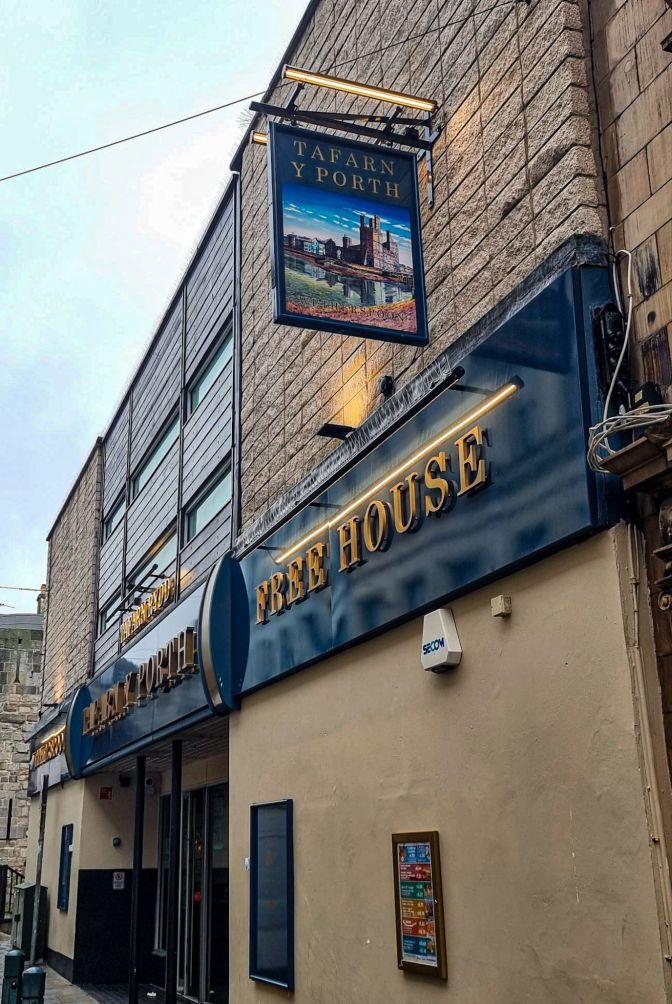
Tafarn y Porth
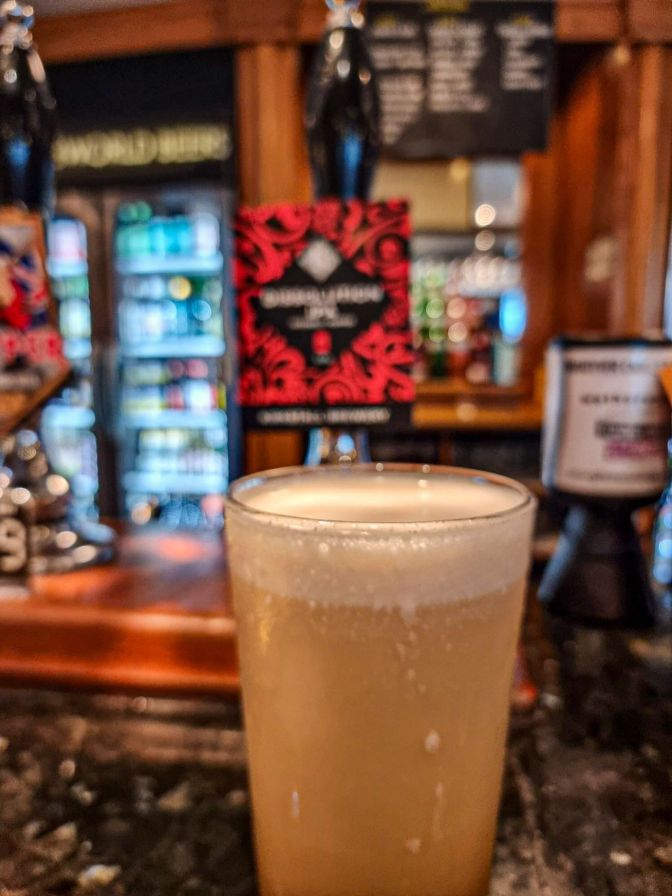
Meaning “The Gate Pub” in Welsh, this was the final stop of my pub crawl. By this point, I was starving and this is the commercial pub to go to for cheap fare and a wide selection of ales. A hearty Fish & Chips and a Dissolution IPA, and I was ready to wrap things up.
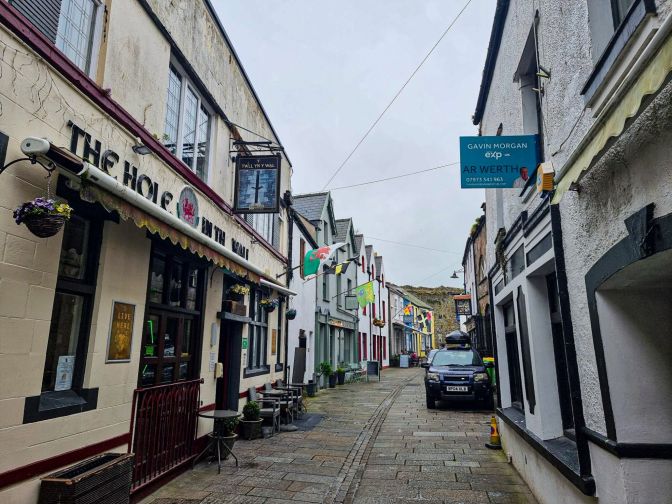
As a side note, along the narrow Hole in the Wall Street is the The Hole in the Wall pub. I had high hopes for this one, but this is really a locals place only with nothing of interest for a beer pilgrim. In that sense, it may be the most authentic and noncommercial of the pubs, but it lacked any appeal to me.
Final Words
“To most ramblers, Caernarvon represents either the end or beginning of a holiday.”
Odd Corners in North Wales by William T. Palmer (1937)
No matter how you spell it, Caernarfon did not disappoint in its offering of quality watering places. While there was not much in the way of medieval flair and quirkiness, the pubs also didn’t give the impression that they were fabricated to draw tourists. All of the pubs have a kind of living room wear and tear to them with just enough variety for the beer tourist to make it interesting. The history of the city also makes for interesting places for the mind to wander while under the influence of a beer buzz. The castle is one of the most significant in all of Great Britain and sits there not as a proud reminder of the city’s former greatness but of invaders who once enforced their will upon the locals. Today the Welsh flag emblazoned with the red dragon proudly flies above the castle lest any modern revolutionary doubt that the spirit and heart of Caernarfon and its infamous castle aren’t expressly and “supremely” Welsh.


 itsabrewtifulworld
I’ve really enjoyed the stories of your travels around the UK (including, of course, the recent ones on Wales). It’s amazing how medieval conflicts and regional powers have shaped the architecture and culture of these regions (especially since few hotels, pubs, churches, or public spaces in the US predate the 18th century). As an American who has been to Europe a few times, seeing the date on a keystone or cornerstone, or a historic plaque that marks an event or building predating the “discovery” of America in 1492, was mind-blowing to me.
I was glad to learn in our recent video chat that you plan on visiting Scotland this year. In my drinking days, I loved comparing single malt Scotches, and read quite a bit about their history and the families involved. Try out that 1926 Macallan Adami, a bottle of which sold at Sotheby’s a couple years ago for $2.7 million.
Thank you for your accounts. I look forward to traveling with you vicariously in 2025!
LikeLike