
“Beddgelert lies in a flat of woods and meadows, shut in upon all sides by mountains… Beautiful it cannot help being, where such a wealth of meadow and woodland and sparkling water is overhung on one side by the immense bulk of Moel Hebog”
Highways & Byways in North Wales by Arthur G. Bradley (1905)
After my drizzly, heavy fog covered hike in Holyhead the day before, waking up to the sight of blue skies on Day 2 of my August 2024 trip in North Wales brought with it an energetic anticipation of changing fortunes. And then they were gone. And then they were back again. Then gone. Then back. It was going to be that kind of day. Little did I know at the time, but it was the nicest day Mother Nature was going to bless me with on this trip. In retrospect, I probably should have chosen to hike Snowdon, but then I wouldn’t be able to sit here now telling you how amazing this hike is.

Holyhead Loop (Wales)
A beautiful hike into the unforgiving clouds over Holyhead Mountain.
Continue reading Holyhead Loop (Wales)

The story of this hike is defined by wind; wind I have never experienced so intensely on any other hike. Wind that constantly changed the sky like a kaleidoscope, sometimes taunting me like a bully and other times guiding me through the hills like the ghost of an old hill walker, but never obscuring the view to the point of despair. The clouds would sometimes linger, then be swept away in a gust blowing in from the Irish Sea. A blue sky would suddenly appear and the green of the surrounding hills would glow. Then like the whoosh of a privacy curtain, the views would be covered in a misty haze, from emerald to haunting and all shades of green in between. Always stunning.
This hike starts in the village of Beddgelert, which is to Snowdonia what Lauterbrunnen is to the Jungfrau Region of Switzerland. It is the quaint traditional village of the region which bustles with tourists during the day and then returns to divine tranquility at night. I will officially start the hike at Beddgelert’s train station which is a stop on the Welsh Highland Railway running from Caernarfon to Porthmadog.
This hike is not difficult but there is one spot near the summit of Moel Hebog where some scrambling is necessary. If you are quite nervous about heights like me, you might need to hunt a little for the best way up in one spot, but I found it easily manageable. This hike will ascend Moel Hebog (meaning “Hill of the Hawk”1) first and then follow the ridgeline over the two lower neighboring summits of Moel yr Ogof and Moel Lefn, then descend and come back through a very nice forest.

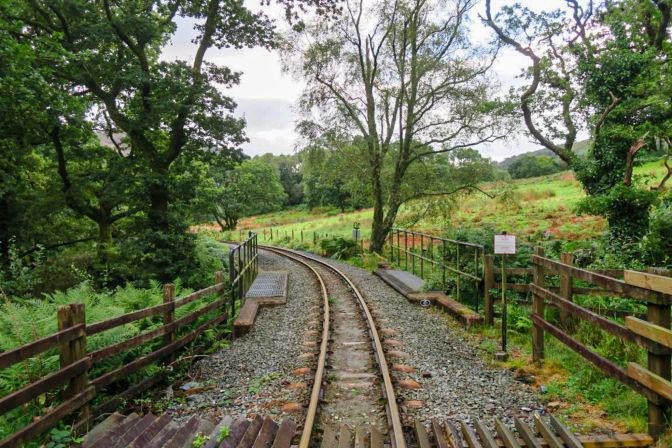
| Starting/Ending Point | Beddgelert Train Station |
| Distance | 13.6km |
| My Moving Time | 3h36m |


It’s Not Just a Beer, It’s a Journey
“Hebog is Beddgelert’s mountain. The usual route… passes the farm of Cwmcloch, bears slightly to the right and follows a line of cairns up a steep shoulder.”
The Mountains of Snowdonia by Carr & Lister (1948)
Cwmloch is the name of a mountain stream running from Hebog into the river Afon Colwyn, the river which adds to Beddgelert’s charm. After the hike passes over two legs of the Welsh Highland Railway, it arrives to a couple of old stone houses where you start the ascent at the foot of Moel Hebog. Perhaps this is the old farm mentioned in the above quote.

Just after the farm structure, you see the path marker which directs you into the boggy pasture towards Moel Hebog.


The Ascent of Moel Hebog
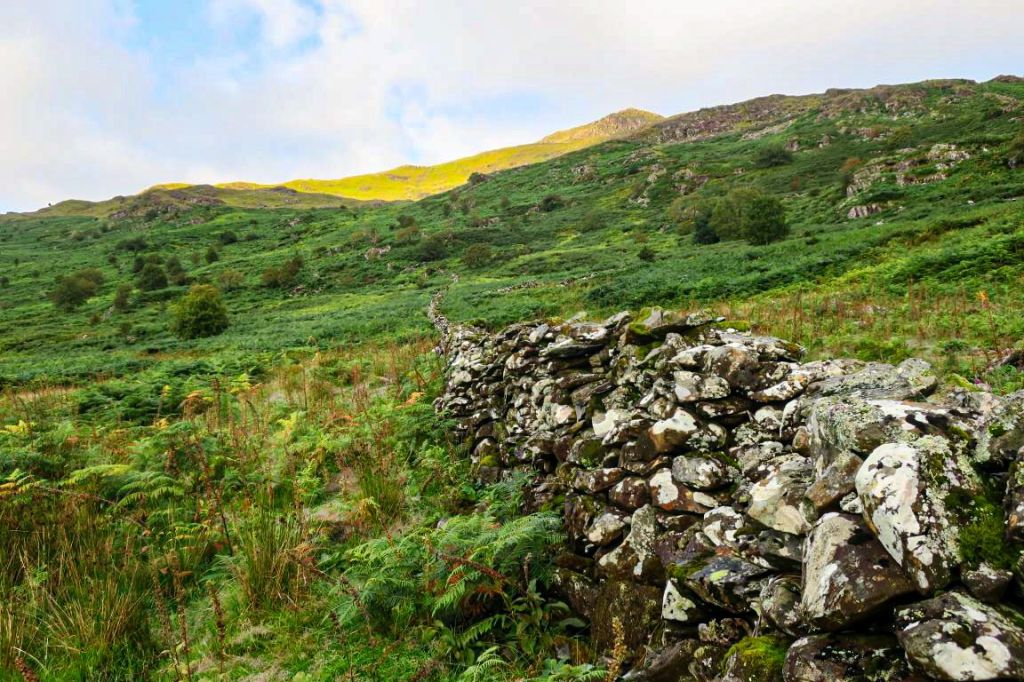
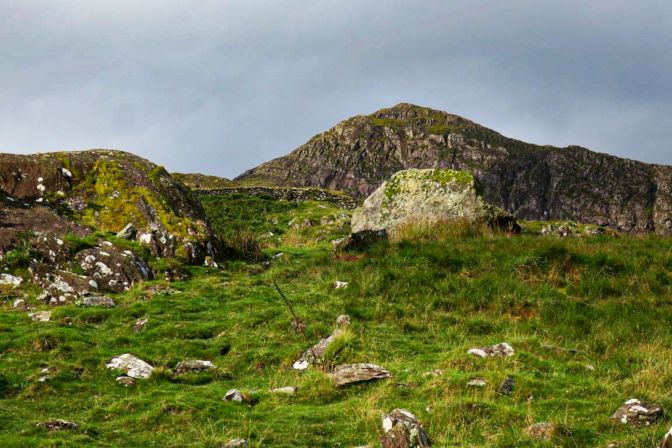


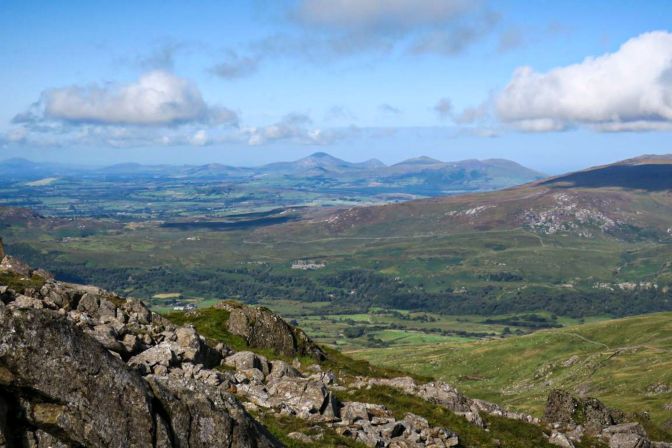

Summit of Moel Hebog
The summit of Moel Hebog is an example of how deceiving a mountain looks from afar. You expect a rocky peak but instead find a vast terrace.

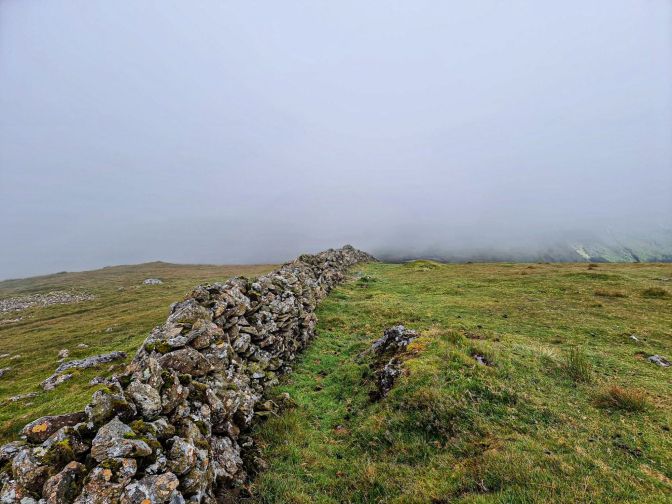
In this short video clip you get a glimpse of a couple of the cairns mentioned earlier as well as witnessing the intensity of the wind.
In a moment of clarity at the summit of Moel Hebog, you can see towards Moel yr Ogof and Moel Lefn. The path over to Moel yr Ogof follows along the stone wall.
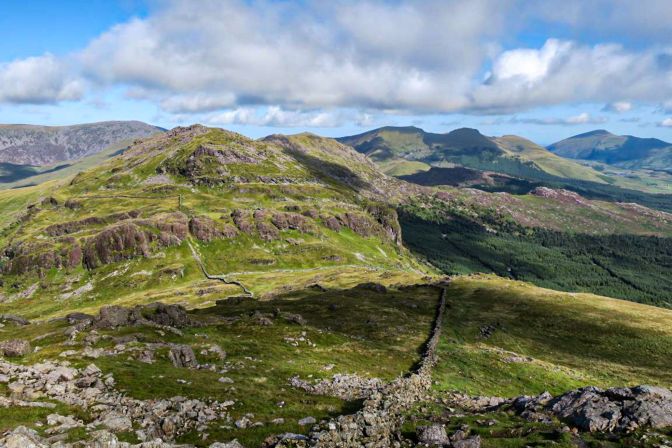
Moel yr Ogof
“Glyndwr’s great revolt at the close of the fourteenth century, in a last desperate bid for Welsh freedom, brought further social disaster to the hills and valleys of Snowdon. It is one of the great tragedies of history…”
Snowdonia by North, Campbell, and Scott (1949)
When you cross over onto Moel yr Ogof (or “Hill of the Cave”), you are entering a place of Welsh mystique. It is here in a cave on this mountain that the great Welsh hero Owain Glyndwr (or Glyndwyr or in English Owen Glendower) hid from the pursuing English army of Henry IV. Glyndwr had rose to power, led the last great Welsh rebellion against the English, and struck terror in the English crown that a Welshman could challenge and ascend the throne. However, around 1404, his luck started to run out leading to his exile into hiding.
“Only the loneliest ravines of Snowdon have seen the thin trail of his campfire as the Welsh Prince of Wales hides in caves and woods, an outlaw biding his time. In north and south men speak of him as they might have spoken of (King) Arthur.”
In Search of Wales by H.V. Morton (1932)
In 1968’s Rambles in North Wales by Roger A. Redfern, the author has provided a sketch of the cave, and modern hikers have posted their own exploits of searching for the cave, but there seems to be no official designation. Perhaps it is more wishful thinking than proven fact where Glyndwr hid away on this mountain. I did not divert my energy to try to find it. I was content to imagine that if the English couldn’t find him, nobody else can. From this point, Glyndwr’s movements are “one of the mysteries of history.”2 In fact, we know he passed away in 1415, but “No man knows where his bones lie.”3
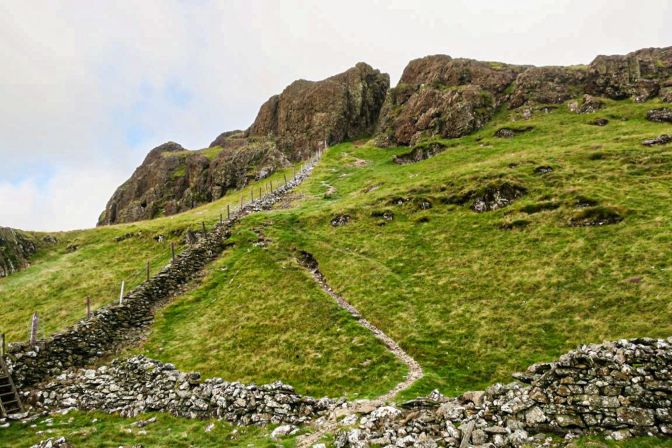
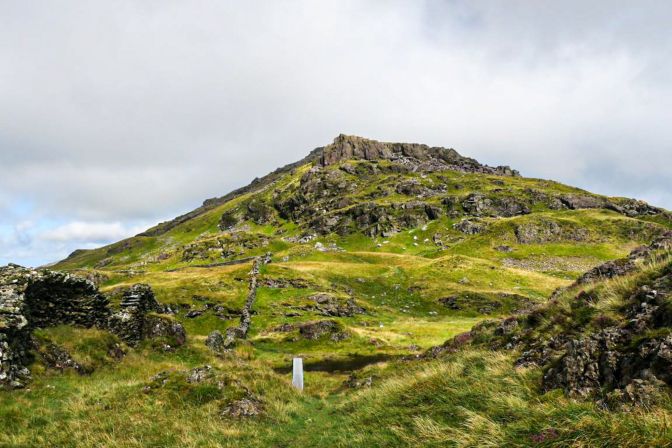

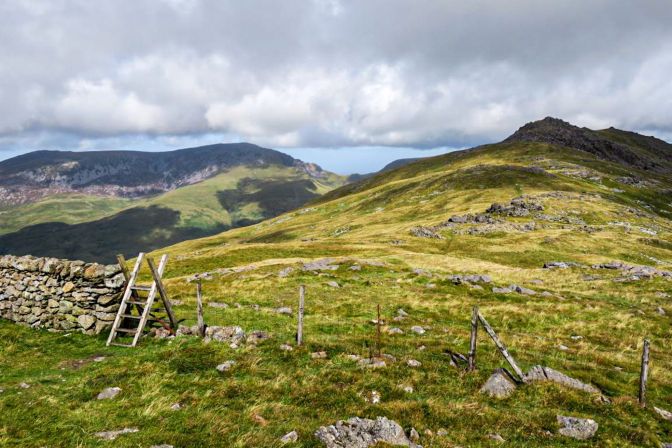
Moel Lefn
The final peak is Moel Lefn (or “Smooth Hill”). The approach betrays the mountain’s name, but after reaching the craggy peak, the terrain beyond is a smooth grassy plain.
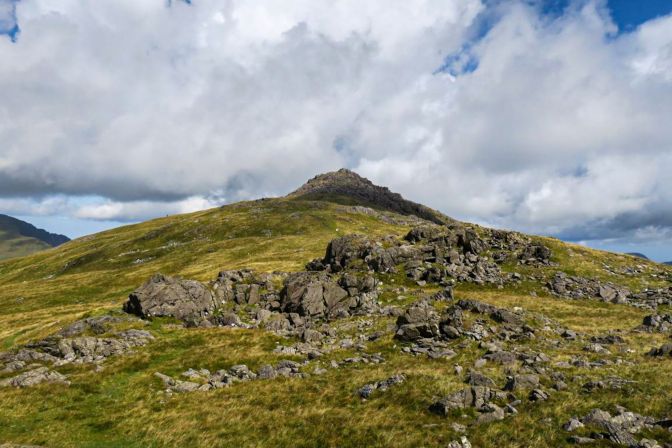


As you start the descent, you can see in the distant left the remains of an old slate quarry, a journey for another time. This hike, however, will lead down to the right towards the small lake, Llyn Llywelyn.

Descending and Returning
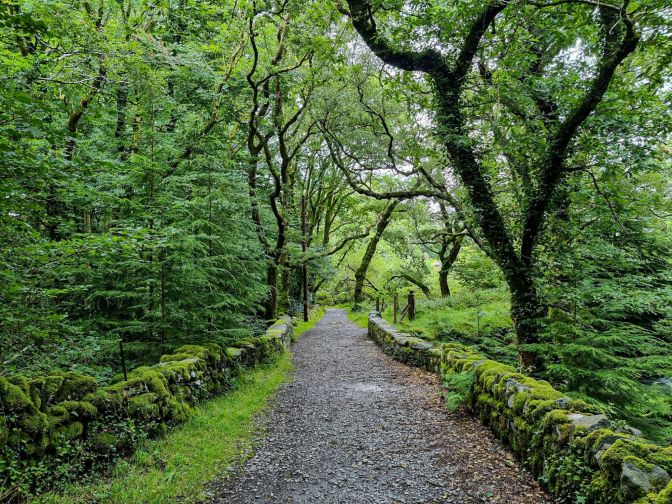
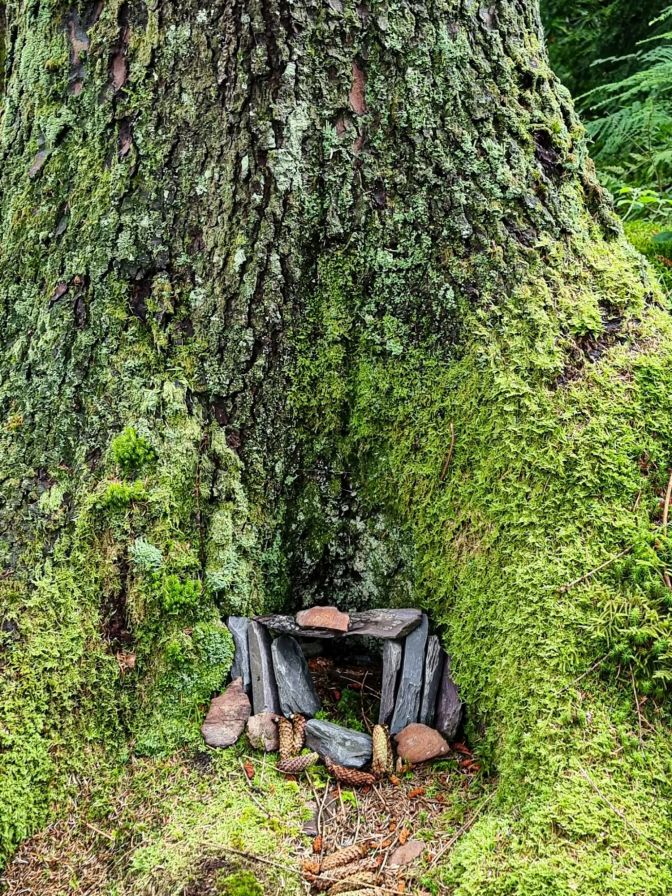
As you descend, you see evidence of the slate which this part of Wales is known for.


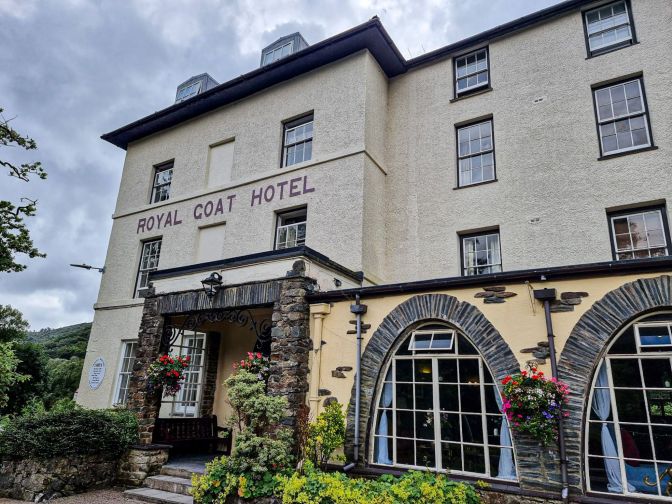
Royal Goat Hotel
“At Beddgelert we are undoubtedly on historic soil. The village is, of course, modern and created by the tourist traffic, for which provision was first made when the Goat Hotel was opened in 1801.”
The Mountains of Snowdonia by Carr & Lister (1948)
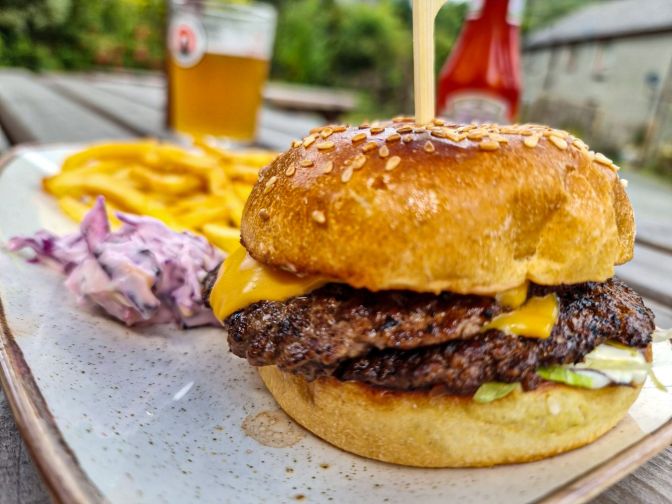
Back in Beddgelert, it was time for a celebratory beer and late lunch. Rather than head to one of the pubs, I decided to try the town’s historic hotel. With no Welsh beer on tap, I went with the Eazy NEIPA from the Greater London-based Camden Town Brewery. I gave it a 4.25/5 on Untappd and at 5%, it was a deliciously refreshing beer after a long hike. The Royal Goat, despite being historic, has the appearance of an aging relic experiencing inevitable decay. The Royal Goat sits on the outskirts of the village away from the hustle and bustle of the tour groups and is mainly relegated to picking up the stragglers who are adventurous enough to wander the extra 100 meters south of the tourist office to find a place to eat. In other words, I did not have any high expectations about the food. I could not have been more surprised. The smash burger was absolutely delectable and dare I say one of the best I have ever had. Hyperbolically speaking, it was better than all burgers I’ve ever had in Belgium put together. It lured me back later in the week for another round.

Final Words
After my delicious burger and beer, I strolled around Beddgelert, satisfied with my day’s accomplishment as I watched in amusement tourists flocking to the local ice cream parlor and browsing the village’s few gift shops. I then meandered around the Church of St. Mary, followed the Afon Glaslyn river a few hundred meters towards the Aber Glaslyn Pass and then back-tracked soaking in the final hours of the afternoon. I looked up at Moel Hebog, listened to the quiet din of the river, and imagined a small torch ascending in the distance as the parish priest carried food up to the hiding Owain Glyndwr. If I were on the run from the English, I cannot imagine a more beautiful place to hide. Then I looked over towards Mt. Snowdon and saw nothing but clouds. I wondered what the weather would be like tomorrow as I pushed aside sudden feelings of regret. I shrugged my shoulders, wandered back through a suddenly peaceful Beddgelert and went to drink another beer.

 itsabrewtifulworld
Wow, amazing place and beautiful pictures! Great post, Matthew! 👏👏🔝
LikeLiked by 1 person
Thank you Patricia 😊
LikeLiked by 1 person