
“San Gimignano of the Beautiful Towers is a place of frowning grey and brown walls and towers, of mysterious alleys, of shimmering olive-trees and fields of flowers that lie beyond, of flaming skies at sunrise, of clamorous bells at nightfall.”
Edmund G. Gardner. “The Story of Siena and San Gimignano.” (1902)
While I could hardly dispute any superlatives or the obligatory flourish of delle belle torri added to the end of its name, I prefer to call San Gimignano the City of the Unpronouncable Name. My brain and tongue clash upon reaching the ‘gn’, both vying for supremacy just like the competing Guelph and Ghibelline factions who built the medieval towers for which the City of the Unpronouncable Name is known. I can never get past that point without suddenly feeling like I am talking through peanut butter. Nevertheless, this should not prevent one from visiting this beautiful hill town.
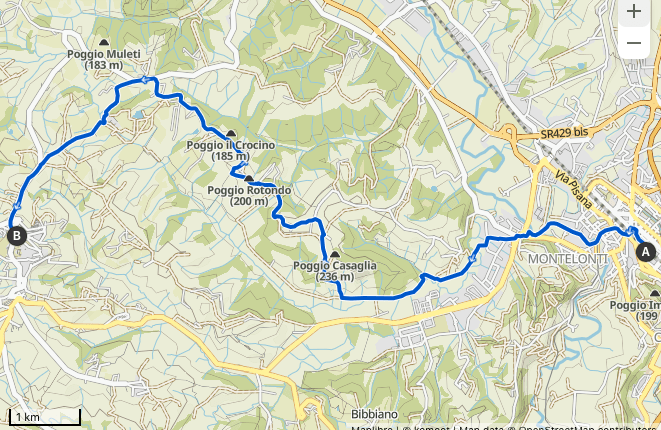
Not having its own train station, San Gimignano takes some effort to get to, although most options are quite easy. You could take one of the many tour busses that run from Florence which you can find on a website like Viator. If you are not into that sort of thing, you can catch a train from Florence to Poggibonsi station and there take the 130 bus which runs about once per hour (be observant, as some hours are skipped each day for siesta presumably) and takes 25-30 minutes. And the other, of course, is to rent a car. A more unique way to arrive in San Gimignano is to come by train to Poggibonsi and hike your way across the Tuscan countryside. San Gimignano’s characteristic skyline is best viewed from afar, and the perfect way to achieve this is to approach it by foot.
Hike Details
| Starting Point | Poggibonsi Station |
| Ending Point | San Gimignano (Return by Bus 130) |
| Distance | 14.4 km |
| My Moving Time | 3 hrs |

It’s Not Just a Beer, It’s a Journey
This hike is really made up of two parts; the first being rather uninteresting and the second more exciting when you start to climb into the Tuscan hills and emerge into view of San Gimignano. The latter more than makes up for the unimpressive beginning.
After leaving Poggibonsi, you follow the Elsa River. While this segment is not very scenic, you do immediately notice that butterfly activity and variety are flourishing at this time of year (early June).
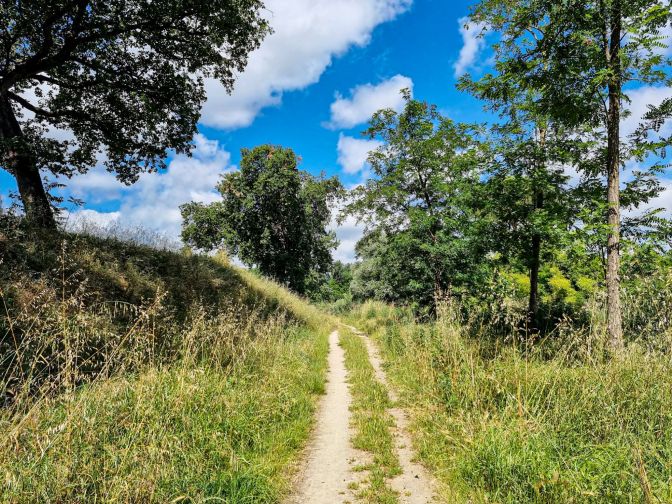
You will then need to walk through an industrial park which brings you to a path at the back of it. This will pass by a farm and then come to a long segment of tall grass which hardly resembles a path at all. There is no maintenance on this path, and it is just tramping down tall grass or bushwhacking your way across a very long field. Once you get past this field, the route improves dramatically.
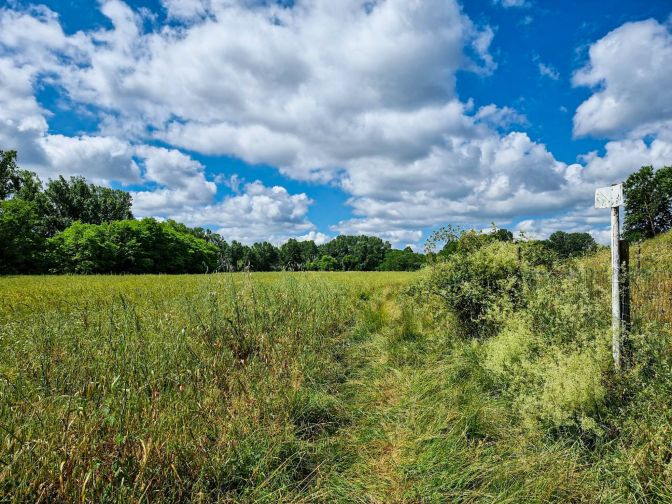
With some perserverence and a thorough check for ticks at the end of it, you will come to a farm road, and the reward is some graceful Tuscan scenery.
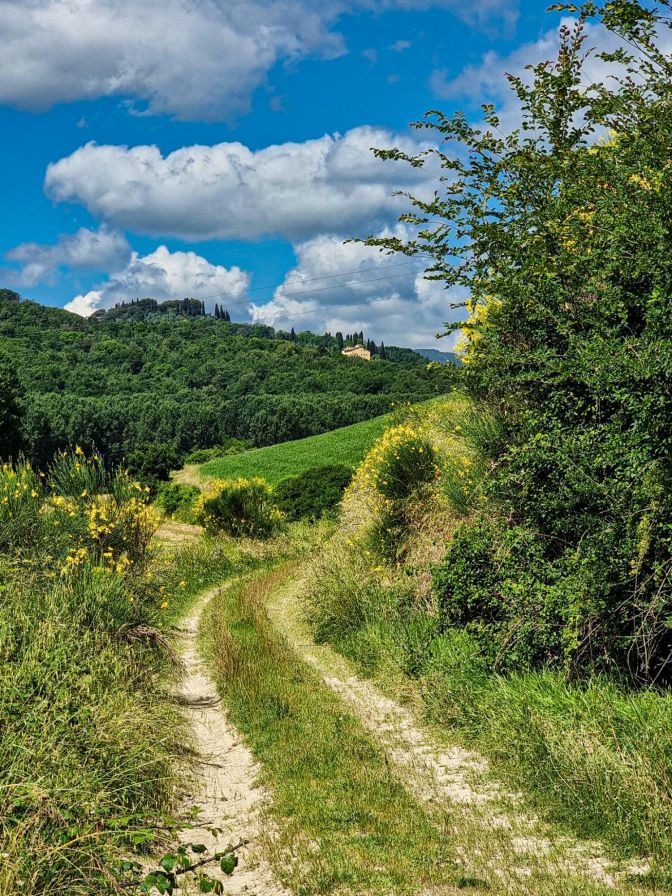
After several failed attempts at capturing some butterfly pics, I managed to succeed with a Marbled Fritillary and a Marbled White.
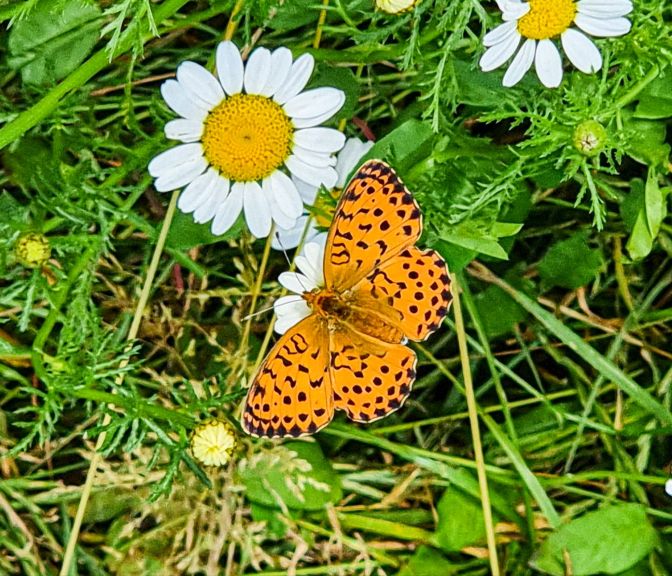
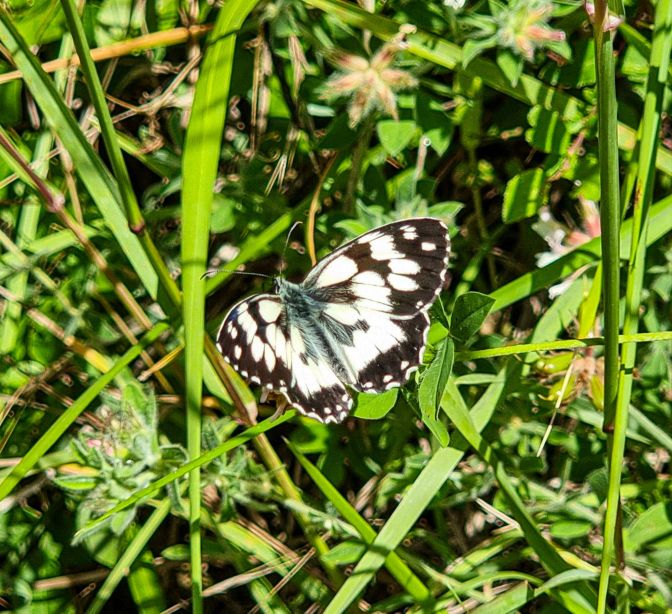
After the path heads up into the Tuscan hills, you come to the top of a vineyard, and for the first time, San Gimignano comes into view.
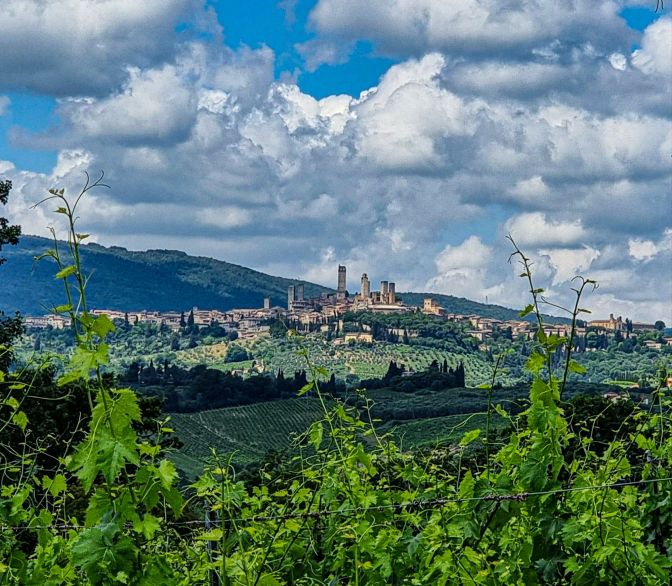
“Its thirteen square towers of uneven heights massed on the top of its little hill make the most fantastic sky-line in Italy”
Olave M. Potter. “A Little Pilgrimage in Italy.” (1911)
This is the Val D’Elsa, the lush countryside formed by the Elsa River. From this viewpoint, there is no direct route over to the city from the east. Instead, it is necessary to follow along the line of hills and bend around to approach from the north. There are lots of amazing views of the surrounding vineyards and the path eventually meets up with a road which winds its way past some luxurious Tuscan villas.
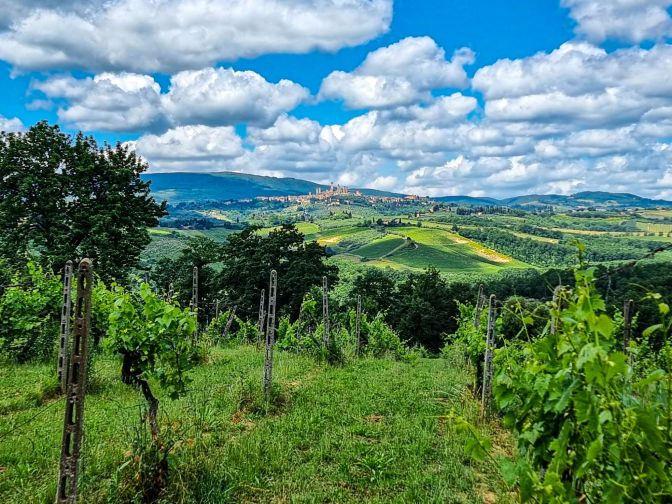
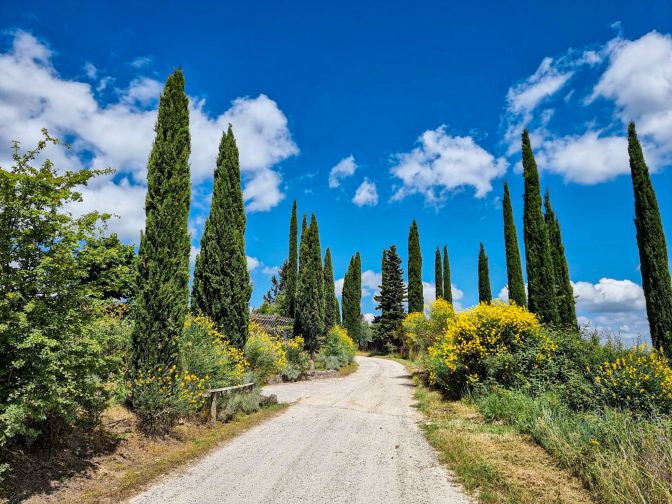
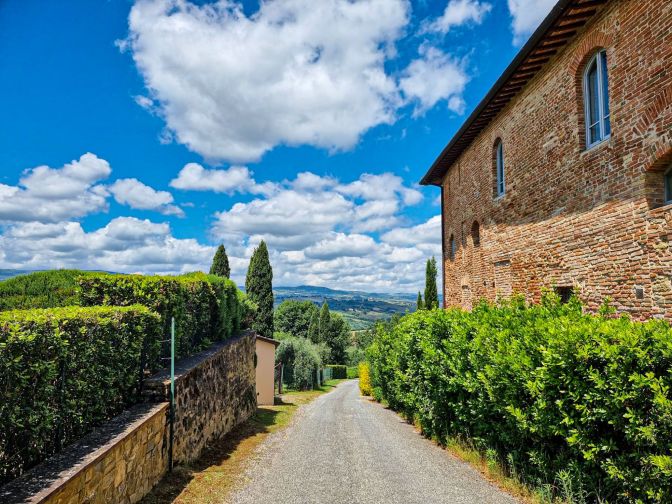
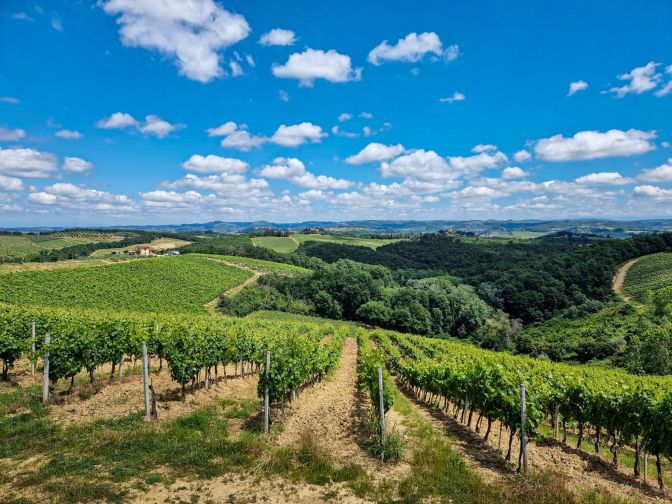
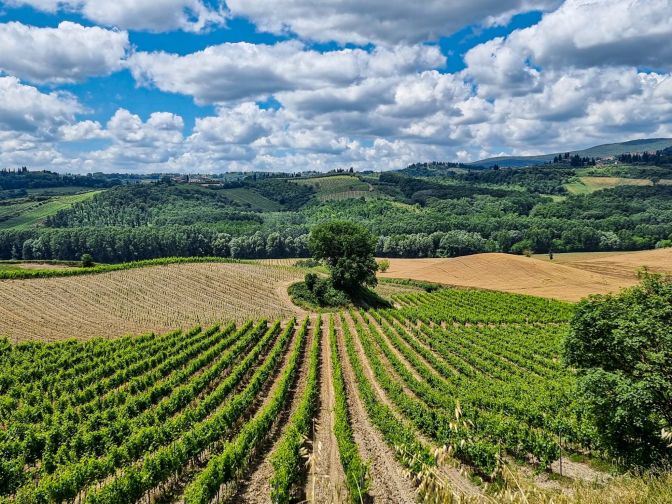
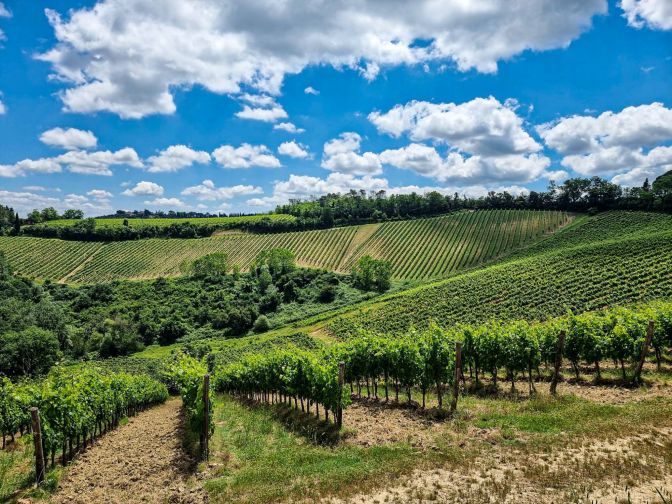
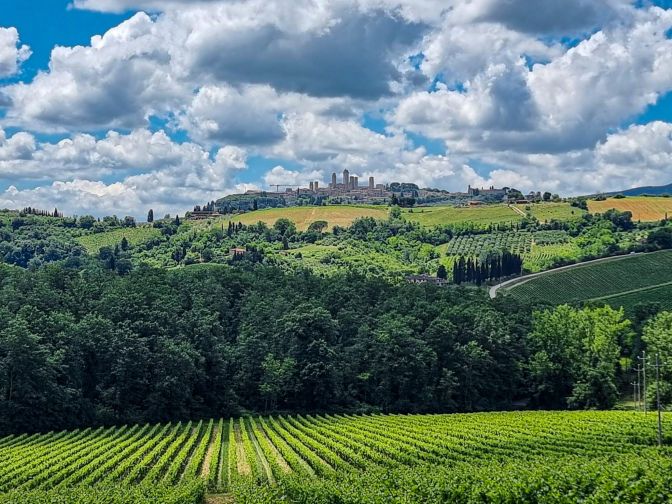
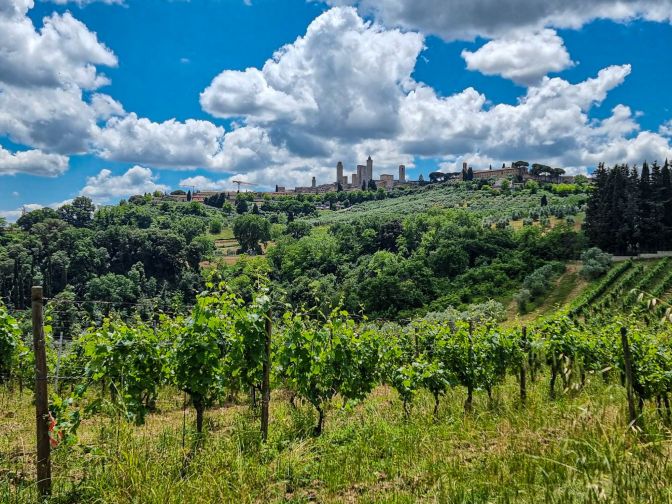
“Long before we reached San Gimignano we saw her towers rising up above the festooned vines like those Giants in Dante’s Inferno”
Olave M. Potter. “A Little Pilgrimage in Italy.” (1911)

San Gimignano
Navigating to the city center is quite easy. You enter through a city gate which immediately puts you on the city’s main thoroughfare from the north called Via San Matteo. You can follow this street all the way to Piazza del Duomo in the center.
The first order of business upon arriving in San Gimignano though was to satiate my hunger and thirst. An advertisement for ‘Draft Beer’ and a row of beers of the local San Gimignano craft brewery made it an easy decision.
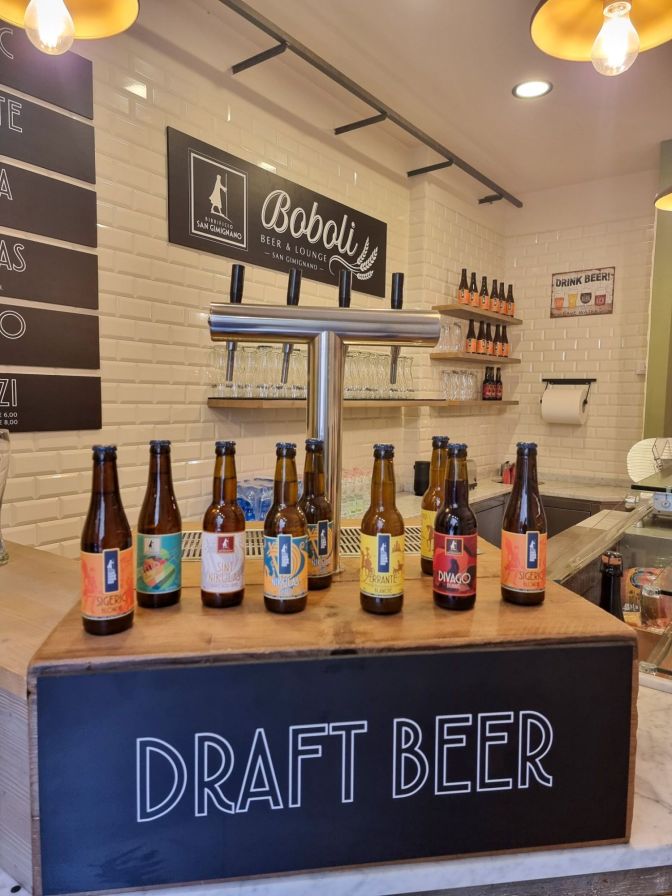
La Flaschetteria di Boboli di Sordi Andrea (per Google Maps)
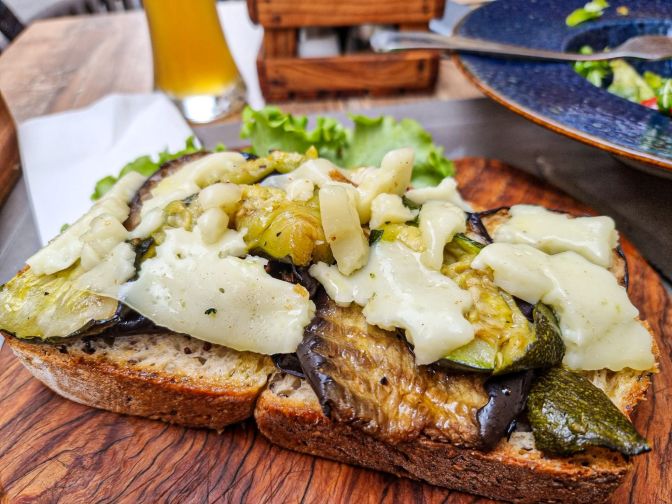
Also known as Panificio Boboli on Untappd. On the signs, it is either Boboli Beer & Lounge or Boboli Bakery & Bistrot. It’s all a matter of which side of the street you sit on I guess. Here, I had a delicious salad with a kind of open-faced hot sandwich with grilled eggplant and local cheese. The beer was a Sigeric di Canterbury Blonde from the San Gimignano brewery located in Poggibonsi.

“Like most other small Italian towns, the origin of San Gimignano—il nobile castello, or il florido castello di San Gimignano—is hidden in legendary clouds.”
Edmund G. Gardner. “The Story of Siena and San Gimignano.” (1902)
One of these legends is that the ghost of St. Geminianus (which I am taking to pronounce Gemini Anus) appeared here and protected the city against a horde of Huns.1 Whatever the origination, some time in the 6th or 7th century, the city took its name after this saint (but thankfully Italianized it). During its heydey, the city boasted over 70 of its famous towers, mostly built by two rival factions as previously mentioned. This came at a time in the 1300-1400’s when you had two major political and religious powers in Italy, the Pope and the Holy Roman Empire. One of the main disputes between the two was who had the authority to appoint Bishops. The Guelphs supported the Pope while the Ghibellines supported the Empire. Both sides jockeyed for influence in San Gimignano. Today only 14 (not 13 apparently) of the towers remain.2
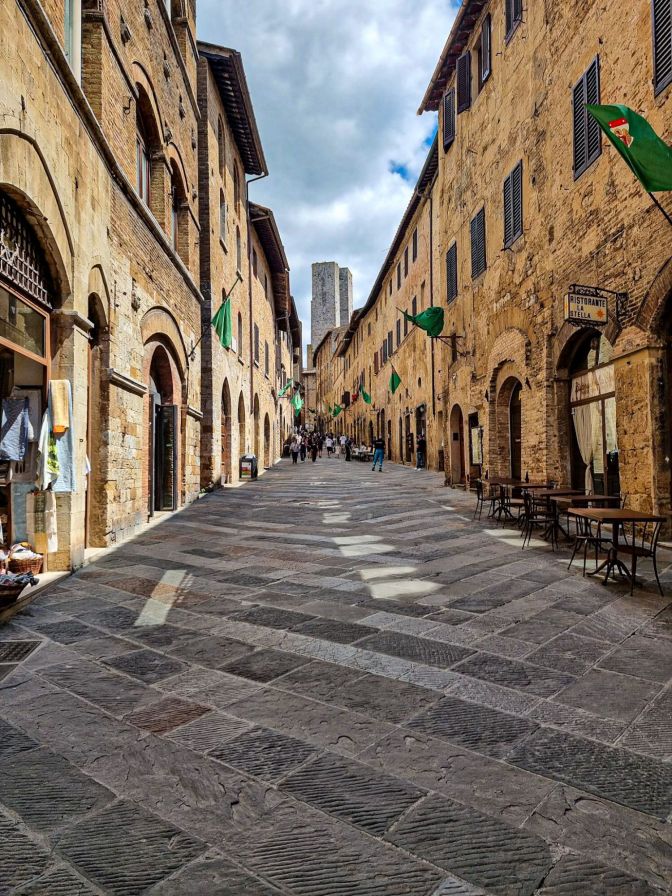
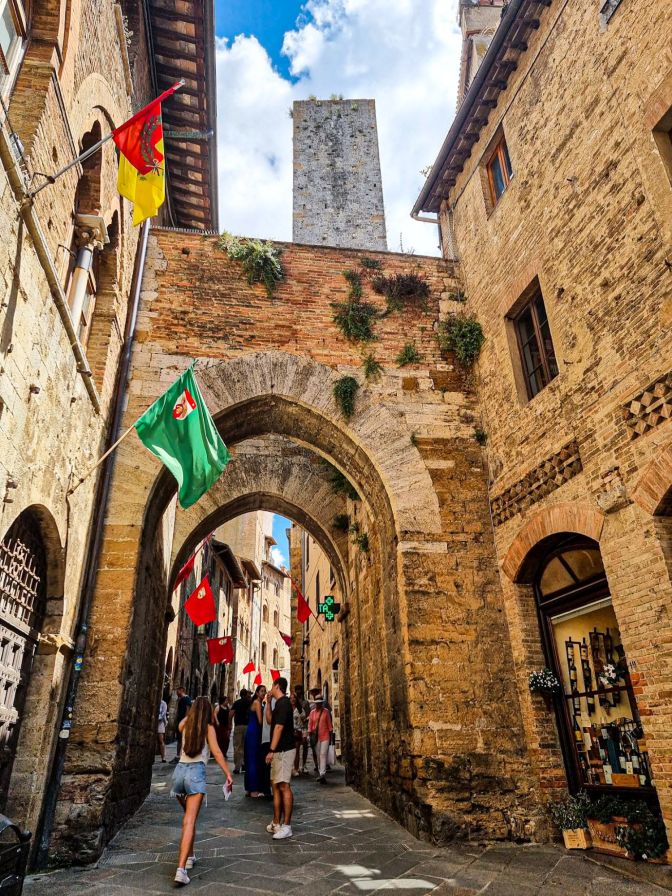
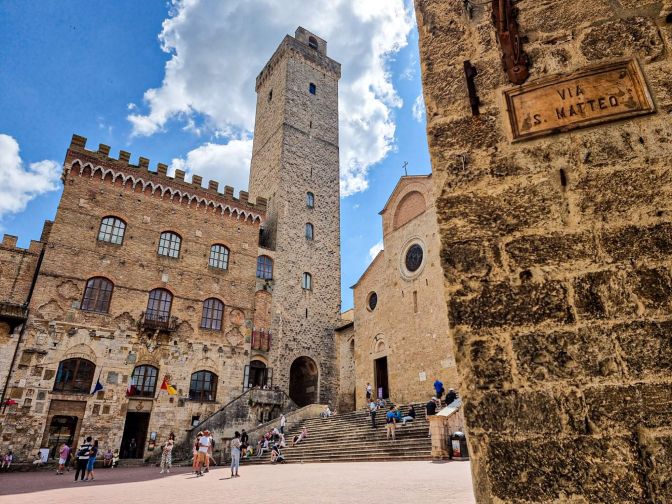
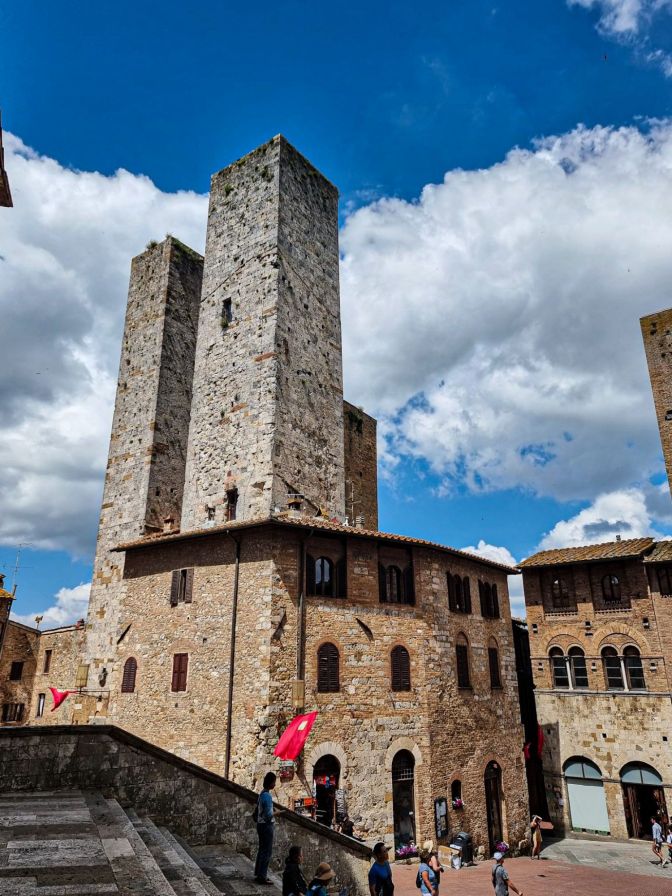
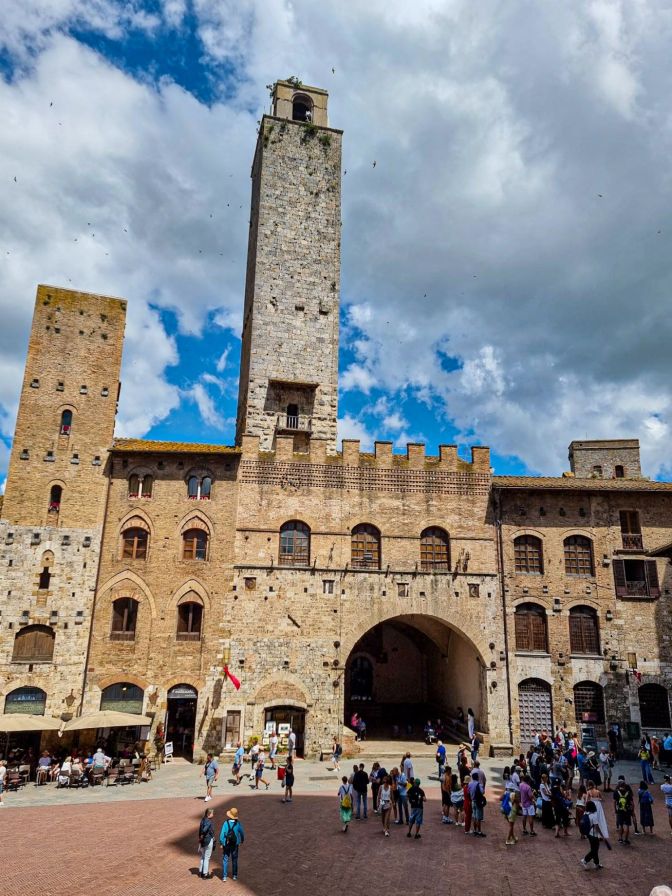
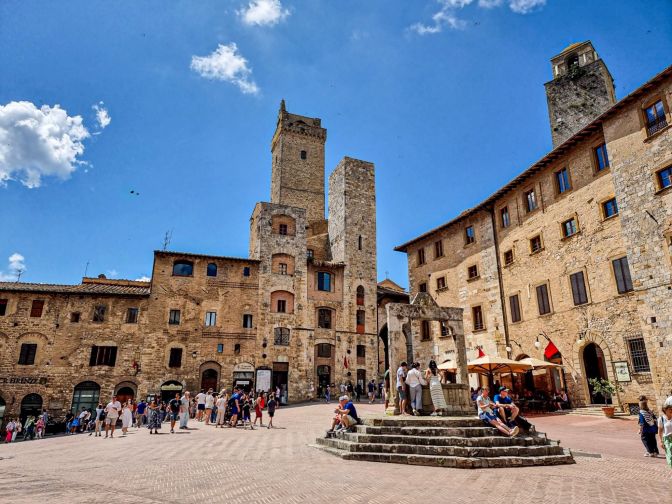
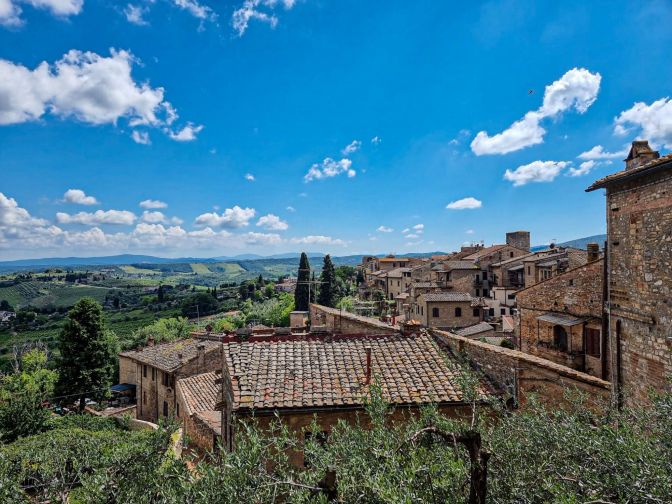
Footsore and feeling the effects of the 30C day, I wandered little from the main artery, not feeling the urge to buy tickets to any of the sites or duck down every alleyway. I was content to admire the medieval splendor of the city from the outside and wonder how it looked in 1300 when Dante visited the city to speak on behalf of the Guelphs when there were 76 towers3. Today, the city was swarming with tourists from various bus groups, and the lines at each gelato shop stretched out like vine tendrils into the square and along the street.
At the southern gate of the city is the main parking lot and bus stop where I caught the 130 back to Poggibonsi Station. The ticket booth for the bus is actually well hidden behind the bus stop. You will feel like you are trespassing on some property, but confidently walk up to the small nondescript building and walk in.

Final Words
This is not a perfect hike, but one well worth doing if you prefer to experience places in a manner outside the box. I am sure I sacrificed some tourist energy by hiking to San Gimignano on a hot June day. As such, I came away with only a passing impression of the city, but probably no less than someone hopping off a bus for two hours to wait in line for gelato. It is a city that begs to be seen from its narrow lanes and alleys though, and I fear that neglecting that will leave a certain lack of fulfilment in my soul. I don’t make it to Italy very often so who knows. In the meantime, the story of San Gimignano goes on; with my part a small fraction of a fraction of its existence. And at the end of it all, I still can’t pronounce it.

- Edmund G. Gardner. “The Story of Siena and San Gimignano.” (1902) ↩︎
- https://en.wikipedia.org/wiki/San_Gimignano ↩︎
- Olave M. Potter. “A Little Pilgrimage in Italy.” (1911) ↩︎

 itsabrewtifulworld
Beautiful landscape photos, great hike. Thanks for sharing, Matthew!👏👏
LikeLiked by 1 person