
“The city of Salisbury, it has been well said by one of our best antiquarians, has its origin well defined, and in this respect differs from English cities generally. It has nothing Roman, Saxon, or even Norman in its origin, but is purely an English city, and it may be considered as unique.”
Ancient Streets and Homesteads of England by Alfred Rimmer (1877)
I emerged from the Salisbury train station under a blue sky, which for those living in Northern Europe has been an elusive experience in 2024 as I am writing this. A day after the mostly dreary weather on my West Malling hike, the rays of the sun revived my muted spirit, eviscerating the shadows which linger like bacteria on the soul when there are long periods of grey skies.
Beer & Dickens Hike: Maidstone to West Malling
Literature’s most famous cricket match and the hike it inspired.
Continue reading Beer & Dickens Hike: Maidstone to West Malling

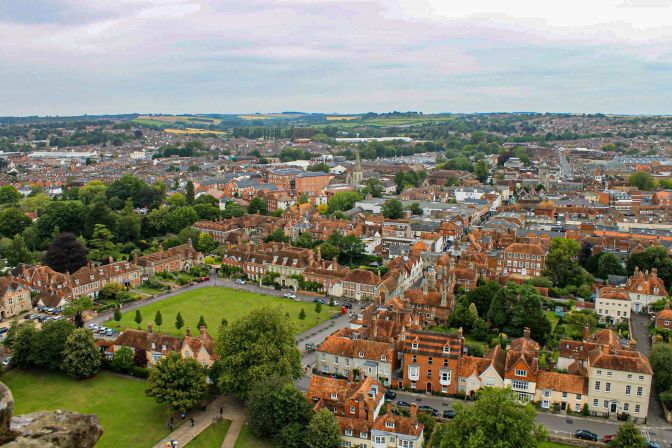
Salisbury station sits on the outer fringe of the city and as such, it gives you the experience of letting the city slowly unfold to you as you make your way to the center. There are a couple approaches to the city center, and I took the more circuitous southerly route which passes by the Elizabeth Gardens, where on a sunny Saturday morning, families were already out en masse. There, rising in the distance was the spire of Salisbury’s great cathedral.
“The spire was built as a guide in the flat lands that surround it, and it is marvellous at what great distances it can be seen on a clear day from remote parts of Salisbury Plain. ”
About England with Dickens by Alfred Rimmer (1883)
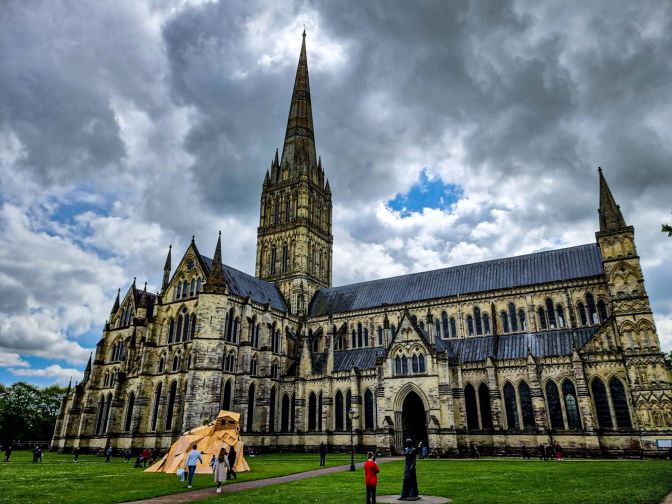
My hotel sat on the opposite side of town, so I tried to put on blinders to avoid spoiling my first impression opportunities, but several of the pubs which I had on my list were unavoidable. I quickly dropped my suitcase off at my hotel and headed out to discover what makes Salisbury a “purely” English city. Charles Dickens used Salisbury as a major setting in his novel Martin Chuzzlewit and along the way, I would also be bumping into a scene here or there. By the time I arrived at the cathedral, clouds had started to converge above it. The pending sense of gloom I was starting to feel was quickly extinguished as I observed the spire reaching towards the heavens.
Salisbury Cathedral
During the years 1215-1218, the city of Salisbury, then known as Sarum was relocated from a nearby hilltop to the flood plains of the Avon River to have better access to fresh water. The foundations of the cathedral were laid in 1220. All of this occurred during the reign of Henry III, 150 years after the Norman invasion. Since the city was built from scratch, leaving what would become known as Old Sarum to deteriorate into ruins, we get a big clue as to why the style would have an English identity rather than that of an invading culture.
“The history of no English cathedral is so clear and so readily traceable as that of Salisbury. It was the first great church built in England in what was then the new or pointed style (Early English)”
How to Visit the English Cathedrals by Esther Singleton (1912)

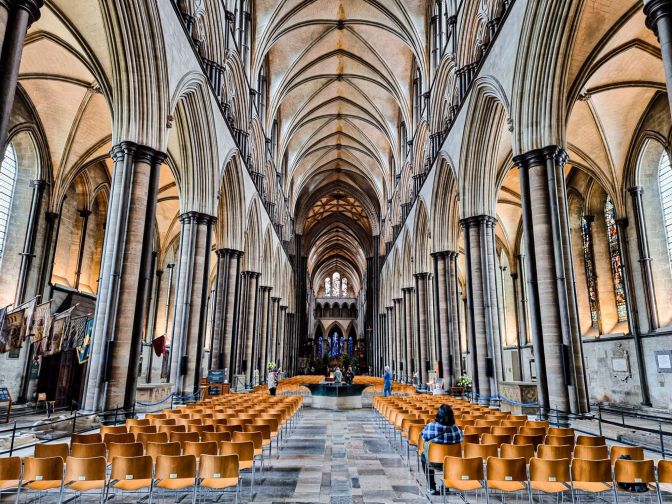
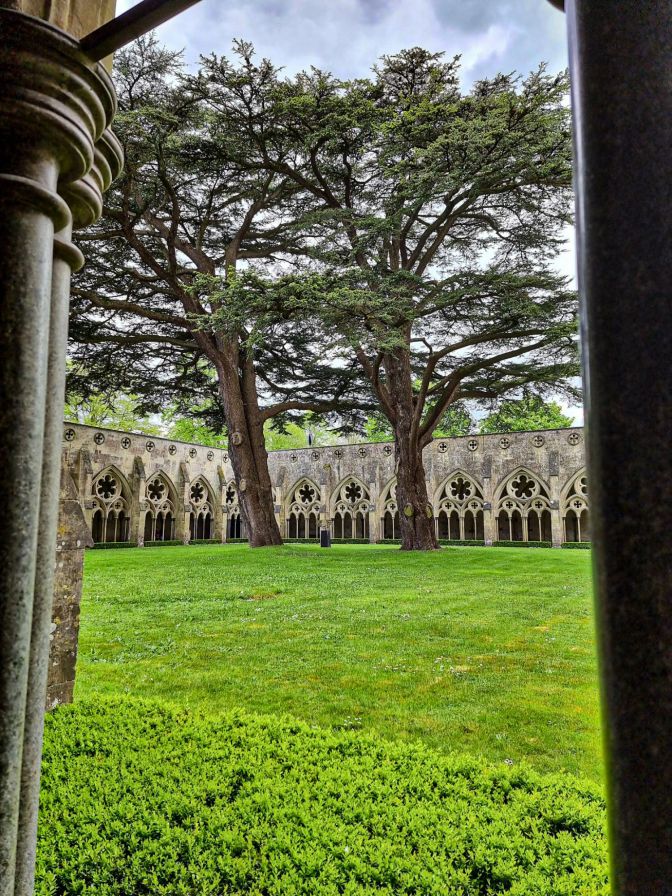
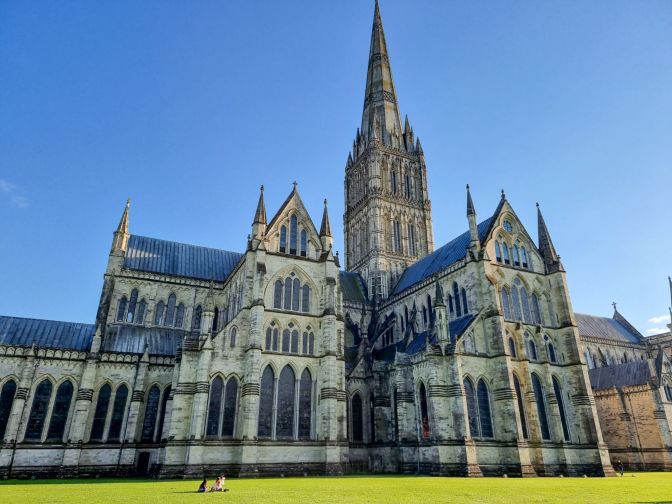
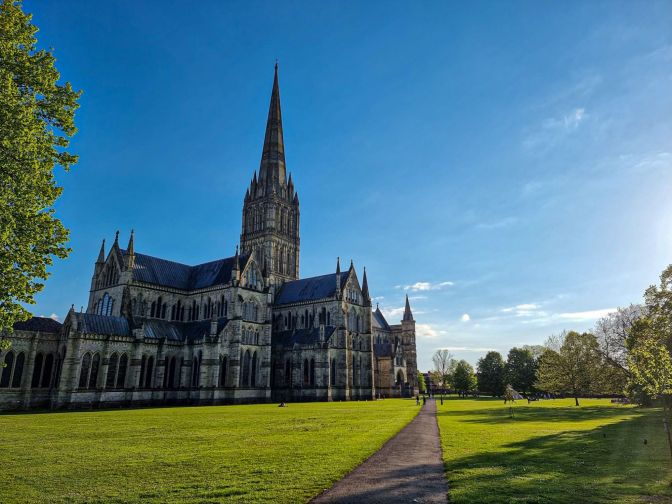
One of the most unique features of Salisbury Cathedral is that it sits in a large open area surrounded by grass. This makes it possible to observe it on a scale unlike other cathedrals. Like all great English cathedrals, they are not just a place you go inside, shoot a couple pictures, and leave. Perhaps more than any country on Earth, England’s storied cathedrals are interwoven into their history; whereby entering one, one does not just follow the story of Christ, but of England itself. Salisbury Cathedral is no exception. It contains one of the most important documents in its history. The Magna Carta, signed by King John in 1215. The Magna Carta was an agreement drafted by the Archbishop of Canterbury to establish baronial rights and rights of the church which limited the power of the King. This comes just 45 years after the murder of Archbishop of Canterbury, Thomas Becket, as part of the fallout of his feud with King John’s father, King Henry II over ecclesiastical rights.

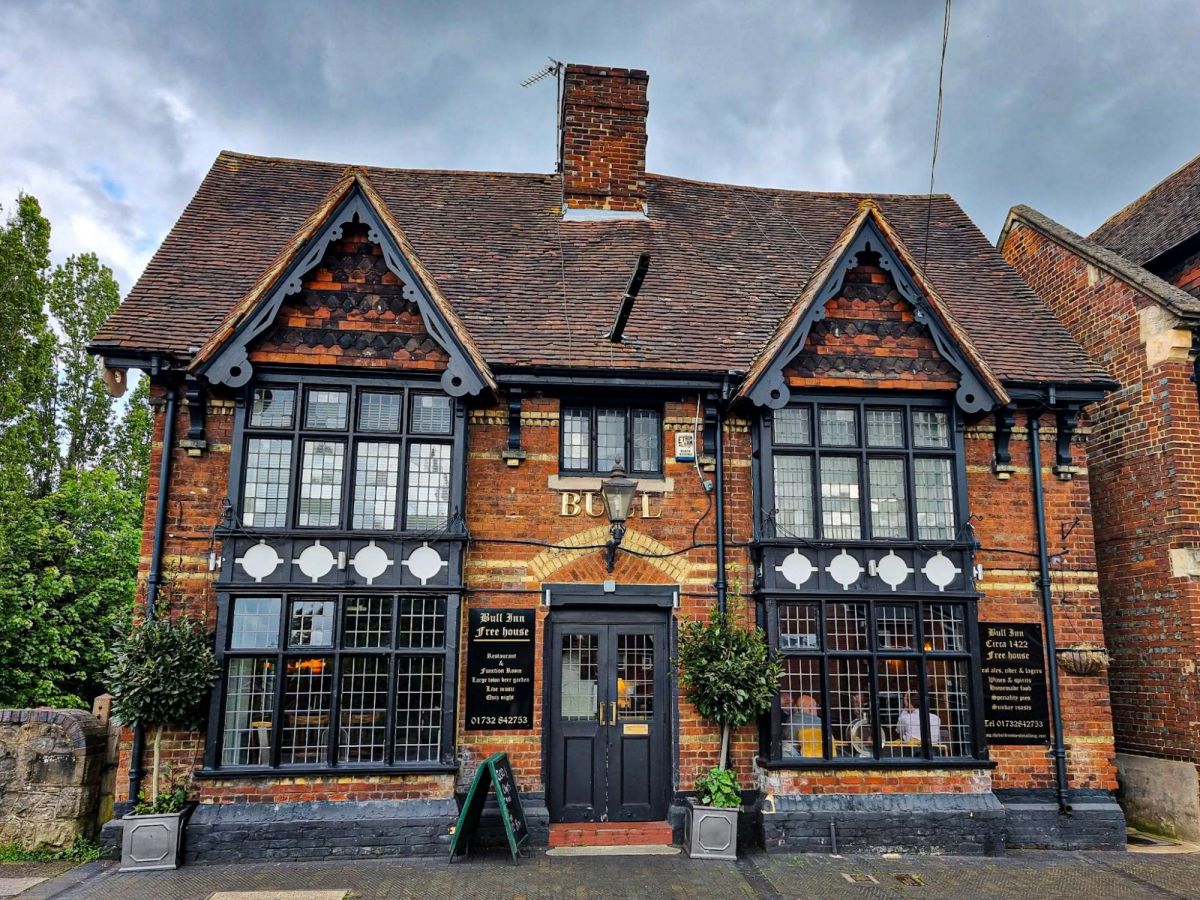
Thoroughly convinced that I had achieved the insight I needed about Salisbury’s origins, it was time to explore the pubs of Salisbury which range from the commercial to the half-timber to just your typical unflashy local pub. And there is a craft beer bar thrown in for good measure. A couple of them I did the following day after a hike, so I will save them for my next post. These are the ones I took care of on that formerly sunny and now quite cloudy but soon to be spectacular Saturday.
Flashback to July 2011
This wasn’t my first trip to Salisbury. Back in July 2011, my first excursion after moving to Belgium was a whirlwind visit to London with side-trips to Dover, Leeds Castle, and a bus trip to Stonehenge and Salisbury. Back then, I took a tour of the tower.

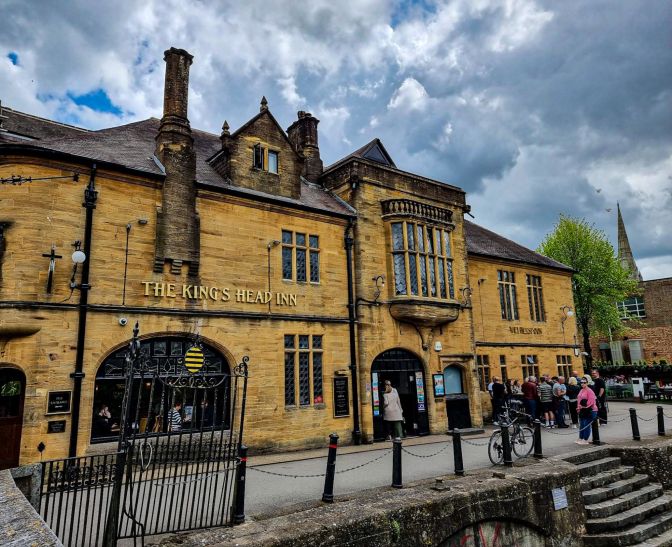
The King’s Head Inn
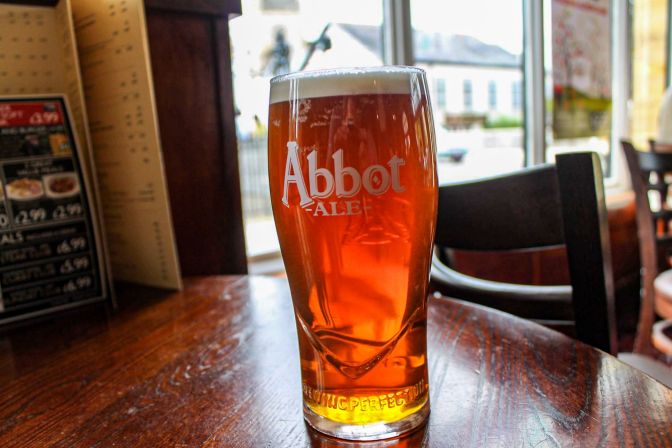
The King’s Head Inn was a reunion of sorts as this was the one pub I visited in July 2011. This is a commercial Weatherspoon pub, which means it has low prices and a good selection on tap, but at the expense of being a bit chaotic. In my opinion, it is well worth the visit.

The Bishops Mill
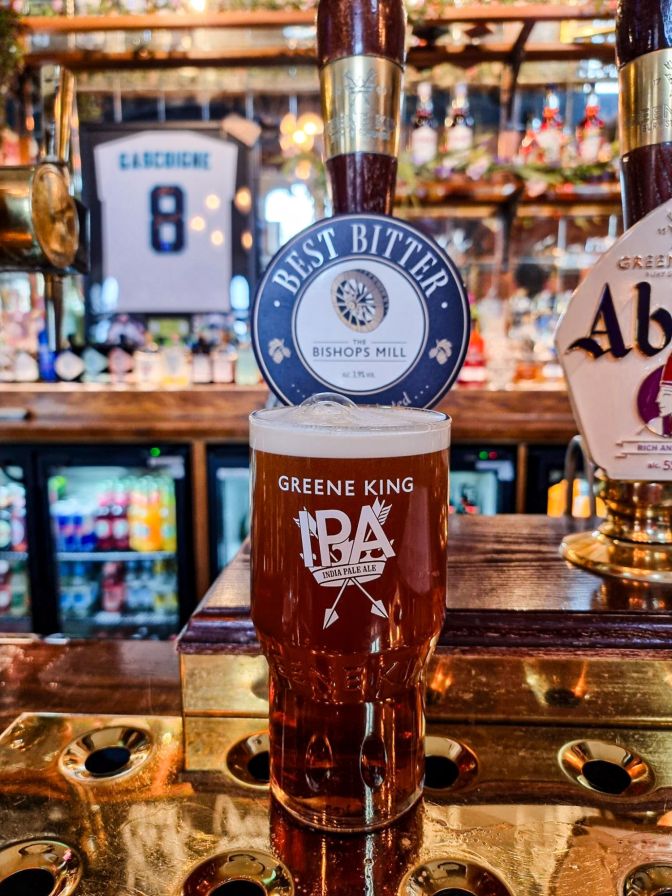
The Bishop’s Mill belongs to the Greene King group of pubs, which makes it commercial also, but this is a really nice pub. It is a step or two above The King’s Head Inn in class and style. The outdoor seating area is great for people watching and has a view of the Avon River.

The Pheasant
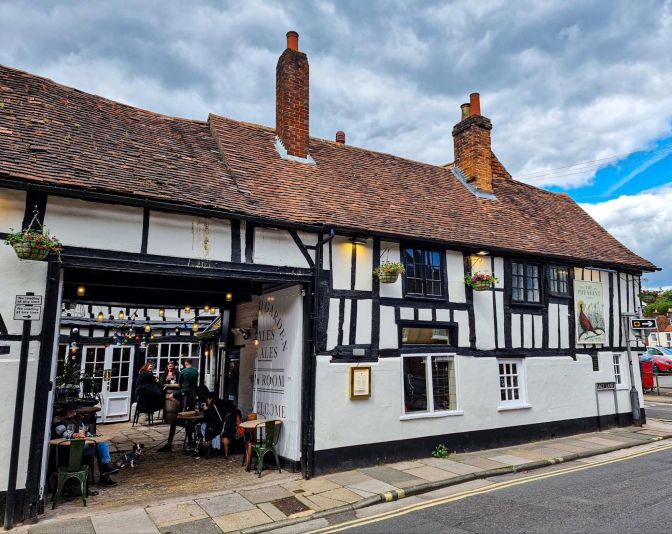
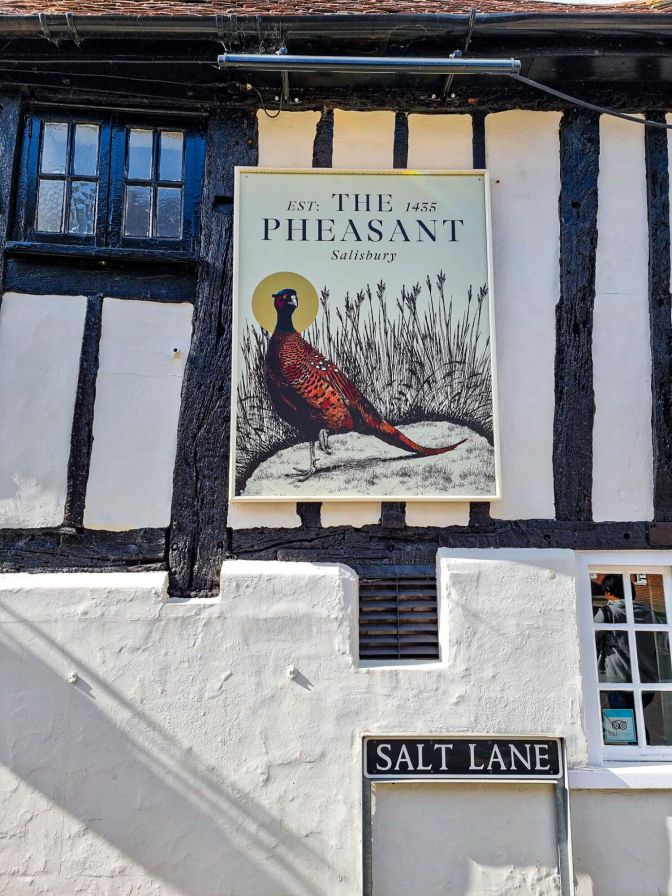
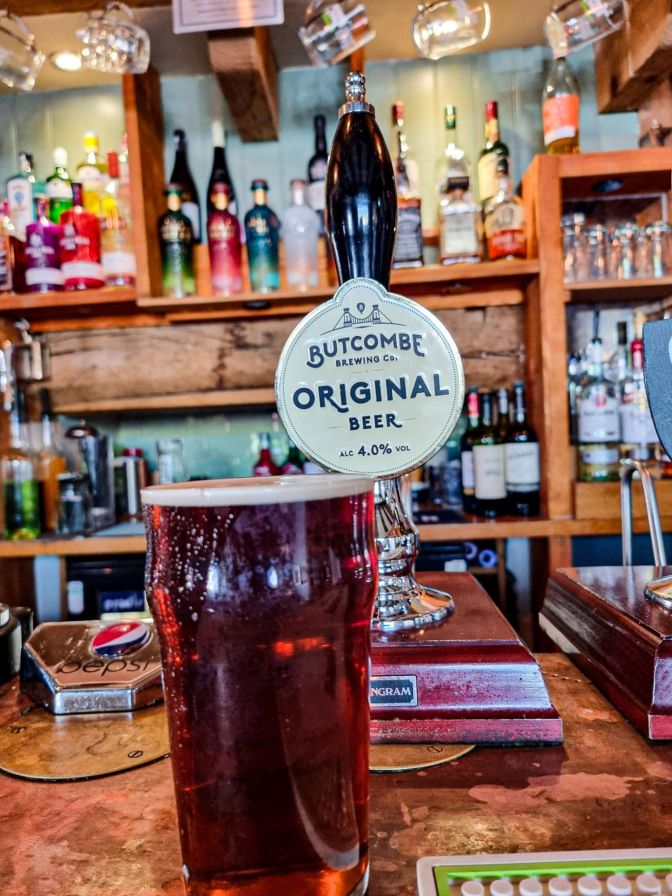
Here we step away a bit from that commercial vibe to something which looks and feels more authentically old. This was a nice peaceful respite after the noisier, busier pubs I had just come from. While writing this, I was trying to decide which pub I liked most. The Pheasant is definitely a candidate.
Haunch of Venison
“All the farmers being by this time jogging homewards, there was nobody in the sanded parlour of the tavern where he had left the horse; so he had his little table drawn out close before the fire, and fell to work upon a well-cooked steak and smoking hot potatoes, with a strong appreciation of their excellence, and a very keen sense of enjoyment. Beside him, too, there stood a jug of most stupendous Wiltshire beer; and the effect of the whole was so transcendent, that he was obliged every now and then to lay down his knife and fork, rub his hands, and think about it. ”1
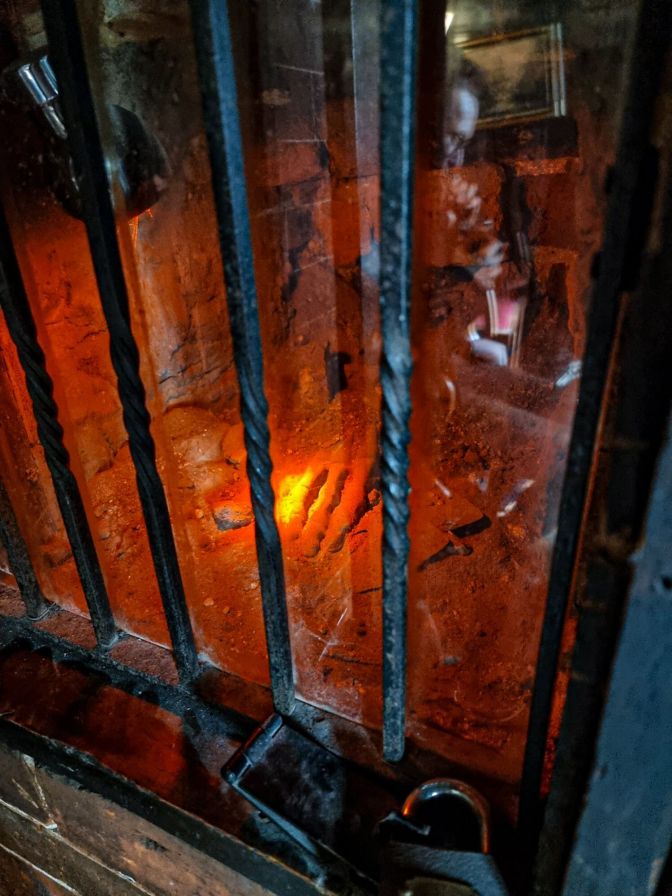
Situated on an old market square is the quintessential old inn of Salisbury, Haunch of Venison. Dickens never mentions the name of the tavern in the above scene from Chapter VII of Martin Chuzzlewit, but of course it has its favorite candidates among Dickens enthusiasts. Walter Dexter, who for a time was the treasurer of the Dickens Fellowship and editor of The Dickensian2, is the only source I have found which mentions Haunch of Venison3. We will pass by the more commonly accepted candidate later. Nevertheless, if any pub in Salisbury exemplifies the atmosphere of a “Dickensian Inn”, it is Haunch of Venison. In the upper floor is a small caged area with a mummified hand believed to have been cut off a gambler caught cheating and thrown into a fire. Remarkably, it was discovered well preserved in 1911. While I like the aesthetics of this pub better than The Pheasant, this one will attract more tourists while The Pheasant feels a bit more local. It is a toss-up.
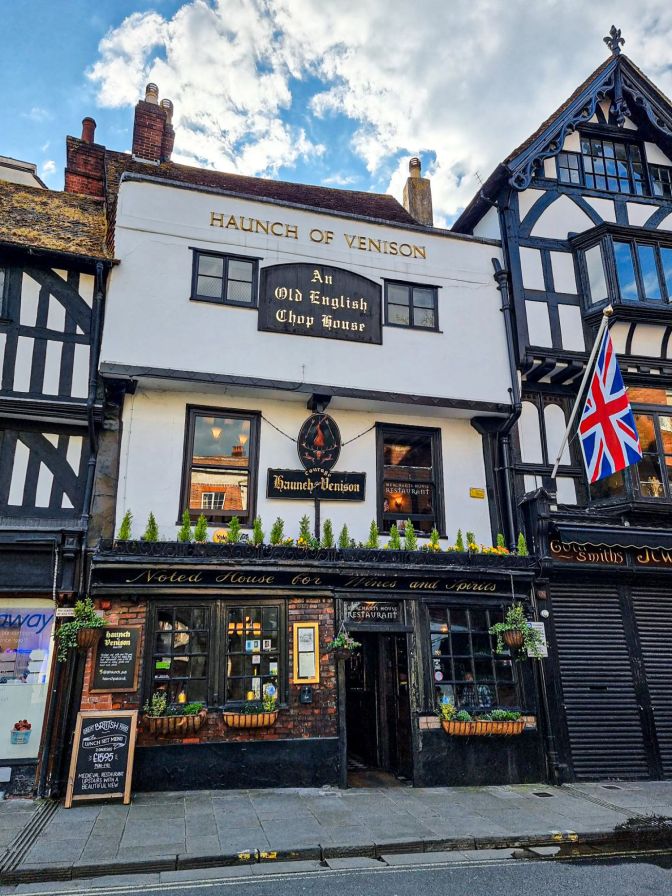

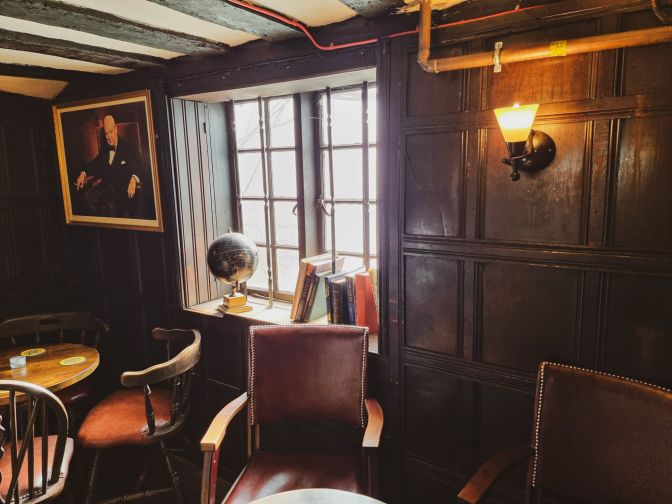
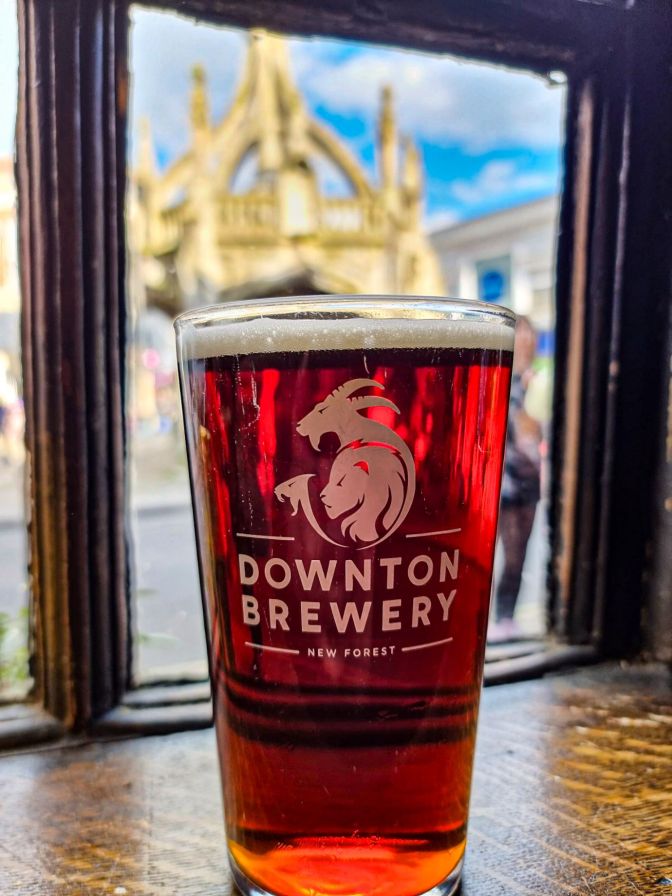
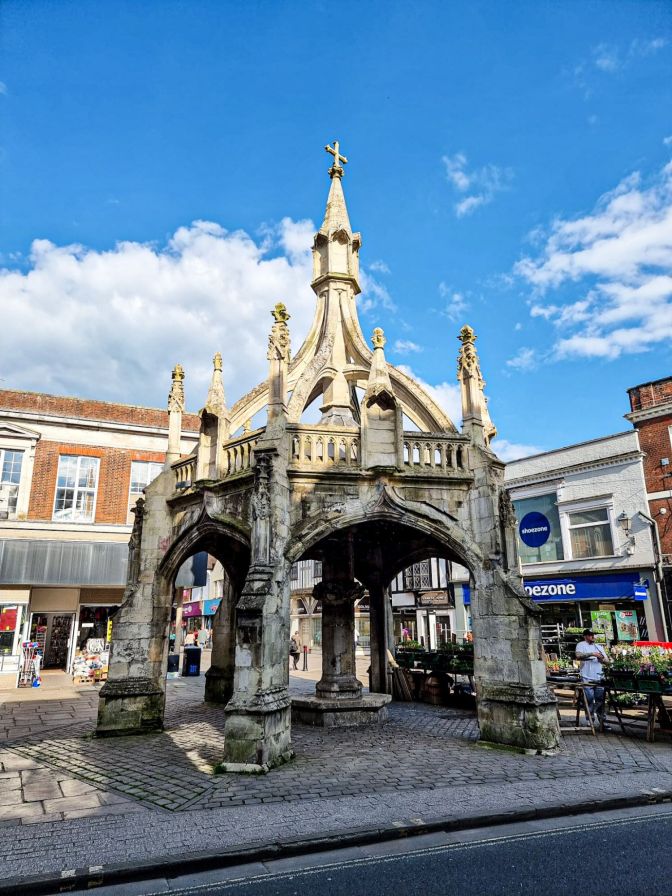
Just outside the Haunch of Venison is the poultry cross.
“Market crosses… are an interesting feature of the old market-places wherein they stand… they were the ancient meeting-places of the local assemblies, and we know that for centuries in many towns they have been the rallying-points for the inhabitants. Here fairs were proclaimed, and are still in some old-fashioned places”
Vanishing England by P. H. Ditchfield (1910)
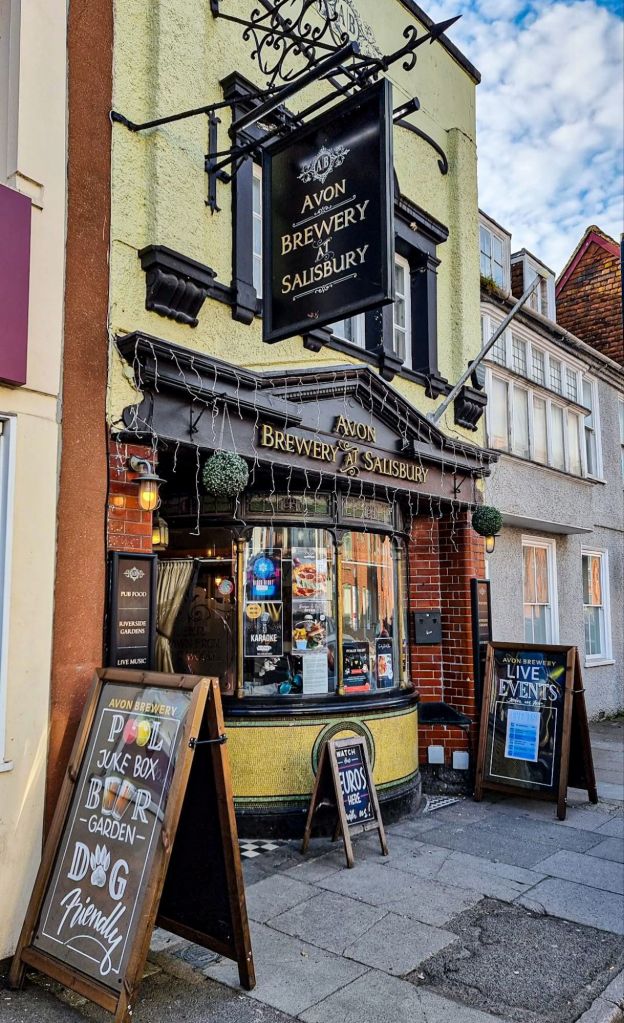
Avon Brewery at Salisbury
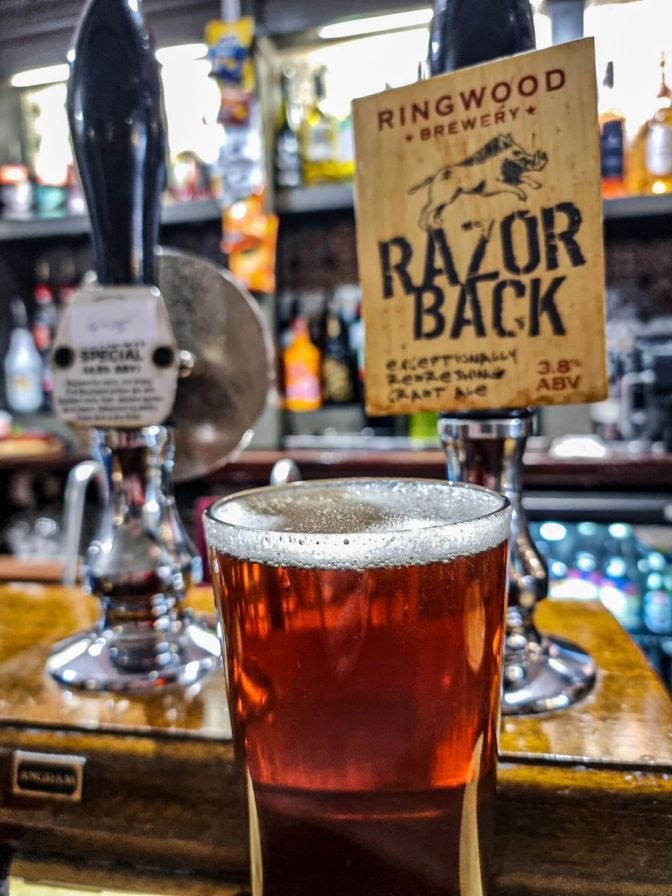
I was disappointed to find that this was not actually a brewery but housed in the location of the former brewery. Fortunately, they had some unique beers on tap; otherwise, nothing remarkable but a solid locals hangout.
The George Inn
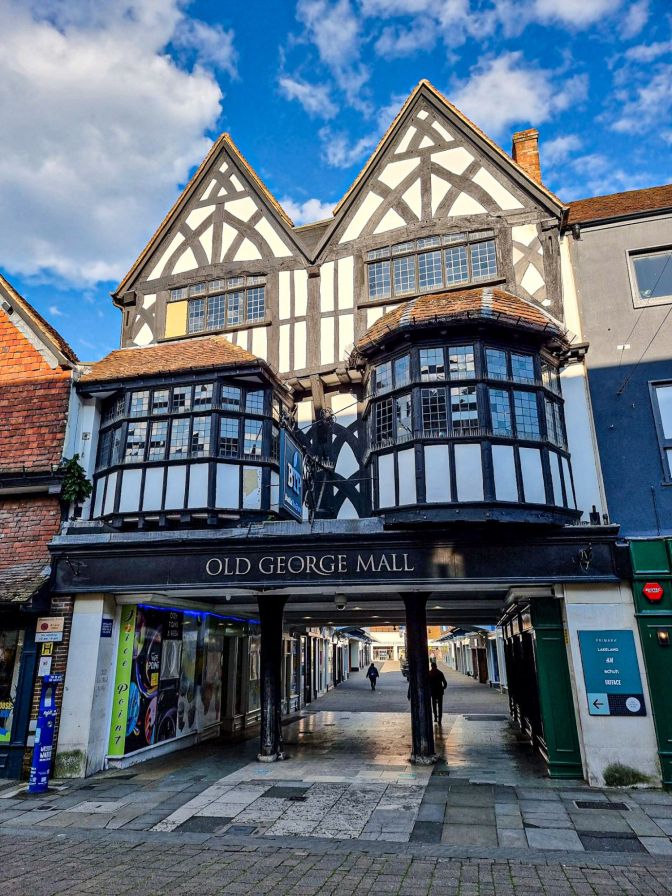
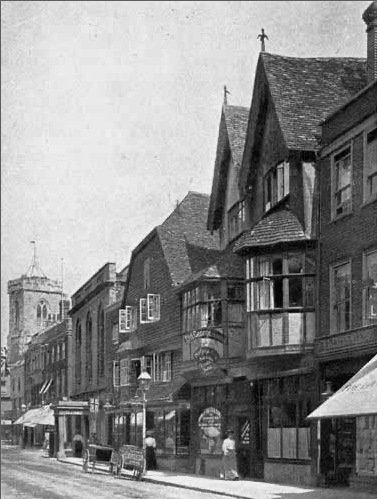
The favorite candidate for the tavern from Martin Chuzzlewit Chapter VII is The George Inn, which today is the entrance to a shopping street. Perhaps it was this comment by B. W. Matz which persuaded Dexter to propose the Haunch of Venison.
“It may have been the inn which Dickens had in his mind’s eye, but it must have been a recollection of an earlier visit to Salisbury, for at the time he was writing Martin Chuzzlewit, the George had lost its license and would not have been able to supply the “jug of the most stupendous Wiltshire beer”…”
Dickensian Inns and Taverns by B. W. Matz (1922)
A Short Early Evening Stroll Around Salisbury
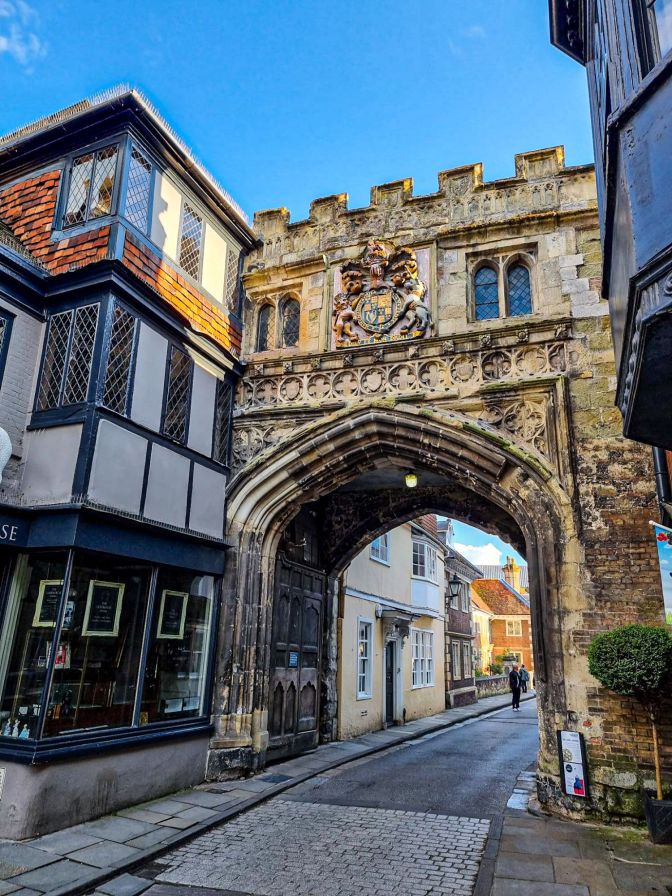
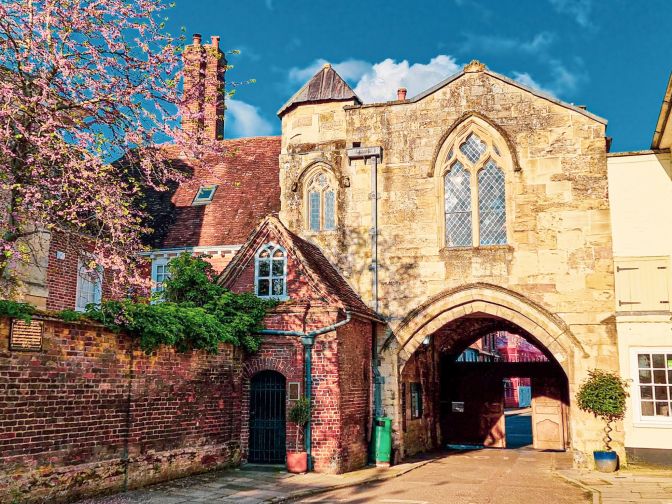
By this point in time in the late afternoon, besides having a considerable beer buzz, the sky had decided to clear itself of clouds and inspire short-lived hope, so I headed to the cathedral area to capture some additional photos.
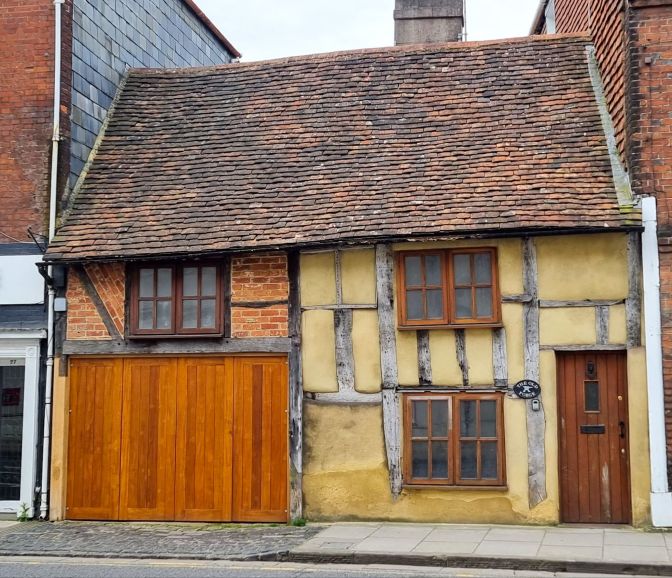
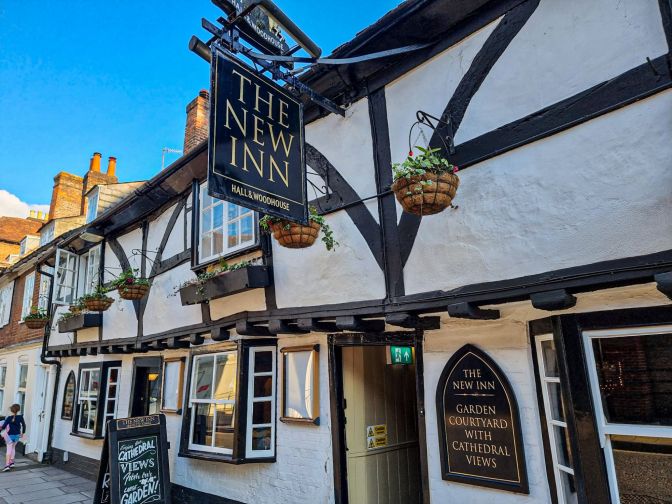
The New Inn
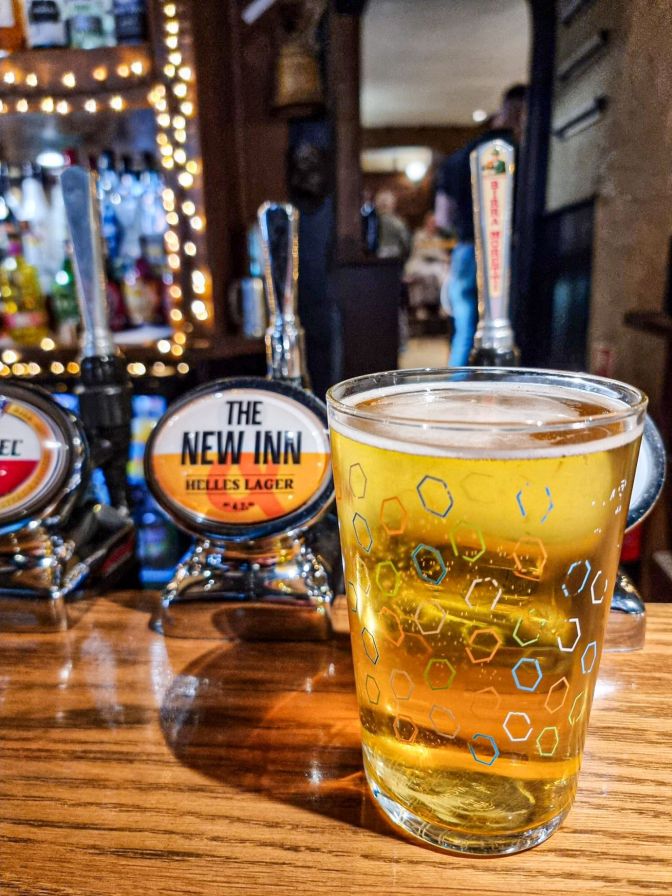
The final pub of the day was not originally on my pub list, but it was recommended by some guys I met at the Haunch of Venison. It was dinner time and had attracted a large crowd. I grabbed my final beer of the day and sat outside enjoying the weather. The garden terrace is quite nice. My accent once again attracted the attention of some locals, and I spent the next hour dodging questions about the current state of affairs in American politics. Similar in vibe as The Pheasant, but I happened to catch it at a more vibrant time of day. Tough decision.
Final Words
“Mr Pinch had a shrewd notion that Salisbury was a very desperate sort of place; an exceeding wild and dissipated city; …he set forth on a stroll about the streets with a vague and not unpleasant idea that they teemed with all kinds of mystery and bedevilment.”
Chapter VII, Martin Chuzzlewit by Charles Dickens
When you walk out onto the lawn of the Salisbury Cathedral, it inspires neither mystery and bedevilment, but a combination of tranquility and awe which you don’t get in the cathedrals of Belgium, for example, which are often crammed between buildings and houses. I really could envision myself lounging on a blanket reading a book on a beautiful day and gazing up at it from time to time. I am afraid though that my capability of sensing when a city is “purely” English is muddled by the modern world. Does it even exist anymore besides in the joy of an elderly tour guide at the cathedral? I envy a little bit how the authors from pre-WWII lived at a time where they could conjure a romanticism about history and describe the essence of places with words, sketches, or watercolors without being crushed by the overwhelming access to information and media. My sense of a place being “purely” English lie predominantly in the pubs. And Salisbury has several remarkable ones. If you twisted my arm, I would probably go with The New Inn as my favorite by a hair, but depending on the weather and time of day, it could change. As it turned out, the bedevilment was not in the streets of Salisbury but in the heavens. I headed to bed with these thoughts on a clear May night only to be bedeviled come morning.

Footnotes:
- Martin Chuzzlewit by Charles Dickens ↩︎
- https://www.goodreads.com/author/show/18112.Walter_Dexter ↩︎
- The England of Dickens by Walter Dexter (1925) ↩︎
- Photo from Dickensian Inns and Taverns by B.W. Matz (1922) ↩︎

 itsabrewtifulworld
Nice post. Hope the conversation on politics at The New Inn was not too draining!
LikeLiked by 1 person