
The chief object of interest in Antwerp, even more important than the cathedral itself, is the Picture Gallery… The building alone might make Trafalgar Square blush, if Trafalgar Square had a blush left in it.
Belgium: Its Cities by Grant Allen (1903)

When France took rule over Antwerp in 1794, Napoleon saw the potential of Antwerp’s harbor as a base from which to invade England. Napoleon’s infamous quote about Antwerp was “C’est un pistolet charge que je tiens a la gorge de l’angleterre!”1 or “It’s a loaded pistol that I hold to England’s throat!” Meanwhile, during the French occupation, the revolutionists looted the churches and monasteries of Antwerp as they were doing all over the rest of Belgium.
All of this came to a dramatic end in 1814 as the British sieged Antwerp. Napoleon’s forces made their final stand from the citadel of Antwerp until Louis XVIII of France surrendered the city and ended Napoleon’s rule.
It was on the former site of the citadel where the construction of a royal art museum would begin 70 years later in 1884 which would eventually house much of the recovered art looted during the French occupation. The recovered art would join an already impressive collection accumulating since the 17th century by the Antwerp painter’s guild called the Guild of St. Luke. Until the new museum was built, this art was housed in the church of a former Franciscan monastery2.

When I moved to Antwerp in 2011 from Houston, I was hoping to find a successor to my membership to the Museum of Fine Arts Houston. Instead, I found a closed-up building just beginning renovations that would take 11 years to complete and outlast my life in Antwerp. The elegant building, capped by chariots reminding me of Brandenburg Gate in Berlin, sat grand but silent, like a Sphinx, in the midst of Antwerp’s trendy Zuid neighborhood. Rather than satisfy my art cravings, it would go on to become symbolic of a time in my life in my early years in Antwerp where I was being compelled to mingle in the Zuid’s fancy cocktail bars listening to expats comparing investment portfolios when deep down I just wanted to be sitting in a pub drinking a beer or at home reading… and drinking a beer. Sometimes I looked at that slumbering building as a part of my soul that was missing; the part that shallow conversations in a cocktail bar couldn’t fill. Eventually those days passed. I indulged gleefully and heavily in Antwerp’s pub and beer culture, and after eight years, I moved away from Antwerp; by then the museum was all but an afterthought.
At least in respect to my life, 2022’s reopening of the Royal Museum of Fine Arts Antwerpen (Koninklijk Museum voor Schone Kunsten Antwerpen or KMSKA) came and went with no fanfare. However, I have found myself over the last couple years revisiting Antwerp from time to time contemplating why I have yet to write a dedicated blog post about Antwerp’s beer culture. Antwerp is constantly evolving, and if I had written a blog about its beer culture five or six years ago, I think a good percentage of it would now be out-of-date. One of my favorite pubs was a craft beer bar called The Gollem which used to be situated on the Suikerrij between the Grote Markt and the Schelde River, the perfect atmosphere for people watching and sipping craft beers on a nice evening. Another was The Pelgrom, a pub/restaurant located in an old wine cellar where you were surrounded by low arched ceilings, medieval brickwork and candlelight. As far back as my first visit to Belgium in 2003, it was a bonafide place for impressing visitors. It seems to have passed away during covid.
One of these spontaneous visits in April 2023, I finally returned to the Zuid of Antwerp after several years absence. Memories flirted with my emotions, some regret for leaving Antwerp, others simply welcoming me back to my former home. After 12 years, the museum stood wide awake in front of me as if to say with a big grin Where’ve you been? After a hearty hrrmpf, I stepped up to the ticket machine ready to let bygones be bygones.
The Royal Museum of Fine Arts Antwerp is more than just a collection of amazing paintings from predominantly Flemish and Dutch artists, it is a visual homage on canvas to Antwerp itself. It quickly became clear to me that the theme should be Antwerp in art and beer. However, a dissertation on the art and beer culture in Antwerp would require volumes, so in this instance, I chose to focus on the Old Town and thereby leaving the rest for blog posts to come.
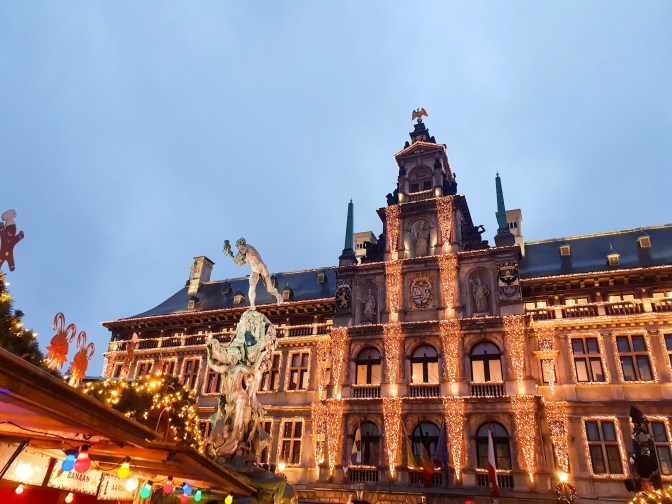
The Grote Markt
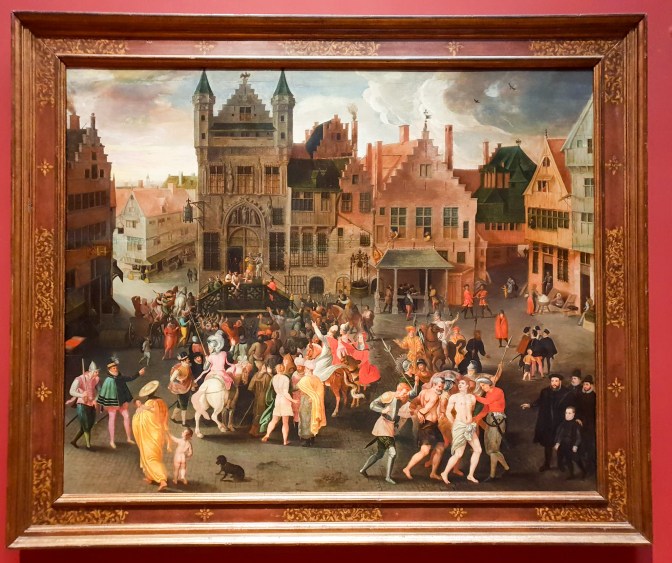
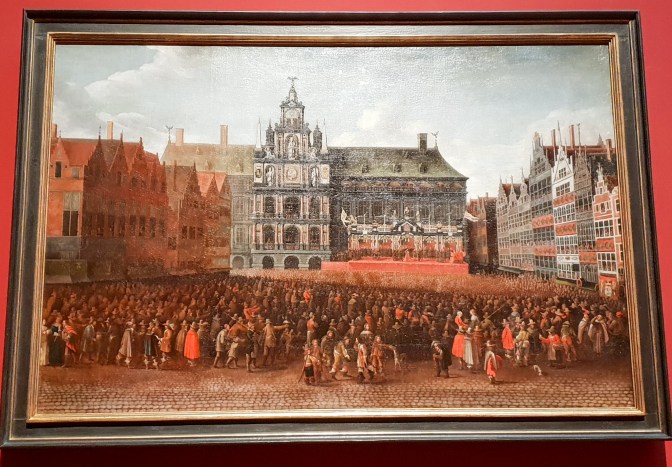
Two of the most interesting paintings of Antwerp in the collection feature the Grote Markt, the city’s main square upon which sit the historical city hall (Stadhuis) and guildhouses. Both are fascinating perspectives of how the square would look without the iconic Brabo Fountain which didn’t come along until 1887. But what stands out the most is how strikingly different the buildings look. During the 1500’s, Antwerp’s population more than doubled due to the decline of cities like Bruges3. It is a pity that the date of the Mostaert painting is unknown, but the two images together show in one step how Antwerp exploded in importance by the end of the 1500’s, reflected by the new and more luxurious Baroque city hall and how the buildings on the right-hand side went from the more plain façades to the exquisite Flemish guildhouses that still appear today much like they are in the Pauwels painting. Even the enormous increase in the size of the crowd can be taken as symbolic.
Top: Passion Play on the Grote Markt by Gillis Mostaert I (mid to late 1500’s)
Bottom: The Proclamation of the Peace of Münster on the Grote Markt by Maximillaen Pauwels (1649)
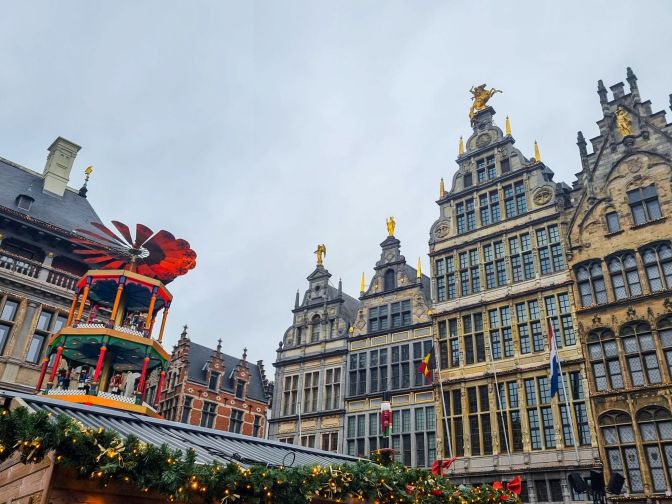
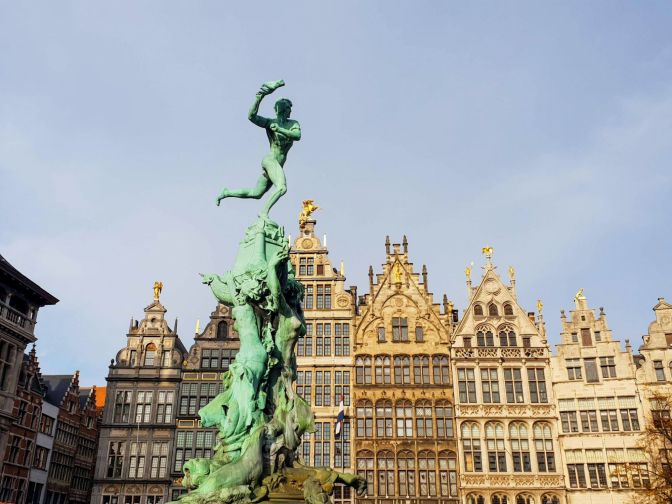
Den Engel & Den Bengel
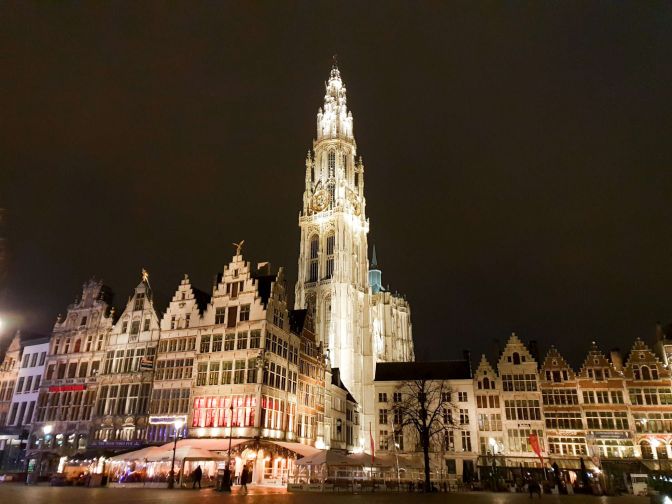
Situated on the corner of the Grote Markt in the two guildhouses on the end are two inseparable pubs called Den Engel and Den Bengel. After years living in Antwerp, it is impossible to think of or say the name of one without the other. There is no place better to enjoy a beer with a view of the square and the cathedral than these two pubs.
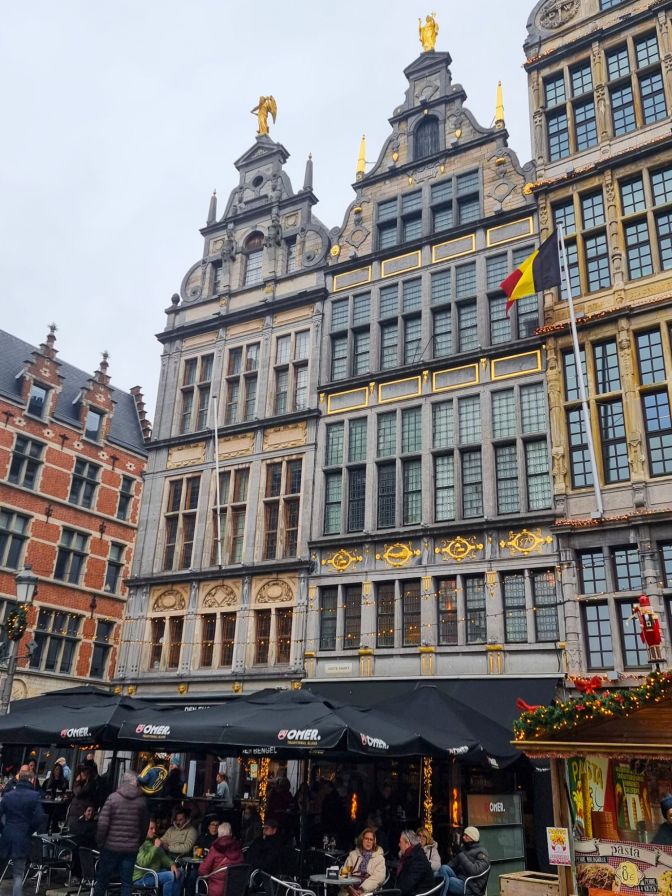
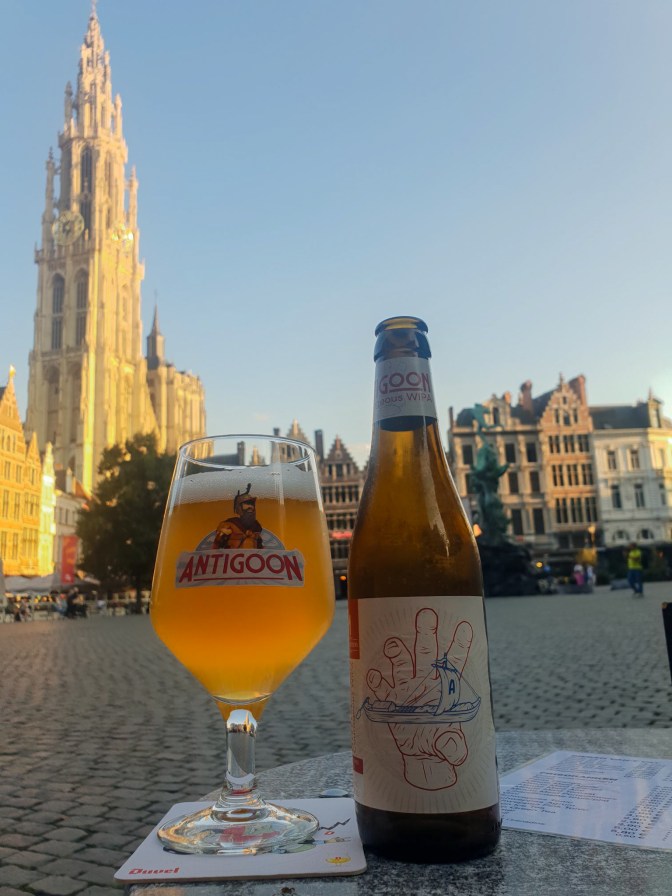
The guildhouse of Den Bengel used to be the Cooper’s guild. Just next door, the tallest of the guildhouses, belonged to the Archer’s guild.
Archer’s Guild
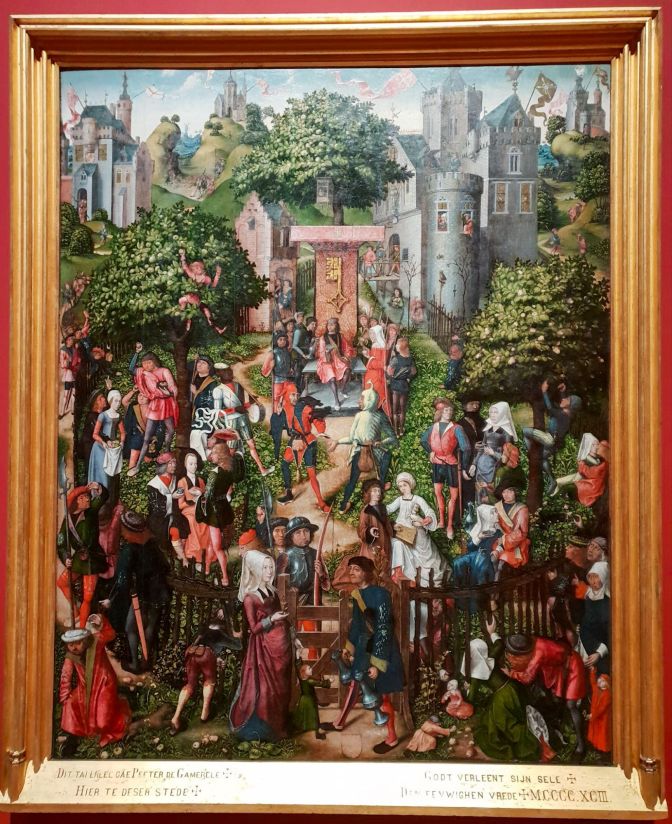
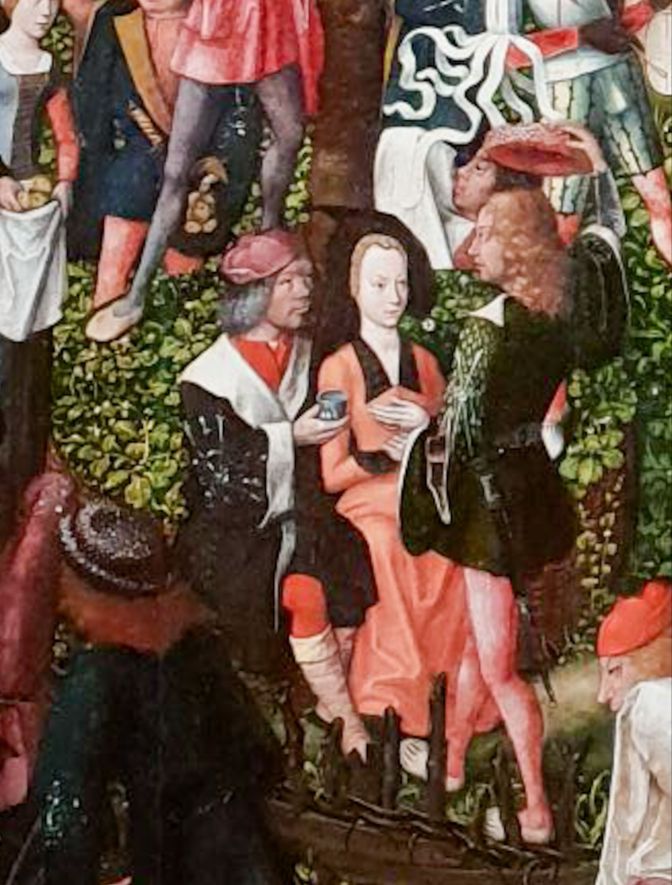
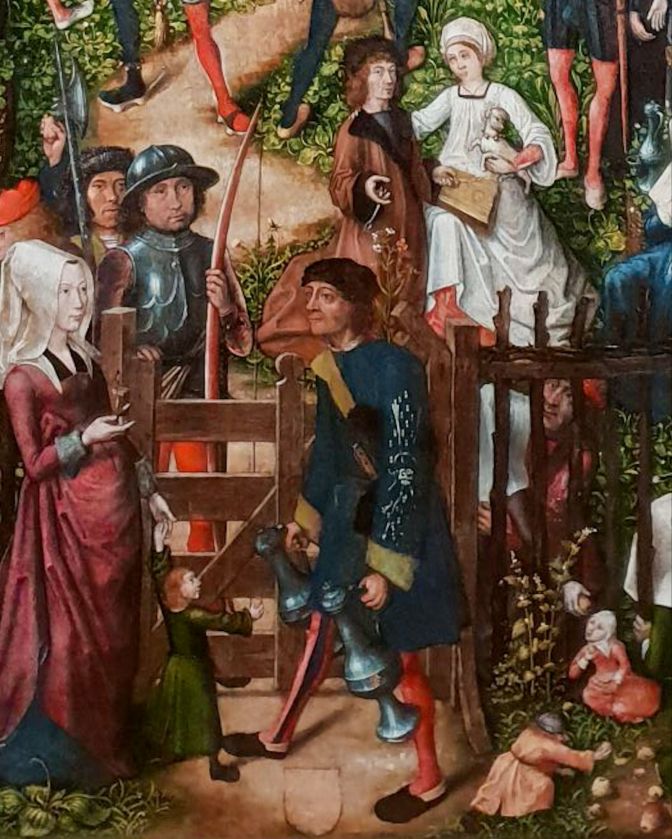
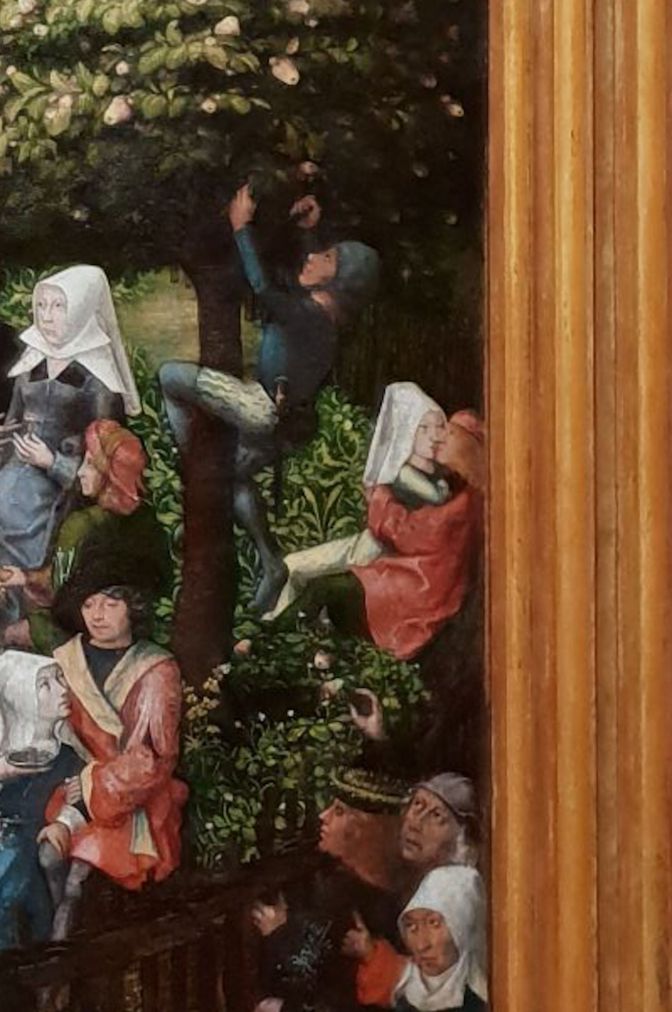
This painting depicts a festival of the Antwerp Archer’s Guild, by an unknown master from Frankfurt in 1493. The background clearly has no relationship to Antwerp. It makes me wonder if the guild commissioned the work to an artist who never actually stepped foot in Antwerp. I enjoy these kind of party scenes because they always bring out the humor in the artist and show that the results of mixing people and alcohol in a party atmosphere hasn’t changed. You have the typical standing around holding a drink behavior, the guy (wearing the blue tunic) showing up well prepared and the two people kissing at the right edge of the painting which may or may not be ironic. All around the painting, pears are being picked, which were symbolic of marital faith4.
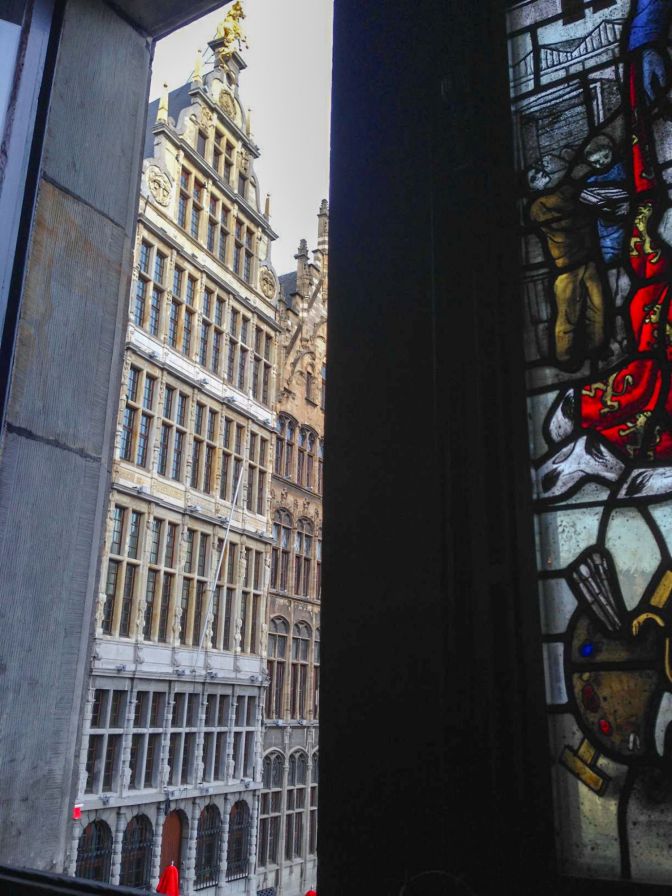
Suikerij
Between the Grote Markt and the River Schelde is the busy Suikerij thoroughfare. This is where one of my favorite pubs in the past, The Gollem, was located. This painting by Ferdinand de Braekeleer from 1837 depicts the ransacking done by the Spanish Army in 1576. The scene appears to occur on the Suikerij leaving The Gollem strewn with bodies.
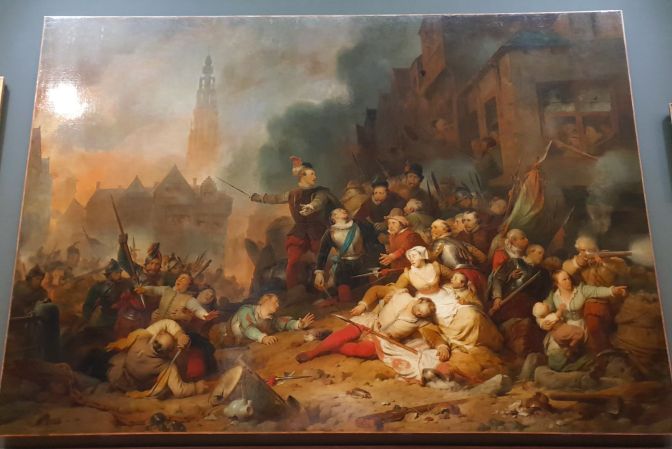
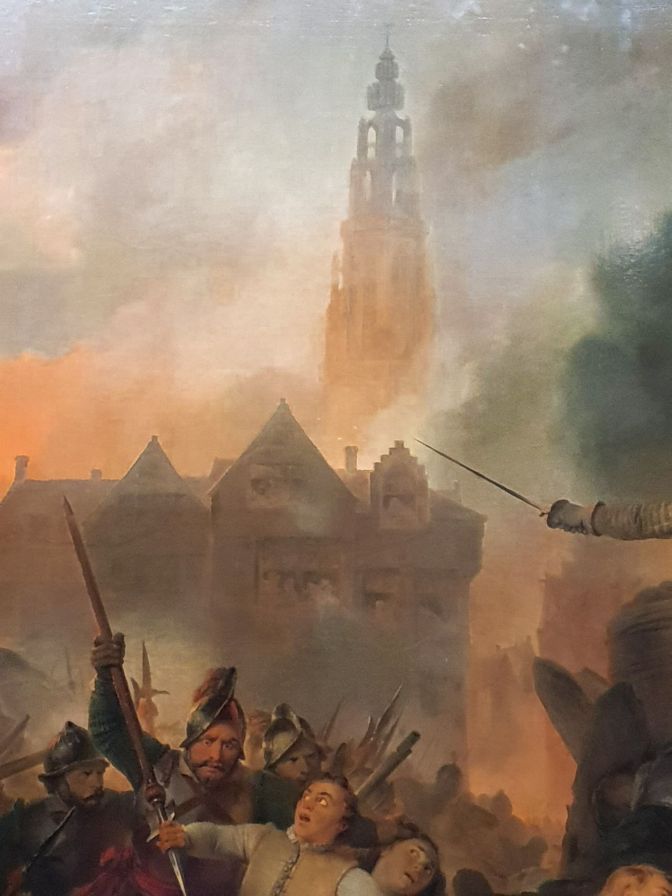
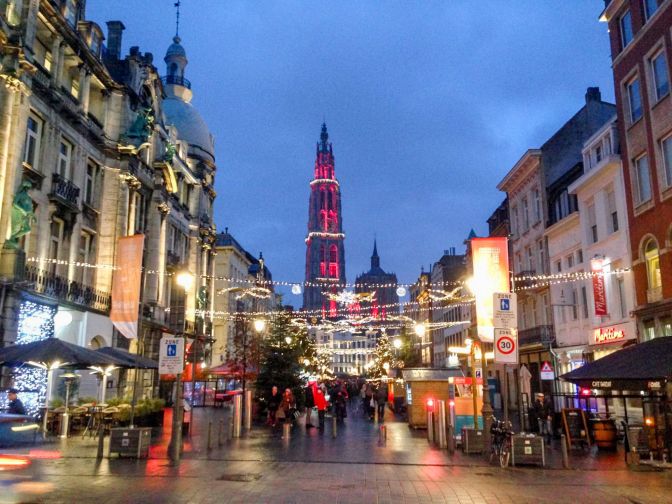
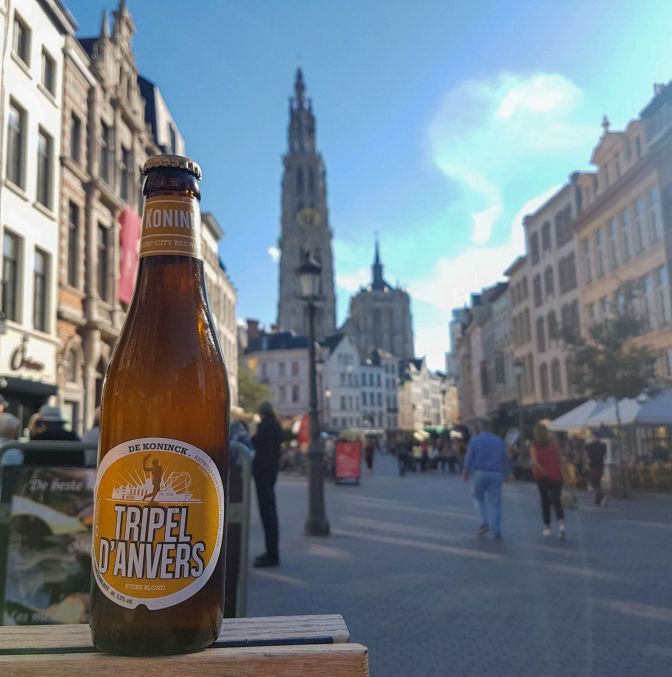
Handschoenmarkt
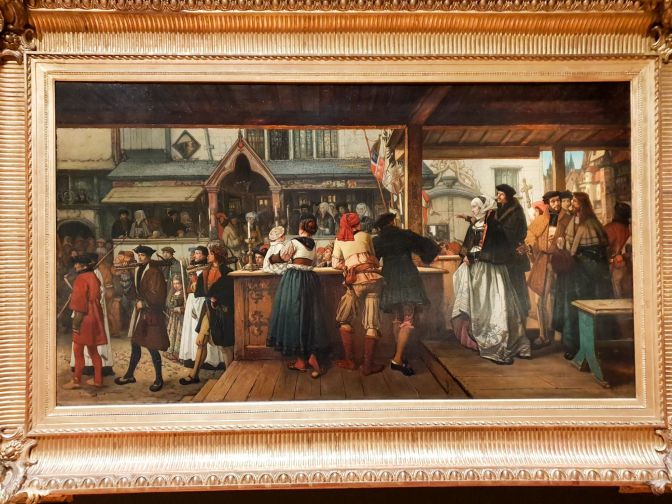
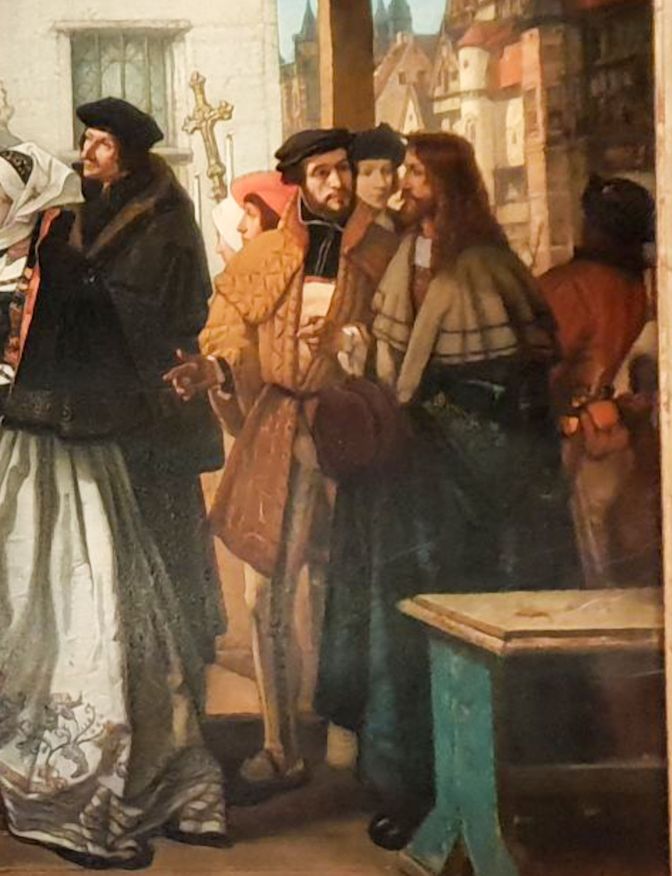
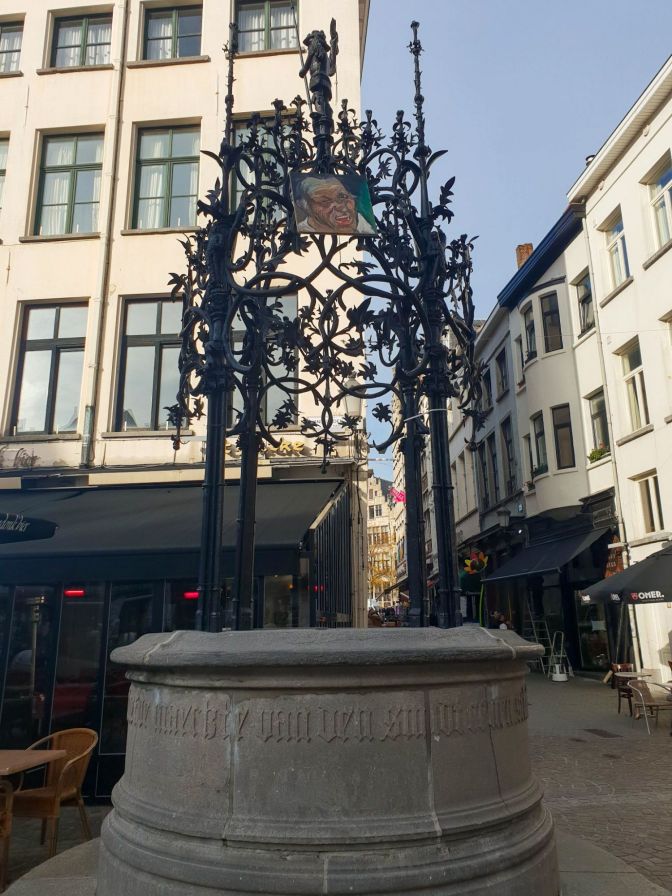
Just one block over from the Grote Markt is this smaller but just as busy square. Most people probably don’t know it as the Handschoenmarkt (or Glove Market) but as the square in front of the cathedral. This square is known for the well, the ironwork of which was made by Antwerp painter Quinten Matsijs. Matsijs is also buried in the cathedral. In this 1855 work from Henri Leys, Matsijs is shown explaining the Procession of Our Lady of Antwerp to a visiting Albrecht Dürer (he of the long wavy locks), the famous German painter who visited Antwerp in 1520 and stayed until 1521.
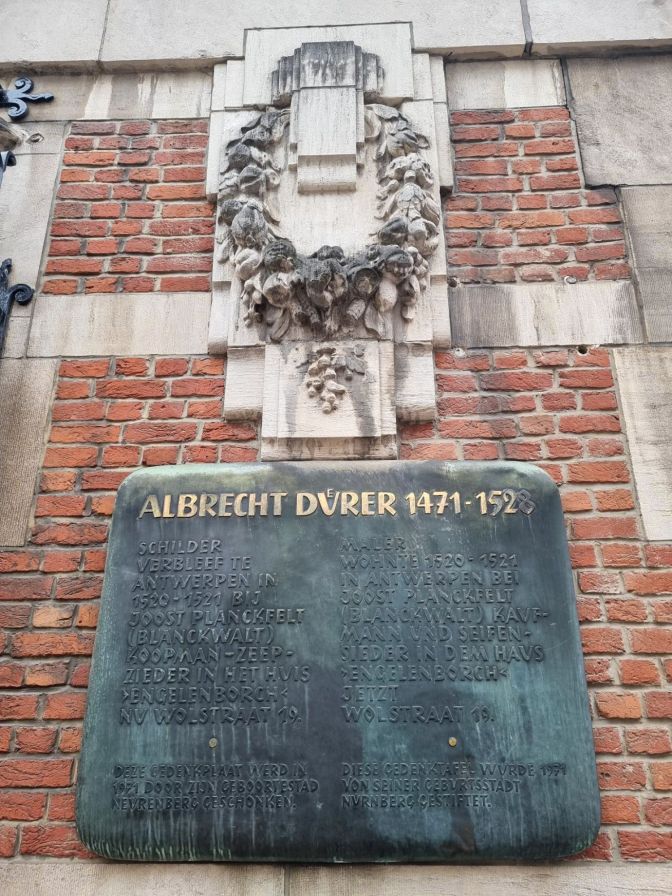
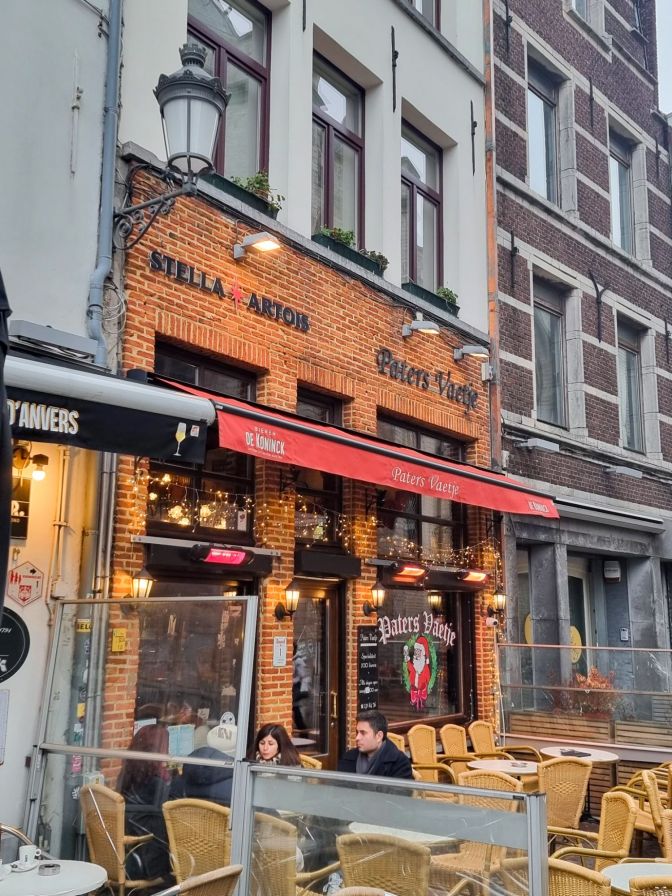
Paters Vaetje
On the Handschoenmarkt and immediately at the base of the Cathedral of Our Lady’s tallest tower sits one of the stalwarts of Antwerp pubs. When I think of the classic Belgian pub in Antwerp, it is Paters Vaetje which comes to mind. It’s cosy outdoor seating practically puts you right up against the stones of the cathedral; you can almost hear the work of the medieval masons chiseling and barking orders during the cathedral construction. Inside, it is even cosier, with a small lower seating area, a few bar stools, and a claustrophic stairwell leading to a balcony area which gives you about as close to a medieval pub feeling as you will find anywhere. It is not a place you will ever stroll in with full confidence to find a place to sit.

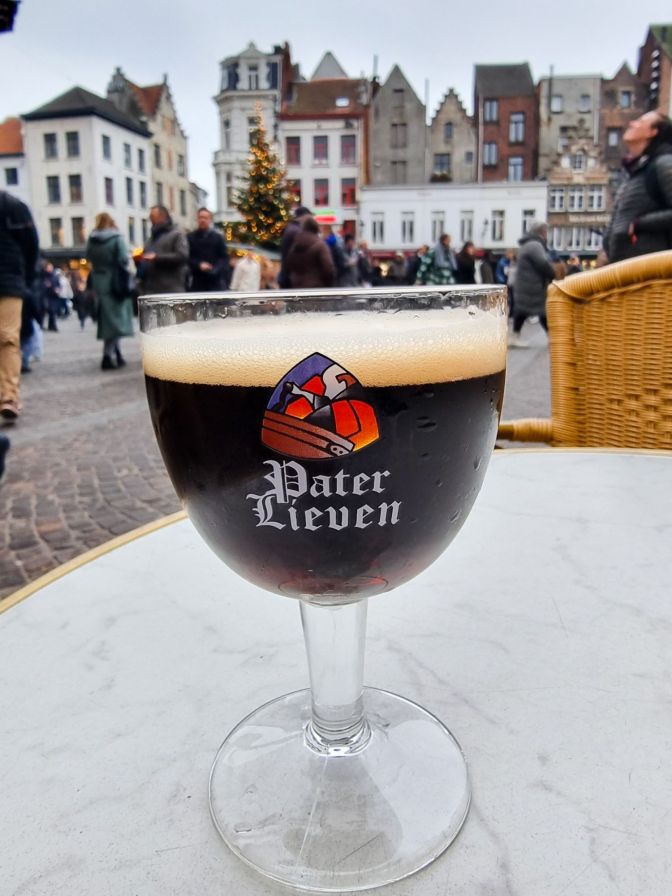
Just a few buildings away from Paters Vaetje is perhaps the most unique of the pubs featured in this post.
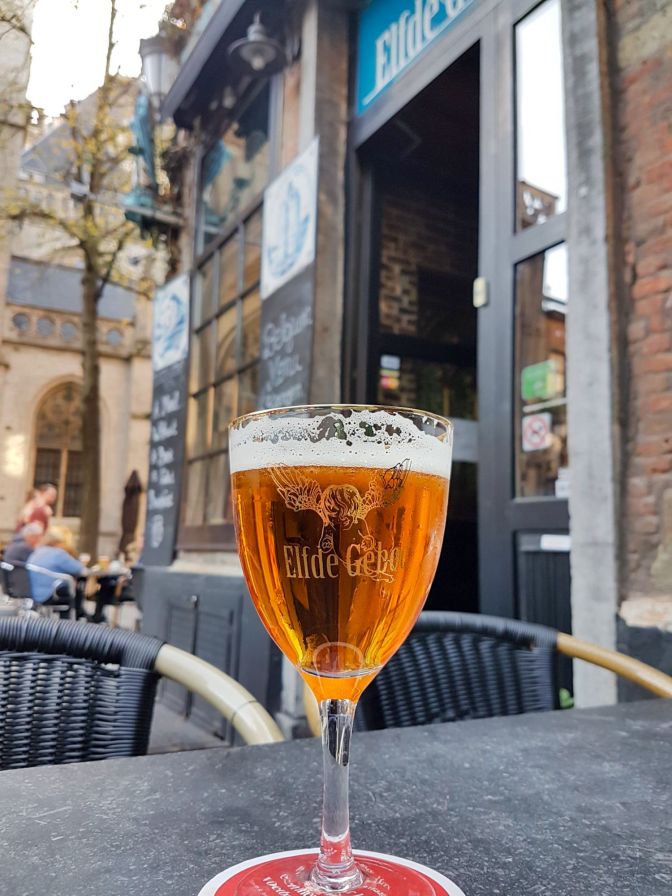
Het Elfde Gebod
In this lively Tavern Scene by Jan Van Amstel from the early 1500’s, we see lots of fraternizing and drinking going on. In the background, one patron chugs some beer presumably to quench his thirst after an encounter in the canopied bed. Meanwhile, the guy in the red hat seems about to lose grip on his girl as he is distracted by a flask of beer. Observe how intensely he looks at it. The scene is not crowded but still eminates debauchery.
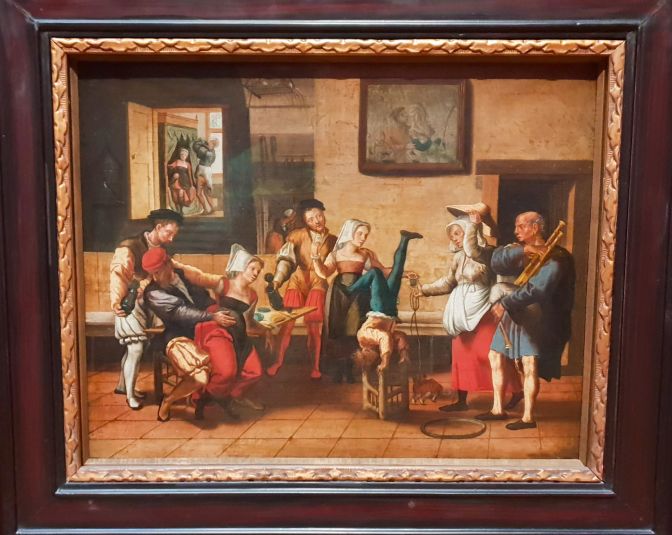

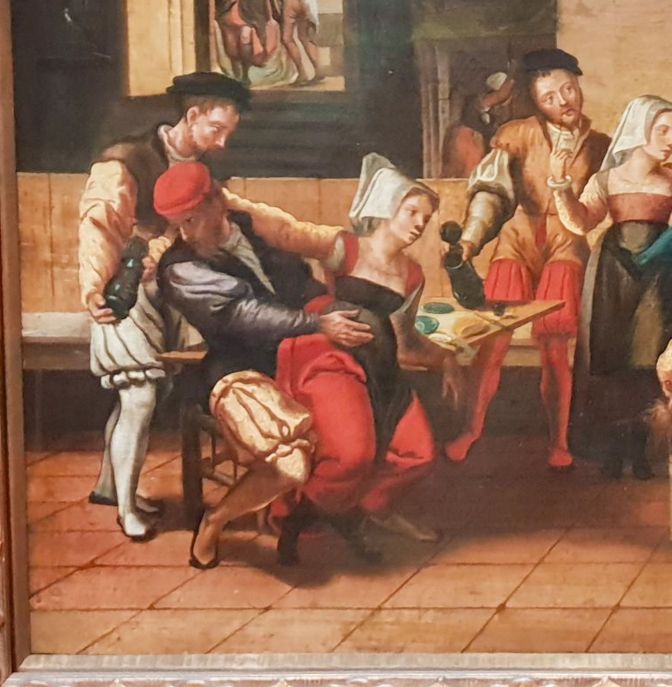
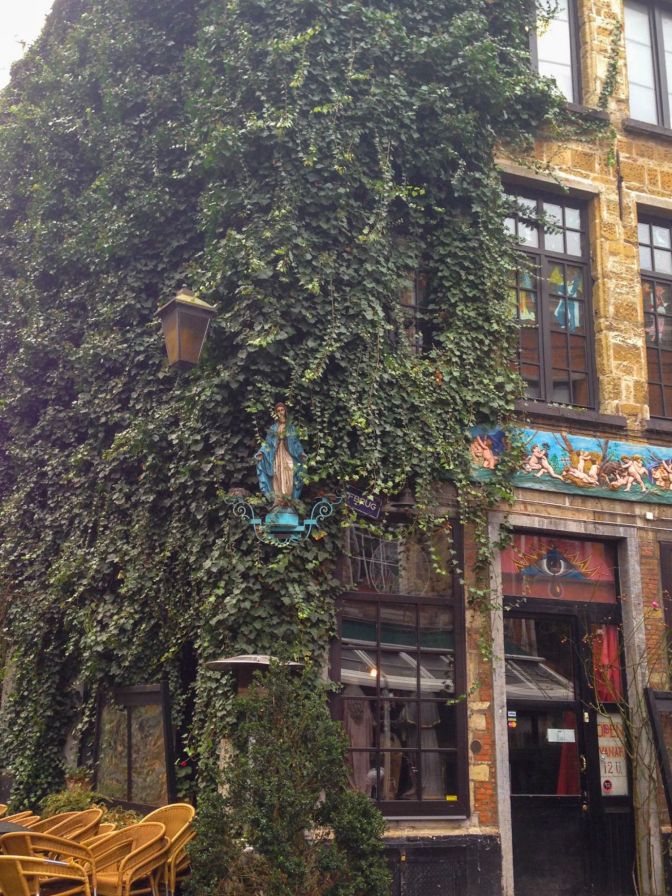
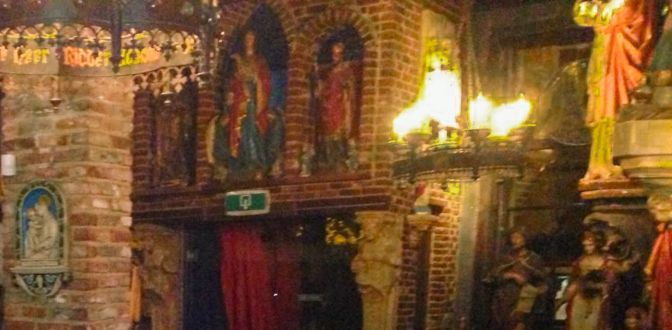
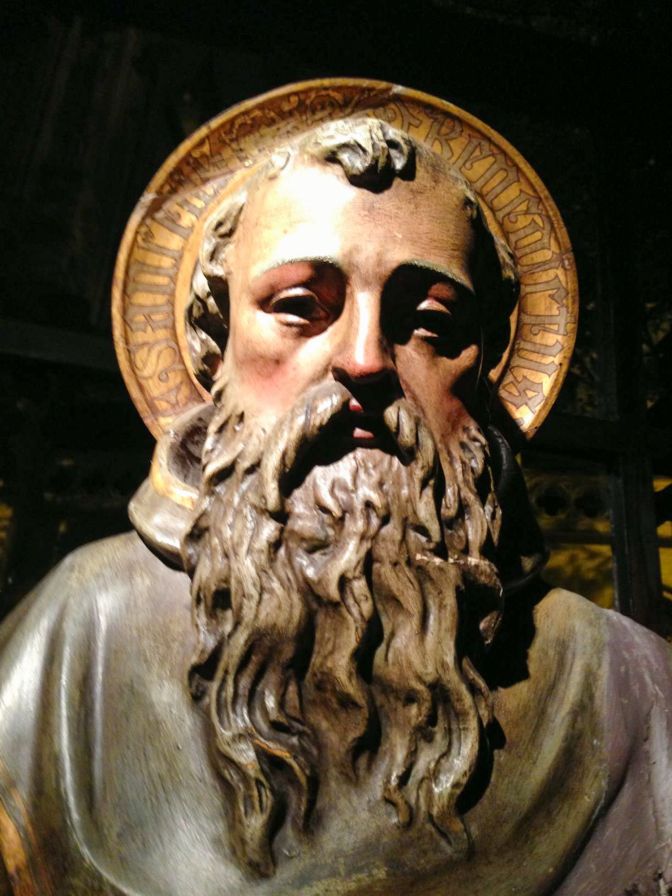
What does this have to do with Het Elfde Gebod? Absolutely nothing. However, Het Elfde Gebod is the total opposite of this tavern scene. The interior is famously decorated with dozens of religious statues as if the owner set about to ward off evil and was not taking any chances. No illicit Tavern Scene behavior in this establishment Het Elfde Gebod does have the distinction of having their own range of house beers. It is a classic place to enjoy traditional Belgian food like mussels and Flemish stew. It is a wonderfully warm place to sit inside in the Winter and ever better sitting outside in the Summer.
Hendrik Conscienceplein
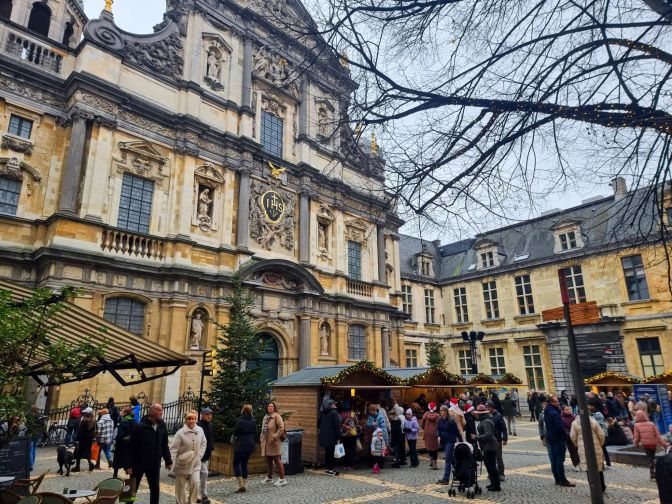
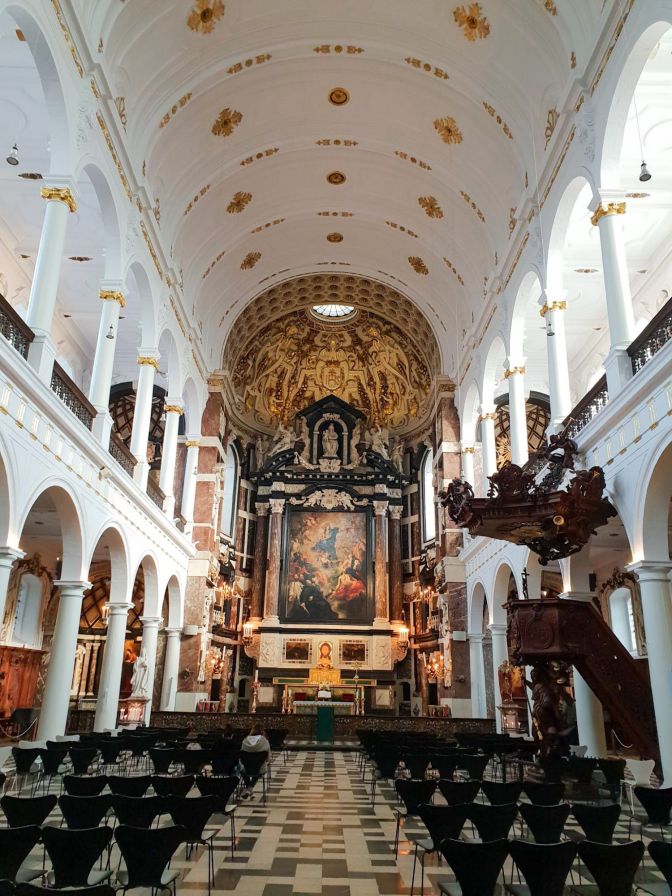
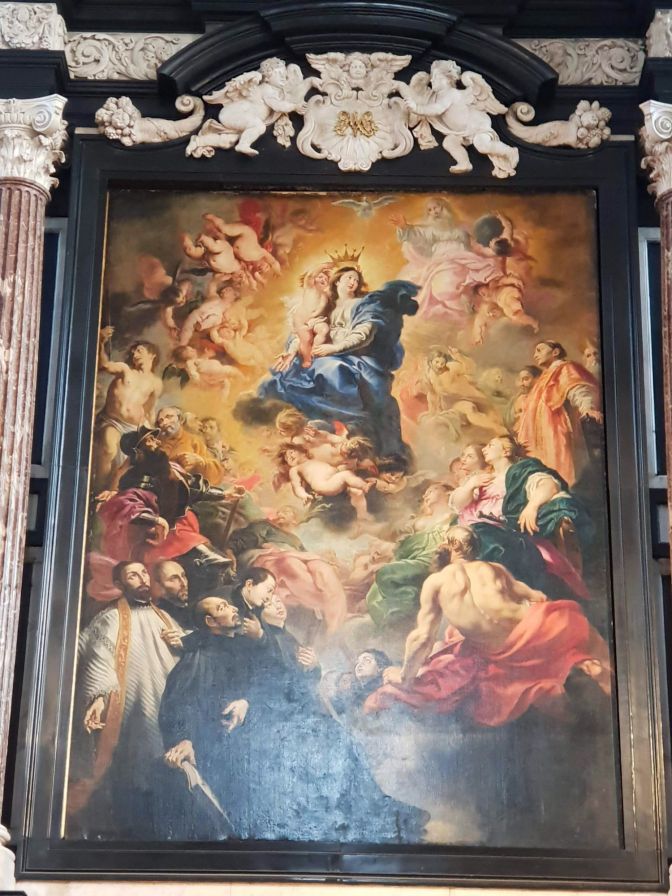
This was an oft under-appreciated square in Antwerp when I lived there. The main attraction is the Sint-Carolus Borromeuskerk which has a beautiful Baroque interior with several works of art, including its famous Rubens altarpiece. The square also has several cafes and restaurants, but for me nothing intriguing from a beer standpoint. For that you have to make your way just around the corner on Hoofdkerkstraat.
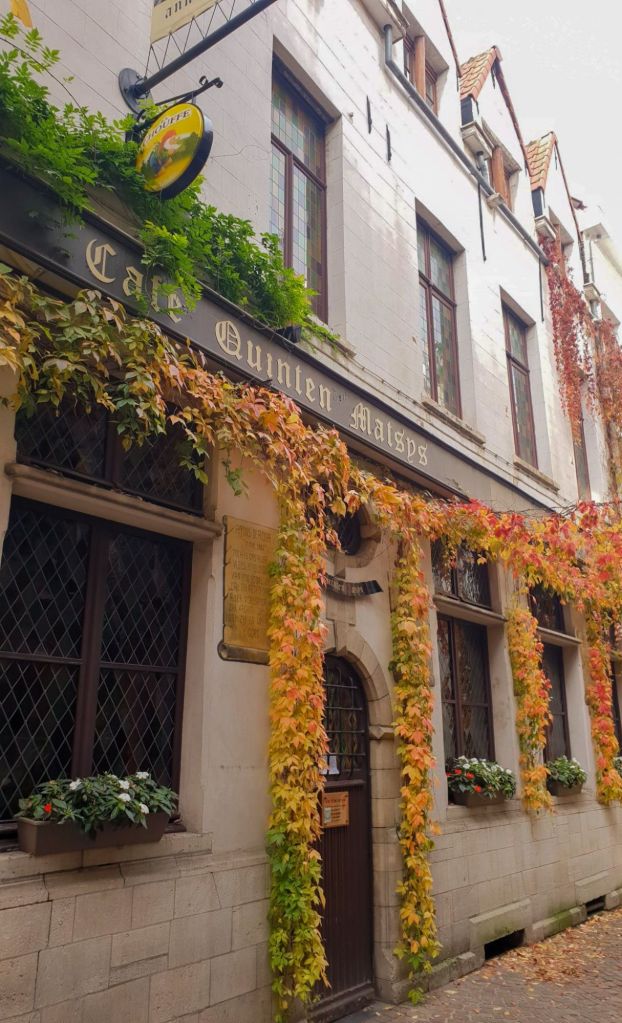
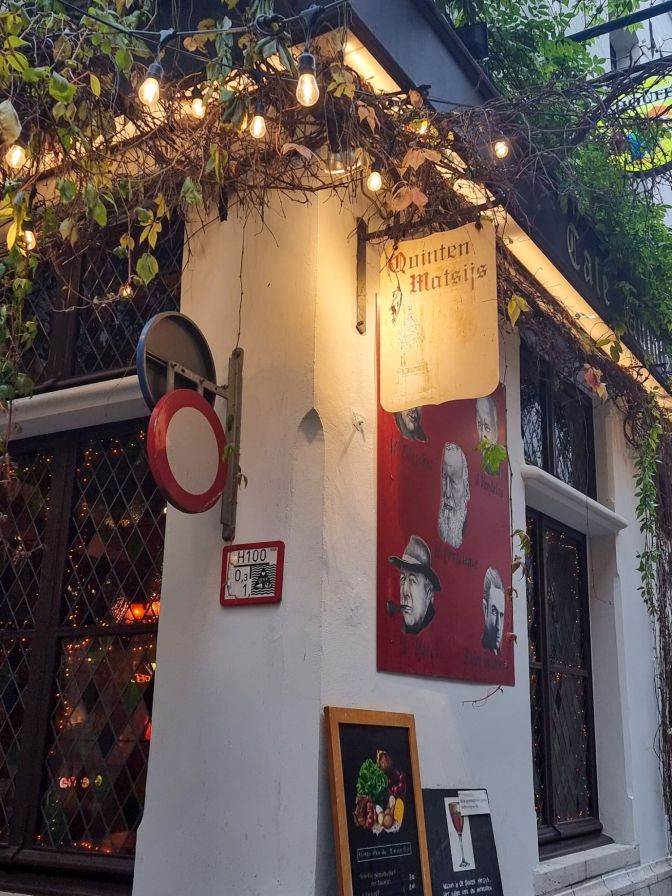
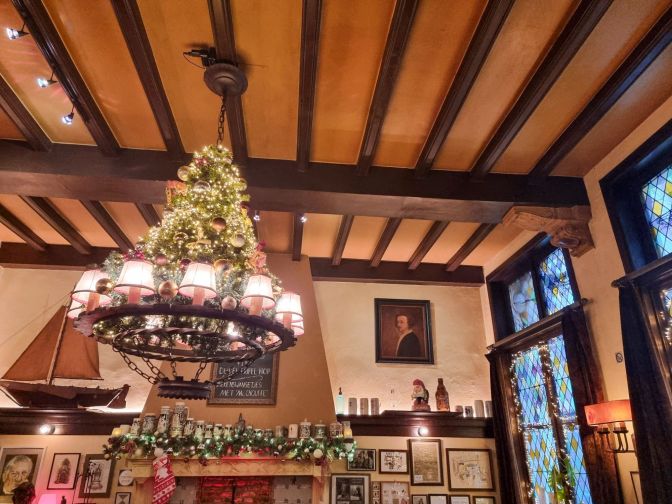
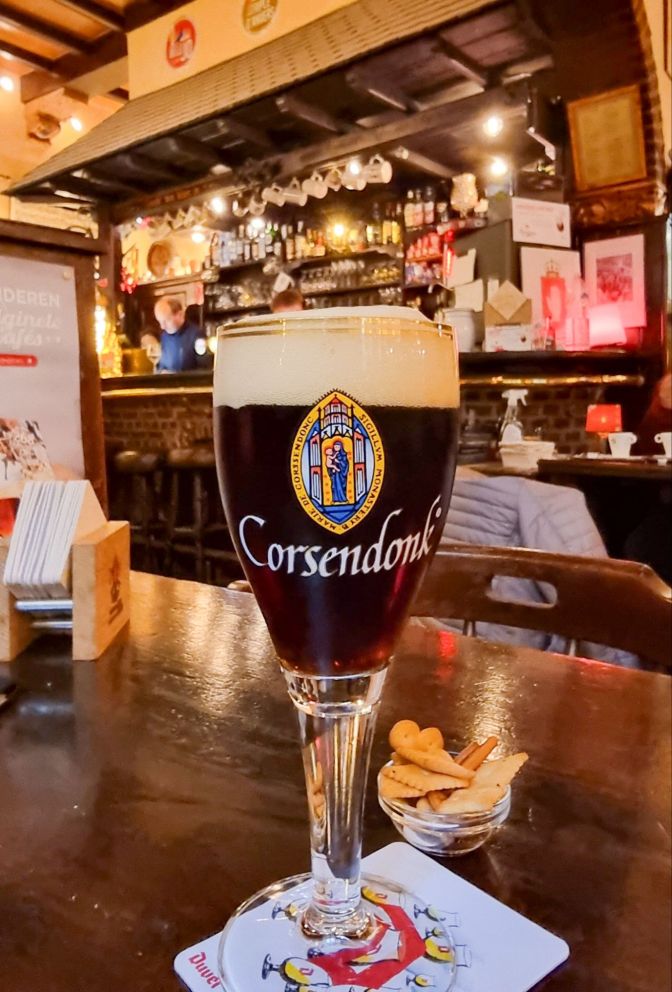
Cafe Quinten Matsijs
This is the oldest pub in Antwerp and has supposedly been around since 1565. The decor inside will satisfy anyone wanting that old Europe atmosphere.
The Brown Bar
Brown bars are typical of Belgium and the Netherlands. These are the small, lively, dimly lit pubs which feel homey but have so many wrinkles and warts that poor hygiene is part of the charm. This painting by Henri De Braekeleer from 1877 called The old Inn “Het Loodshuis”, a former tavern in Antwerp, shows that the concept of the Brown Bar might have changed over time. What you see here is an open, brightly lit, tranquil atmosphere, yet quite literally brown. The term Loodshuis refers to a pilot house or a sort of administrative building for ships coming in and out of the harbor. The guy behind the bar looks to me dressed in a bit of old mariner garb.


On the flip side of this scene is, in my opinion, an underrated brown bar in the old town of Antwerp. Paters Vaetje gets all the glory. Den Engel and Den Bengel have the best view, but if you want to escape the usual suspects, the best place to do it is here.
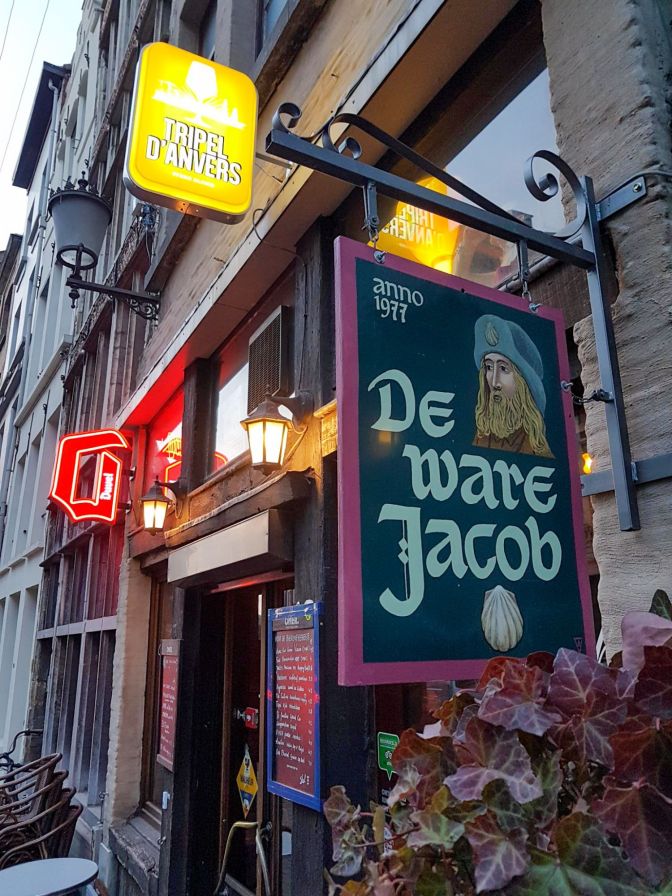
De Ware Jacob
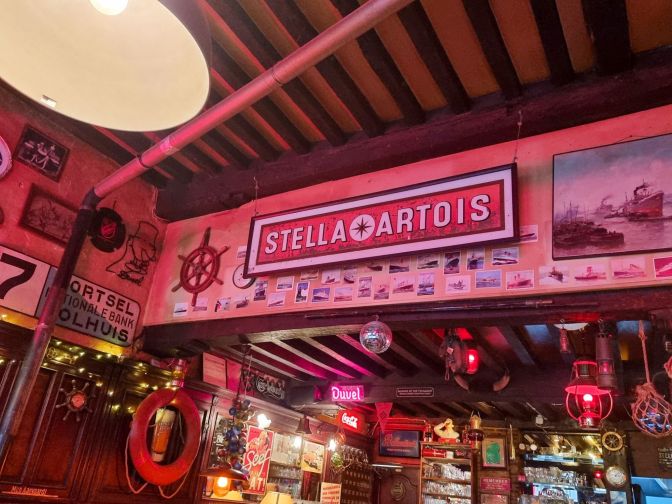
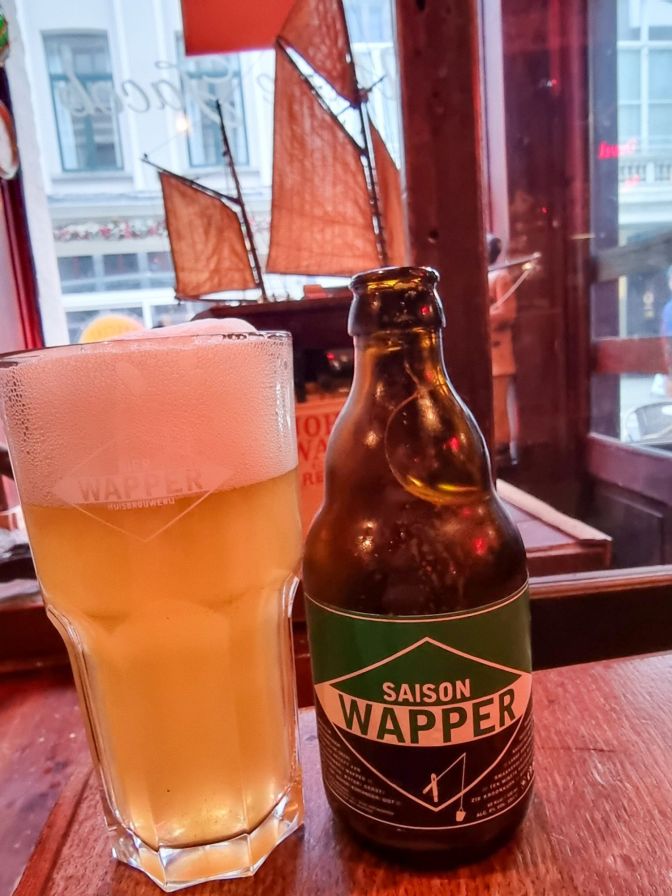
Located on the Vlasmarkt street, De Ware Jacob carries over the ship theme from the painting but has more of the characteristics of a traditional brown bar as we know and love today. It has one of the best selections of Belgian beers in the city.
Final Words
This by no means exhausts the best pubs in Old Town Antwerp. But it does get one started on the classics and introduces one to the wonderful city of Antwerp. Antwerp is a city that continues to grow. It rose to great heights in the 16th and early 17th centuries. It’s painters were and still are icons of the art world; Rubens, Van Dyck, Matsijs, and Jordaens to name a few. By the time Napoleon arrived in 1803 though, Antwerp had fallen on hard times. Napoleon referred to it as “little better than a heap of ruins.”5 Napoleon upgraded the harbor and Antwerp became the greatest port on continental Europe and third only to London and New York City by 1830.6 Since then, Antwerp has been consistently on the rise despite the setbacks of two world wars. However, during the rise of international tourism, Antwerp had to watch while Brussels and, to a lesser degree, Bruges took the spotlight. Meanwhile, Antwerp has transformed itself into a city which can stand on its own right and doesn’t need to compare itself to them. You simply need to walk its streets, which are never straight by the way. They dart off in all directions and often change course, defying your sense of direction. This makes Antwerp a great city to wander and get lost. No matter which direction you go, there are always interesting squares, neighborhoods, and architecture to be found. So after arriving here in June 2011 and starting my blog around the same time in 2016, I have finally managed a post about Antwerp beer culture. It has taken me through a vault of memories and reminded me how Antwerp is in my blood now, in my DNA, and I could never adequately bring it to life in words the way it sparkles in my soul like the Christmas lights flickering all around me as I write. I wish everyone who has read this or just stopped by for the pictures a Happy Holidays.

Footnotes
- Belgium Old and New by George Wharton Edwards (1920) ↩︎
- Baedeker’s Belgium and Holland (1881) ↩︎
- https://en.wikipedia.org/wiki/Antwerp ↩︎
- ianphillipsmclaren.com/pears ↩︎
- Belgium by G.W.T. Omond (1908) ↩︎
- Belgium by G.W.T. Omond (1908) ↩︎

 itsabrewtifulworld
Great post! 👏👏
Happy Holidays, Matthew. 🍻
LikeLiked by 1 person
💛
LikeLiked by 1 person
So brilliant for you to range from the museum’s collection to beer culture to your own experience at the museum and prior visits to the city. I enjoyed every ounce.
LikeLiked by 2 people