
Rochester Pt. II
It is with a combination of sadness, relief, and unending wanderlust that I come to the final installment of my Beer & Dickens trip of 2023 by concluding my chapter on Rochester. All of my dusty tomes which are piled up next to my writing chair and which have been my devoted companions these last few weeks are ready to go back neatly in their place on my bookshelf. But before they retire, I will beg their pardon one final time in 2023 to gift me with their boundless inspiration.
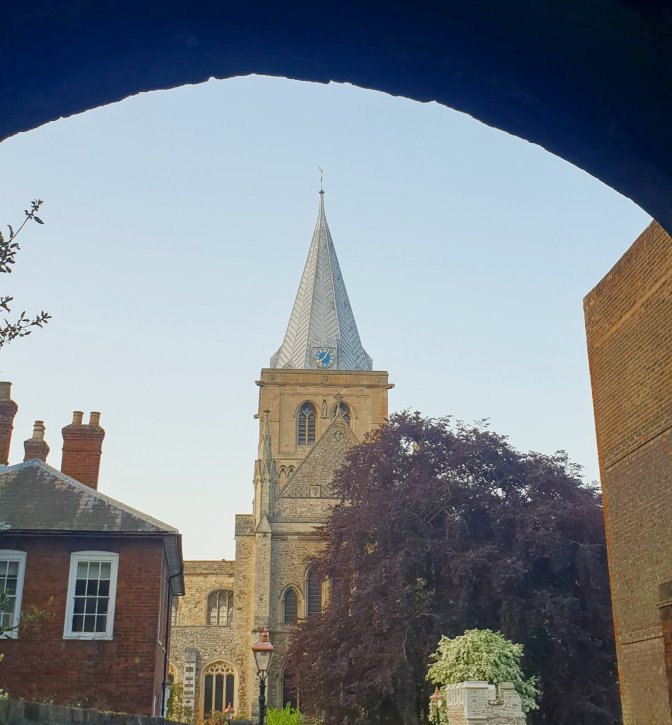
In this post, I will share a list of all the places which I visited in Rochester and its neighbor on the south bank of the Medway, Chatham, which have links to Dickens and his stories. And I have saved my favorite pub of Rochester for last. But where is the soul in doing that without first giving the context?
“It has no doubt been observed by all careful readers of the works of Charles Dickens how very frequently in his earliest and his latest books he introduces the city of Rochester as the scene of portions of his stories.”
Charles Dickens and Rochester by Robert Langton (1879)
Rochester is symbolic of the idealization we have of the locations of our youth. As a child, no matter what troubles are going on around you, the known universe is forming inside your soul filled with the streets, buildings, fields, hills, rivers of your surroundings; which will to the outsider seem unremarkable, but to you, especially as the years pass, grow more and more hallowed. There are places of my own youth, a babbling stream, a windswept dam, or an old train bridge, which are greater wonders of the world than the Great Pyramids or Machu Picchu. This is what Rochester was to Charles Dickens.
“Though not a man of Kent by birth1, Charles Dickens was at the tender age of four years removed with his father’s family to Chatham, where they lived near the parish church of St. Mary. Forster2 truly says that “the associations that were around him when he died were those which, at the outset of his life, had affected him most strongly.”
“That his childhood at this time was a happy, innocent enjoyment of life, is certain. We can gather this from some of his autobiographical characters, for we may now be quite sure that besides David Copperfield, Pip in Great Expectations, little Paul Dombey, and to some extent little Oliver Twist, there are other children, boys and girls too, here and there in his writings, who more or less reflect his own quaintly beautiful child-life.”
Charles Dickens and Rochester by Robert Langton (1879)
“This fruitful little city, which he knew by heart, inspired him with several distinct currents of humour and incident.”
Bozland: Dickens’ Places and People by Percy Fitzgerald (1895)
While the presentation of the remaining sites not mentioned in Part I will appear like a stream of consciousness, without any particular walking order, a good place to start is where the Pickwick Club arrived. It was the Pickwick Papers which launched Dickens to stardom, and was fueled in no small part by the Pickwick Club’s stay in Rochester. This is arguably the sequence in the book which is the most influential for inspiring the term Pickwickian Inn. (Although there are something like twenty-four other inns mentioned in Pickwick that could make an argument.)
Royal Victoria & Bull Hotel
“it is only a few steps from the station up the narrow High Street to The Bull Inn, where the coach stopped on the memorable occasion of the Pickwick Club’s visit. It was at The Bull Inn that the Pickwickians put up (by Jingle’s advice), and invited their new acquaintance to dine with them that evening.”
A Pickwickian Pilgrimage by John R.G. Hassard (1881)
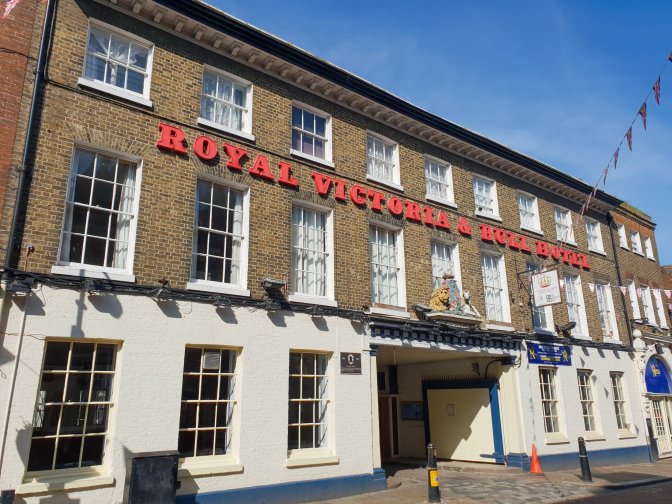

Anyone reading this who has not read the Pickwick Papers will find nothing particularly fascinating by the above passage. I never could have imagined that anything written in the Victorian Era would be able to elicit more than just mild amusement, but I have to admit that the events which occurred in Rochester, a combination of mistaken identity with the ridiculousness of the gentlemen tenets during that age generated authentic laughter.
“The visitors’ book in the coffee-room, at the Bull—we never shall call it “The Royal Victoria and Bull Hotel”—abounds with complimentary remarks on the hospitable treatment received by its guests; and there are several poetical effusions, inspired by the classic nature of “Dickens-Land.”
A Week’s Tramp in Dickens-Land by William R. Hughes (1891)
Guildhall
“The Guildhall, “marked by a gilt ship aloft,”—”where the mayor and corporation assemble together in solemn council for the public weal,”—is “a substantial and very suitable structure of brick, supported by stone columns in the Doric order,” and was erected in 1687.”
A Week’s Tramp in Dickens-Land by William R. Hughes (1891)
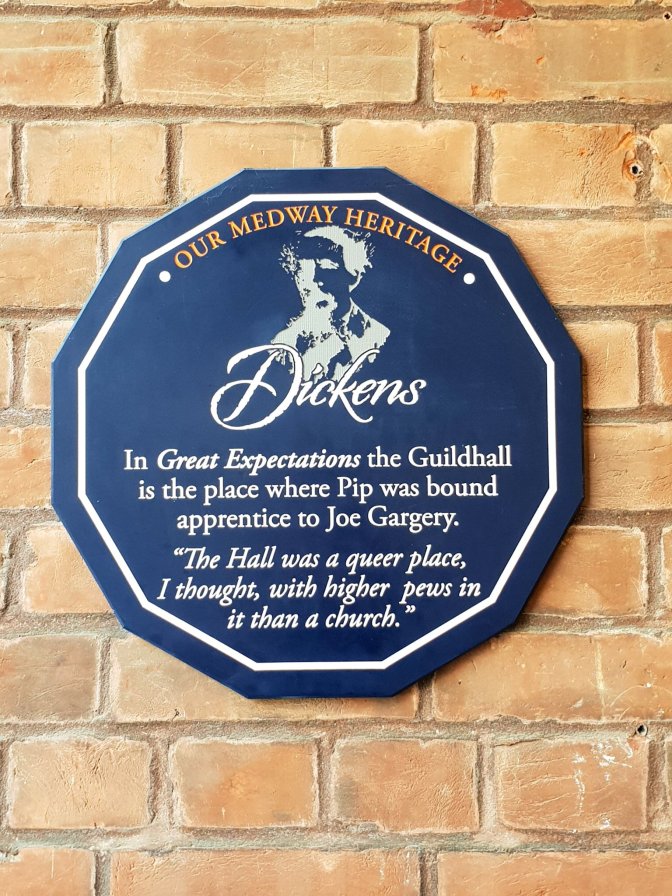
Across the street from the Bull Inn is the Guildhall which hosted a scene in Great Expectations.
“Pip is taken to the Town Hall to be bound apprentice to Joe Gargery, the blacksmith. The “Hall,” is of course the Guildhall, Rochester.”
Charles Dickens and Rochester by Robert Langton (1879)

Miss Havisham’s House
In Great Expectations, the home of Miss Havisham is called Satis House. Which of the following can you imagine a dishevelled old crone in a tattered wedding dress standing at a window?
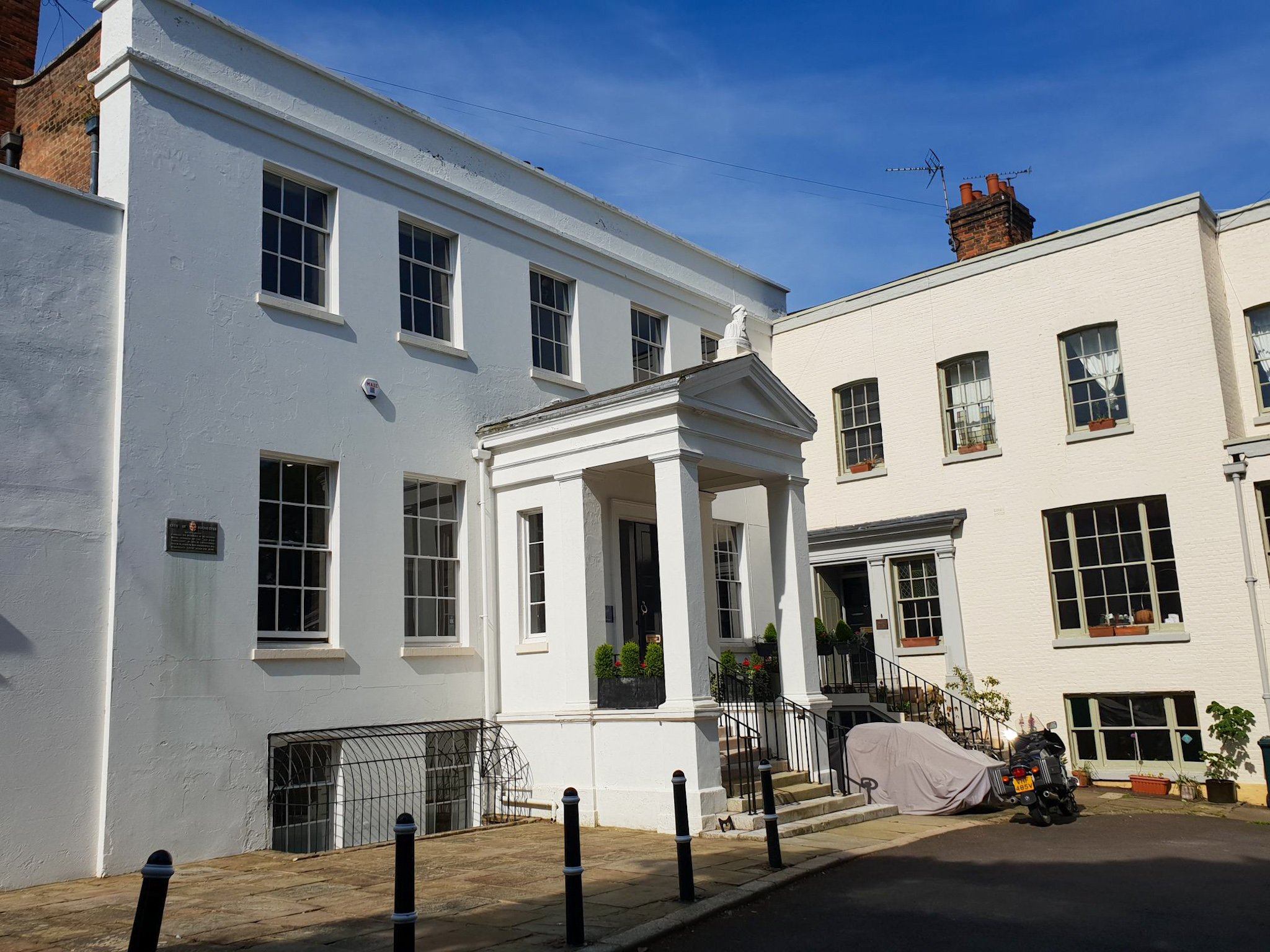
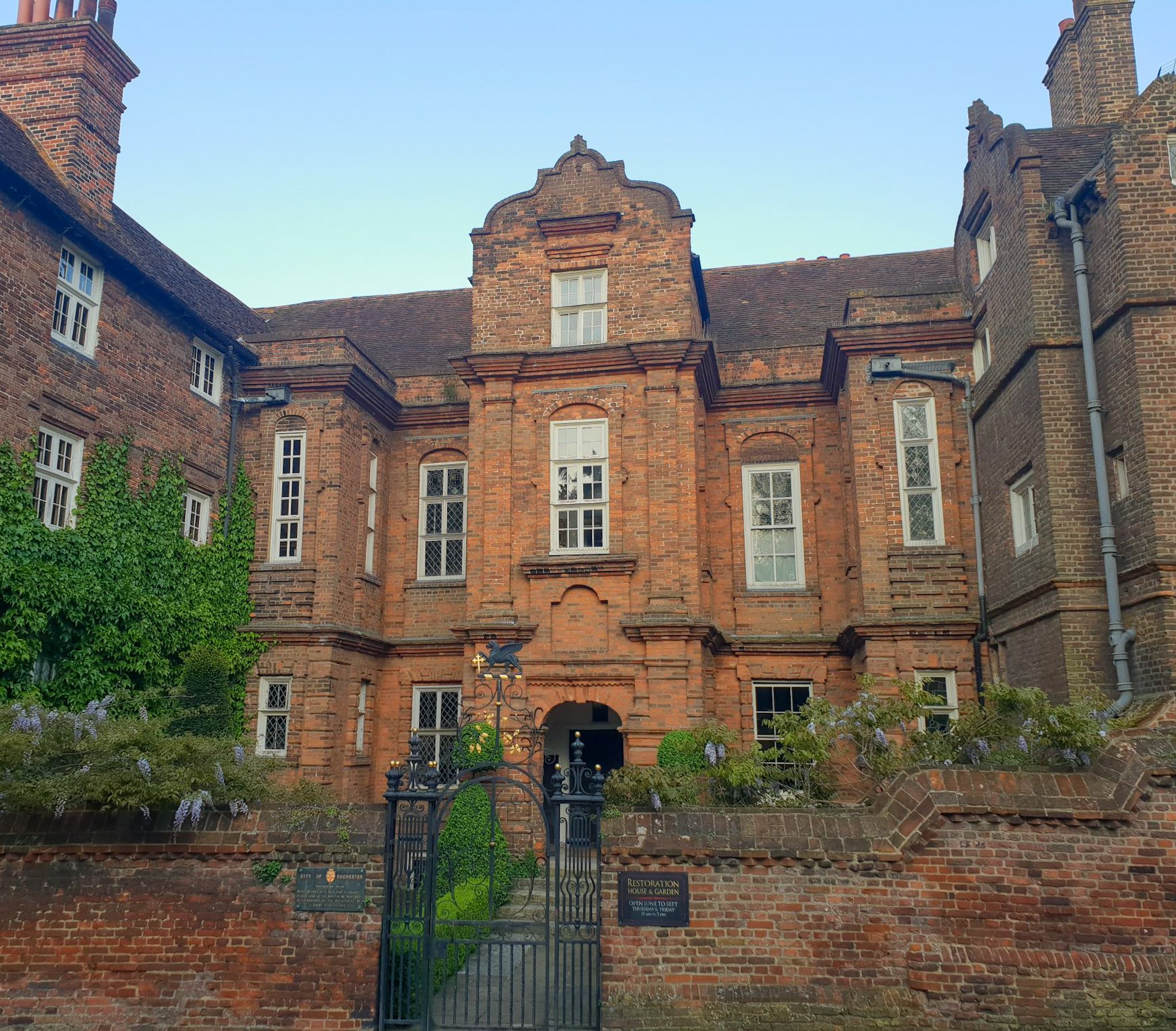
“According to Forster2, “Restoration House,” as it is called, stands for the “Satis House” in the tale. That may be so, but it certainly is not the “Satis House” where Richard Watts entertained Queen Elizabeth.”
Charles Dickens and Rochester by Robert Langton (1879)
The red brick building is called Restoration House and is the inspiration for Miss Havisham’s house, while the white building is the real Satis House. For those who read Rochester Pt. I, Richard Watts was the philanthropist known for the Six Poor Travellers house, also in Rochester.


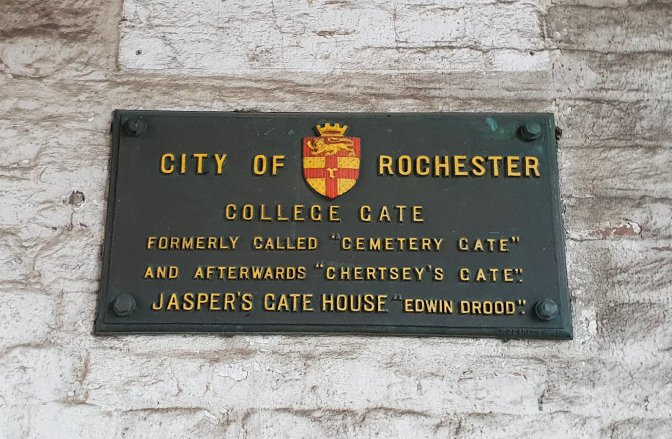
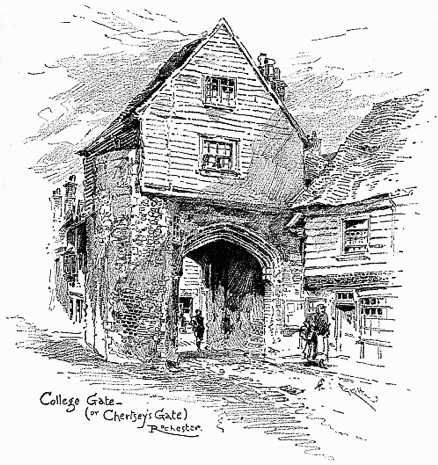
Jasper’s Gate House
“Jasper’s Gatehouse”… is certainly an object of great interest to the lover of Dickens, as many of the remarkable scenes in Edwin Drood took place there.”
A Week’s Tramp in Dickens-Land by William R. Hughes (1891)

Uncle Pumblechook’s Residence
“Uncle Pumblechook; a large hard-breathing middle-aged slow man, with a mouth like a fish, dull staring eyes, and sandy hair standing upright on his head, so that he looked as if he had just been all but choked”
Great Expectations by Charles Dickens
In Great Expectations, it is Uncle Pumblechook who facilitates Pip’s meeting with Miss Havisham and Estella.
“Mr. Pumblechook’s premises in the High Street of the market-town, were of a peppercorny and farinaceous character, as the premises of a corn-chandler and seedsman should be.”
Great Expectations by Charles Dickens


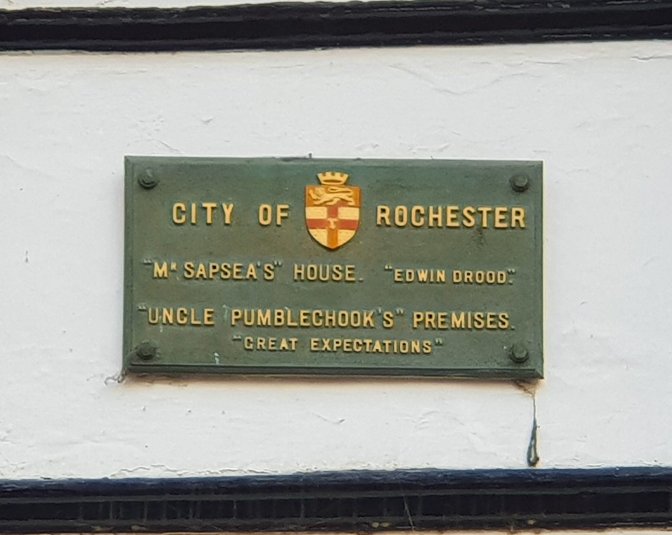
The book does not mention the specific location on High Street, but according to Walter Dexter, a seedsman was living in this house at the time Dickens wrote the story3. As noted on the placard, the same house also stood in for Mr. Sapsea’s house in The Mystery of Edwin Drood (Dickens’ last and unfinished novel). In that book, the location is more exact. Interesting to me is that in 1880’s Charles Dickens and Rochester by Robert Langton, he only references the house in relation to Mr. Sapsea. The Pumblechook connection seems to have come later. It appears as a surprise in the below excerpt from 1891. It is omitted in 1899’s Rambles in Dickens Land but then reappears in 1904’s The Real Dickens Land.
“the residence of Mr. Sapsea, which, as we ourselves discover, was also the residence of “Uncle Pumblechook.” The latter buildings are about a quarter of a mile from Rochester Bridge, and are splendid examples of sixteenth-century architecture, with carved oaken-timbered fronts and gables and latticed bay-windows.”
A Week’s Tramp in Dickens-Land by William R. Hughes (1891)
Dickens’ Childhood Home (Chatham)
Chatham sits on the eastern side of Rochester and is where Dickens and his family moved in 1817 while he was a boy. Despite its historical significance, the actual house, today looking quite shabby, is marked only be a modest plaque and is otherwise still lived in.


Dickens’ Swiss Chalet
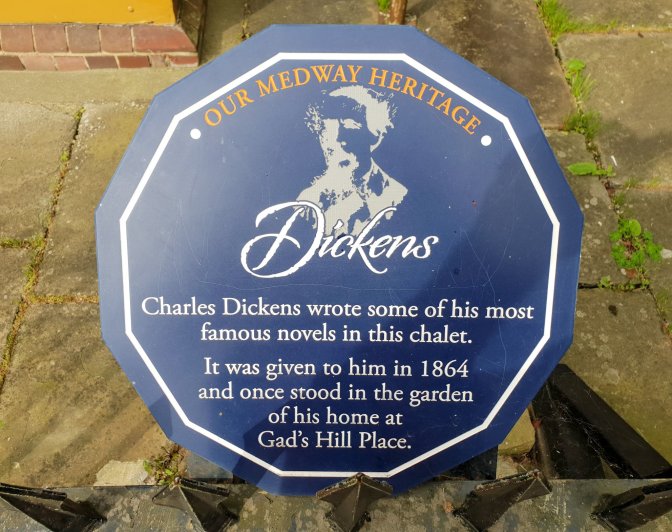
The Swiss Chalet was a gift to Dickens in 1864. It originally stood on the opposite side of the road from his Gad’s Hill home near the Sir John Falstaff Inn. Dickens had a tunnel built under the road so that he could easily access it. Today, the Chalet sits in the courtyard of the Eastgate House (see below).
“The last page of Edwin Drood was written in the Châlet in the afternoon of his last day of consciousness”
The Life of Charles Dickens by John Forster (1875)


Other Minor Sites
There are several landmarks around Rochester which are settings in The Mystery of Edwin Drood, a novel which I am not yet familiar with.
Minor Canon Row


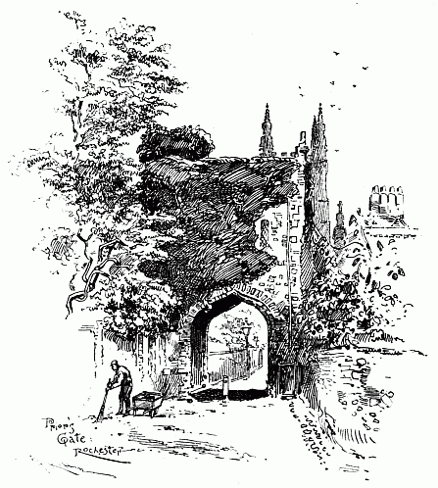
Deanery Gatehouse
This gate has been referred to as Jasper’s Gatehouse.

The Vines
Called the Monk’s Vineyard, this plot of land was once a vineyard for the priory and today is a public park.

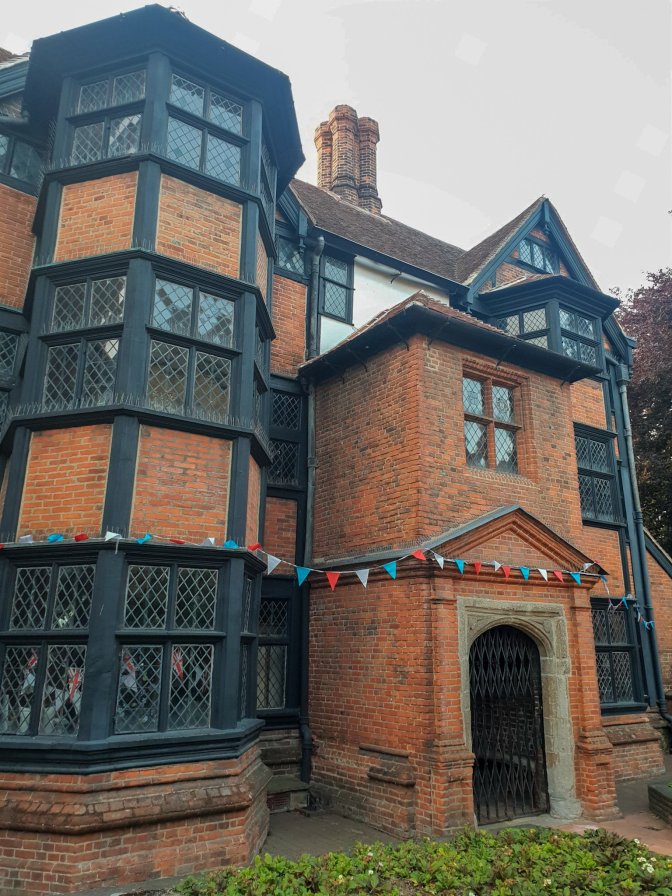
Eastgate House



Pubs
Unlike Rochester, Chatham doesn’t seem to suffer from the same malaise of quietude. One evening I decided to spend time visiting some of the pubs there along its own stretch of High Street. While not bustling by any stretch of the imagination, I found it a bit more alive. The first three pubs listed below are within a 200 meter stretch.
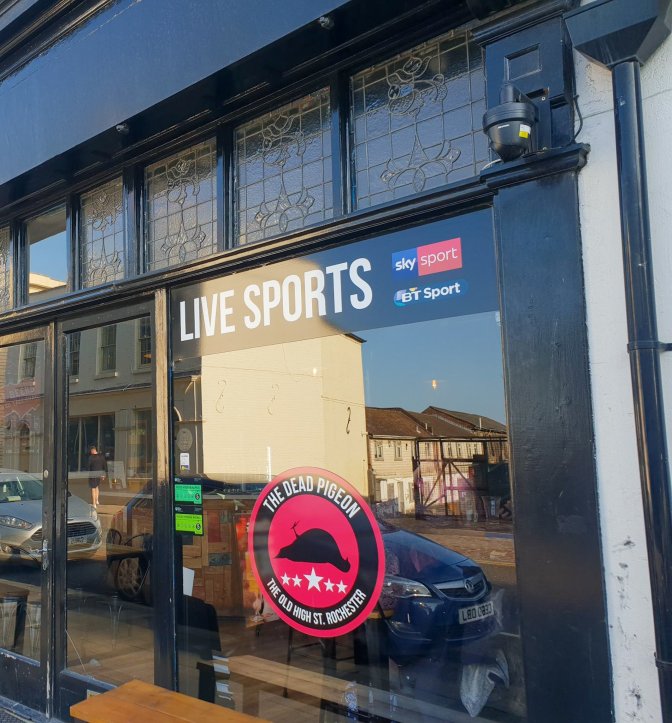
The Dead Pigeon
With a cool name like The Dead Pigeon, I was hopeful of something more traditional looking. Instead, it is a modern craft beer pub. However, two hazy IPA’s on tap were worth the lack of wood beam and fireplace coziness.


The Flippin’ Frog
A craft beer bar. For some reason I didn’t take a photo of my beer and I have no idea why.

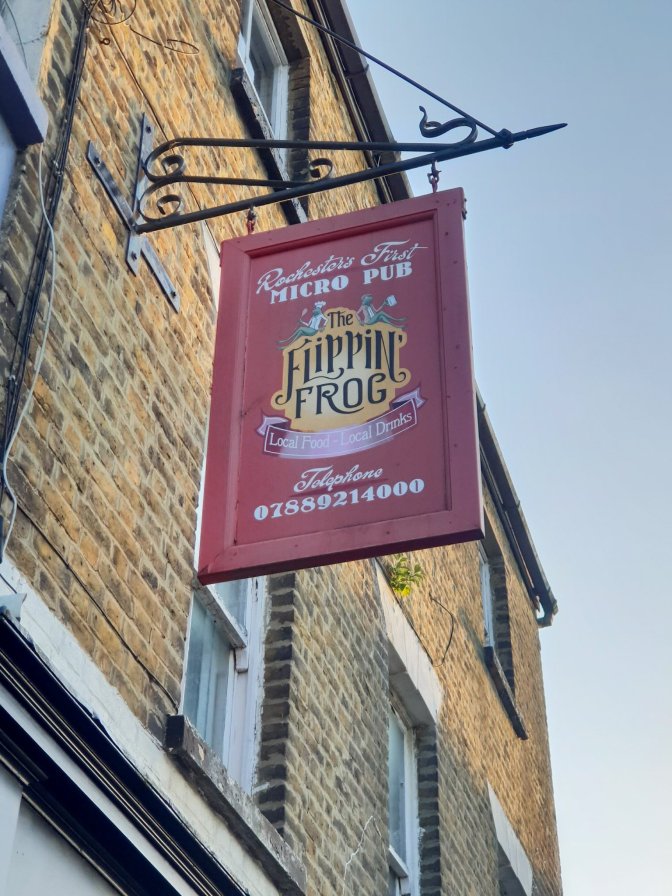

The Nags Head
The Nag’s Head stands out when taking the train between Chatham and Rochester as the train tracks are actually above the pub giving you a birds eye view of it. I had made a mental note to visit it and was glad I did. I quite enjoyed the aforementioned craft beer bars and the NEIPA diversions, but I wanted to experience a traditional pub. The Nags Head did not disappoint. A great atmosphere and selection of unique cask ales on tap.


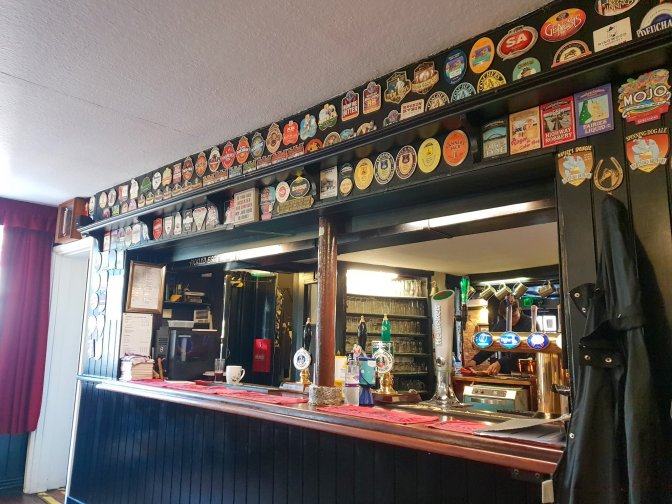
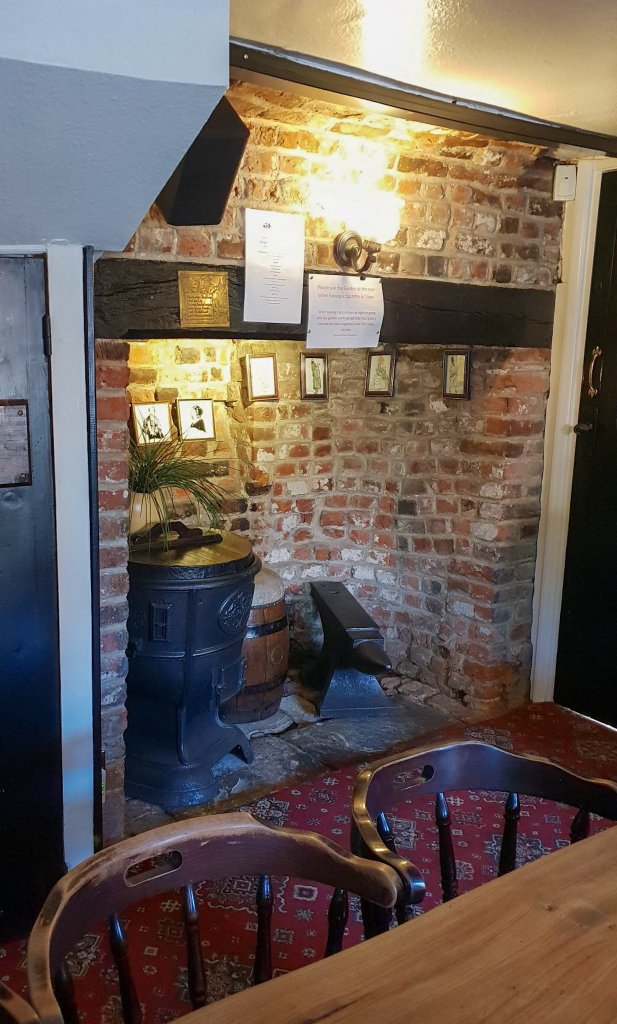
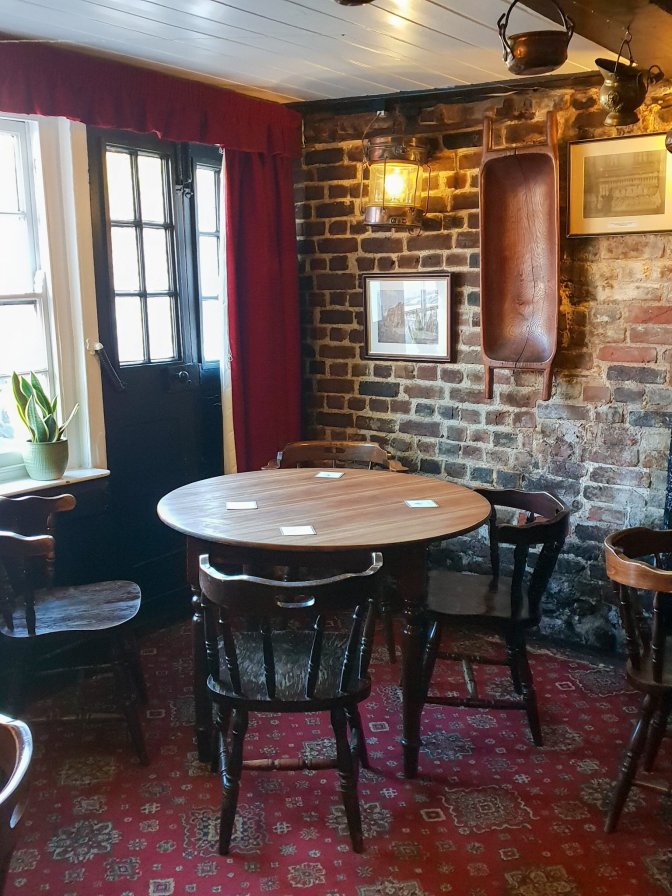
The Coopers Arms
Last but not least is my favorite pub in Rochester. With an old fashioned interior and perhaps the best variety of cask ales of any place I visited on the entire trip, The Coopers Arms was not all that difficult of a decision. To cap it off, it also has its own house ale, The Coopers Ale.




Final Words
“And of the future what shall we say? His fame had a brilliant day while he lived; it has a brilliant day now. Will it fade into twilight, without even an after-glow; will it pass altogether into the night of oblivion? I cannot think so. The vitality of Dickens’ works is singularly great.”
Life of Charles Dickens by Frank T. Marzials (1887)
Alas, I have finally come to the end of 2023’s sojourn into, let’s call it Dickens England, which began last year with Dickens’ London and was followed up this year in Kent, with Dickens Land. I ask myself, am I a big Dickens fan or a Dickens scholar? What is it that really attracts me to this subject? As I type these final words, I have just completed Barnaby Rudge which would make it my 5th completed novel after Great Expectations, The Pickwick Papers, David Copperfield, and Bleak House. There is no doubt I have enjoyed each one, but I find reading Dickens to be laborious at times where my mind is glazing over during some of the more Victorian-style descriptive passages until coming to the next conversation or until there is some movement within the text. Perhaps this is due to the modern attention span but it is also due to the complexity of the Victorian grammar which requires more concentration than I am liable to give. However, I am constantly attracted to the world in which he writes. It calls me like a foggy lamplit lane of wooden shops and taverns, of top hats and bonnets. The words are like a warm blanket or a mug of ale. But that is not ultimately what attracts me to the topic of Dickens and why I look forward to these trips. It is the inspiration he was to travel writers and travel writing. Dickens himself was also a travel writer. His books do not only exist on the page. They can be explored in the streets of London and Rochester or along country paths to Maidstone and Cooling or found in the cozy confines of inns such as The Leather Bottle or The Horseshoe & Castle or The Coopers Arms. In a world where it is too easy to wander aimlessly, barely observing beyond our smartphone cameras, this subject has brought context to travelling which I find both copiously comforting and thrilling. The blue butterfly flutters in this world and I am anxiously awaiting the opportunity to continue this exploration in 2024. Thank you to anyone who has managed to come along for the journey. That doesn’t mean that Dickens’ inspiration is over for the year. Naturally, Christmas Market season is coming.

References
- Dickens was born in Portsmouth.
- John Forster was Dickens’ friend and biographer.
- The Kent of Dickens by Walter Dexter (1924)

 itsabrewtifulworld
Thank you too, Matthew. 👏👏👏
LikeLiked by 1 person
We’re holding onto this whole series of your Beer & Dickens trip, so that we can recreate it someday ourselves. We love your writing! Thanks so much for the idea, and the guide!
LikeLiked by 2 people
Thank you Barbara! I hope you will reach out and let me know how your trip went. Cheers!
LikeLiked by 1 person