
“At Maidstone the southern limit may be considered to have been reached of the district of Kent which can be distinguished as “Dickens-land” in the most intimate sense, as lying within the radius of the novelist’s habitual walks and drives from his residence at Gadshill.”
Dickens-Land by John Arnold Nicklin (1911)
Dickens-Land
With the early morning sun at my back, mighty Rochester Castle stood facing me with it’s chest out in full reflection of the sun’s rays rather than casting me in it’s shadow. I imagined the castle having to feign being an inanimate object, standing stock still along with the spirits that were looking out from its many openings. But when my gaze would falter, its turrets would bend in my direction to look at me, then quickly restore to their original stone-faced position at the moment I would look back. Only when I would move along my journey would the castle and its spirits all relax and engage in a flurry of excited chatter. As I headed up Maidstone Road, it was energy I could feel at my back as vibrant as the sun itself.

What the castle and its spirits would have been excited about was that I was embarking on a hike to the town of Maidstone. But not just any hike. Back in the old days, they would have called this a tramp. It is a word that feels like it has become old-fashioned. However, a proper term for walking long distances across a countryside is tramping. With that in mind, in all my tramps, it would be difficult to pinpoint one that I was looking forward to more than this one; not for its grandiosity or historical significance, but for its unique literary connection.
When Charles Dickens was 45, he moved to nearby Gad’s Hill, where he lived until his death at 58. During those years, he was a prolific walker whose walks have now become legendary in the world of Dickensiana. They were the arteries of what became known as Dickens-Land.
“…those brisk walks with which he sought, too strenuously, perhaps, health and relaxation, some object redolent of childish dreams or mature achievement, of intimate joys and sorrows, of those phantoms of his brain which to him then, as to hundreds of thousands of his readers since, were not less real than the men and women of everyday encounter.”
Dickins-Land by John Arnold Nicklin (1911)
Of all the walks that Dickens was known for, it was the one between Rochester and Maidstone that carries special significance.
“In a letter to Forster, written soon after he came to reside at Gad’s Hill Place, he says:—”I have discovered that the seven miles between Maidstone and Rochester is one of the most beautiful walks in England,” and so indeed we find it to be.”
A Week’s Tramp in Dickens-Land by William R. Hughes (1891)
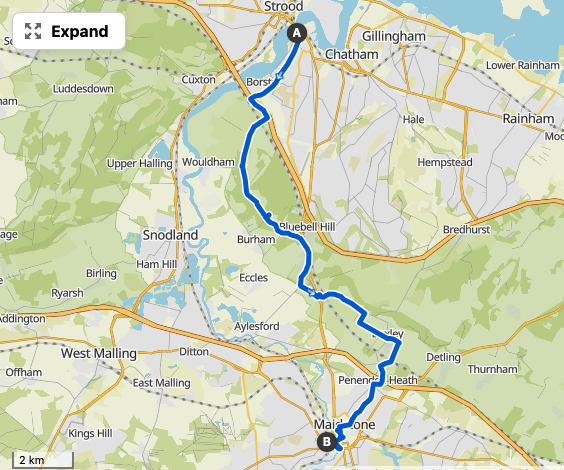
In Dickens’ time, the route may have been quite more direct. In a letter to his biographer John Forster, he describes a route following a “beautiful little line of railroad”1. Today to hike between Rochester and Maidstone the most obvious scenic way requires a bit more than 7 miles. I tried to stay as true to a route that Dickens would take today to maximize the scenery and get away from modern railroad tracks, while also hitting the waypoints he was known to have described. Adding in a divergence through the village of Boxley, my final route was 13.4 miles (21.4 km). One question on my mind was how much had the modern world impacted the character of this walk? Fortunately, I was not to be disappointed in what I would find out there in Dickens-Land.
Tramp Details
| Starting Point | Rochester Castle |
| Ending Point | Maidstone Train Station |
| Distance | 21.4 km |
| My Moving Time | 4h 31m |

The Tramp
Leaving Rochester
As I was making my way up Maidstone Road and then Borstal Road passing cottages oozing with British-ness, I couldn’t help feeling like I was carrying some arcane knowledge. Leftover from the day before was a sensation that life was carrying on around me just for my benefit. And now it was as if I was being followed by ghosts who were eager to relive their own past experiences while anxiously waiting for my reactions. Ghosts with names like Hughes, Rimmer, Fitzgerald, Ward, Dexter, Frost, Kitton and Allbut. Illuminaries in the world of Dickensiana, but otherwise names relegated to the footnotes of history. I was carrying a delicate thread that I somehow managed to grab last year and was about to add my own stitch to a tapestry that has already been in the making for 170 years.
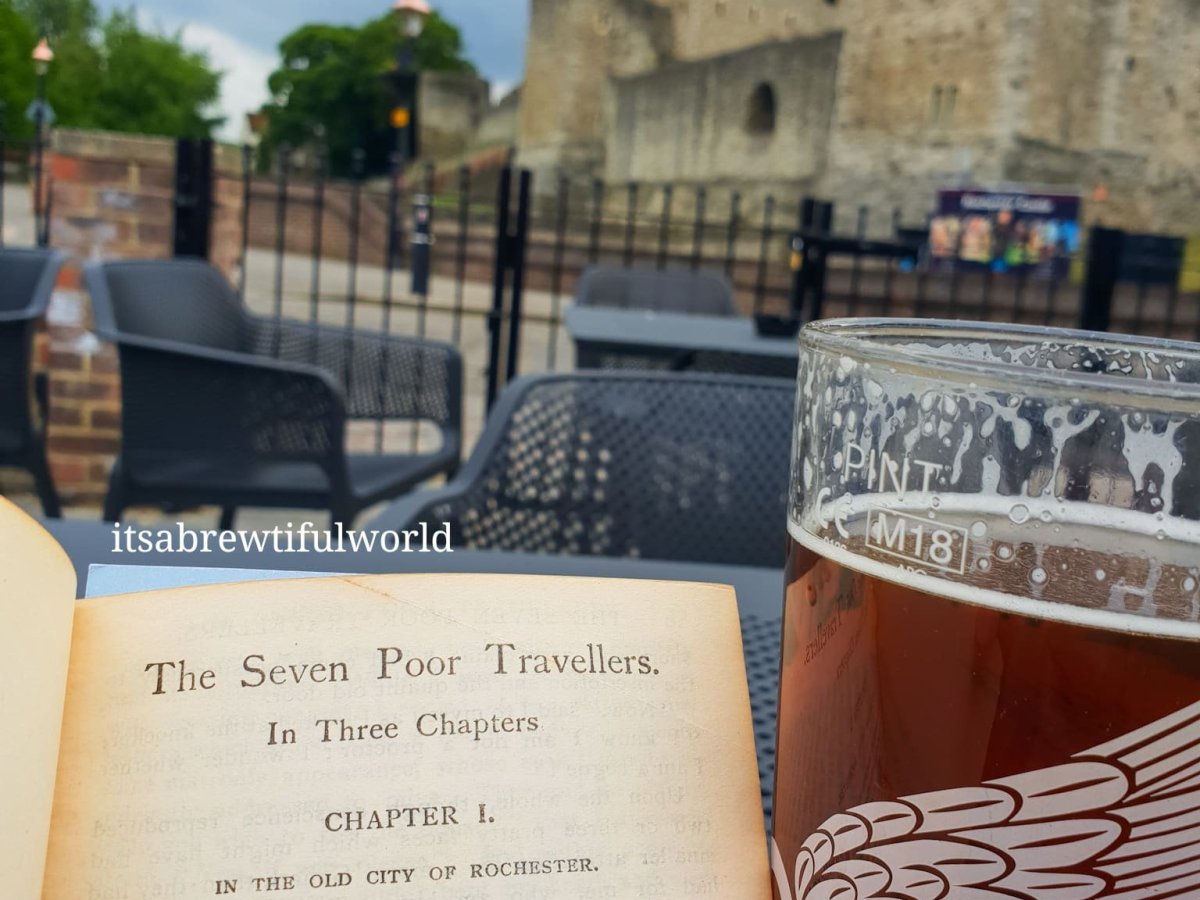
Beer & Dickens: Rochester Pt. I
If you want to follow in the footsteps of Dickens and classic travel writers, there is no better place than Rochester.
Continue reading Beer & Dickens: Rochester Pt. I

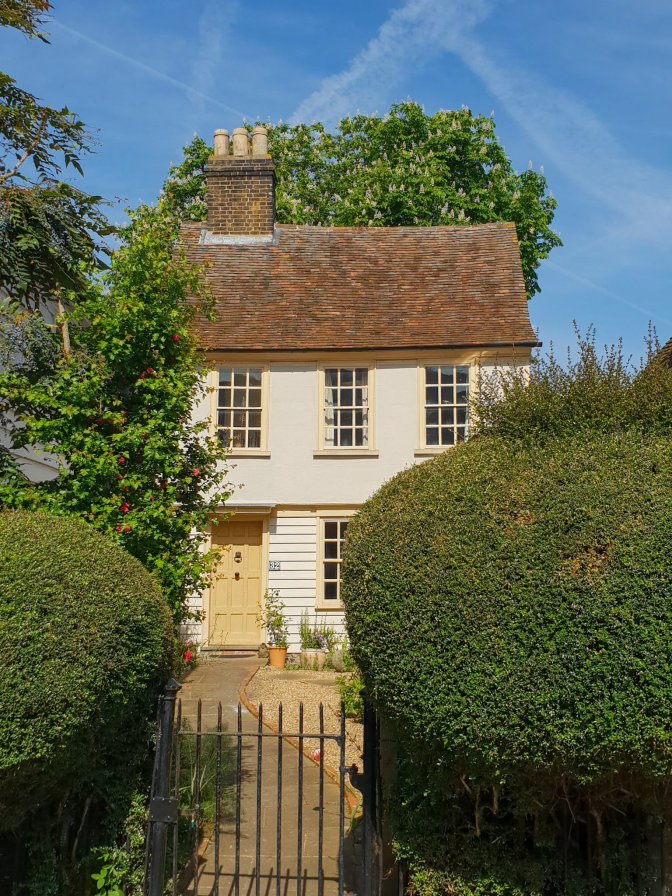
Before heading into the countryside, there is one last glimpse of the Medway River which will only appear again once I have reached Maidstone.

Into Dickens-Land
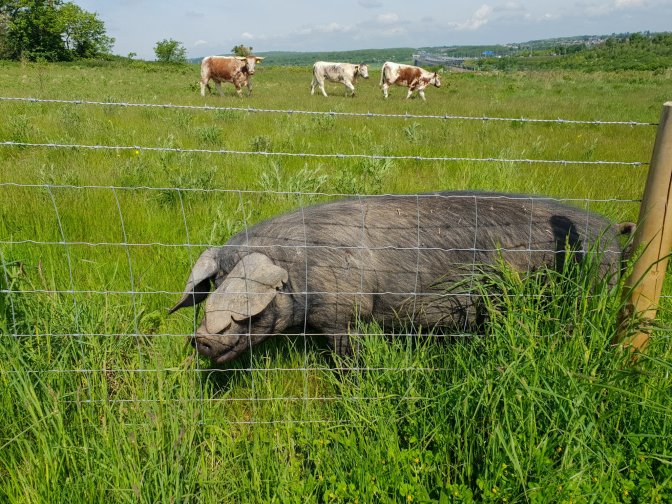
Leaving civilization behind, I am greeted to the countryside by a huge sow.
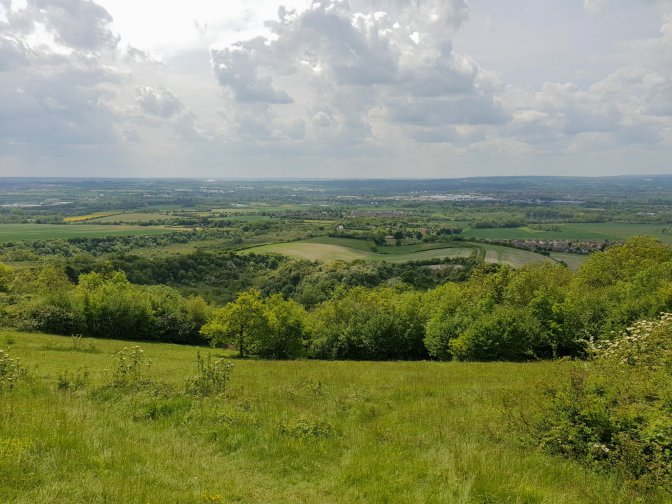
The hike takes me up a double-track path to the top of a grassy hill. When I reach the top, there are grand views of the Medway valley.
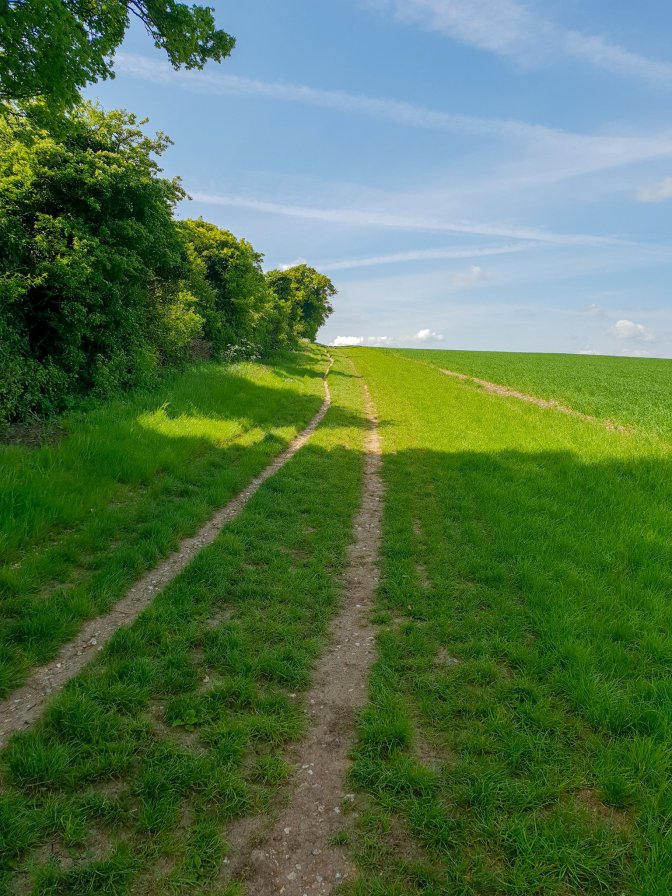
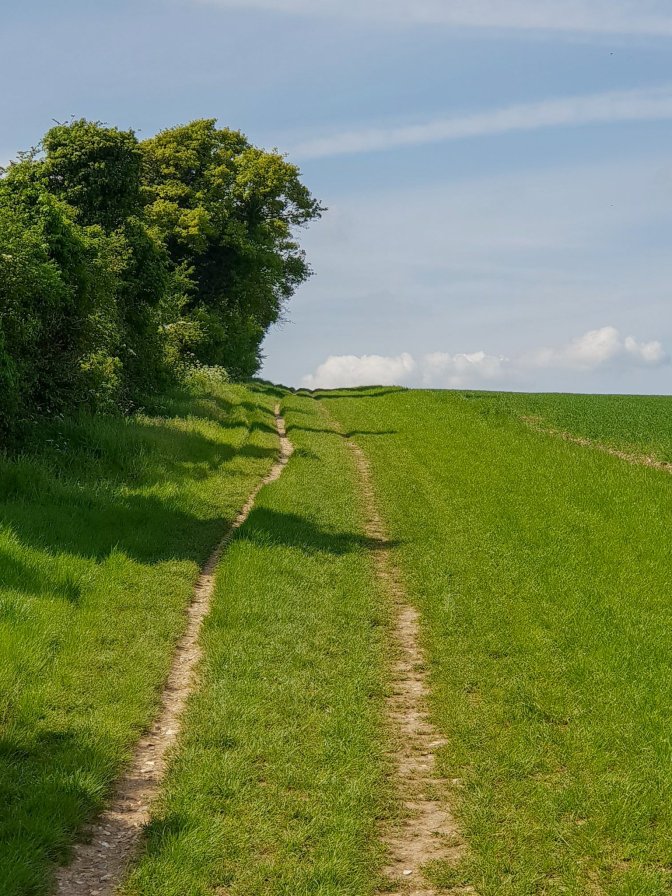
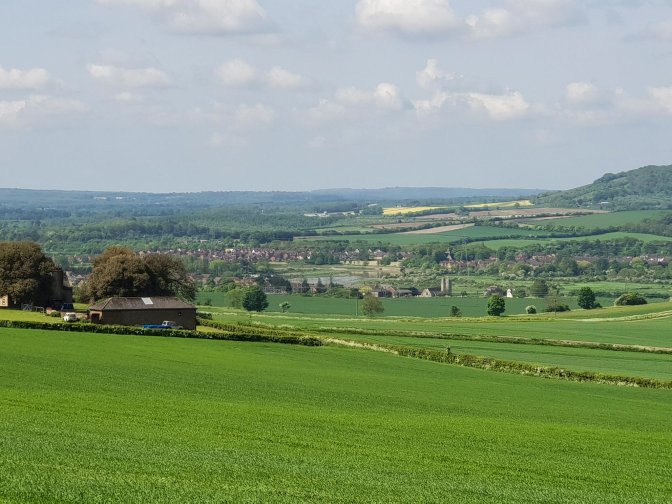
This is my first real look at Dickens-Land; an unobstructed view of a graceful topography sprinkled with farms, church towers, and villages. It is a view that defines what peace feels like to me. It could easily lull one into a false sense of security of no outside world filled with hate and war.

I followed the tree line and found a bench where I sat and read a few paragraphs of a book I brought along. Afterwards, the path entered into some woods. The canopy of trees seemed to constrain my thoughts to those more internal and reflective; for which I was soon to be rewarded.

The Butterfly
It was a short time later that I came across a Red Admiral basking in the sun on top of the stony dirt path. A special characteristic of the Red Admiral are the two little blue specks at the base of each wing.


Continuing along this lush quiet country road, I arrived to a hideaway gem.
The Robin Hood Pub
This is the kind of pub that defines the joy I have with combining hiking and beer pilgrimages. There are few if any more satisfying beers than ones in places like this. A pub has stood here for 700 years servicing pilgrims like myself. It is not mentioned in any of my texts which to me is a small clue that Dickens was content to stay close to the railroad. I sat there in the beer garden with another walker, an old timer dressed in walking gear that looked older than the book (c.1924) I was reading.
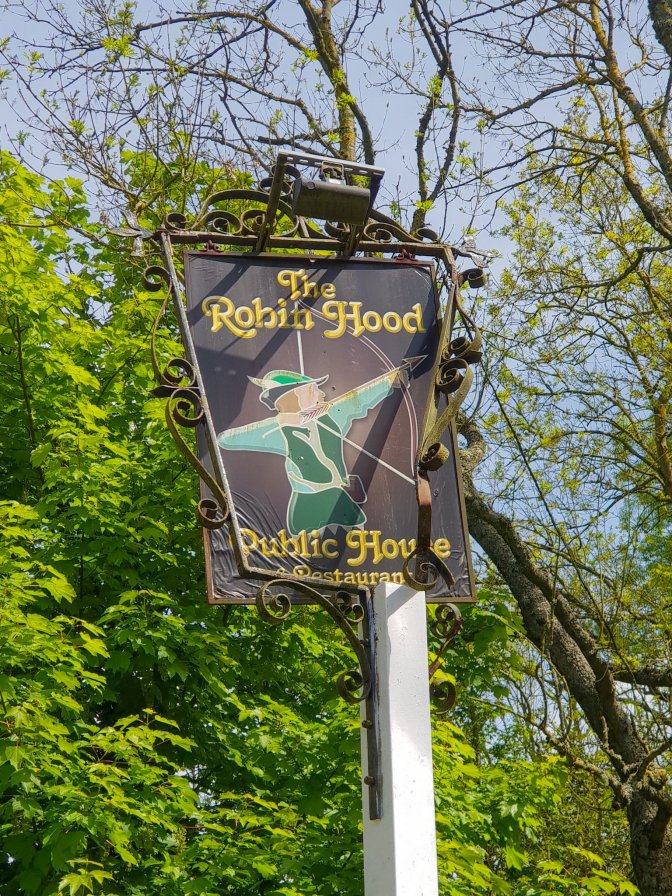
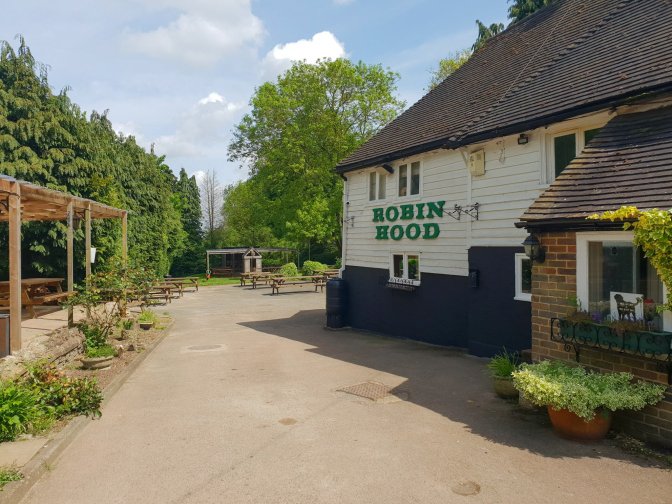
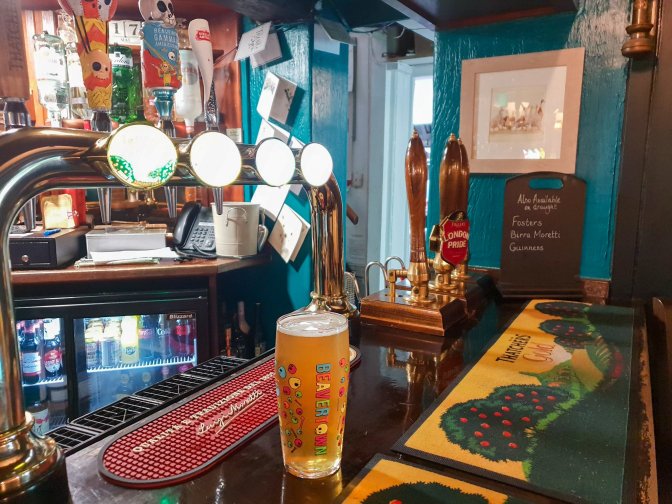
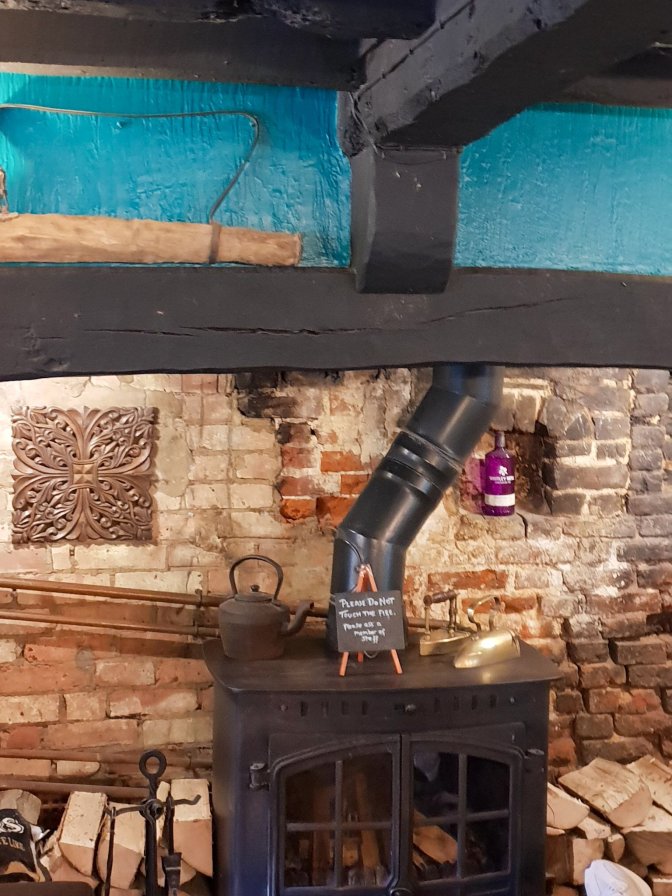
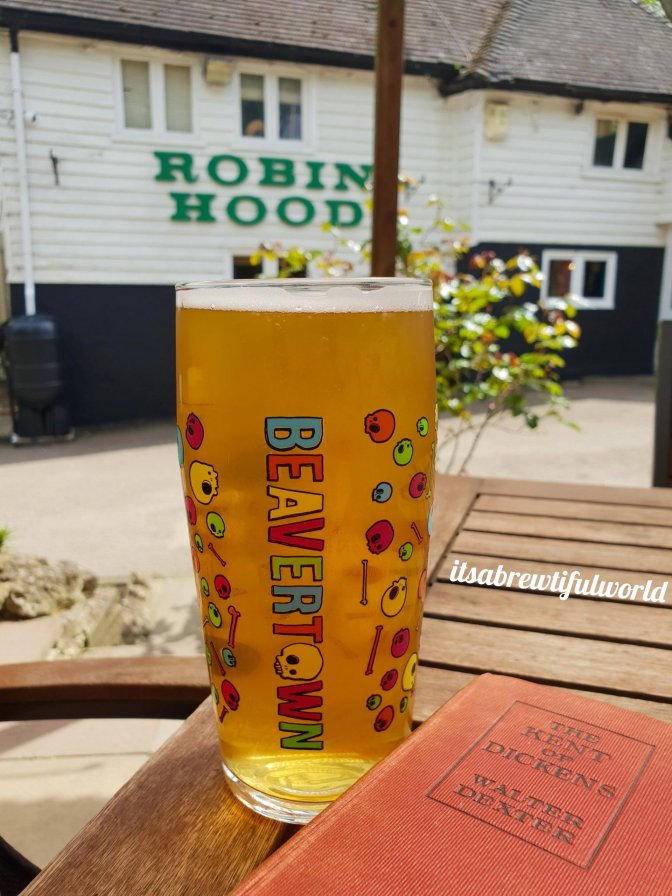
In a perfect world, I could have sat there all afternoon reading, lunching, and sipping more beers, but I wasn’t even halfway thru my tramp. The old timer got a little head start on me.

Blue Bell Hill
The Robin Hood Pub marks the beginning of a scenic area called Blue Bell Hill. It is known that Dickens visited this lookout to picnic and visit a nearby Druidic site called Kit’s Coty House.
“Pilgrims in Dickens land would do well to visit Kit’s Coty House and Blue Bell Hill, where, from the higher elevations, a prospect is revealed of enchanting beauty; from such a point of vantage we behold an extensive view of the valley, in which are seen little hamlets, cornfields, hop gardens, orchards, and spinneys, with the river Medway meandering in the direction of Rochester, and gradually widening as it approaches that ancient town.”
The Dickens Country by Frederic George Kitton (1905)



After Blue Bell Hill, the trail starts to lead down into the valley. This route looks rather deep forest, but there is a busy road up on a bank off to the left of the view. Still, the look of the trail here is wonderful.
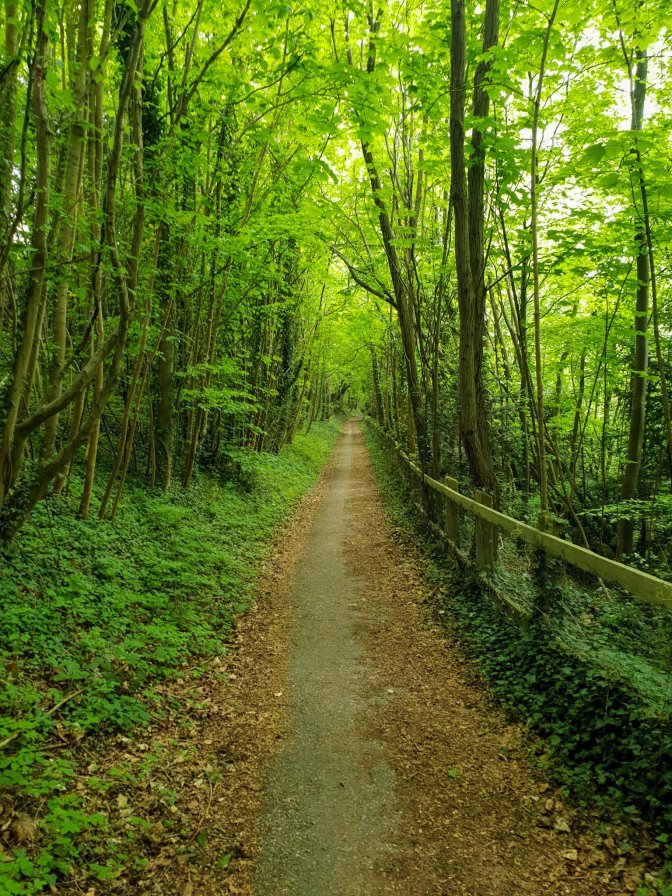

At some point, you see an opening on the right which brings you out to an odd looking stone formation.
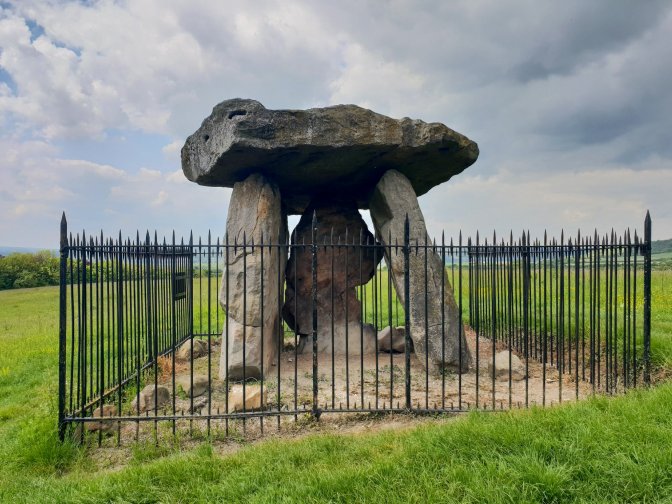
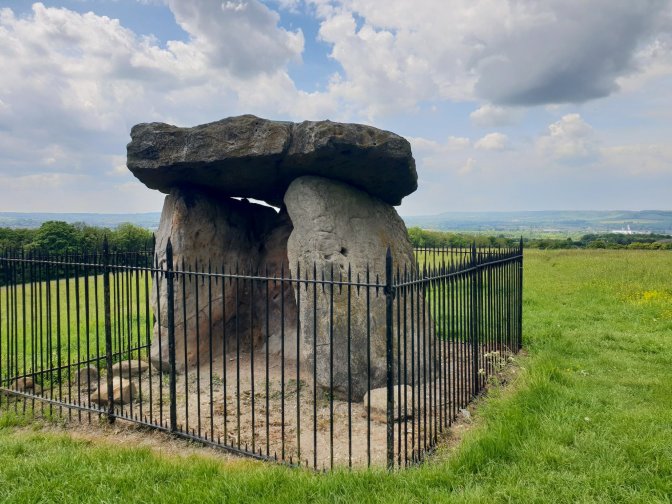
Kit’s Coty House
The date and purpose of this structure is unknown, but it is of ancient origin similar to Stonehenge and Avebury. For Pickwick Papers fans, there are carvings on the rock which are believed to have inspired the Bill Stumps-inscribed stone found by the Pickwickians in Cobham.
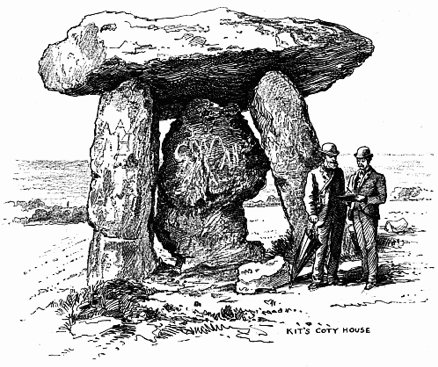
A little further on, the trail diverts from the road and it is back in a tunnel of green.


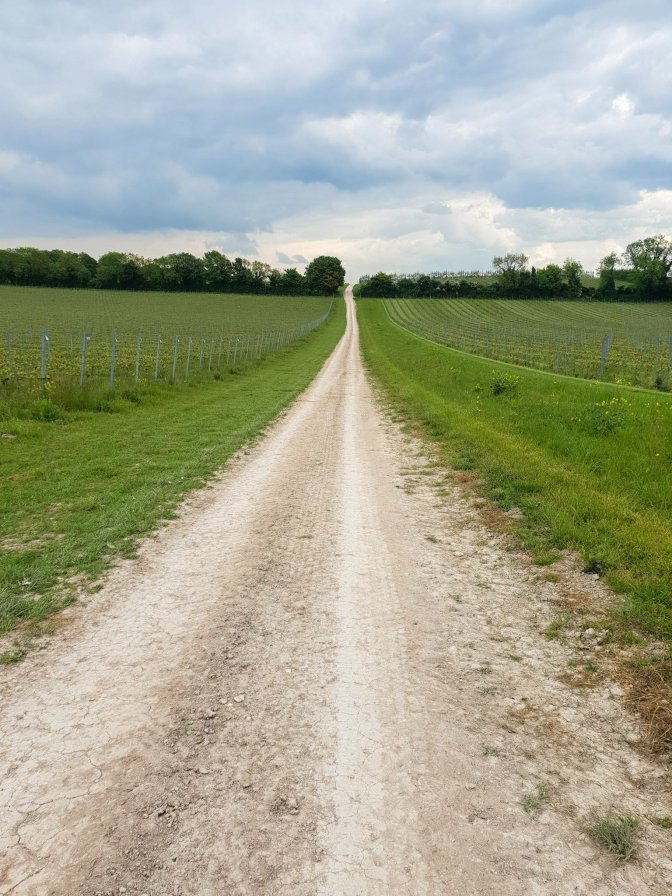
This region of Kent used to thrive with hop cultivation for beer brewing. Fields such as this one leading into the small village of Boxley may have looked very different in Dickens’ day.
Boxley and The Kings Arms
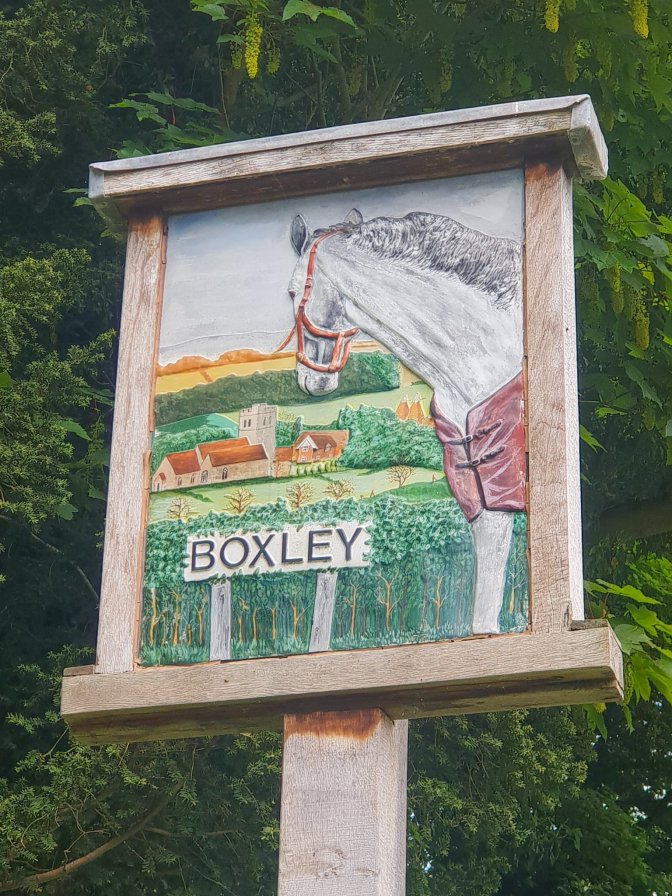
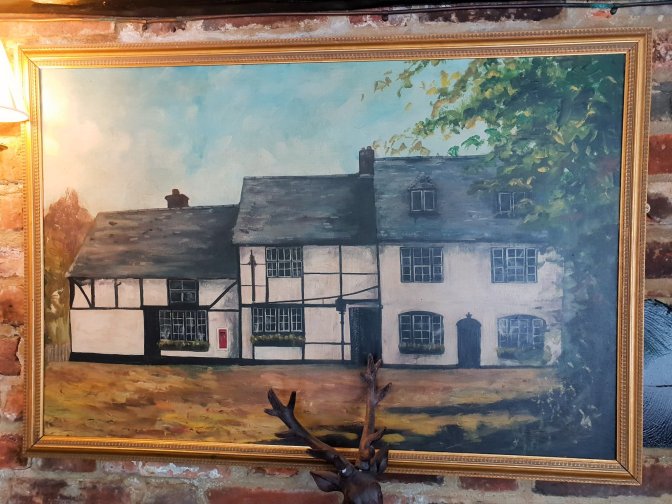
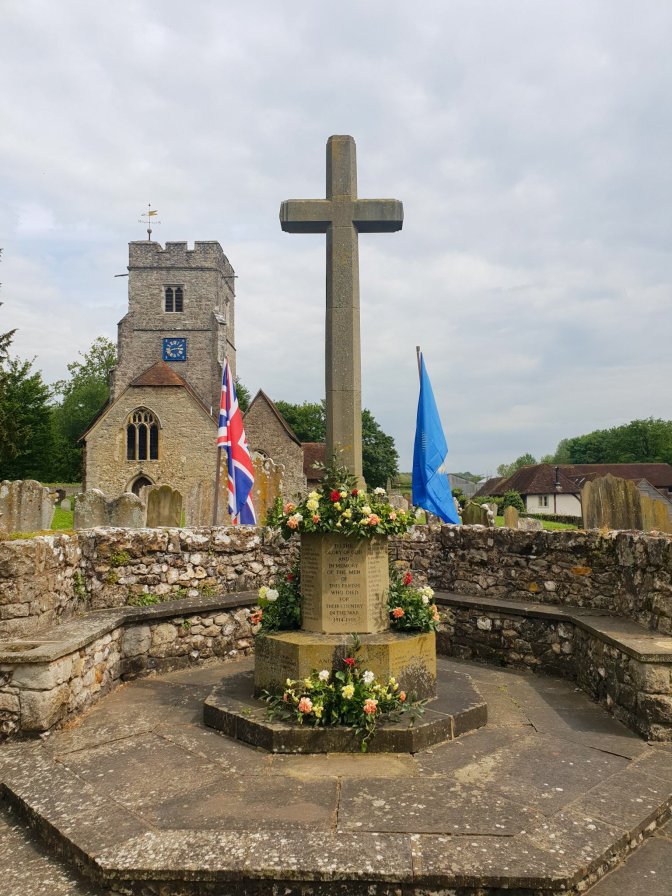
If you have ever imagined being in a tiny British village which consists only of a church, a pub, and a few houses, that would be Boxley. You come out of the farm fields almost directly to the doorstep of The Kings Arms. Across the way is a village green with a war memorial and St. Mary’s and All Saints Church at the end of it. The Kings Arms has all the warmth and low-beam charm that you would expect in a village pub. On tap, a Sharp’s Sea Fury. Like most of the small village churches that I have been to in the UK, the cemetery exudes an air of mystery that is so thick, you can almost feel the fog and moonlight in middle of the day.




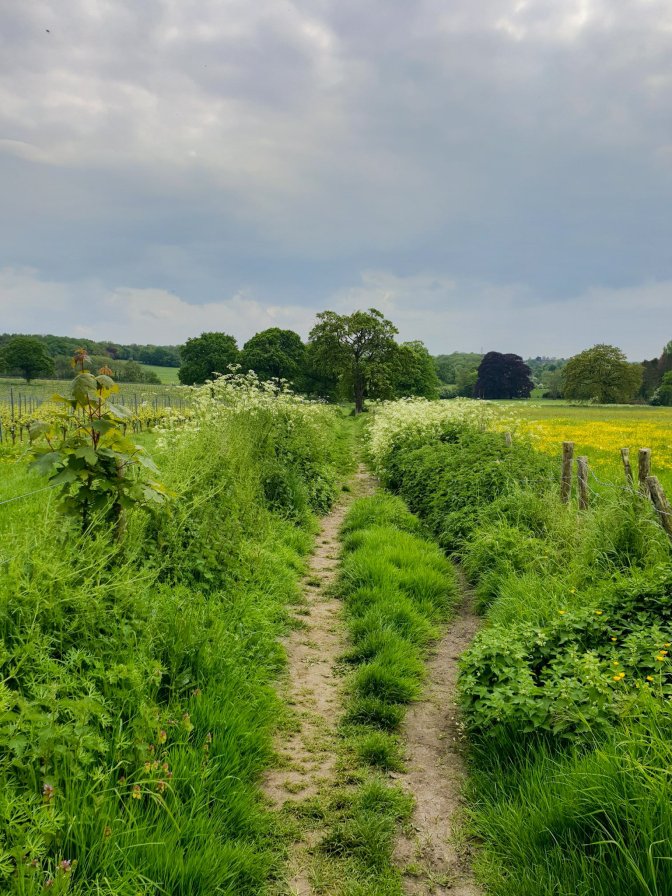
From Boxley to Maidstone, the tramp follows through several beautiful fields.
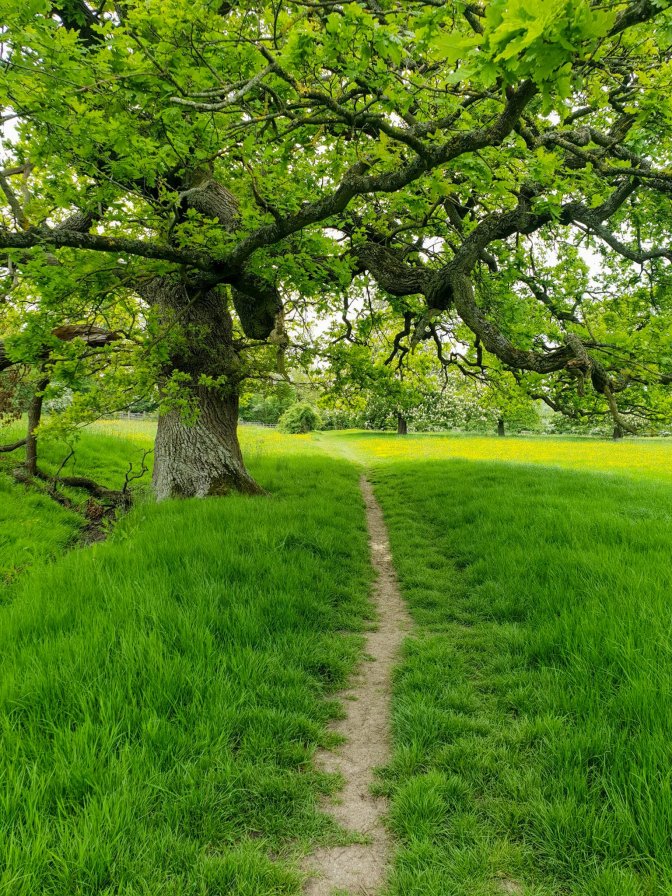
Little by little, civilization returns and you find yourself in the center of Maidstone.
Maidstone
He not only knew Maidstone well, but was much attracted to it. Yet it is curious that he only refers to the county town once or twice in his novels…
The Kent of Dickens by Walter Dexter (1924)
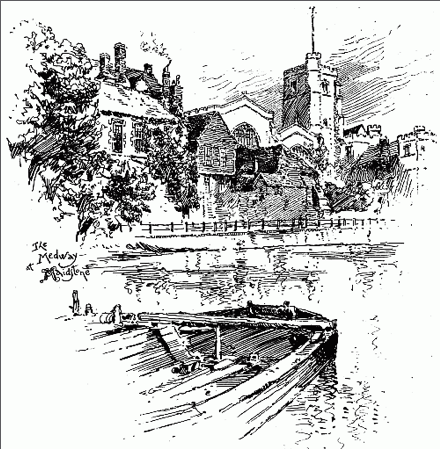
Maidstone is the largest town in the County of Kent. It has a long history, most of which for me will remain in obscurity. William R. Hughes, fortunately gives us a rundown of what to see.
“No pilgrim in “Dickens-Land” should omit visiting Maidstone and its treasures in Chillington Manor House; nor of seeing the splendid view of the Medway from the churchyard…”
A Weeks Tramp in Dickens-Land by William R. Hughes (1891)
The Chillington Manor House is today the Maidstone Museum which is not far away from a plaque indicating that the city was the site of a famous battle of the Second English Civil War in 1648.


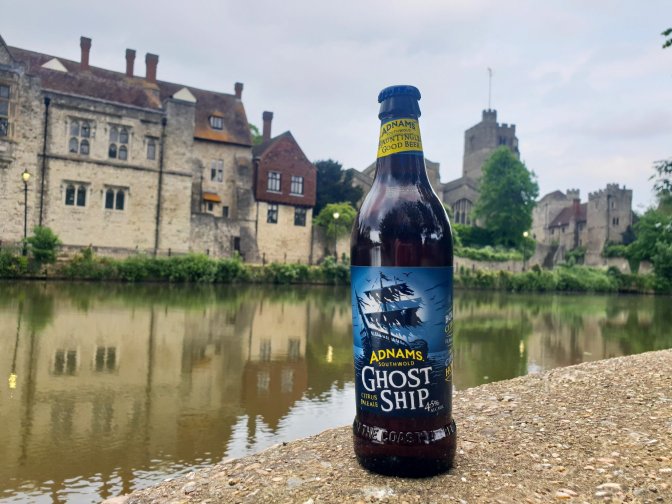
However, it was for neither of these reasons why Maidstone was so important to this tramp; it was Maidstone’s involvement in one of the great mysteries of The Pickwick Papers.
Muggleton
Muggleton is the setting of one of the most famous scenes in The Pickwick Papers. The scene involves Samuel Pickwick and his three friends attending a cricket match between two fictitious towns, Dingley Dell and Muggleton. It has always bothered Dickens followers why he chose fictitious names for these two towns when the book otherwise takes place in real locations. Of the two, Muggleton seems to be the most frustrating.
The first writer I have found to approach this subject is Thomas Frost in 1880.
“though there may be many spots the seclusion and picturesqueness of which might suggest such a name as Dingley Dell, there is no town to correspond to Muggleton.”
In Kent with Charles Dickens by Thomas Frost (1880)
The following year in 1881, Alfred Rimmer also played it safe.
“Dingley Dell and Muggleton are generally considered to be mythical places… we must be content to suppose that the latter is imaginary”
About England with Dickens by Alfred Rimmer (1881)
Perhaps it was Dickens’ own son Charles in 1886 that first gave Dickens followers the encouragement to choose their favorite candidate in the Jubilee Edition of The Pickwick Papers,
“Muggleton, perhaps, is only to be taken as a fancy sketch of a small country town; but it is generally supposed, and probably with sufficient accuracy, that, if it is in any degree a portrait of any Kentish town, Town Malling, a great place for cricket in Mr. Pickwick’s time, sat for it.”
If a member of the Dickens family says it’s Town Malling (today called West Malling), then this quickly became the accepted stand-in for Muggleton as indicated in 1891 by William R. Hughes.
“Yes! We are convinced that Muggleton and Town Malling… are one. ”
A Week’s Tramp in Dickens-Land by William R. Hughes (1891)
But in 1895, Percy Fitzerald came out with a bold counter-proposal.
“I fancy he had in view Maidstone…”
Bozland, Dickens’ Places and People by Percy Fitzgerald (1895)
Fitzgerald’s viewpoint may not have come out of nowhere. It seems that Fitzgerald had discussed the matter with other of Dickens’ children who clearly were not in agreement.
“The situation and real name of Muggleton has always been a hotly debated point… I was once inclined to adopt Gravesend, on the statement of the author’s daughter…”
“A member of Boz’s (Dickens’) family has assured me that Maidstone was in the author’s mind…”
Pickwickian Studies by Percy Fitzgerald (1899)
Following Fitzgerald into the 20th century, Maidstone has emerged the victor in this debate.
“Maidstone…” seems “…to answer the description given by Dickens far better than any other…”
The Real Dickens Land by H. Snowden Ward (1904)
“It is conjectured that Maidstone is the Muggleton of “Pickwick,”
The Dickens Country by Frederic George Kitton (1905)
“It (Maidstone) will, however, probably go down to posterity as the original “Muggleton…”
The Kent of Dickens by Walter Dexter (1924)
Dexter gives the best explanation as to this conundrum:
“The only reason we can at present assign for the fictitious names of Muggleton and Dingley Dell, is that Dickens was not quite sure of his ground and preferred to present composite pictures under assumed names…”
The Kent of Dickens by Walter Dexter (1924)
This makes some sense knowing that The Pickwick Papers (1836) was written several years before Dickens moved to Gad’s Hill and became more intimately familiar with the lay of the land.
Now that we have settled all of that, it is time to get to the beer part of this Beer & Dickens.
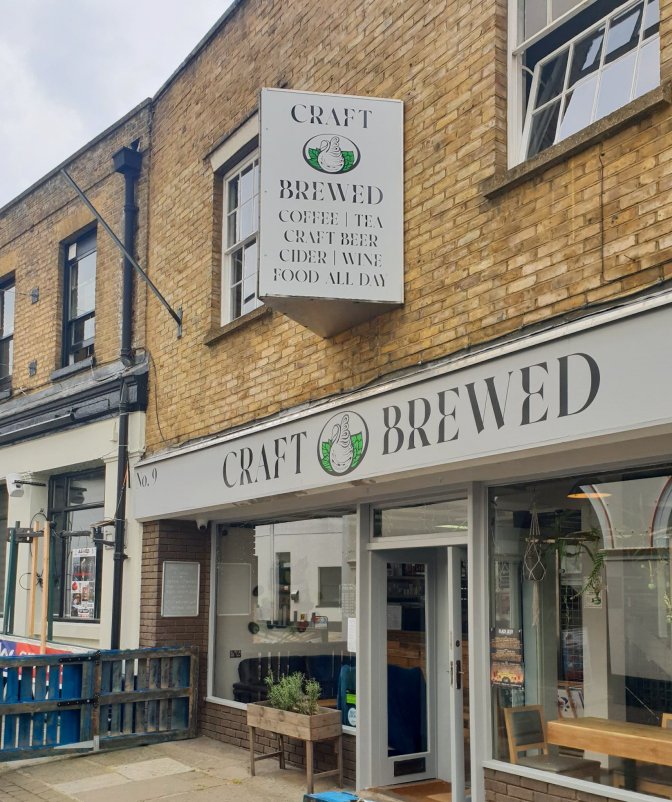
Craft Brewed
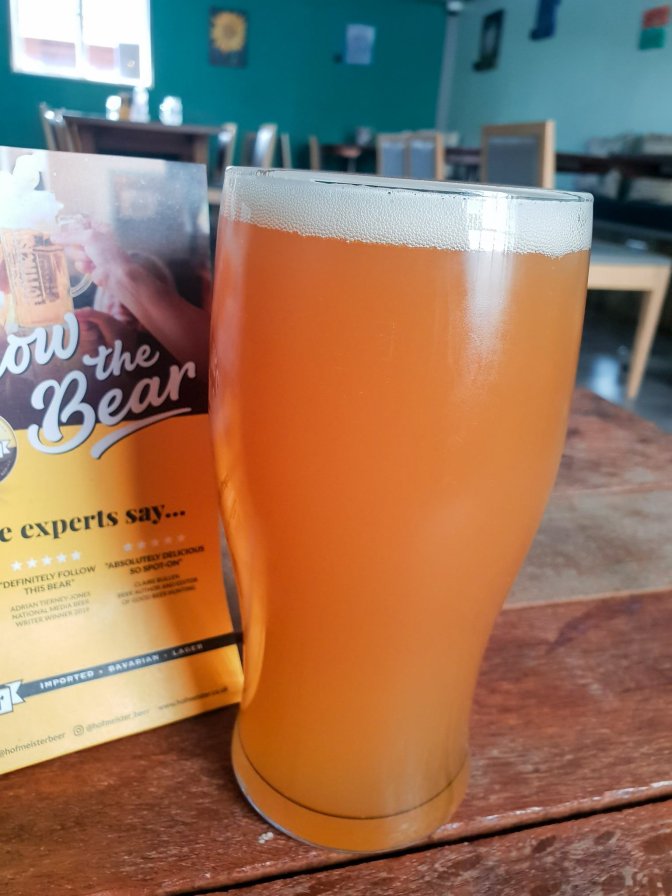
The first stop has a student hangout vibe with its mix of taproom and coffee house selections. After a few days of low weight English bitters and ales, I was happy for an 8% Double NEIPA called You Get What You Need by 360o Brewing Company from East Sussex. The beer buzz indicated I was getting what I needed, but now my stomach was suggesting otherwise.

The Muggleton Inn
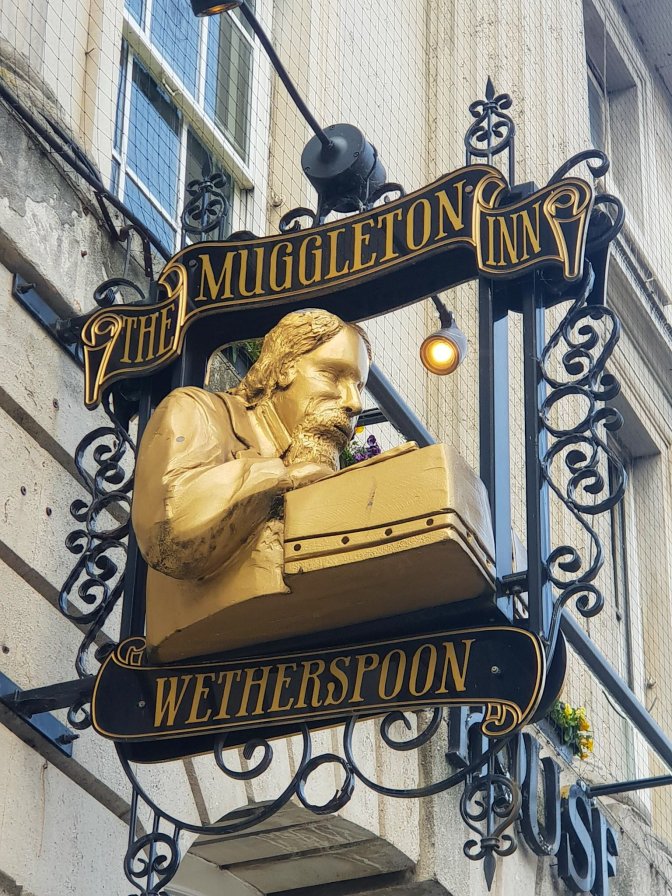
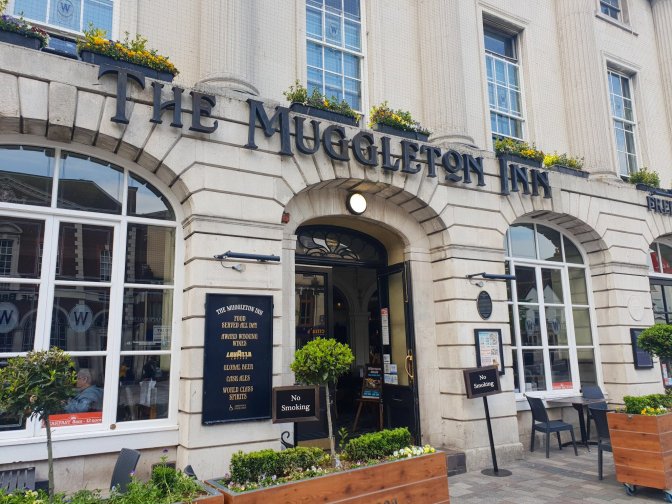
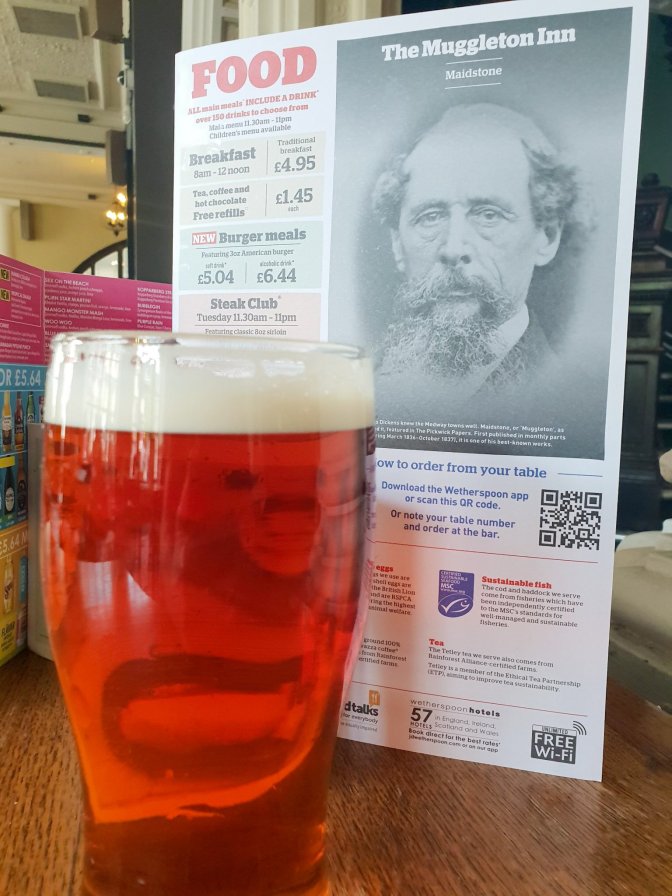
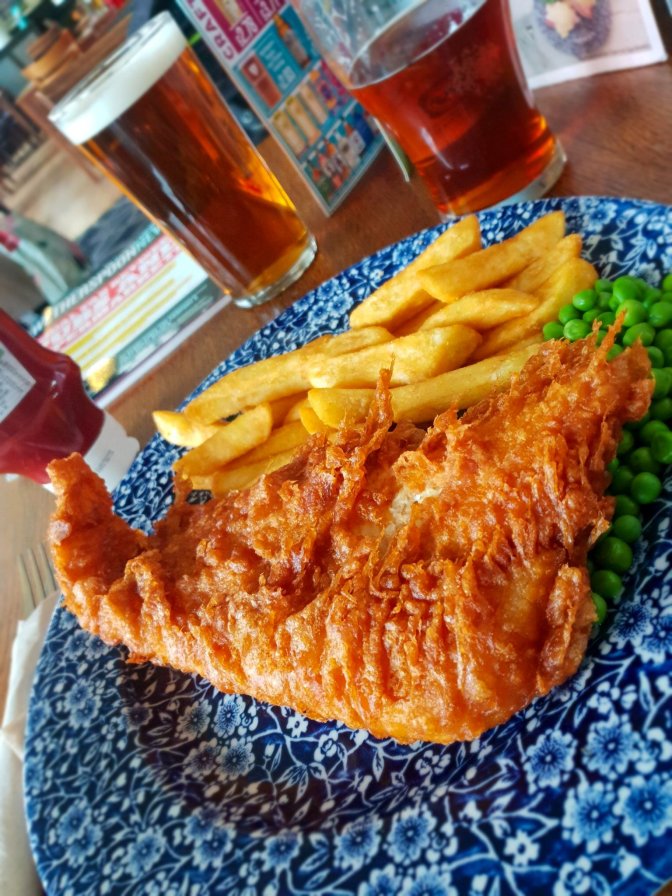
The Muggleton Inn is a Dickensian paradise and shows that Muggleton is fully entrenched into the Maidstone persona. This is a fantastic pub. Lively and spacious with a mix of old-timey Victorian and modern. The prices are also at a level that seem so ten years ago. To pay two-and-a-half pounds for a pint was shocking. A combo fish and chips with a pint was around eight pounds. That seems impossible these days. And the fish and chips were very good quality.


The Cellars Alehouse
Located in the cellar of an old brewery, this is essentially a craft beer taproom in a vintage pub environment. My final beer of the day was the Cellars own house Pale Ale.


Final Words
As the train whisked me back to Rochester from Maidstone, I felt a deep sense of appreciation; the thread I had weaved felt like it belonged. I flipped through the pages of my book (1924’s The Kent of Dickens). I relished the feel of its uncut pages. It exuded a pleasant musty scent which it had acquired little by little sitting on someone’s bookshelf, hidden away in some humid attic or in a quaint old bookstore; somehow finding its way into my hands 99 years after it first found its way into the hands of its original owner. There is an inscription inside the front cover dated July 1924. The first name is illegible but it looks like Winifred Harvey from Fort Pitt, Chatham, which is a neighboring town of Rochester. For the first time in many years, the pages in this book had come back to life, and I couldn’t help wondering about the path this book had taken to accompany me on this journey, as with so many others which had helped to inspire this hike sitting back home on my bookshelf. Dickens-Land was now a real place and with two hikes, rather two tramps, to go, I was feeling the pull of those spirits of the past; whispering to me as Rochester Castle came into view from the window of the train. I would not have been the least surprised to feel the book shudder in my hand with recognition as we passed it by. If anything could sum up what I love about traveling, it was in the reflections of that day that still reside in the most blessed haunts of my soul.

References
- Dickens-Land by John A. Nicklin (1911)

 itsabrewtifulworld
Wow! As always great post, Matthew! 🔝🔝
LikeLike
Great post. The Muggleton is a Wetherspoons pub – a chain that specialises in low price drinks and often has a decent selection of local brews.
LikeLiked by 1 person
Thanks for the info and for reading! Unbelievable how low their prices were especially for the quality. And I agree, the selection was better than a lot of other pubs I went to.
LikeLike