

Introduction
“Of all the places I visited in England, not excluding Oxford, I believe that Canterbury pleased me most. The day may have had something to do with it. It was warm and gray—threatening rain at times—but at times also the sun came out and gave the old English town a glow which was not unrelated to spring and Paradise. You will have to have a fondness for things English to like it—quaint, two-story houses with unexpected twists to their roofs…”
Theodore Dreiser. “A Traveler at Forty” (1913)
One hundred and ten years after that was written, I stepped out under the same threatening and grey English sky ready for my second pilgrimage into the heart of Canterbury. There are some countries which don’t wear grey very well. Belgium is one country which wears grey like sackcloth. On an overcast day, the face of Brussels droops like an old bloodhound. On the other hand, England, more specifically, Canterbury, does not share this trait. It is a city where a greyscale palette enhances it like an old postcard.

Brewtiful Canterbury Pt. I
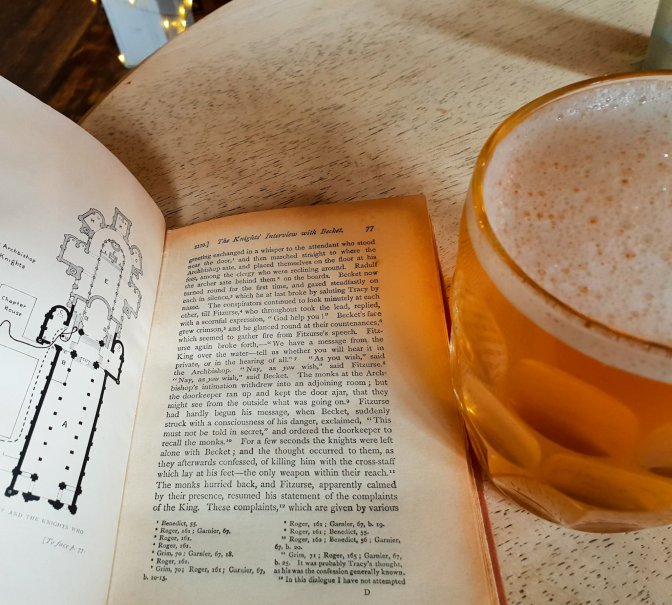
I could call this Becket & Beer
Continue reading Brewtiful Canterbury Pt. I

I proceeded out on today’s pilgrimage with a list of historical sites, pubs, and locations associated with Charles Dickens and his novel David Copperfield. I was continuing my journey to follow in the footsteps of several authors who sought out places related to Dickens’ stories. Most of these classic works occurred between 1875-1925, each building upon its predecessors. It is not my intent to provide further scholarship about them or dispute any of the theories of these works. I cherish them for what they are; books written by fans who love history, travel, and literature and ache to strip away the artificial authenticity of the modern world, just for a time, and find oneself living and breathing in a bygone age; for them the age of Dickens and for me the age of classic travel writing.
Pilgrimage II
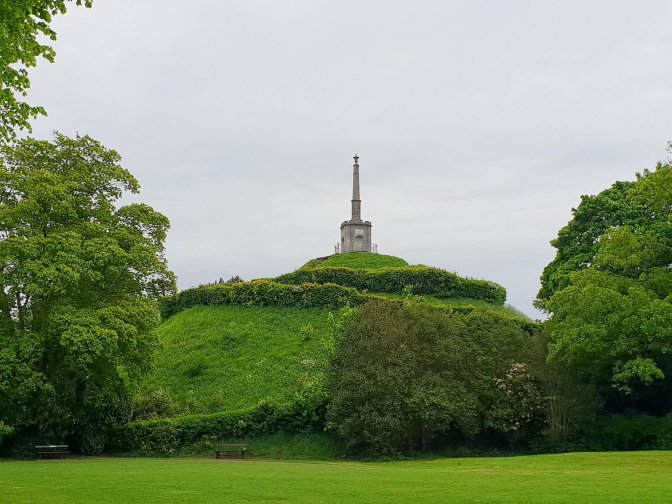
Dane John
The grey sky loomed over this earthen mound from prehistoric Britain on my early morning walk. This mound has stood witness since long before the Romans invaded. The Romans called it duroverrum1. From the top of the mound, you get a commanding view of the city. Becket, Chaucer, and Dickens would have stood here looking out over the city and its cathedral. It was the perfect awakening for the upcoming day. The sketch of Dane John is from A Week’s Tramp in Dickens-Land by William R. Hughes in 1891.


After the Dane John, I continued towards the monastery of St. Augustine which is adjacent to a quaint neighborhood wherein a very fine pub called The Two Sawyers lies tucked away. I will come back to this later. We also find here two houses with a link to David Copperfield, courtesy of Robert Allbut’s Rambles in Dickens Land from 1899. Curiously, until this book by Allbut, neither of these houses had been identified by previous authors.
Dr. Strong’s House
Dr. Strong was the beloved headmaster of the school attended by David Copperfield while living in Canterbury. In the story, the schoolroom was a “pretty large hall, on the quietest side of the house.” The house is described as
“a grave building in a courtyard, with a learned air about it that seemed very well suited to the stray rooks and jackdaws who came down from the Cathedral towers to walk with a clerkly bearing on the grass-plot”
Charles Dickens. “David Copperfield”
All authors agree that the school is based on King’s School which sits next to the cathedral. However, authors before Allbut could not find any building within or around the school which matched the above description. It was Allbut who first mentions the house on 1 Lady Wootton’s Green.


Lady Wootton’s Green, sits opposite the above house. This house though is nowhere near the towers of the cathedral to attract the “stray rooks and jackdaws”, and Allbut offers no reasoning why this is chosen. However, following this book, it seems that this house gained traction amongst subsequent authors such as 1905’s The Dickens Country by Frederic Kitton, which provides the photo of the house(see above), and it is later mentioned in 1924’s The Kent of Dickens by Walter Dexter. While 1 Lady Wootton’s Green somehow made its way into Dickensian lore, the same cannot be said about the next location just 100 meters away.
Miss Larkins House
In Chapter 18 of David Copperfield, David reminisces about a childhood crush on an older lady named Miss Larkins. There is no description of the house except that it has an upstairs drawing room where Miss Larkins entertained potential suitors with her harp playing. Allbut states matter-of-factly that it is this fascinating house connected to one of the gates of St. Augustine’s monastery.
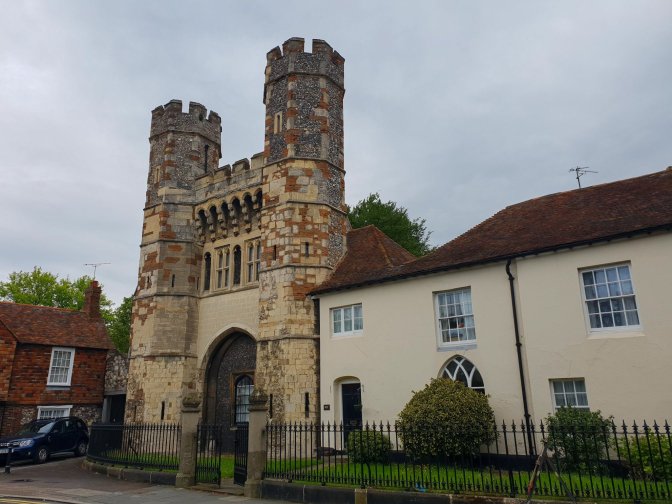
In the novel, David describes how he used to walk to and fro along the street to get a chance to bow to Miss Larkins. Since David spent a lot of time visiting Dr. Strong’s, the close proximity of these two houses does make it plausible. However, both in my opinion are purely wishful thinking.
Leaving the world of David Copperfield behind for a moment, I reached the easternmost point of today’s pilgrimage.
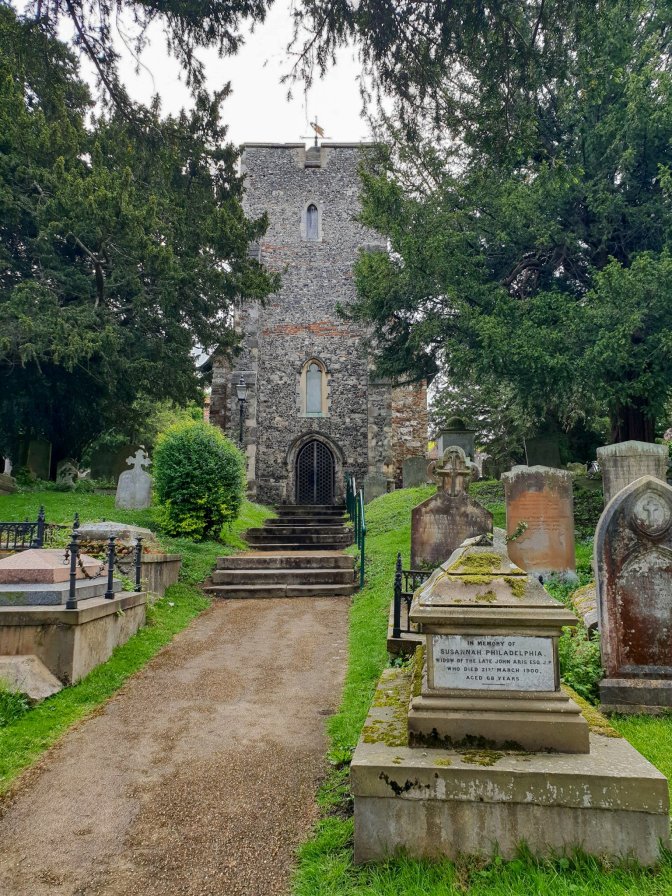
St. Martin’s Church
“The first feeling as we enter the churchyard and look upon this famous House of God is one of disappointment; there is something rough and homely about the clumsy walls of stones, flint, and Roman tiles, and the squat tower, creeper clad. But the associations of the little building render it lovely to us. No matter what the faith may be of him who stands in this seemly God’s-acre..”
W. Teignmouth Shore. “Canterbury” (1907)
A place of worship since around 580AD, St. Martin’s claims the title as the oldest parish church in the English-speaking world. When St. Augustine arrived here in 597AD, he used it as a temporary headquarters. While the structure you see today was not around then, it is believed that part of the bricks and tiles used in the walls date from back then. The nerdy Sherlock Holmes fan in me was pleased to find a grave with the name Baskerville on it. Entry was not possible so the interior photo comes from Bell’s Cathedrals: Church of St. Martin (1898) by Rev. C.F. Routledge.


By now, the sun was breaking through and bringing its Springtime energy to an already exhilarating morning. Just in time to indulge in some ancient Britain history.
St. Augustine’s Abbey
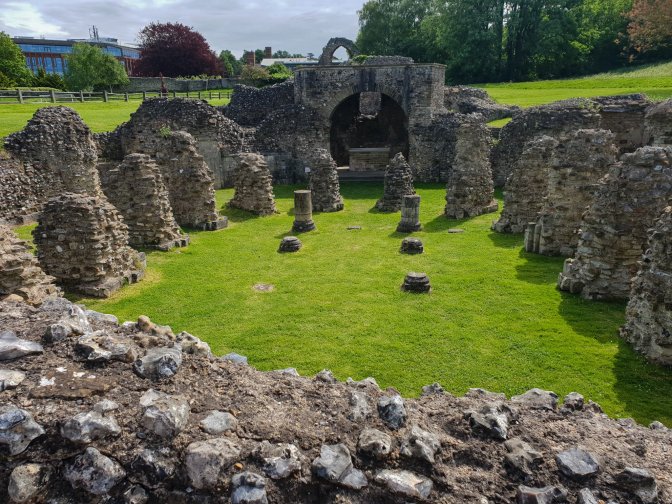
St. Augustine was a missionary to Britain in 597AD. He converted King Æthelbert of Kent to Christianity after his arrival. The abbey stood for almost 1000 years unit 1538, where like all abbeys in England, King Henry VIII had it destroyed. The intact buildings that you see today belong to St. Augustine College. St. Augustine’s grave is marked on the grounds along with some other ancient kings; however, the grave of King Æthelbert is not identified.




I was ready to leave the ancient past and stroll around locating a couple of the pubs on my list. It was still morning, so the next two were not open yet. Based on my research, both of these are highly rated pubs.
The New Inn
Located not far from St. Augustine Abbey, this pub has a unique list of beers on tap.

The Thomas Tallis Alehouse
This a classic pub and looks like it should be a must-see. It was Monday and unfortunately they were closed leaving it to tantalize me for the foreseeable future.

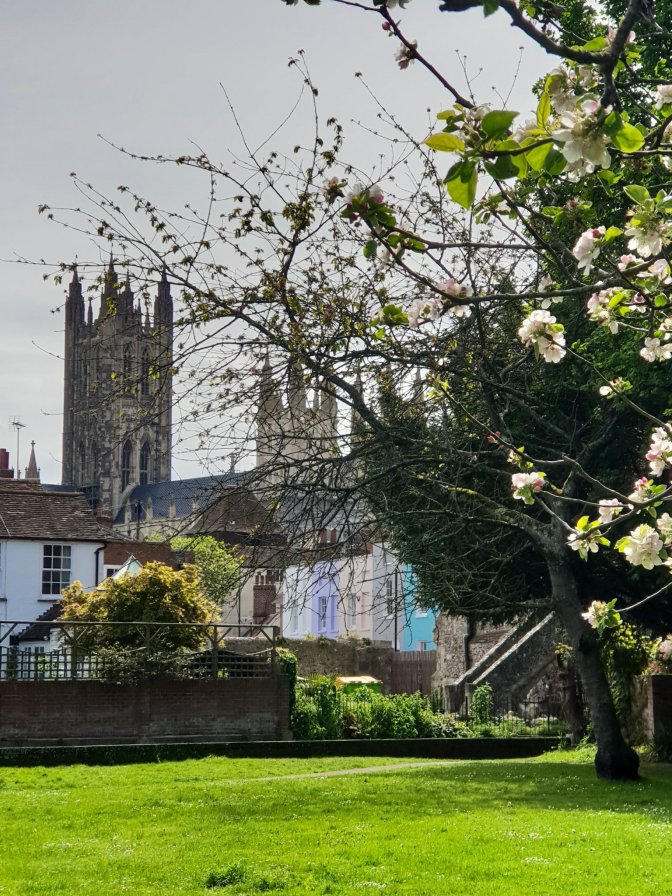
Meanwhile, every street in Canterbury has a charm; no matter which way you look, it always seems that the cathedral or the Westgate are there in the background.

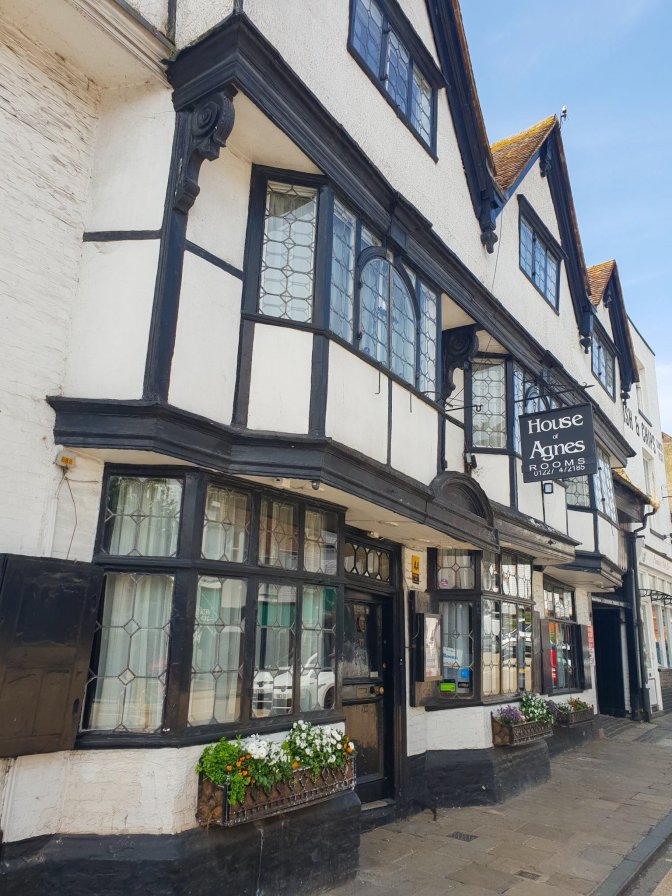
House of Agnes
Canterbury is endeared to us through its association with Agnes Wickfield…
Walter Dexter. “The Kent of Dickens” (1924)
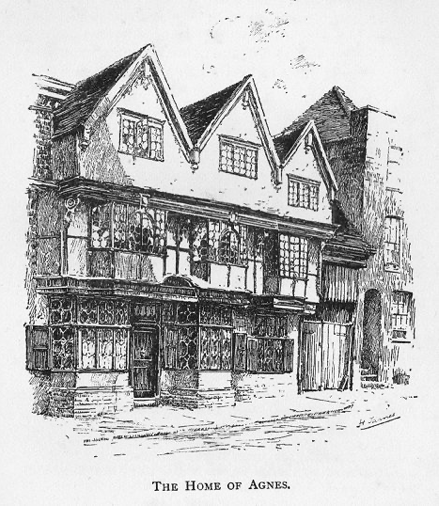
The third “house” on the list today with links to David Copperfield is the home of Agnes Wickfield, the ultimate love of David’s life. In David Copperfield, it is described as “a very old house bulging out over the road; a house with low latticed windows, bulging out still further, and beams with carved heads on the ends, bulging out too.” Like the other two houses, it has been the source of debate and frustration.
“There is no such house now. I went again and again over the city to identify it”
Alfred Rimmer. “About England with Dickens” (1883)
In steps Robert Allbut again in 1899. He assigns the house at 71 Dunstan’s St. to the Wickfields despite acknowledging that the house “does not answer in every respect to the full description as contained in the book.”3 By the time Walter Dexter’s The Kent of Dickens was published in 1924, it seemed accepted as fact. Today the hotel here takes full advantage of that prestige.
Before having lunch, I took advantage of all the color around the Guildhall next to West Gate.


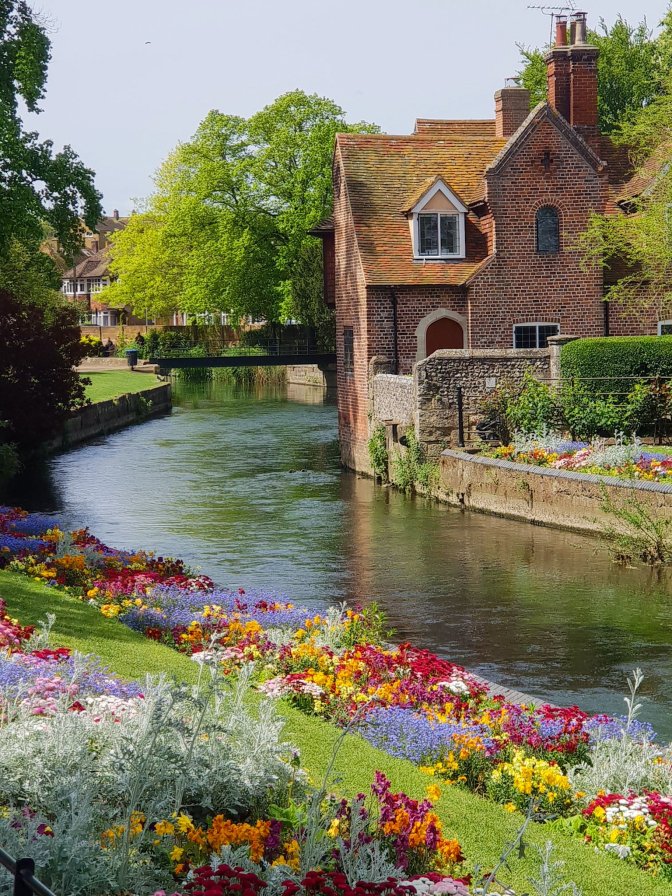
Not far from the House of Agnes, I finally had a chance for lunch and my first beer of the day.
The Bishop’s Finger
A typical colorful Shepherd Neame pub with a cool name. Shepherd Neame pubs are quality but predictable.
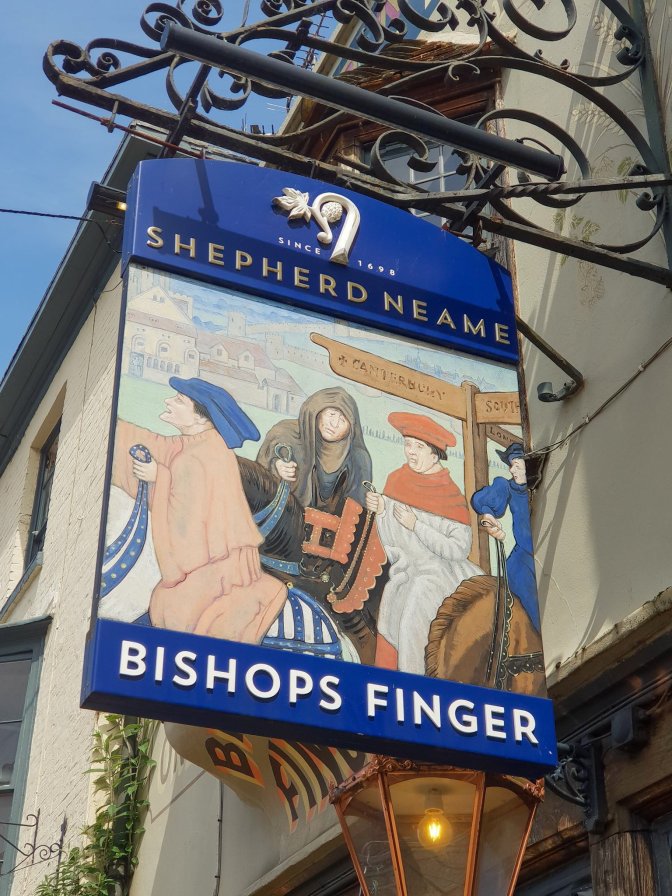

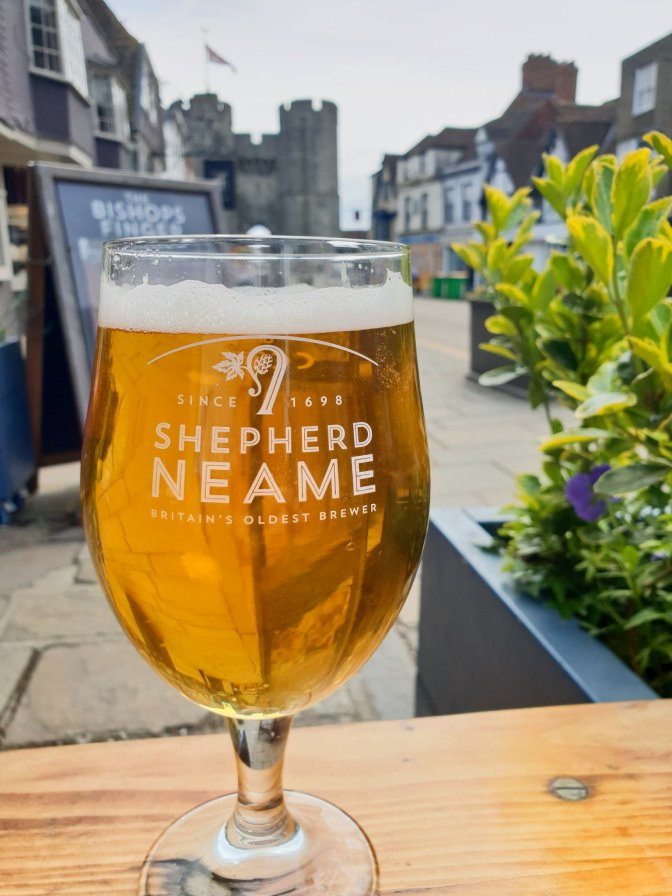
With a lunchtime beer buzz, I took to shopping some quaint bookstores and came up with two cool new members to my collection. To celebrate, I stopped at the Thomas Becket.
Thomas Becket
I really enjoyed this pub. With a name like Thomas Becket, you might assume it is a typical commercial pub, but what I found not the case. It had its own unique charm and a good selection on tap.
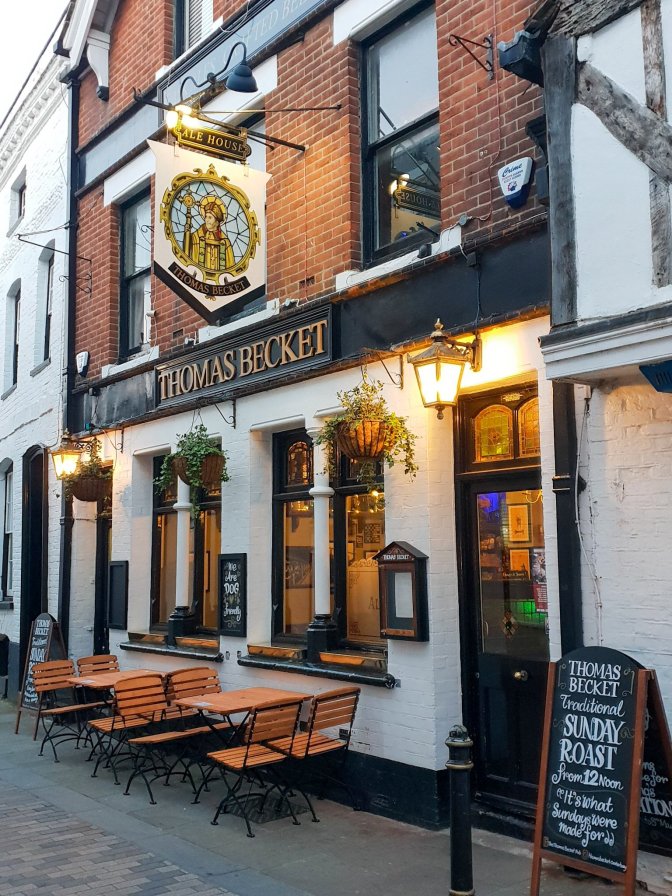
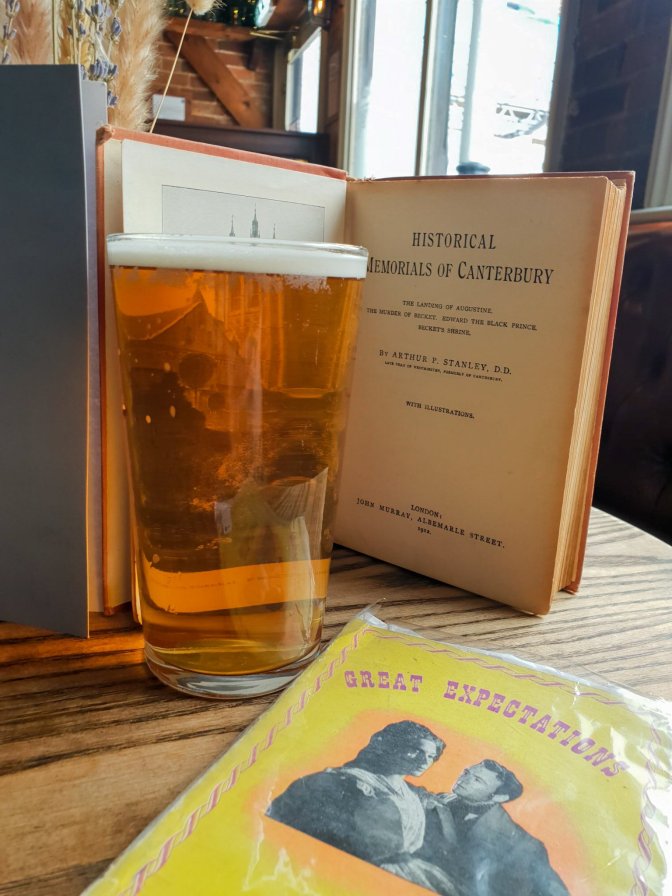
Finally, the time had come to visit the spiritual heart of Canterbury.
Canterbury Cathedral
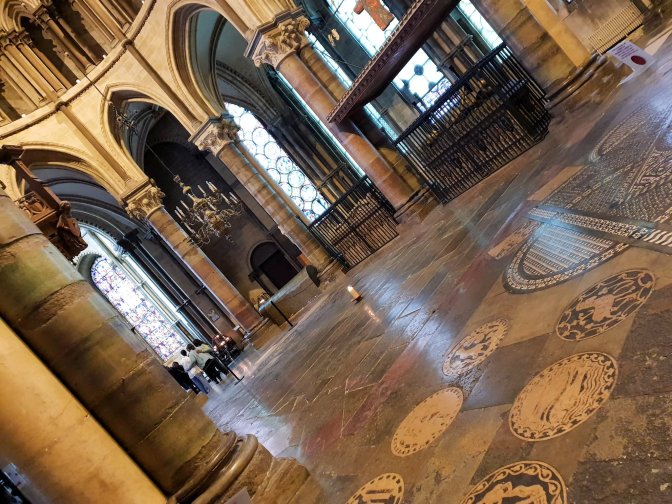
There are few if any cathedrals in Christendom as storied as Canterbury. The cathedral was begun in 1070 replacing a church which stood in the same place but had suffered time and again from Danish pillaging before succombing to fire. Now the construction was in the hands of the Normans who had taken control of Britain in 1066. It took four hundred years to reach the state more of less what we see of it today2.
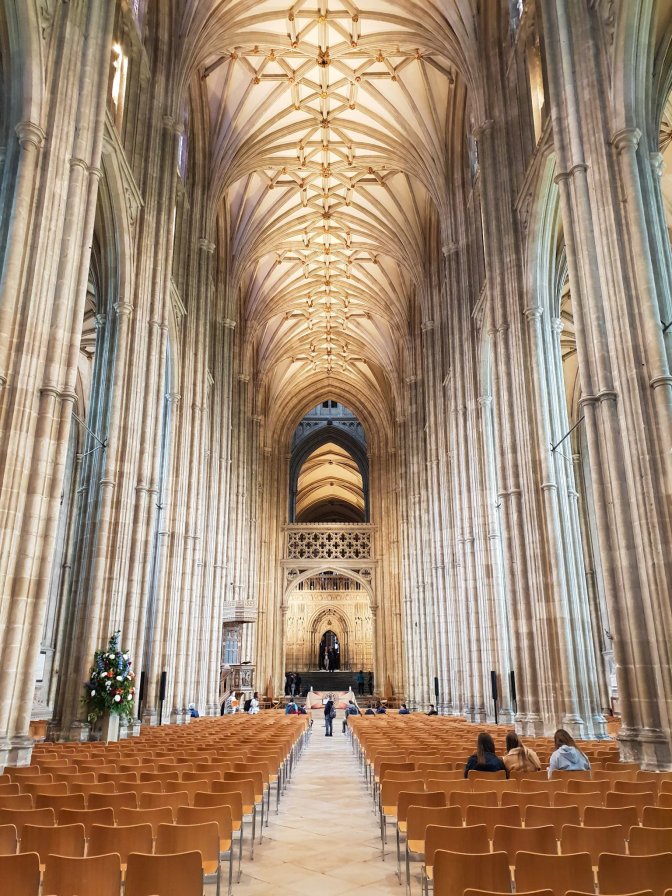
However, it only took one hundred years before the crucial event occurred which put Canterbury Cathedral at the center of Christian pilgrimages; the assassination of Thomas Becket in 1170 by four knights, Reginald Fitzurse, Hugh de Moreville, William de Tracy, and Richard le Brez, for defying King Henry II, particularly on the matter of who has authority over the trials of priests accused of crimes. The location where the murder occurred is called The Transept of the Martyrdom.
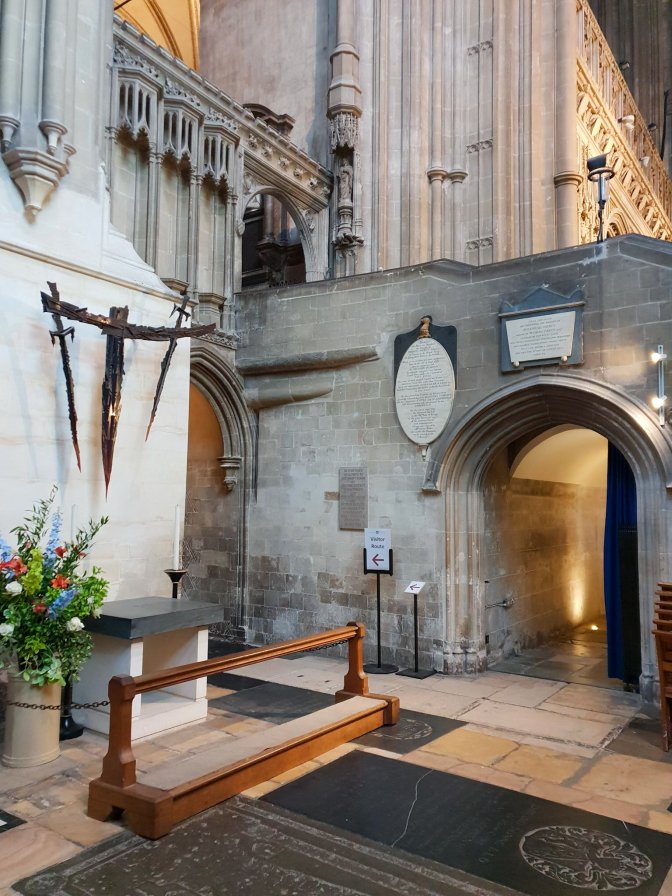
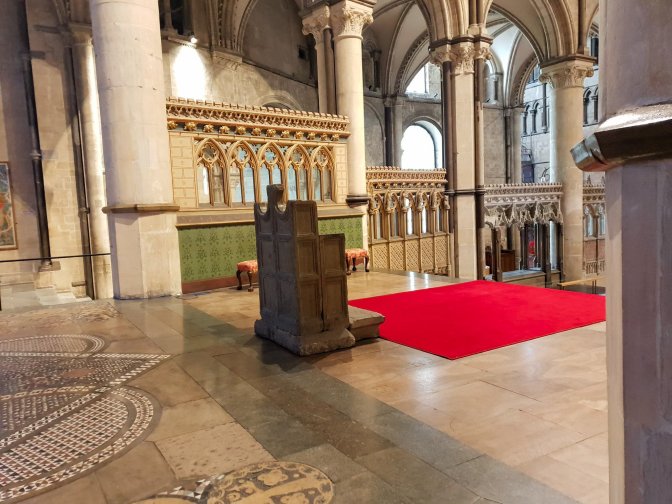
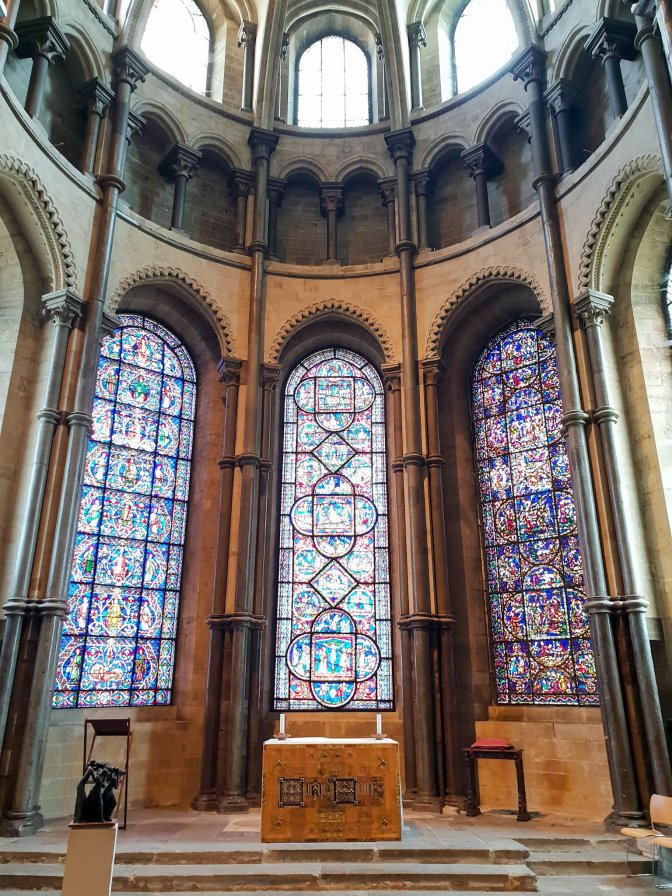
Becket was shortly thereafter sainted. A shrine was installed which attracted thousands of pilgrims from all over the world and inspired Geoffrey Chaucer’s Canterbury Tales. In 1538, King Henry VIII had the shrine destroyed as part of his vendetta against the Pope for spurning his desire to divorce. Today there is a solitary candle marking the location. The candle sits between the chair of St. Augustine, given to Augustine by King Æthelbert after his conversion to Christianity and the apse which has become known as Becket’s Crown.



The Two Sawyers
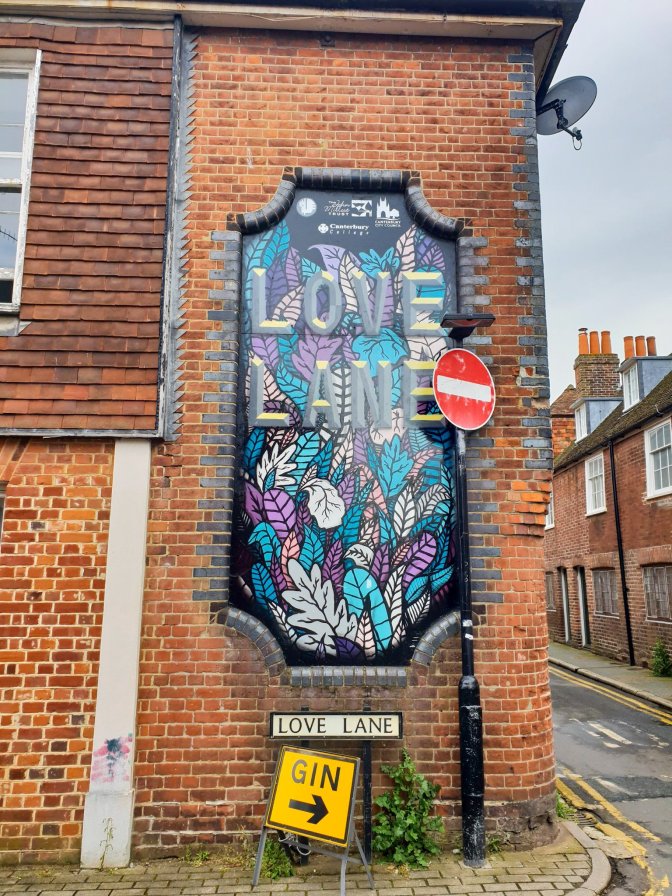
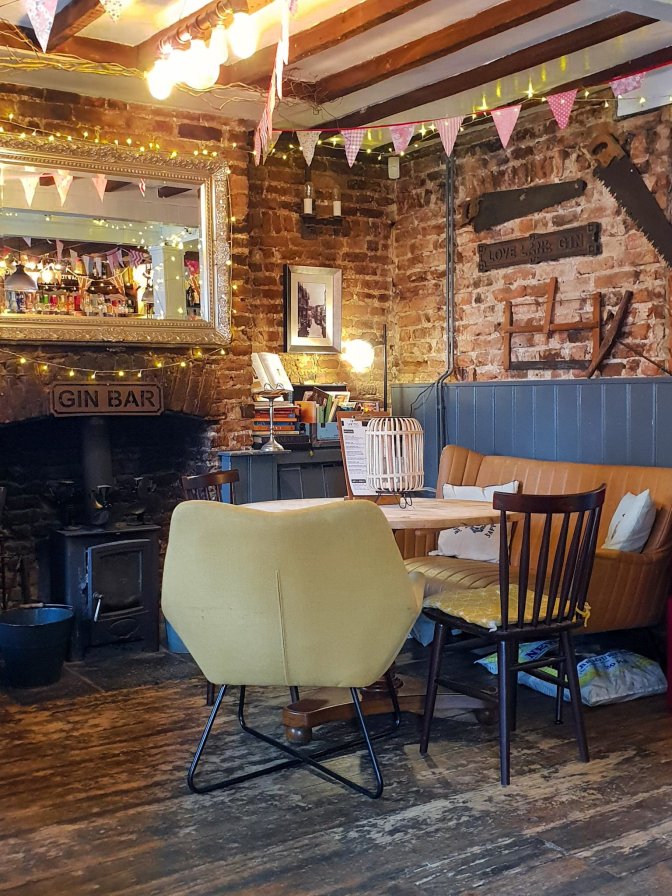
For dinner, I returned to this pub which I had passed during my morning walk to St. Augustine’s. This pub ticks all the boxes for me. It sits on a quiet street away from tourists, has a classic exterior with the whitewash façade and gothic lettering, the old-fashioned sign, a warm and homey interior with exposed beams, and a set of unique beers on tap. I went with the Hurricane by Wantsum Brewery and a Kent Golding Bitter from Kent Brewery.





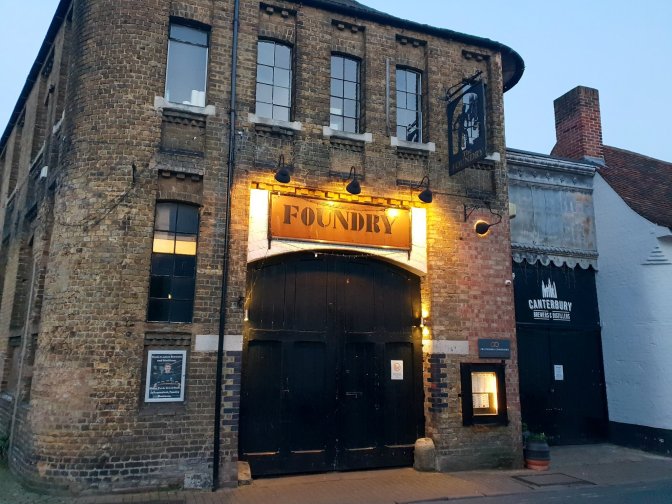
The Foundry Brewpub
The final stop on my pilgrimage to Canterbury was to this brewpub, serving local beers from Canterbury Brewers & Distillers. Their flight was the perfect finale.


Final Words
If you want to get away from London and experience old England, I can’t imagine there is anywhere better than Canterbury. I feel my recital of its history to be embarrassingly trite compared to its true place in the annals of Britain’s great halls. I found that Canterbury also blended the modern world so seemlessly as I scoured its many shops specializing in clothing and gear for walking and hiking without detracting from my medieval fuzziness. I asked a merchant about why there were so many similar shops, all with cheap prices on good gear, and she simply shrugged and said that walking was a way of life here. While I love Switerland and its grandeur, there is something pure about how walking and hiking is woven into the souls of the British. I was just getting started on a week of exploration into this phenomenon with a Dickensian focus, so I gladly scooped up several items and tested the capacity of my luggage by the time I headed by train towards Rochester. I had three hikes planned and my enthusiasm was about to burst at the seams. Still nothing to be compared with how those pilgrims must have felt arriving here so long ago. Already I have ordered three classic books related to the Canterbury pilgrimage. For reasons I have yet to know, this trip enveloped me in a curiousity which drove me to a deep state of reflection as the fields of southern England zipped by outside my train window.

References
- “Beautiful Britain” by Gordon Home (1911)
- “Bell’s Cathedrals: The Cathedral Church of Canterbury” by Harvey Withers (1897)
- “Rambles in Dickens Land” by Robert Allbut (1899)

 itsabrewtifulworld
I love this!! Thank you for this fantastic write-up, I have learned so much, and Canterbury is now on The List.
LikeLike
A wonderful recounting, thank you!
LikeLike