
Growing up in central Pennsylvania, one gets accustomed to and perhaps spoiled by the simple beauty of its forests, rivers, and mountains. The mountains are by no means majestic but what they lack in altitude, they more than make up for in providing a wonderland of hiking and escape from the modern world. The changing beauty that comes with the seasons is something I have rarely seen rivaled since moving to Belgium. As I hiked along the Our River which runs along the border between the Duchy of Luxembourg and Germany during an early November 2025 day, I realized that the nature around me was perhaps as close as I have experienced to central Pennsylvania on this side of the pond. I had caught the peak of Autumn a couple weeks too late, but there were still enough colored leaves tenuously holding on to their final moments in the trees, while the leaves blanketing the path were fresh and untarnished. It was bringing me back to the forests of Pine Creek and the Golden Eagle Trail. And with it a reminder of how little I actually appreciated those times in the woods of central Pennsylvania compared to how I look back on them today.
There are often things in the places we grew up that we took for granted. At the time, they may not have seemed interesting or spark any emotional response. Then later in life, we eventually find that connection and look back with some regret. One of these things I have recently become aware of is the National Shrine to the 28th Infantry Division located less than a 10-minute drive from where I spent four years of my life going to university. The 28th Infantry Division was formed out of the Pennsylvania National Guard and used the keystone symbol of Pennsylvania (nicknamed the Keystone State). On December 16, 1944, it was elements of the 28th Infantry Division who were patrolling and setting up a line of defense along the border between Luxembourg and Germany. It was the tiny hamlet of Ouren, Belgium, which gets its name from the Our River, where the command post of the 112th Infantry Regiment of the 28th Infantry Division was located. Ouren sits on a tight bend on the Our and had a couple strategically valuable bridges. It would be these bridges that the 112th would valiantly try to prevent the German Army from crossing while being outnumbered for two days when the Germans started attacking. On the 17th, the 112th was forced to retreat but was able to destroy the bridges in the process, slowing down the German advance and forcing them to look for an alternate route or build their own.
To demonstrate how chaotic and caught off guard the Americans were in those first couple days, the leader of the 112th, Col. Gustin Nelson and his small force retreated to the next village a mere 5km to the west, Weiswampach, where Col. Nelson recalls:
“I went to a nearby bistro where I saw a light and found about thirty soldiers drinking free beer passed out by the Luxembourgers. In ten seconds I had the place cleared and the soldiers moving out to man the outposts.”
Alamo in the Ardennes by John C. McManus (2007, NAL Caliber)
The thought of going from drinking free beer to suddenly being thrust out into the freezing winter weather to defend against oncoming German tanks, artillery, and infantry is something none of us modern civilians can possibly comprehend. When I arrived in Ouren to start my hike, the irritation of finding no open bistro of my own to enjoy a beer at the end was the most discomfort I would experience on what turned out to be a glorious throwback Keystone State-style Autumn hike.
Hike Details
| Starting/Ending Point | Three-Country point parking area |
| Distance | 17 km |
| My Moving Time | 3h 24m |
It’s Not Just a Beer, It’s a Journey
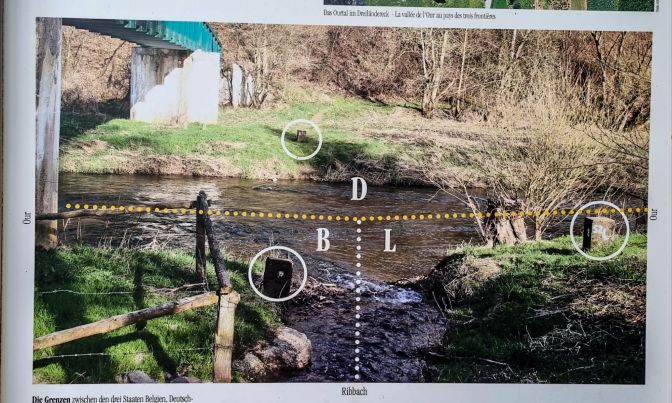
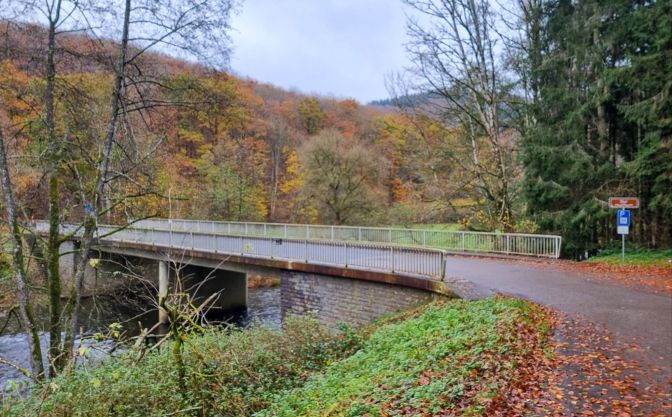
The hike begins at a footbridge which crosses from Belgium to Germany near the three-country confluence with Luxembourg. In order to stand on the actual point, one needs to wade into the middle of the Our river.
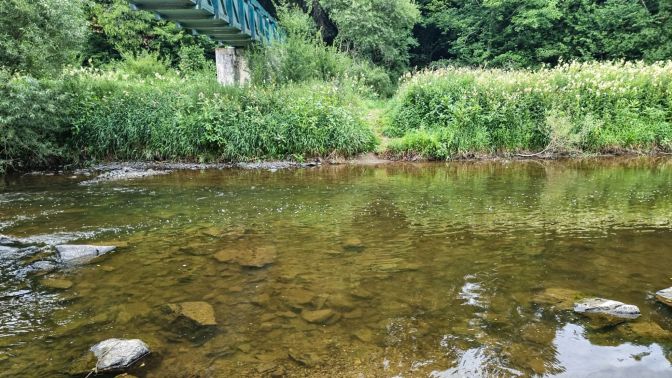
Standing on the footbridge, one can contemplate the importance of this river in the defense of Luxembourg from the German army.
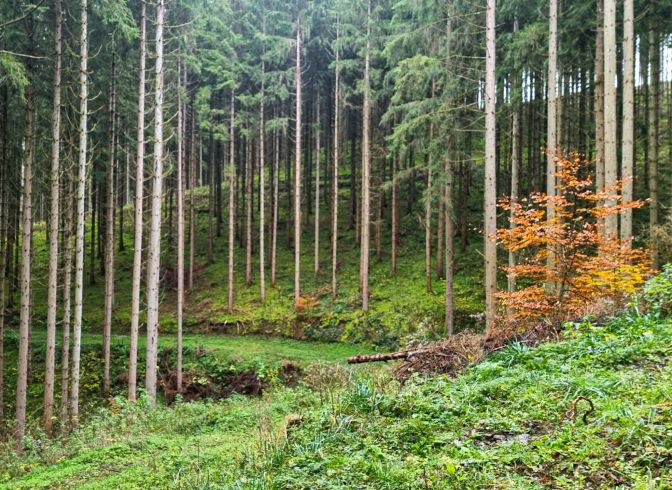
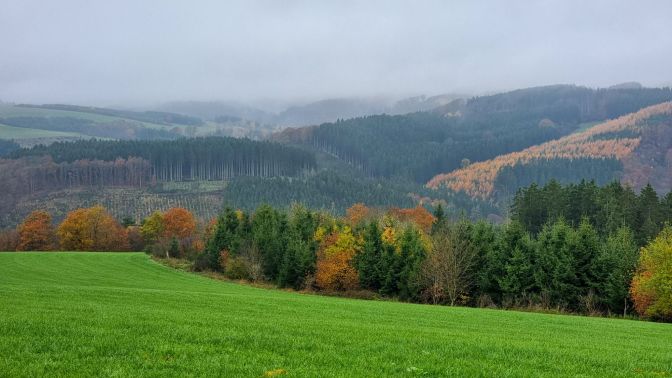
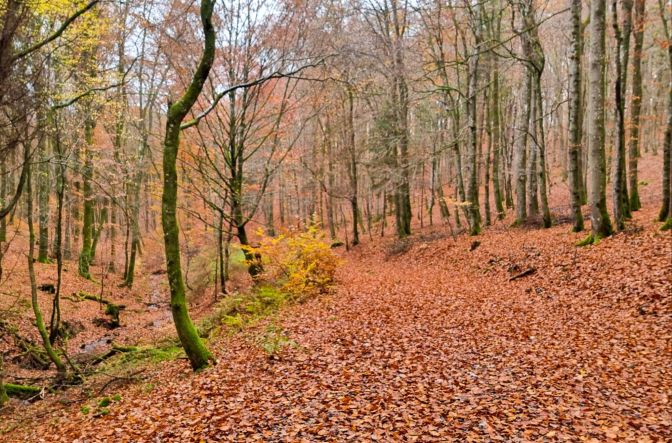
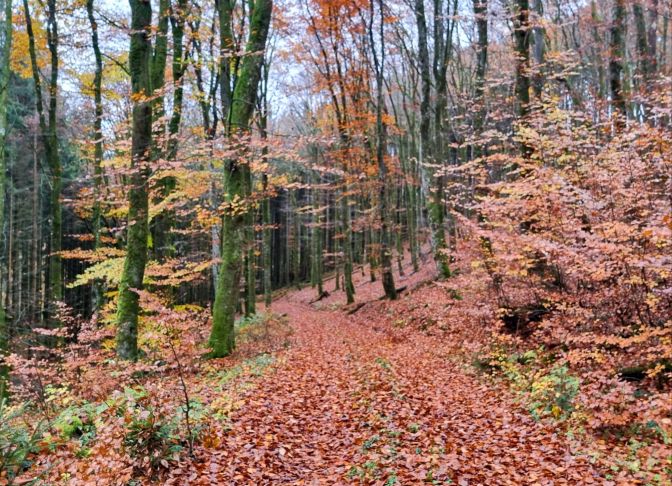
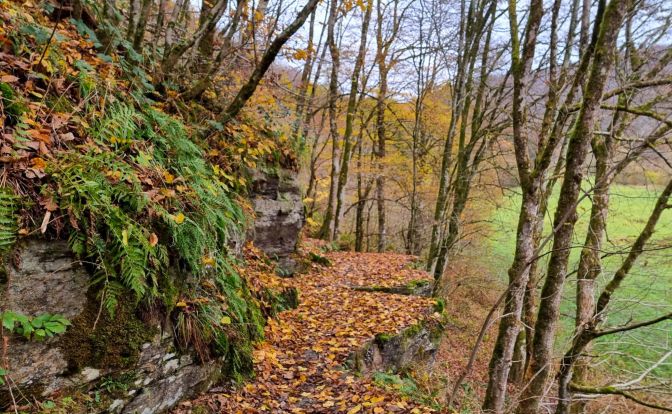
Upon reaching the highest point, the hike becomes a series of colorful forest trails hearkening back to my childhood.
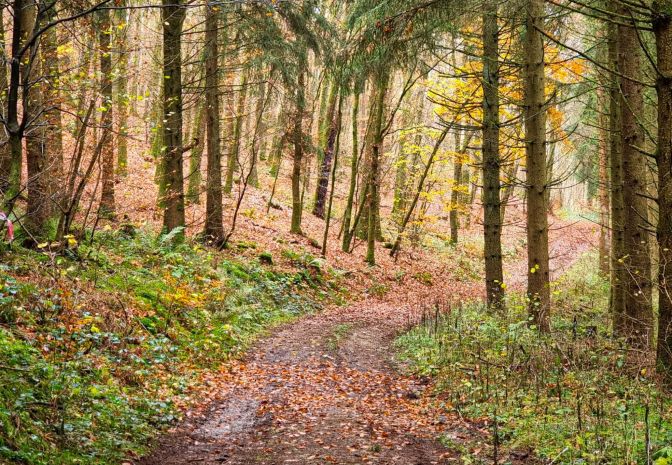
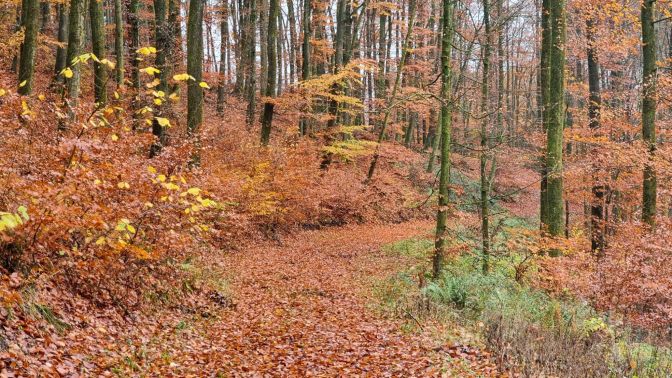
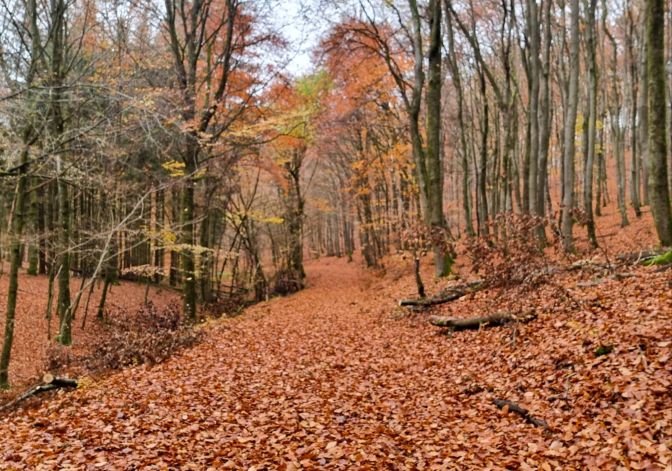
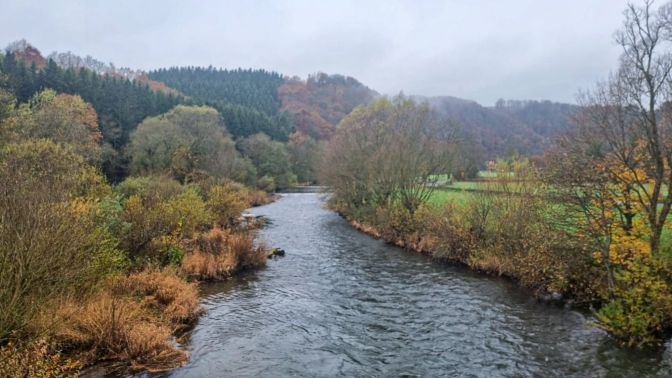
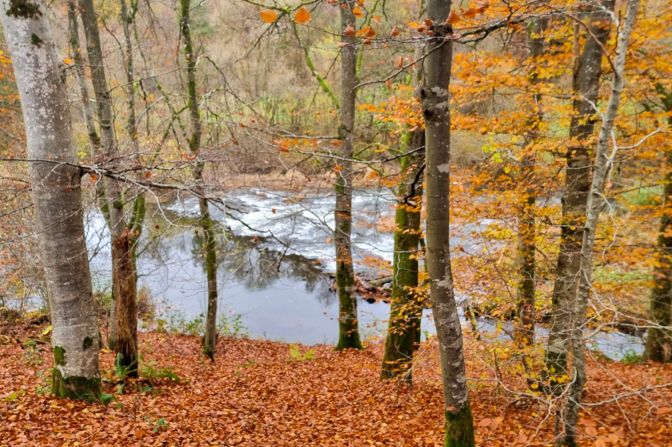
At one point, the trail comes out to a great view of the winding Our river.
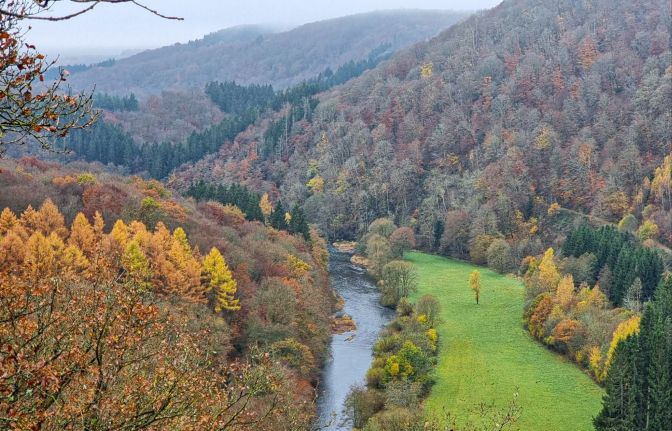
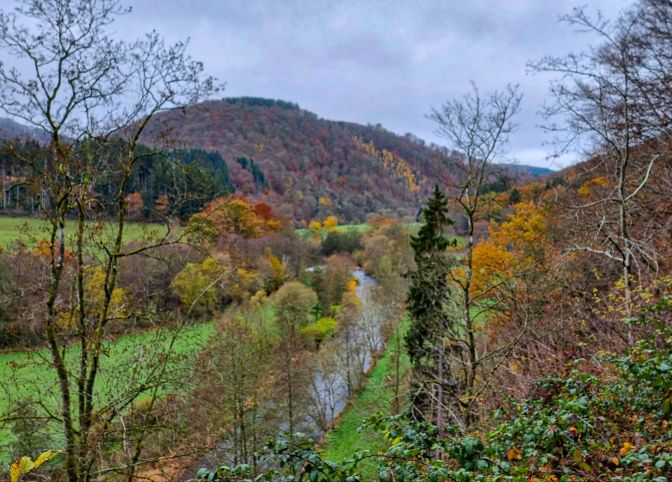
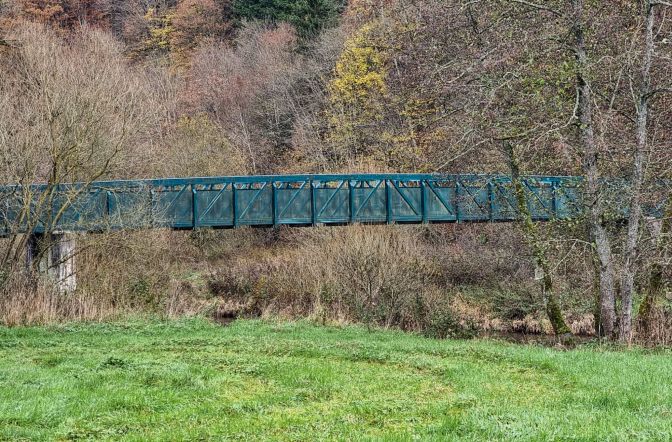
Upon descending, you reach the bridge at Dasburg crossing back over to Luxembourg where the 2nd Panzer Division was able to cross the Our. Here the hike follows closely along the Our River back north to the three-country point.
Final Remarks
There are very few hikes where I am already looking ahead to when I can redo it. This hike begs to be done earlier in the Autumn and I could easily foresee adding this to my 2026 hiking agenda. I would also like to follow the route that the 112th might have followed to get to the nearby village of Weiswampach and look for what might have been the fateful bistro. Both Ouren and Weiswampach fell back into the hands of the Germans during the Battle of the Bulge. The 112th and the rest of the 28th Infantry Division still had work to do defending the route to Bastogne through Luxembourg. This would include the stand at Clervaux, Luxembourg, referred to as the Alamo of the Ardennes by its lead defender Colonel Hurley Fuller, and then Wiltz, Luxembourg. The 28th Infantry Division made up of many residents of my home state were key in slowing down the progress of Manteuffel’s Panzer Division and in the process earned the respect and adoration of the local Luxembourg citizens. I would return to Luxembourg in April 2026 to continue the story following the days after the destruction of the Ouren bridges and the 112th’s retreat.
For more on the Alamo of the Ardennes
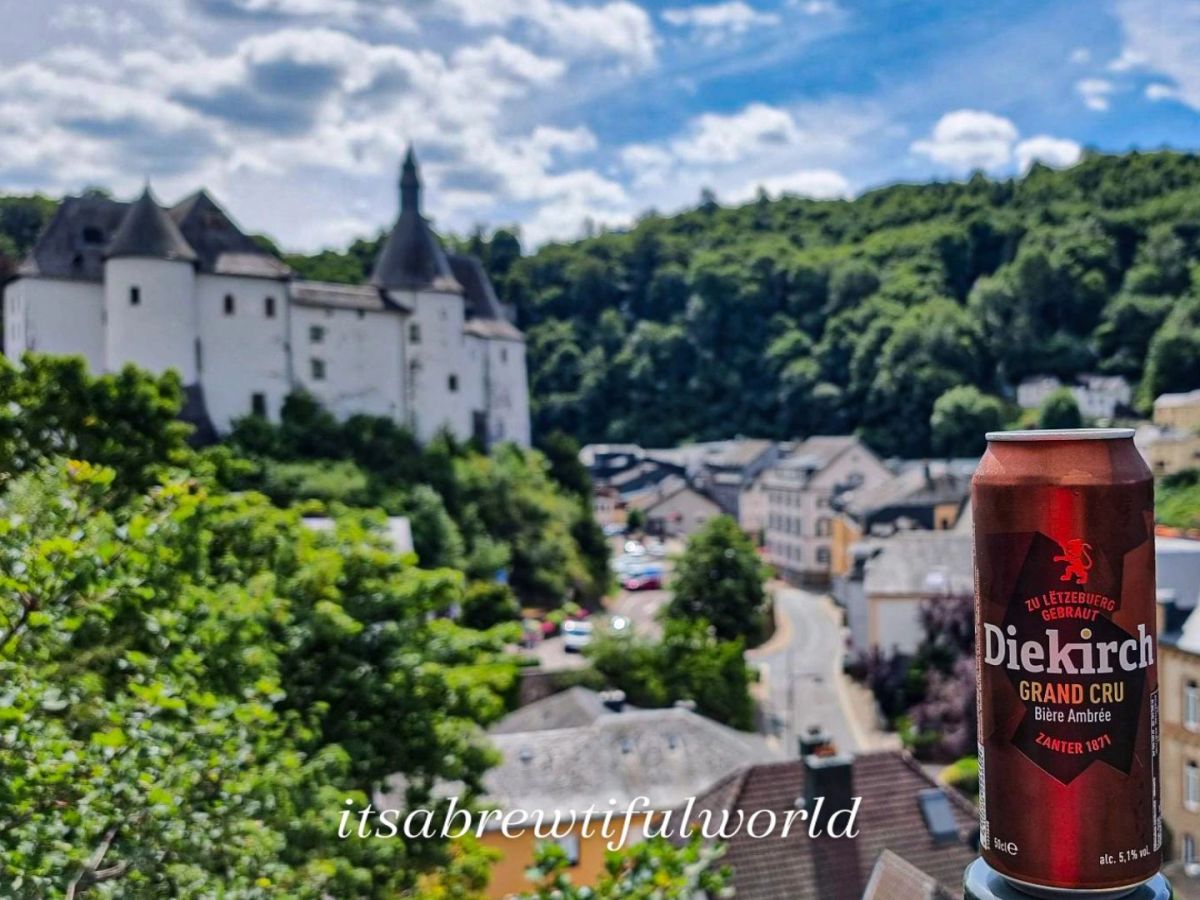
Beer & Hike: Clervaux & Brauerei Ourdaller
Beer and Battle of the Bulge, Luxembourg style
Continue reading Beer & Hike: Clervaux & Brauerei Ourdaller



 itsabrewtifulworld