
Nestled in a valley at the confluence of the Arno and Sieve rivers in Tuscany is the quiet village of Pontassieve. When you emerge from the train station at Pontassieve, you will suddenly have this feeling that you have arrived in someone’s living room. Everyone at the station seems to be traveling to or from work or school, and in just a few steps, you have emerged into everyday Tuscan life; enough to wonder if your presence here could cause some unwanted ripple effect. You stroll, like an invisible observer, until you realize that some old woman has noticed you and has already figured out you are an outsider. As you turn down the main street from the station parking lot, your initial impression will be underwhelming if you are expecting the picturesqueness of a hill town. In Pontassieve, there are no flashy piazzas or grand churches. However, with the right perspective, the charm of Pontassieve reveals itself.


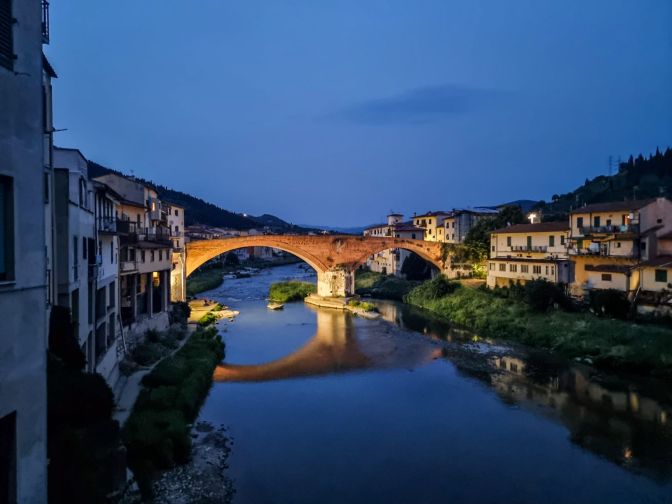
Along the Via Ghiberti, you still feel a connection to old Italy. It is the quaintest neighborhood in Pontassieve where you find cozy little delis, grocers, and cafes. In the late afternoon, the local gelateria swarms with locals seeking a cool refreshment while the rest of the street closes their shutters. Echoes of the happy gelato consumers careen off the pale yellow buildings lining the street. Otherwise, not a sound can be heard. As the street reaches the river, it bends around the last building and crosses over an old bridge or Pont. Here the Sieve river meanders towards the Arno. This feels like the center of the village’s soul.
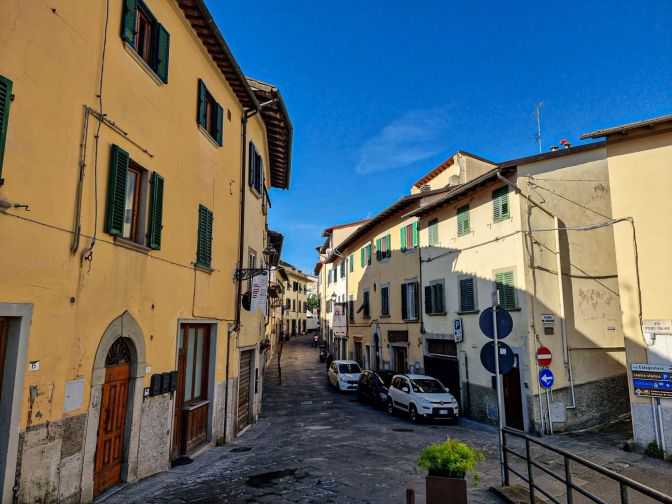

It was a delight to sit at the neighborhood wine bar, i’Mommo, not far from the bridge on Via Ghiberti and sip a local wine as I planned a hike into the neighboring hills.

It’s strategic location at the confluence of two rivers and it’s bridges made Pontassieve an important junction for trade and transport for centuries. As a result, it became a prosperous industrial village. But this also made it a target of severe Allied bombing during WWII which stripped it of most of its medieval charm. Nevertheless, being just a 20-minute train ride from Florence, I found it to be the perfect place to balance the sensory overload of Florence with the tranquil authentic Tuscan life.
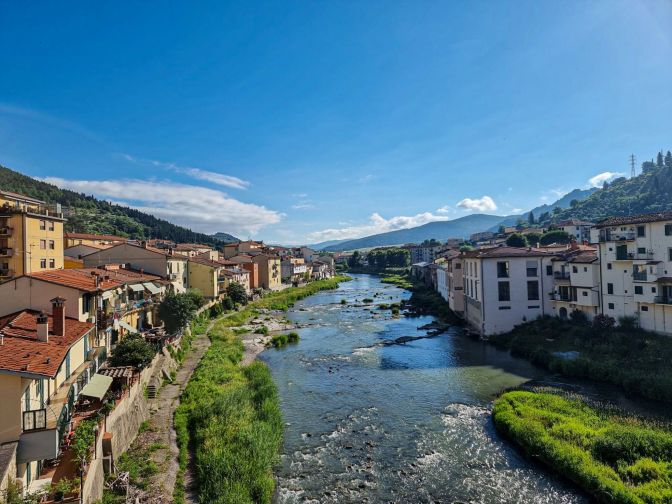

Pontassieve is surrounded by Tuscan hills and hence it is easy to take hikes directly from your doorstep. The one I planned originated surrendipitously as I was scrolling Google Maps looking for any interesting landmarks. What I discovered was a waypoint called the Montecucco Viewpoint which offers a panoramic view of Florence. This was convincing enough to build a hike around. Lacking any wow landmarks, the hike itself became the highlight, full of color provided by several species of butterflies and wildflowers. Little did I know that upon reaching Montecucco, I would discover that part of the route I was taking had historical significance. I would learn about a tragedy of World War II which involved relatives of someone whose path I was least expecting to cross while in Italy… Albert Einstein.
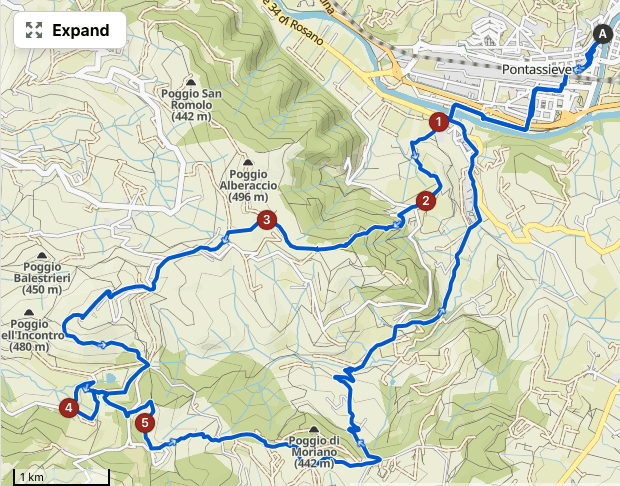
Hike Details
| Starting/Ending Point | Pontassieve Bridge |
| Distance | 25.1 km |
| My Moving Time | 5h 26m |

It’s Not Just a Beer, It’s a Journey
The soul of this hike starts with crossing the Arno River to its southern bank. Here immediately we have the village of Rosano. From this point on, if you have not packed enough supplies for the hike, the trattoria La Bottega a Rosano is the only place on this hike where it is possible to buy something to eat and drink. I underestimated my water supply and passed up the chance, but it was welcome salvation at the end of the hike.


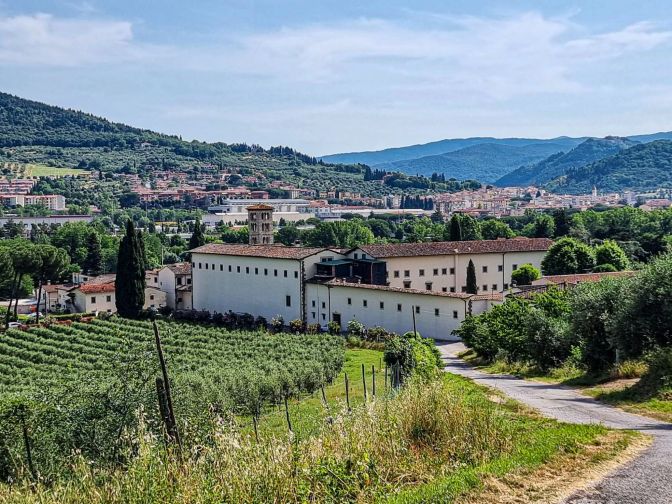
Just around the corner is the Monastero di Santa Maria di Rosano, a Benedictine monastery founded in the 12th century. It provides a provocative introduction to the hike as you look back. If you could filter out the modern world, one could imagine the relief of a pilgrim on the their way to Rome coming down from these hills and seeing this monastery.


There are a couple of small villages on this hike and the first was Prugnano and its quiet church Chiesa di San Martino a Prugnano. While charming, Prugnano is more of a collection of a few houses rather than a functioning village.

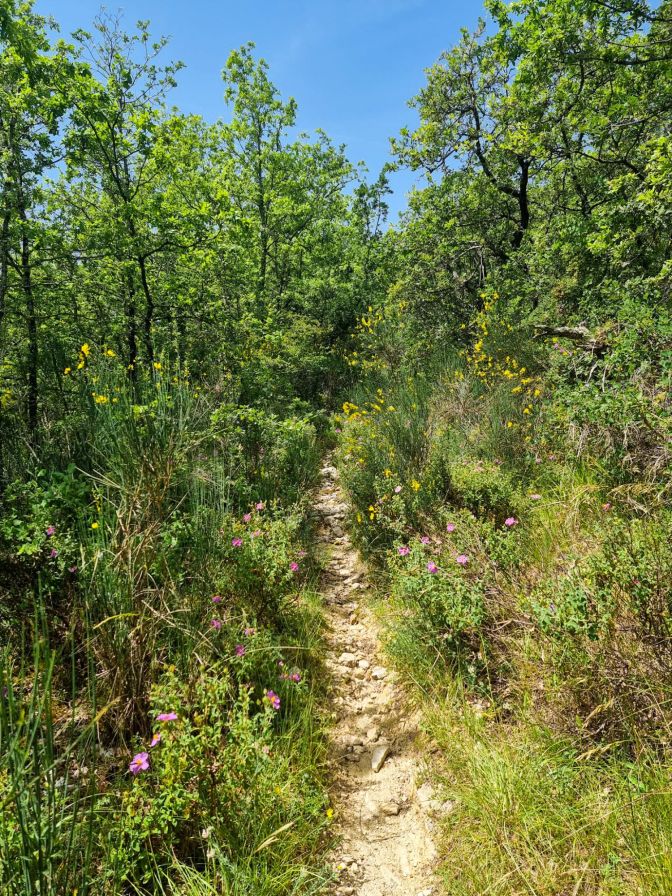
From Prugnano, the hike becomes immersed into nature. The path leads through a hilltop full of wildflowers which are a veritable butterfly garden. The air smells of jasmine. While I saw no white jasmine flowers, there were plenty of yellow Spanish broom and the Pink rock-rose. You will also find here the Madonna lily, Golden-fleece, and lots of tansies and Cantabrian bindweed.


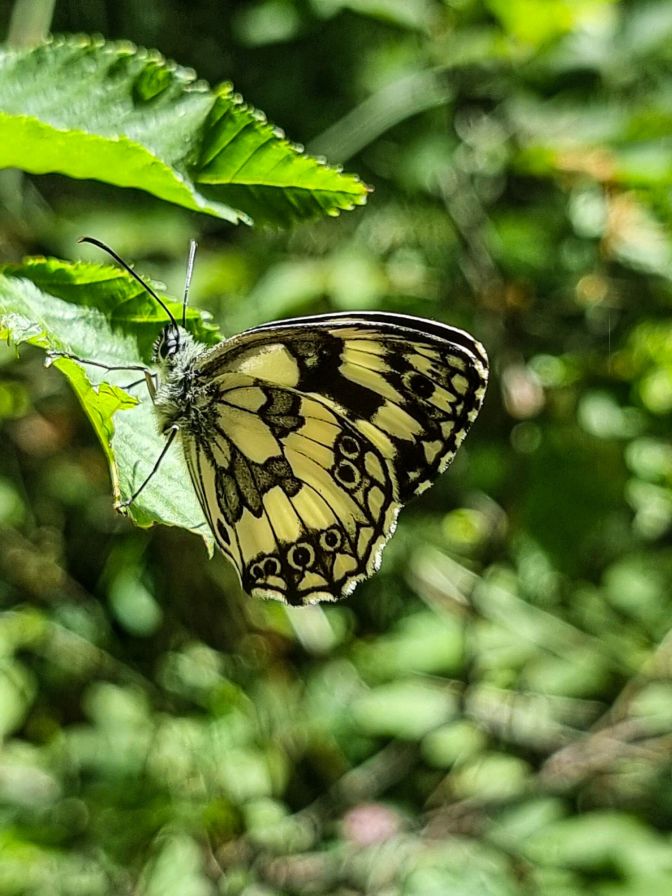
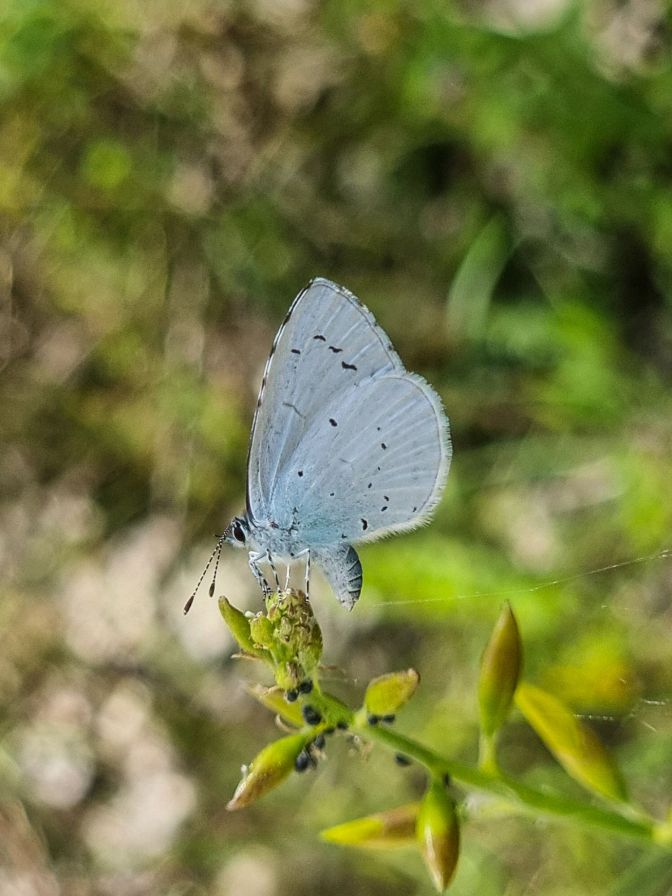
Butterfly species were numerous. Early on the hike, I managed to capture a Marbled White and Holly Blue.
A very scenic section of trail passes by another collection of houses. Here I added the Southern White Admiral to my collection.


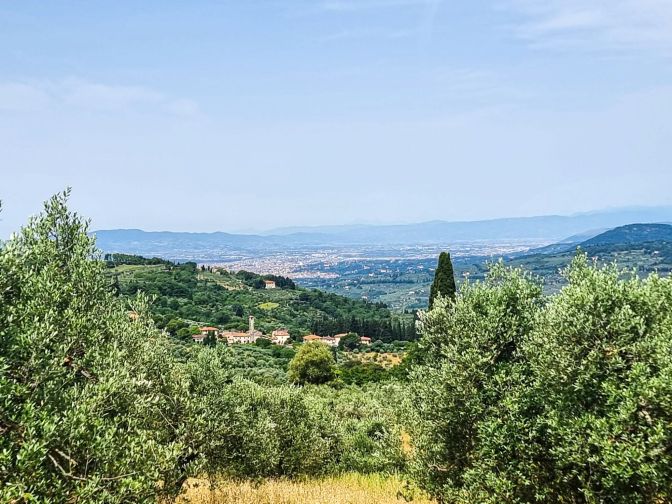
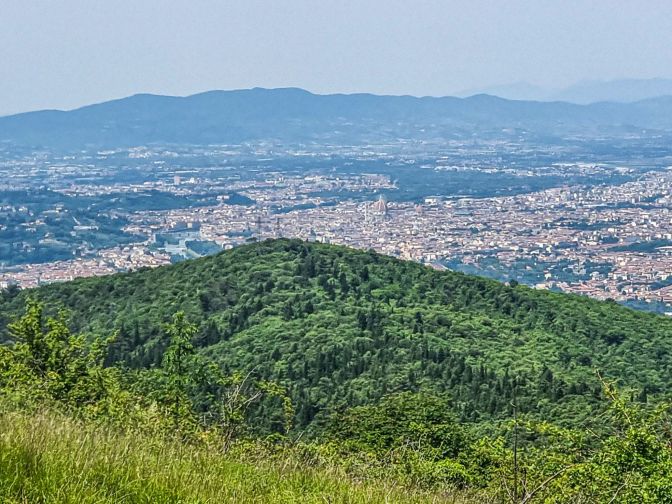
As the hike gets deeper into the hills, you start to see the metropolitan city of Florence in the distance.
Some parts of the trail become very narrow leading to frequent and close encounters with several elusive butterflies.
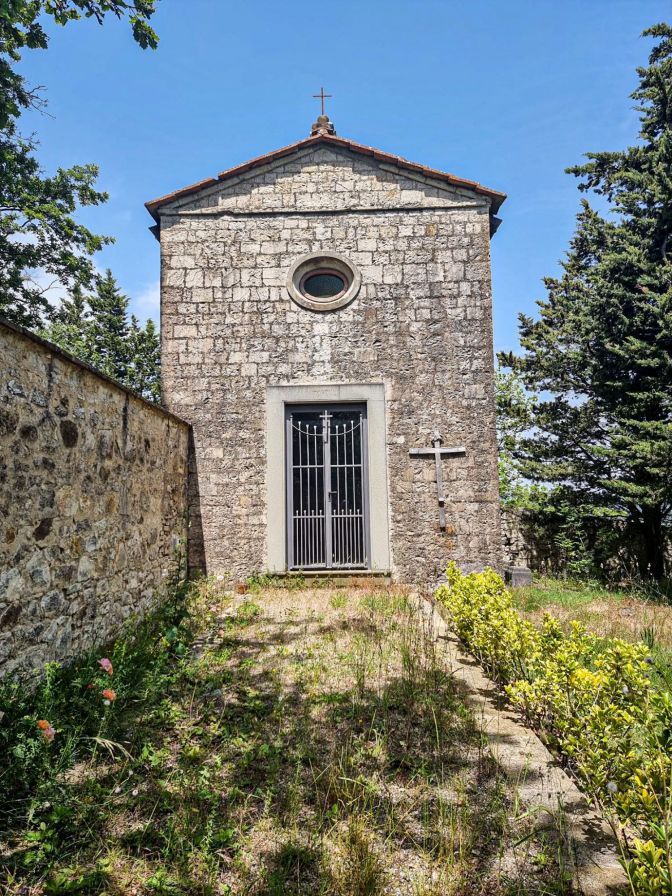
Eventually you will come out to a reclusive monastery which hides itself well. Only a small chapel at the entrance is visible. This is the Convento Dell’Incontro. Pictures of it on Google Maps are lovely, but alas, it is not for hikers and tourists to see.
Just nearby though is perhaps the best view of Florence on the hike; even better than the Montecucco Viewpoint.
The hike continues through the forest with one section of cypresses.

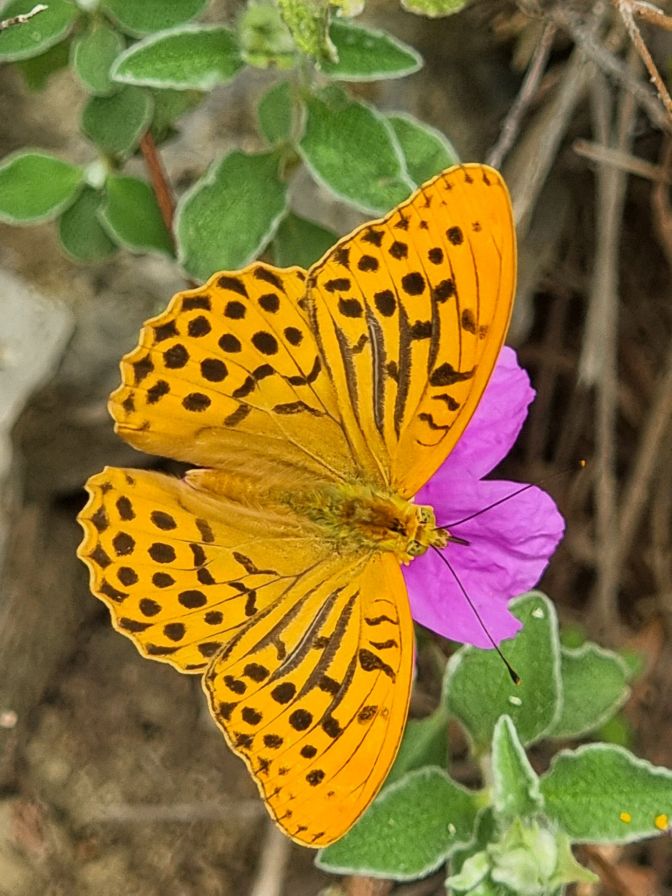
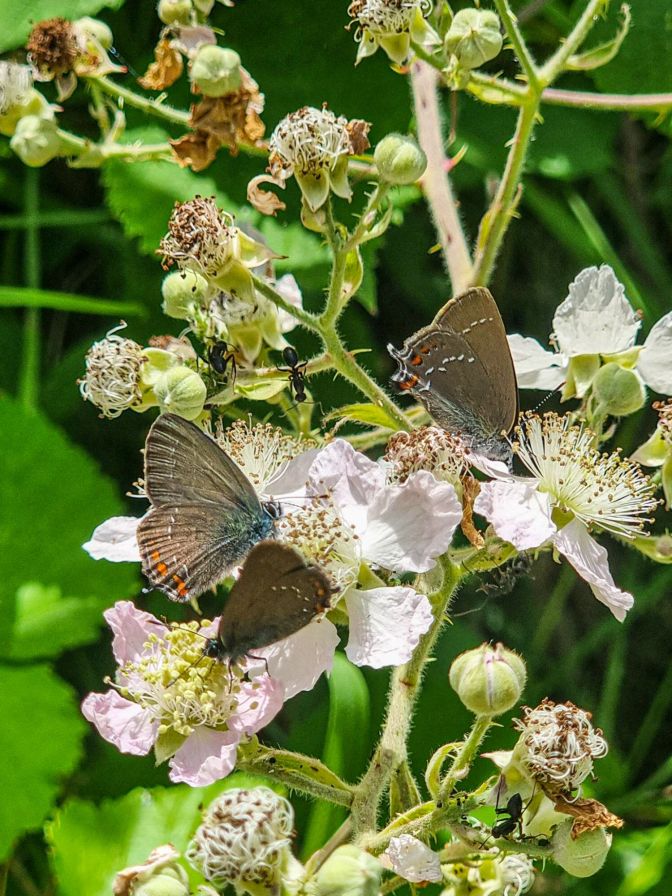
Once again, there was a serenade of different butterfly species. Here I managed to capture a beautiful Silver-washed Fritillary sitting on a Pink Rock-rose and several tiny Sloe Hairstreaks.
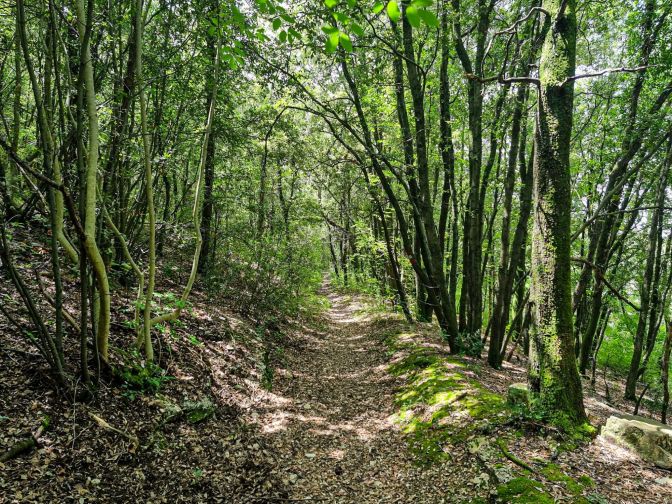

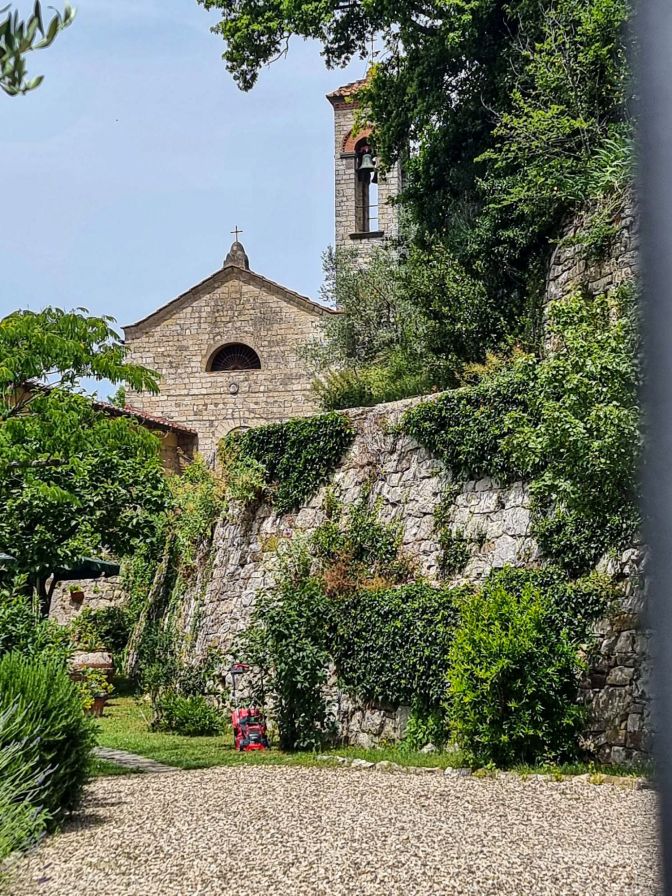
One of the landmarks I was most looking forward to seeing was the Chiesa di Santa Lucia a Terzano based on Google Maps. It sits in another small remote village. Unlike Prugnano, Terzano feels a bit more lived in, and you can see the presence of locals out tending to their yards. However the church was set back within some gated private property and was not accessible. Clearly this region does not cater to the curiousity of hikers.
The next stop on the hike would be the Montecucco Viewpoint.

The view of Florence is much more distant than the previous viewpoint. However, from the vantage point (and with a good zoom lens), you get a more complete view of the city. In the end, it is a spectacular and unique view.

Montecucco itself is basically a holiday villa. Shortly after, an information panel appears along the trail. This panel marks a memorial trail for the murders of the family of Albert Einstein’s cousin Robert Einstein on August 3, 1944. They were living in nearby Rignano Dell’Arno, and on that day, German soldiers murdered Robert’s wife and daughters while he was out. Robert discovered the bodies and attempted to gather support to find the killers and bring them to justice. However, as the war was still going on, this received no priority, and in July 1945, on his 32nd wedding anniversary, Robert committed suicide1.

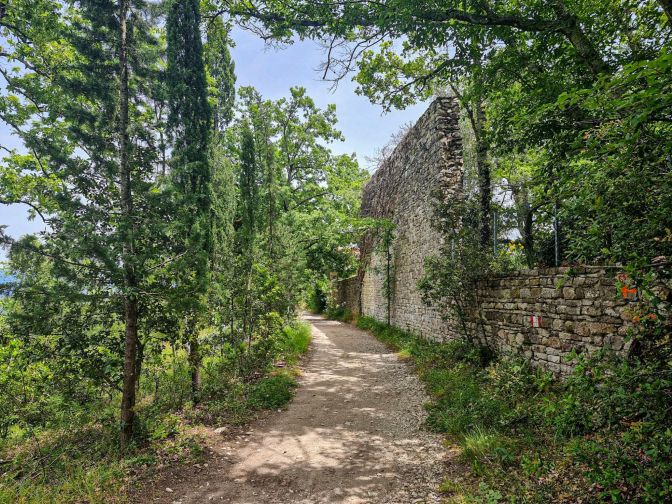
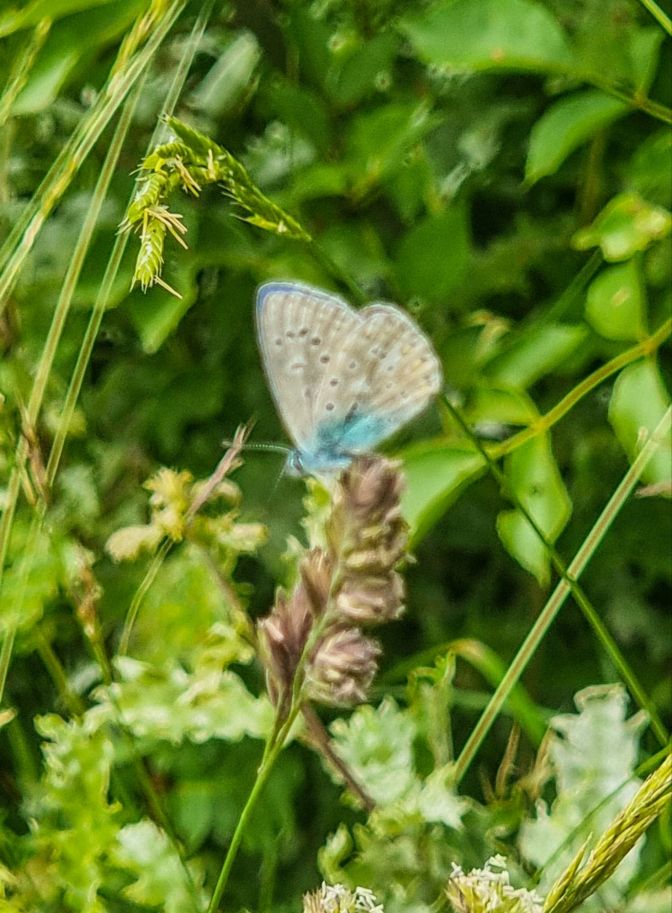
I followed this path for some time before looping back towards Rosano. I was tempted to lengthen my hike to try and make it Rignano Dell’Arno, but thought better of it. It would be an interesting follow-up hike in the future. The family is buried in Badiuzza which is also in the neighborhood. Along the way, I captured a (blurry) Common Blue Butterfly.
Final Words
By the time I arrived back to La Bottega a Rosano, I was severely rationing my remaining sport drink in the midst of a 32-degree blistering day. I bought a large bottle of sparkling water and proceeded to sit outside gulping it down. It was here I realized that I didn’t take a single beer picture on this hike. Italy and beer just based on face value seem to be odd bed fellows, yet one of the things I was looking forward to on this trip to Italy was seeing if I could find a thriving beer culture underneath its dominance as a wine country. Today was not one of those days which aided in this exploration. But what it was was confirmation that Italy is a viable hiking destination; something I almost never consider. As someone who takes interest in World War II, the Italian arena is one I don’t often find myself drawn to. However, the tragedy of the Einstein family and staying in a town like Pontassieve which was so affected by it opened my eyes to the possibilities. It was a beautiful hike and although the Montecucco Viewpoint did not live up to expectations (I would recommend exploring the viewpoint near the convent), it has to be one of the best places to view the city on a grand scale. With my thirst temporarily satiated by the bottle of water from La Bottega a Rosano, it was time to visit Florence on an intimate scale and see what beer culture it was hiding amongst all its Renaissance splendor.


 itsabrewtifulworld
💚
LikeLiked by 1 person
Wonderful description. Thank you. Stay hydrated!
LikeLike
As always, lovely write up and beautiful pictures. Thank you for sharing!
LikeLike