
“The situation and real name of Muggleton has always been a hotly debated point; many have been the speculations and many the suggestions as to the original.”
Pickwickian Studies by Percy Fitzgerald (1899)
The Posthumous Papers of the Pickwick Club or better known by its abbreviated Pickwick Papers was Charles Dickens’ big break as a young 23-year old writer in 1836. He was chosen to write a series of sporting adventures to provide a vehicle to feature a certain kind of humorous caricature art which was popular at the time. The story follows the exploits of a group of four men whose leader is the rotund gentleman, Samuel Pickwick.
After a slow start, The Pickwick Papers became a phenomenon. Dickens steered the adventures towards satire on customs and manners more than sporting activities. Several of its characters and phrases entered into the pop culture of the time. An industry of Pickwickian studies devoted itself to finding the true life inspirations for every location mentioned in the book so that fans and admirers could relive the club’s footsteps. Pickwick Clubs were formed around the world, which still exist today, trying to capture the spirit of this book. And a whole genre of travel writing was invented around Dickens’ London and Dickens’ Land. As late as Walter Dexter’s Days in Dickensland published in 1933, authors were revisiting well-worn paths, trying to discover what still existed and what had been swallowed up by changing times. I consider Dexter’s 1933 work the last great classic book on the subject before World War II came along and inflicted a heavy toll on what few landmarks still remained. The torch, however, did not stop being passed on. Today, there is some exciting new Dickensian scholarship, particularly by Dickens’ own great great great granddaughter Lucinda Hawksley and an author specializing in Victorian Times, Lee Jackson.
In Chapter VII of the Pickwick Papers, the club were visiting a town called Muggleton to witness a game of cricket. It makes its first appearance as the gentlemen arrive into the city center:
“Mr. Pickwick stood in the principal street of this illustrious town, and gazed with an air of curiosity, not unmixed with interest, on the objects around him. There was an open square for the market-place; and in the centre of it, a large inn with a sign-post in front, displaying an object very common in art, but rarely met with in nature—to wit, a blue lion, with three bow legs in the air, balancing himself on the extreme point of the centre claw of his fourth foot.”1
In earlier chapters, the Pickwick Club had been spending their time in Rochester, a real place. What frustrates Dickens fans is that suddenly the story enters a fictitious world, yet it is natural to assume that an imaginary place cannot simply be an abstract creation but a real place adapted to fit the story. Every detail given by Dickens in the story, such as walking distances, driving distances, and physical descriptions have been pored over relentlessly. Maidstone is the largest city in Kent and therefore best fits the description of an “illustrious city” but it doesn’t sit next to a cricket site; whereas West Malling is a small village but is known for its large cricket field. Neither of them have an inn called The Blue Lion. But they both have inns which could easily have given birth to it.
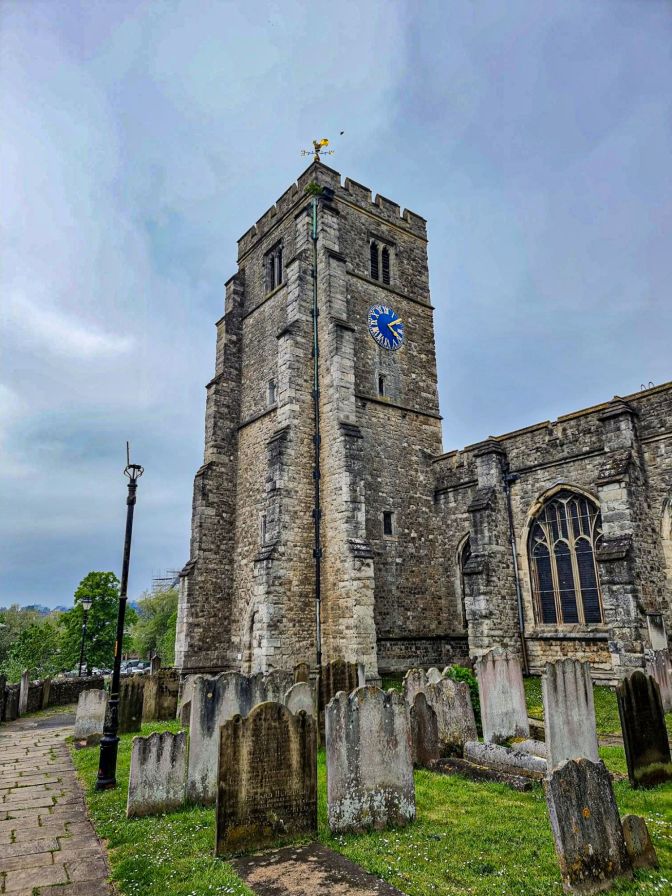
This is the crazy and admittedly nerdy world of Dickensiana that I was indulging in as I set out on my own Pickwickian adventure of discovery starting from the All Saints Church in Maidstone.
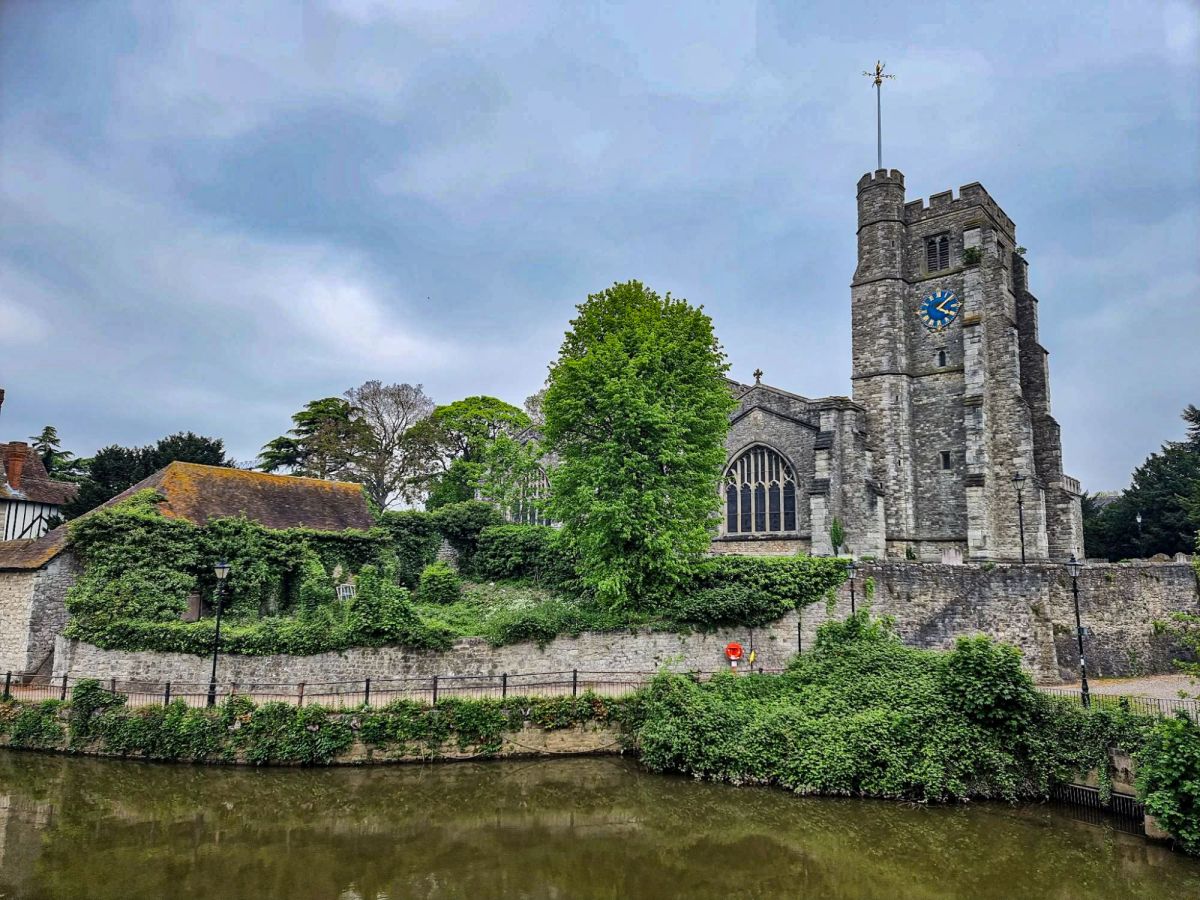
Brewtiful Maidstone
In search of Muggleton and getting my yearly dose of English bitters.
Continue reading Brewtiful Maidstone

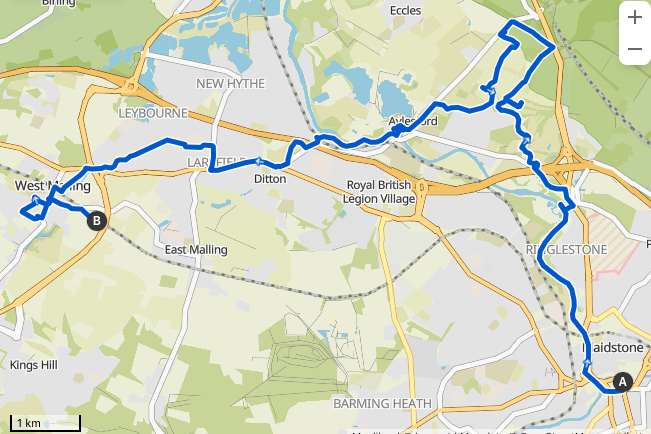
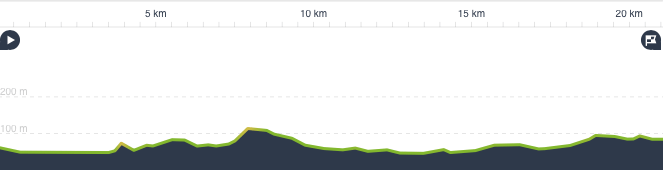
Hike Details
| Starting Point | All Saints Church Maidstone |
| Ending Point | West Malling train station |
| Distance | 21 km |
| My Moving Time | 4h 16m |
It’s Not Just a Beer, It’s a Journey
From All Saints, the hike follows the Medway River, first passing by the Archbishop’s Palace which used to be where the Archbishop of Canterbury would stay on his way to and from Canterbury.
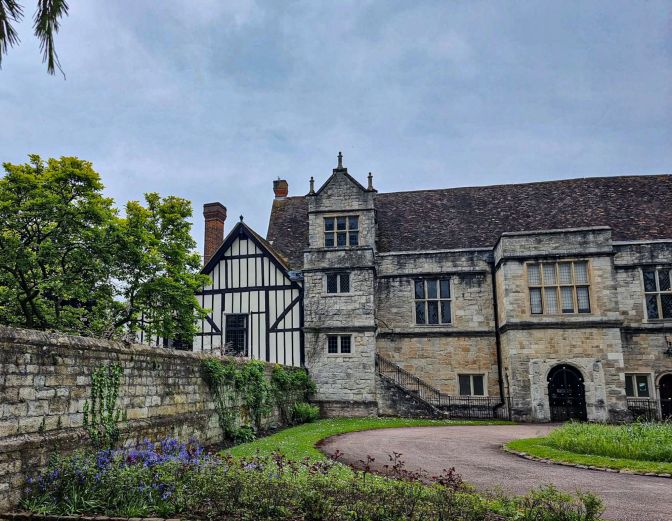
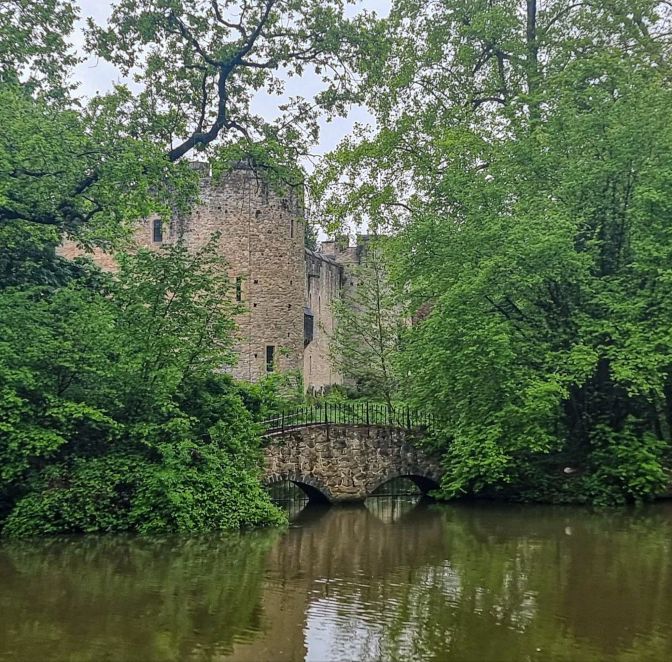
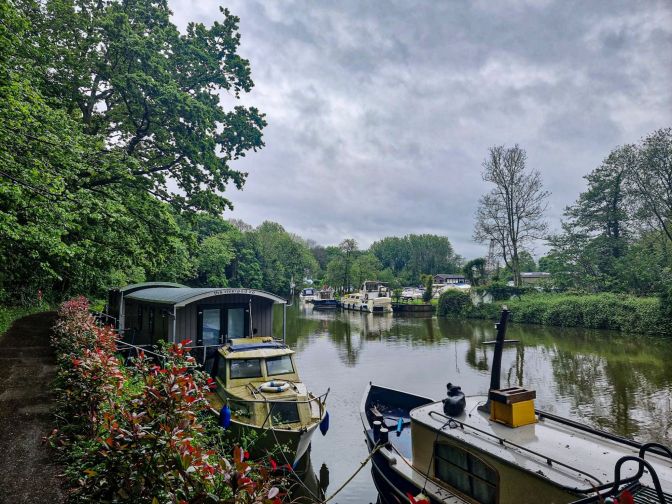
The way along the Medway is a peaceful stroll with the occasional cyclist or walker. Eventually you reach the opposite bank of Allington, with its castle peeking out between the trees.
“Ah, grey old castle of Allington, green field
from Queen Mary by Alfred Lord Tennyson (1875)
Beside the brimming Medway, it may chance
That I shall never look upon you more.”
Cobtree Manor Park
“Cobtree Hall… is an Elizabethan structure of red brick with stone facings prettily covered in a beautifully wooded and undulating country overlooking the Medway and surrounded by cherry orchards and hop gardens.”
A Week’s Tramp in Dickens-Land by William R. Hughes (1891)
When the Pickwick Club arrived in Muggleton, they were visiting from a nearby manor where they were staying called Dingley Dell, also a fictitious place. However, Dickens’ scholars believe that Cobtree Hall was its inspiration. Today the cherry orchards and hop gardens are replaced by a golf course and an adjacent park. Whether the actual Elizabethan manor still exists is unclear looking through photos on Google maps.
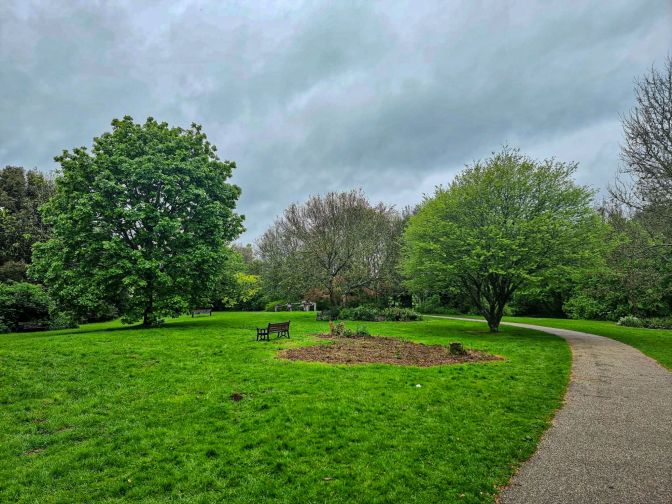
The path through the park merges on both sides with the path following the boundary of the golf course. The British are avid walkers, but my experiences carrying over from last year are that their marked footpaths are not always reliably traversable without something like overgrown stinging nettles, or paths swallowed up by farmland growth, or what I was about to confront as I was making my way past the park. I stood there confronting a shoe-defying morass of horse-trodden No Man’s Land masquerading as a footpath. I realized that my idyllic tramp was about to turn into a test of wills and balancing ability as it forced me to play a sadistic version of hopscotch trying to avoid sinking my shoes into craters of mud accumulated from a rainy Spring and exaggerated by the disturbance of horse’s hooves. Nothing made me check the map on my phone. I made it about 300m or so before the calculations in my brain didn’t add up. There should have been a turn off already. That was when I discovered that my man-sense had failed me, and I was not on one of those unreliable footpaths after all. But rather, I had missed a turn right before the mud horror began. Not only did I have to retrace my steps through the muck and mire, but the whole nightmare experience was unnecessary to begin with. Right where I missed my turn, the dry path connected up to a road. My shoes were in bad shape and my lower pant legs were one-and-done on this trip. This would not be the last time I would be cursing on this hike.
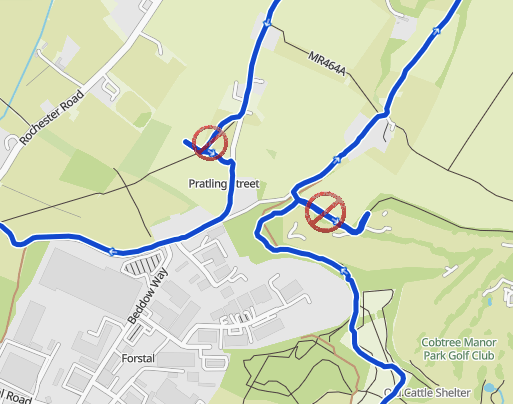
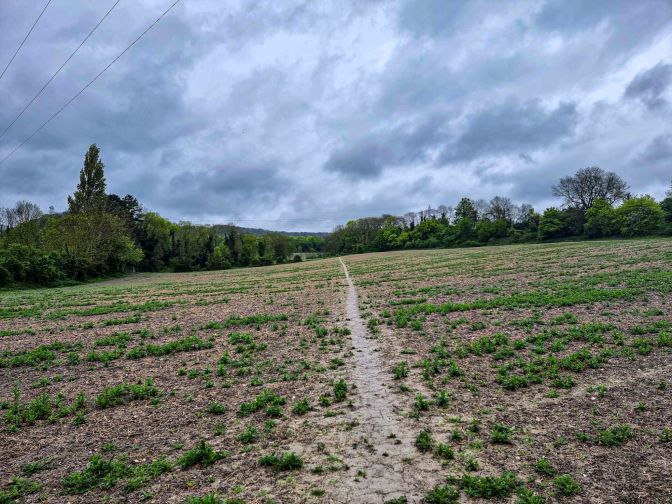
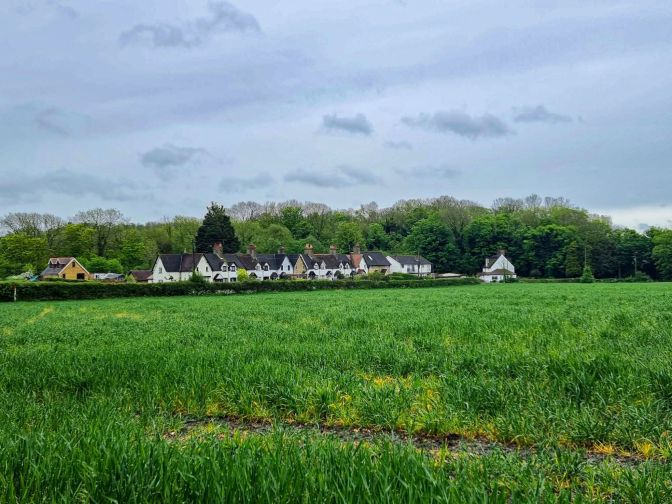
After getting back on track, the hike passes through a lonely series of quaint houses before the route opens up into a large set of fields.
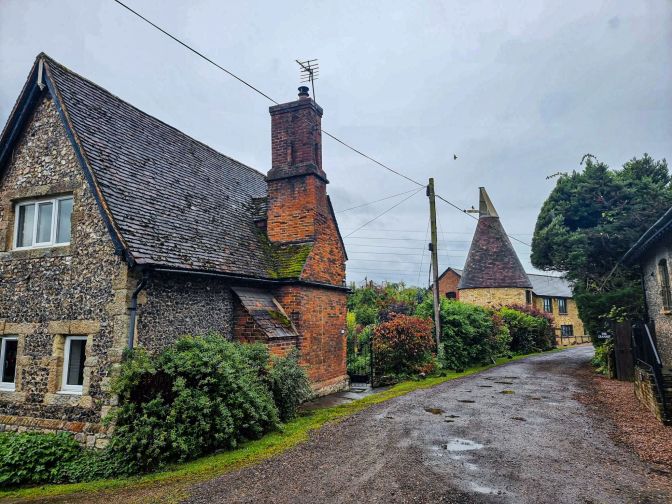
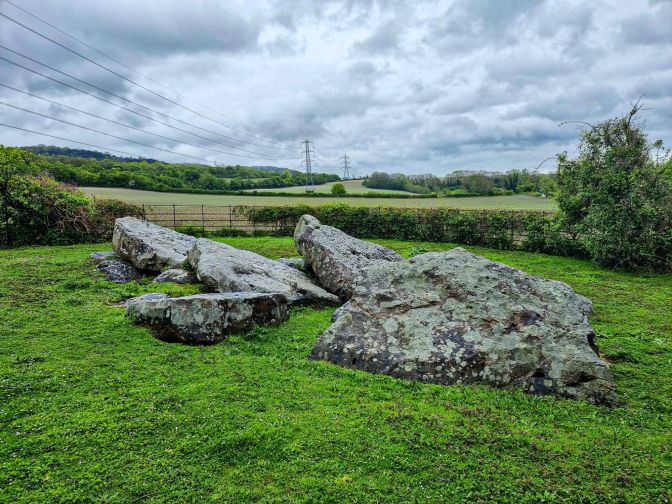
Little Kit Coty’s House
These stones are the remains of a long barrow tomb from around 4000 BC.
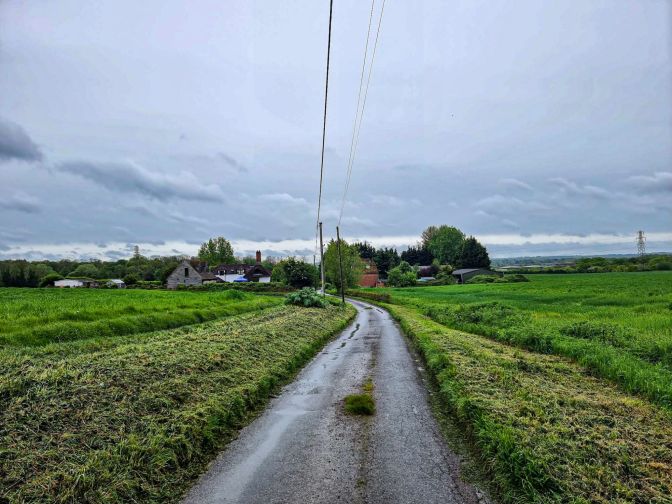
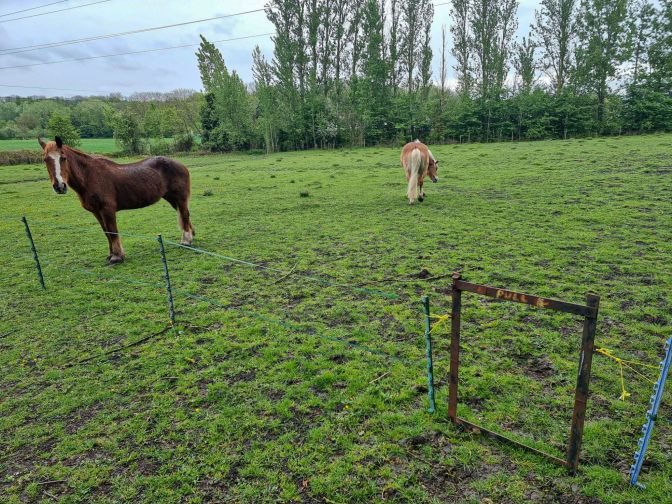
On the way toward Aylesford, the mapped route leaves the road and crosses through a farm field rather than staying on the road. The initial part passing by a couple of curious horses was fine, but as I emerged into the field, the mud was so thick and sticky that it collected on my shoes until it was like walking with cinderblock snowshoes. I cursed mud for a second time and decided to skip the scenic route and stay to the road.
Aylesford
Perhaps even more than West Malling, the place I was looking forward to the most on the hike was the picturesque village of Aylesford which sits on a bend in the Medway. There were two pubs on my list.
The Chequers Inn
It was an unfortunate break that The Chequers Inn was recently closed due to the death of the owner.

This was my intended lunch spot, but food would have to wait. Beer, on the other hand, didn’t have to.
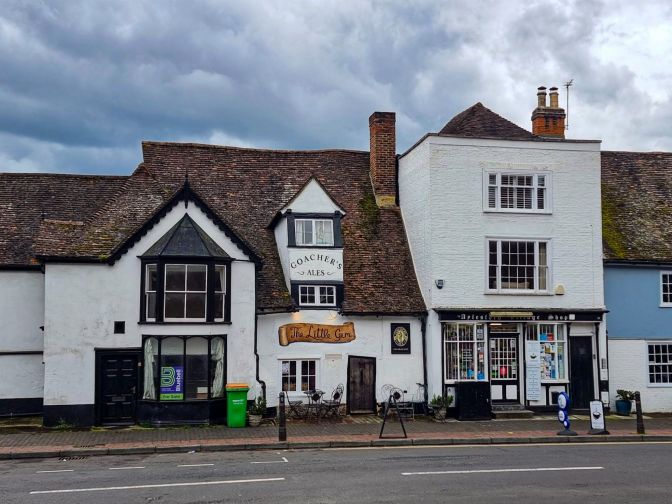
The Little Gem
The name says it all. Easily the coziest pub that I would visit on the whole trip. This is the type of place that makes you hope for a cloudy, dreary day in order to sit inside its warm confines. The beer selection features the Goacher’s Ales, and its ambience is unmatched. You not only step back in time when you enter, but you soon find yourself waylaid for over two hours chatting with the locals, while telling yourself you can have one more despite an empty stomach. One local shared his adventure when he was barely in his 20’s driving a bus full of old ladies all the way from England to India. Now in his late 70’s, his eyes twinged with regret as he mentioned how he has been putting off writing a book about it for years. Imagine the stories that could be told of such a journey; the challenges of finding places to sleep, exchanging currency, buying food, giving bribes, navigating with paper maps, dealing with the dangers of bandits and bad roads, and most of all listening to the constant din of persnickerty and chatty old ladies who constantly had to go to the bathroom. I would be first in line to buy it, I told him.
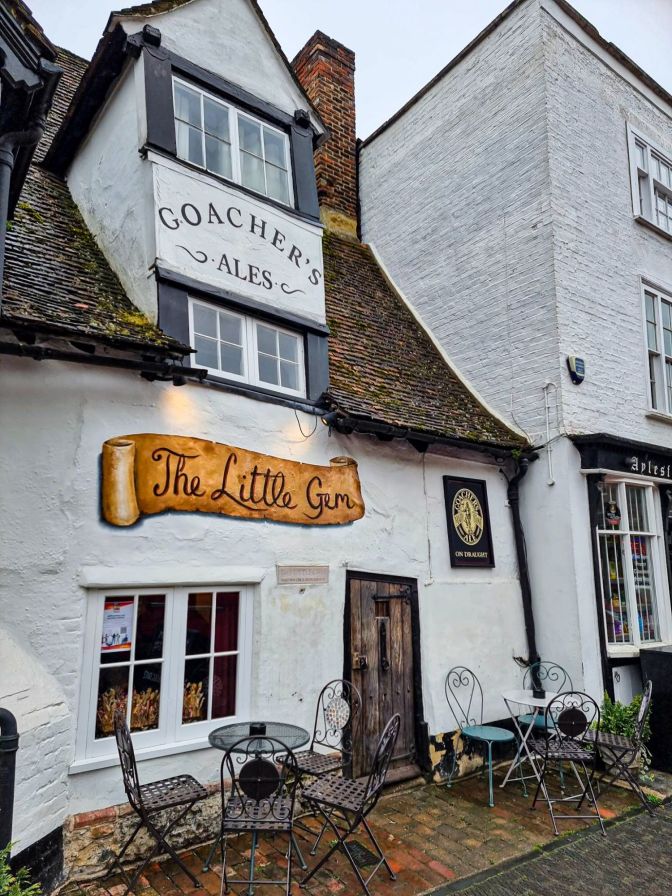
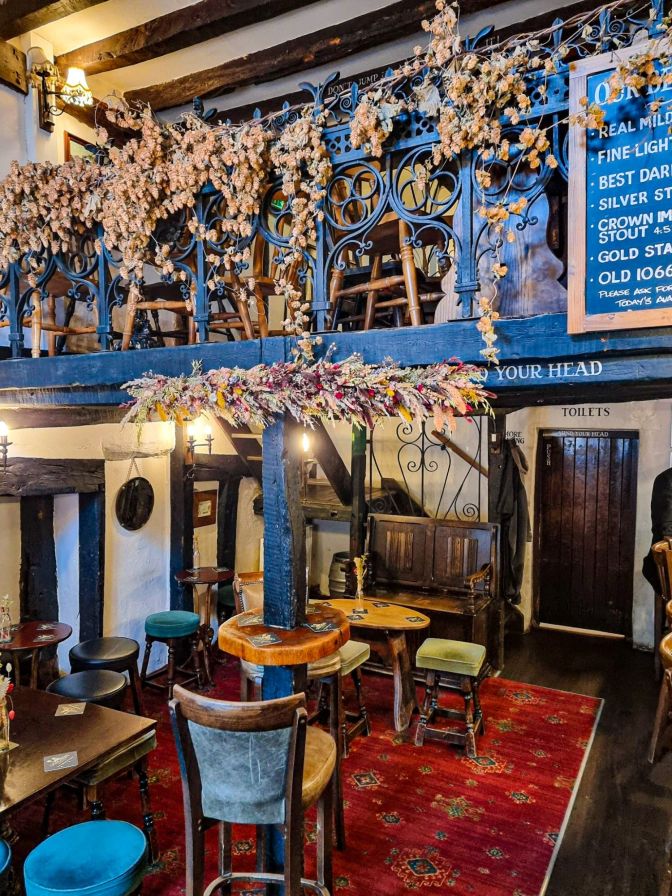
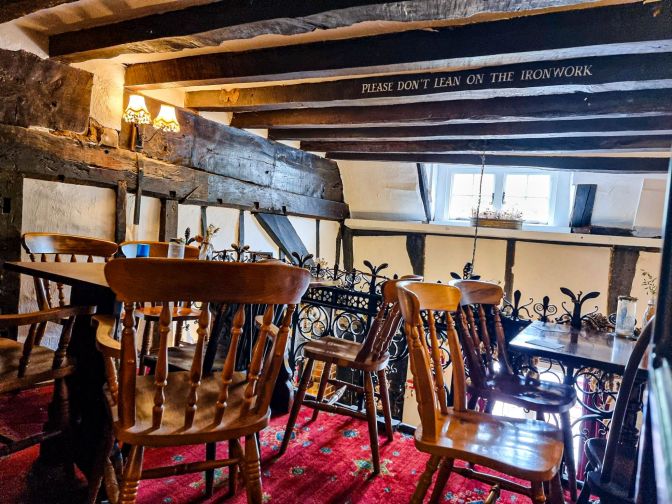
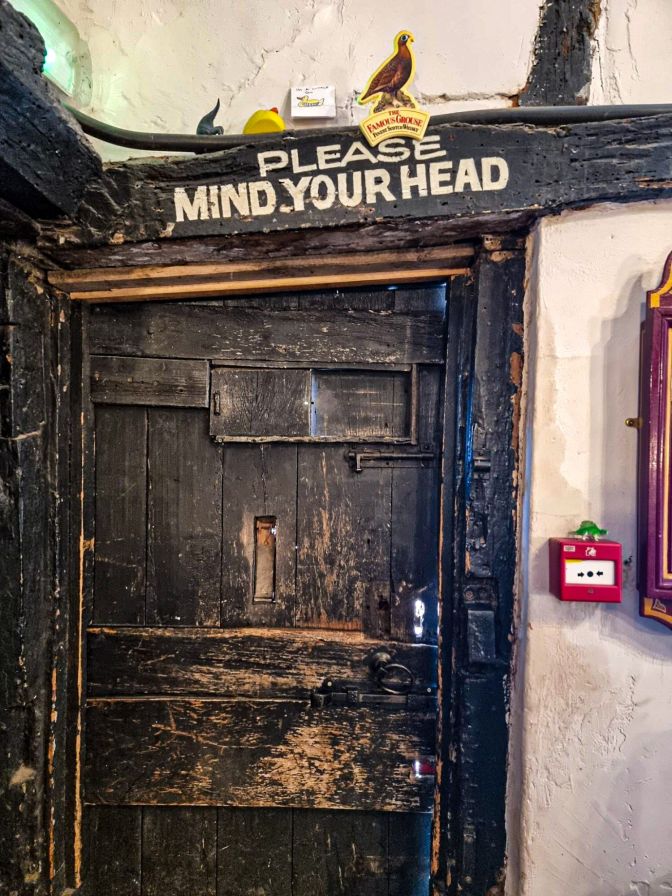
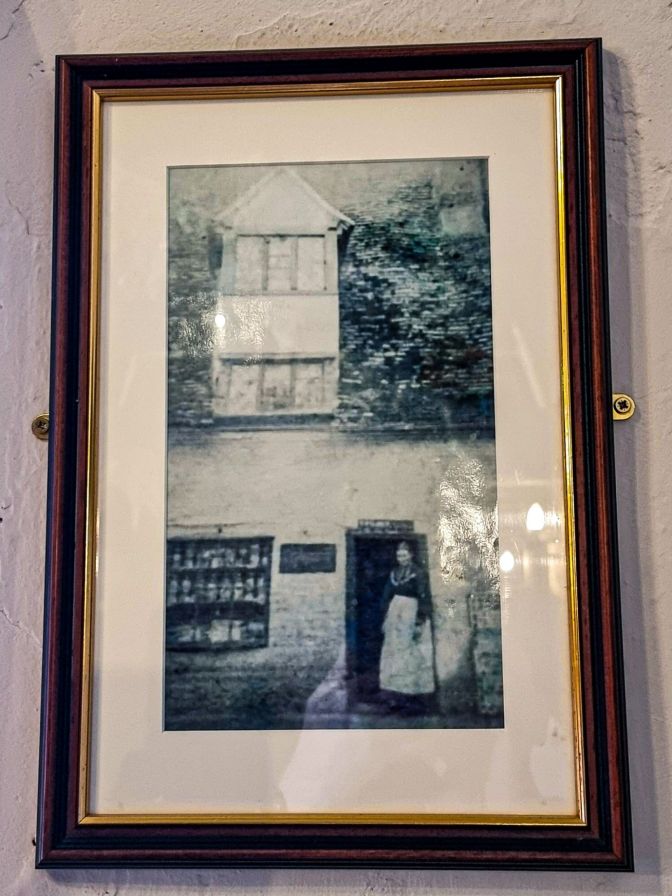
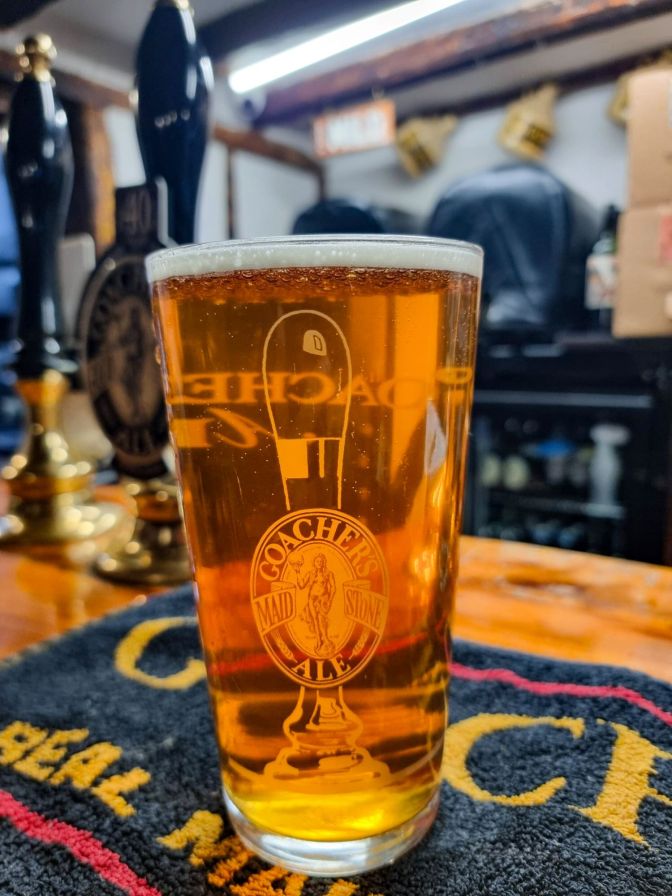
After convincing myself I should not prematurely end my hike in Aylesford (although it was tempting to keep drinking more Goacher’s Ale), I cleared my head with a short walk up to the church and then started toward the village’s historic bridge.

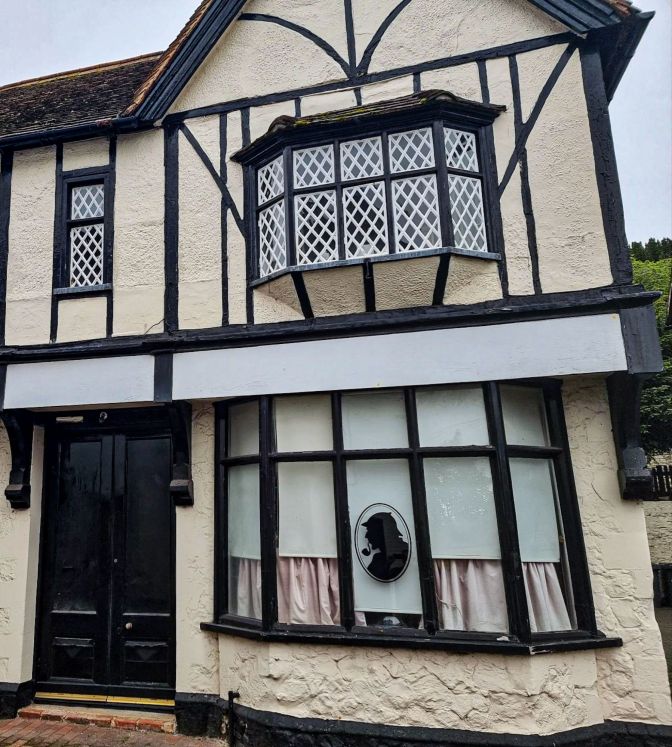
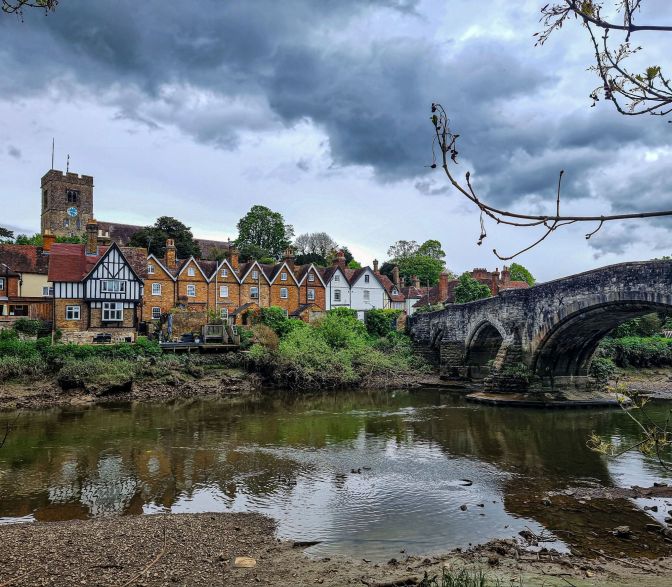
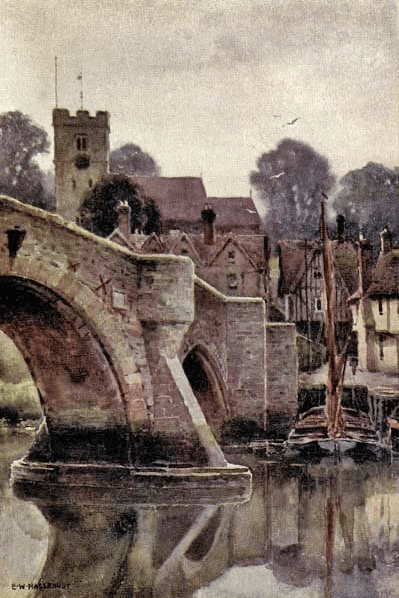
Aylesford Bridge
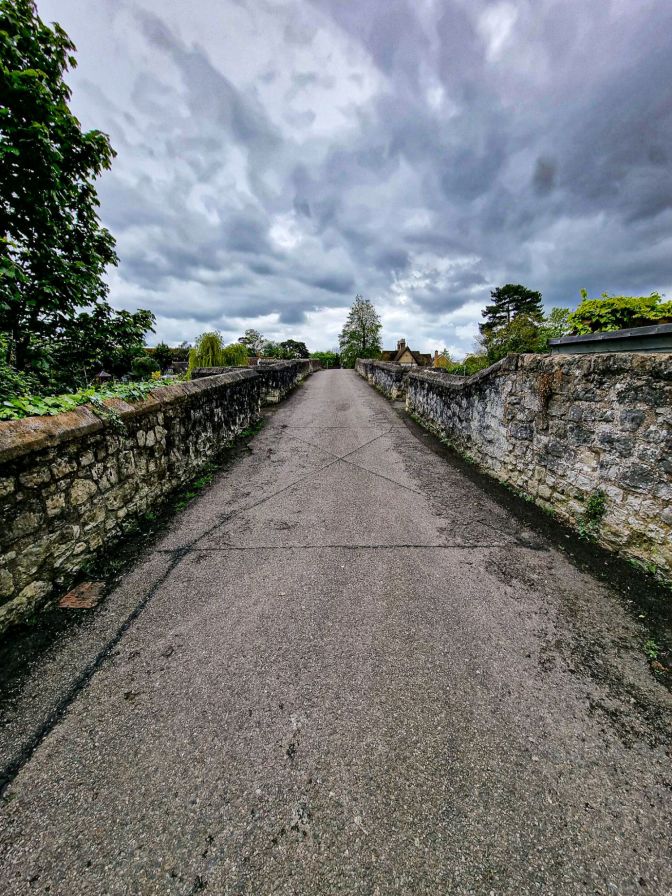
The beauty of the bridge requires no Dickens link to appreciate. However, it does have a dubious connection to the Pickwick Papers which is representative of how far Dickens’ pilgrims have gone to associate every location in Pickwick Papers to a real place.
“…the river is spanned by an ancient stone bridge, of pointed arches and triangular buttresses, at Aylesford. The ancient Norman church, and the red roofs and crowding gables of the picturesque and historic village, are set in a circle of elm trees, with a background of rising chalk downs beyond. Those who have investigated with perhaps “an excess”—as Wordsworth would say—”of scrupulosity” all the details of Pickwickian topography are inclined to believe that the wooden bridge, upon which the chaise hired by the Club to make the journey from Rochester to Dingley Dell came hopelessly to grief, was Aylesford Bridge, transmuted for the nonce from Kentish ragstone into timber. ”
The Dickens-Land by John A. Nicklin (1911)
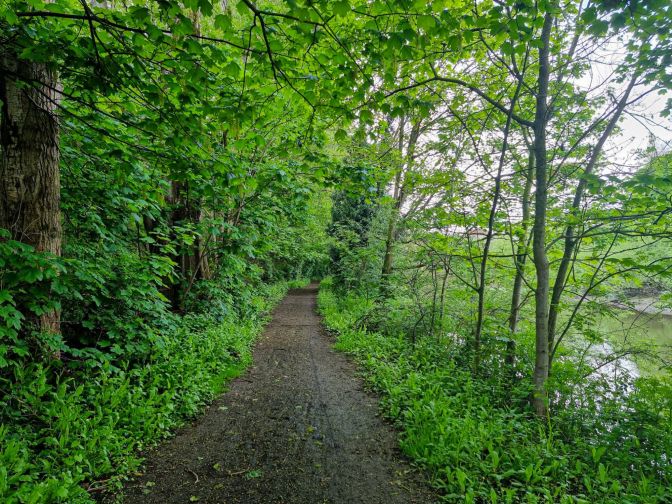
After a short stretch following the Medway, the hike veers into a rather uninteresting walk through the city of Larkfield. I did have two pubs on my list, but as I had sacrificed a lot of time at The Little Gem and had promised my stomach to hold out until West Malling, I didn’t stop for a drink.
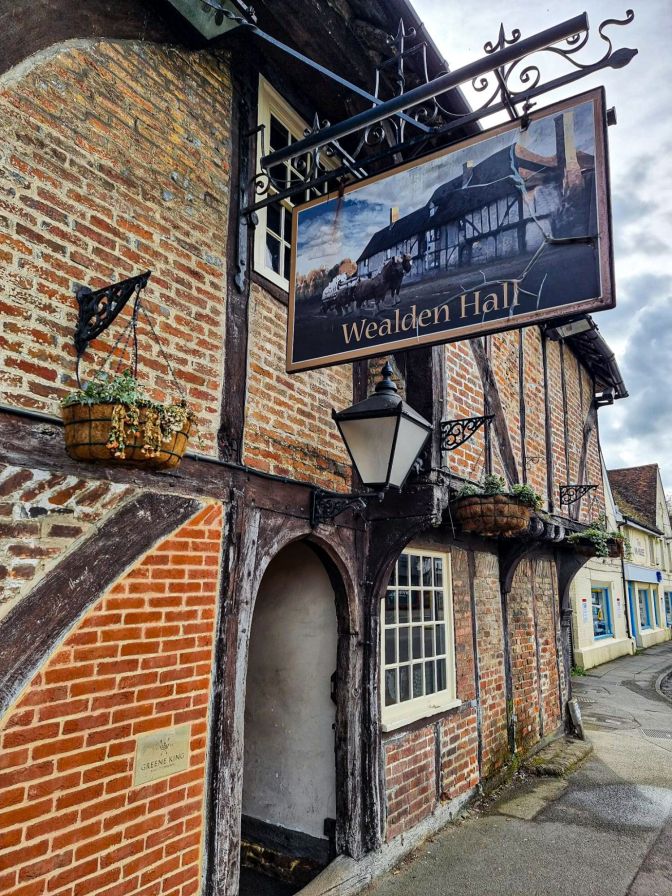
Wealden Hall
Very attractive pub and restaurant from the outside. Looks like the place to go in Larkfield. I regret that I didn’t have a quick look inside.
Monk’s Head
I had high hopes that this would be a hidden highlight of the hike, so I took a peek inside. Not to take anything away from the establishment, but the tap selection was ordinary, so I continued on to West Malling. It is a nice locals hangout. No more, no less.

I then came upon the sign of the city outside the fire station. There above Wealden Hall, proudly displayed are a couple pristine rolls of toilet paper. It was like England has Larkfield to thank for its toilet sanitation, occasional nose-blowing convenience, and dead spider extraction. In actuality, it is the local Kimberly-Clark factory.

Between Larkfield and West Malling, there was one final stretch of scenery.

West Malling
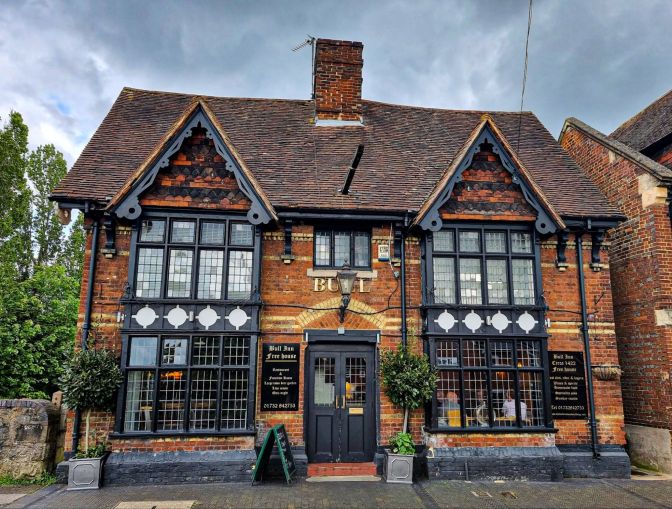
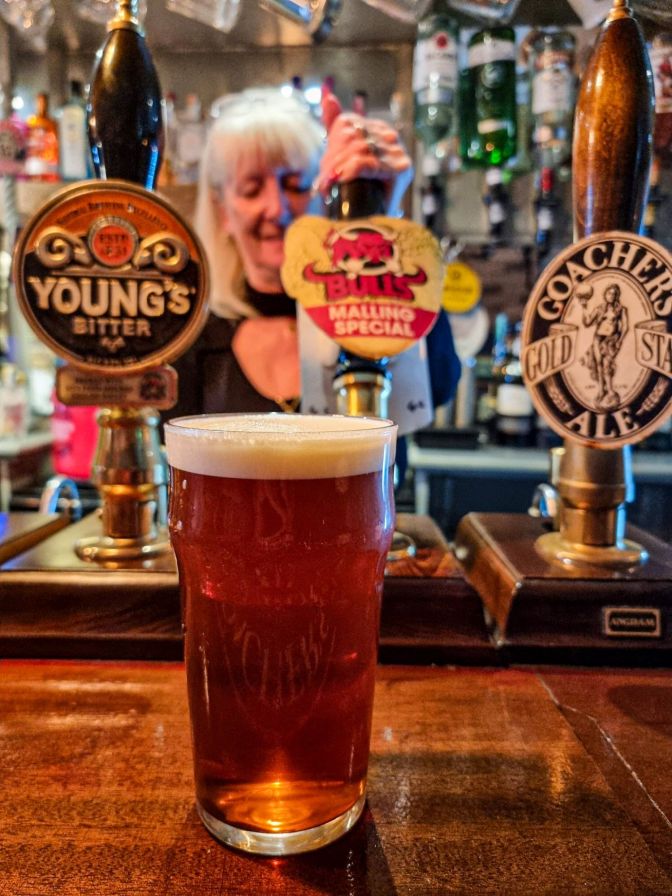
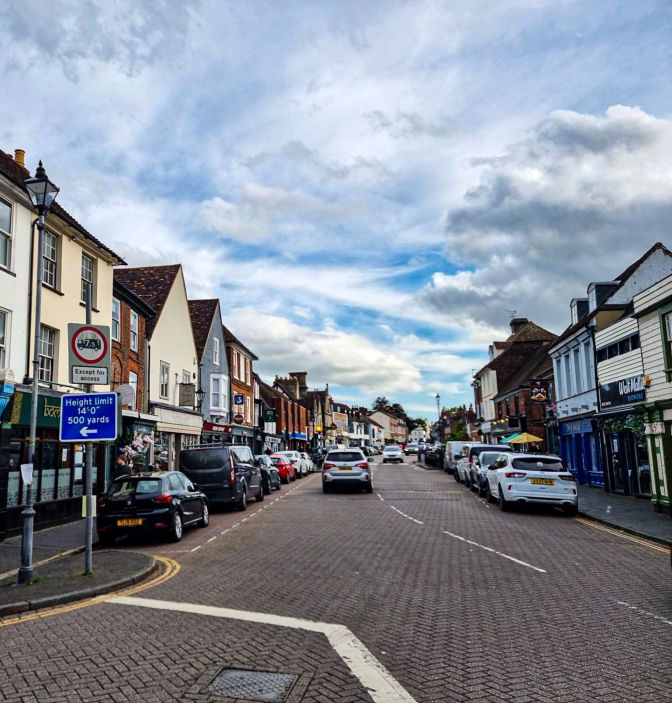
Arriving in the other Muggleton, Dickens was the furthest thing on my mind. Footsore and starving, I stood before The Bull Inn which seemed to give me a welcoming smile; it’s upper windows like two big bright eyes urging me to enter and have a hearty meal of bangers & mash and a couple of beers, including their house beer, the Bulls Malling Special bitter.
The Bull Inn
This was recommended to me back in Maidstone, and it did not disappoint. It was happy hour and the place was buzzing with local business men. They had a great selection on tap, and I could have easily spent couple hours or so sampling them. But I had one other drinking spot I wanted to visit.
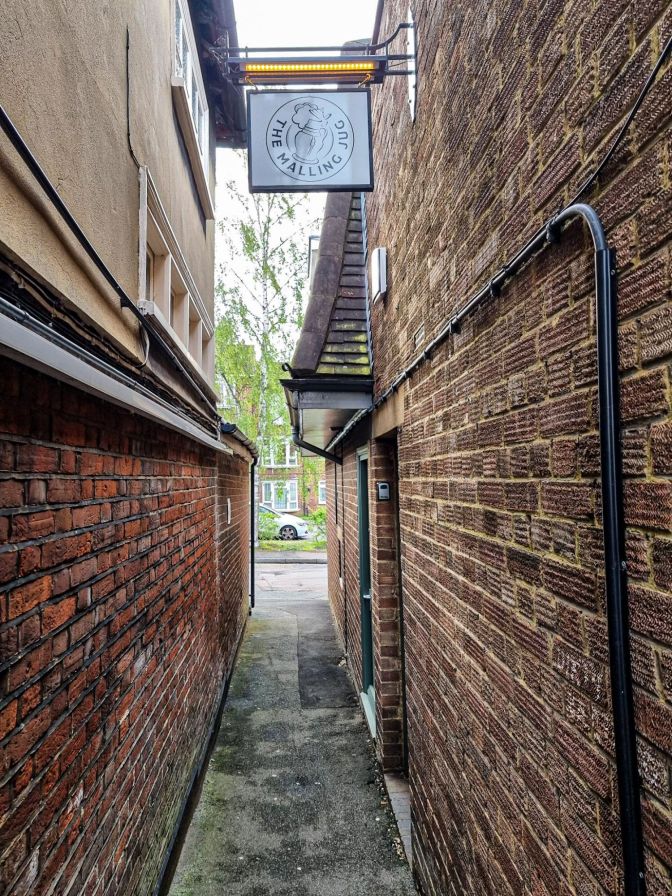
The Malling Jug
This quaint little side alley joint is a craft beer bar serving mostly regional ales.

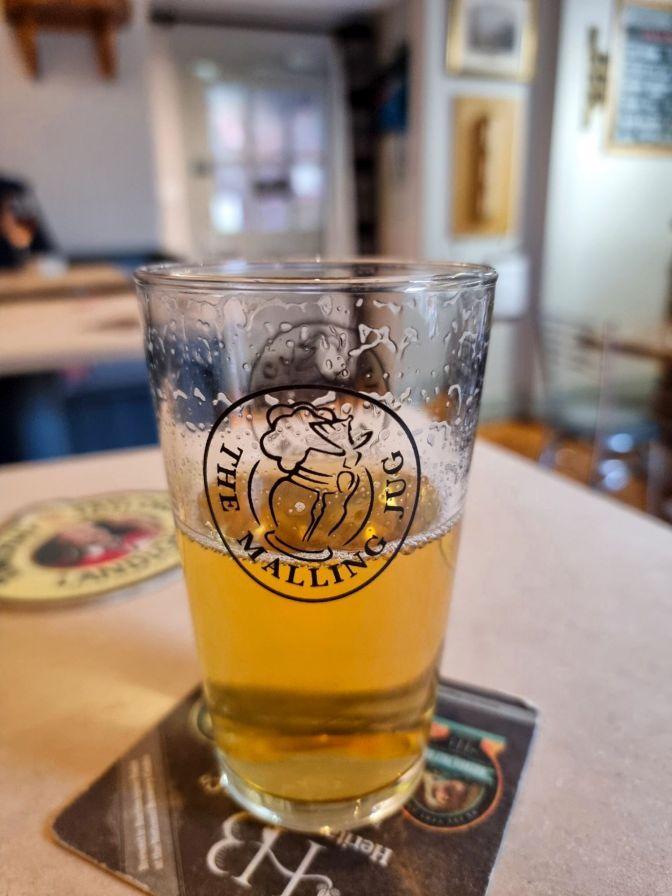
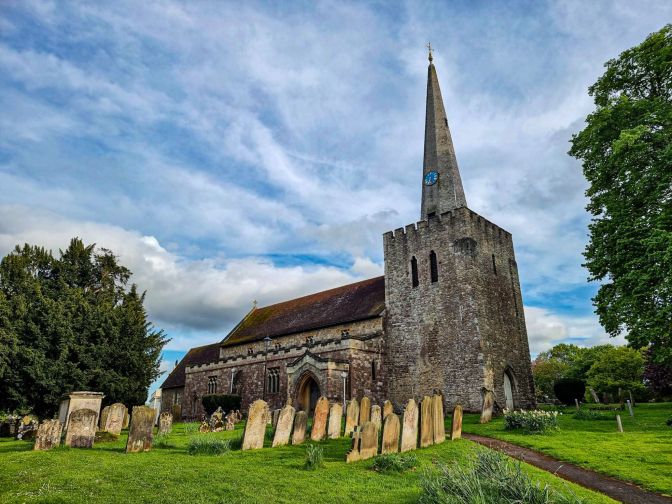
With a satisfied stomach and low-grade beer buzz, I went in search of the Muggleton cricket fields, first passing by the local church with a spire which looks like the mayor ordered in the wrong size and then pretended not to notice.
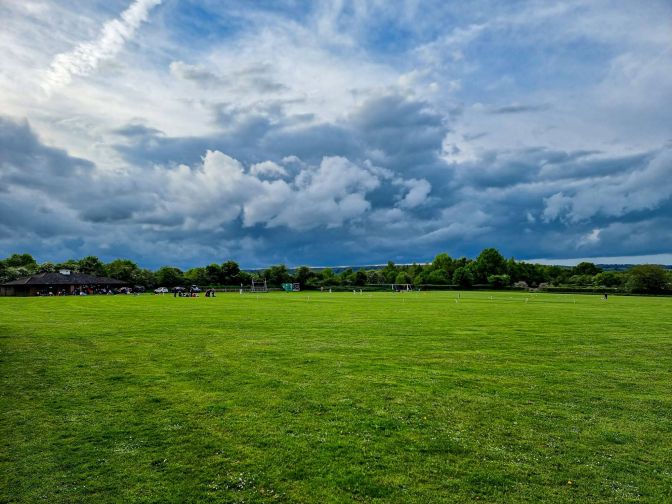
West Malling Cricket Fields
“All-Muggleton had notched some fifty-four, while the score of the Dingley Dellers was as blank as their faces. The advantage was too great to be recovered. In vain did the eager Luffey, and the enthusiastic Struggles, do all that skill and experience could suggest, to regain the ground Dingley Dell had lost in the contest—it was of no avail; and in an early period of the winning game Dingley Dell gave in, and allowed the superior prowess of All-Muggleton.”2
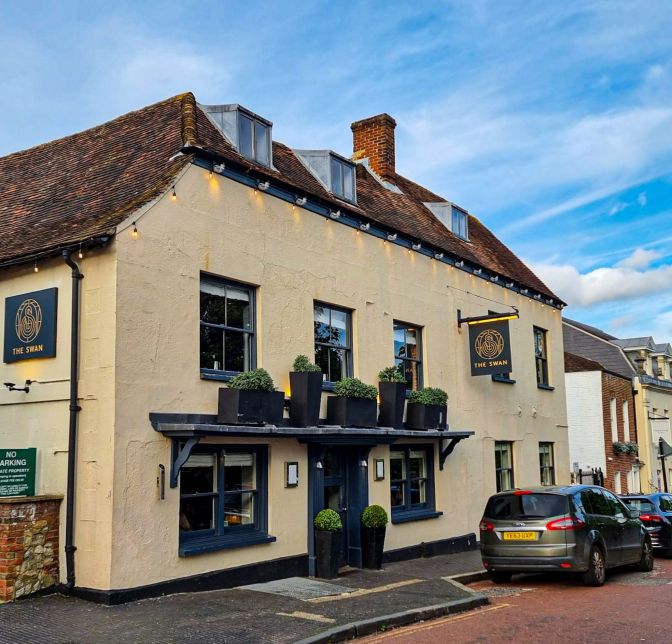
The Swan
The Swan represents the West Malling candidate for the Blue Lion Inn mentioned in the earlier excerpt of Pickwick Papers.
“It is not difficult to believe… that at the Swan—otherwise the Blue Lion—the Pickwick fellowship shared the conviviality of the rival teams”
Dickens-Land by John A. Nicklin (1911)
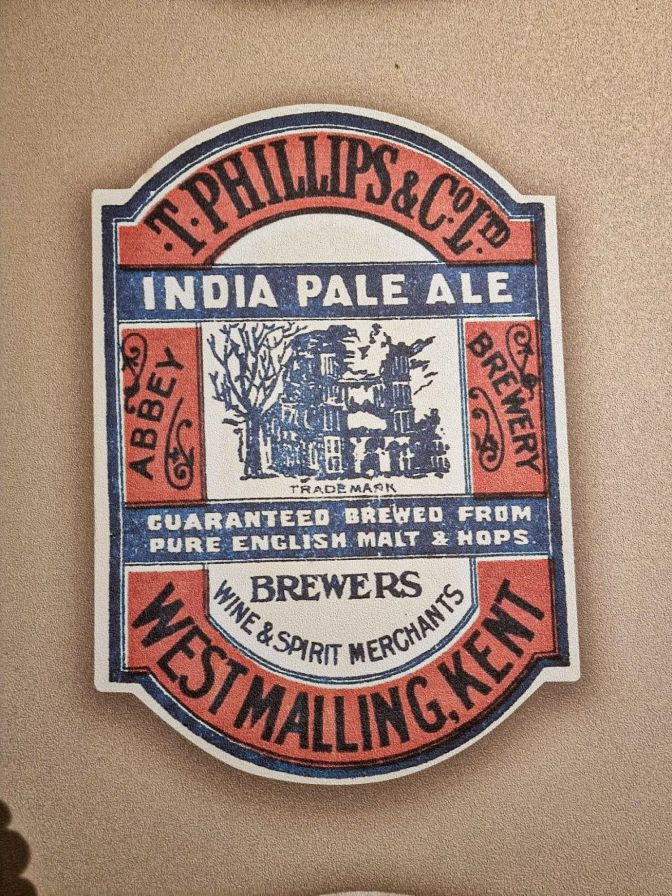
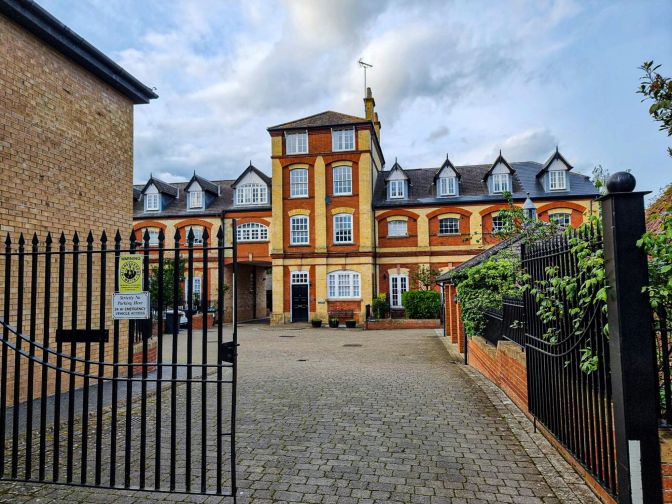
West Malling’s old Abbey Brewery
I took a random picture in The Malling Jug of an old sign for West Malling’s former Abbey Brewery which closed in 1939. Walking to the train station, I discovered that the building still exists. Today it is used for apartments.
Final Words
There is just something that fascinates me about the way The Pickwick Papers has inspired several authors to become like amateur sleuths and create a fascinating canon of travel books. Of course many of the conclusions are wishful thinking, but what is the harm in that if it gets your nose in books and your feet out on the footpath? It does more than that for me. It gets my butt on a train and across the English Channel. I asked myself in my last post, What am I doing in Maidstone? It is one chapter in a book about a place which doesn’t exist. Yet where is there a more nobel place in the world to hike than the English countryside, with its rolling green scenery, its villages and village pubs, where you engage in conversations with locals who each seem to have as interesting a history as the country itself, where the country lives and breathes within its literature? The next morning, as I boarded my train to Salisbury and County Wiltshire, I wondered if I would ever see Dickens’ Kent again. What would I come back for? I thought about The Leather Bottle in Cobham, The Coopers Arms in Rochester, The Horseshoe and Castle in Cooling, The Robin Hood near Blue Bell Hill, and The Little Gem in Aylesford. All of them forever destined to whisper in my ear every May. These places talk to me like these books talk to me. For reasons as unexplainable as the human soul, I came and went from the city of Maidstone.


 itsabrewtifulworld
What a scenic route! But no blue lion statue, standing on the center claw of one back foot, unfortunately — would have to be a strong claw from an engineering standpoint!
LikeLiked by 1 person
🍺 To your health!
LikeLiked by 1 person
Thank you! The same back! 🍺
LikeLike