
“I like Brussels.”
France to Scandinavia by Frank G. Carpenter (1923)
It is hard to believe it was five years ago that while still suffering a hangover from the grey Winter of the lowlands and looking to find a spark of inspiration, I fatefully chose an ordinary March Saturday to visit Brussels. I was hoping to find color in a city which has always existed to me as grey as a Belgian February. I was never a big fan of it. However, that day generated more than just a fine afternoon and a beer buzz. There was color. A blue as fine as the lapis lazuli of the Silk Road. Not in the literal sense. But in the preciousness of it. The effects of that day have reverberated in every blog post I have written ever since. Five years later, to the day, I found myself standing on a familiar Brussels street corner condensing those five years into a single moment of blue thought. A lot has happened. A lot has changed. It was with great anticipation and carrying those ghosts that I stepped into the street in the direction of the Place de la Chapelle starting a new adventure.

Brewtiful Brussels
A hike around Brussels best beer-related spots which would make Charles of Lorraine proud.
Continue reading Brewtiful Brussels

The hike and pub/brewery crawl I did in 2019 was in the main historical center of Brussels, which can be referred to as the Lower Town. Overall, Brussels is a city which has eluded classification for me. What is Brussels exactly? Does it have an essence like London, Amsterdam, or Munich, for example? These cities have identities, and there are many others as well. You may not be able to articulate it but when Amsterdam comes to mind, you know what it is. But what about Brussels? In every classic travel book, Brussels is always called “The Little Paris“, thus emphasizing the possible lack of an identity all its own. I don’t honestly think even Brussels knows what it is. A mixture of Parisian and Flemish architecture. Streets filled with an eclectic mix of cultures; a melting pot of small businesses and restaurants. The complexity of its identity is certainly not a new phenomenon. During this hike in 2024, I was heading into the Upper Town of Brussels in search of more of the essence of Brussels and its beer culture. The natural place to start this question of identity are the languages.
“The character of the city and its inhabitants thus gradually developed itself, the court and the nobility, with their French language and manners, being established in the upper part, while the lower quarters were chiefly occupied by the trading community and the lower classes, whose language and character were essentially Flemish. The characteristics of the upper and lower parts of the city are recognizable at the present day.”
Baedeker’s Belgium and Holland (1881)
If you have ever been to Brussels and found yourself running up the Rue Infante Isabelle to make the train at Brussels Central, you know the city doesn’t sit on a flat plain. The parks and museums sit on an even higher level giving Brussels a distinct multi-layer landscape. Class doesn’t determine your language or whether you are from the Upper or Lower part of Brussels anymore, but this historic lack of linguistic solidarity still adds a lot of graininess to the identity of Brussels.
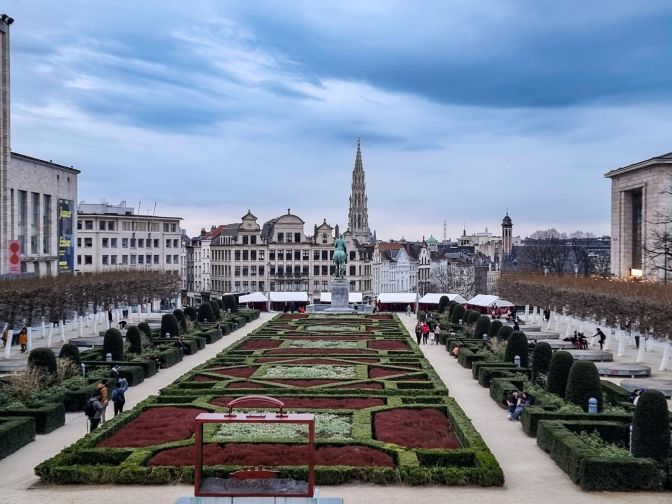
“The nucleus of Brussels, as of Paris, was formed by an island, now no longer existing. Round this islet ran two branches of the little river Senne, at present obliterated by the Inner Boulevards. Brussels, in short, has denied its parentage; the Senne…”
Belgium: Its Cities by Grant Allen (1903)
As the Senne lay buried beneath my feet, I started my ascent to the Upper Town of Brussels, no longer occupied by only snooty upper-class French-speaking aristocrats.
The Upper Town Hike
The urban hike starts in one of my favorite neighborhoods around the Église Notre-Dame-de-la-Chapelle. This neighborhood, known as Marollen, is a delightful mix of boutiques and antique shops, whose attractions made several attempts to delay my progress.

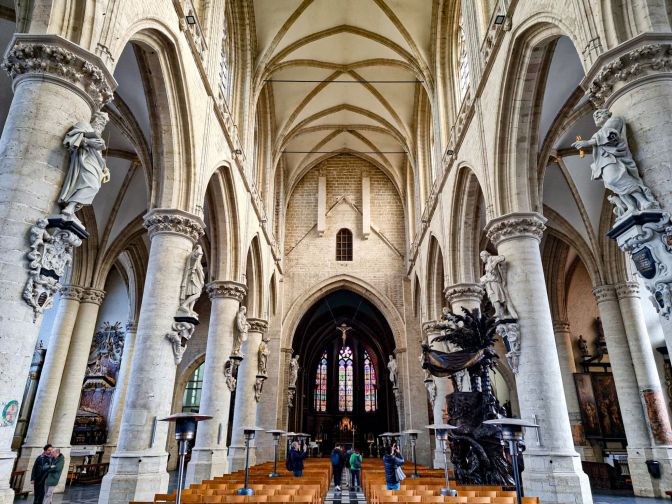
Église Notre-Dame-de-la-Chapelle
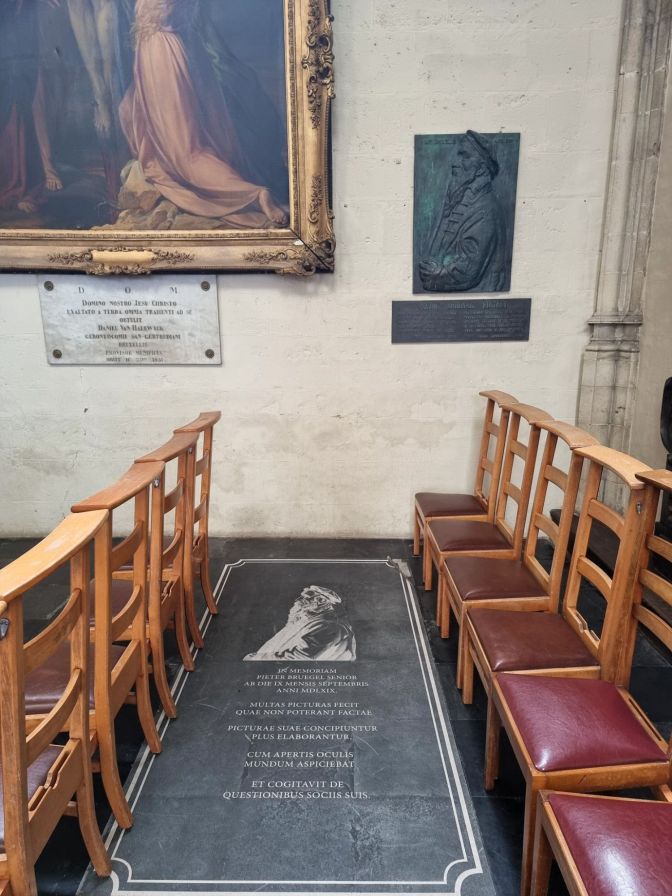
The Kapellekerk, as it is called in Dutch, is a 12th century church which is of interest to me as the burial place of Pieter Breugel the Elder, a famous Dutch painter of the 16th century, who transplanted to Brussels later in his life. His crypt and memorial are so understated, that you could easily pass by it not realizing that here lay one of the great masters of Dutch and Flemish art. What makes Bruegel fascinating for me is that he was born in the Netherlands and ended up in Brussels. In most cases, the great masters immigrated in the other direction (as will be discussed later). So understated is the Bruegel crypt that even in the famous Baedeker travel guide of 1881, the tomb is haphazardly attributed to his son, Jan Breugel. This careless detail was corrected by the 1905 edition, but it points out a curious lack of attention. Meanwhile, in several other of my classic travel books, the church is mentioned without any reference to Breugel, and classic travels authors otherwise drooled over the great masters. Did the writers not know? Can it be that despite being at the heart of one of the great countries of art, Brussels, which is not solely a Flemish city, seems to handle any credit for the glory of Dutch and Flemish art with the awkwardness that comes with not deserving it? It is like one of the backups who contributed very little on a sports championship team accepting their championship ring to a cheering crowd.
“During the two golden ages of Flemish art in the 15th and again in the 17th century, Brussels held a subordinate position, when compared with other Belgian towns, such as Ghent, Bruges, and Antwerp…”
Baedeker’s Belgium and Holland (1881)

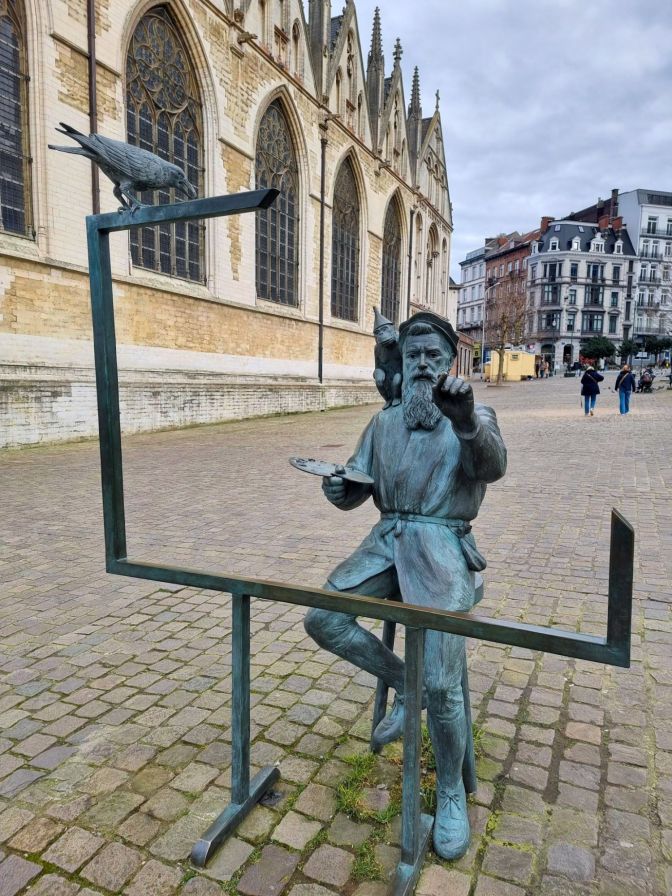
Bruegelhuis
Just up the street from Bruegel’s gravesite and amongst all the boutiques on the quaint Rue Haute is Pieter Breugel’s former home, looking 100% Flemish and 0% Parisian. The home stands oddly disused and ignored despite the plaque and its claim to fame.

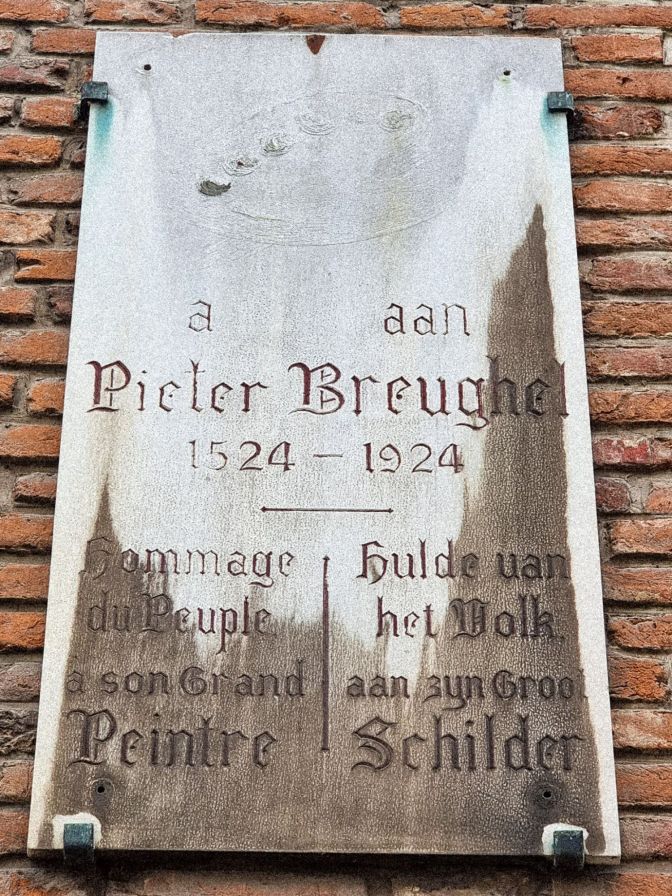
What makes this more odd is that Bruegel is featured at the Old Masters Museum in Brussels. The museum is fantastic, but perhaps that is as far as Brussels will go with trying to be a Flemish and Dutch Art City like Antwerp, Ghent, and Bruges.
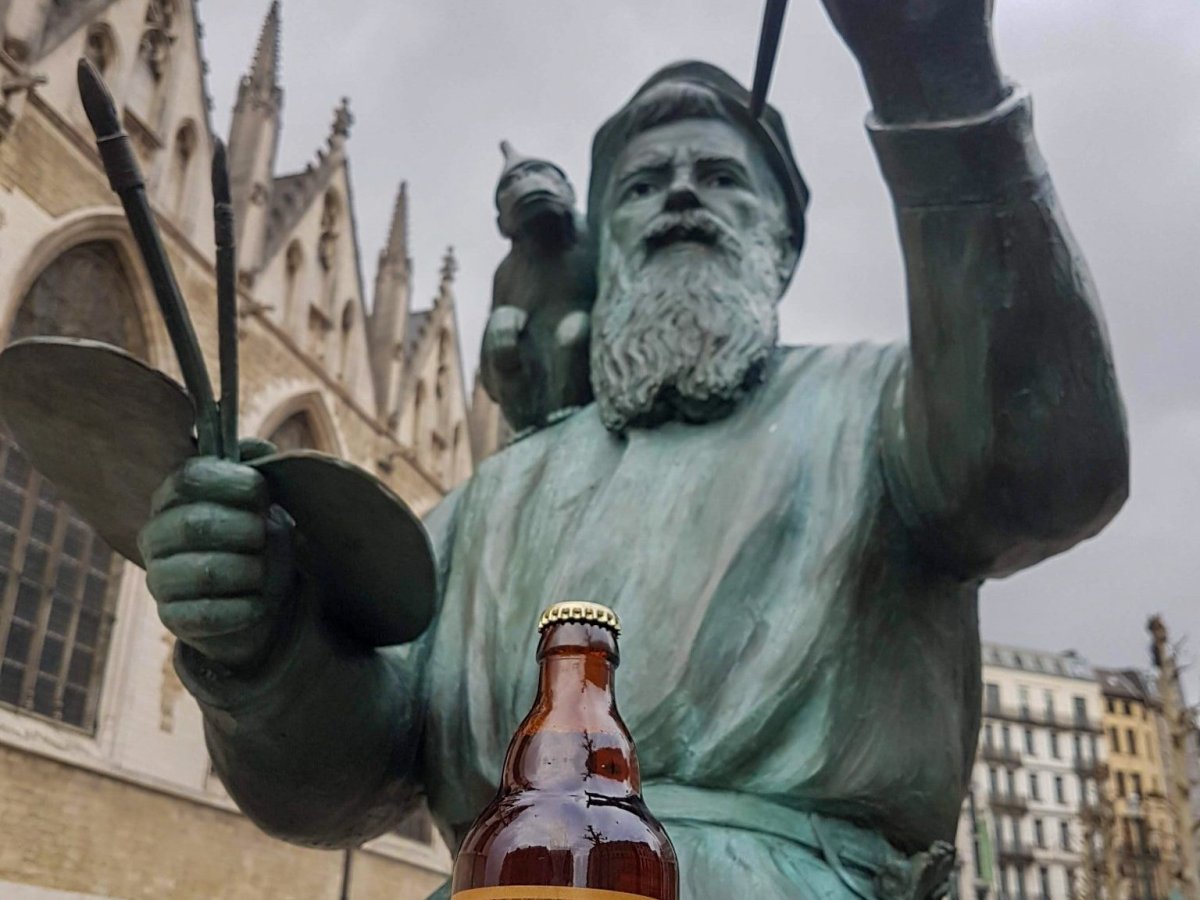
Drunken Masterpieces: Old Masters Museum Brussels Pt.2 – Bruegel edition
Bruegel kept drunks from falling into obscurity during the 1500’s
Continue reading Drunken Masterpieces: Old Masters Museum Brussels Pt.2 – Bruegel edition
Palace of Justice
Leaving these questions and Bruegel behind, we ascend further up the hill to the massive golden-domed Palace of Justice, which seems perpetually covered with scaffolding. This building looms over the Lower Town like a warning to any of the rathskallion Flemings living there that the law is watching. From here there is a great view over Brussels.

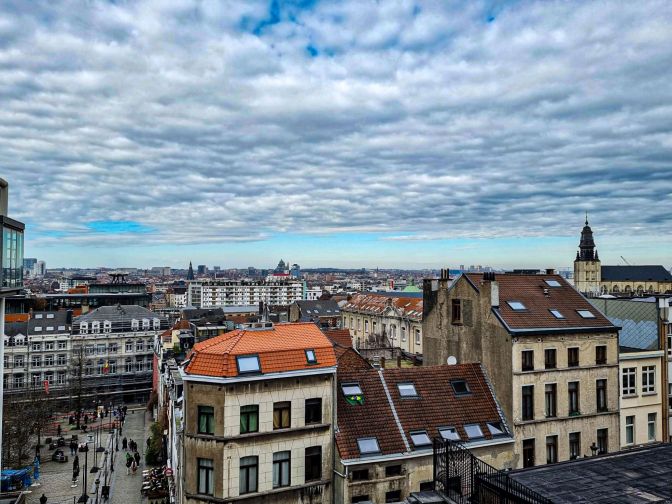
Square du Petit Sablon
A few blocks away, we steer away from justice into tyranny. We come to a fountain capped by two statues. I can imagine this fountain is photographed all day long by tourists, who, as with most statues, photograph it with the purest intent to look them up on the internet later. Who among us has ever actually gone back through our photos and looked up who the statue was? (sound of crickets) How much of the earth’s natural resources have been wasted storing data of photographs of statues that people have no clue about? Prior to 2023, these statues would also have meant nothing to me. They are Counts Egmont and Horn. Fortunately for me, I have come across them before.
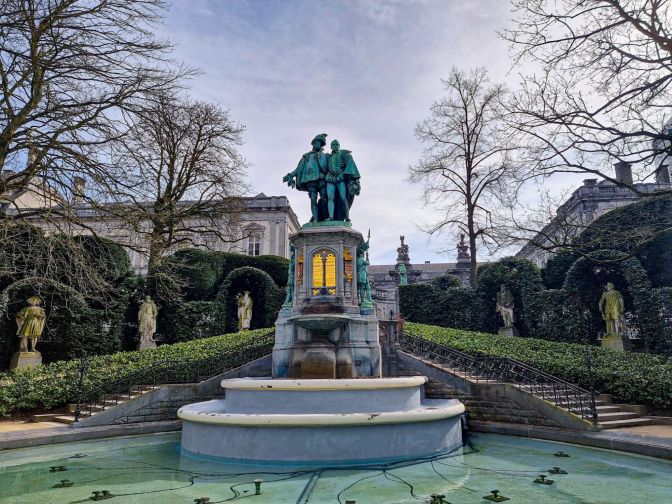
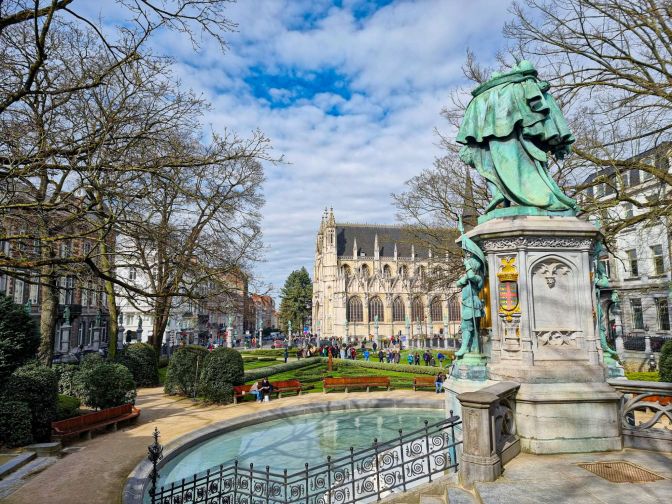
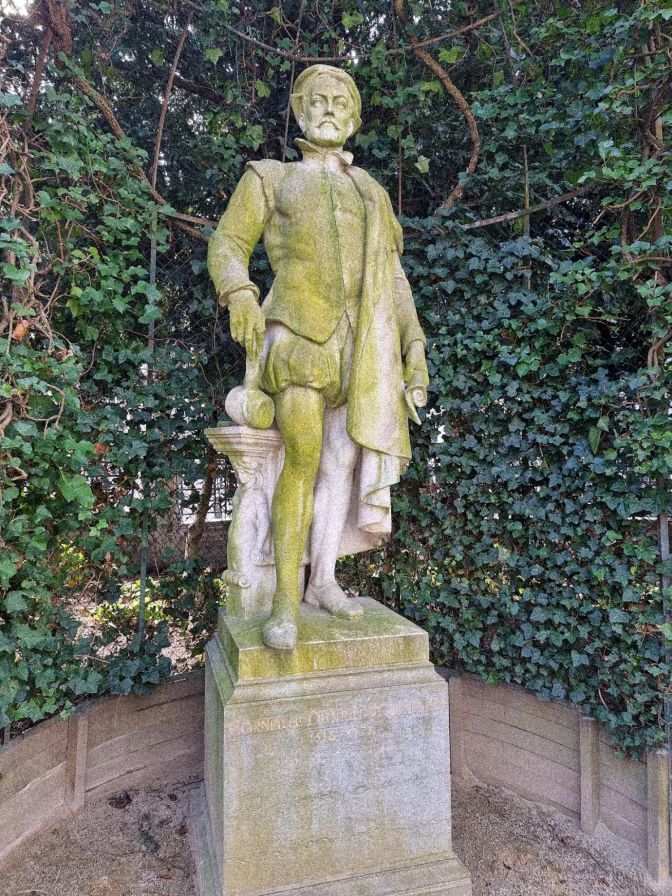
Brussels in the late 16th century, like the rest of Belgium, was under the thumb of the Spanish (and Catholic) empire. But the Protestant Dutch were struggling for independence. Spain sent an Inquistor to lay down his particularly ruthless form of justice. The Duke of Alba. The statues you see in the background of the fountain were highly successful scientists, scholars, architects, and other professionals, including the architect of Antwerp’s Stadhuis Cornelis Floris de Vriendt, who were victims of this inquisition. It was the public execution of Counts Egmont and Horn in Brussels which was the main spark for the Dutch Revolt led by William of Orange (a.k.a. William the Silent). The eventual outcome of this revolt was an independent Netherlands. Where have you heard part of this story before?
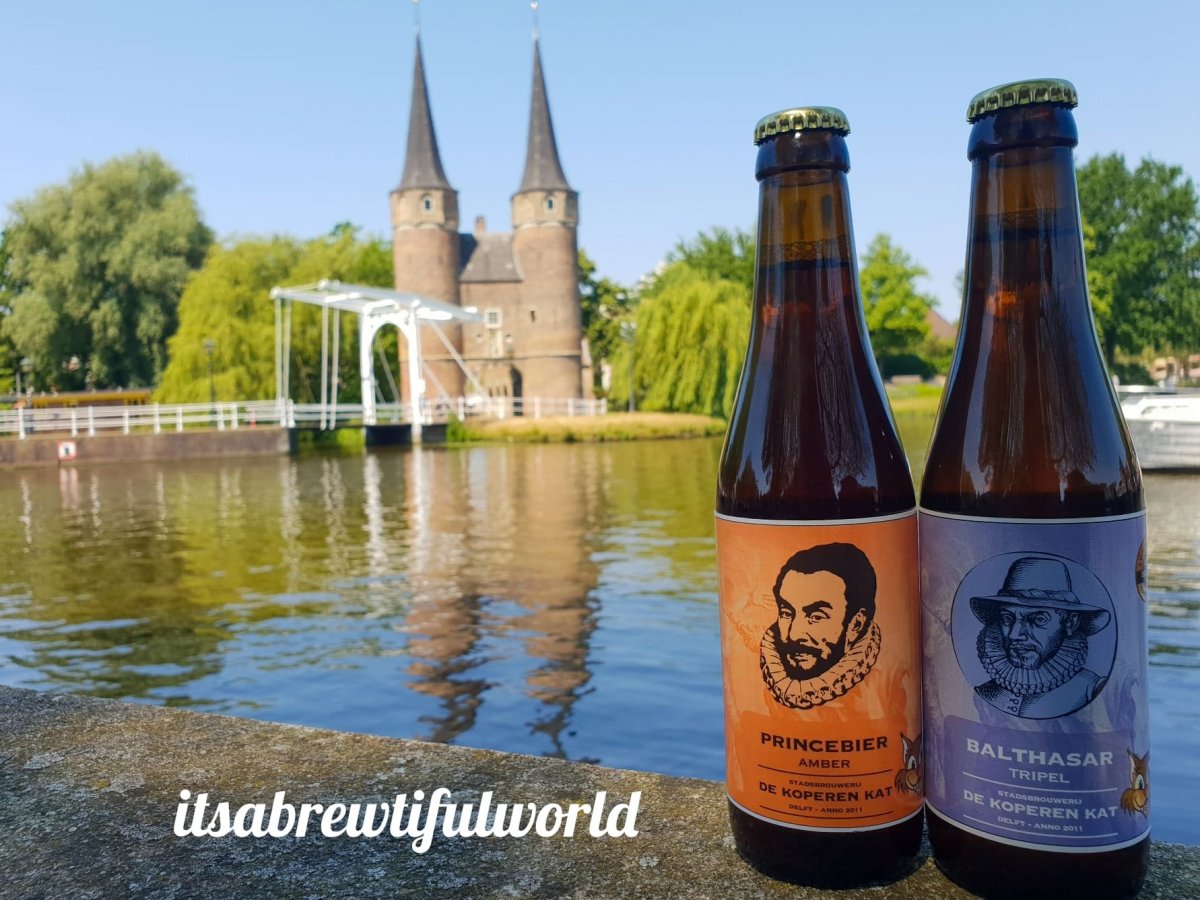
Brewtiful Delft: Having Beers with Vermeer and William of Orange
Looking thru the beer bottle to discover Delft 400 years ago.
Continue reading Brewtiful Delft: Having Beers with Vermeer and William of Orange
In the below painting, the Bishop of Ypres pleads for mercy with the Duke of Alba on behalf of Egmont and Horn. The print is of the execution. Both of these works are located at the Prinsenhof in Delft.


In general, the French-speaking citizens of Brussels supported the Spanish rule, whereas the Flemish were given the option to flee to the Netherlands to be with their Dutch brethren. Hence the reason why Antwerp-born masters like Frans Hals moved to the Netherlands. Those that stayed were forced to submit. For centuries, Brussels had to deal with several different rulers, and the division between the different languages has been a factor long before Belgium came into existence in 1830.
Further on, we come to another statue which should not need much introduction.
King Leopold II Monument
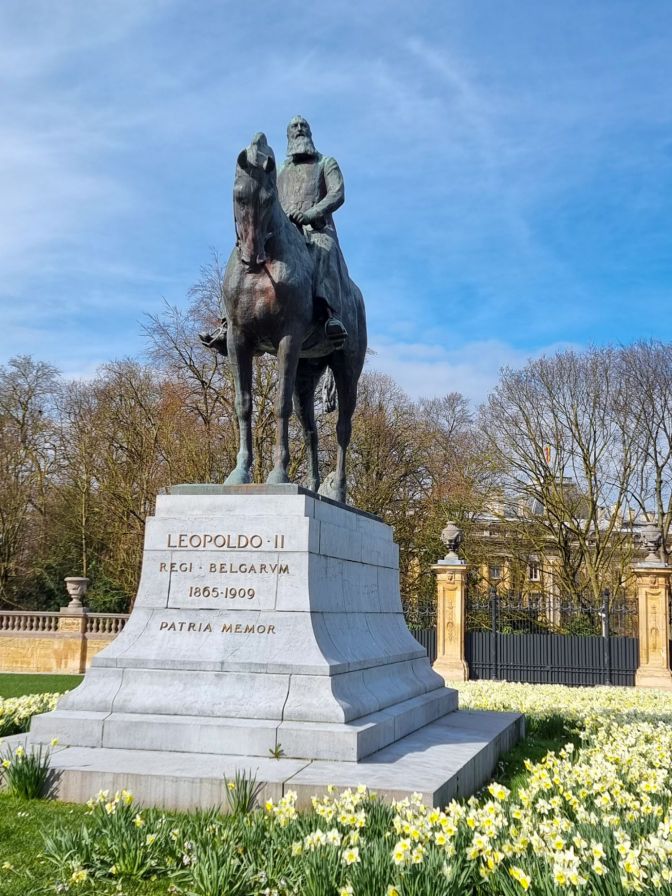
No one today will view this statue and exclaim There was a great leader! At least for now, it is a testament to the level-headedness of the people to leave this statue here as a reminder. His deeds and injustices need not be recounted here. But the wealth accumulated from his exploitation of the Congo paid for much of the luxurious architecture around the city. Brussels became “The Little Paris” because of it. If you don’t know the story, it is recommended to watch the documentary or better yet read the book, King Leopold’s Ghost.
Parc du Cinquantenaire
This huge sprawling park was dedicated to the 50th anniversary of Belgium’s statehood in 1830… and yes, funded by profits from the Congo.
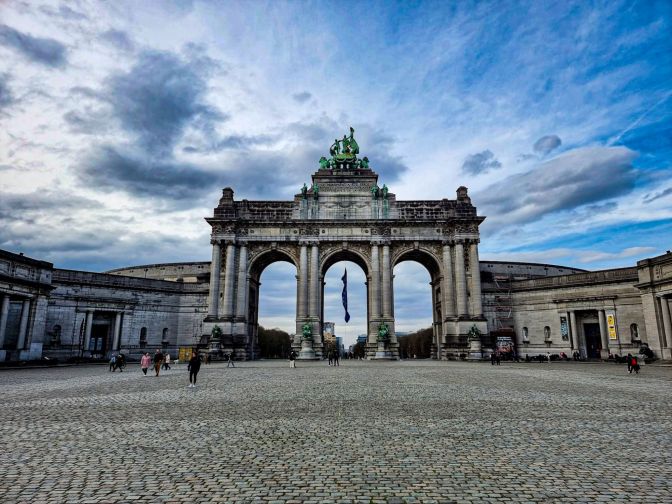
The Royal Museum of the Armed Forces and Military History, which is part of the building complex in the park is easily the most massive and impressive museum of its type that I have ever been to. It houses countless military artifacts going back to the middle ages. But its main appeal is from the Napoleonic Era forward. Like an art museum, it is a mistake to try and soak it all in at once. Though, when you do stop to read an information panel or two, you discover many fascinating artifacts.
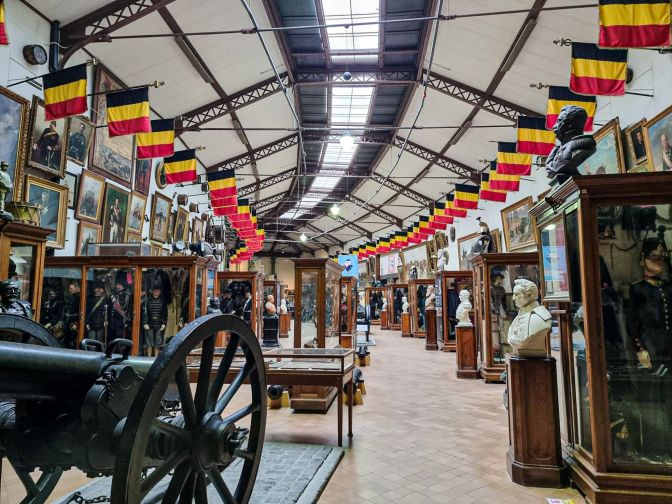
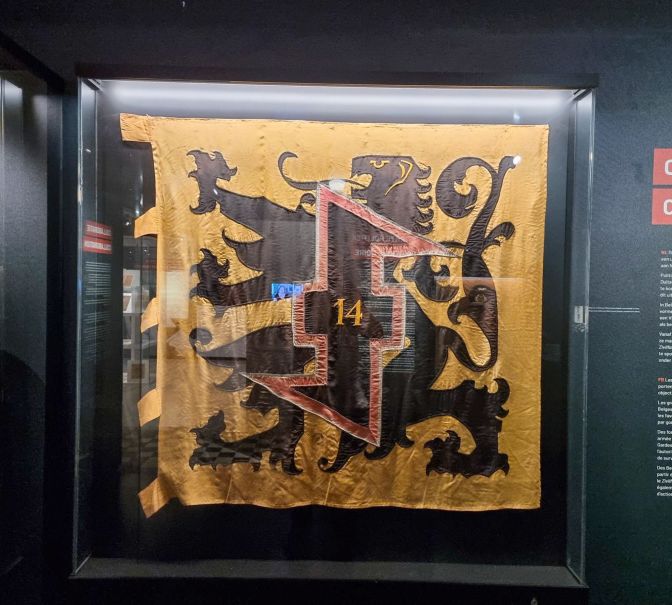
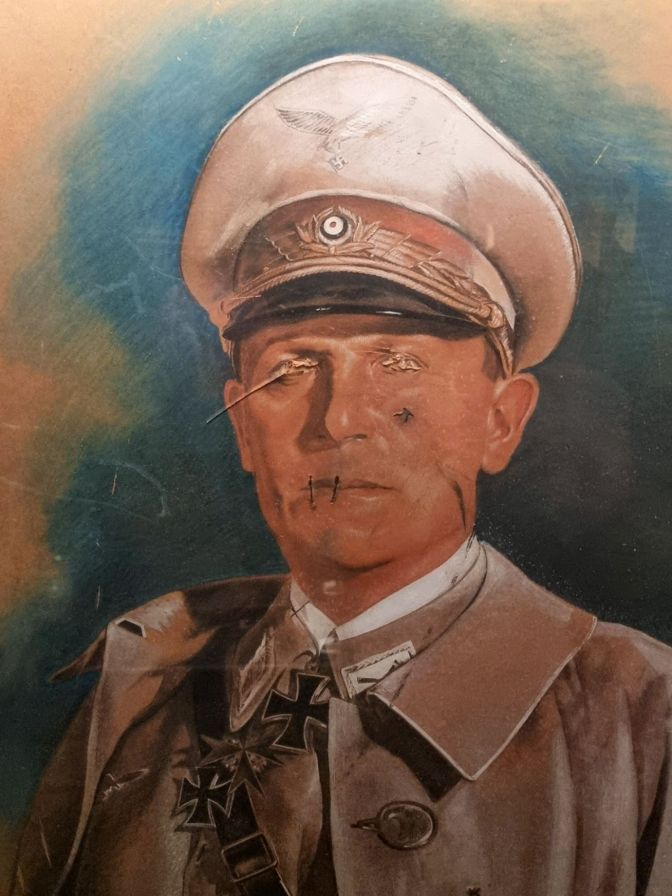
Some curiousities of the collection:
- A Flemish flag used by Nazi collaborators. Today, the Flemish flag has changed the claws and tongue to red in order to differentiate it from the all-black lion, which has come to represent extreme nationalism and racism.
- A painting of Hermann Göring with the eyes gouged out
- Nazi Christmas ornaments
- The jacket worn in this photo by Czar Nicholas II’s son Alexei
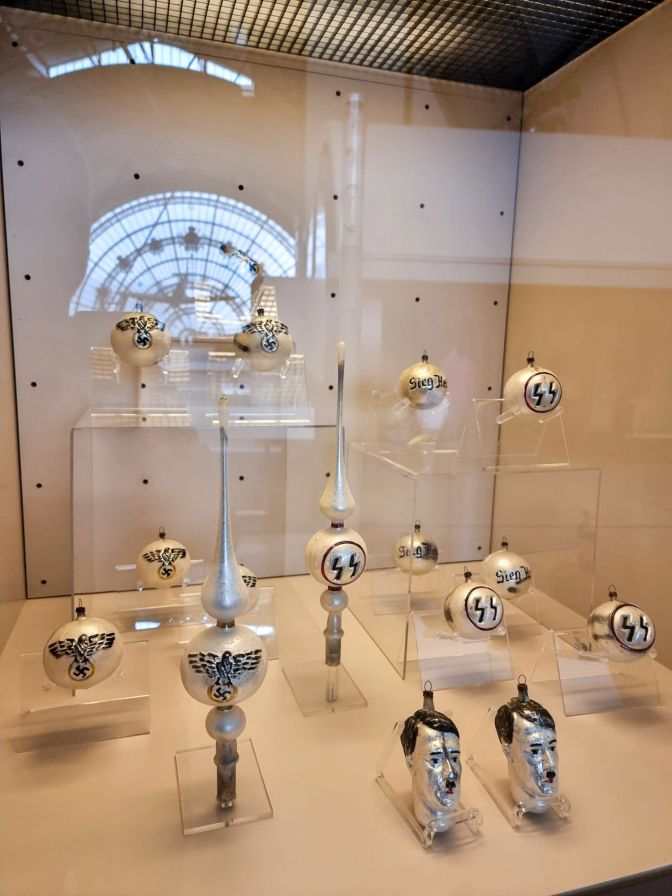
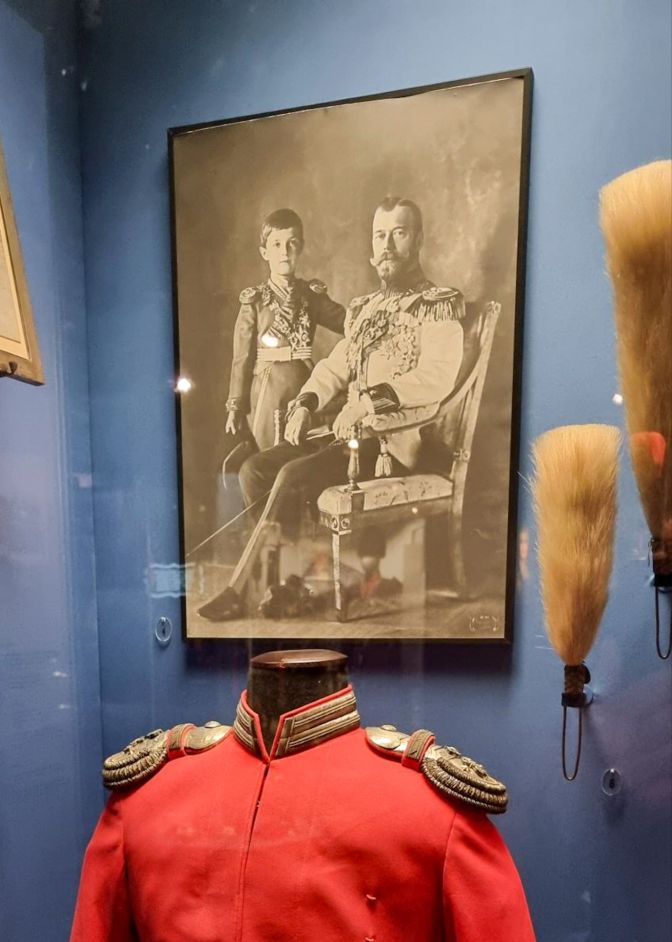
There is one undeniable impression that you get from this museum. Belgium has been in a lot of damn wars. As the capital of Belgium, Brussels has certainly seen its share of leaders having to cope with yet another invader, with yet another stronger more powerful ruler demanding allegiance and subservience, with yet another culture trying to enact its influence.
Leaving the museum and walking through the rest of the park, it was time to leave the question of Brussels’ identity behind for a time. Spring was starting to show it’s face. But by this point, it was about 5pm, and I was getting thirsty.

Brewtiful Brussels Pt. II
The James Joyce
Just around the corner from the Parc du Cinquantenaire is a neighborhood which is replete with Irish pubs. With a name like The James Joyce, I couldn’t resist. The interior was covered with sketches of Joyce and it made a valiant effort to transcend the typical Belgian brown bar and feel Irish. All around the bar, there were televisions showing a rugby match between Scotland and Italy. There were definitely some Italians in the bar. I was excited to see a Kilkenny on tap. Served ice cold. I sipped it while I studied the rugby match trying to figure out the rules. Then I headed a half block back.
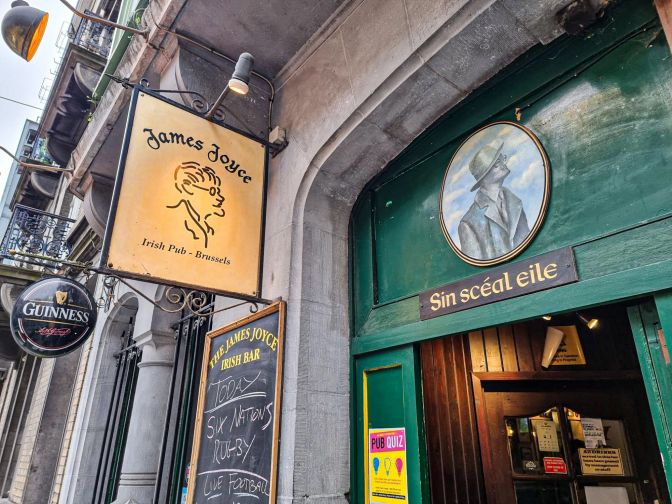
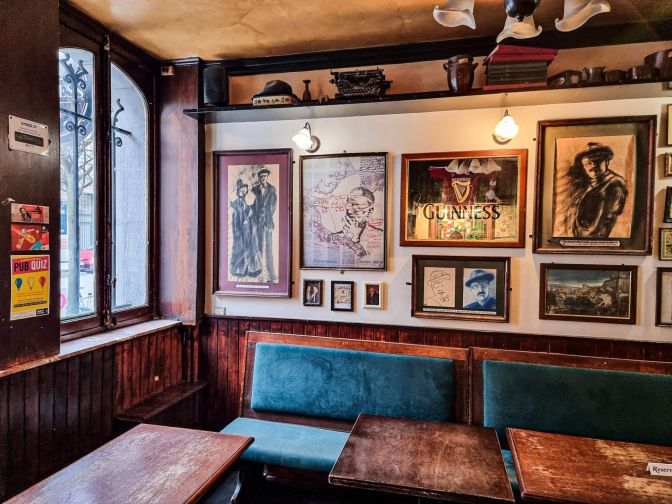
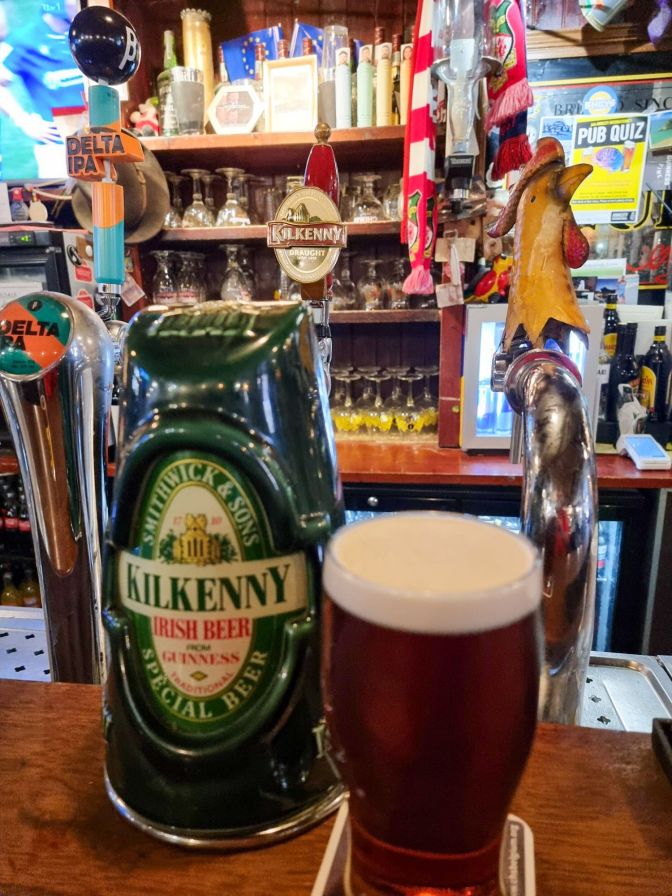
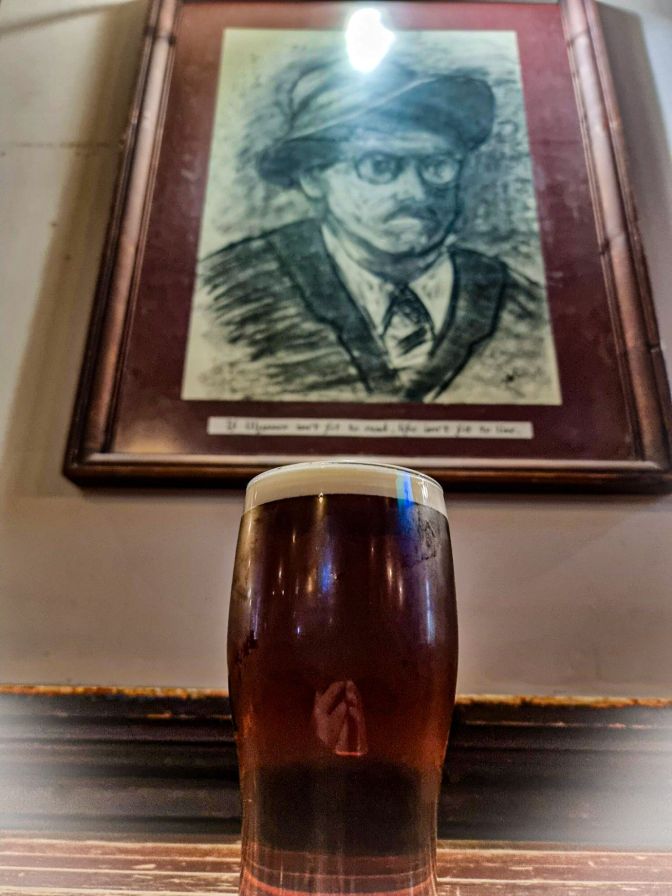
The Hairy Canary
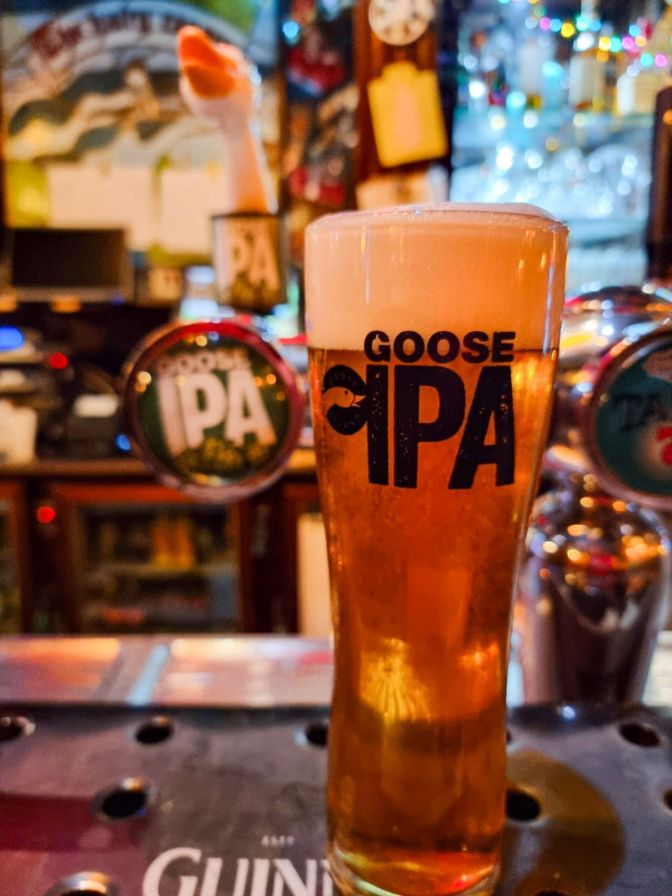
I passed this on the way to The James Joyce and decided half way through my Kilkenny to come back and check it out. Advertised out front as a Victorian Pub, I was feeling friskily Dickensian about the idea. While the interior had a classic, bookish kind of British flair, the beer selection was disappointingly un-British. Kilkenny was again featured on tap, making me believe it had the same owner (or distributor) as The James Joyce. Without a British ale to choose from, I went with a beer from a former British colony.
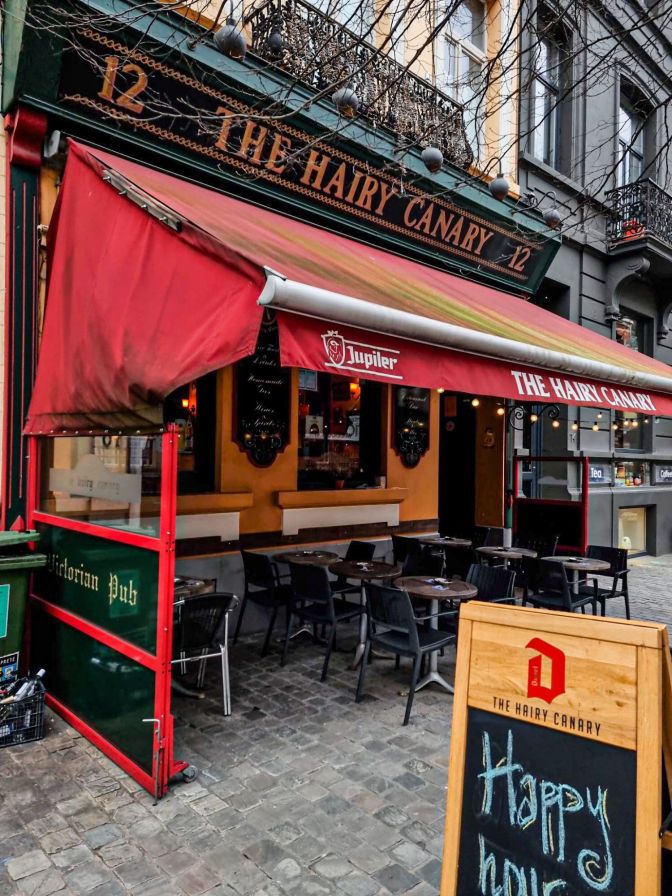
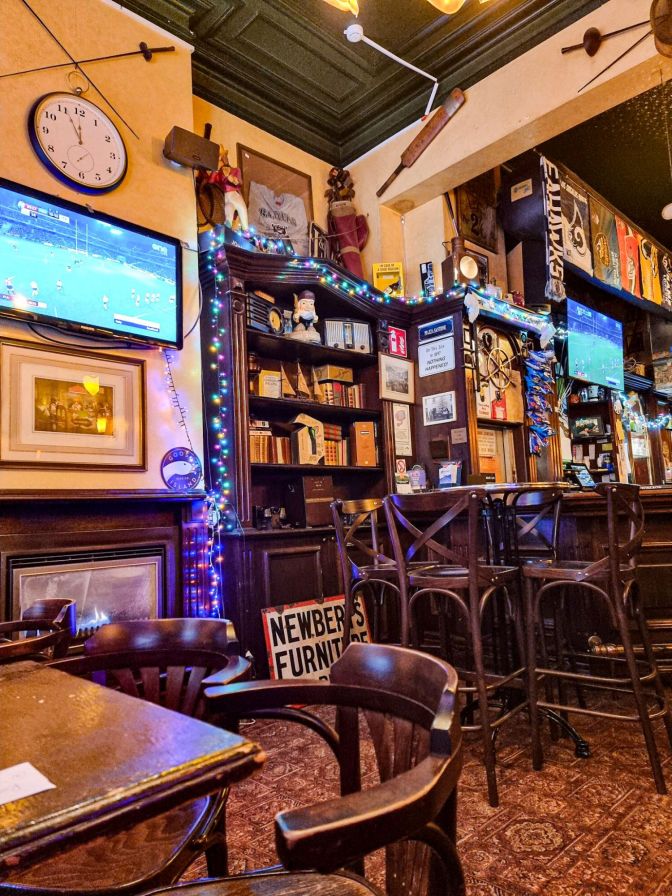
Python Beer Cellar
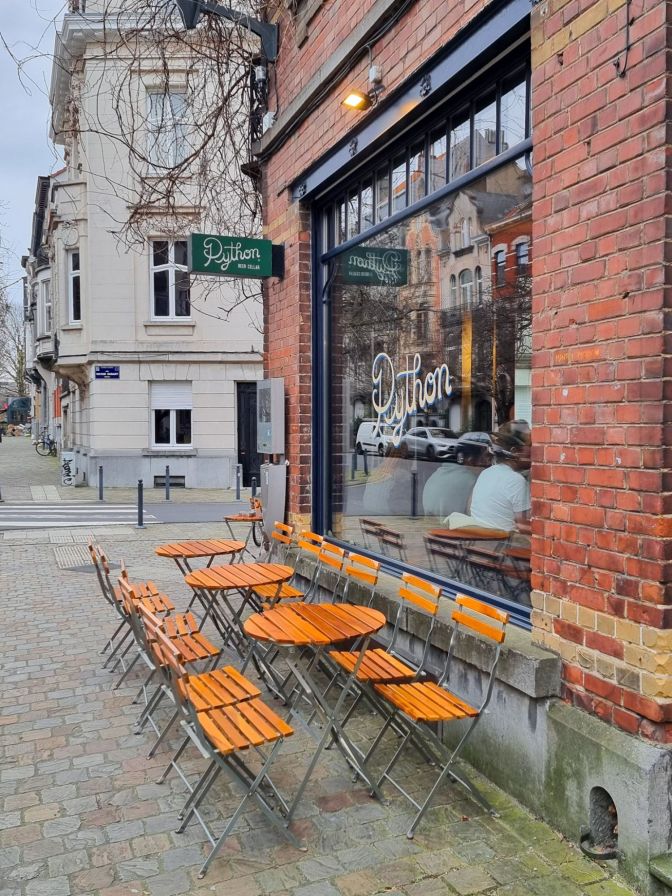
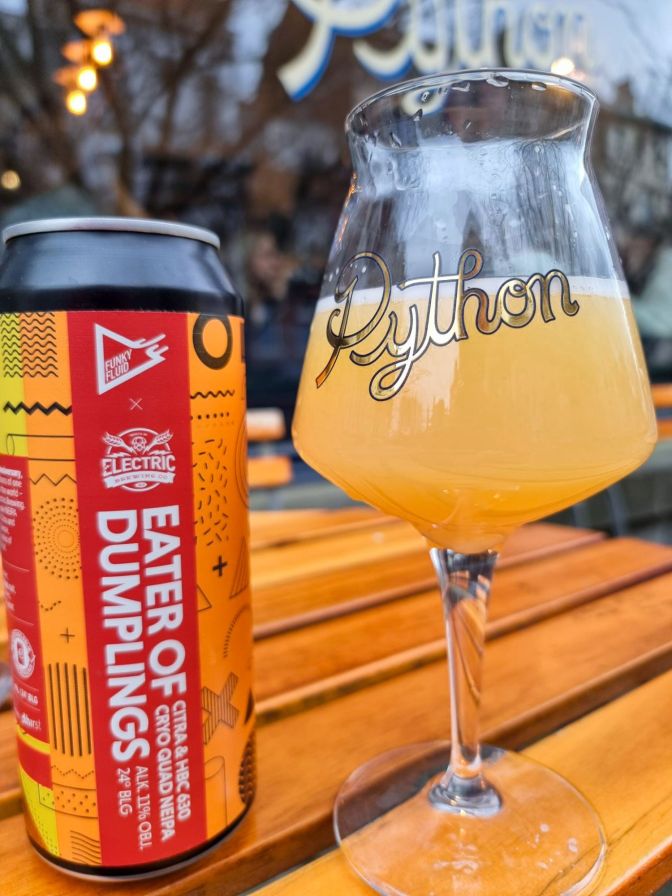
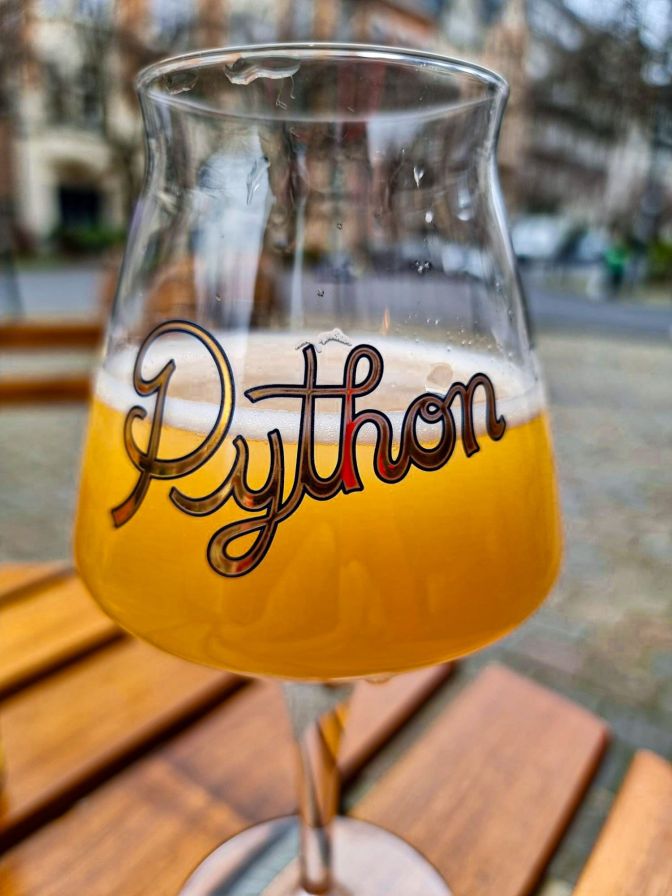
About a 10-minute walk deeper into the Brussels suburbs is this suburbian little hole in the wall serving up craft beers. I ordered two at once while also splurging on a can to drink later at home. I ordered the house Python DIPA and a Polish hazy double NEIPA called Sticky Clouds by Funky Fluid Brewing. Both were scrumptuous. And by this time, my beer buzz was giving me the euphoric preparation for the long walk back to the center of Brussels.

“Brussels… is somewhat provincial in its hours, and goes to sleep very, very early. For a metropolis, it is surprisingly deserted at ten o’clock in the evening.”
A Wayfarer in Belgium by Fletcher Allen (1934)
After finishing off a delicious pizza, I made a stop for one final beer. It was around 7:30pm. Darkness had settled in over the city. Switching to Summer time in three weeks would soon change that. While I am sure the streets were not as deserted as 1934, the street was just peaceful enough to sip a beer quietly and watch a few tourists here and there searching for a cafe. I wondered where they were coming from and what, if any, surrendipitous events befell them this day.
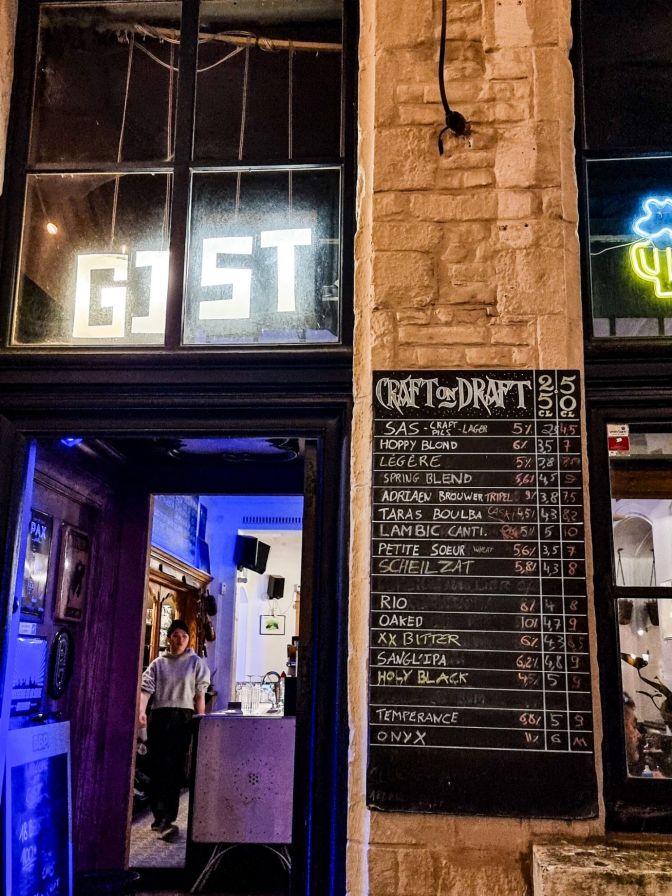
Gist
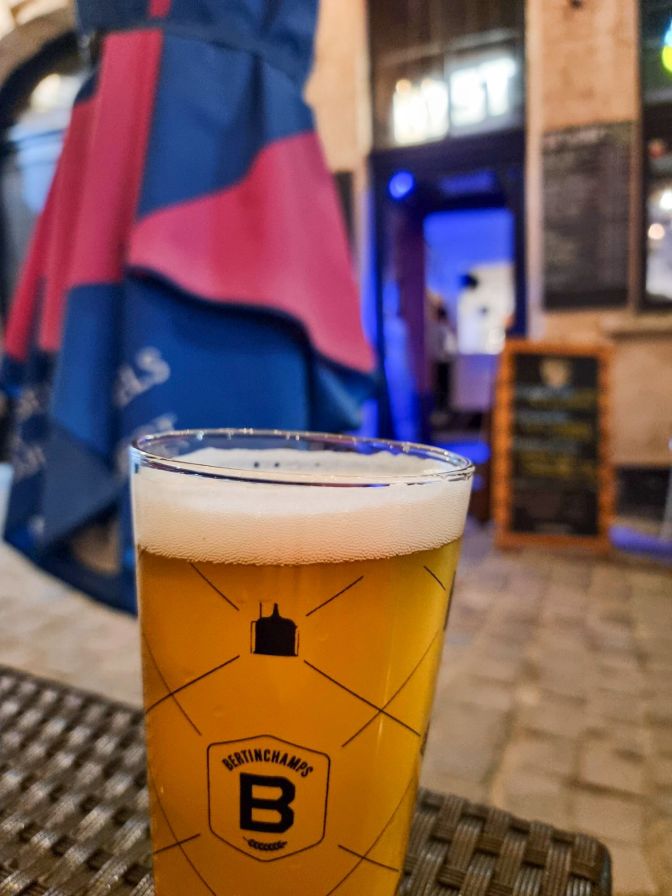
This is one of those craft beer bars that combine some true craft beer with established Belgian beers that would appear to be craft for unwary tourists. You don’t find Adrian Brouwer Tripel on tap very often (but it’s not a craft beer). In this case though, I enjoyed the Scheilzat house beer. The atmosphere here was a calming way to end a long journey around Brussels. By this time, I was feeling less contemplative about the essence of Brussels as I was soaking in my last minutes of peace before dealing with the affliction of delays that have been plaguing the Belgian rail system.
Final Words
Thanks to Charles V, who we beer lovers refer to as Gouden Carolus and Keizer Karel, Brussels became the capital of this great land. Whether she liked it or not, she had to endure her more talented sisters Bruges, Ghent, and Antwerp achieving artistic glory without her, and then she found herself suddenly out-shining them in wealth and architectural magnificence thanks to her unscrupulous King. Today, she is the face of Belgium to the rest of the world. As Belgium’s torch, she has to promote the artistic heritage of the country she represents despite playing a minor role in it. She has to be proud of her beauty despite how she got her elegance. She has to endure the bickering and differences of her polylingual children while being accepting of all of them. Is there any capital city which has to deal with such an identity crisis? I still may not have my head wrapped around what Brussels really is, but after another enriching hike through the city, there is one thing I do know.
I like Brussels, too.


 itsabrewtifulworld
Great post!
LikeLiked by 1 person
Thank you! 🍻🙏
LikeLike
💙
LikeLiked by 1 person