
“To the average American, Bastogne epitomizes the Battle of the Bulge.”
The Battle of the Bulge by Robert E. Merriam (1947)
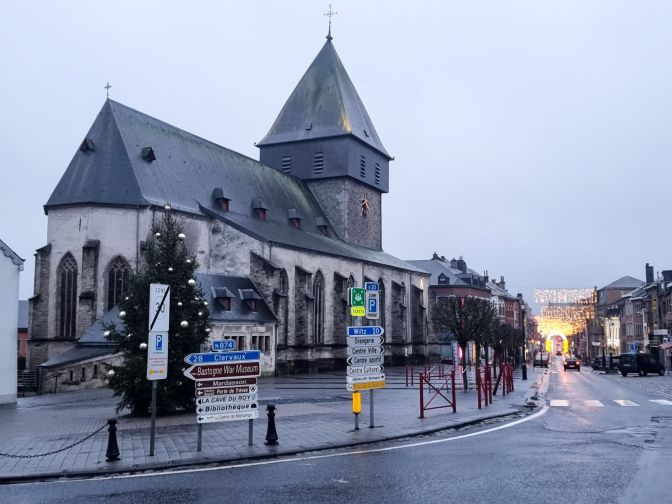
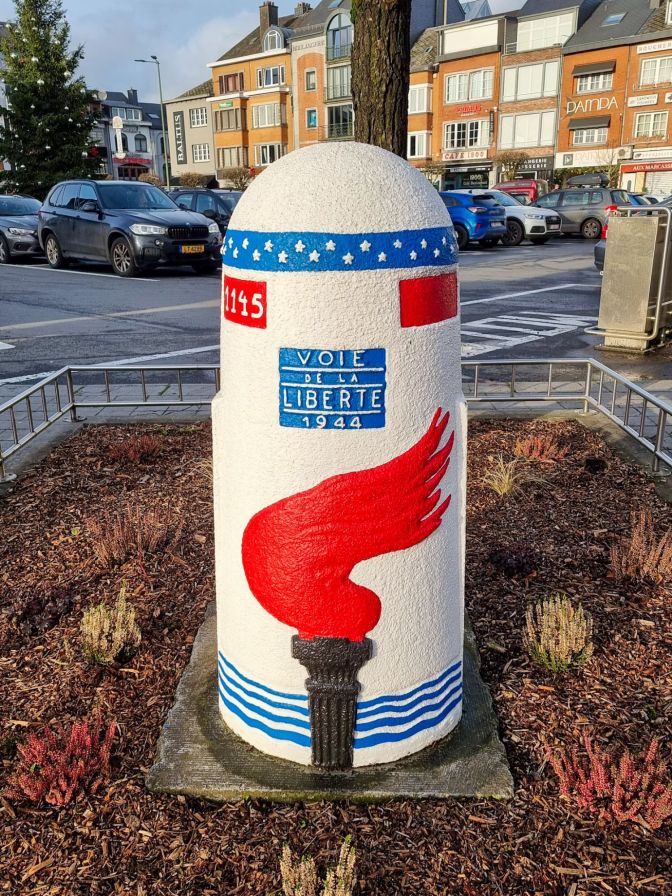
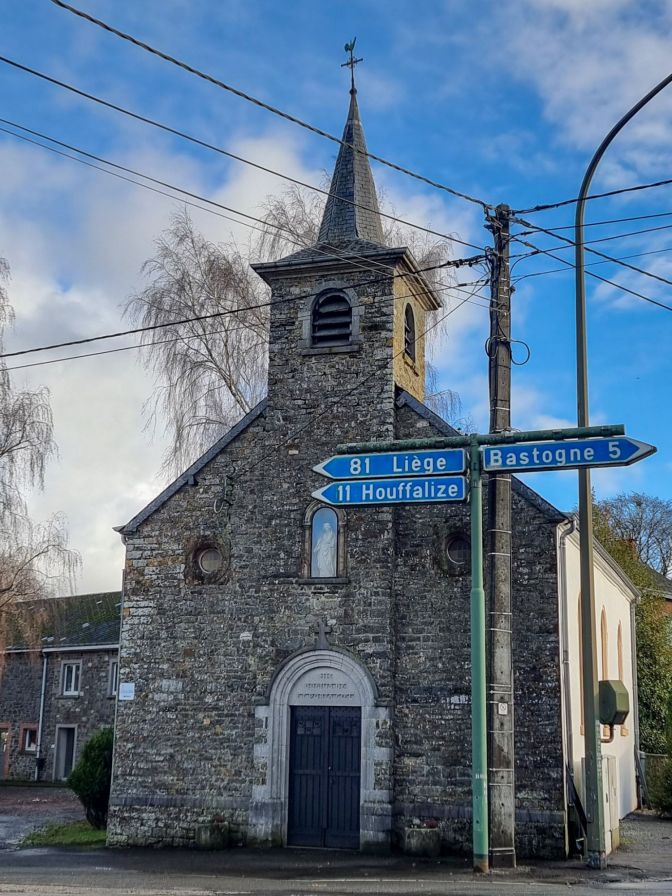
Somewhere, at some indeterminate point in my life, from some unknown source, perhaps a documentary or a magazine, the name Bastogne was forever embedded in my subconscience. Not as a word which floats around in the ether of the mind like all other words, but in the form of something both ordinary and haunting. A road sign.
I don’t know when I first saw this image, but if I could trace back all of my compulsion to immerse myself into Battle of the Bulge lore to a single moment, I am sure it would be when this image got absorbed into my brain.
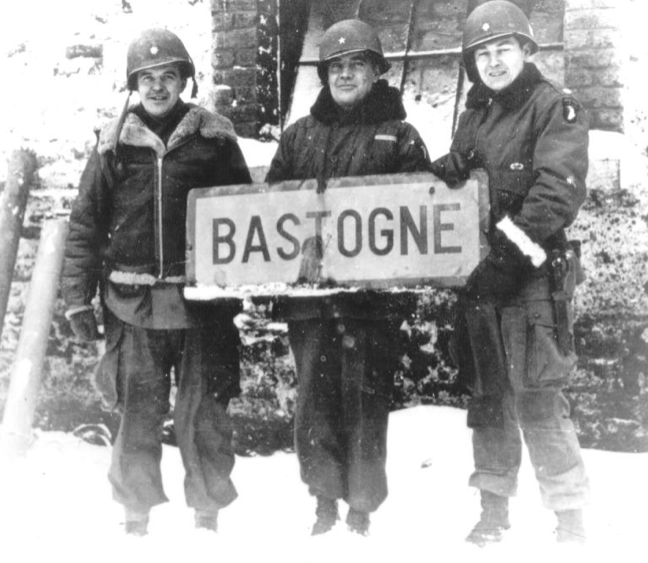
On December 18, 1944, two days after the events I wrote about previously where eighteen men of the 394th Regiment, 99th Infantry Division valiantly defended the American lines at Lanzerath, Belgium, the 101st Airborne Division, a.k.a. the “Screaming Eagles”, were called to defend the town of Bastogne. Bastogne is an important intersection of seven main roads in the Ardennes of Belgium. This characteristic still exists today (see below). The German’s goal was to rush their Panzer divisions as quickly as possible to the Meuse River, and from there, head to Antwerp and re-capture Antwerp’s port, thereby cutting off a critical supply chain of the Allies.

Capturing Bastogne would enhance the speed at which the Panzer Divisions could proceed on their mission as well as facilitate reinforcements and supplies. However, the 101st Airborne Division did not cooperate. The frustrated Germans were caught between devoting their resources to capturing the city or focusing on going around Bastogne, both of which meant disrupting their timetable. Either way, Bastogne was completely surrounded by December 20. Bad weather prevented air support to bring much-needed supplies, and on December 22, the Germans fatefully called a parley to offer terms of surrender. The reply from Brigadier General Anthony McAuliffe was given to his Colonel to deliver to the Germans. The scene was filmed in the 1949 movie Battleground which amusingly captures the confusion the one-word reply caused the German delegation.
Following this exchange, the 101st held out until Patton’s 4th Armored Division finally broke through on December 26. Leading the charge was a Sherman M4A3E2 Jumbo commanded by Lt. Charles P. Boggess. This by no means ended their troubles, but it marked a turning point in the Battle of the Bulge.
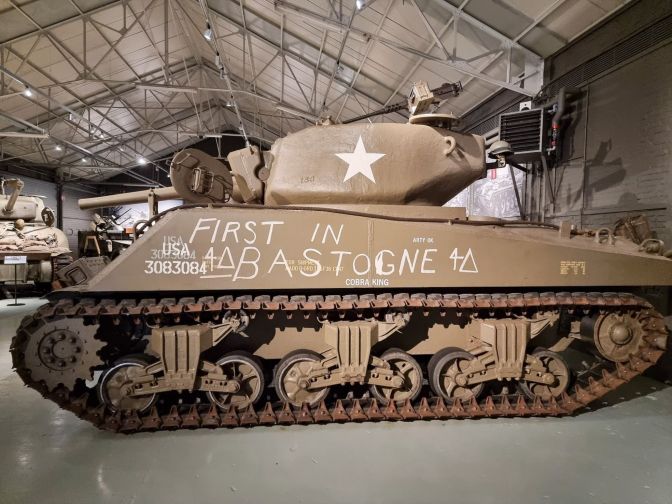
Nuts City
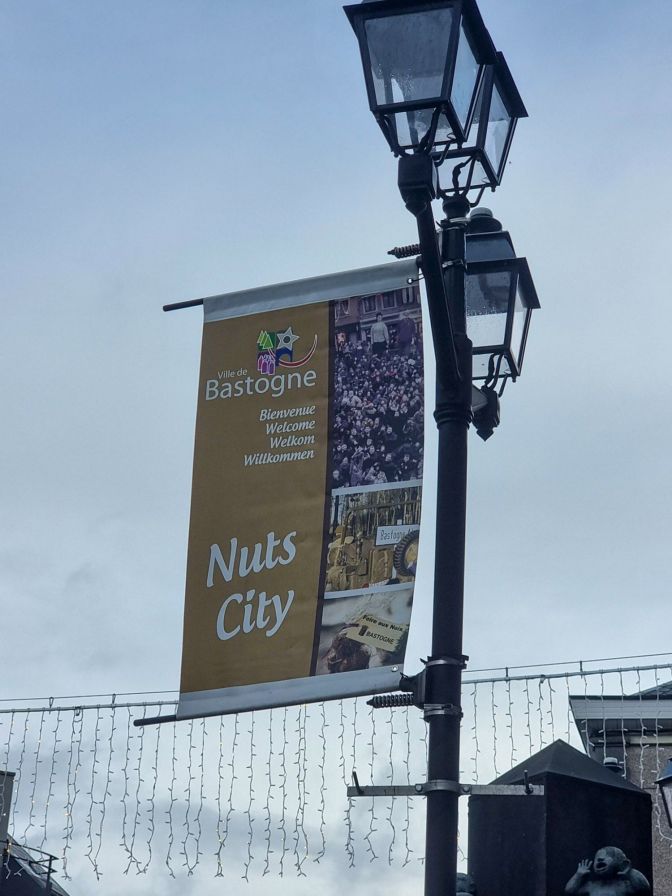
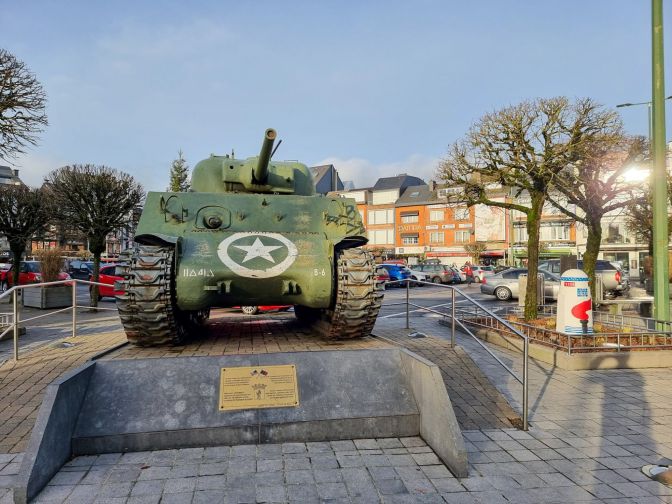
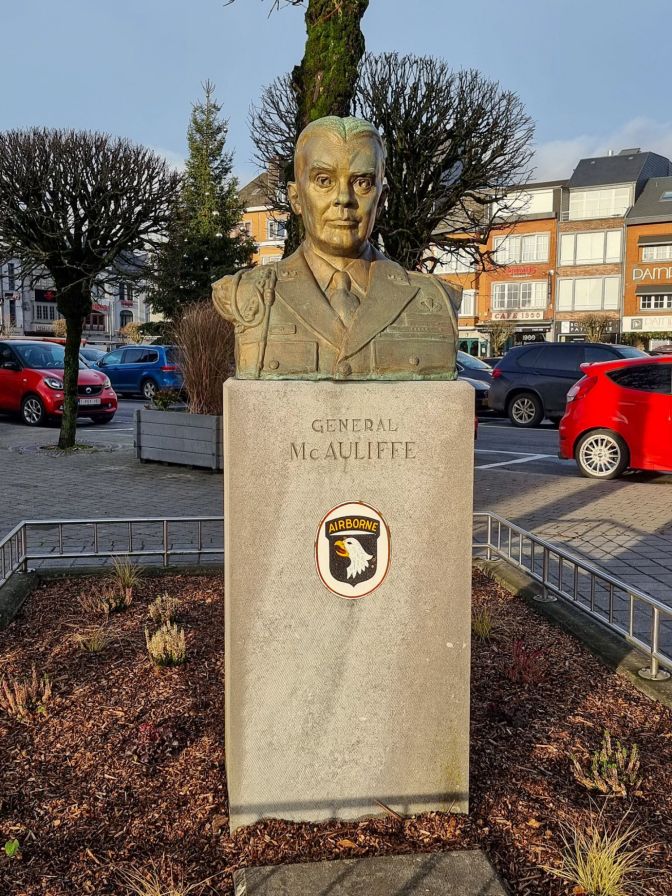
Today, Bastogne welcomes you to Nuts City. The main square, which is a parking lot surrounded by restaurants and a charcuterie, is called McAuliffe Square and is guarded by a bust of the General and a Sherman tank. Flanking the square is the aptly named Brasserie Le Nuts.
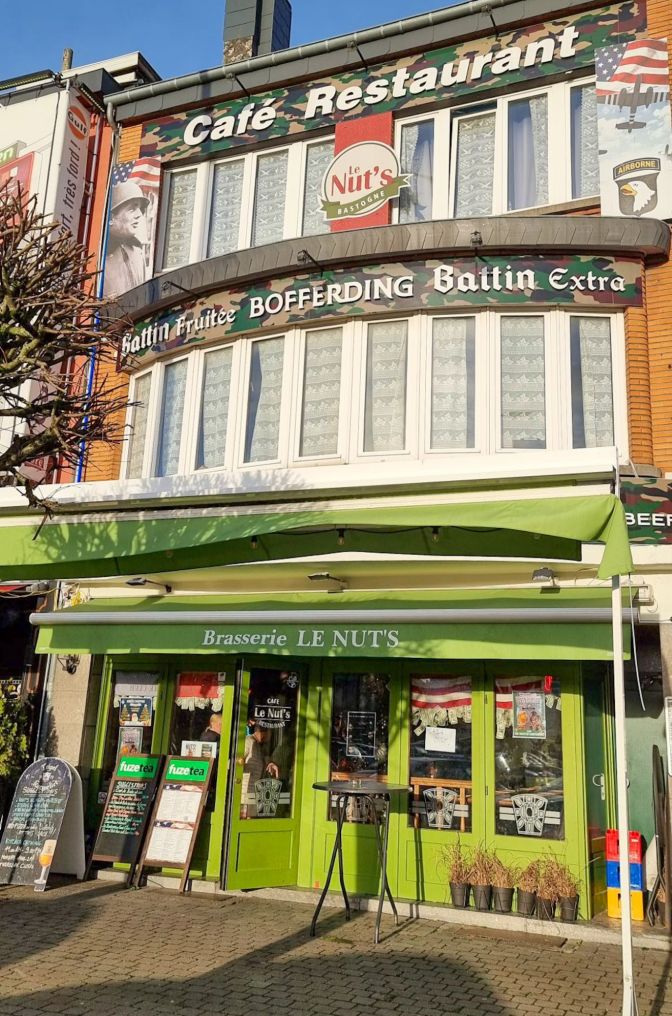
Bastogne has one of the most interesting shopping streets in Belgium, lined on both sides with several unique shops, rather than the same old fashion franchises that you see in Flemish towns.
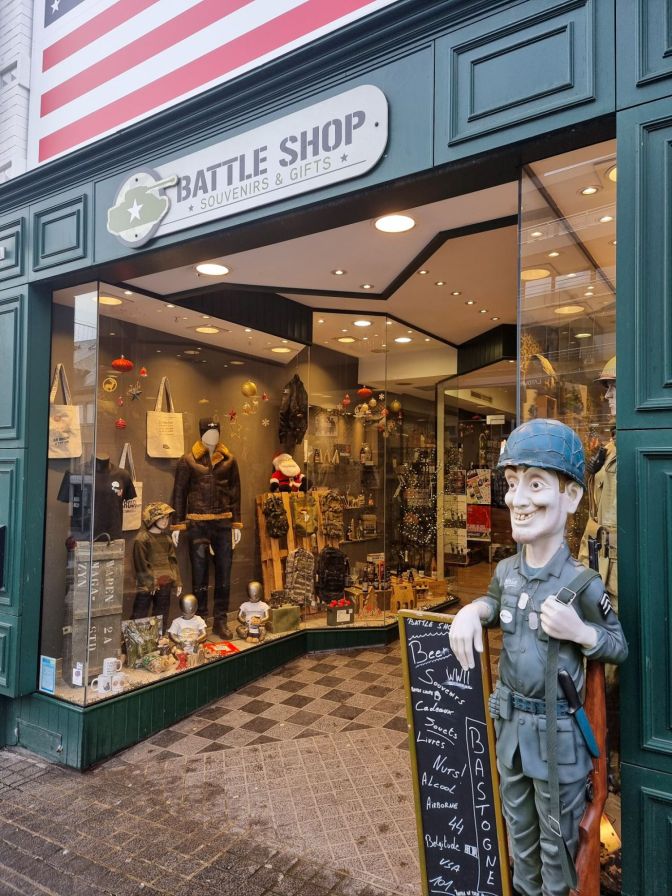
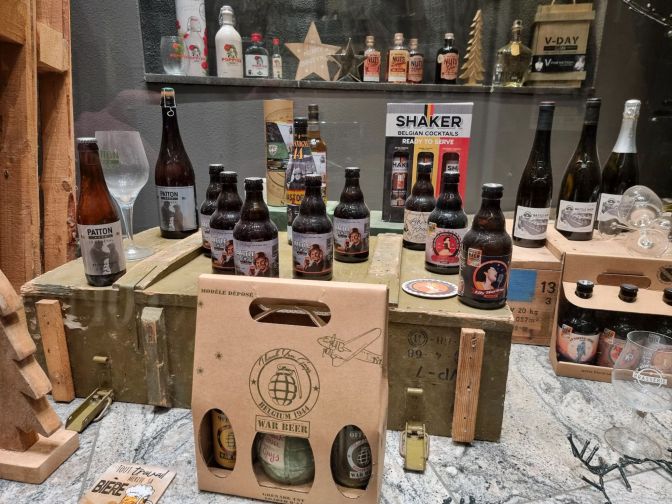
My favorite shop, of course, is the Battle Shop where you can buy all sorts of military-themed souvenirs. But for me, it is about their special beers. No Belgian town has married the themes of beer and war as well as Bastogne.
Brewtiful Bastogne
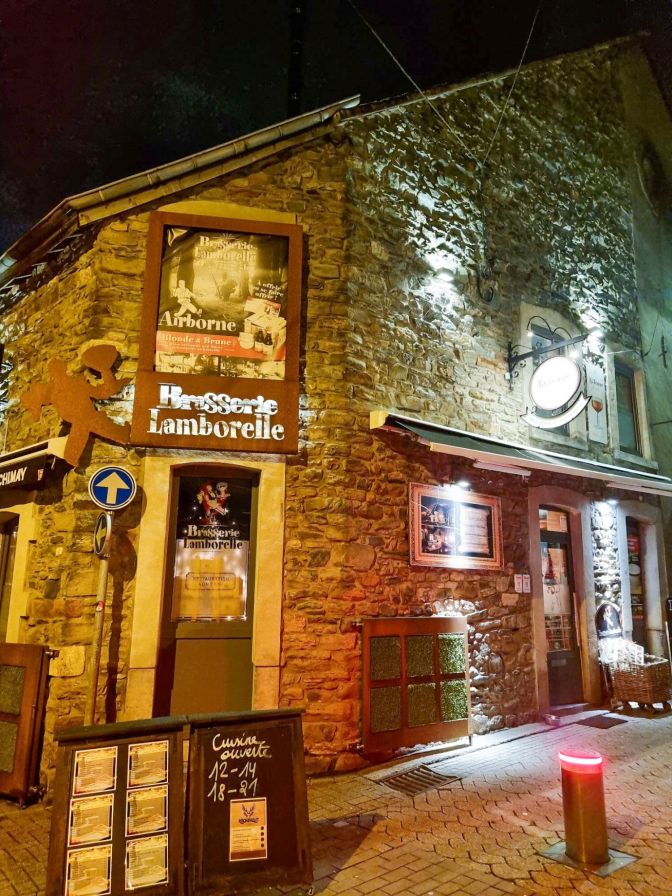
Brasserie Lamborelle
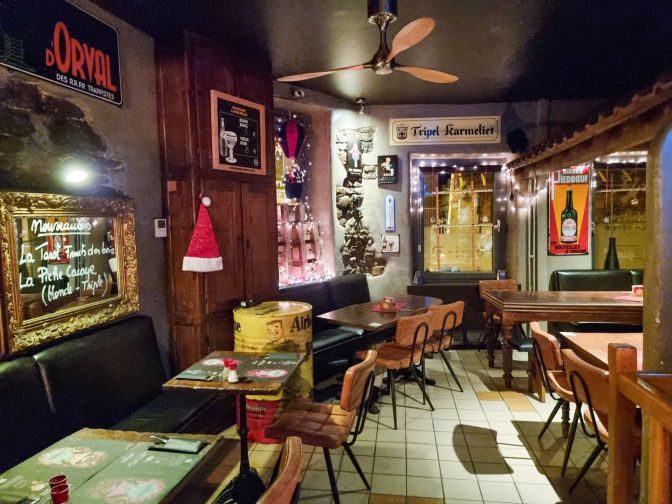
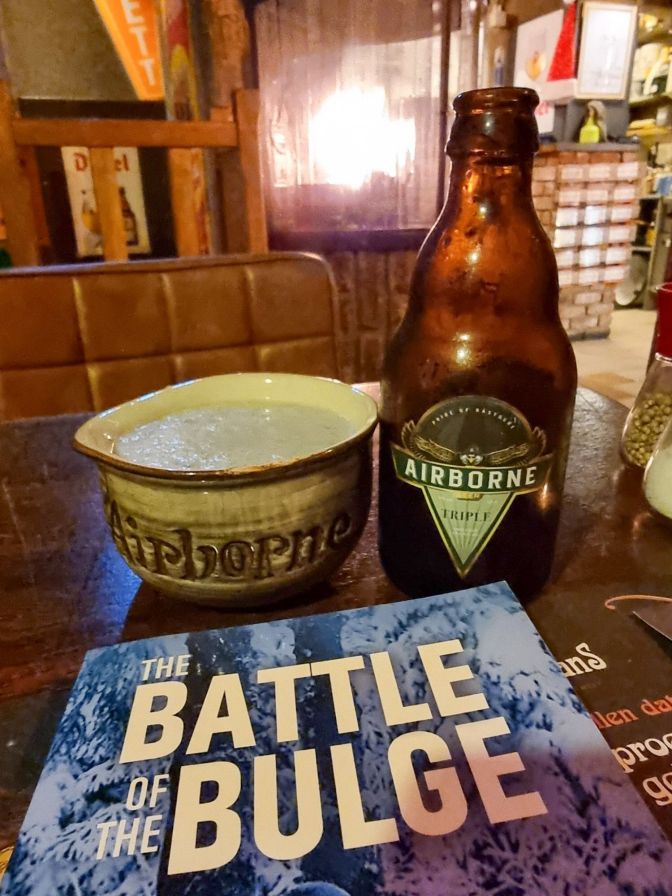
Lamborelle is the home of Airborne beer, which has blond, brune, and triple versions. They are contract-brewed by Val-Dieu, which means high quality. Besides serving Airborne beer, this pub has an extensive Belgian beer menu which right now (Dec 2023) includes the Rochehaut Triple on tap, a beer, like Airborne, which is rarely marketed in Flanders.
Cafe des Sports
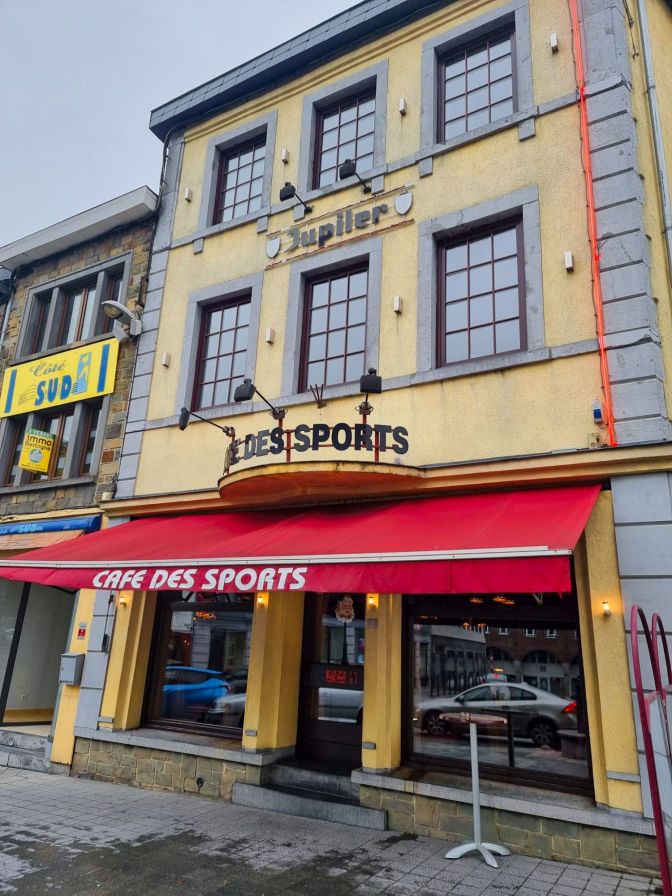
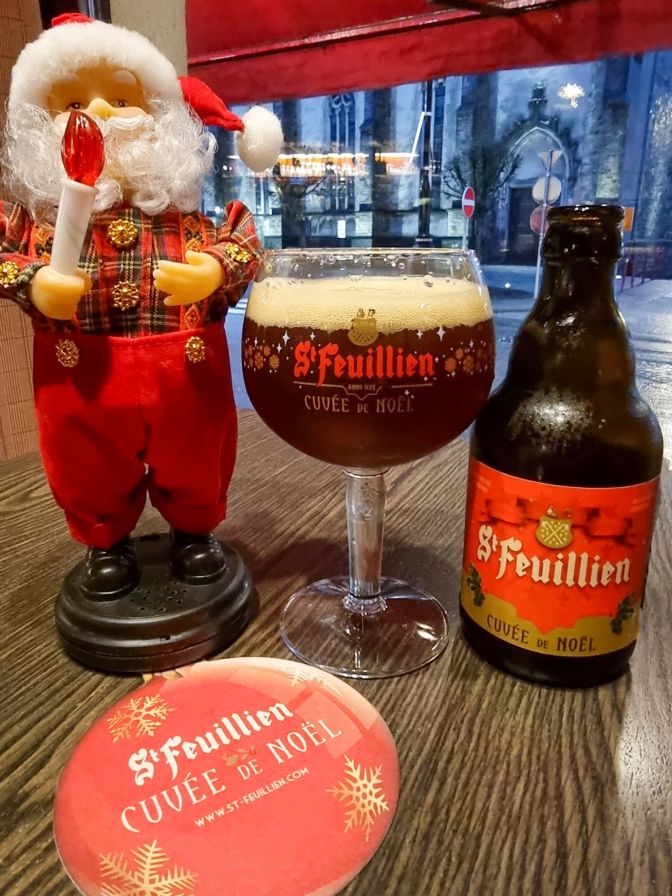
I have to give a shout out to this pub near Bastogne’s main church. Frankly, it is not a pub whose outward appearance and name would normally draw my interest. However, they were one of the few places open on Christmas night, so I gave them a try. Inside, the pub is much more charming, and they were serving St. Feuillien’s Christmas beer. A fine quality pub.
War-Themed Beers
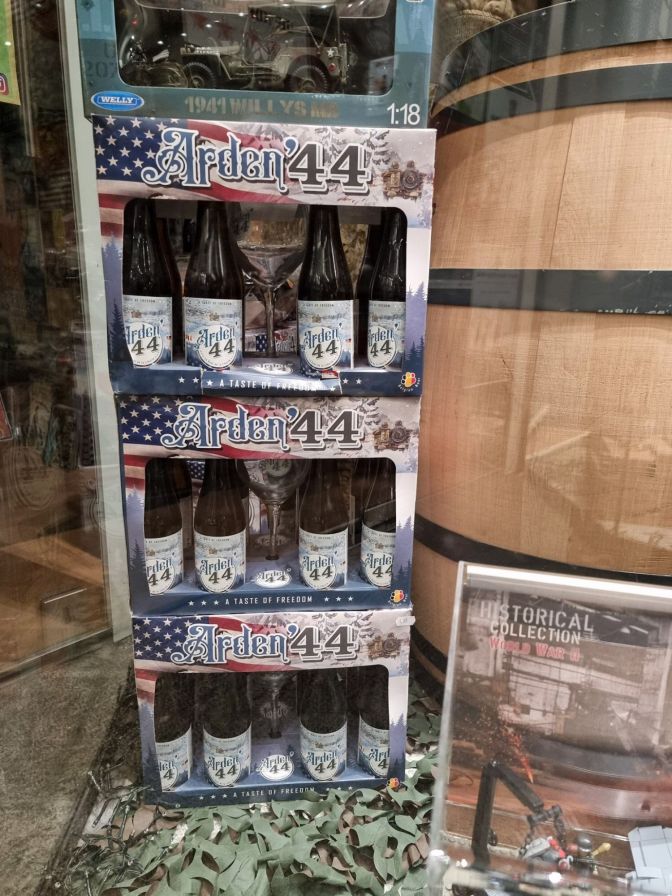
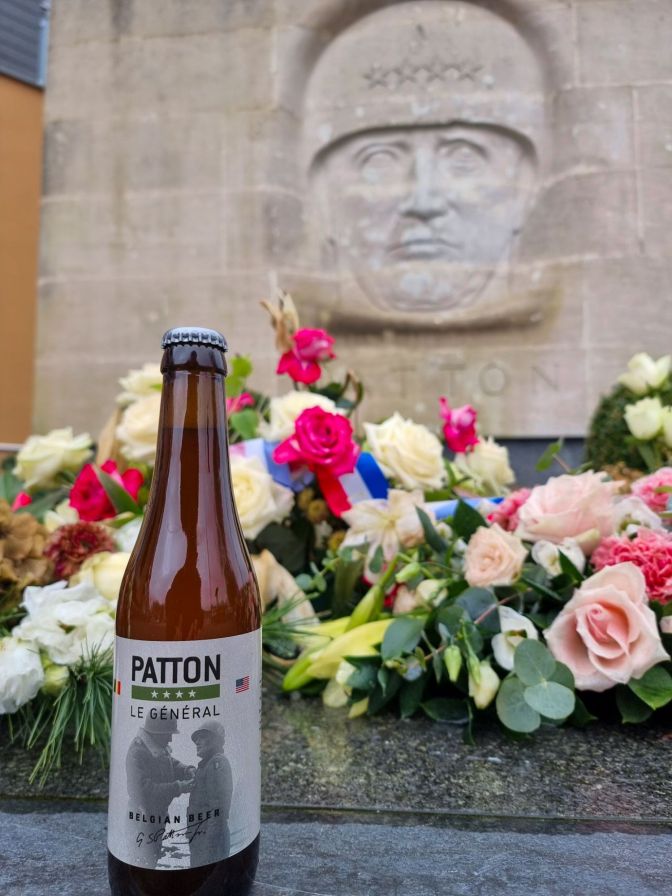
Besides Airborne, there are other war-themed beers that you can pick up at the Battle Shop.
Patton Le General
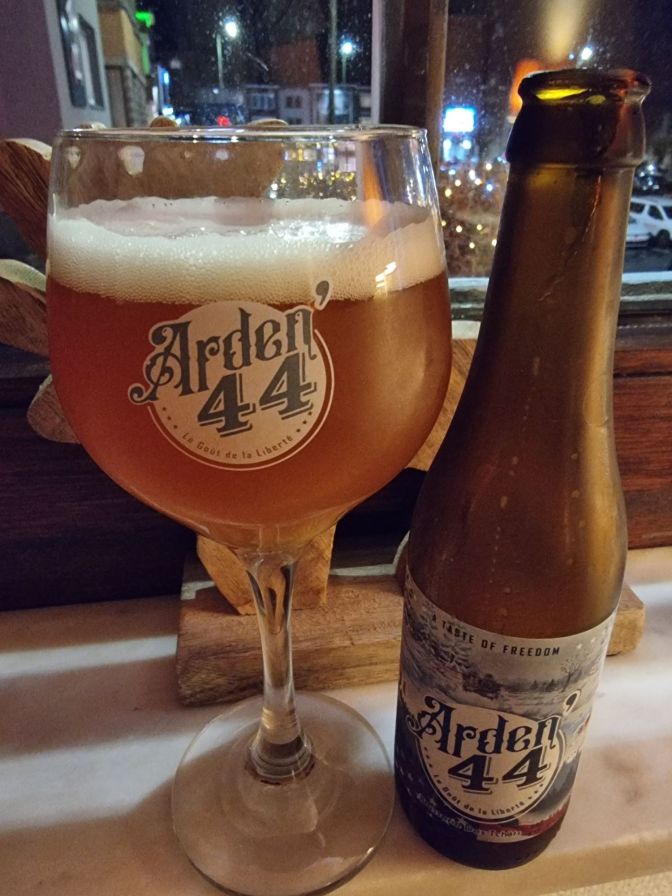
Arden’ 44
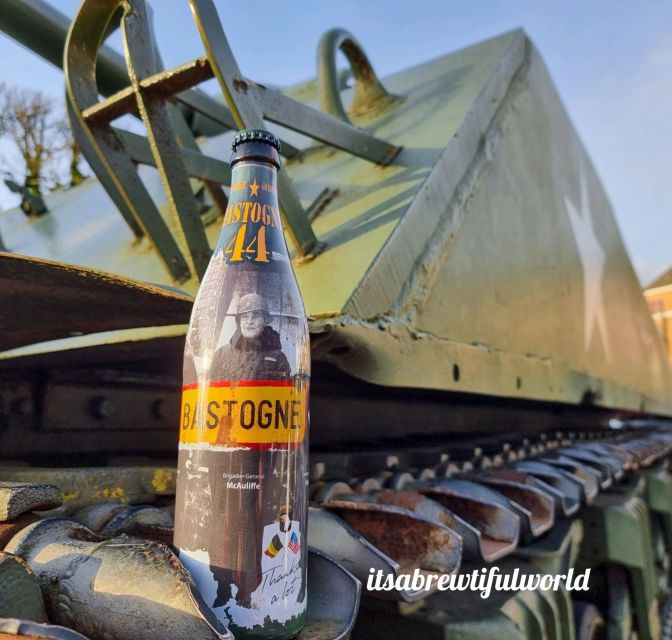
Bastogne 44
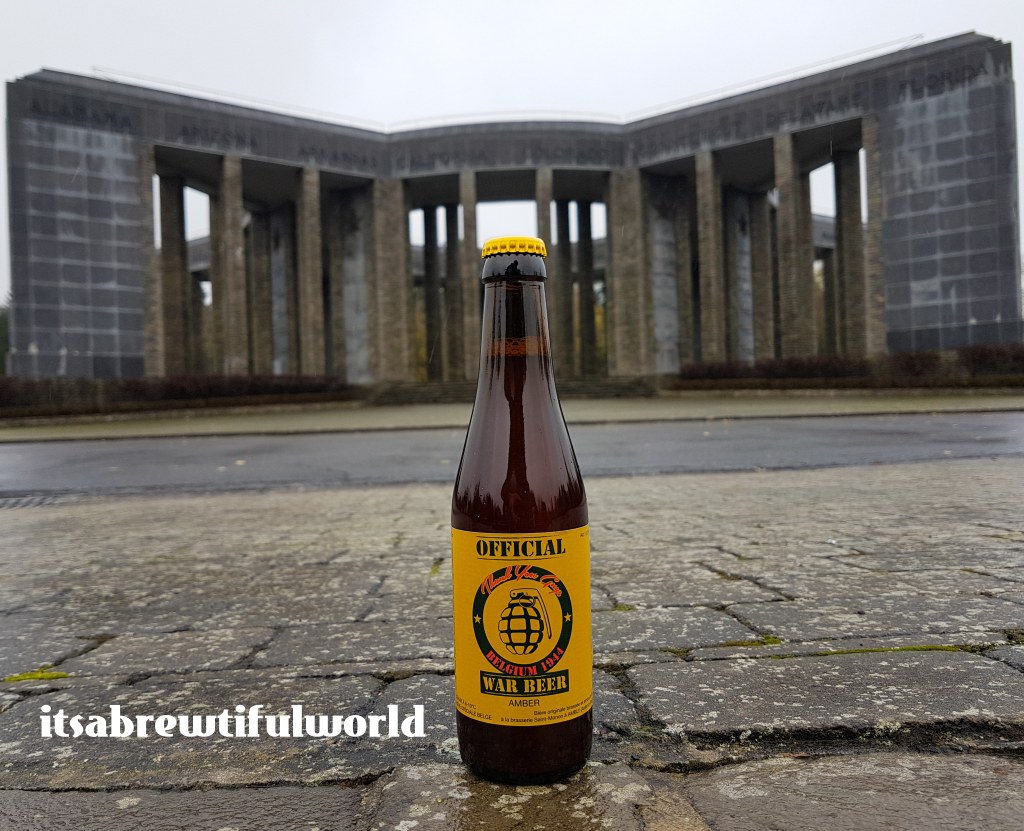
Official War Beer
While the city of Bastogne is without doubt interesting to visit by itself and try all the special war-themed beers, the countryside around Bastogne offers the most intimate connection to what became known as the Siege of Bastogne. Most of the sites can be visited easily by car, but this is beautiful Ardennes country and for me hiking is the best way to see it.
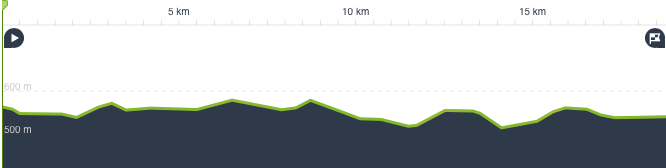
Hike Details
| Starting/Ending Point | McAuliffe Square |
| Total Distance | 18.8km |
| My Moving Time | 3h35m |

It’s Not Just a Beer, It’s a Journey
The hike starts at the Liberty Road Marker #1145 on McAuliffe Square.
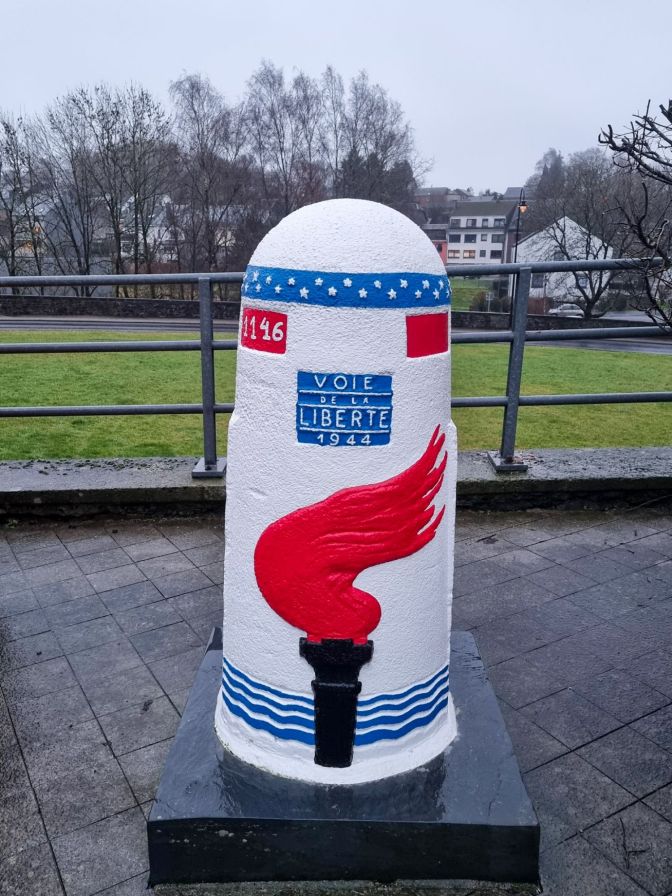
Follow along Bastogne’s enjoyable shopping street. At the end just past the church is the second of three Liberty Road markers.
From the city center, it is a short walk until coming to the Bastogne War Museum and Mardasson Memorial. It is highly recommended to visit these another time. However, the Bois Jacques Easy Company foxholes further on are no longer accessible unless you buy a combo ticket to the Bastogne War Museum. You can do this online or at the museum. So if you want to visit the foxholes during the hike, you will need to already buy the combo ticket. Buying the ticket requires you to pick an entrance date and time to the museum. I have been to the foxholes when they were freely accessible, so I chose to skip it this time.
Bastogne War Museum & Mardasson Memorial
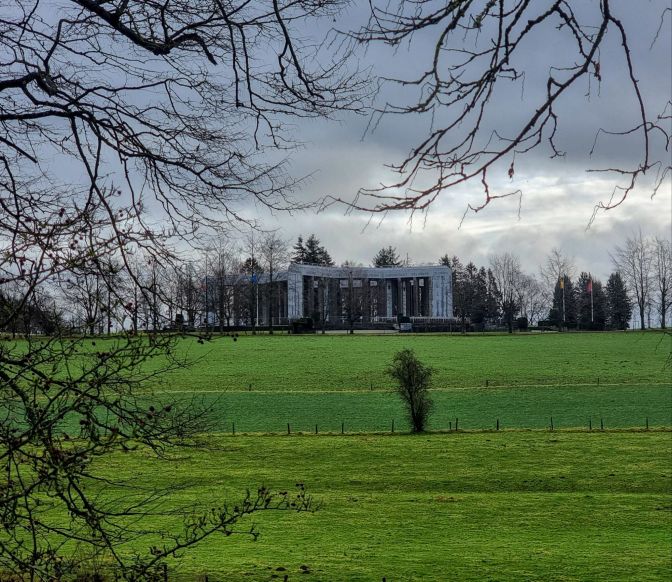
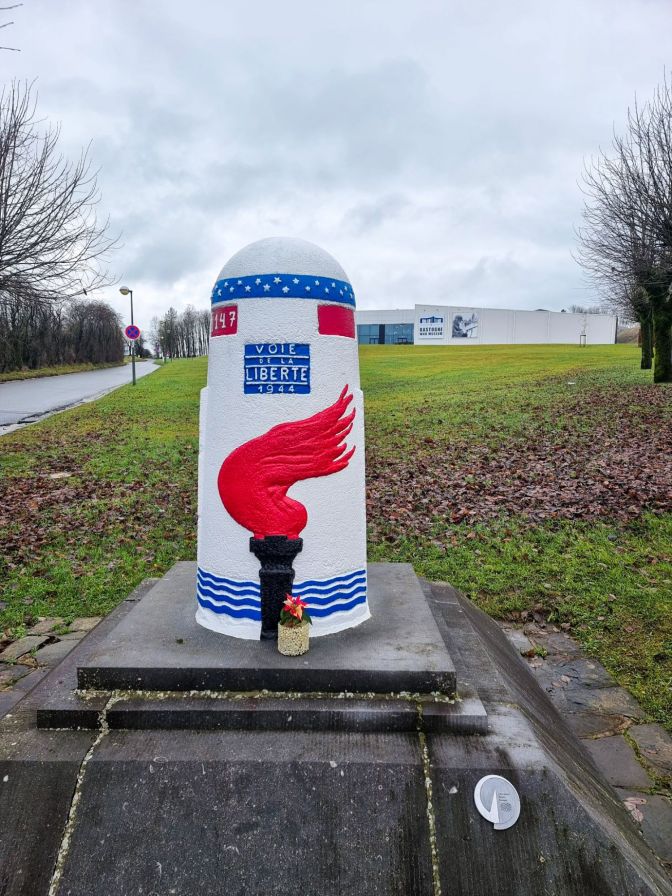
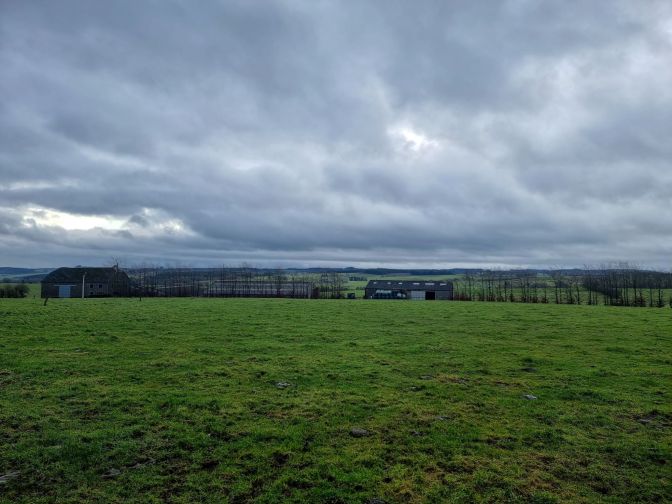
Just beyond the museum, there is a nice view towards the east, perfect for watching German activity.
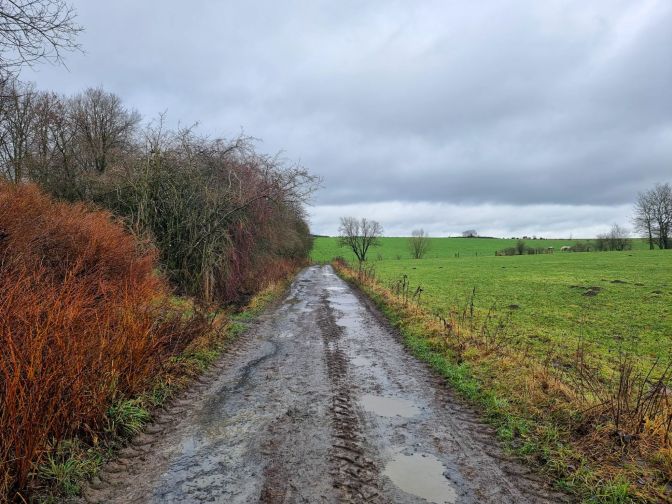
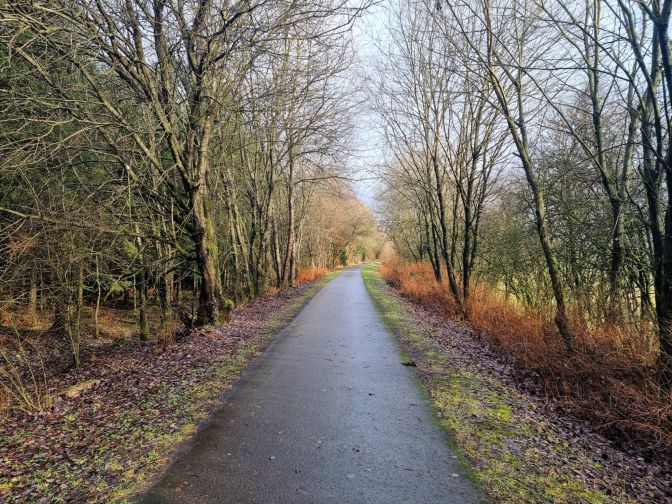
The hike follows a muddy farm road before being relieved by a Ravel (similar to what Americans know as Rails-to-Trails).
Easy Company Memorial
If you want to follow in the footsteps of the Band of Brothers, you have come to the right place.
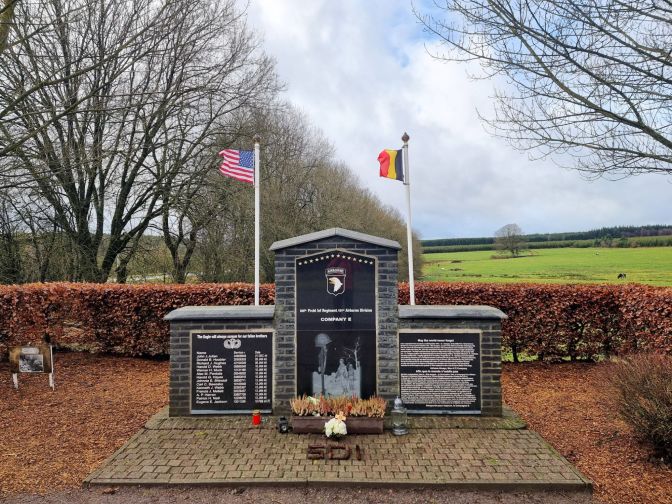
From here you catch a path nearby which leads to the Bois de la Paix.
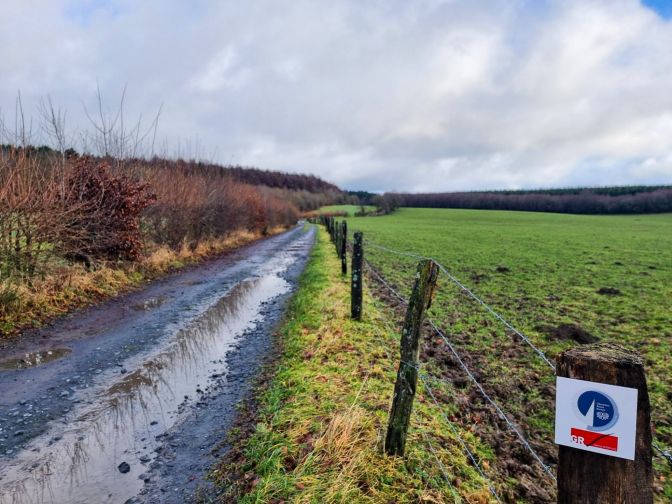
Bois de la Paix
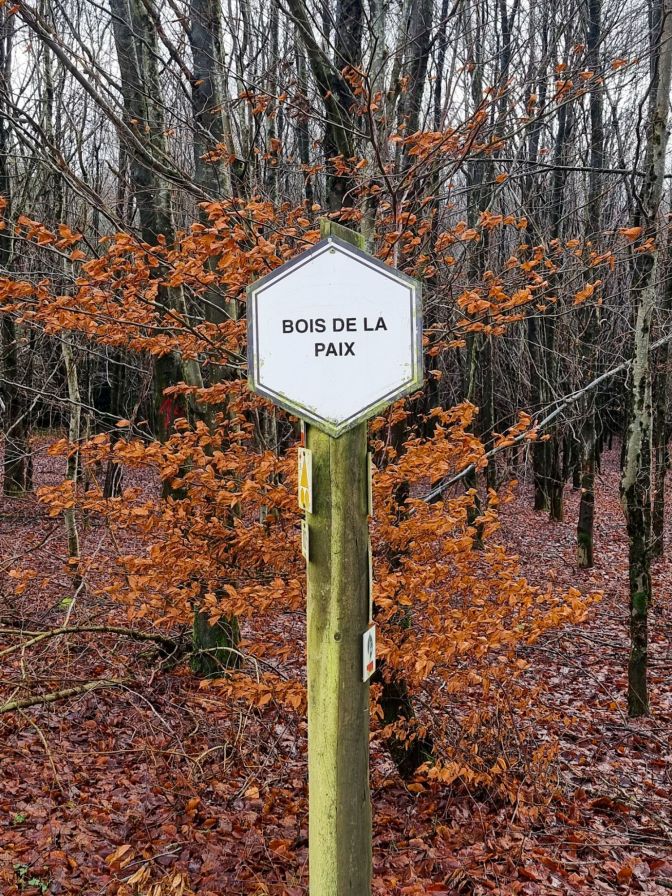
This forest is laid out in the shape of the UNICEF logo. All around are memorials to military groups as well as individuals.
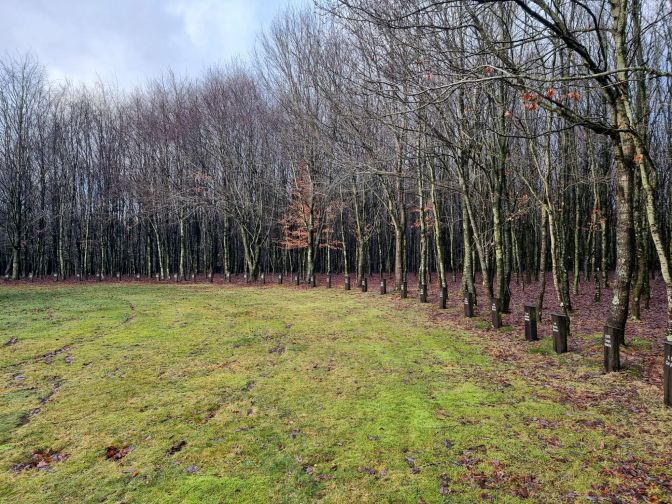
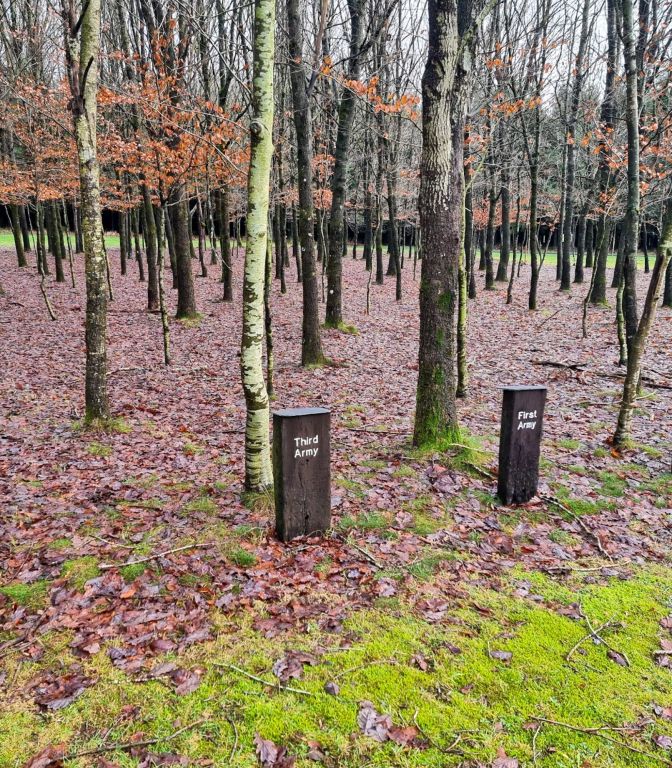
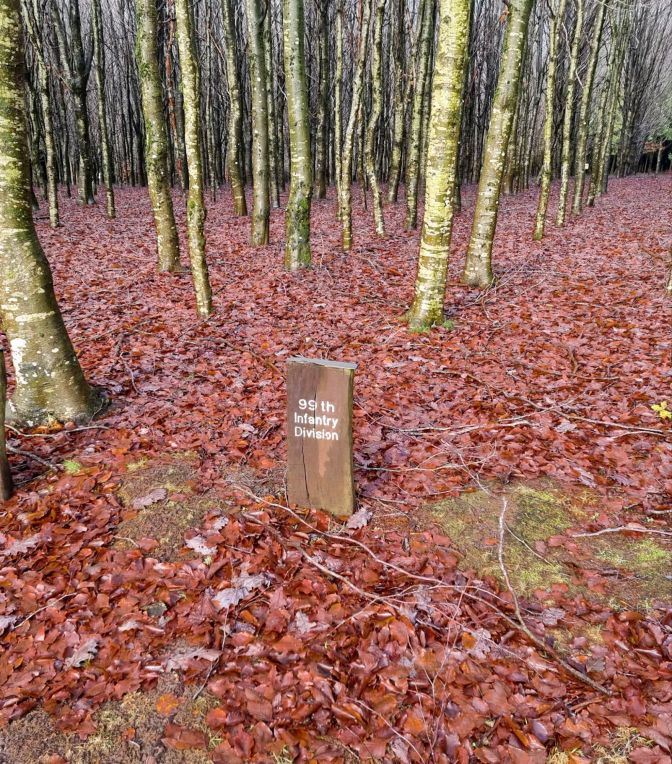
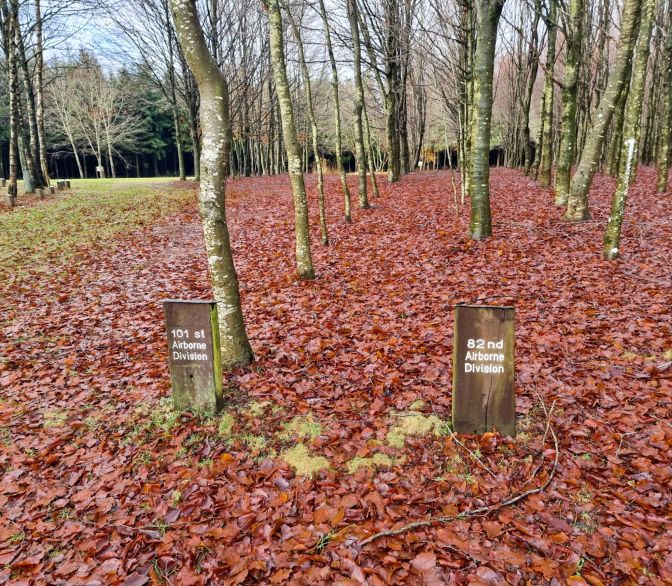
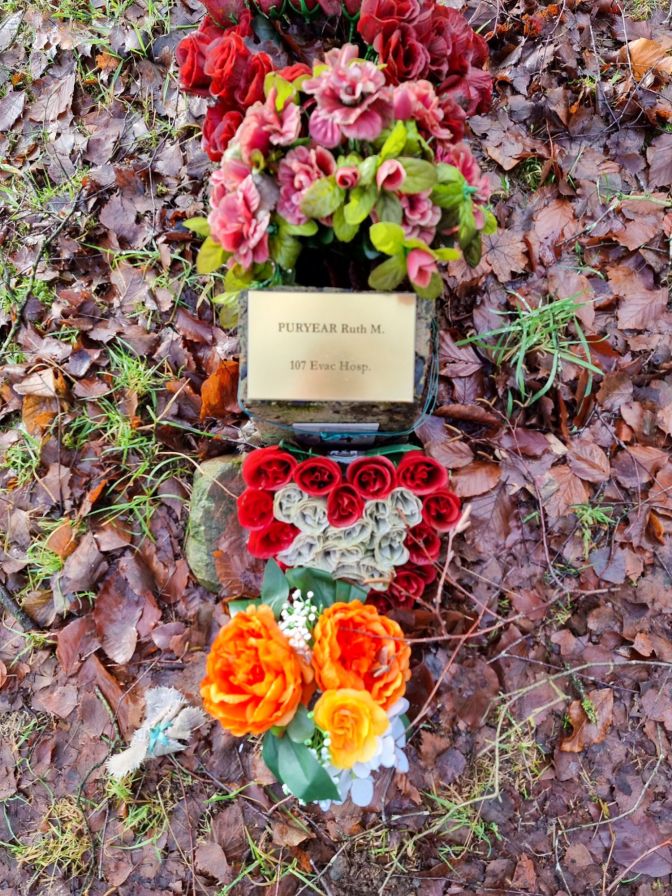
The two most decorated memorial stones belong to Ruth Puryear who was First Lieutenant and nurse of the 107th Evacuation Hospital. She was also part of the liberators of Buchenwald concentration camp. The other is Lt. Col. Everett “Red” Andrews who gives his story in the short clip.

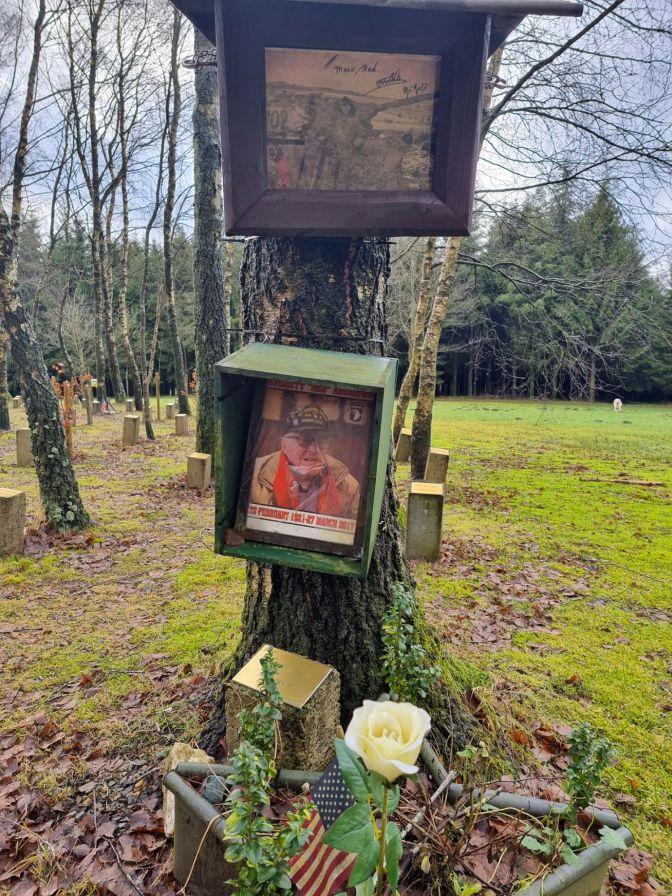
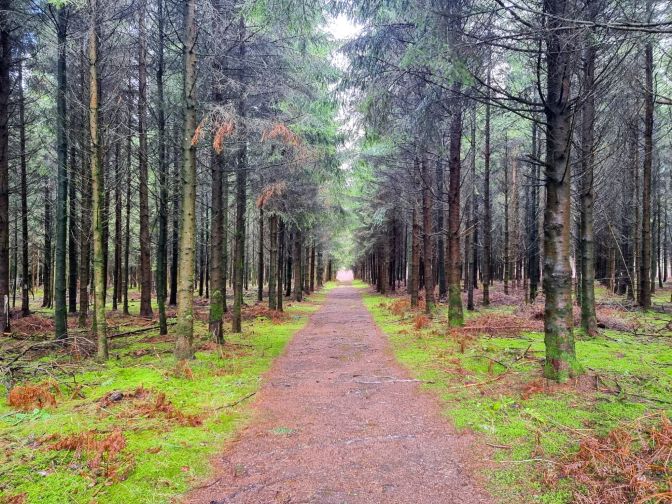
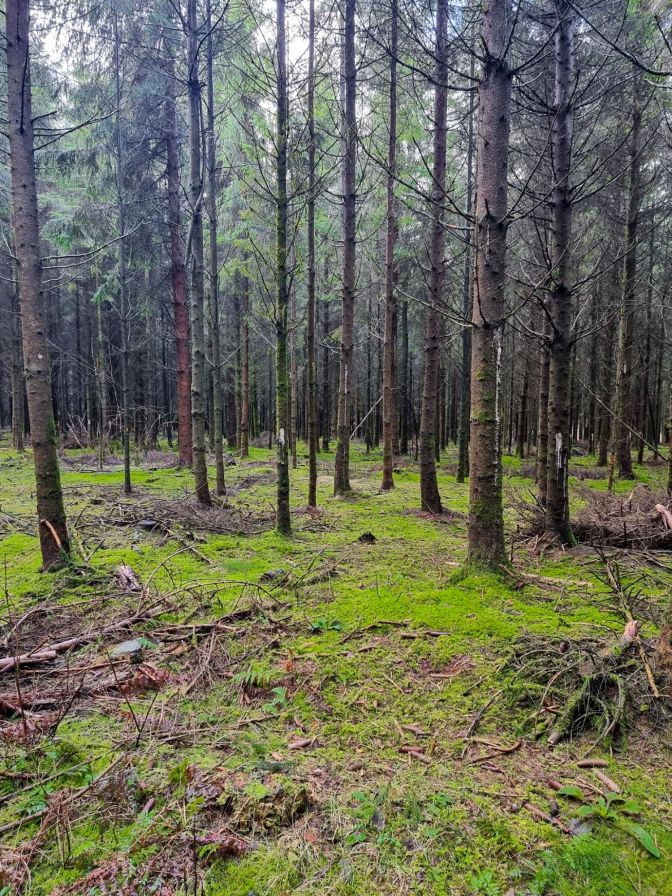
Moving on up the road, I discovered for the first time that the Bois Jacques was now completely fenced in.
Bois Jacques & Easy Company Foxholes
As mentioned above, a combo-ticket is necessary from the Bastogne War Museum.

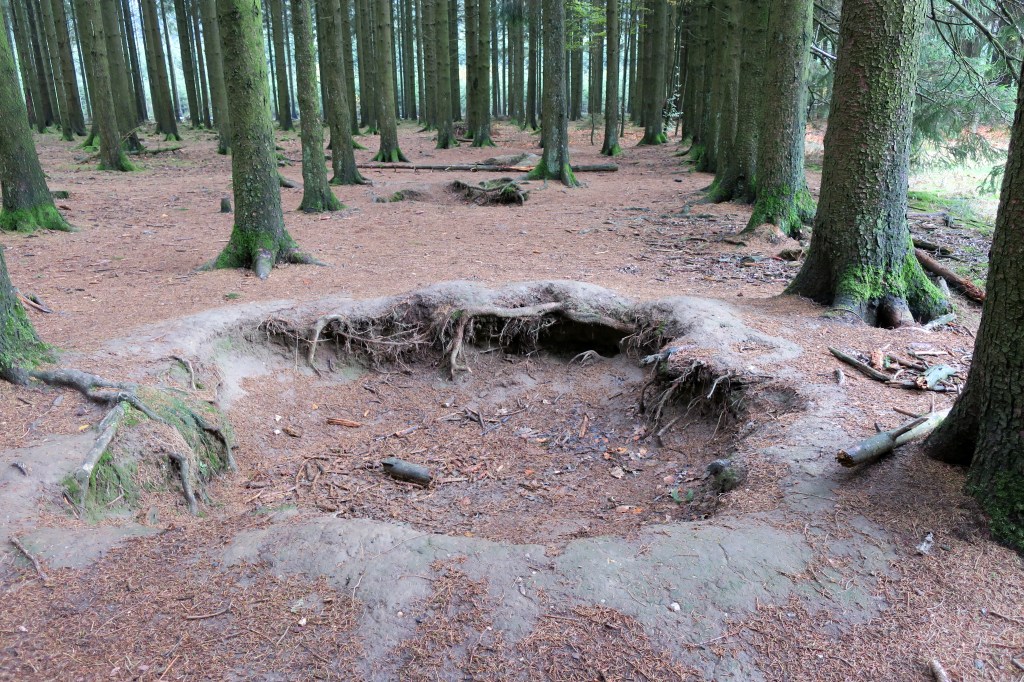
Foy
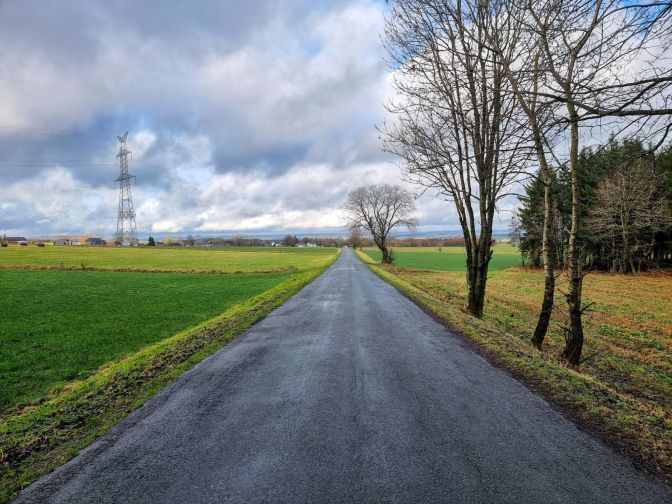
Passing by the Bois Jacques, you come to the small village of Foy. My entrance into Foy was a little less stressful than Easy Company’s.
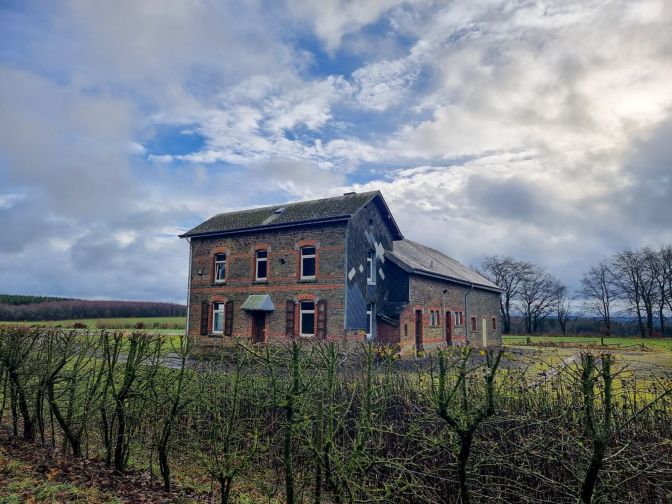
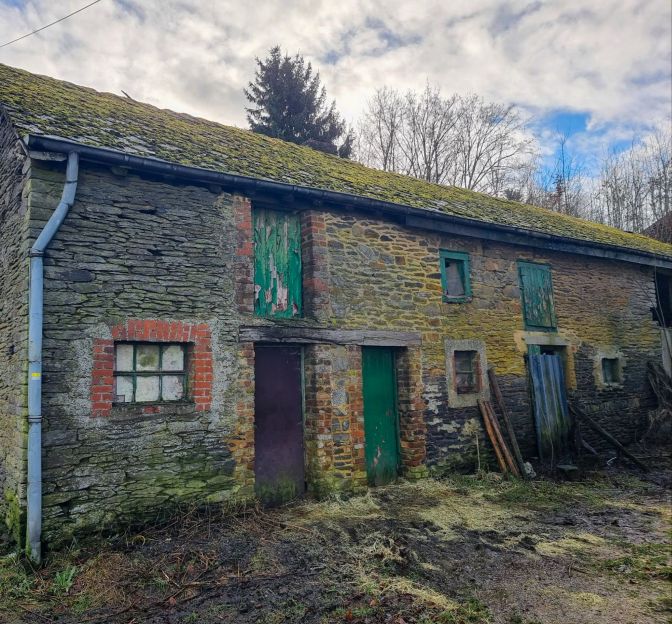
Foy has several buildings that look like they would have existed in 1944 including the one below.
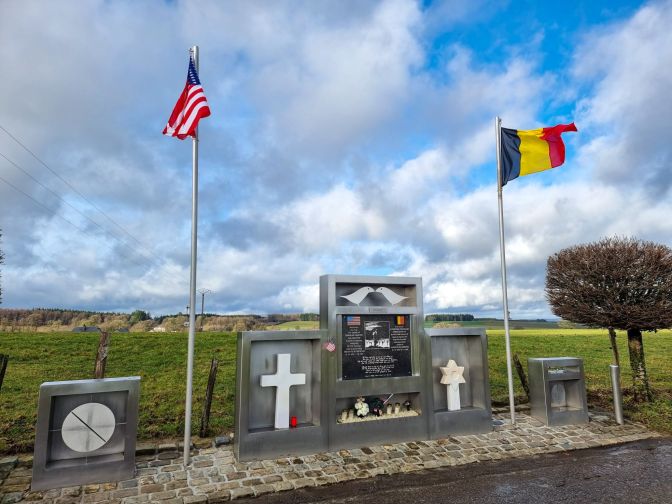
Former Site of the Foy American Cemetery
According to the plaque, this site was used as a cemetery between 1945 and 1948.

Recogne German Cemetery
Just a short distance further towards the village of Recogne is a German military cemetery.
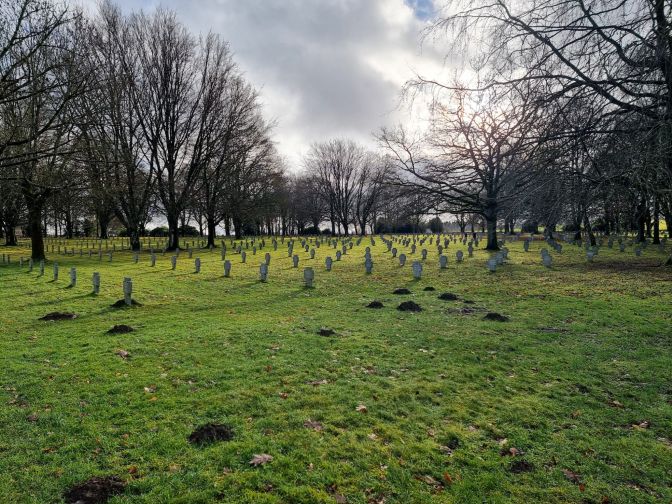
The hike then passes briefly through the village of Recogne and a bison farm. The bison farm is marked as private property but it seems quite ok to follow the road which is necessary to get to the next memorial.
WWII Native American Memorial
This memorial was dedicated in 1995 to honor Native Americans who fought in the Battle of the Bulge1.
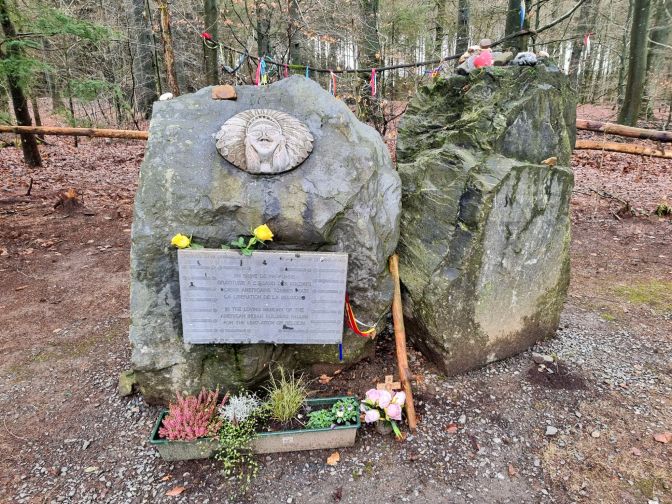
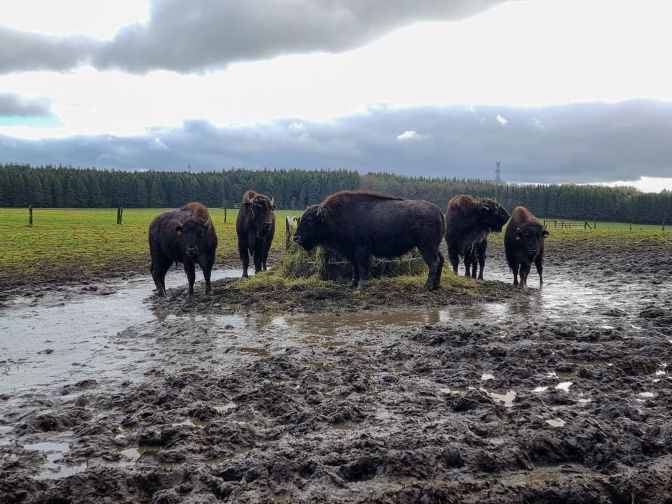
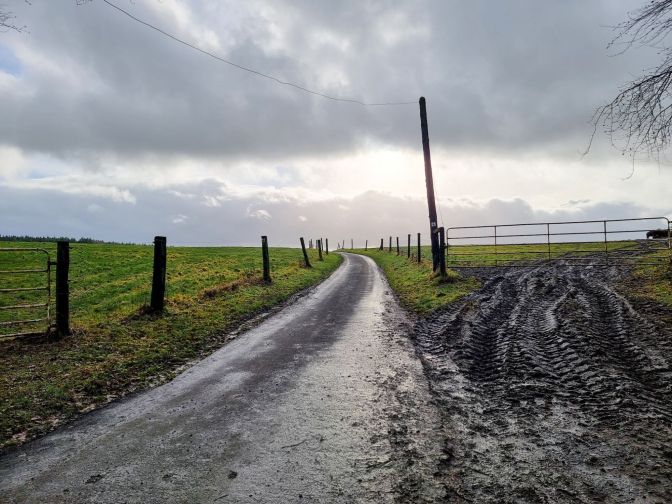
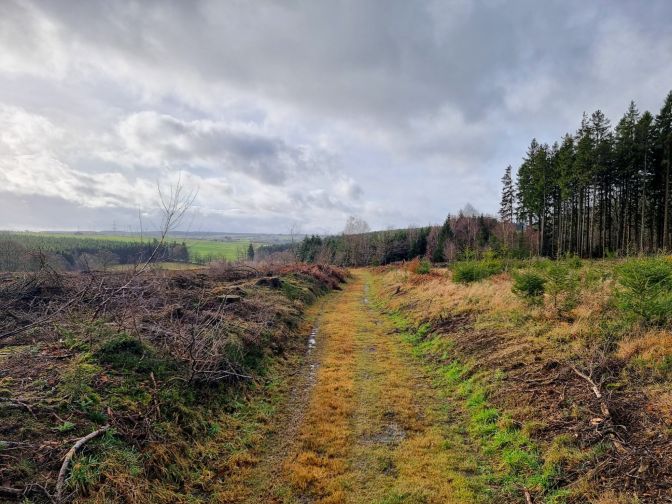
The way back to Bastogne was along muddy paths and backroads.
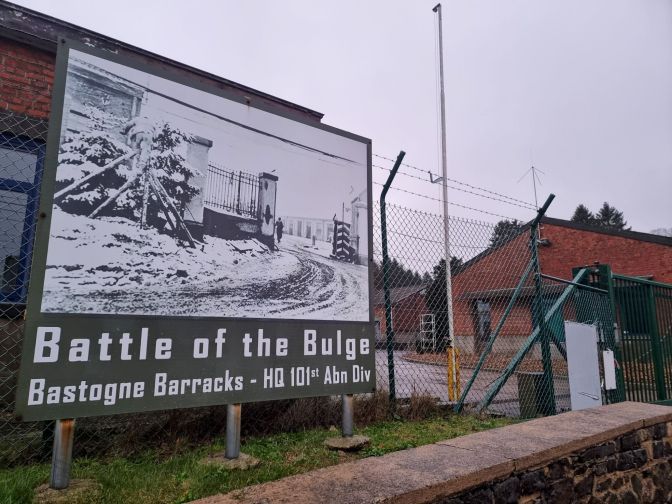
Bastogne Barracks
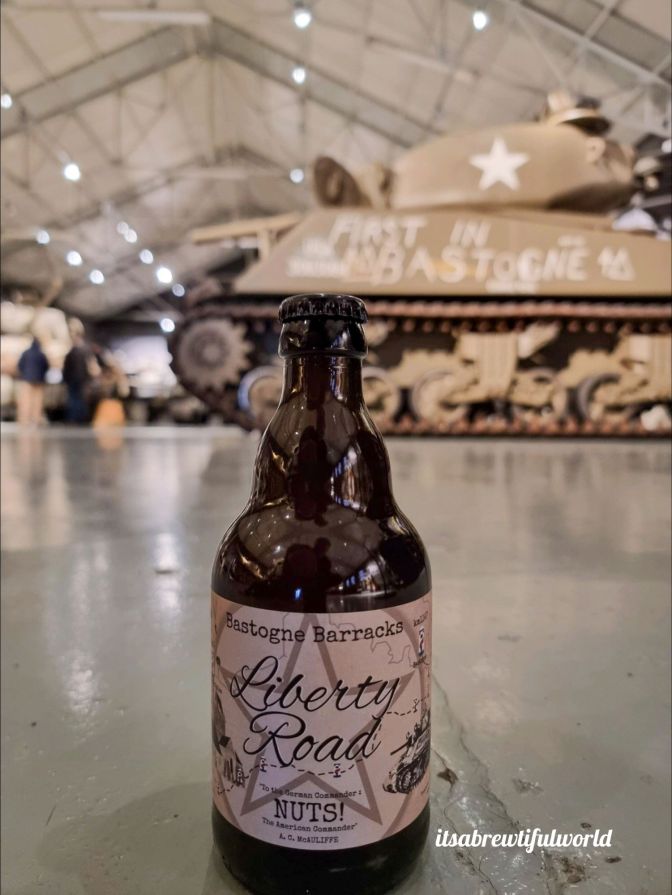
As you arrive back into Bastogne, the hike passes by the Bastogne Barracks which was the headquarters of General McAuliffe. Today it has two large showrooms of WWII-era military equipment. Highly recommeded. In honor of the museum, the Brasserie Artisanale Saint Mere Eglise in Normandy brews a Liberty Road Bastogne Barracks beer.
Final Words
“…the Battle of the Bulge was not fought solely in Bastogne.”
The Battle of the Bulge by Robert E. Merriam (1947)
Robert Merriam was part of a special team of historians who worked for the War Department in order to make sure that the historical record of the war was properly and evenly recorded, warts and all. Naturally, they were received with some suspicion. When your job and duty are to kill other human beings, you want to be cast in the best light possible. The American public latched onto Bastogne, because they were fed “line after line of newsprint” about the “bravery of our boys in Bastogne”2. Bastogne accounted for about 3000 out of 80000 American casualties in the Battle of the Bulge. Merriam seemed to be trying to caution us already within a couple years after the war ended not to forget or dismiss the other 77000. The Band of Brothers are now pop culture, even among non-Americans. I admit when I walked through the forests around Bastogne or when I passed through the village of Foy, I was thinking of that show and connecting it to the experience. Yet recalling Merriam’s words and witnessing the way the memorial of a nurse in the 107th was the most decorated memorial in the Bois de la Paix, it reminds me to broaden my reflections and appreciate the legacies that carry on today by some unseen benefactors who have thought to put flowers next to Lt. Ruth Puryear’s stone in this quiet far corner of Belgium. Bastogne will always pass through my consciousness as a road sign, but in reality it is people, voices, stories, and histories that continue on in lives that have been touched by the sacrifices that were made and that captivate people like myself to come and seek them out.

Footnotes
- https://www.liberationroute.com/it/pois/1164/native-american-memorial ↩︎
- The Battle of the Bulge by Robert E. Merriam (1947) ↩︎

 itsabrewtifulworld
This is what exactly I was looking for ! I have been searching for a DIY tour around Bastogne which tops my Belgium itinerary and all I could find were the overpriced guided tours. I am a solo female traveler planning to spend a day or two in the area. I would like to know if the above hike is possible in a day as I can see the War Museum takes at least two hours and fox holes can only be combined with a ticket. How feasible is to skip museum and the forest for the next day and continue with the other sites (including the barracks)? I would like to know about the accommodation options and the area best suited for staying to cover all these.
LikeLiked by 1 person
Hello Cma, I am glad you found my post helpful. It is definitely possible to do everything in one day. The hike is about 19km, so say about 4 hrs of actual walking. If you stop at the War Museum (2h), Bois de Jacque (30m), and Barracks (1h), that is an 8-9h day with stopping to have a bite to eat and take some breaks. During the long Summer days in Belgium, this is quite feasible and it gives you more time to browse and linger at the different stops. Definitely a busy, tiring full day, but doable.
I stayed in this apartment right on McAuliffe Square. It was quite affordable during the Christmas holidays. It is listed a bit higher during the summer when I just checked it. But I can recommend it. If you do the hike, I’d like to hear of your experience. You can reach me at the site email beerhike@itsabrewtifulworld.com. Cheers!
https://www.booking.com/Share-RB0nMc
LikeLike