
Faversham would probably be the last overnight stop for pilgrims on their way to Canterbury…
Pilgrimage to Canterbury by Howard Loxton (1978)
After two fantastic days of drinking toasts to Thomas Becket and Charles Dickens in Canterbury, I was on my way to Rochester by train, wondering if I was damning myself for following the pilgrim’s way in the reverse direction. I was barely on the train for 20 minutes though when I disembarked at the village of Faversham. There is a certain category of joy that I get when I find myself in a place which has some significance to me but where I get the impression that I will be the only outsider. It is the uniqueness of the experience. As I gathered my orientation outside the train station, I felt like a stranger in some old movie wandering into a town not used to strangers. It was too sunny of a day to add any additional atmosphere to that sensation, but it does adequately describe the level of unknown and excitement that was brewing within me.


The road leading into town was speckled with pubs having names like The Railway Hotel, The Leading Light, The Limes, and The Old Wine Vaults. Like Canterbury, there are enough Tudor-style façades to be reminded of old England with some upper stories bulging out over the sidewalk. Hundreds of years of ago, Faversham would have been loaded with inns to house pilgrims. Today it seems like a fairly sleepy Kentish town.

I went through Faversham. A very pretty little town…
Rural Rides by William Cobbett (1821)
Preston Street bends around to Market Street where a shabby looking establishment called The Swan Cafe & Restaurant evokes the Don’t judge a book by its cover dilemma. I did not enter, but it was my first brush with the classic travel writers of old. If you are a shoemaker, pay attention.
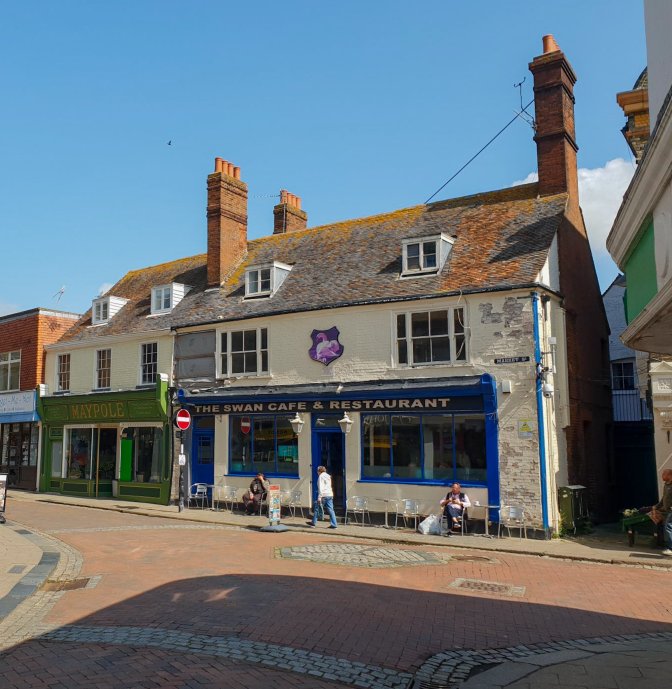
The saints are said to have carried on their shoemaking trade “at a house in Preston Street, near the Crosse well, now the sign of the Swan,” and that house… was long a place of pilgrimage for other workers in the craft of which St. Crispin is the special patron.
Highways & Byways in Kent by Walter Jerrold (1920)
The saints spoken of are St. Crispin and St. Crispianus who fled Rome during the Reformation and managed to foil several attempts at being executed through miraculous interventions; such as a stray stream of molten lead spurting into the eyes of their wannabe executioner as he was about to immerse them. When I read about some of their narrow escapes, I am reminded of the Oktoberfest scene in the Pink Panther Strikes Again movie where a slew of assassins manage to kill each other trying to assassinate Inspector Clouseau.
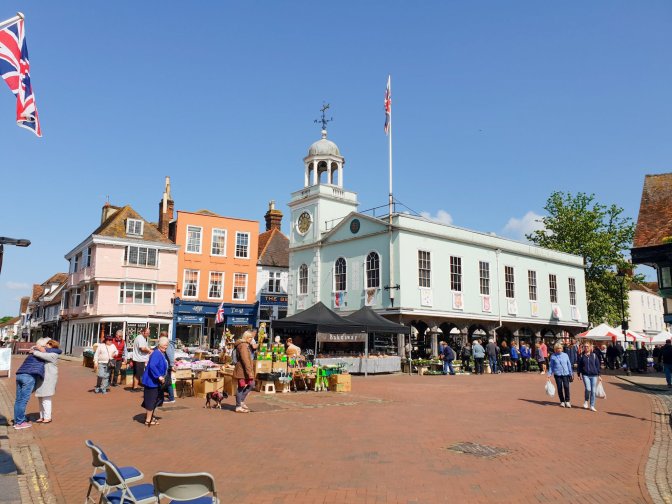
Market Street brings you to the market square and the Guild Hall where a timeless scene hasn’t changed much since a 1920 sketch by Hugh Thomson1.

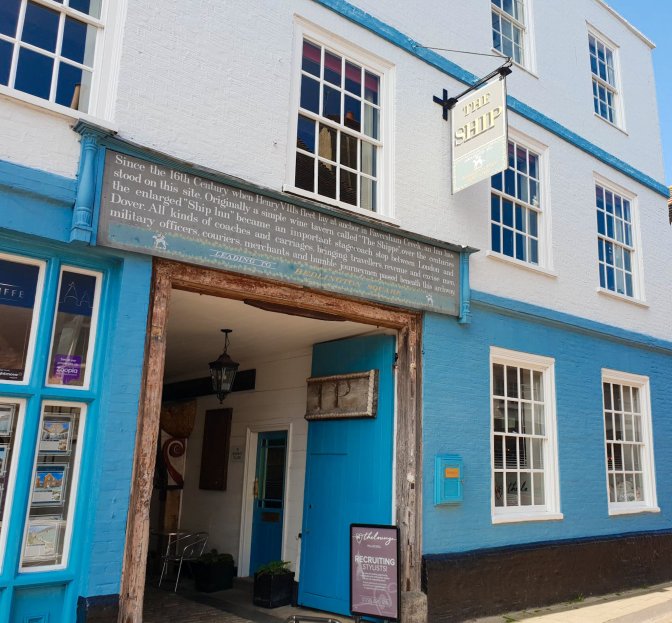
On the market square also sits one of the city’s most historical inns, The Ship Inn which has been around since the 16th century. However, don’t bother looking for the pub entrance unless you want to get your hair done. Today it is a salon.
It was still a bit too early for a beer so I explored the village. A river simply called the Creek connects the village to the Swale and Whitstable Bay which allowed it to serve as a market town. Goods could be easily brought in to the town’s harbor.

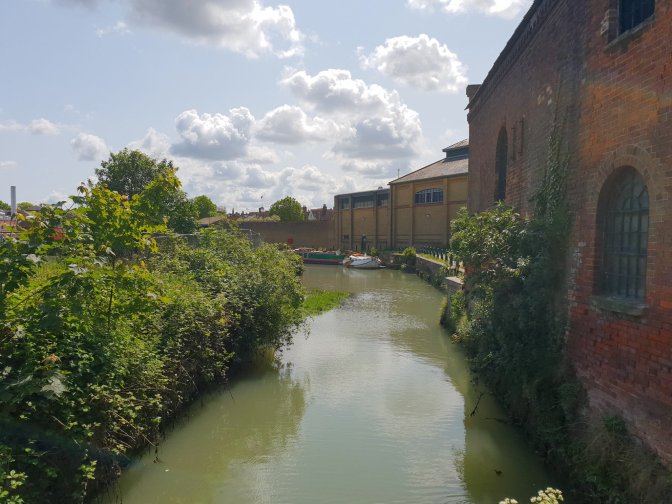
The Standard Quay is the village’s old harbor which today is a collection of antique shops and restaurants.
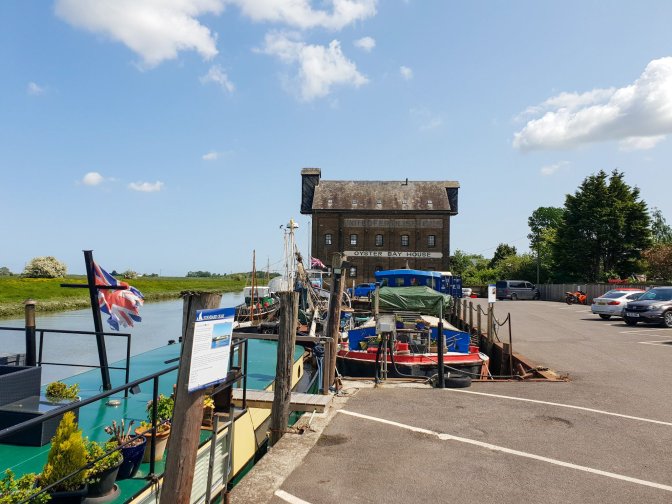
Meanwhile, I passed a few other nice looking pubs called The Bull Inn, The Quay, and The Anchor.

As I followed Abbey Street back towards the village center, a curious house caught my eye; the house of one Thomas Arden. Arden was the mayor of Faversham in the 1500’s. He was also a bit savvy with real estate and would dabble with old abbey properties that were left over after King Henry VIII abolished and destroyed them. Arden’s house is built into one of the old sections of the abbey.

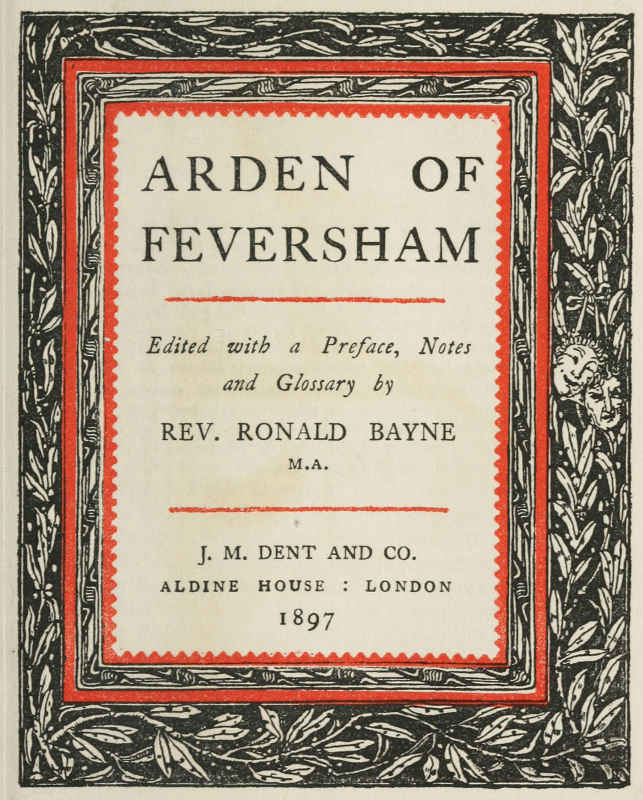
But not every aspect of Arden’s life was so rosy. His wife had him murdered, and this story was the big news of the day; so much so, that a tragic play was written about it called Arden of Feversham (back when it was originally spelled with an ‘e’). The authorship of this play has been debated for 450 years, but one of the top candidates on the list is a young Shakespeare.
“There could be no alternative in that case; so that the actual alternative before us is simple enough: Either this play is the young Shakespeare’s first tragic masterpiece, or there was a writer unknown to us then alive and at work for the stage who excelled him as a tragic dramatist”
A Study of Shakespeare by Algernon Charles Swinburne (1875)
Thus the basic logic of Swinburne is that it must be Shakespeare because if there was someone better than him at tragedy, historians would know who it was.
Almost nothing of the rest of Faversham Abbey still exists which includes the resting place of King Stephen, a Norman king who ruled England from 1135-1154. who was buried there.
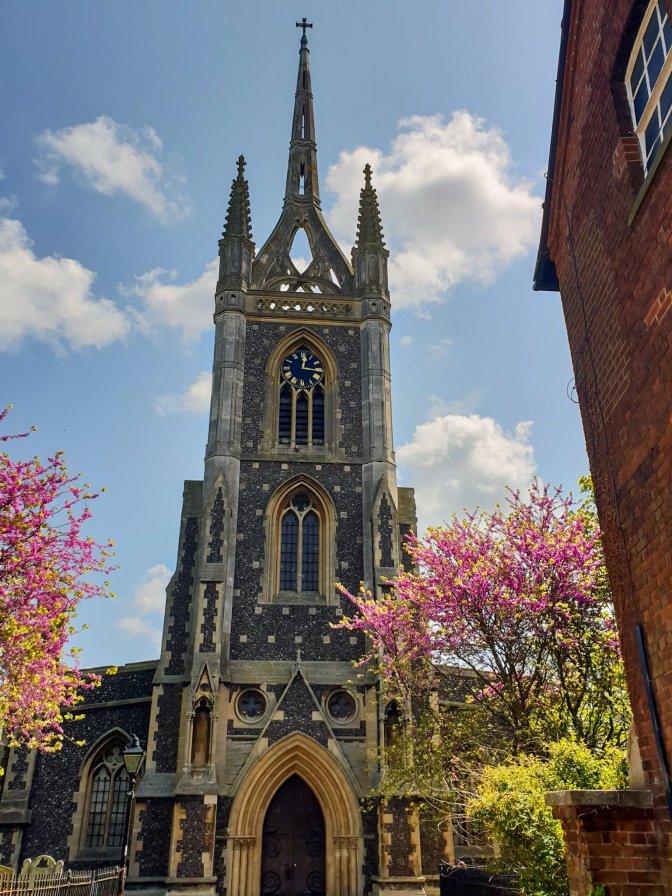

Discovering some minor Shakespearean connection put me in a drinking mood and it was finally time to get to what I really came here for. All the hops that used to come in from the Swale along the Creek did not come here just to be sold at the market place, but to fuel Favershem’s brewery, arguably the oldest brewery in the entire U.K.
Shepherd Neame
The brewery was established in 1698 but there are records of beer brewing going back to 1573. This is the home of illuminaries such as Spitfire, Bishops Finger, and Whitstable Bay; beers that already had left their footprint on my short trip to England thus far. At the gift shop, I added a Spitfire beer glass to my collection.


Faversham has many nice pubs to enjoy the Shepherd Neame beers and the first on my list was aptly named.
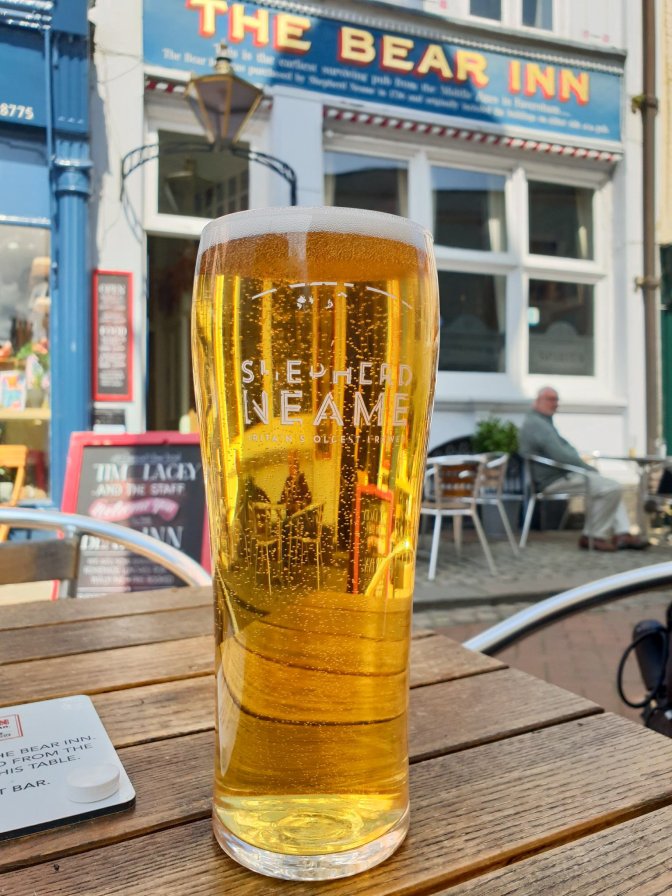
The Bear Inn
The oldest surviving Faversham pub from the Middle Ages… or so the sign above the entrance says. On tap was the Bear Island Triple Hopped Lager, a fresh beer to start the sunny afternoon. The pub is situated right behind the Guild Hall on the market square. There was something special about lounging around sipping a beer on a Tuesday at an outdoor cafe while everyone around me were going about their daily lives.


Lunch would follow at this next place just around the corner.
The Sun Inn
This is a very nice old-fashioned pub. This is the one to visit if you want that dark wood, classic medieval fireplace interior. I would be remissed to not indulge in one of the Shepherd Neame headliners, Spitfire.


After lunch I headed back down Preston Street towards the station and made one final drink stop.
The Limes
Of the three pubs I visited, this one has the most local charm. I rounded out my short visit to Faversham with a Whitstable Bay pale ale.


Final Words
After briefly dipping my toe into Shakespearean lore, it was back to Dickens Land and onward to Rochester where I would spend the next four days following in the footsteps of Charles Dickens and wandering through some of his fondest memories of hiking the Kentish countryside. Did Dickens ever stop at one of the inns in Faversham on his way between Rochester and Canterbury? I haven’t found anything written about it. But here a quiet village sits, and even despite its famous brewery, it feels hidden from the outside world. It’s main claim to fame is the tragic murder of it’s mayor in 1550 by a scheming wife which caught the attention of a brilliant writer the world will never truly know. It seems impossible that Dickens wouldn’t have stopped at least once out of curiosity. Despite all of the wonderful travel experiences I would enjoy on this trip, I had a feeling that my little side visit to Faversham was going to linger merrily in my soul as strong as anything else when I look back on it.

References
- Highways & Byways of Kent by Walter Jerrold (1920)

 itsabrewtifulworld
One thought on “A Stop at the Oldest Brewery in the UK”