
Introduction
“I believe there is no country on the face of the earth where there is less freedom of opinion on any subject in reference to which there is a broad difference of opinion, than in this.—There!—I write the words with reluctance, disappointment, and sorrow; but I believe it from the bottom of my soul.”1
When Charles Dickens wrote these words, he was in the midst of his second visit to the USA in 1867. While these words still ring true today on any number of subjects, they were not in regard to a social cause that would be typical of Dickens, but about the inadequate copyright laws in the US at the time.
“It is nothing that I have a claim to speak and be heard. The wonder is that a breathing man can be found with temerity enough to suggest to the Americans the possibility of their having done wrong.”1

Dickens second trip to the USA was frought with frustration. Now in his mid-fifties, he found himself deciding mid-trip to refuse invitations and remain at times holed up in his hotel. To the general public he was immensely popular, but he was particularly irritated by the “high and striking tone”1 of the media who would deliberately imply the superiority of American society and try to get under his skin.
“I have come at last, and it is time I did, to my life here, and intentions for the future. I can do nothing that I want to do, go nowhere where I want to go, and see nothing that I want to see.”1
“I am always represented, whenever I appear in public, as being ‘very pale;’ ‘apparently thunderstruck;’ and utterly confounded by all I see. . . . You recognize the queer vanity which is at the root of all this?”1

Dickens tried hard to be positive about his visits to America, but whenever he would start out with something complimentary, a few sentences later, the true undertone of Dickens’ feelings would reveal themselves, in that glorious Victorian flair. So it is not exactly that Dickens should have been all that surprised by some resentment in the media. One perfect example brings us back to his first visit to Philadelphia in 1842 where we will take off from for the rest of the blog post.
“We reached the city, late that night. Looking out of my chamber-window, before going to bed, I saw, on the opposite side of the way, a handsome building of white marble, which had a mournful ghost-like aspect, dreary to behold… It was the Tomb of many fortunes; the Great Catacomb of investment; the memorable United States Bank.”
Charles Dickens. “American Notes.”
Deliciously laced with sarcasm, this text gives us an idea that when Charles Dickens first visited Philadelphia in 1842, he stayed in a hotel across from the First US Bank, which is today the location of the Museum of the American Revolution.

Unfortunately, he mentions very little of his sight-seeing to really follow in his footsteps. A Quaker hospital, the Franklin Library, and Girard College. The first two have multiple candidates but for sure exist in some form today. Girard College still exists as a private boarding school. But the main subject for the second Dickensian urban hike in Philadelphia is the topic he spent most of his efforts writing about in the Philadelphia chapter of his American Notes.
The Eastern State Penitentiary.
Urban Hike #2: Grip and Eastern State Penitentiary
Distance: about 6km

As with the first hike, we start from the Victory Brewing Company, but this time head north up N. 18th St.
Immediately, we come to the largest Catholic church in Pennsylvania.
Basilica of Saint Peter & Paul
Construction started in 1846 and thus didn’t exist during Dickens’ first visit.
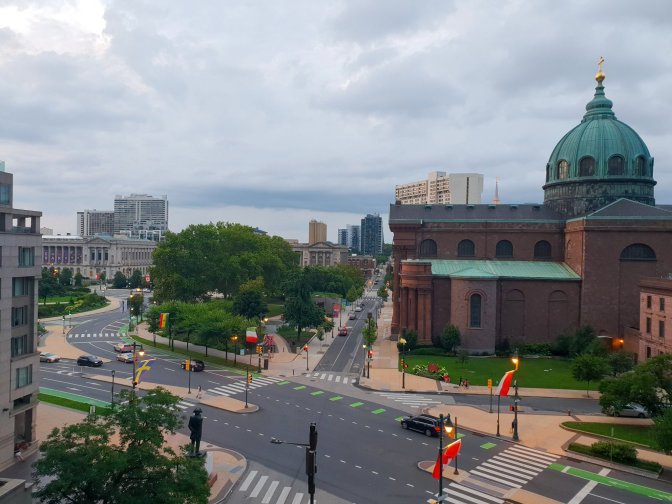

A few blocks from the basilica is our first Dickens stop.
Parkway Central Library (a.k.a. The Free Library)

In the Rare Books Department of this grand library is a curiosity of astounding literary pedigree that it seems hardly possible it exists. And it’s name is Grip. Grip was the pet raven of Charles Dickens which died in 1841 and is on display in the department. The bird came into the possession of the library in 1970. The full provenance can be found here.

“You will be greatly shocked” (the letter is dated Friday evening, March 12, 1841) “and grieved to hear that the Raven is no more. He expired to-day at a few minutes after twelve o’clock at noon.”
“On the clock striking twelve he appeared slightly agitated, but he soon recovered, walked twice or thrice along the coach-house, stopped to bark, staggered, exclaimed Halloa old girl! (his favorite expression), and died.”
John Forster. “The Life of Charles Dickens, Vol. I-III, Complete.”
After saying Halloa old girl! to Grip, head back on N. 18th St. until Fairmount Avenue and take a right. In about a block is the first beverage spot.
Bar Hygge
This brewpub serves and sells beers made onsite by Brewery Techne. As I was running a bit late for my scheduled tour of the penitentiary, I didn’t stop for a beer.


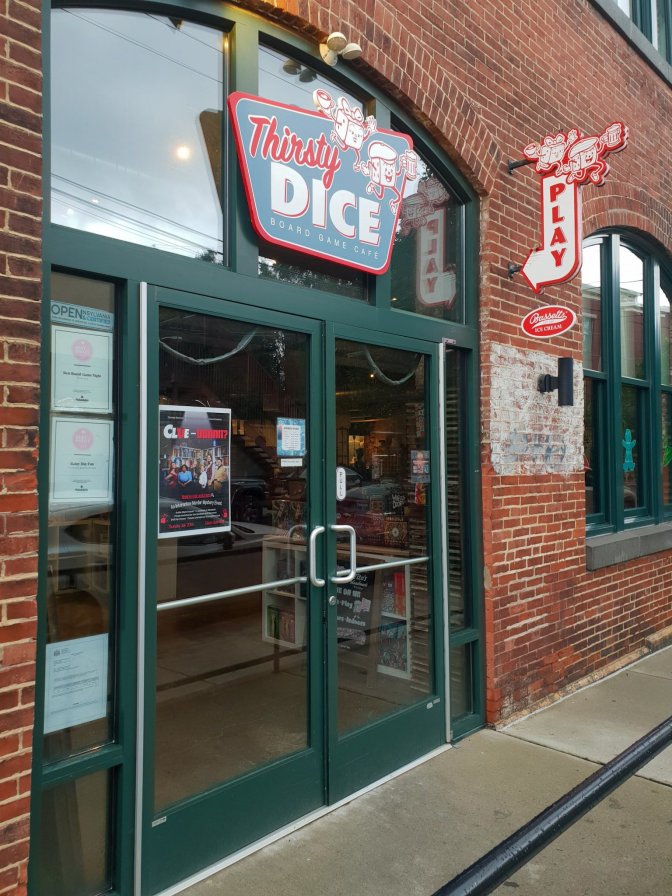
A little further on is a cool cafe which mixes beer and board games.
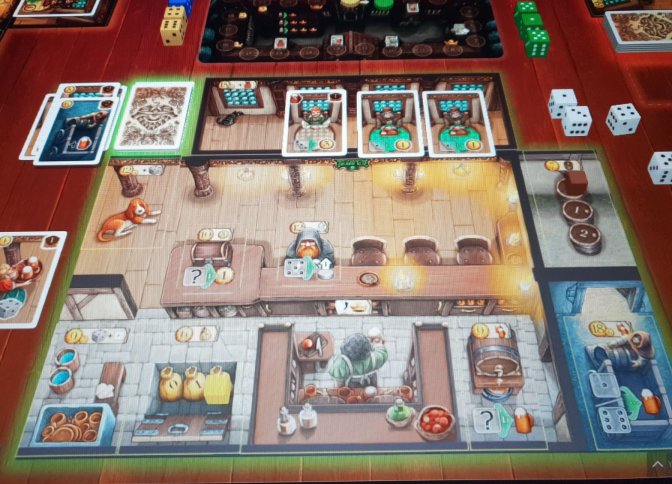
Thirsty Dice
They were closing early that day, but being a bit of a board game fanatic, I wouldn’t have minded to challenge someone to a game of Taverns of Teifenthal, a really cool Tavern simulation game. It is there in the picture, trust me. 2nd shelf from the left on the back wall, 4th row down.

Head back the other way, west on Fairmount Avenue until you reach the imposing fortress-like structure.
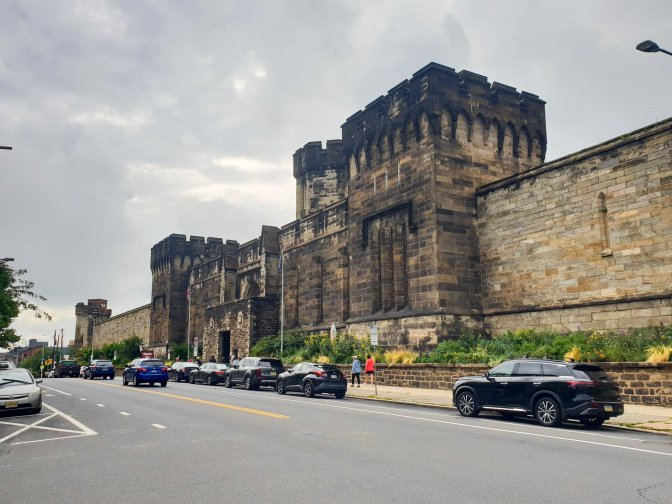
Eastern State Penitentiary
“I went last Tuesday to the Eastern Penitentiary near Philadelphia, which is the only prison in the States, or I believe in the world, on the principle of hopeless, strict, and unrelaxed solitary confinement, during the whole term of the sentence. It is wonderfully kept, but a most dreadful, fearful place.”
John Forster. “The Life of Charles Dickens, Vol. I-III, Complete.”
Dickens “passed the whole day in going from cell to cell, and conversing with the prisoners.”1

“Standing at the central point, and looking down these dreary passages, the dull repose and quiet that prevails, is awful.”2

“Over the head and face of every prisoner who comes into this melancholy house, a black hood is drawn; and in this dark shroud, an emblem of the curtain dropped between him and the living world, he is led to the cell from which he never again comes forth, until his whole term of imprisonment has expired.”2
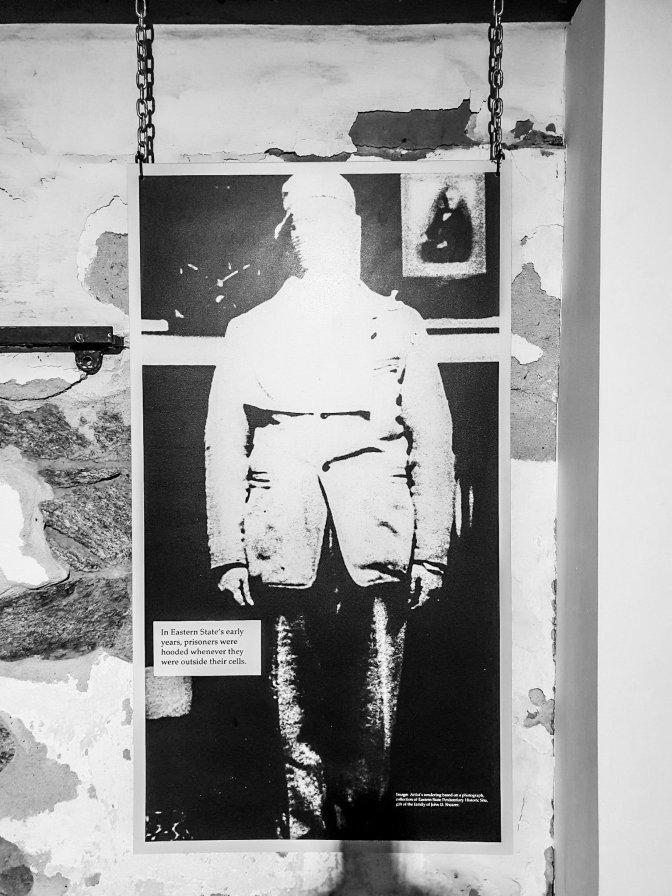
“Every cell has double doors: the outer one of sturdy oak, the other of grated iron, wherein there is a trap through which his food is handed. He has a Bible, and a slate and pencil, and, under certain restrictions, has sometimes other books, provided for the purpose, and pen and ink and paper. His razor, plate, and can, and basin, hang upon the wall, or shine upon the little shelf. Fresh water is laid on in every cell, and he can draw it at his pleasure. During the day, his bedstead turns up against the wall, and leaves more space for him to work in. His loom, or bench, or wheel, is there; and there he labours, sleeps and wakes, and counts the seasons as they change, and grows old.”2
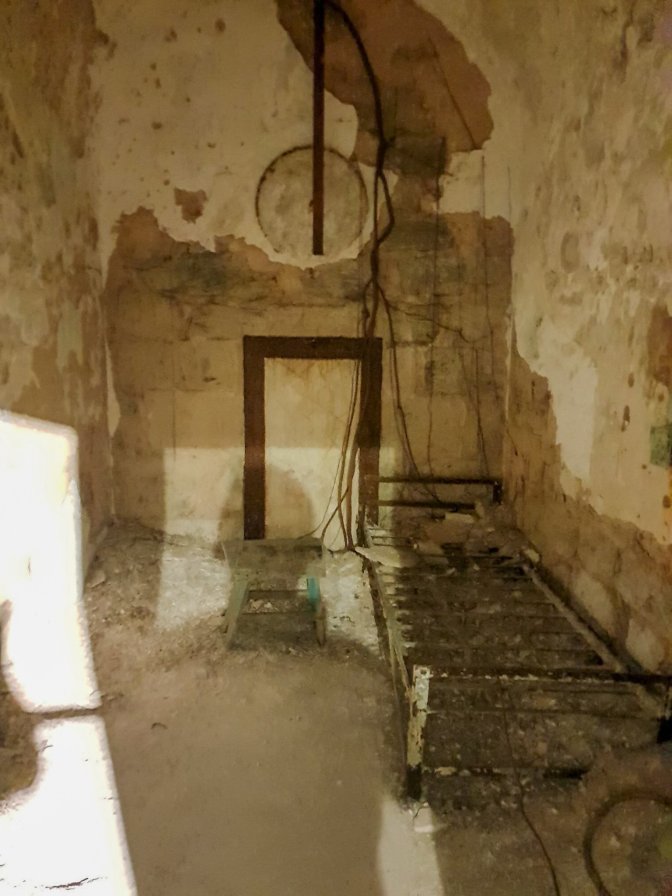
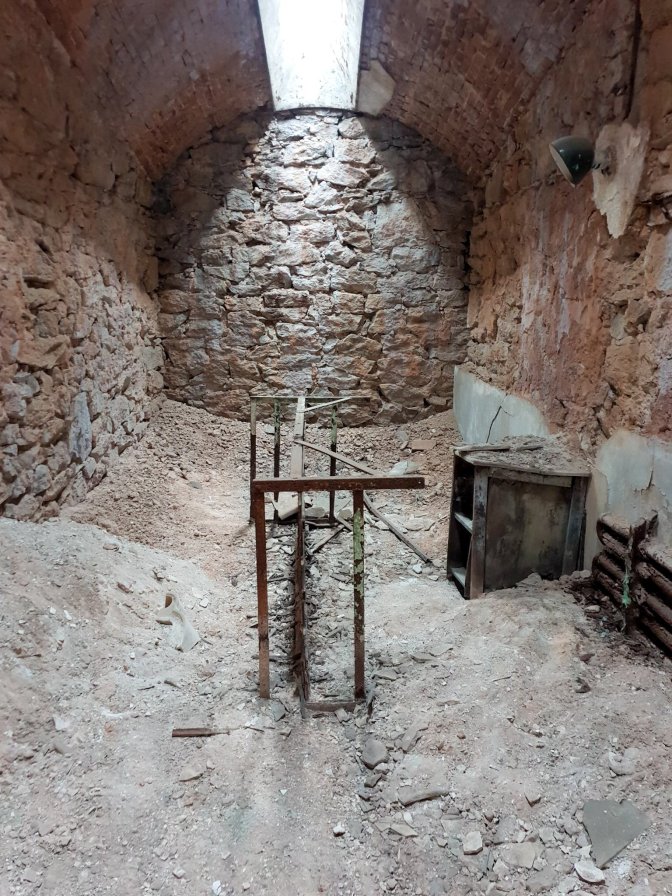
“We dined in the jail: and I told them after dinner how much the sight had affected me, and what an awful punishment it was. I dwelt upon this; for, although the inspectors are extremely kind and benevolent men, I question whether they are sufficiently acquainted with the human mind to know what it is they are doing. Indeed, I am sure they do not know.”1
The Eastern State Penitentiary was still operational up until 1971.
With this it was time to contemplate crime and punishment a different way. We now head to the Brewerytown neighborhood.
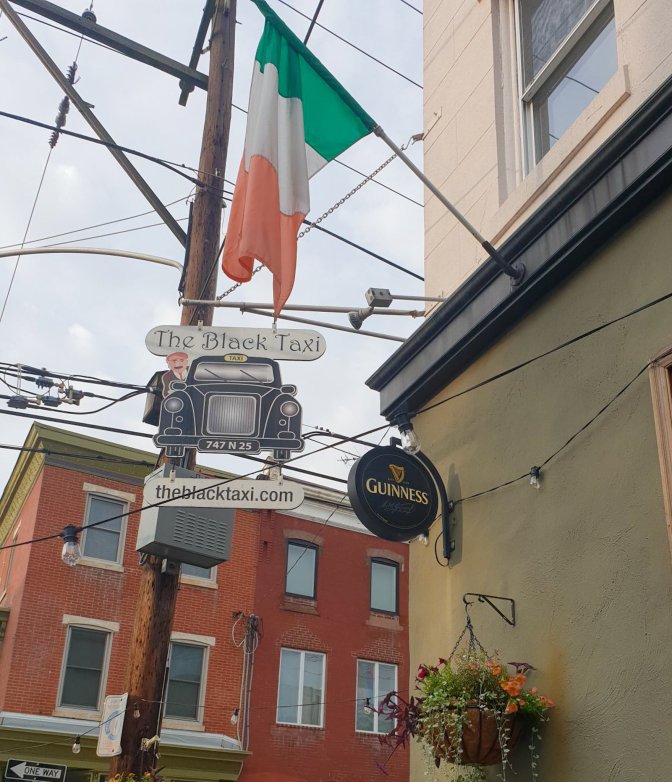
The Black Taxi
I passed this place surrendipitously on the way to my next stop. Felt it was well worth noting.
Crime and Punishment Brewing Company
Of the brewery taprooms I visited, this was the least flashy. Just a very personal, down-to-earth environment with a tinge of Russian influence and inspired by the Dostoyevsky novel of the same name.

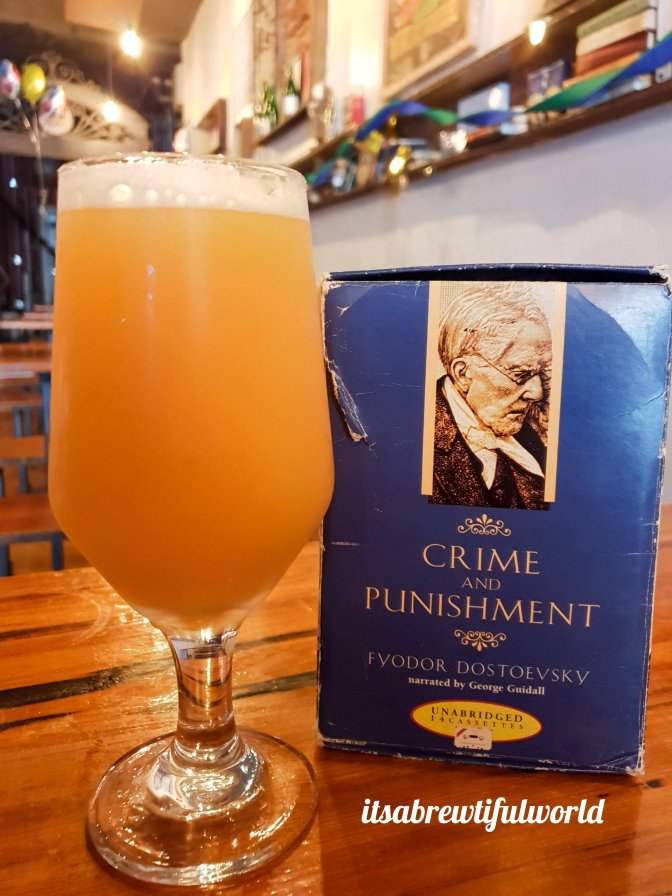
After a delicious beer, the hike cuts over to Fairmount Park to follow it back. This part is known for its plentiful sculptures. The part through the museum district is only the southern tip of a much larger riverside park.

As we come to the end, we pass by the Philadelphia Museum of Art.

Drunken Masterpieces: Philadelphia Museum of Art
A quick tour of some brewtiful artwork in the Philadelphia Museum of Art and a toast to an almost forgotten woman of art.
Continue reading Drunken Masterpieces: Philadelphia Museum of Art

Shakespeare Memorial
As if it wasn’t enough to pay homage to Dickens and Dostoyevsky, there was one final literary surprise on this hike. Out in front of the Parkway Central Library is Shakespeare Park and this memorial.

Crossing over past the fountains, it is finally time to wash down the memories of a great urban hike with another beer at Victory Brewing Company.

Victory Brewing Company

Final Words
Dickens, Dostoyevsky, Shakespeare. And a raven. A 6km masterpiece of literature in its own right. And we are still missing someone. I wasn’t sure before I arrived that I would make much of the Dickens association. But what I was discovering was far exceeding my expectations. Philadelphia was teeming with literary connections.
Grip the Raven was not just a real pet, but he appeared as the companion to the main character in Barnaby Rudge.
“To bed!’ he answered. ‘I don’t like bed. I like to lie before the fire, watching the prospects in the burning coals—the rivers, hills, and dells, in the deep, red sunset, and the wild faces. I am hungry too, and Grip has eaten nothing since broad noon. Let us to supper. Grip! To supper, lad!’
The raven flapped his wings, and, croaking his satisfaction, hopped to the feet of his master, and there held his bill open, ready for snapping up such lumps of meat as he should throw him. Of these he received about a score in rapid succession, without the smallest discomposure.
‘That’s all,’ said Barnaby.
‘More!’ cried Grip. ‘More!”
Charles Dickens. “Barnaby Rudge.”
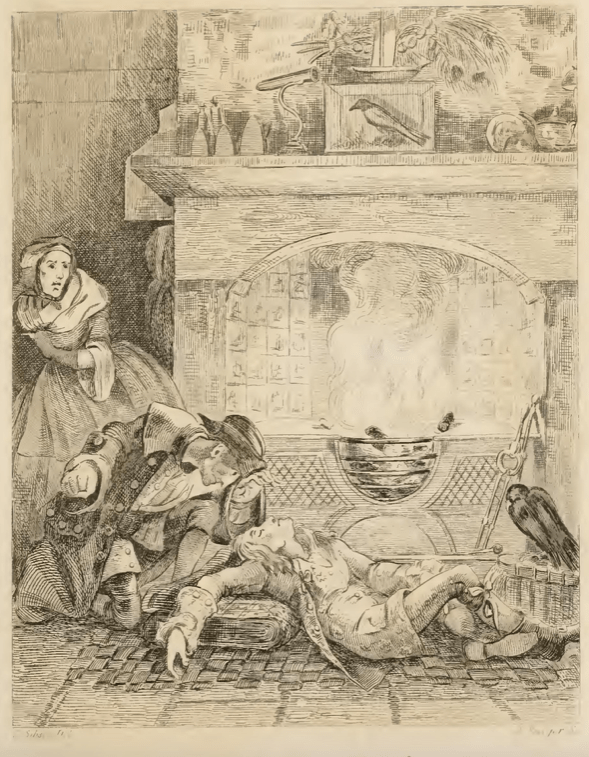
Where does a talking raven sound familiar? It doesn’t take a lot of imagination to realize this raven had an impact on another author who was living at this time. Not just living somewhere, but living about 2km away from the penitentiary at the very time Dickens was visiting it in 1842.
You know who it is, but I will save it for the next post.

References
- Life of Charles Dickens, Vol I-III, Complete by John Forster (1875)
- American Notes by Charles Dickens (1842)

 itsabrewtifulworld
Great post. Very interesting. What a horrible jail.
LikeLiked by 1 person
Thank you Kelly for reading 🙏 I agree….
LikeLiked by 1 person
I loved visiting the penitentiary when I was in Philly.
LikeLiked by 1 person
It is a really cool place to visit, I agree.
LikeLike