
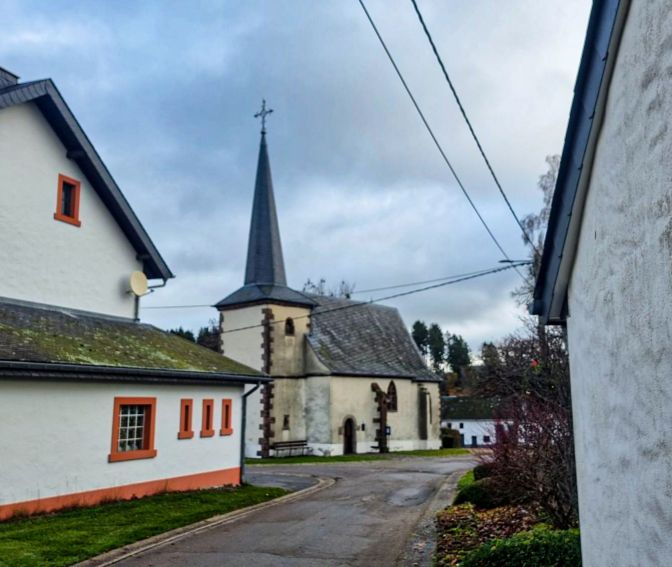
On Belgium’s eastern-most frontier sits a secluded village which feels like the last stop to nowhere. It smells of manure like any remote farming community would and is a place where you are more likely to encounter the local farm dog or scare off one of its skittish cats than see another human soul. At its center sits a quiet church adjacent to a well-manicured graveyard, a reminder that life and death pass through this tiny outpost just like anywhere else in the world.
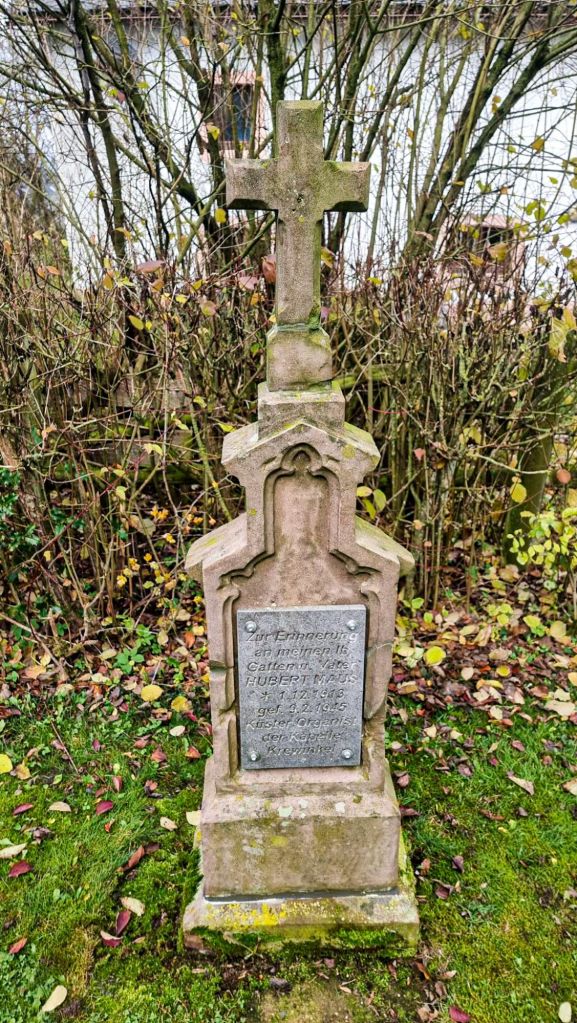
The most decorative of the headstones in the cemetery is one dedicated to the church’s former organist and sexton (a fancy word for gravedigger), Hubert Maus, who died at the age of 31 on February 9, 1945. This would put his unfortunate death a mere 5 days after Krewinkel became the last village in Belgium liberated during World War II. It does not take a stretch of the imagination to assume he succombed to injuries or illness associated with the effects of being caught in the path of elements of General Manteuffel’s Fifth Panzer Division in the Battle of the Bulge. Just a couple months prior to his death, if Hubert had not fled from the village in the Fall of 1944 like most villagers, he would have possibly shared his home and church with American soldiers of the 18th Cavalry Reconnaissance Squadron. However, on December 16th, when the Germans invaded, the American frontline in this sector was too thinly manned and quickly overwhelmed. By the 17th, the Germans had set up shop in the church. As locals started to return to their homes for Christmas, they would be interrogated as to their loyalties. Had they sought refuge behind the German West Wall or behind the American lines?
It is within the ghosts of this time forlorn that I wanted to explore and find out what evidence still remains, where heading left or right could have meant the difference between life or death. Krewinkel lies about 6km southeast of Lanzerath, where at the same time as the events unfolded on December 16th in Krewinkel, Lt. Lyle Bouck and his 394th Infantry Regiment were writing their own history.
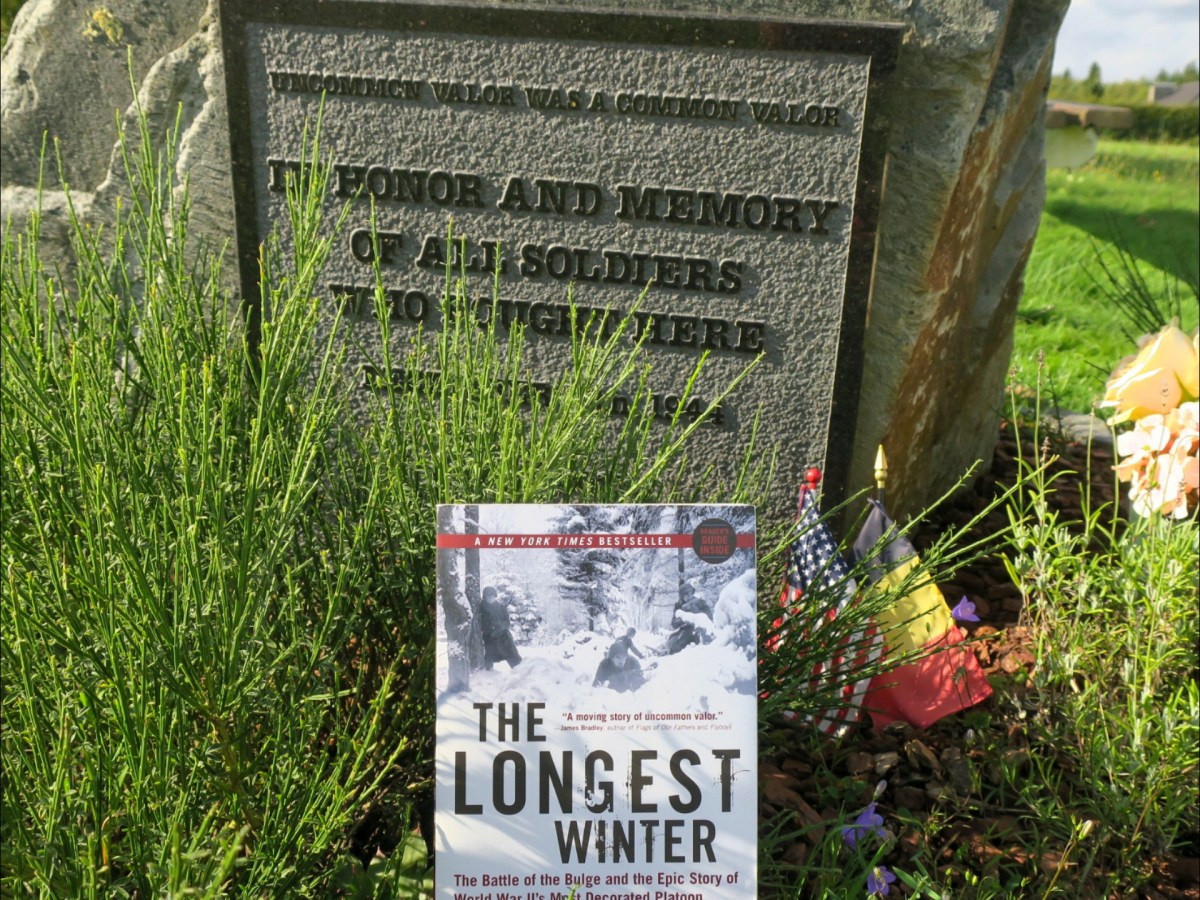
Beer & The Bulge: The Longest Winter
Having beers with the most decorated U.S. platoon in WWII.
Continue reading Beer & The Bulge: The Longest Winter

Hike Details
| Starting / Ending Point | I parked along a bend in a farm road where there was a pull-off area next to a field |
| Distance | 21.3km |
It’s Not Just a Beer, It’s a Journey
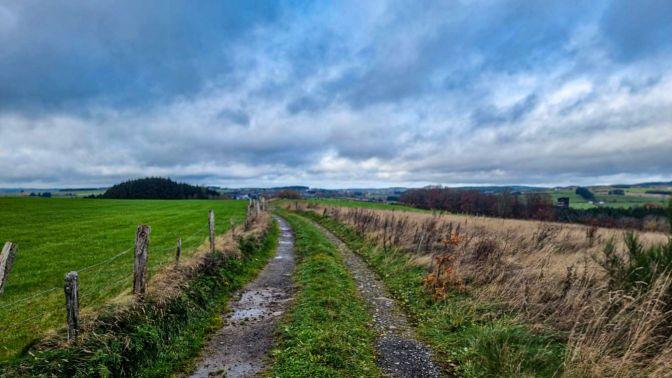
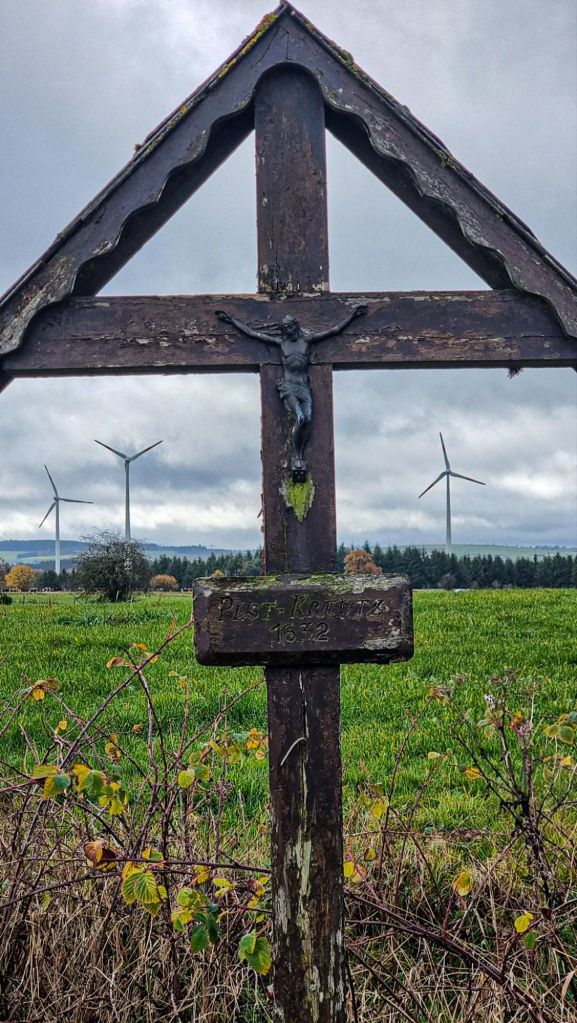
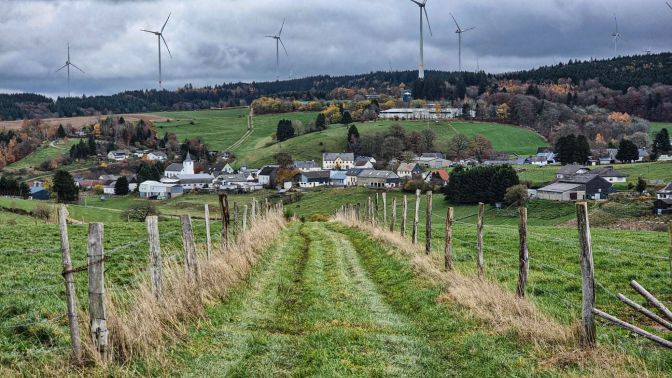
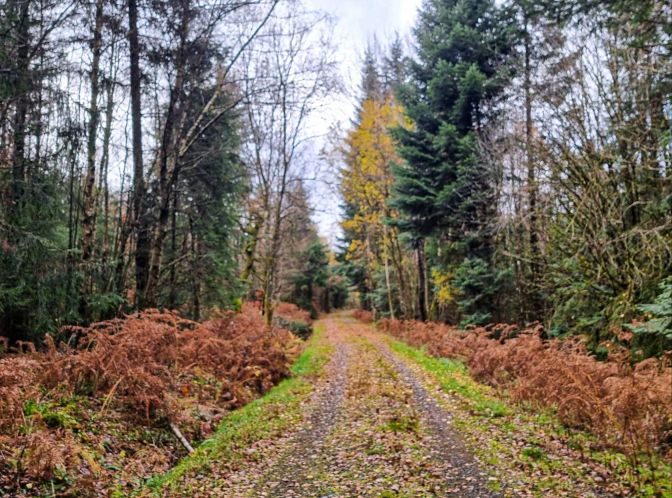
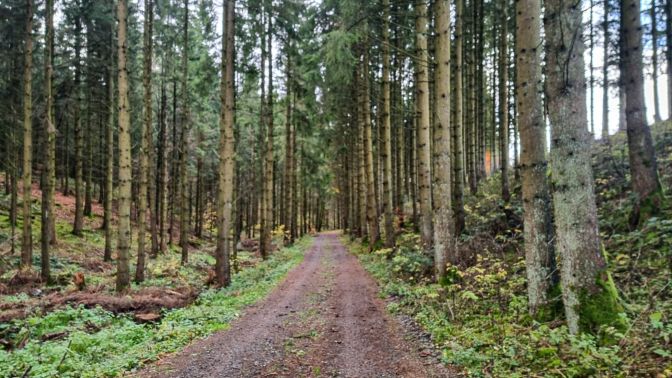
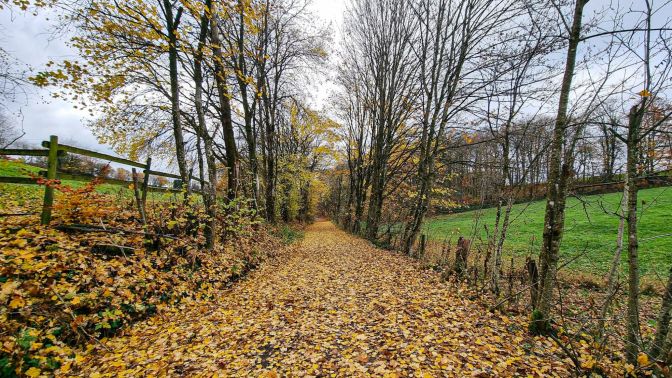
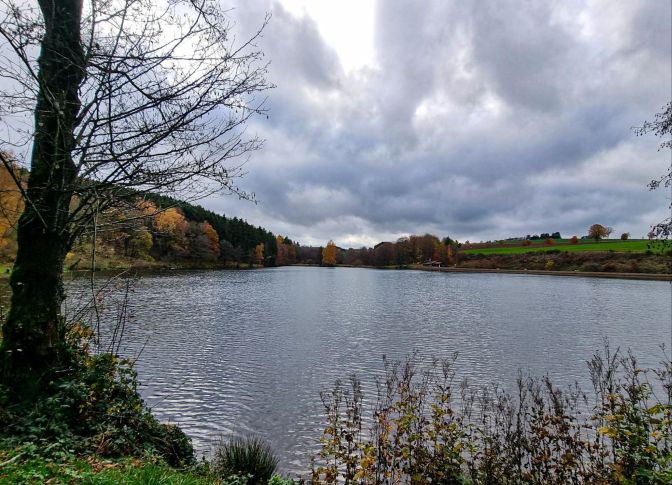
It was a mid-November day, past the peak of Autumn, but still enough color in the trees and in the leaves on the ground to add some warmth to the muted palette of a cloudy day.
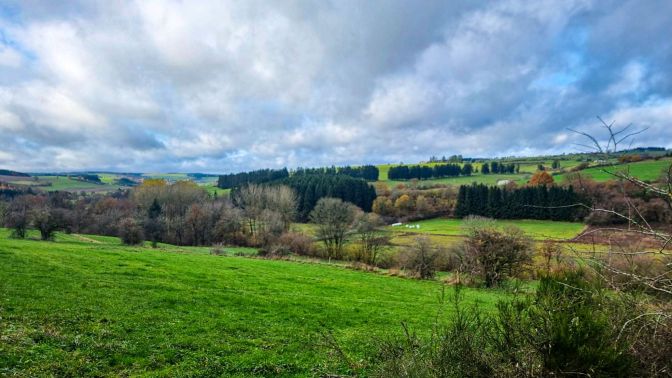
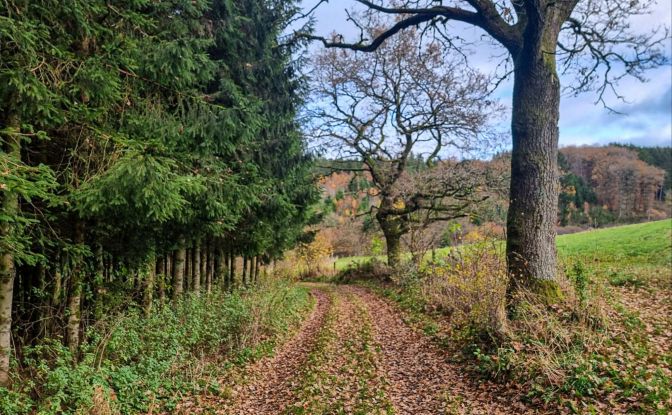
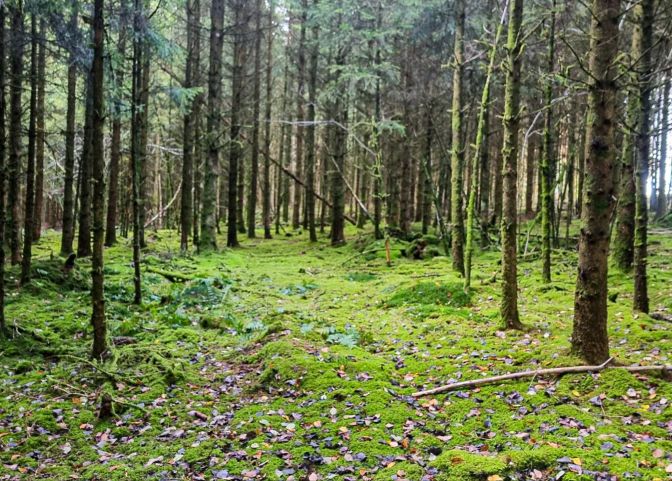
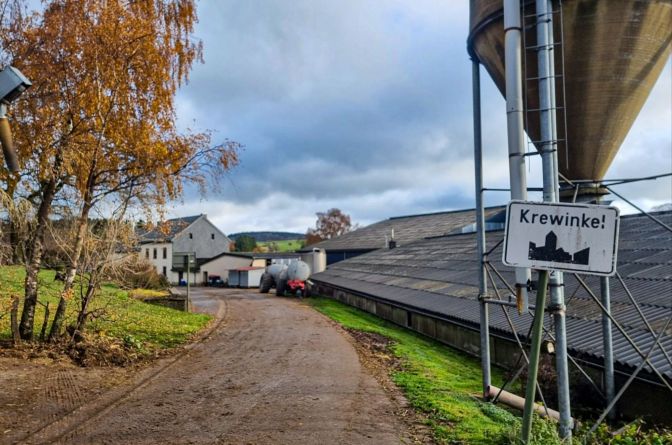
During World War I, Krewinkel’s remote location and proximity to the border made it a perfect hub for smuggling goods, such as coffee, between Belgium and Germany. Not far from the village is the easternmost point in Belgium. Just across the border is the village of Hellenthal.
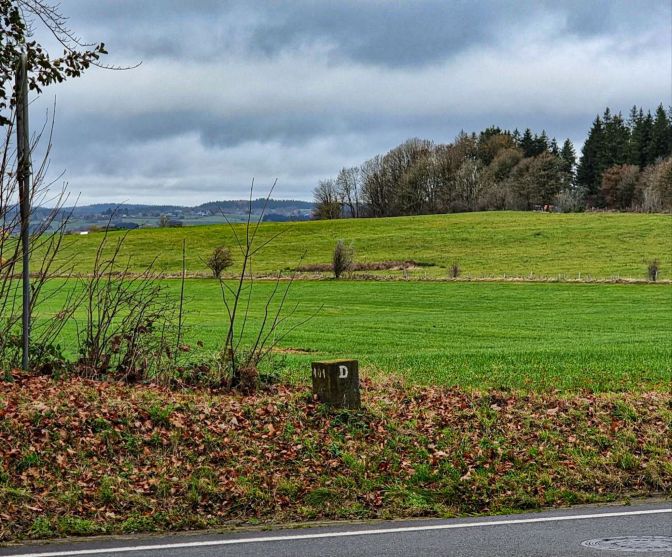
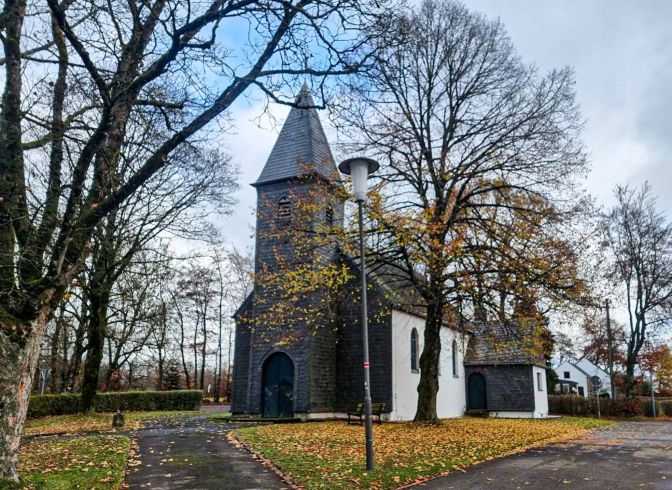
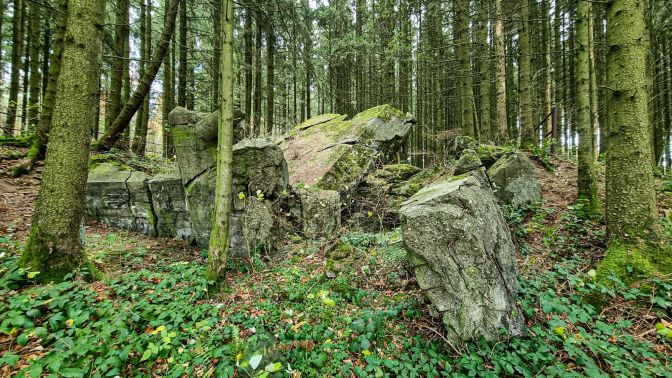
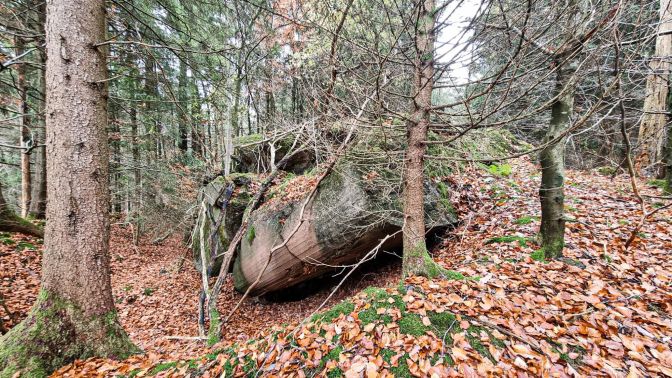
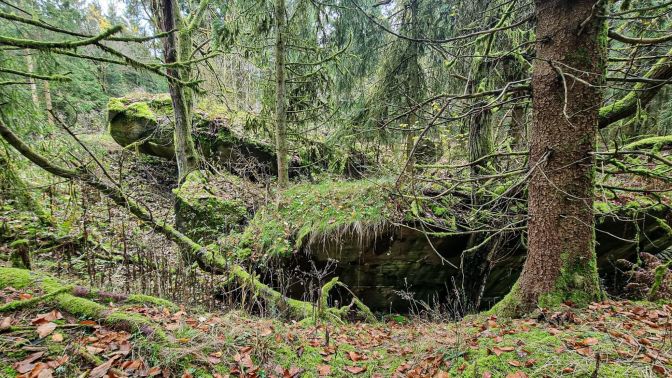
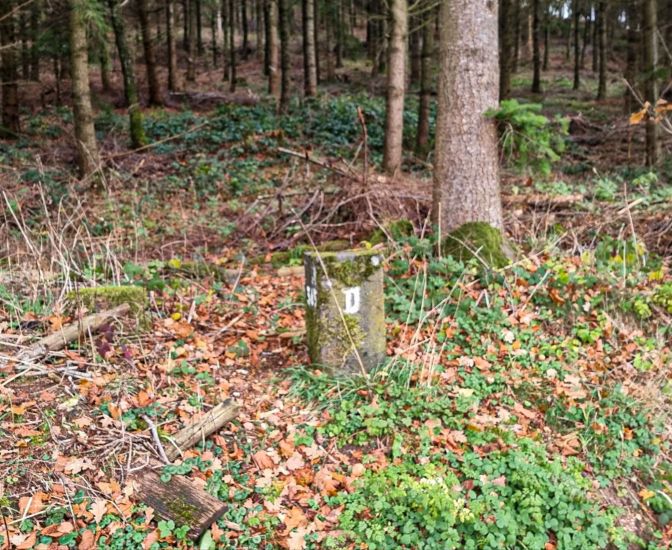
Crossing the border doesn’t change the views, but this is the area of the West Wall. It is recommended to keep your eyes peeled. Some of the remnants are quite obvious, while others have started to become overgrown with time. Quite soon, the first destroyed bunker is visible along the side of a farm road.
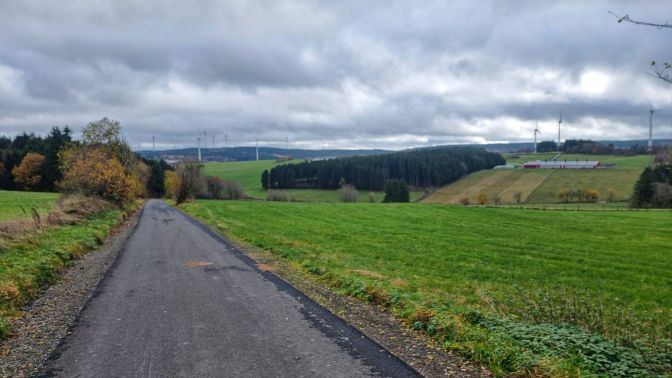
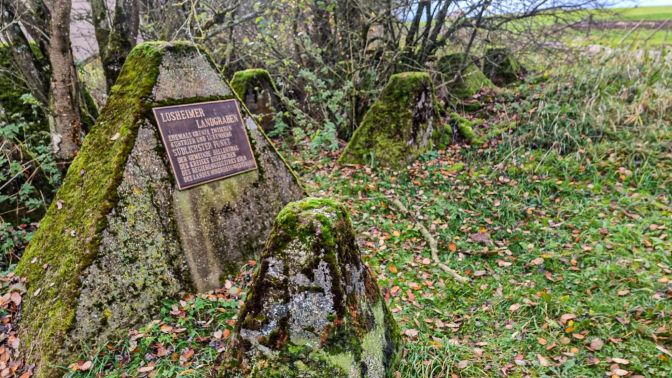
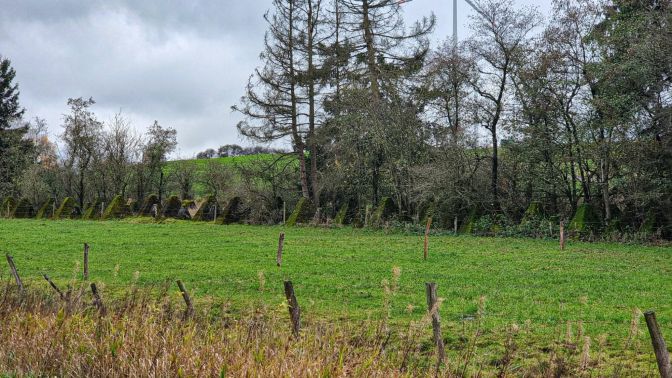
The most prominent feature along the West Wall are the dragon teeth tank obstacles. They line many of the fields, and some are completely swallowed up by vegetation.
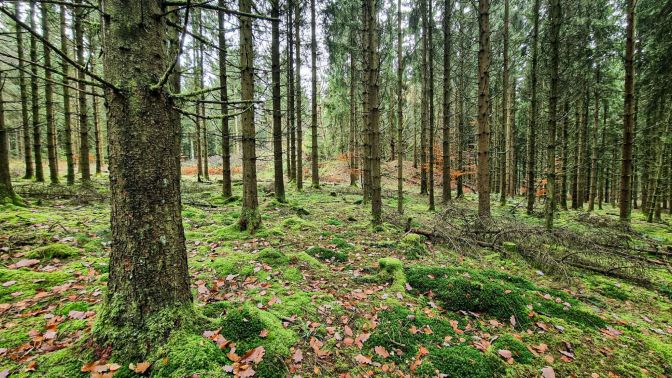
When you enter a forested area, look for hills which seem out of the place. It is very likely you will find remains of a bunker. Many of these are not found on any hiking map.
Final Remarks
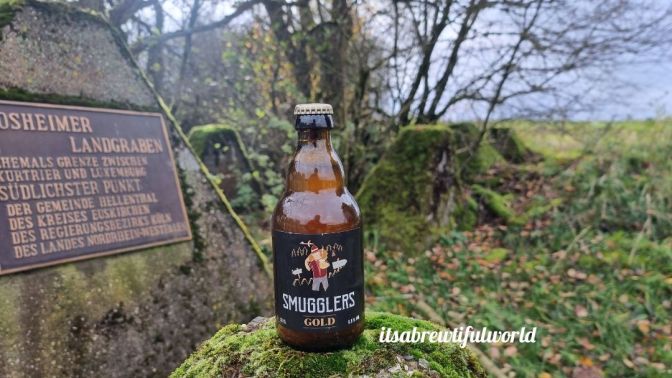
There wasn’t much beer in this Beer & the Bulge hike. It is too remote for any pubs or breweries along the way. But I found a local beer in a supermarket inspired by the smuggling history of Krewinkel called Smuggler’s Gold brewed by Eifel Craft Beer mentioned in the Longest Winter blog post.
In Unknown Dead: Civilians in the Battle of the Bulge, author Peter Schrijvers describes how a Heinrich Maus (seems likely a relative of Hubert) returned home with his family after the Germans had re-occupied Krewinkel. He was, however, returning from behind the American lines. Heinrich was punished by being forced to bury several dead German soldiers who were lying in a field (Heinrich and Hubert could not have been the same person as Heinrich is described as being 41 years old at the time). Today, Krewinkel and its prim graveyard will never again hear the sound of Panzer or Sherman tanks rumbling through it or the sound of deafening artillery. But the area probably has changed very little in the last eighty years making this a hike where it is easy to leave the modern world behind and transcend to a time when this isolated village sat right on the front line of history.


 itsabrewtifulworld