
“One of the most important during the great battle was the German-speaking city of Sankt Vith that still had rail links to Germany in 1944 and was arguably more important than Bastogne.”
The Battle of the Bulge by Martin King (2019, Arcturus Publishing Limited)
Every time I visit the remote eastern region of Belgium, I feel like I have entered a place forgotten. The first time you are in Belgium and are greeted by someone speaking German, it can leave you disoriented and more importantly curious. The eastern cantons of Belgium, which bulge gently into Germany and rest over the top of Luxembourg have had a complex history, once belonging to the Duchy of Luxembourg, then Napoleon’s France, Prussia and eventually Germany up until World War I. Today, it feels like a land that belongs to no one but itself, quietly existing in a perpetual state of minding one’s own business.
One of its main villages seems to sit closer to Germany and Luxembourg than it does the rest of Belgium. Sankt Vith (or more commonly spelled St. Vith) exemplifies the aforementioned persona perfectly. It is a rather uncharming plain-looking town lacking any old world character whatsoever, as if deliberately preferring to avoid any attention.
“Formations with seventy-six B-26 bombers had arrived to flatten the remains of St. Vith. The tactic was cynically known as ‘putting the city in the street’, that is to say filling the roads with rubble so that German supply convoys could not get through this key crossroads.”
Ardennes 1944 by Antony Beevor (2015, Penguin Books)
A very plausible explanation for Sankt Vith’s prosaic appearance is that from December 25-26, 1944, during the Battle of the Bulge, the Americans and British bombed it completely to the ground. Information boards displayed around the town show the devastation of those days.
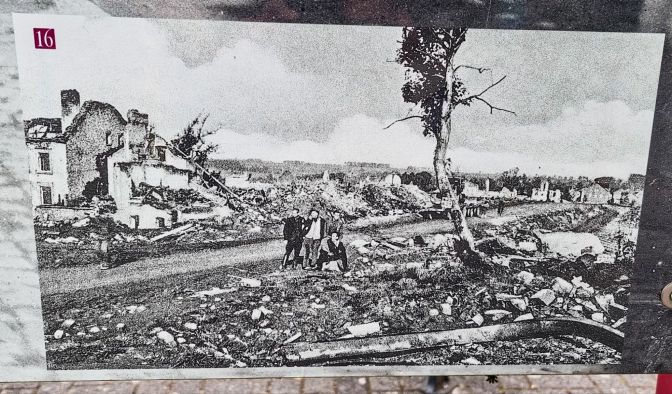
Just a week before, on the quiet morning of December 16, 1944, Sankt Vith still stood, defended by American units of the U.S. First Army including those of the 7th Armored Division and the 106th Infantry Division. They were unaware that Sankt Vith had a huge target on its back and that the Fifth Panzer Division led by General Hasso van Manteuffel would soon be on their doorstep. Sankt Vith was a vital crossroads for establishing a supply route deeper into Belgium. The 106th were un-battletested and were in the process of relieving the more experienced 2nd Infantry Division who were sent on a dam-busting mission into Germany. Despite a valiant stand, by December 18, the Americans were forced to retreat. Then on December 21, Sankt Vith fell to the Germans. The entire area was a chaos of traffic jams as American units tried to retreat while other units were on their way in to support, and meanwhile, the Germans themselves were mired in their own troubles navigating the rural network of roads.
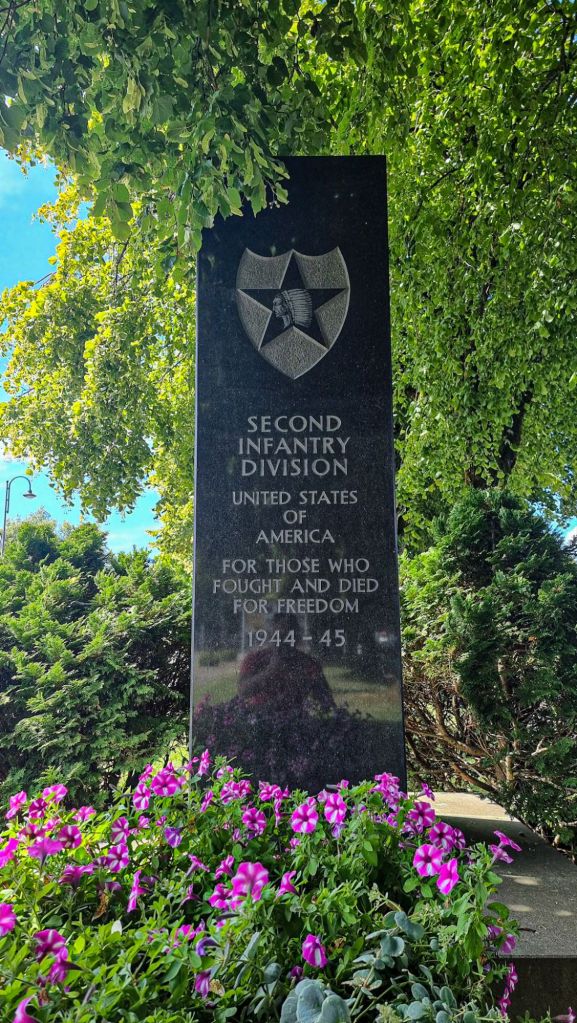
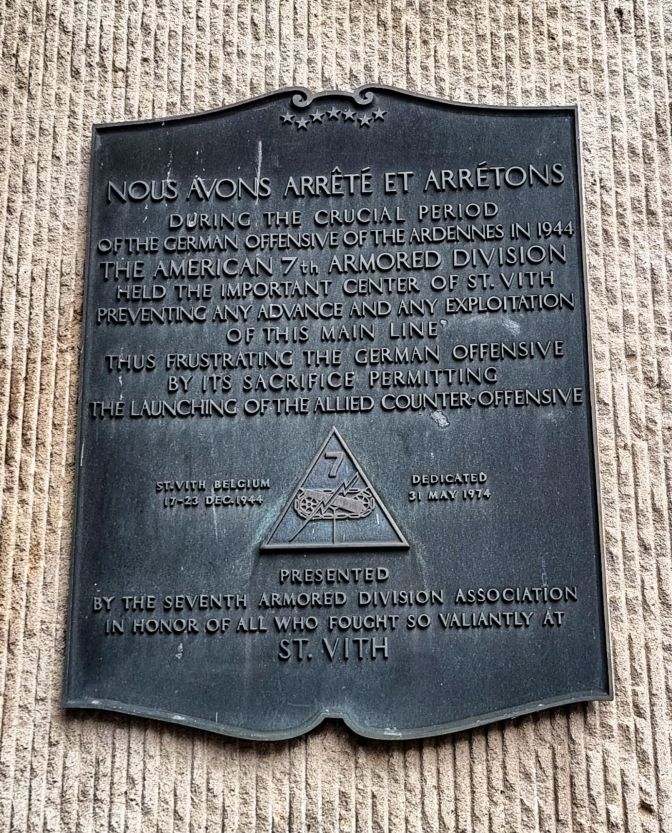
Today, Sankt Vith offers quiet reflection of those turbulent events. A memorial to the 2nd Infantry Division stands in the shade of a tree just north of the town center along a grassy divide. A plaque to the 7th Armored Division is placed rather subtly on the outside of a bank. I walked by it several times before noticing it. And south of the town center is the memorial to the 106th Infantry Division.

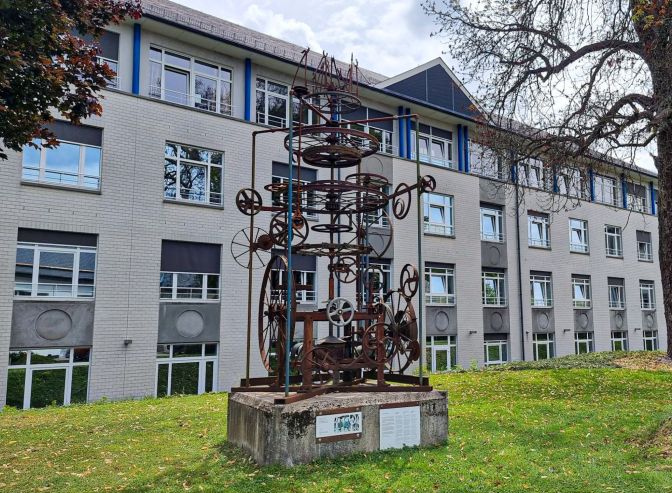
The Klinik Sankt-Josef, today a hospital, was a convent prior to December 1944. It became an American HQ and was destroyed in the bombing. Next to the hospital are several interesting information boards with photos showing the before and after of the convent. One of them shows the nuns posing with several German officers.

Other than these few reminders, Sankt Vith benefits mainly as a jumping off point to discovering the region’s hiking (or biking) possibilities. On two separate long weekends in 2025, I used it as a hiking homebase. If you are interested in the history of the Battle of the Bulge, it is natural to find yourself comparing Sankt Vith to Bastogne. It is so natural that it has been happening since the day the battle started, and the narrative of the battles was reaching not only the outside world but within the U.S. military itself.
“A rather frivolous business attended the pages of Stars and Stripes, the official U.S. Army newspaper. Stories about the heroic stand at Bastogne and the feats of Patton annoyed the pooh-bahs of the First Army so much that they successfully insisted on a separate edition that would focus more on their exploits.”
A Blood-Dimmed Tide by Gerald Astor (1992, Dell Publishing)
When you visit Bastogne, you get multiple war museums, a Sherman tank on McAuliffe Square, several memorial sites within an enjoyable walking distance and a cool beer culture centered around Bastogne’s status in the Battle of the Bulge lore. Sankt Vith has none of that. I saw nary a military-themed beer, and except for the handful of memorials and information panels already mentioned, you would hardly know the war ever came through here. As far as the beer culture, there is one pub worth mentioning in Sankt Vith, Cafe Ratskeller. Here you will not find an Airborne beer like in the pubs of Bastogne but will have to settle for the standard Luxembourgish beers like Battin and Bofferding. Nevertheless, it is a very nice place to sip a beer on a sunny day.
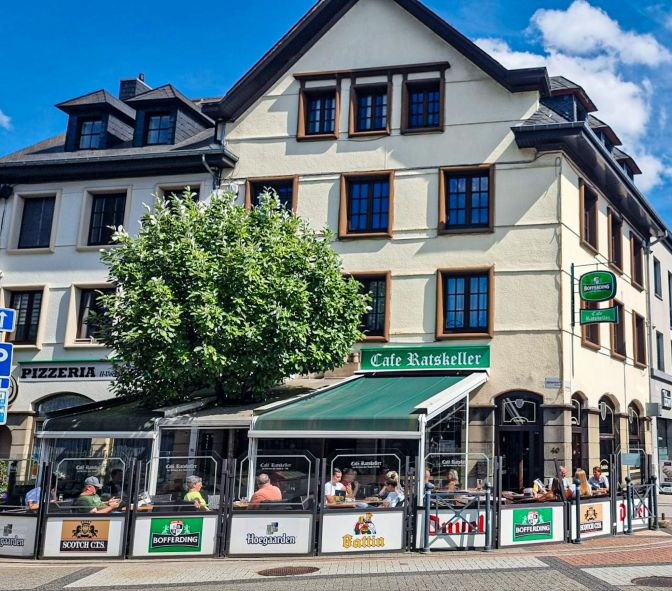
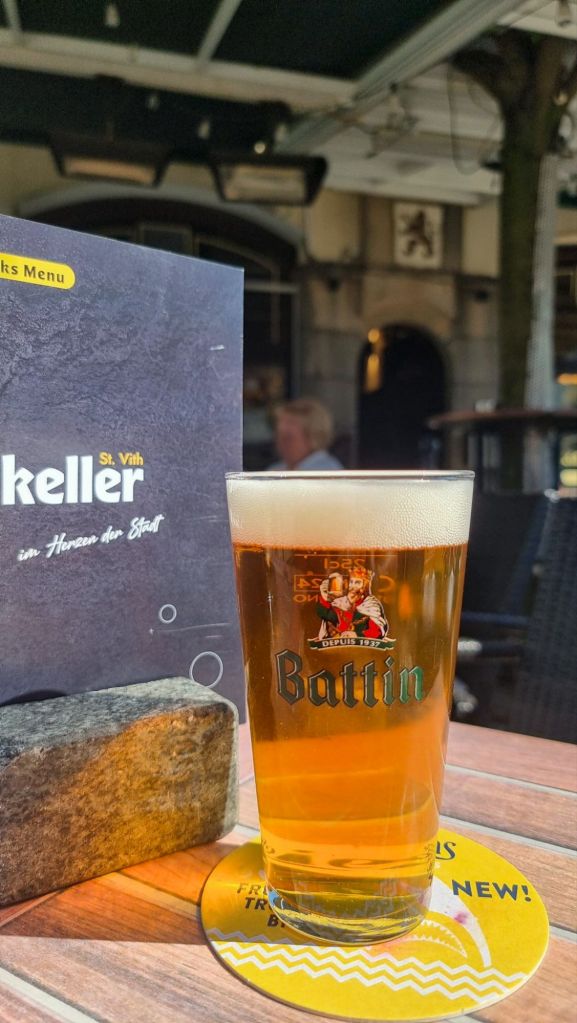

However, to get a local craft beer, you can try the Richtenberger at the (overpriced) restaurant An den Linden.

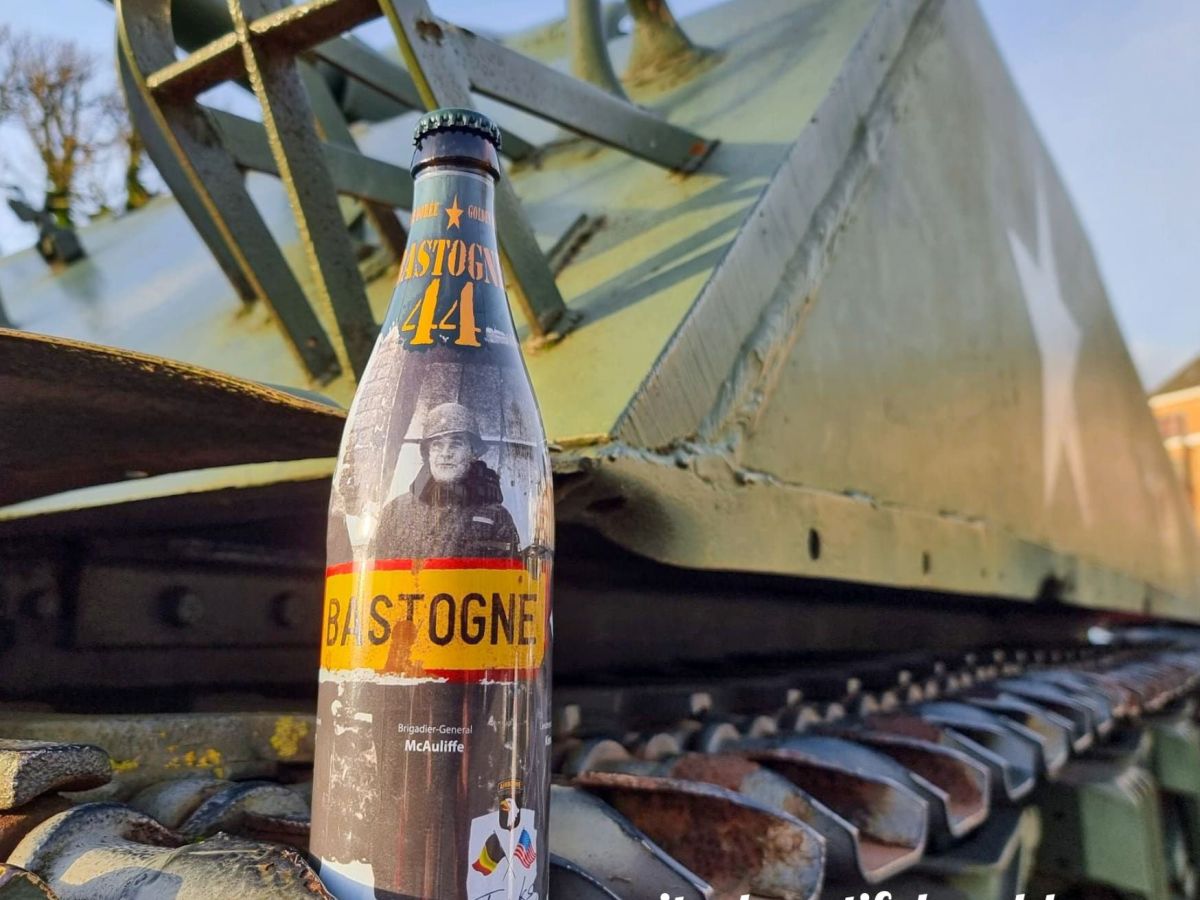
Beer & The Bulge: Bastogne
Having beers with the Battered Bastards of Bastogne
Continue reading Beer & The Bulge: Bastogne

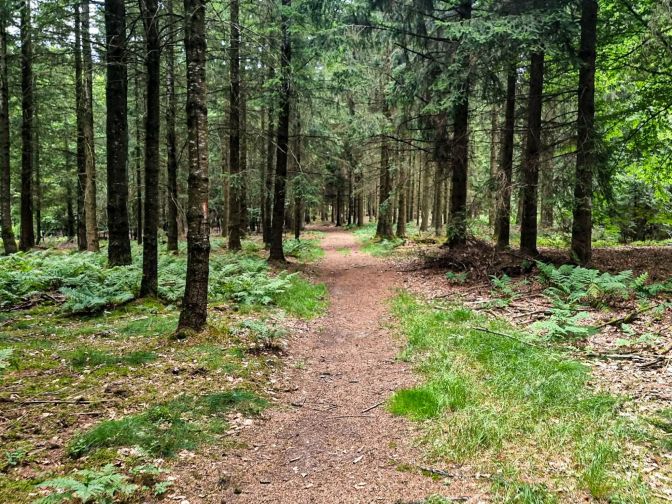
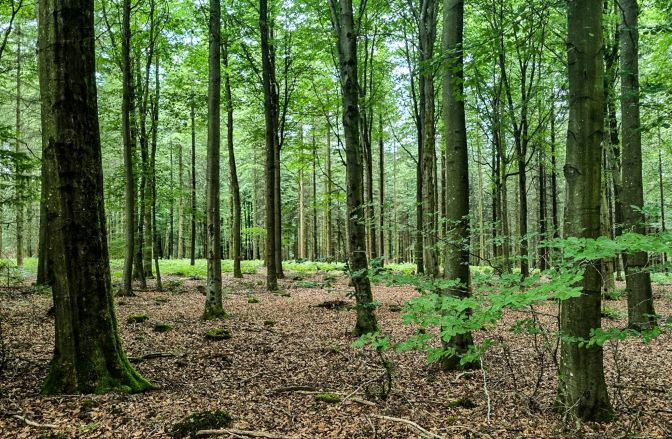
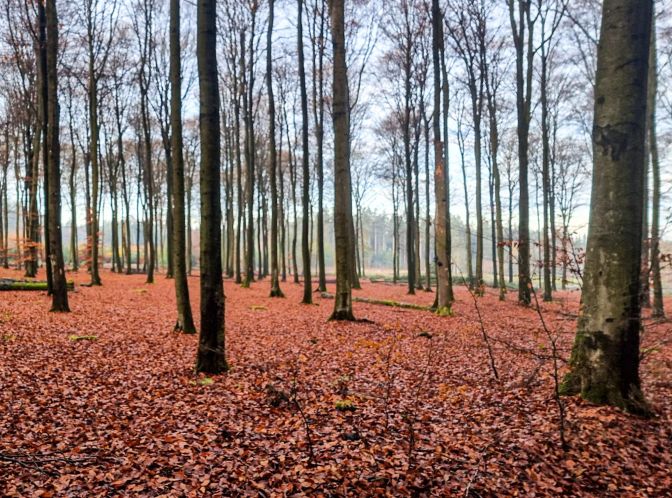
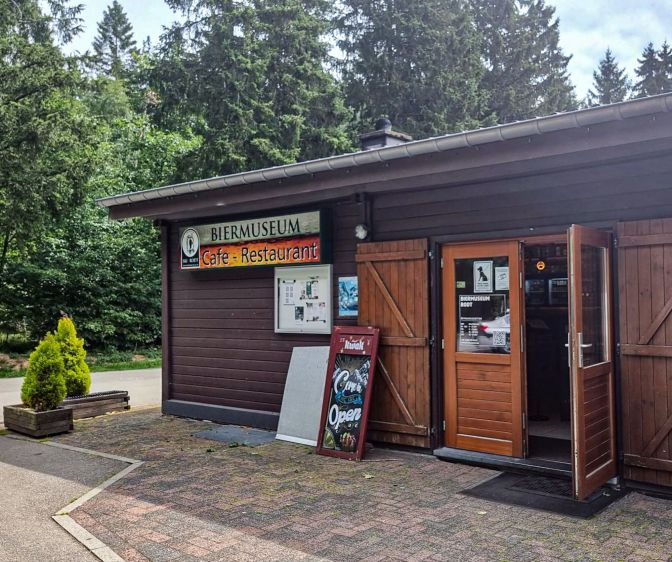
To find a more interesting beer culture in Sankt Vith, one must go looking for it in the neighboring villages and countryside. One of these places is just to the west of Sankt Vith called Rodt. Today, it is a 5-minute drive, but in December 1944, it would have been clogged with tanks and military vehicles. The highlight of Rodt is a restaurant bar called Biermuseum Rodt. This is a great place for dinner and beers and also sits at the entrance to a forest criss-crossed with hiking trails. So, one of the hikes I planned explored these woods. Along the way, you can pass by an old slate mine offering tours, and for further immersion into the Battle of the Bulge, there is the village of Poteau where the Americans engaged in a vicious tank battle.
Hike Details
| Starting/Ending Point | Biermuseum Rodt |
| Distance | 15.7km |
| My Moving Time | 3h 7m |
It’s Not Just a Beer, It’s a Journey
Starting with a few photos from the July 2025 hike.

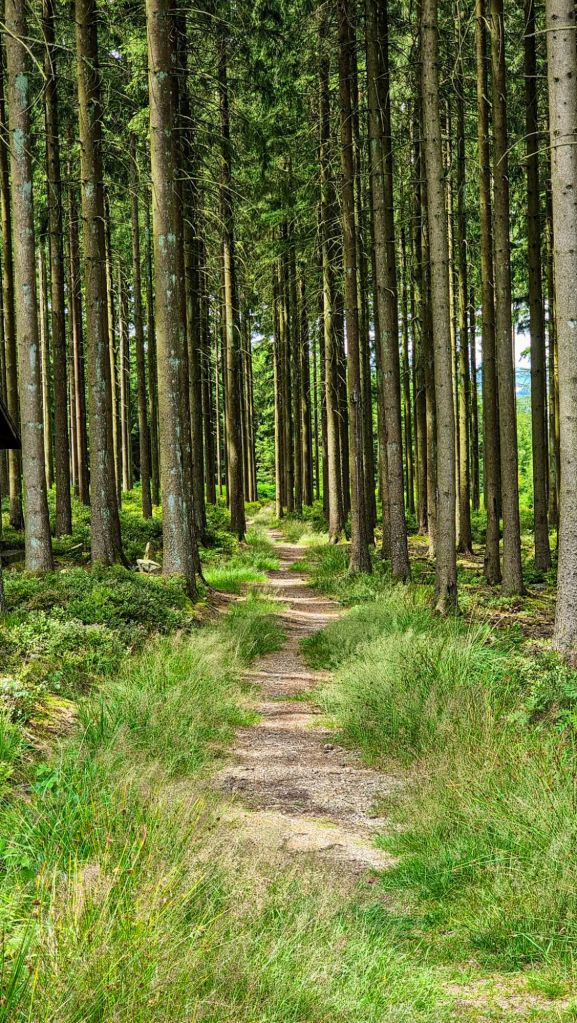
And then November 2025.

“The best known pictures from the Bulge – which appear in every book about the Ardennes and show German troops running past blazing U.S. vehicles – originate from this December 18 encounter.”
Snow & Steel by Peter Caddick-Adams (2014, Arrow Books)
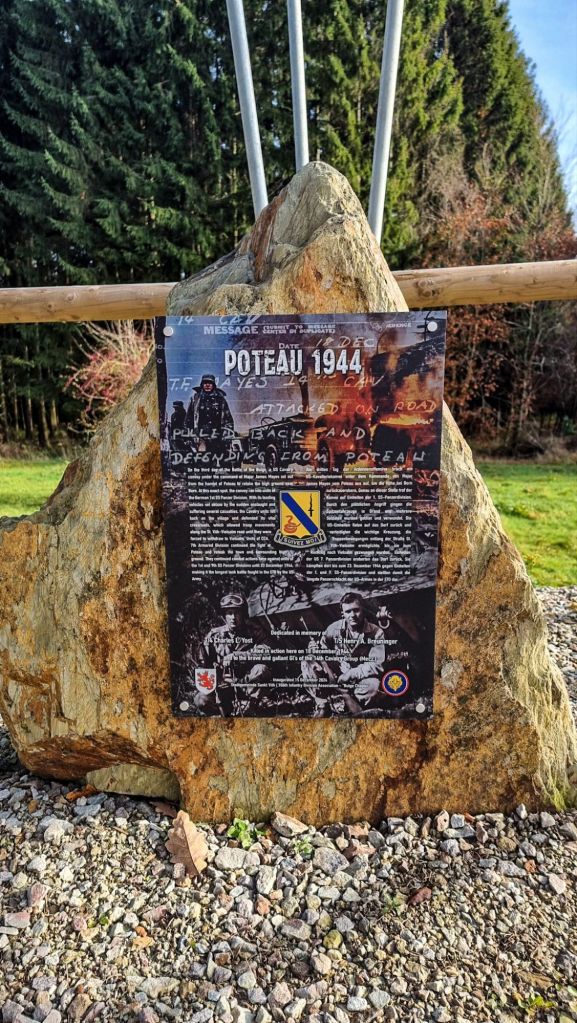
To get to the Poteau memorial, you have to walk along a road with no shoulder. On December 18, 1944, the 40th Tank Battalion of the 7th Armored Division engaged in a day long battle along this road. The Ardennen-Poteau ’44 Museum once stood at the top of this road but closed down in 2014.

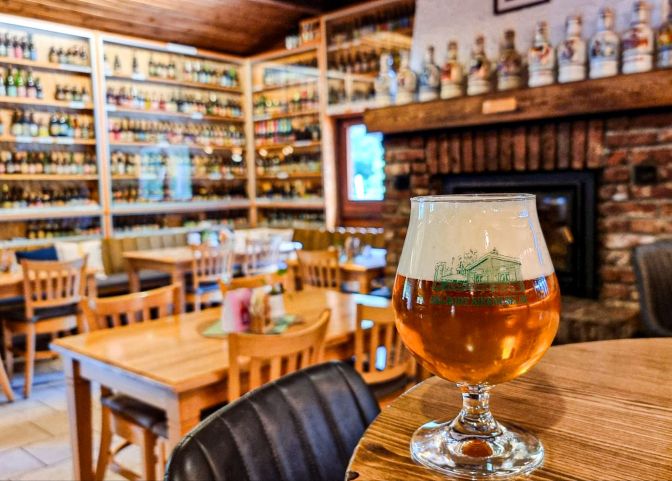
Biermuseum Rodt
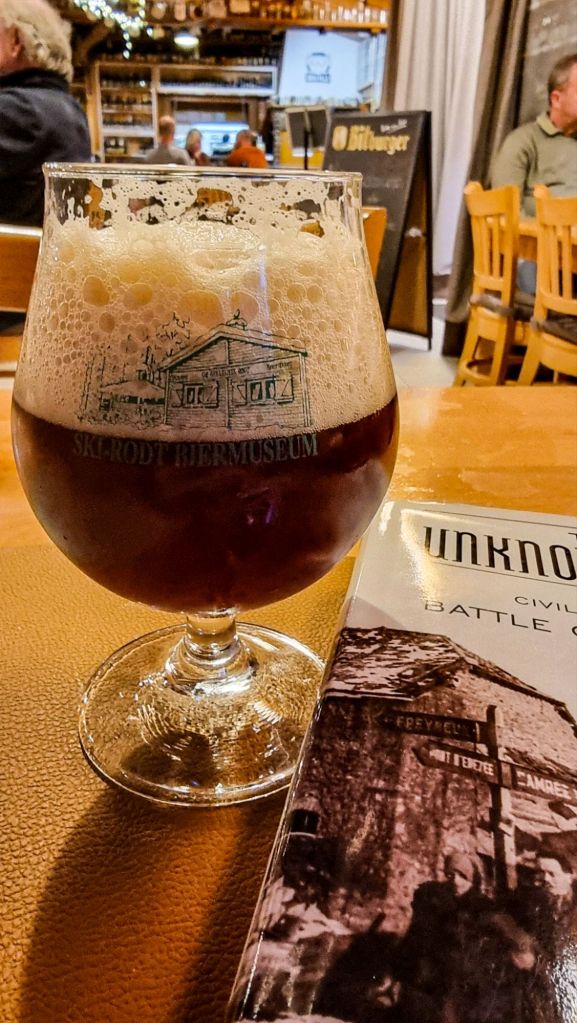
The restaurant is named as such mainly for the collection of beer bottles that line the walls of the restaurant. It does have house beers brewed by the renowned Brouwerij van Steenberge, makers of Piraat, Gulden Draak, and Augustijn, including both a blond and dubbel, and an impressive array of both local and national Belgian beers.


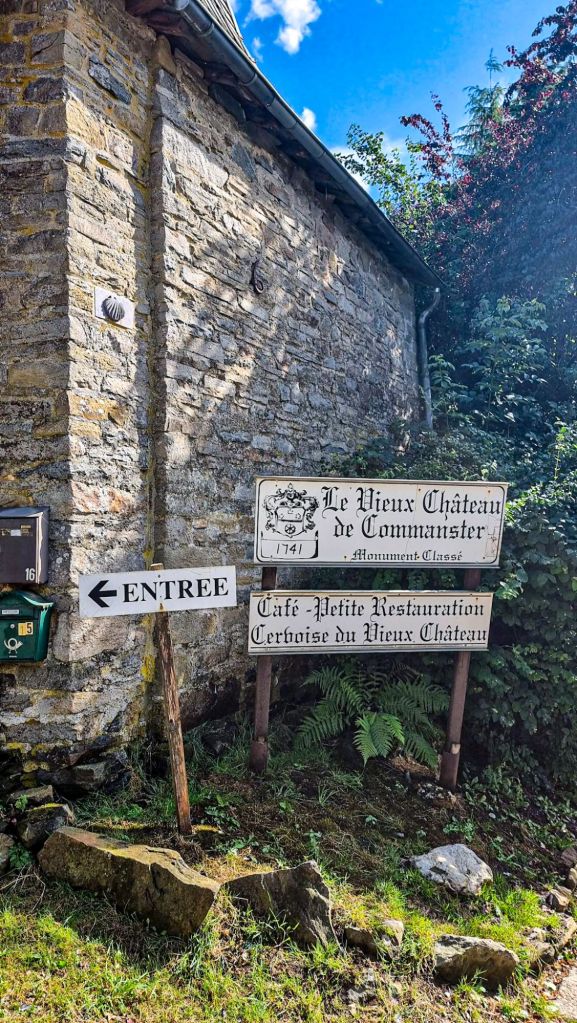
Le Vieux Chateau de Commanster
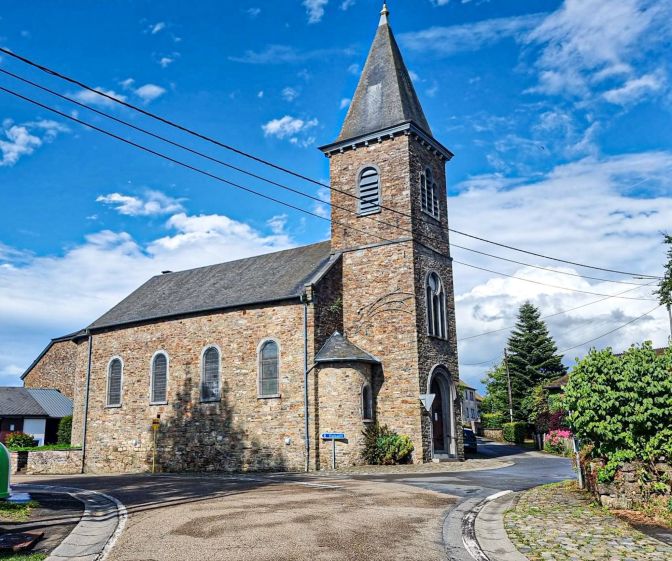
But if there is one beer pilgrimage that any beer lover should take when visiting the vicinity of Sankt Vith, it is a dusty chateau in the miniscule village of French-speaking Commanster. The intersection by the church was once the scene of Brigadier General Bruce Clarke directing traffic during the chaos of the Battle of the Bulge. At the chateau, a single dark beer is served deliciously resembling a Leffe Bruin on steroids. This feels like a place best visited in November rather than July when you can sit inside its medieval interior, probably unchanged since World War II, while the fireplace is soothing and the beer is nourishing. Only open on weekends. Would recommend calling in advance just in case.


Final Remarks
Perhaps the main reason that Sankt Vith never embraced any publicity or sought to follow in the footsteps of Bastogne was that its German-speaking citizens saw the conflict much differently than French-speaking Bastogne. Robert Merriam in 1947’s Dark December writes that “many of the residents” of Sankt Vith were “openly pro-Nazi.” Peter Schrijvers, who describes St. Vith as being a “divided city” where “half the population had remained pro-German” and the other “half had embraced Belgium as their home” writes:
“In stark contrast with other Belgian towns, the German-speaking people in St. Vith had not been out in the streets cheering the Americans as liberators.”
The Unknown Dead: Civilians in the Battle of the Bulge (2005)
The divisions that existed must have severed the trust among friends and families leaving a legacy that aside from a few polite memorials indicates perhaps Sankt Vith prefers to remain ambiguous. But the fact remains that in the six-day Battle of St. Vith, the Americans suffered 12,500 losses, combining those who were killed, wounded, taken prisoner, or were missing in action. By comparison, the more famous Siege of Bastogne resulted in 3,000 American casualties. This remote corner of Belgium will not appeal to those seeking old world half-timber charm, but when the waiter switches from German to English to take your beer order, just remember there is a long, complex tale in the generations behind that friendly smile.


 itsabrewtifulworld