
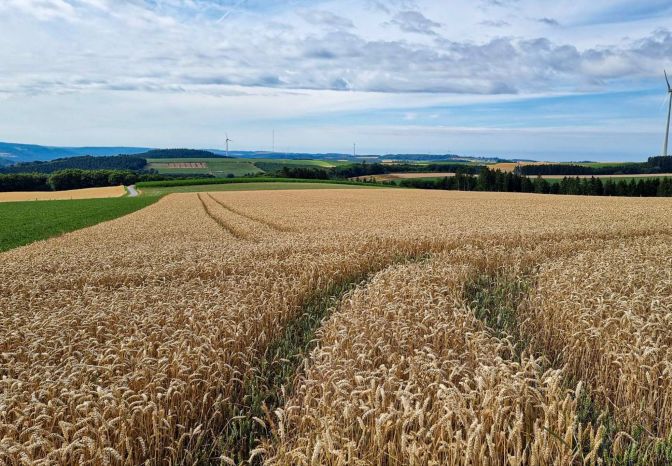
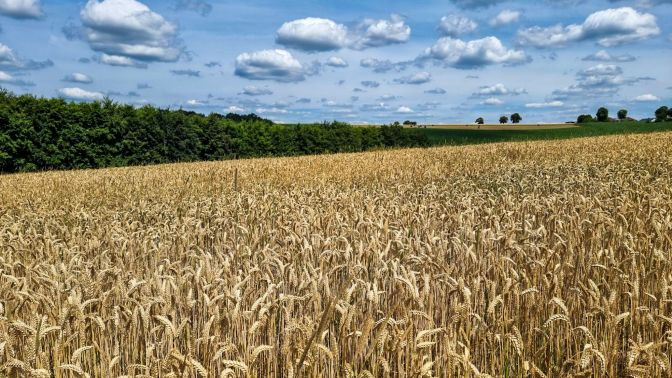
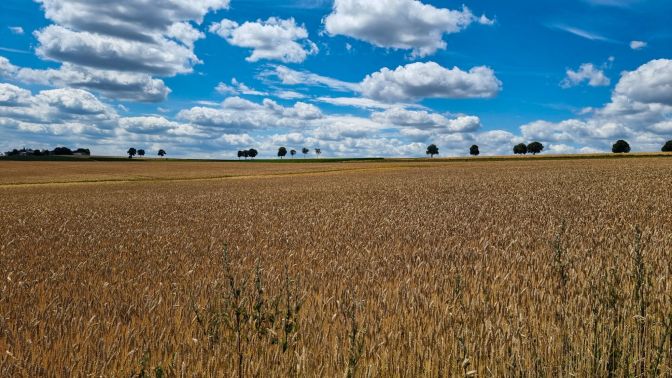
The first time I ever drove through the heart of Luxembourg, two things were constantly on my mind. First was how beautiful the country is and second was what a pain in the butt the roads can be. There seems to be no direct path between any two points in Luxembourg. Trying to get from one town to the next is an adventure of weaving up and down from one valley to the next, navigating the occasional hairpin turn, where every minute of driving feels like twenty. But there is a certain stretch where the world seems to open up in all directions, a sea of wheat fields spread out like gentle ocean waves undulating around you. You feel like your car has entered a celestial plane and is suddenly floating on air. Your brain looks for words to encapsulate the experience properly, as I am doing now, only to fail at capturing its purity in the same way that a photograph would fail. In December 1944, American soldiers called this high ground the Skyline Drive after the historic scenic road in Virginia. When the Battle of the Bulge erupted on December 16, 1944, American troops were stationed along this high road which connects the Belgian village of St. Vith with the Luxembourg city of Diekirch1.
Along this route was the historical town of Clervaux where Col. Hurley E. Fuller of the 110th Infantry Regiment had his headquarters in the Hotel Claravallis. Little did he know on the 16th that headed in the direction of Clervaux were German Volksgrenadiers and part of the 2nd Panzer Division, who incidently were suffering from the same difficult Luxembourg road network that exists today. Clervaux was not the ultimate target, however, but a Belgian town just a few miles to the west, which over the next few weeks would become one of the most hallowed towns of World War II.
Bastogne.
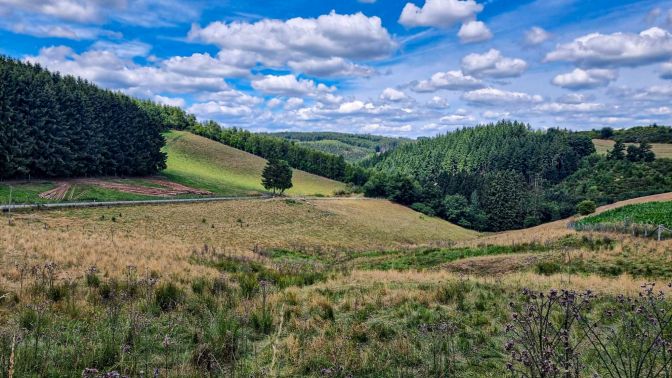
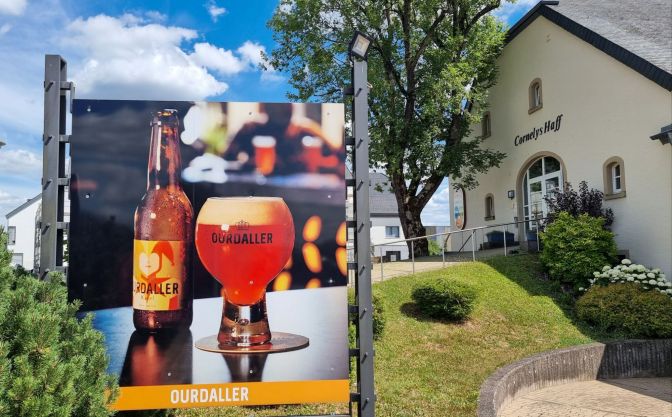
It was within this landscape that I planned a hike in July 2025 under much different conditions than December 1944. The temperature was in the 80’s and the sun was relentless. This area is covered with lush fields of gold offering stunning beauty but little to no shelter from the July sun. The hike starts in the tiny hamlet of Heinerscheid and its local hotel restaurant, Cornelys Haff, which houses the Ourdaller Brauerei.
| Starting/Ending Point | Hotel Cornelys Haff (Ourdaller Brauerei). Parking along the road is possible. |
| Distance | 20.5km |
| Hiking Time | 4 hours |
It’s Not Just a Beer, It’s a Journey
It does not take long to find yourself standing before a field; a quilt of green, yellow, and gold.
The wildflowers growing along the farm road were an open-air conservatory of butterflies. They fluttered in and out of my vision, a tease of colors, until I managed to capture this European Peacock delicately perched on a creeping thistle .

After passing through some fields and across Skyline Drive, I spotted an Old World Swallowtail on a summer lilac.

Clervaux
“There, eight miles behind the so-called front line, the 8th Division had a rest center, where the men frolicked, drank beer, flirted with Luxembourg girls, seduced them when they could, and relaxed from the worries of war. Just such a group was frolicking in Clerf (Clervaux) on December 16,… when the Germans suddenly burst into the town.”
Dark December by Robert E. Merriam (1947)
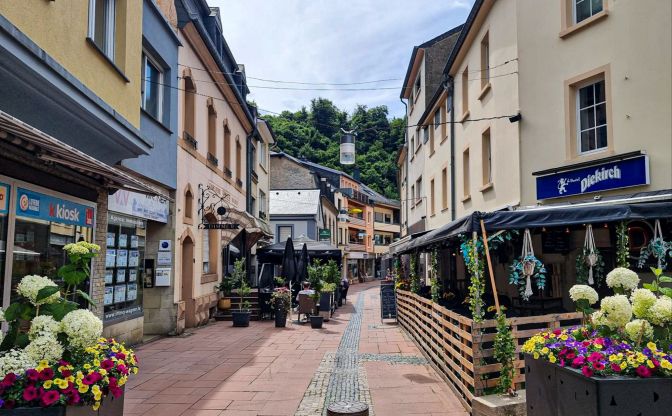
Clervaux sits shoe-horned into a cozy bend in the Clerve River. The Promenade de la Clervaux is essentially the only thoroughfare. Here you will find the majority of cafes, restaurants, and shops. It is as charming as any town on a river bend should be, but it feels oddly bland up close. For all the things I love about Luxembourg, it has never impressed me with its pub culture. As I walked along the promenade, I found no pub or cafe particularly endearing enough to stop for a mid-hike beer. Yet, it feels like a place I would enjoy spending a long weekend soaking up the atmosphere.
At the end of the promenade is a square sandwiched between a bank and a couple hotels. Adjacent to this is a monument to the American soldiers who fought here in December 1944 and then later helped liberate the city.
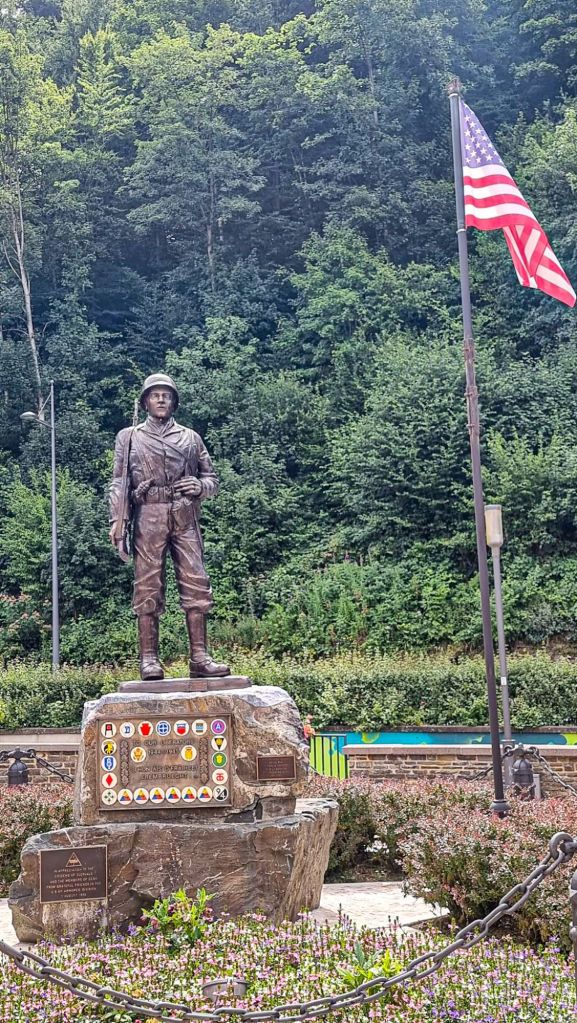
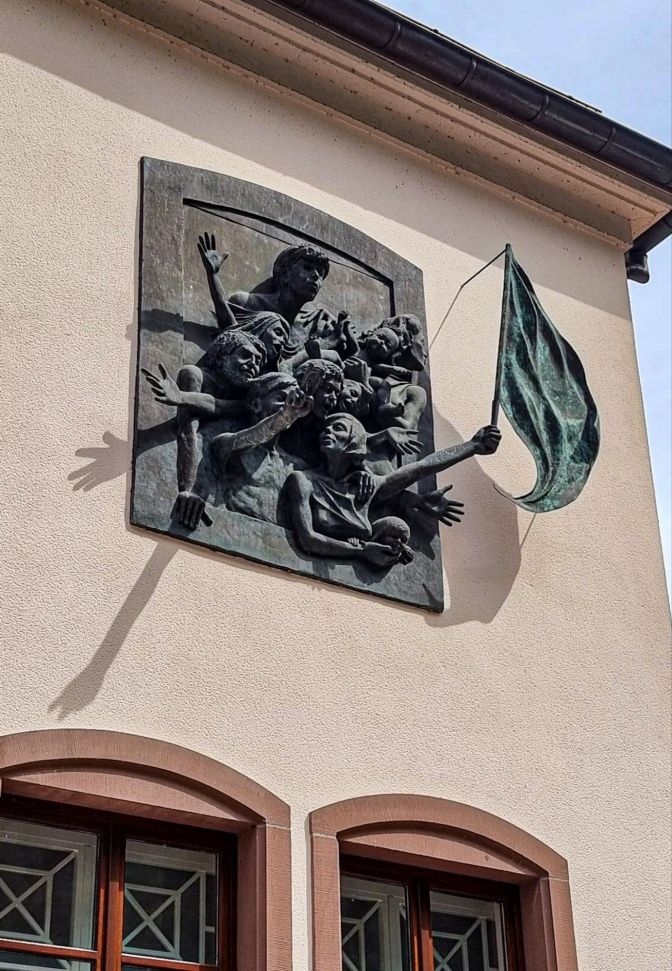
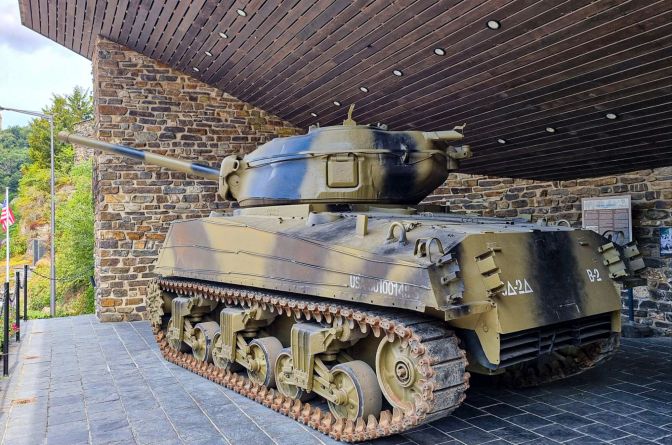
On the late afternoon of December 17, 1944, Clervaux was overrun with elements of the German 2nd Panzer Division. Col. Hurley E. Fuller, whose 110th Infantry Regiment had already been decimated trying to prevent the German advance into Luxembourg along the Our River which forms the border with Germany, was forced to try to escape while a small group of soldiers (sources range from 50-100 men) continued to defend the town until the morning of the 18th. A tank battle ensued as five Sherman tanks of the 707th Tank Battalion arrived as reinforcements. They were able to take out a handful of German tanks (sources also differ whether it was 2 or 4 and whether they were Panzer Mark IV’s or Stug III’s) before three of them were destroyed and surrender was imminent. One of these Sherman tanks remained in the city after the war and was restored. The battle ended with the surrender of the remaining Americans. Col. Hurley E. Fuller was also captured. Fuller, a native of Texas, would later dub this battle the Luxembourg Alamo2. With Clervaux in German hands, the 2nd Panzer Division could now focus on their next target, Bastogne. However, by delaying the German advance, precious time was given for the Americans to collect intelligence on the surprise German offensive and to regroup.
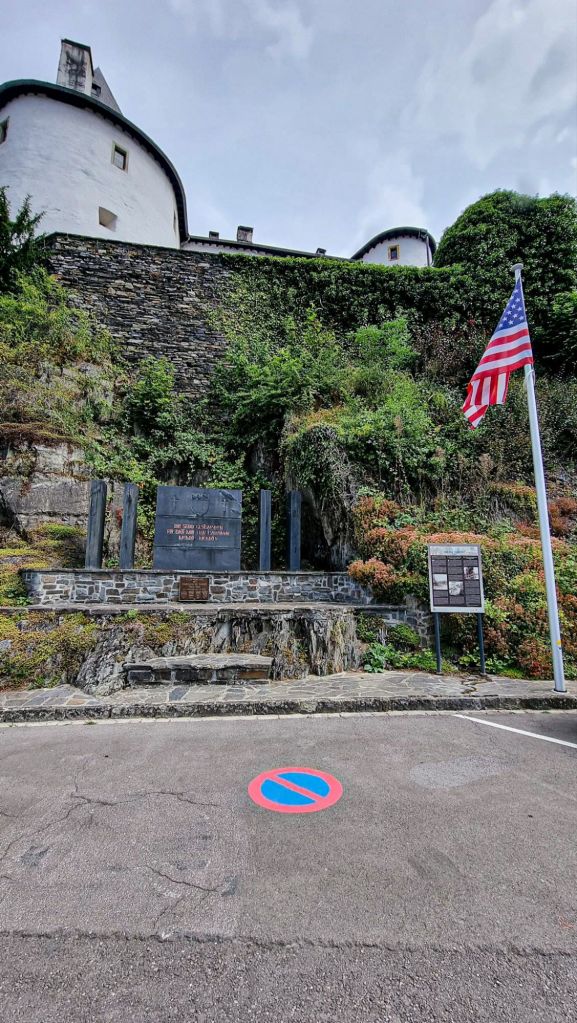
Rising above this quiet town is a 12th century castle which burned down during the December 17-18 Battle of Clervaux. It houses a Battle of the Bulge Museum which I featured in the following post.

My BIG Battle of the Bulge Blog Post
Battle of the Bulge sites are plenty in Belgium and Luxembourg. This post points out some of the best.
Continue reading My BIG Battle of the Bulge Blog Post

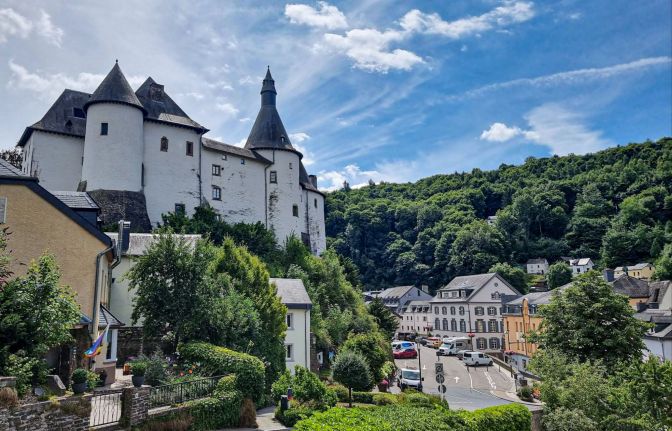
Behind the castle and sitting even higher is the Romanesque Church of Saint Cosmas and Damian.
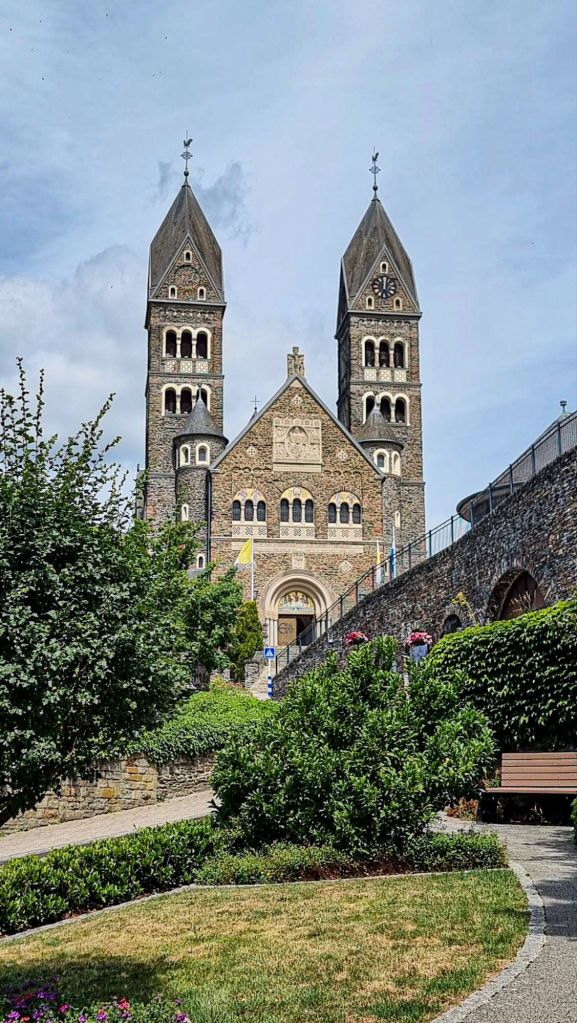
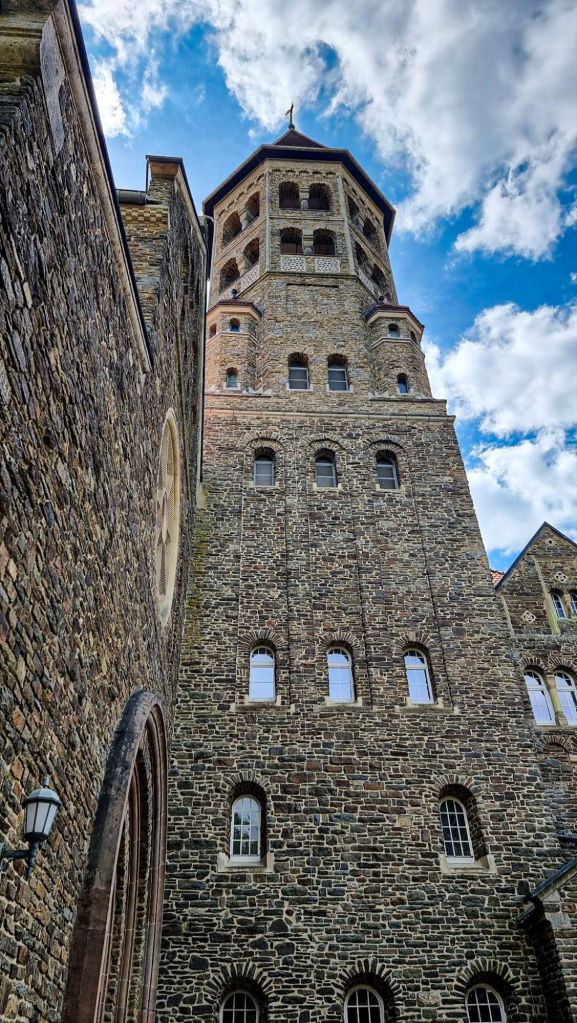
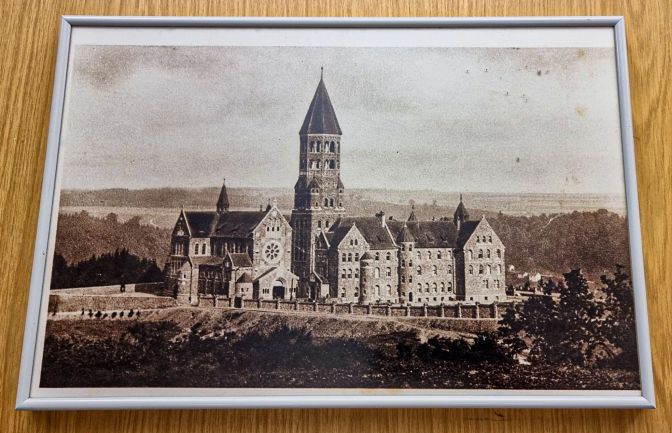
Just beyond the church, the hike heads into the forest where Benedictine monks live quietly in the Abbey de Clervaux. Taking advantage of the shady courtyard of the abbey, I chose this tranquil spot for my lunch. If you are able to spot the cellar entrance, there is a free museum exhibit of the history of the abbey.
The hike then comes back down to the Clerve River where Col. Hurley E. Fuller had his headquarters.
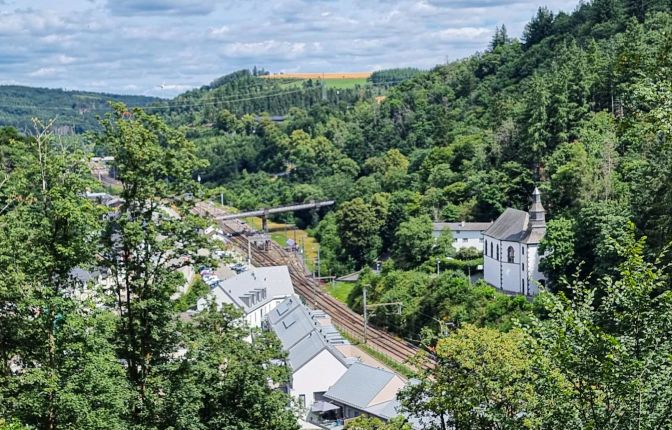
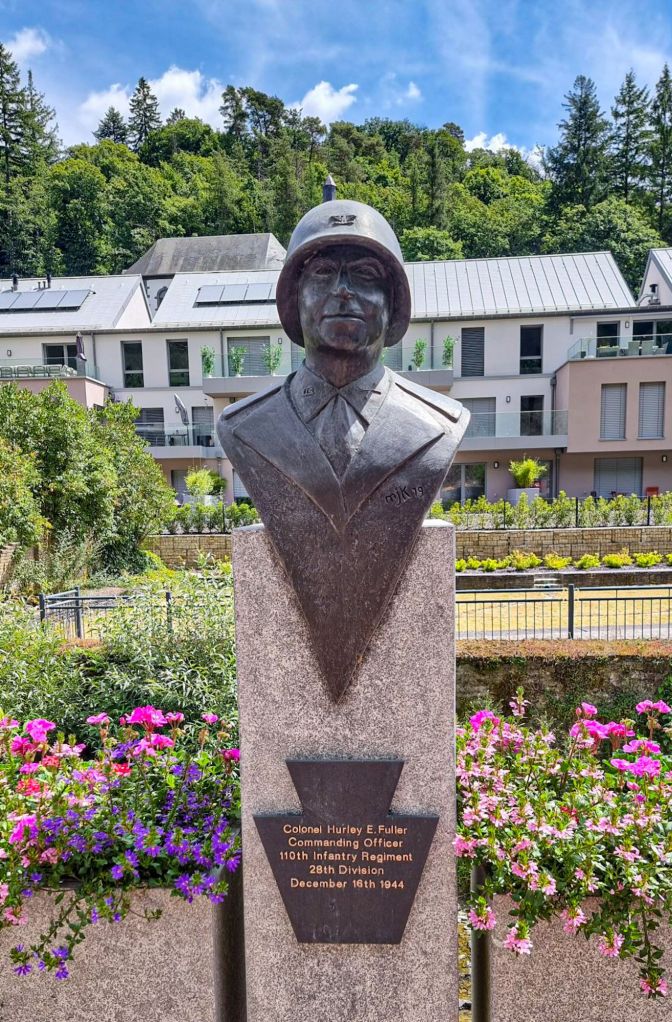
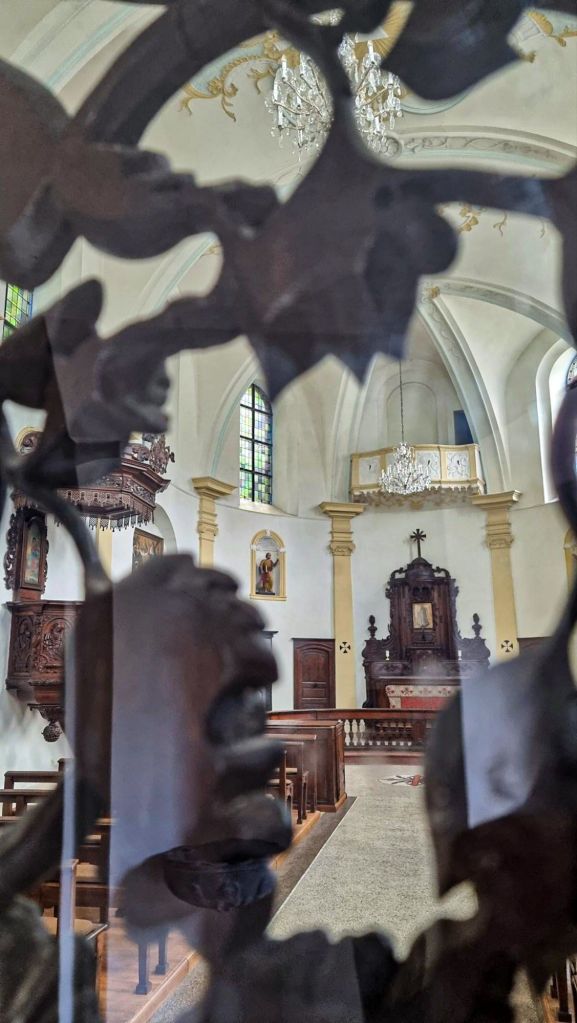
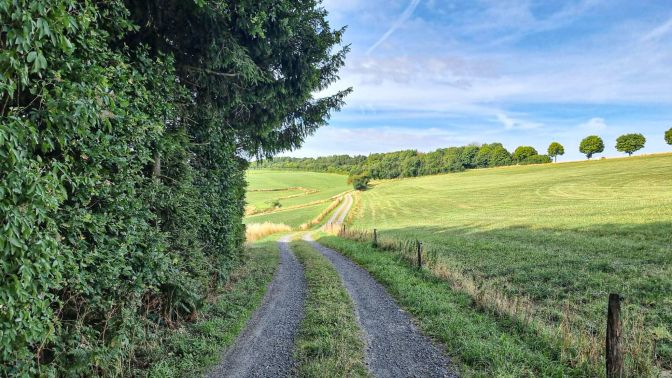
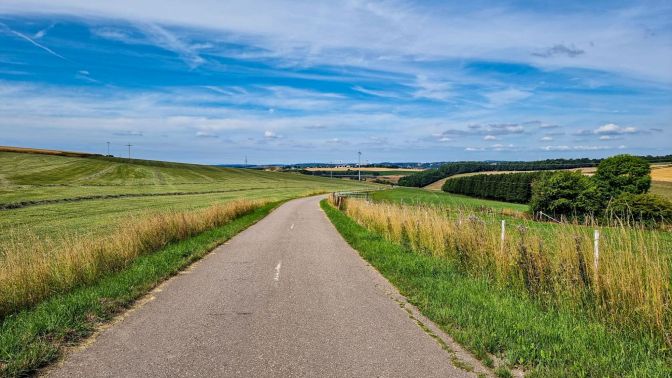
After leaving Clervaux, the hike heads back through the rolling fields.
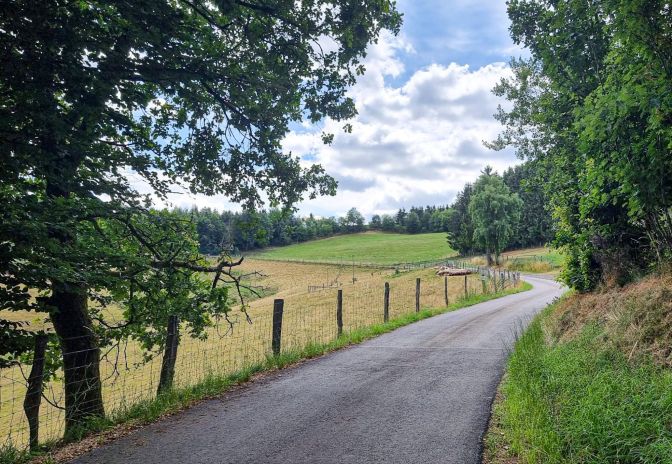
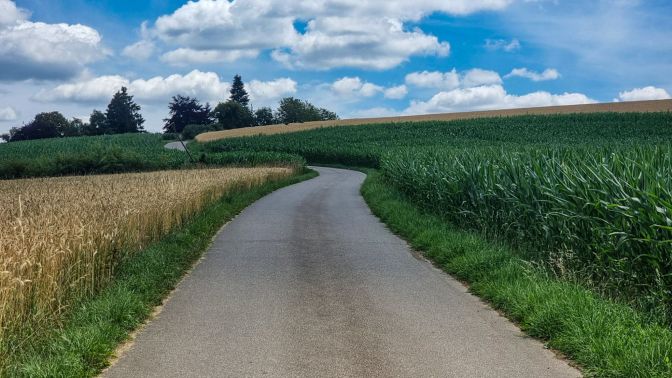
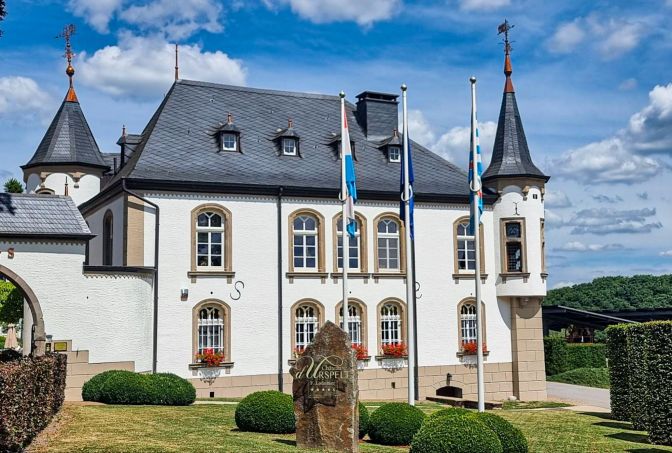
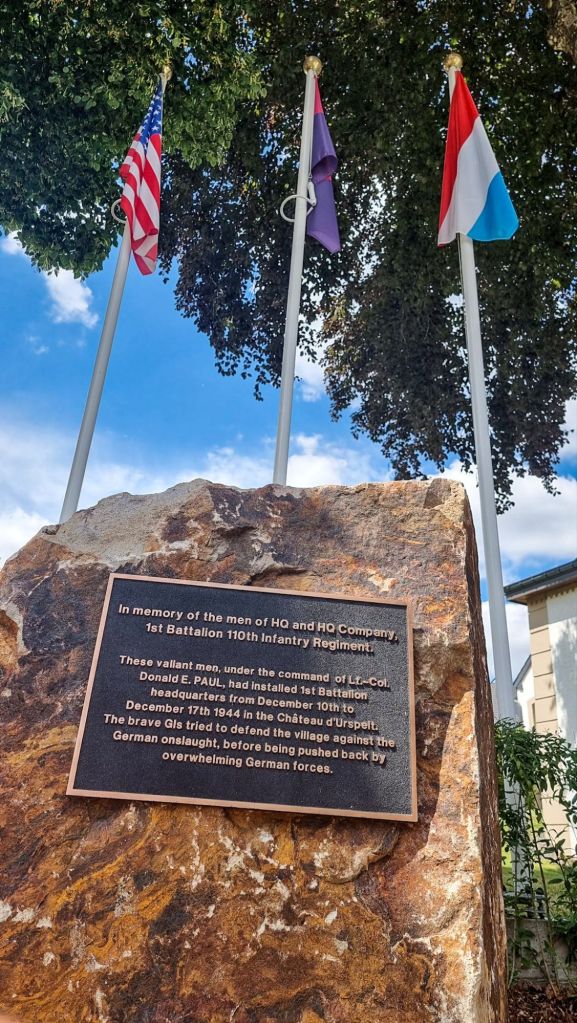
After an hour of solitude, the next landmark is the Chateau d’Urspelt. This 19th century castle was a command post of Lt. Col. Donald Paul of the 110th Infantry Regiment during the Battle of the Bulge. A plaque near the entrance memorializes this.
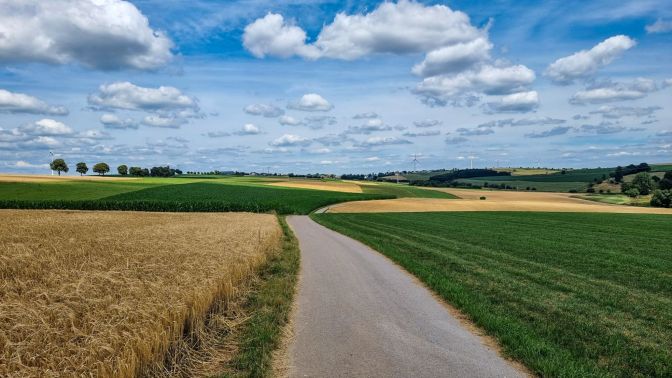
The last segment of the hike included some of the most scenic fields.


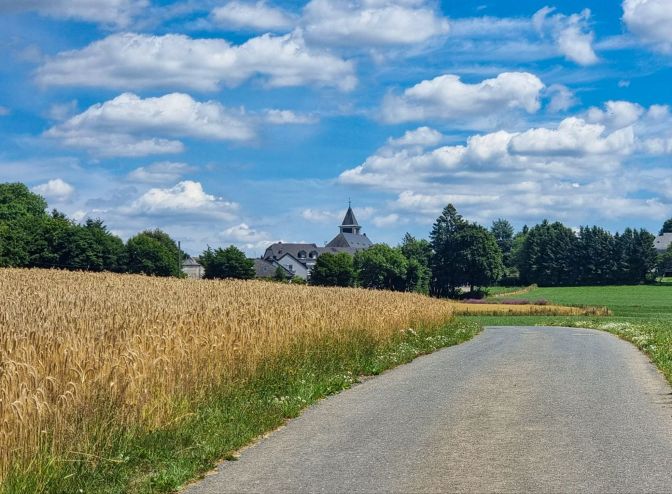
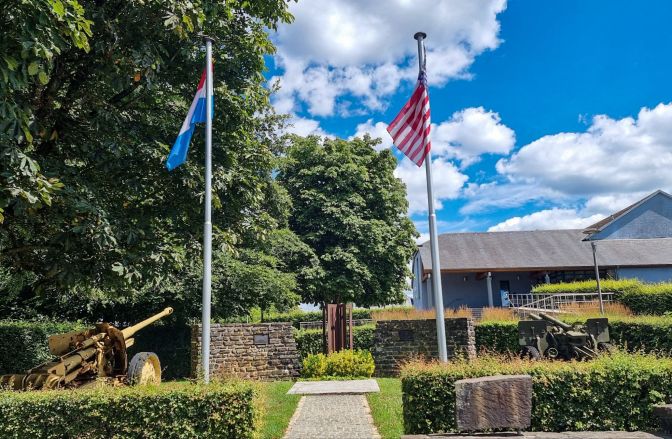
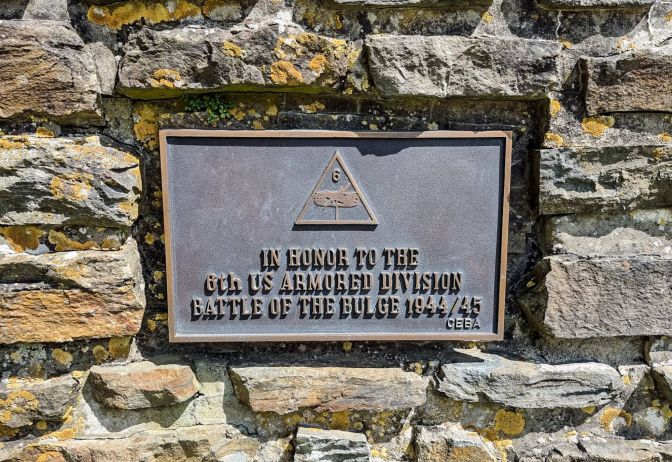
Heinerscheid has a monument to the 6th Armored Division sandwiched between an American howitzer and a German PAK.
Ourdaller Brauerei
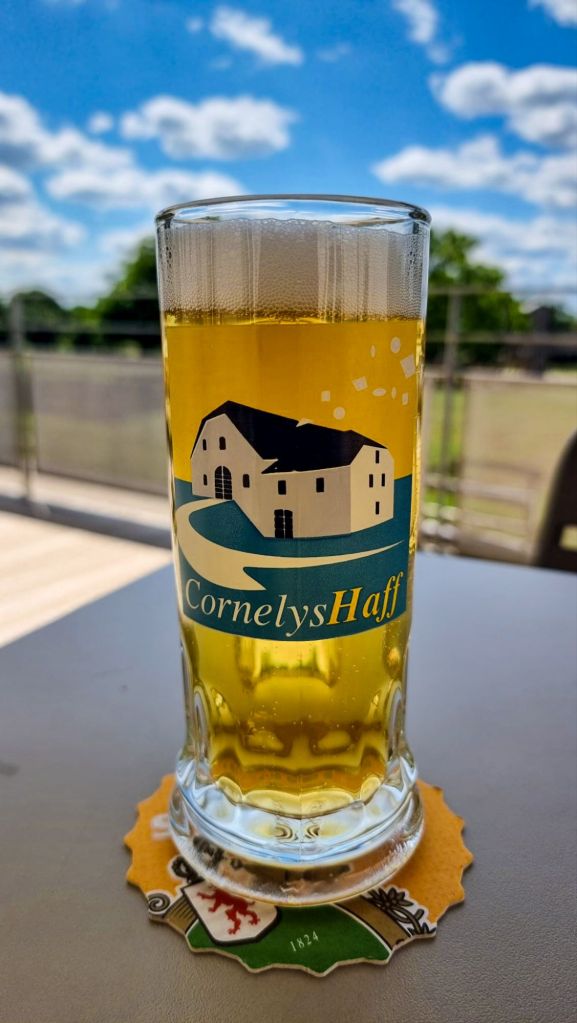
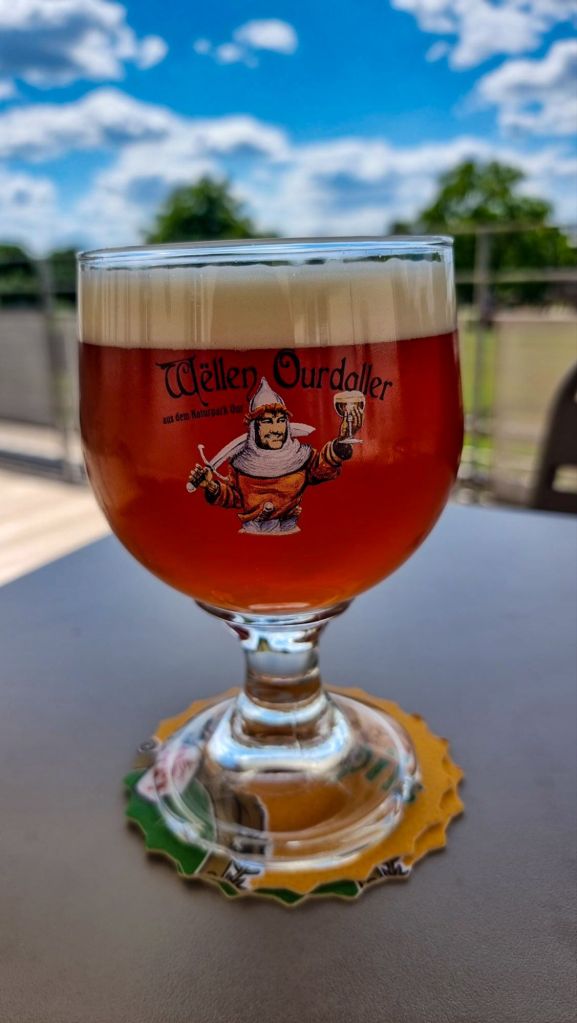
At about three in the afternoon, the hotel restaurant was calm. After a hike which bordered on being blistering hot, a couple cold beers was a refreshing reward. The first was a German-style pils, which was a perfect way to start followed by a malty amber beer similar to a German kellerbier.
Final Remarks
This hike was part of a short holiday I took in July in the town of St. Vith, Belgium. As I drove back to St. Vith after the hike, I would have been following a part of the Skyline Drive and a crucial artery for the German advance. St. Vith, like Bastogne, was an important crossroads that both sides fought to control. There is not much to see between St. Vith and Clervaux. It is a quiet, rural place but when you replace the peacefulness in your mind with the sound of artillery explosions and the mechanical cacophony of tanks, these graceful fields suddenly fill with ghosts of the past. It was surprising to find a brewery here and that makes this hike all the more recommendable. Luxembourg has its quirks, but I find it perpetually inviting and interesting. As I sit here writing, I can feel its attraction. There is still more there to explore. But if I have to drive through it again, I might cuss like a Panzer tank commander.


 itsabrewtifulworld