
“It was a region of fairy beauty and of wild grandeur. Meeting an old
Wild Wales: The People, Language, & Scenery by George Borrow (1862)
bleary-eyed farmer I inquired the name of the mountain and learned that it was called Moel Siabod or Shabod.”
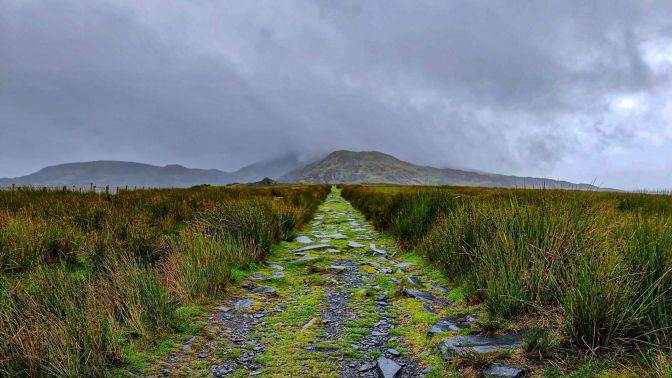
I stood looking up a long straight path heading towards a distant peak hidden beneath a shroud of ominous clouds. The path was strewn with bits of grey slate, a foreshadowing of a lost world just over the horizon. When it comes to hiking in Wales (same with Scotland), I have had to learn to roll with the weather. Staring into a distant abyss of clouds has become a familiar experience. In return, however, the clouds offer their own rewards. They create a cinematic atmospheric landscape; a feeling of stark isolation.
To compensate, I have come to view the concept of a sunny, clear summit view as something reserved for the shallow selfie-stick social media types. Whereas the real Wales, the one hiding beneath the fog, is specifically for the brooding, self-reflective types like me. Anyone can display a piece of art when the painting is already finished, but when half of the canvas is missing, that is where the real imagination and wonder are stirred. As I gritted my teeth and headed into the drizzly wind towards Moel Siabod, I kept telling myself that.
“It is the fashion to speak of Moel Siabod with pitying contempt… That probably is because most climbers see it from the west, and those long monotonous grass slopes…”
Holiday Rambles in North Wales by Arthur L. Bagley (1927)
Moel Siabod is an 872m peak in Snowdonia near the village of Capel Curig. The route referenced in the quote, also called the “easy track”1, goes from Capel Curig and ascends directly up the northside, as implied, without much flair. The other comes from Pont Cyfyng, just up the road, which is quite a bit more interesting. This route comes around the east side and up from the southeast where there “seems nothing on this side of the mountain that can be called a path”2. The approach from the southeast is completely rocky and introduces you to some Grade 1 scrambling3.
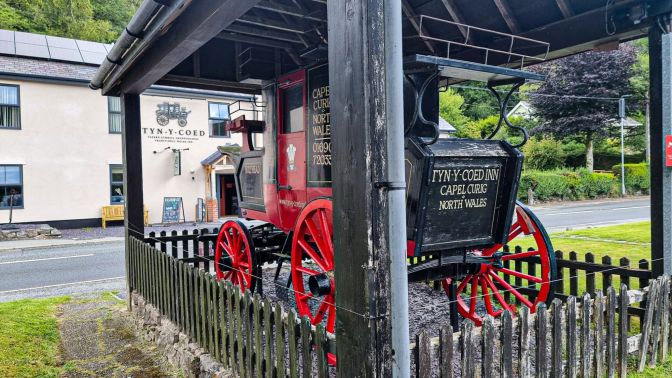
I recommend to start from Pont Cyfyng and do the scrambling as part of the ascent. This leaves the “easy track” for the descent. The other benefit is that you can park in the lot of a local traditional inn, Tyn-y-Coed, which is located in Pont Cyfyng, for a post-hike celebratory beer. There is a parking fee, unless you are actually staying at the inn, which you can pay using the Pay By Phone parking app.
| Starting/Ending Point | Tyn-y-Coed Inn |
| Distance | 10.8 km |
| My Moving Time | 2h 48m |


It’s Not Just a Beer, It’s a Journey
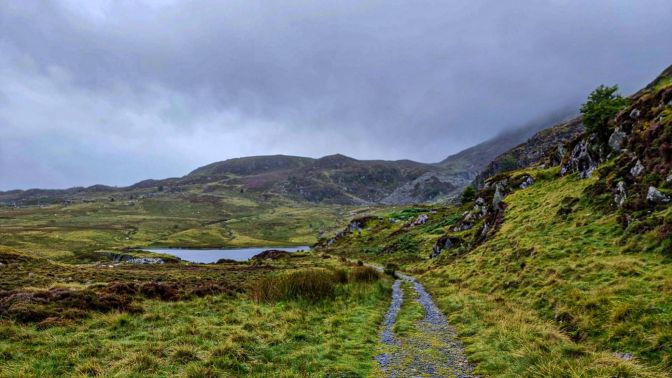
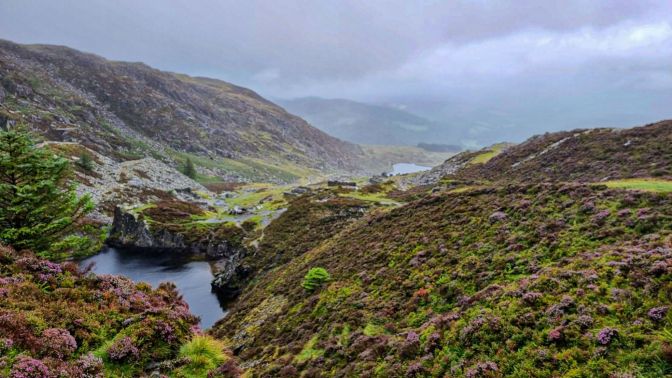
One of the things I love about hiking in this region is how the mountains intertwine with the region’s history. Remnants of the hard life of the local ancestry is scattered among the hills and valleys. The route from Pont Cyfyng is a great example. As you reach the first distant hill from the previous image, the path bends around and discovers a small mountain lake at the foot of a hidden ravine. One of the first things you notice is a huge mound of stone which doesn’t seem naturally occurring. This is a mound of slate scree from the mining activities that went on here in the late 1700’s and early 1800’s. Also in the vicinity are several structures which would have housed a rough community of slate miners. They stand in a haunting silence where once the sound of hammer against rock would have echoed off the hills.
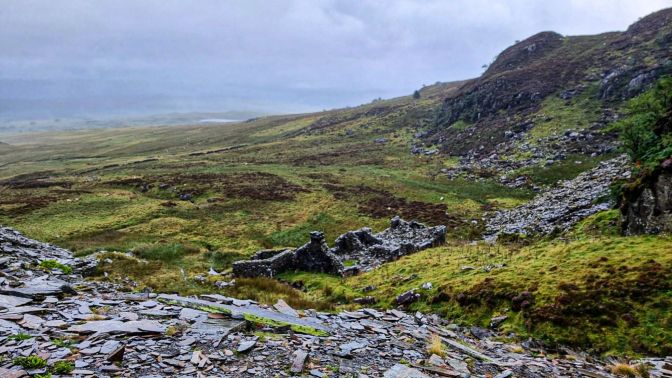

Just at the top of these structures looks like where the quarry might have been. Today, it has filled up with water and is now a small lake.
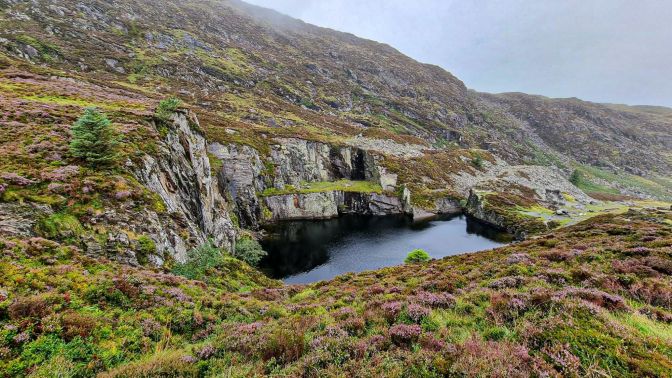
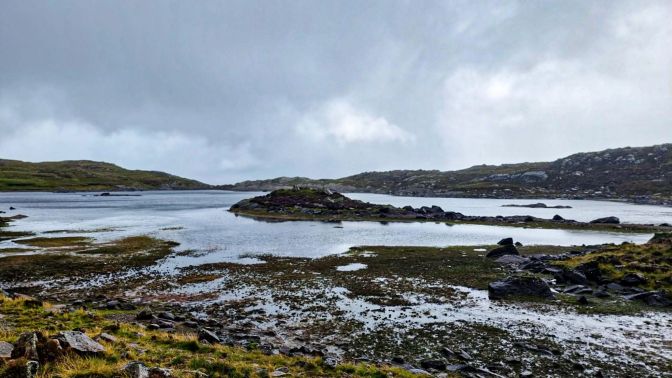
A little further up is lake Llyn-y-foel with its mysterious spit of land where you could almost imagine an old stone tower sitting. In a video game, there would inevitably be some hidden treasure there. It is at this point that you have to make a choice as to your route. The map shows a couple different options, but I chose the one marked by a user of Komoot as Daear Ddu Ridge.
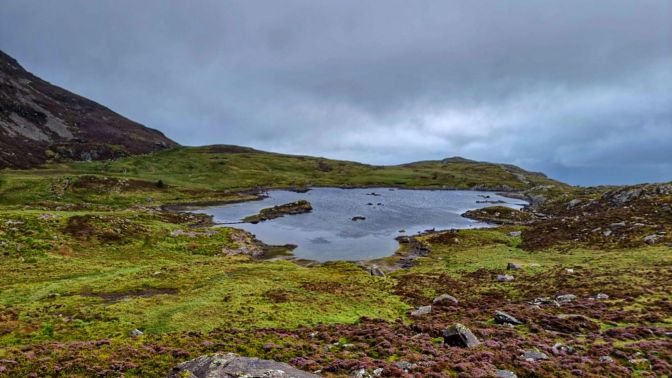
Grade 1 scrambling means you will need to climb up, in-between, and over rocks, often hand over foot, but where equipment is not necessary. As someone who is terrified of heights, I never felt exposed to drops or danger at any time. It was actually relatively easy. Every time it looks like there is no way, one reveals itself, and often there are multiple ways. If you find yourself stuck, just backtrack a couple meters and you will find a better route.
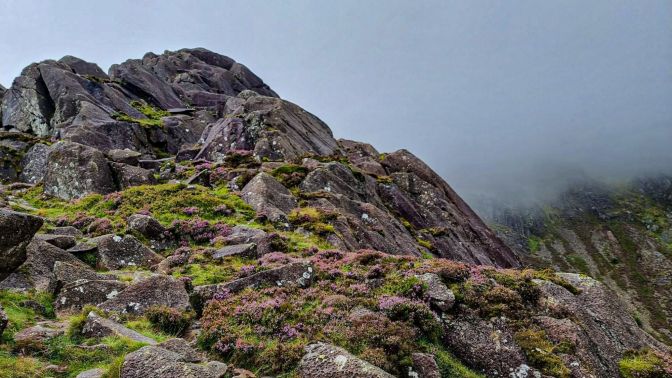
On the way up, the clouds did start to thin out giving a tease of the scenery to the south of Moel Siabod.

After the Daear Ddu Ridge, due to the cloud cover and wind, the scambling intensifies a little as you make the final push for the summit.
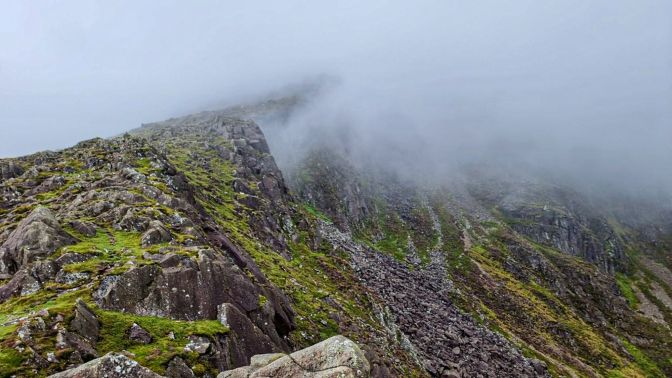
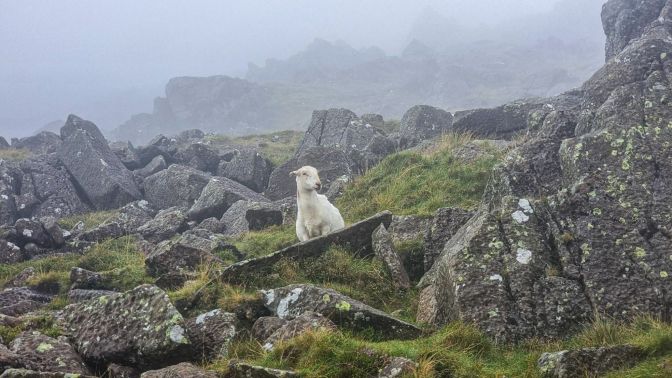
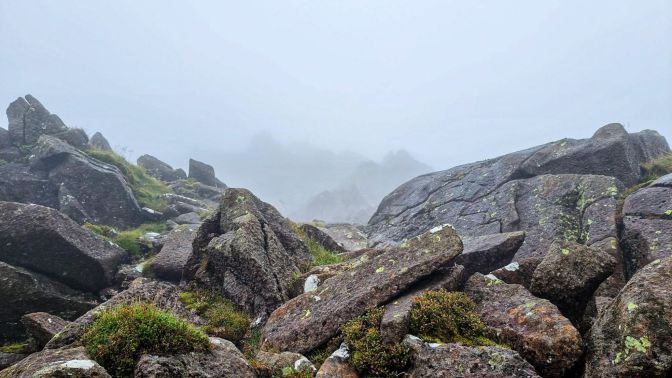
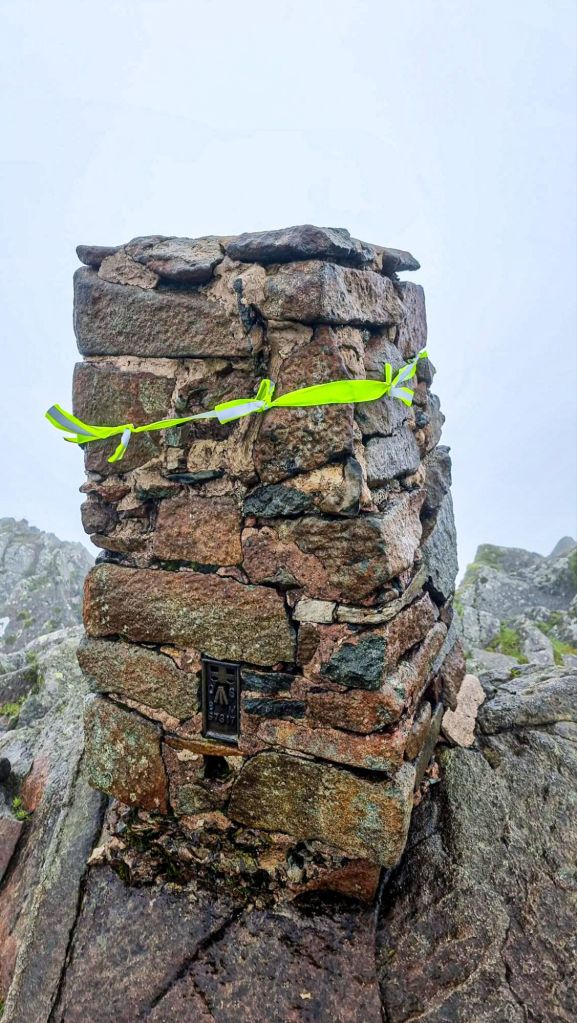
The peak was giving its best Yr Wyddfa impression by being completely engulfed in clouds. The wind was also quite harsh. There were a few other hikers up there, one bundled up looking like they were going to try and wait out the weather hoping to get a clear view. I didn’t have the patience for that, so I started the descent.
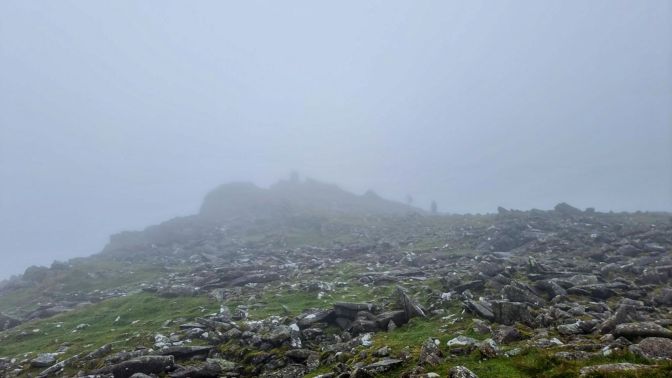
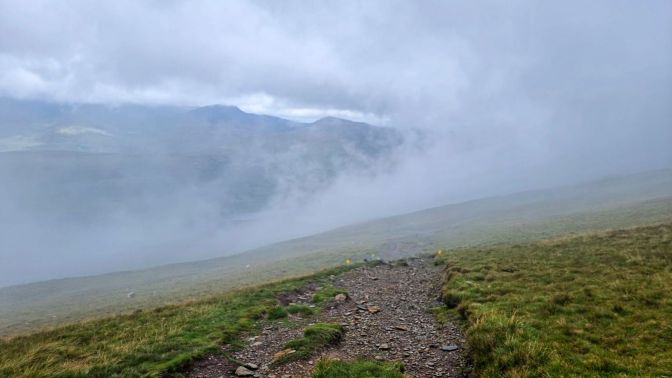
The initial descent didn’t seem to have a well-defined path but there were yellow flag markers that lined up with the route on my gps. These were for a trail running event going on. As I descended the ‘easy track’, I was being frequently passed by the participants.

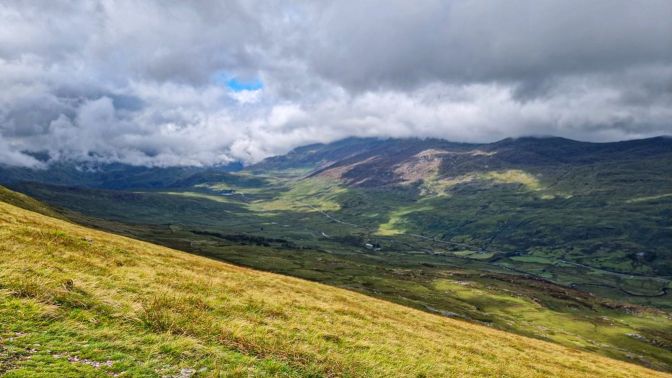
The path becomes quite evident and from that point on, it is indeed an easy descent. When I came below the cloud level, the skies started to clear over the valleys.
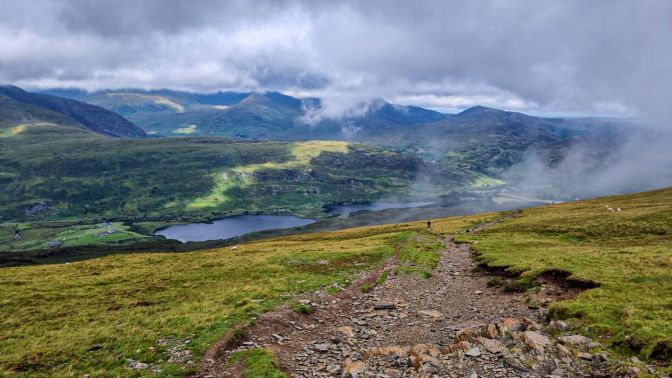
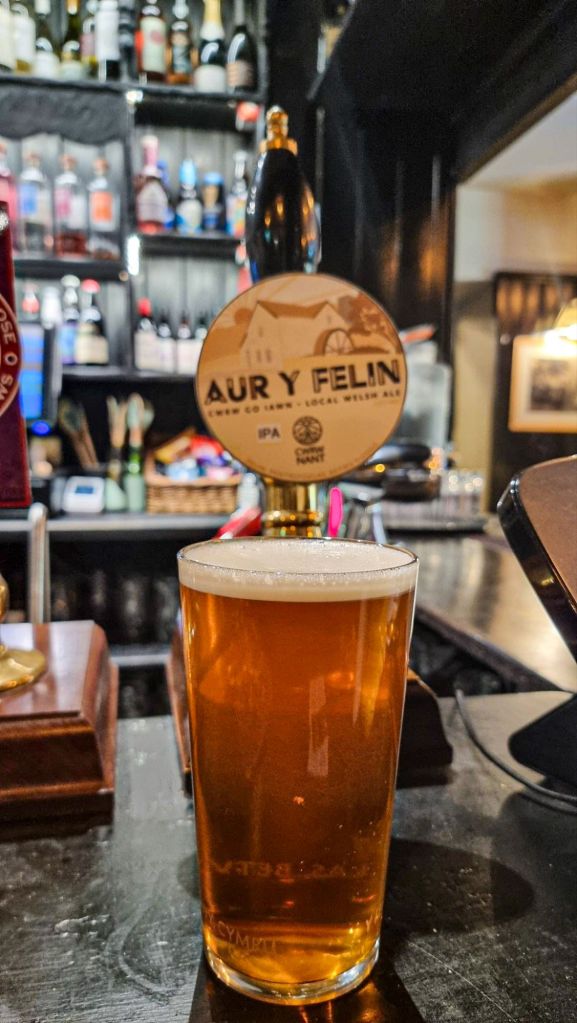
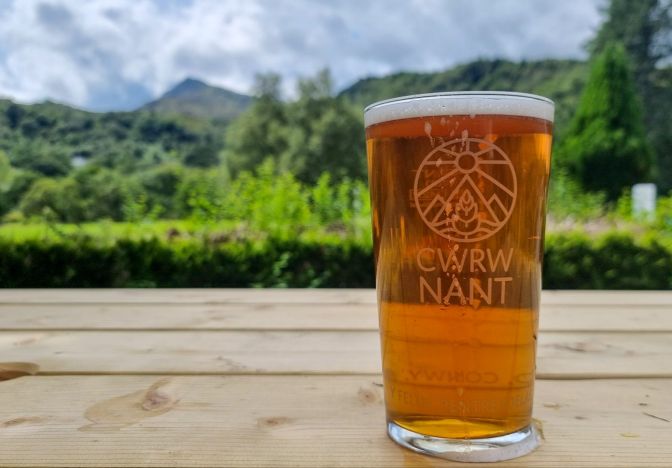
At the end of the hike, it was time for a refreshment at the historic Tyn-y-Coed Inn, a former coaching inn. The Aur-y-Felin ale is brewed by Cwrw Nant in the nearby village of Betws-y Coed. I grabbed an outdoor table and sipped the ale during the quiet of the early afternoon. The peak in the distance was not Moel Siabod, but a mere bump on the way giving the false impression of lofty heights from my vantage point.
Final Comments
As the sun started to show itself during the descent, a trail runner that I had passed in the clouds earlier was now galloping back down the path. She looked back and hollered in her British accent ‘It looks better when they turn the lights on, dun’ it!‘ That’s true, I thought. Despite the “monotonous grass slopes”, the views were spectacular. But in Wales the lights never seem to work in the attic, I muttered under my breath. As the sun started to appear in more glory, the hairs stood up on the back of my neck as I contemplated what I would see behind me. What if I turned around to find a blue heavenly firmament sitting over the mountain top? The temptation was overwhelming, so I took a peek. Fortunately, the attic lights were still off. There’ll be no brilliant summit views for all the Instagrammers on my watch. Little did I realize that I would get a small taste of my own medicine over the next few hikes.


- Odd Corners in North Wales by William T. Palmer (1937) ↩︎
- Holiday Rambles in North Wales by Arthur L. Bagley (1927) ↩︎
- https://services.thebmc.co.uk/understanding-scrambling-grades ↩︎


 itsabrewtifulworld
One thought on “Moel Siabod”