
“Do not attempt to see all the Uffizi at one visit, or even any large part of it. Begin with a little bit, and examine every part of it.”
Grant Allen’s Historical Guides: Florence (1897)
What he is saying essentially is to have temperance.
Stepping into the Uffizi Gallery in Florence, Italy is like stepping into the conscience of the Renaissance. Here hang the works of luminaries such as Michelangelo, Da Vinci, and Botticelli; works many of which once adorned the palaces and churches of Florence, commissioned by the powerful families residing here; the Medici, Pazzi, Rucallei… They are more than just technical skill for us to admire but individual time capsules which collectively capture the values and mindset of the people living at that time. However, the height of the Italian Renaissance happened to overlap with the age of the fiery Dominican friar Savonarola in the late 15th century, who terrorized the world of secular art. As I embarked on my next edition of Drunken Masterpieces, I realized I was stepping into a world barren of tavern scenes and bibulous activities. How in Heaven’s name was I going to find a theme? Could Savonarola’s clutches extend over five centuries and drag me kicking and screaming into the inferno of his bonfire? Where is Jan Steen when I need him?
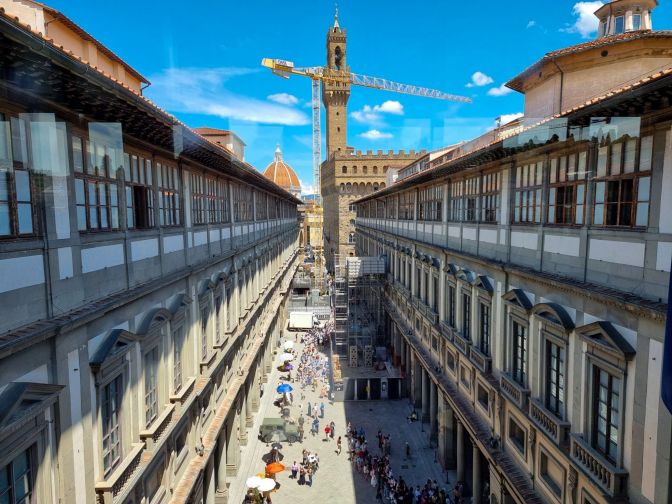
Setting the Tone
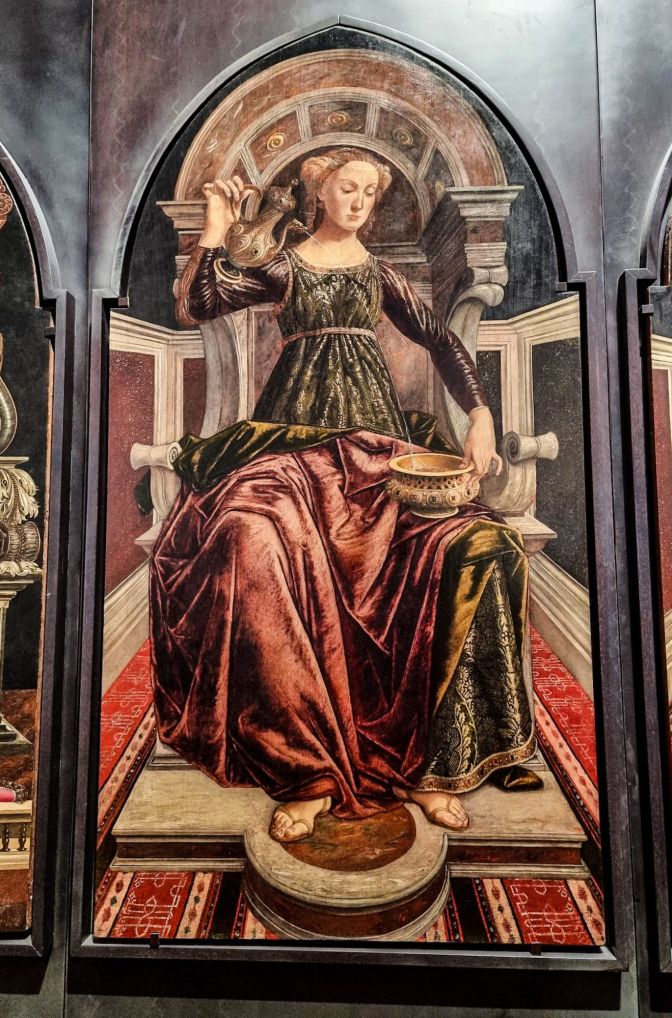
It doesn’t take long in the Uffizi Gallery before our enthusiasm is put to the test. In this 1470 work called Temperance, we see a woman pouring hot water out of a vessel into a bowl of cold water to represent moderation. Or it could be the other way around. Maybe we are the hot water in the bowl and she is pouring cold water on us. Either way, it’s not wine. And she certainly has the look of a woman you don’t want to cross.
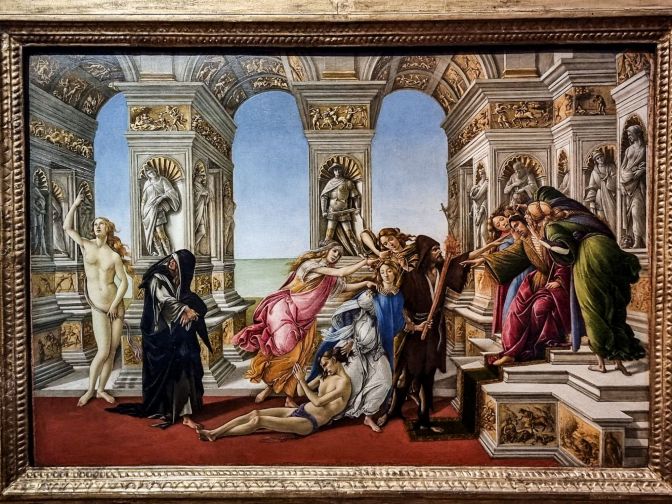
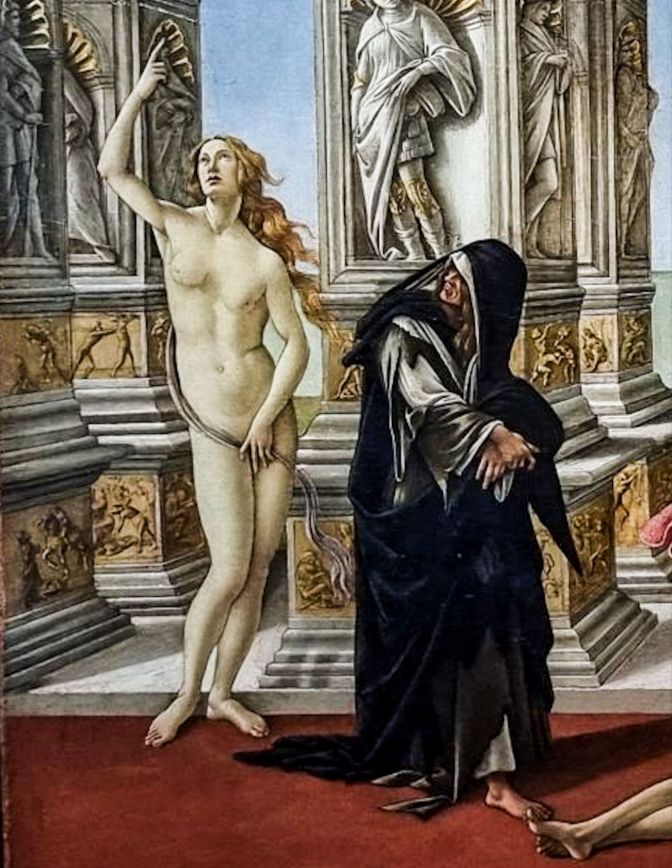
A little further on, this Botticelli scene full of writhing figures must be some alcohol-induced moment of debauchery which I could gleefully write about, correct? Wrong. In this scene, Calumny is dragging Slander before King Midas. Fraud, Deception, and Spite join Calumny while Suspicion and Ignorance whisper in the King’s ear. What are we to make out of all of this? Zooming in on the left side of the panel, one finds Repentance covered in a black robe looking back at the Naked Truth. I certainly was not being inspired to feel less guilty about all of the beers I would indulge in later. Another interpretation is that Repentance is ignoring the injustice that was taking place right in front of her to gaze back at the naked figure. Could this say something about the vanity of social media? I was soon to find out.
Venus Fly Trap
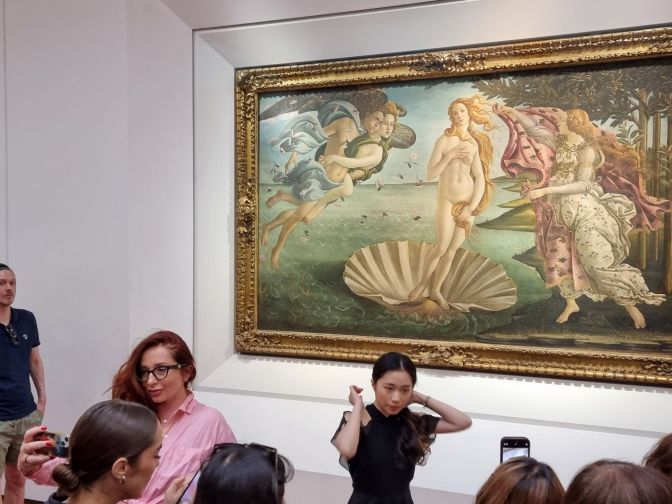
Here we have two flies caught in the trap of Botticelli’s Birth of Venus, perhaps the most famous painting in the entire Uffizi collection. Does not Venus look similar to the Naked Truth in our previous entry? One of the young ladies posing is interestingly dressed in black but the other one spoils the poignancy by wearing pink. Both are assuredly not paying attention to the evils of injustice, such as blocking everyone’s chance to get a good photograph of the painting. Furthermore, neither lass can agree on which side of the head Venus’s hair is falling. Savonarola would have a sh*t fit at the entire spectacle.
Writer’s Block
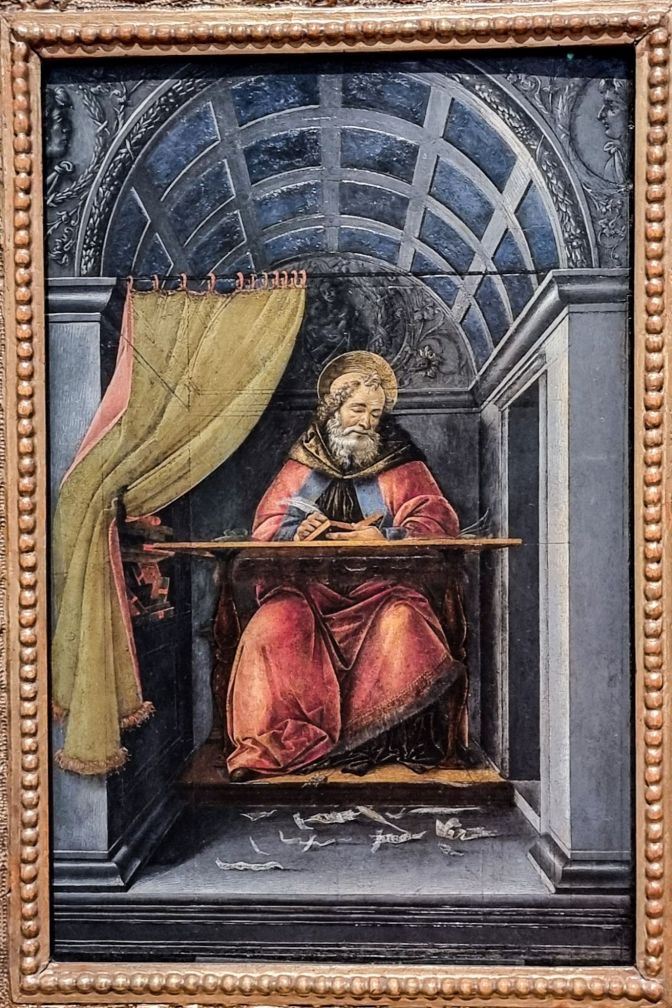
Alas, a theme was as elusive as a broken piece of egg shell in a bowl of yoke. I soon came upon another Botticelli called St. Augustine in His Study who is sitting at his desk writing under the vaulted ceiling of what looks like a very fancy shower stall. At his feet are the scraps of paper containing all of his rejected thoughts. I looked upon his solemn gaze, clearly confounded in his own mind what to put down in his journal, as a kindred soul. It was going to be a long, arduous journey through the Uffizi. One thing was clear. I needed to get away from Botticelli.
Wine Appears
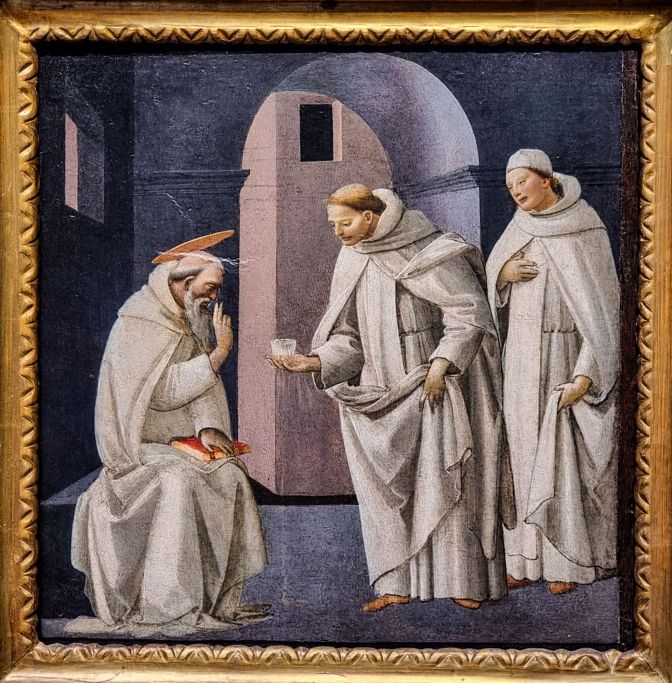
In the Uffizi, it is important to take advantage of any painting with the word wine in the title. This one, however, comes with an asterisk. Here, two monks offer a glass of poisoned wine trying to lure the domineering St. Benedict into unwittingly choosing a frothing, choking, and undoubtedly painful death. St. Benedict’s menacing hand gesture could represent the fraction of a second before he put a bullet into their heads or maybe he was about to poke the first one in the eyes like Moe of the Three Stooges. Either way, St. Benedict survived this encounter.
Wine Disappears
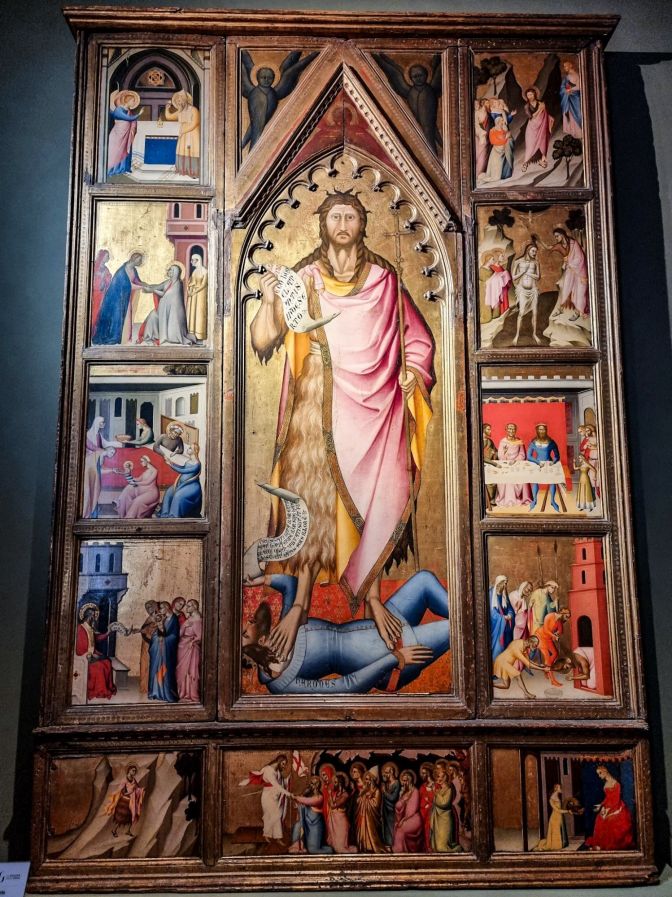
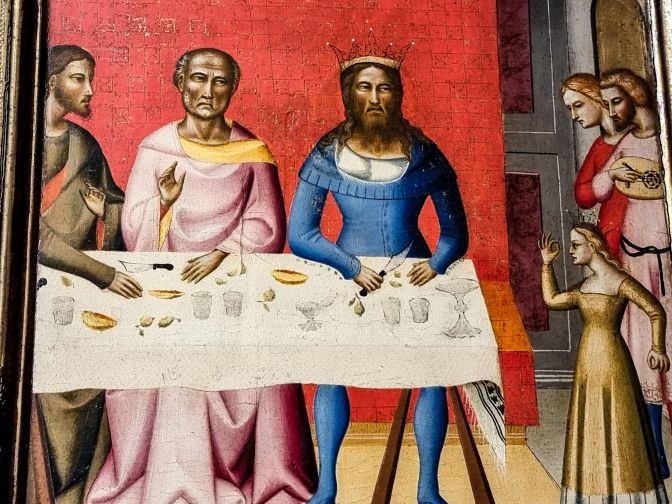
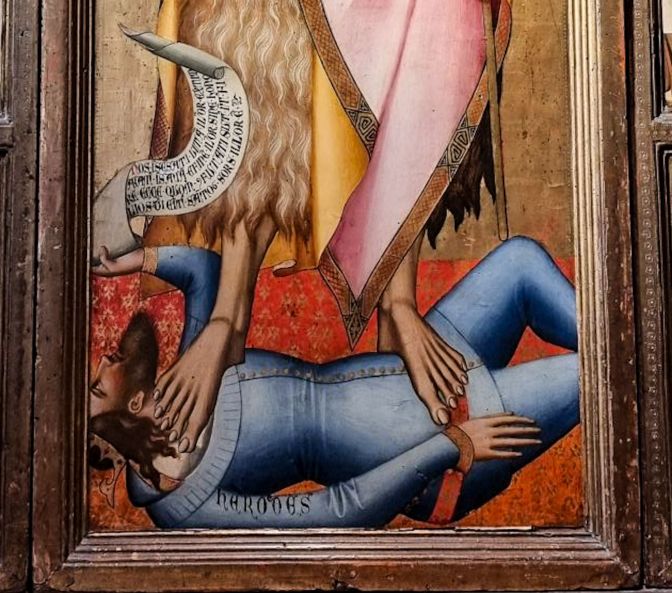
The next painting is the first which falls out of the timeline. This was painted almost 100 years before Savonarola. Here, Del Biondo produced an altarpiece about the life of John the Baptist. Of most interest to me was a panel on the right showing the feast of Herod, the Roman King of Judea who would order all babies aged two or younger to be killed around the time of the birth of Jesus. Herod looks in a rather foul temperament gripping a knife as he sits before an empty wine flask and several empty glasses. Nothing could be worse than listening to the tormented wails of hundreds of devastated mothers while completely sober. The Renaissance, especially under the Savonarola reign, would continue this theme of sobriety. But it does not save villains like King Herod from receiving their comeuppance.
Wine appears again… or does it?
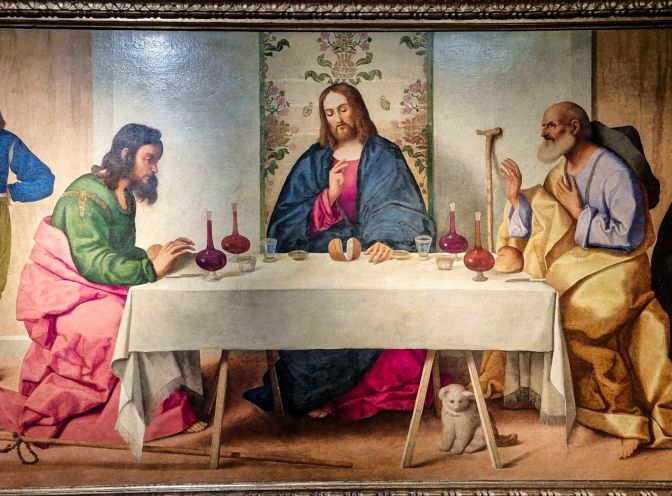
In 1498, Savonarola was tried, hanged, and burned. His ashes were spread over the Arno River. Following his death, perhaps artists felt a little more free to express themselves. Here we actually see four very pretty decanters full of wine. That’s a good start! Yet not a single glass has wine in it. The young disciple on the left, looking like a Jeopardy contestant, clearly can’t wait for Christ to finish praying, his hand ready to grab a flask the second he hears the word Amen. Meanwhile old Cleopas sits across the table gesturing for his young companion to take it easy, man. Temperance is starting to crack but it’s still intact.

Wine Takes Center Stage
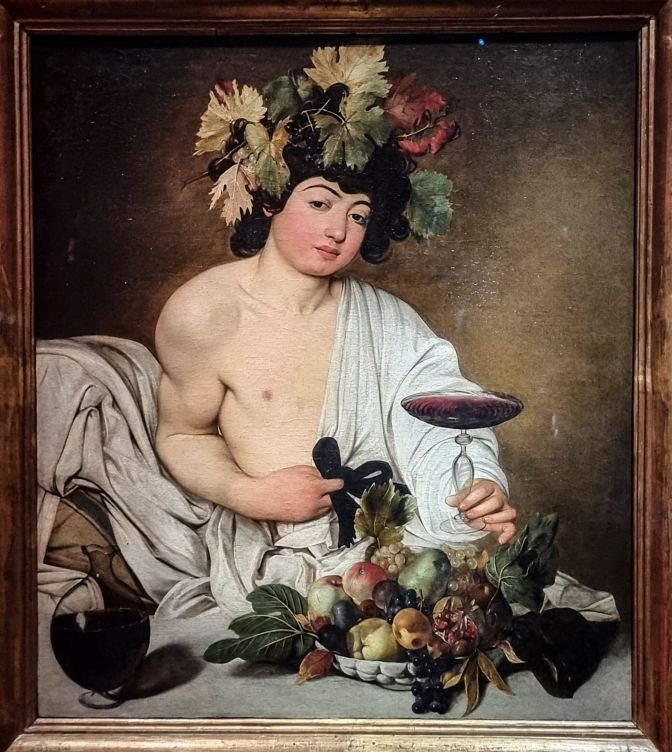
A hundred years after Savonarola’s death, leave it to bad boy Caravaggio to make him turn over in his grave (figuratively speaking, of course). Here, Bacchus, the Roman God of wine, coolly looks on in defiance of any Dominican friar. The ripples in his wine indicate he is swirling his glass as if teasing the religious establishment. This is a Drunken Masterpiece done Italian-style.
Turning Wine Into Water
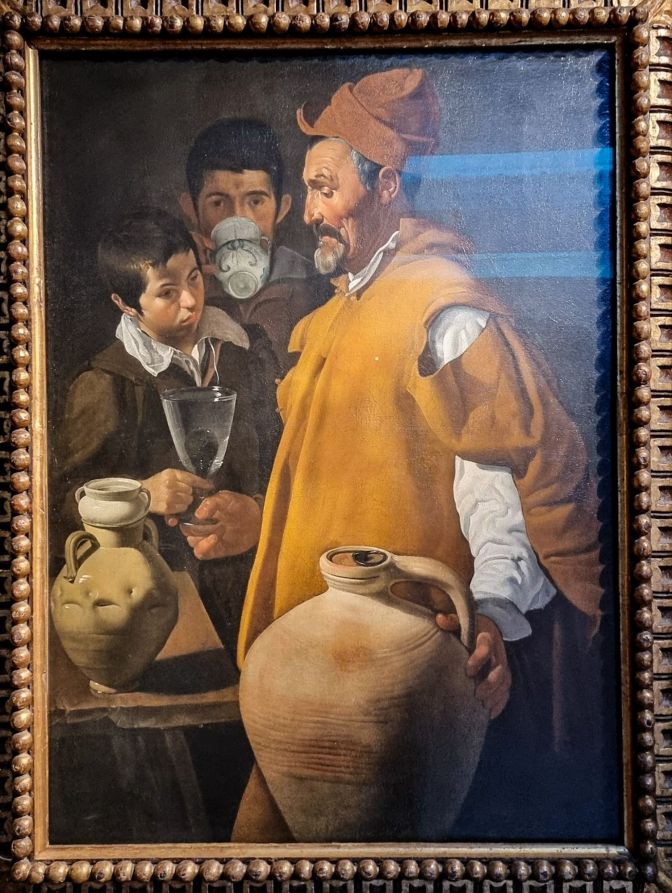
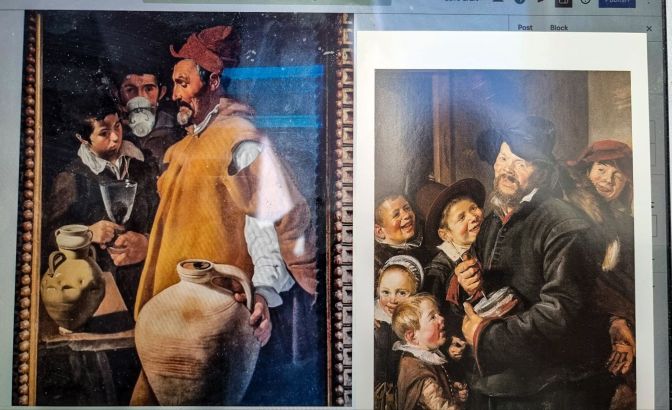
By the 1600’s, secular art had fully returned to southern Europe. While the Flemish and Dutch were by now in raucous tavern and drunken revelry mode, perhaps in Velazquez’s The Waterseller of Seville we see that in Spain, a continued temperance still existed. Or perhaps I have cherry-picked one painting to fit that idea. Here, the waterseller gives water to his two pupils. Nobody in the painting seems particularly thrilled to be in the water business. Meanwhile, in the Netherlands in the same time period of this painting, Frans Hals produced the The Rommel-Pot Player1. Alcohol is not present in the painting, but you know darn well there is a tipple or two just out of frame. They weren’t all born with those rosy cheeks.
Meanwhile in the North
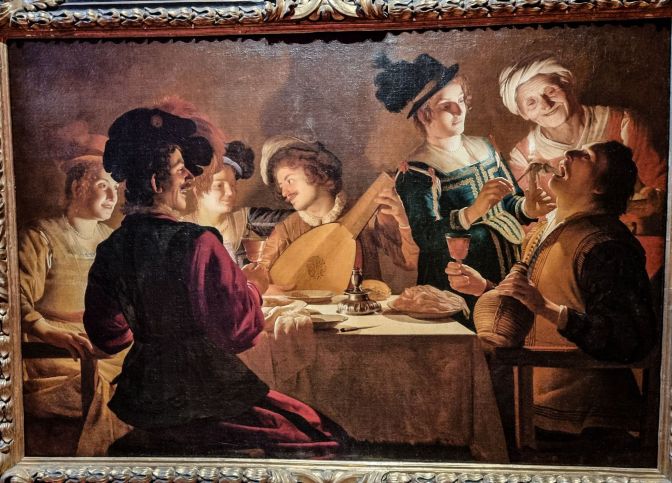
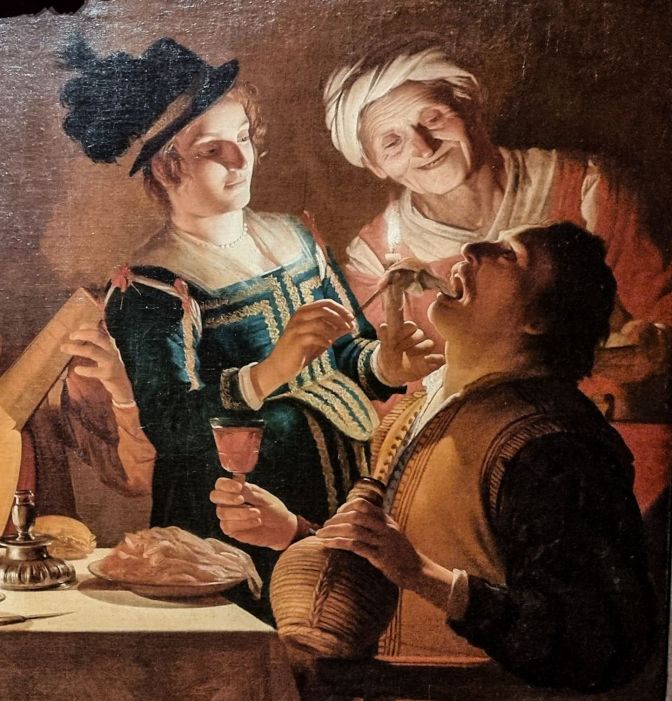
If there is one example why I would take a Gerrit van Honthorst over a Da Vinci any day, it is this painting. Screw dignity and temperance. Not only do we have a scene of a group of people enjoying themselves with wine, but one of them doesn’t want to interrupt their fun to go see a dentist. So he has a tooth extracted right there at the table without so much as spilling his glass. If Savonarola had a crypt with a mail slot, I would enjoy dropping a postcard of this one into it.
20th Century Wine
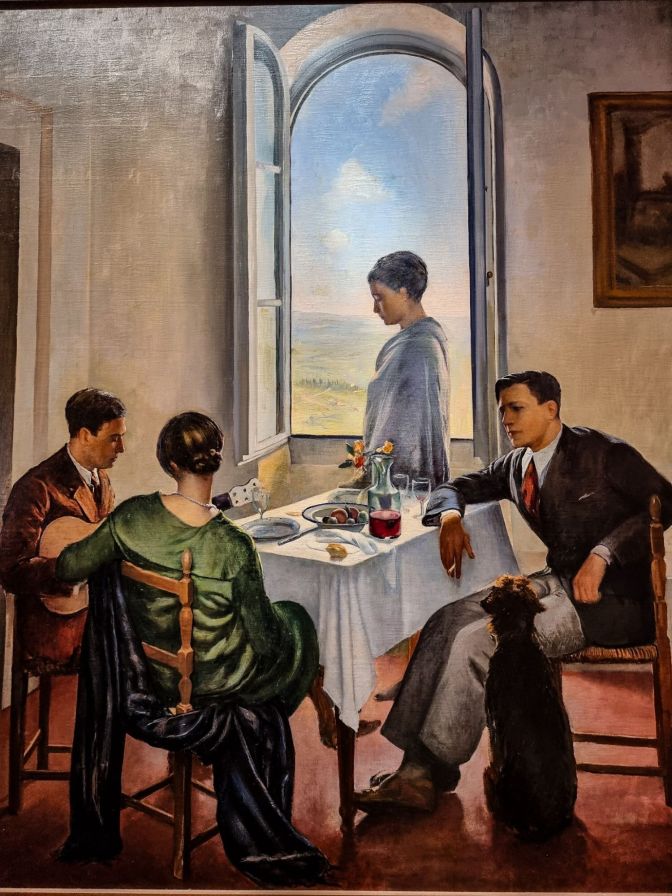
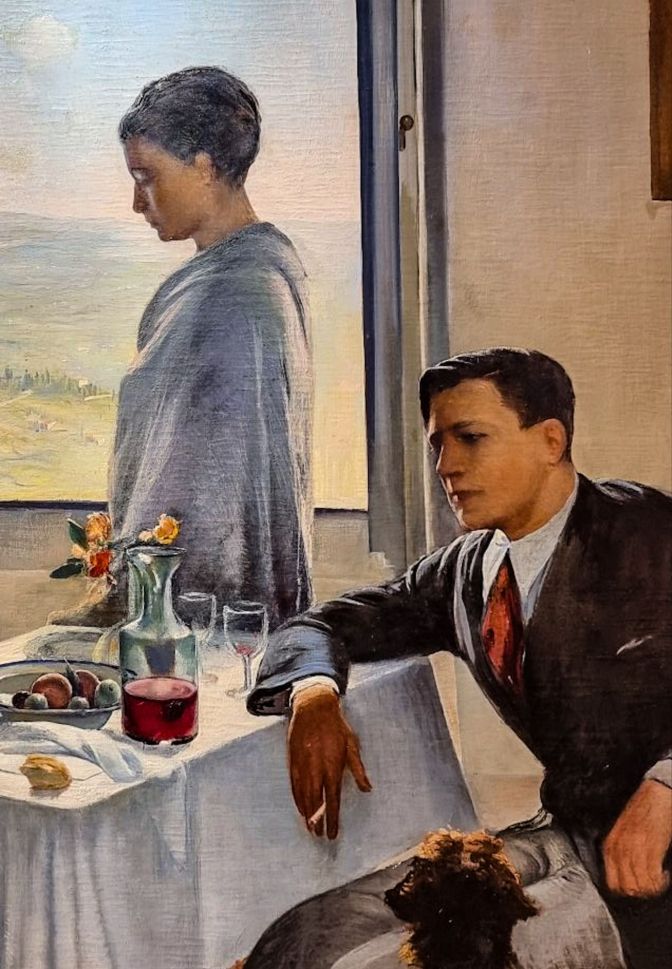
By the 20th century, one could provide evidence of drinking wine in a painting without worrying about a vengeful friar. Notice the small residue of wine sediment sitting in the bottom of the artist’s empty glass. Here, Baccio Bacci has painted a self-portrait of himself seated at the table smoking. Nobody looks particularly optimistic. There was no Savonarola, but at the time of this painting, there was someone else to worry about in Italy. A guy named Benito Mussolini.
Final Words
Since I have made it this far, I guess I have managed to navigate a course through the Uffizi Gallery alive. The Renaissance and Savonarola threatened to teach me a lesson in temperance, something admittedly I could use but would be very clumsy with. However, better to be a guy missing a tooth than a King Herod I always say. Perhaps that was the theme all along. I don’t know; I gotta go back and re-read it a few times. I tossed so many scraps of digital paper on the floor that maybe only St. Augustine can make sense of it. I was thinking maybe Water, Wine, & Temperance: What Savonarola doesn’t want you to know. I will stick with that for now.

- Postcard from my visit to the Kimmel Museum of Art in Fort Worth, Texas (July 2007) ↩︎

 itsabrewtifulworld