
“When Michelangelo was wending his way from Florence to Rome, to assume the charge of finishing St Peter’s church, his servant related that on reaching the summit of the Apennines near Poggibonsi he turned his horse and sat gazing long and intently upon the dome of Brunelleschi, the giant cupola of the Florentine cathedral. After some time he was heard to growl, “Better than thee, I cannot; like thee, I will not!’ The result was the dome of St. Peter’s.”
Form and Function: Remarks on Art, Design, and Architecture by Horatio Greenough (University of California Press, 1947 p.26)
I can think of no city that a visitor benefits more from having a good guidebook than Florence. A guidebook is there to recommend restaurants and hotels and to sort through the names and historical anecdotes that go with every site. In that sense, it becomes a jump drive for the brain. You don’t in fact have to remember everything. You just refer to it in the guidebook as necessary. And in Florence, every sight comes with a slew of names linked to them. These days, the restaurant and hotel ratings in a guidebook are useless to me. I used them early on before the internet became my resource for everything. In 2004, I relied completely on the Rick Steves guidebooks for my trip to Europe. Every single hotel I stayed at on that trip was from his guidebooks. I have long since archived my Rick Steves guidebooks and have branched out on my own paths.
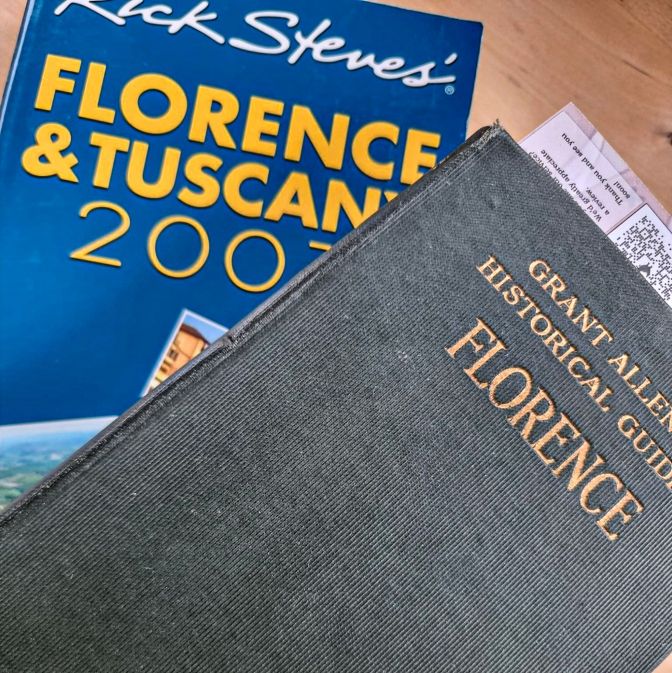
The importance of a good guidebook is not just keeping track of the details. It is about the enthusiasm and immersion they should generate. For me, it is also about connecting with the heritage of the traveling experience itself. Rick Steves guidebooks are excellent at generating this enthusiasm for the modern person cluttered by the modern world. He puts you in touch with art, history, and culture by appealing to the underlying sentimentality that exists in anyone who really wants to get something out of a trip to Europe besides look-at-me Instagram posts. In our hectic Information Age world, this requires some shrewd tactics, and no one does this better than Rick Steves. However, over time, his modern world translations had less appeal to me. That is to say they fulfilled their purpose but had reached their limit.
What I grew to seek out were perspectives of writers from a century or more ago. These writers were writing for people who had no internet or who had to sign books out of a library just to look at pictures of Europe. Each site had to be more intensely described. The result is that early guidebooks (I speak of those from the late 1800’s and early 1900’s) had a flair which sometimes bordered on hyperbole. They are written with passion and a sense of urgency; perhaps the emotion was heightened by the challenges of traveling in those days. Some were not purely guidebooks but travel diaries which would be used as guidebooks. Authors would borrow from earlier authors (as you will see) and also promote these earlier works. In Grant Allen’s 1897 guidebook to Florence, he writes about Santa Croce “Consult parts I and III of Ruskin’s Mornings in Florence…”. Ruskin’s book was published in 1875 and was still an influential resource 22 years later. It would not be surprising that travelers would take with them multiple books to cross-reference and be as prepared as possible. As I gained experience traveling, I found myself preferring to look through the lens of that era rather than today’s. As such, I find it more enjoyable these days to travel with a guidebook from 1897 than one from Rick Steves.
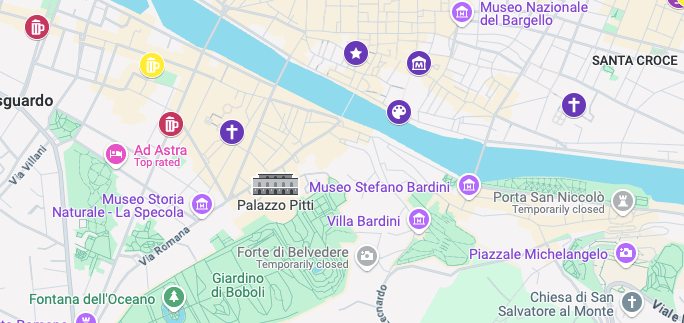
It is with that spirit of travel that I come to the final installment of my tipple tour of Brunelleschi’s Florence. This post leaves the majesty of the Piazza del Duomo behind and heads south to Santa Croce and across the Arno River with my 1897 guidebook in hand.
- Osteria i Buongustai
- Santa Croce (Pazzi Chapel)
- Palazzo di Parte Guelpha
- Santo Spirito
- Rione Brewpub
- The Hidden Pub
- Archea Brewery
- Final Words
Osteria i Buongustai
One could argue that my lack of using modern guidebooks could explain my underwhelming knack for planning where I am going to eat during my explorations. In cities like Florence, where I cannot simply grab a menu in whatever pub I am visiting, I can be a fish out of water when it comes to finding a quality lunch spot. By the time I think to eat lunch, I am usually already footsore and hangry. And in touristy cities, every restaurant is a tourist trap until proven otherwise, each having a persona like a greasy host, clad in a shabby tuxedo, trying to lure me with their evil grin and cigarette-stained finger into paying for hidden fees for stale bread and silverware while serving me spaghetti swimming in oily meat sauce and reeking of garlic. So when I was hungry for lunch one afternoon in Florence, I tried to stay off the main streets hoping I would get lucky. The Via dei Cerchi, which runs from the Piazza della Signoria north about halfway to the Piazza del Duomo, is not exactly off the beaten path, but it has a backstreet feel. As I was making my way south, I caught sight of several containers of fresh vegetables and ingredients through a window. Their vibrant healthy colors were enough to make me pause and notice a steaming pot on a stove behind them. Two ladies stood in this kitchen area and were preparing food completely visible from the street. It was like watching two Italian wives at home cooking for their families. Then another woman appeared to be bringing an order. I ran the calculations in my head. Fresh vegetables, open kitchen, steaming pot, three Italian women, no sniveling host waving a menu in front of my face. The only conclusion at which I could arrive was that this was the real deal. So I took a table in the cozy interior. No pictures of Sophia Loren or Marcello Mastroianni. I ended up having lunch here twice. The spinach dumplings are one of their specialties.


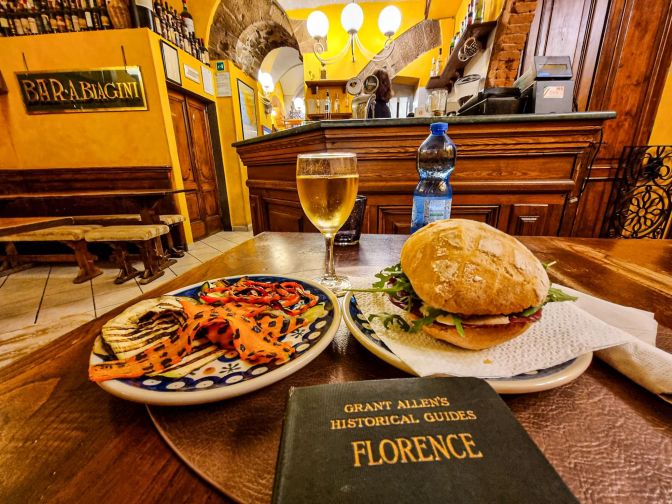
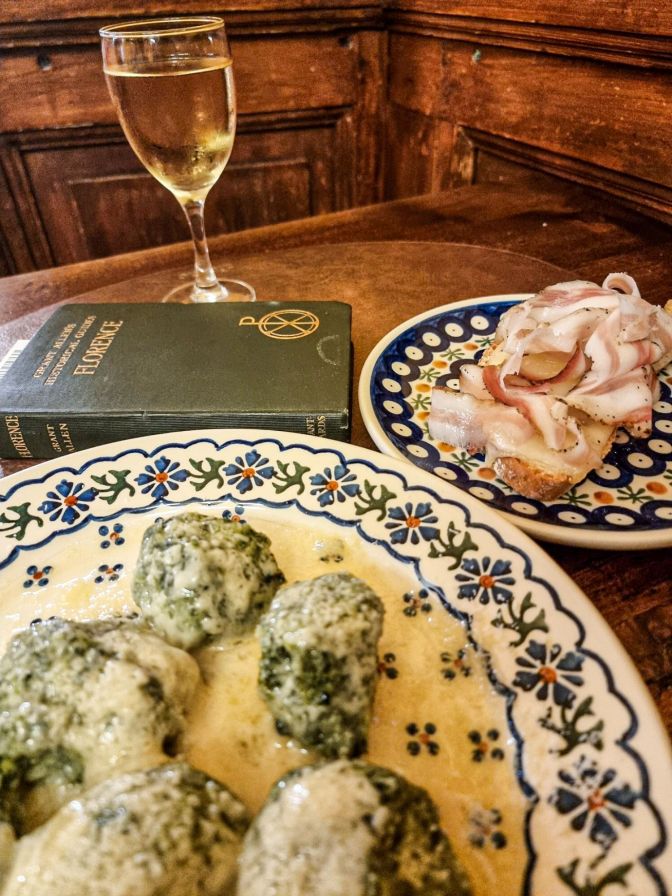
Enough about food. On with the tour.
Santa Croce (Pazzi Chapel)
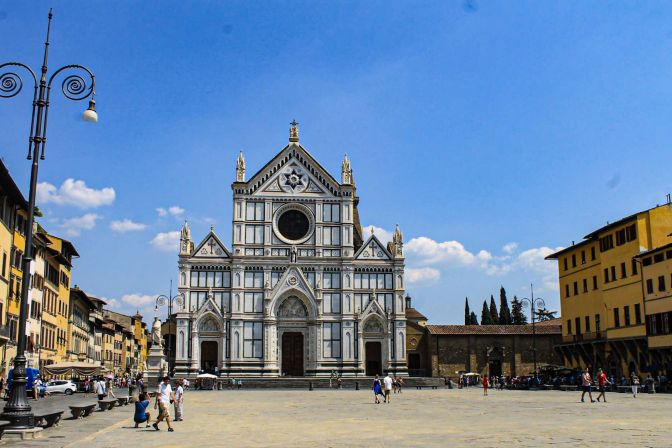

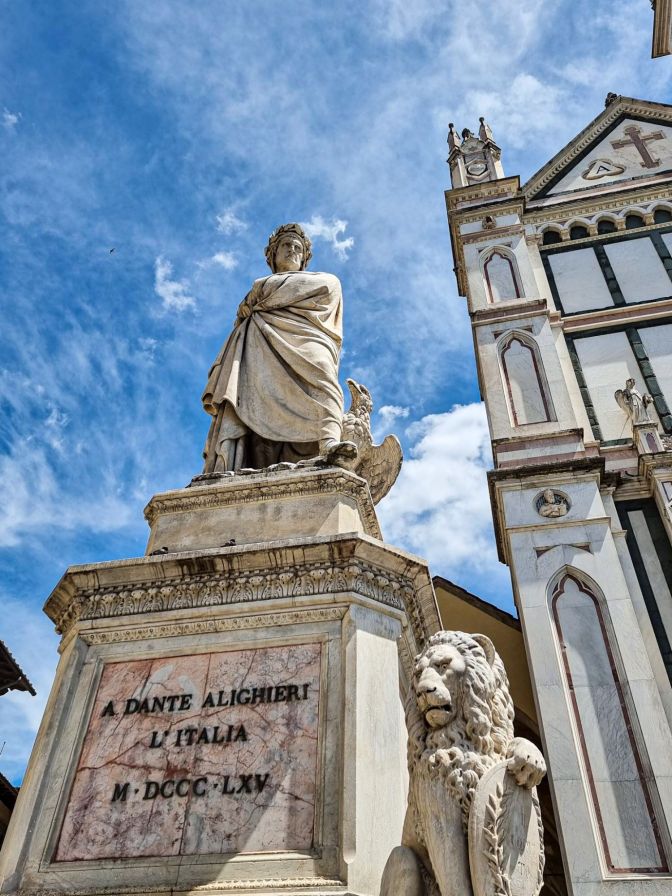
“Get this little bit of geography, and architectural fact, well into your mind. There is the little octagon Baptistery in the middle; here, ten minutes’ walk east of it, the Franciscan church of the Holy Cross (Santa Croce); there, five minutes walk west of it, the Dominican church of St. Mary (Santa Maria Novella).”
Mornings in Florence by John Ruskin (1875)
The significance of this quote is to highlight that when those churches were built there were “two great religious Powers and Reformers of the thirteenth century;—St. Francis, who taught Christian men how they should behave, and St. Dominic, who taught Christian men what they should think. In brief, one the Apostle of Works; the other of Faith. ”1
Santa Croce being Franciscan means that it will be decorated with images of St. Francis and followers who wore the rough brown robes characteristic of their preference to live in poverty.

“See it by morning light. Choose a bright morning. Take your opera-glasses.”
Grant Allen’s Historical Guides: Florence (1897)
“Wait then for an entirely bright morning; rise with the sun, and go to Santa Croce, with a good opera-glass in your pocket, with which you shall for once, at any rate, see an opus; and, if you have time, several opera.”
Mornings in Florence by John Ruskin (1875)
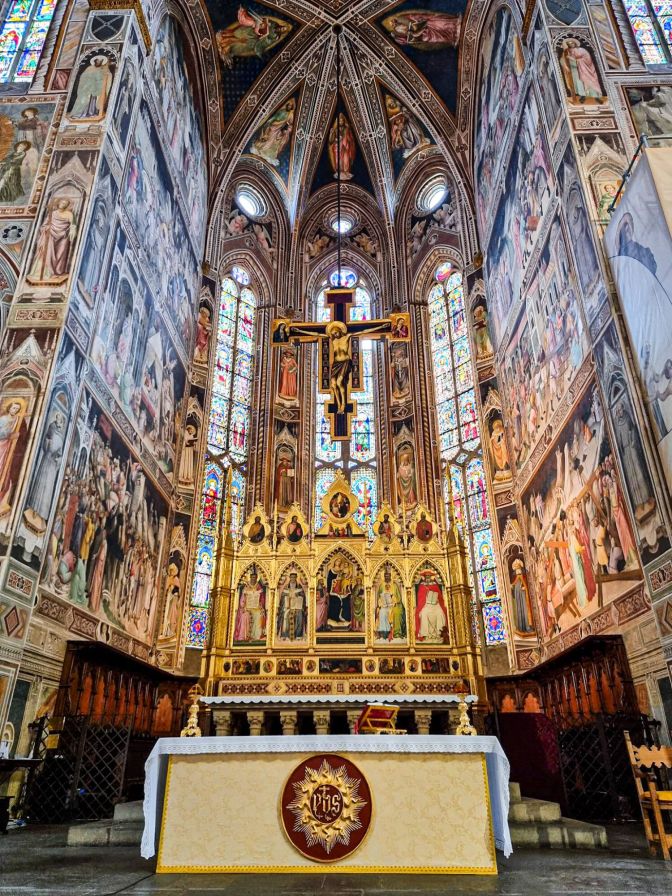
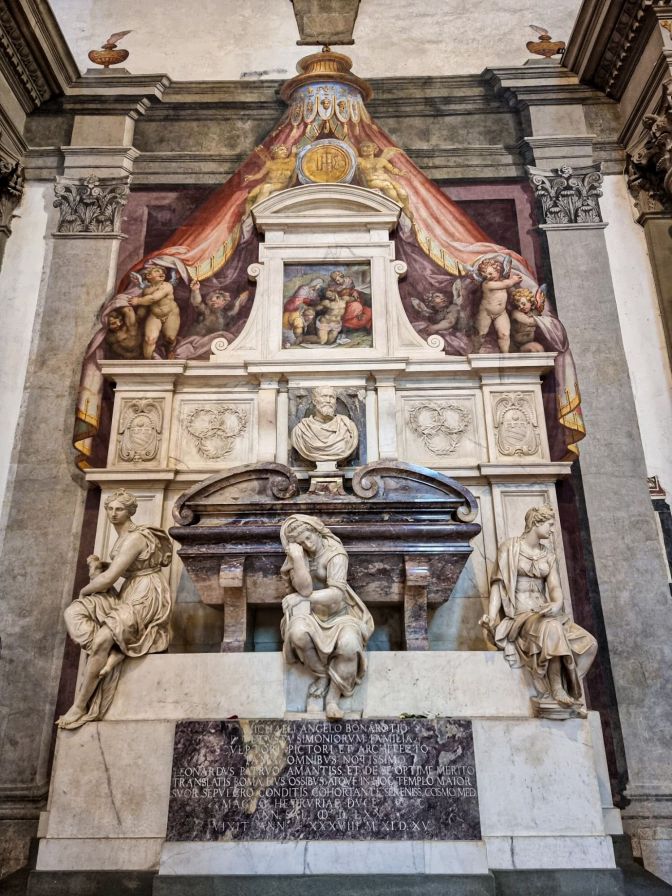
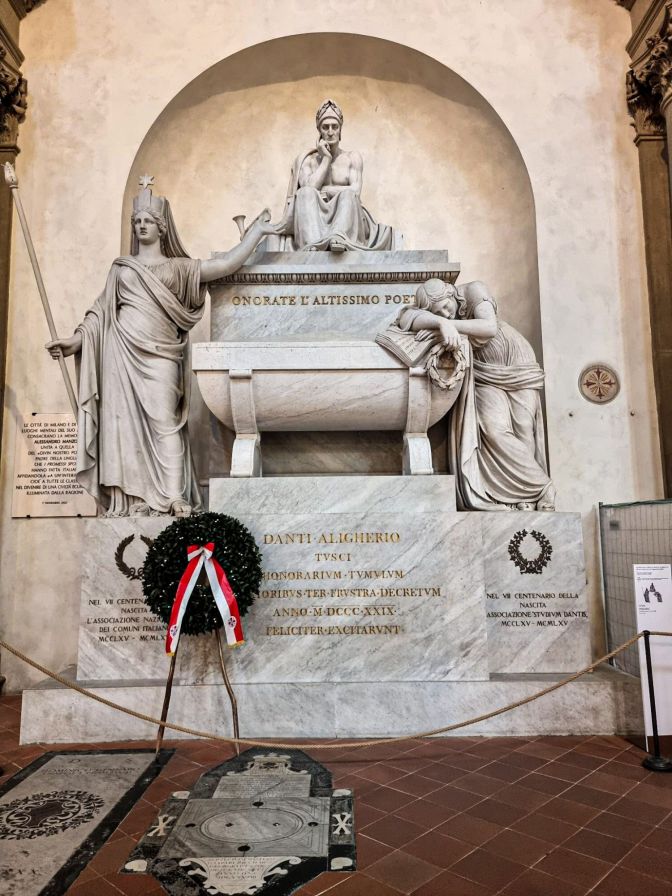
Both of the above quotes (one original and one borrowed) are in the context of examining the frescoes inside the Santa Croce done either by Giotto or a pupil of Giotto. Many people will glance over them and head right for the more quick consumption items; the tombs of some of the great Italians of the Renaissance. Grant Allen refers to Santa Croce as the “Westminster Abbey of the town, where men of literary, scientific, or political importance were laid to rest.”2 Indeed, the tombs on display here are mind-boggling: Michelangelo, Galileo, Dante, Machiavelli to name a few.


The main interest for me was the Pazzi Chapel. Rick Steves refers to it as “Brunelleschi’s Pazzi Chapel.”3 Grant Allen calls it “one of the most characteristic works of Brunelleschi”4. Ruskin seems so infatuated with Giotto and the frescoes not to mention the Pazzi Chapel at all. However, there is some debate as to whether any of it can be contributed to Brunelleschi. The fact that it resembles Brunelleschi’s Old Sacristy in the Basilica of San Lorenzo is both a reason for and against Brunelleschi’s candidacy. The Old Sacristy was started in 1421 while the plans for the Pazzi Chapel weren’t started until 1429 with construction beginning in 1442. One side of this debate is that Brunelleschi’s style would have evolved more since the Old Sacristy. Nevertheless, I will hang in with the long accepted attribution and call it a Brunelleschi, though he would not have taken part in all of the actual work. The Chapel wasn’t finished until 1478 some 32 years after Brunelleschi died.
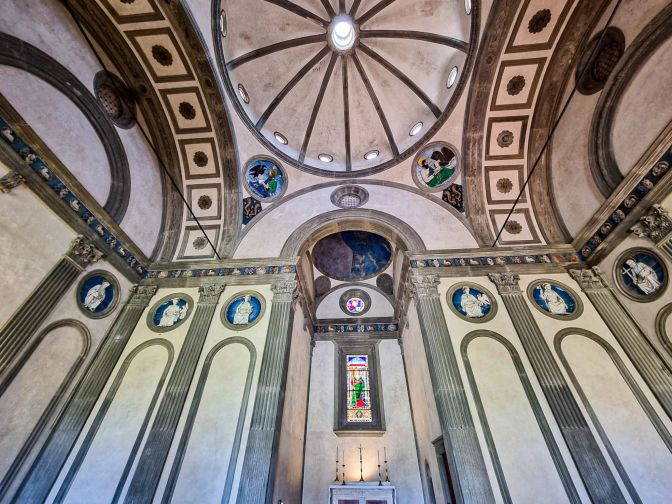
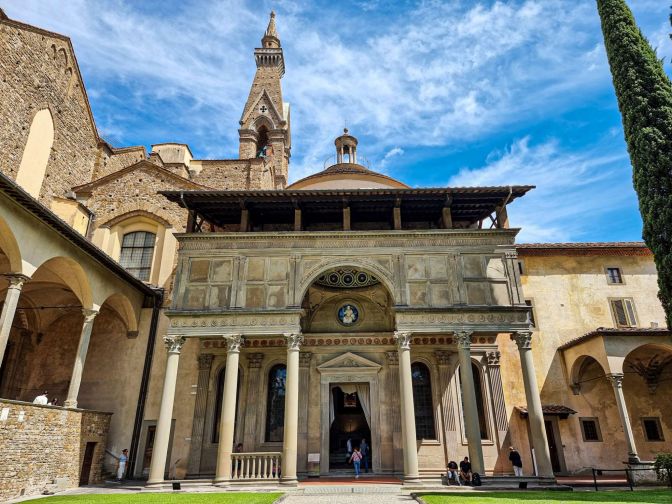
The Pazzi family, the 2nd richest banking family in Florence next to the Medici, didn’t get to enjoy the chapel’s completion very long. 1478 was also the year that the entire family was implicated in the attempted murder of Lorenzo the Magnificent and the murder of his brother Giuliano. Several of the family members were lynched and others executed. The rest of the Pazzi family were banished. However, after Lorenzo’s death in 1492, things rapidly fell apart for the Medici family, and in 1495, the roles were completely reversed. The Pazzi family found themselves welcomed back to Florence and the Medici family banished.5
So whether Brunelleschi designed the chapel can be be up for debate, but who can argue that Florence in the 1400’s was anything but a rip-roaring time to be a fly on the wall?
While you are in the area of Santa Croce, have a peek at Michelangelo’s house.

Palazzo di Parte Guelpha
This was the headquarters for the Guelph faction in Florence and was designed by Brunelleschi. The Guelphs were supporters of the Pope as the preeminent authority in Europe whereas their rivals the Ghibillines supported the Holy Roman Emperor.
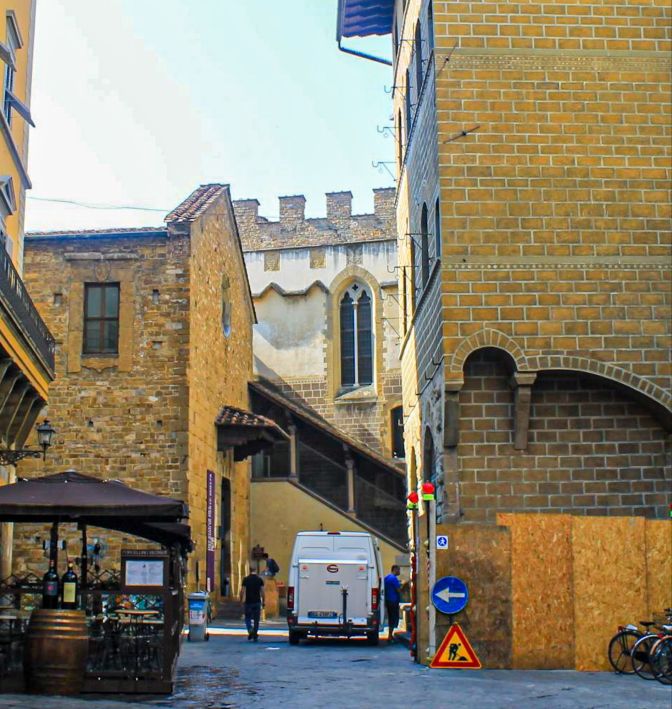
From here, you can cross over the Arno via the Ponte Santa Trinita.
Santo Spirito
“S. Spirito is one of Brunelleschi’s solidest works. ”
A Wanderer in Florence by E.V. Lucas (1912)
“The existing church of S. Spirito is probably the best example of Florentine architecture in the fifteenth century.”
Grant Allen’s Historical Guides: Florence (1897)
Don’t be fooled by the plain exterior. Brunelleschi’s façade was never added. This was an Augustinian church and convent.
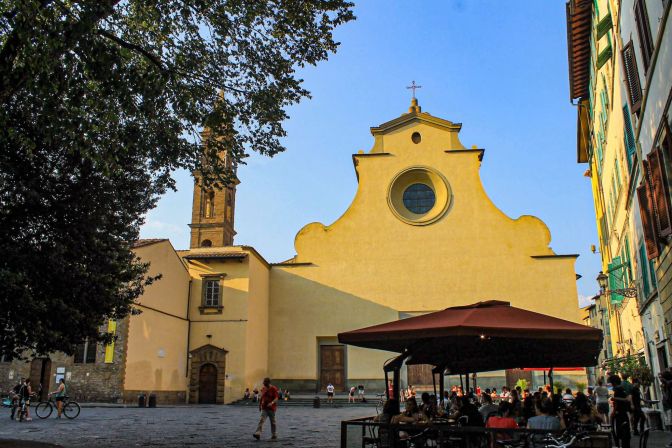
I had arrived too late to enter the basilica and get a closer look at Brunelleschi’s architecture, but I was just in time for the opening of the first brewpub.
Rione Brewpub
This local brewpub closes at 3pm and reopens at 6pm. The outdoor seating has a great view of the Porta San Frediano, Florence’s 13th century west gate. I highly recommend the Vipera if they have it on tap.


On the walk to the next pub, you pass the Santa Maria del Carmine, famous for the Brancacci Chapel.
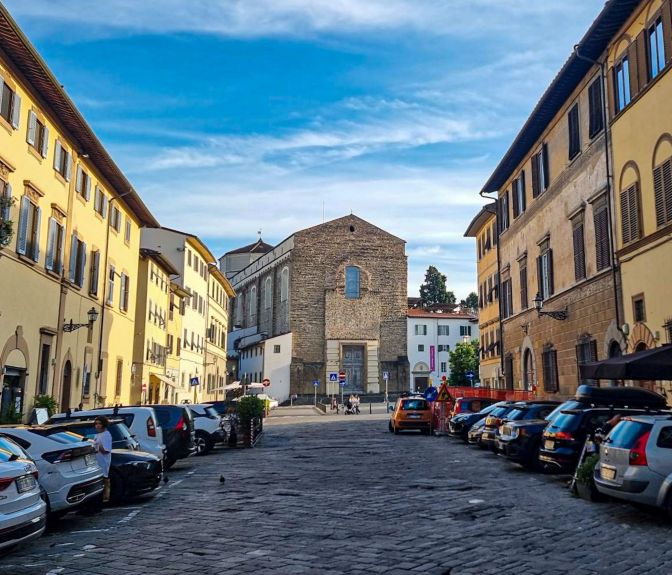
The Hidden Pub
A bar with a heavy-metal-piercing-tattoo kind of vibe. The beer selection is good (although mostly commercial beers), and I couldn’t pass up a Cthulhu-themed Italian craft beer.

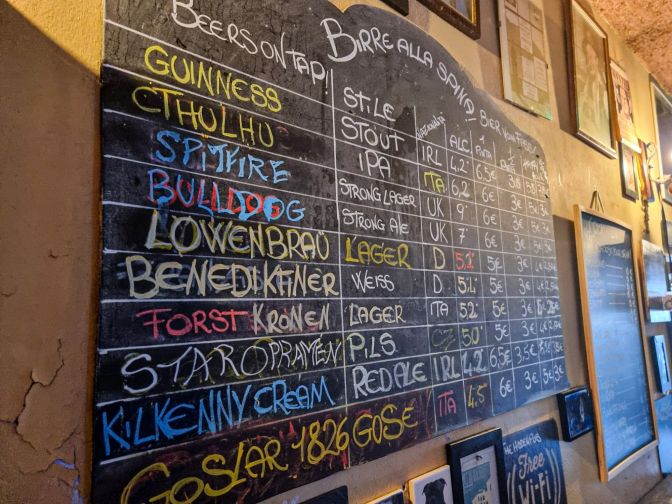
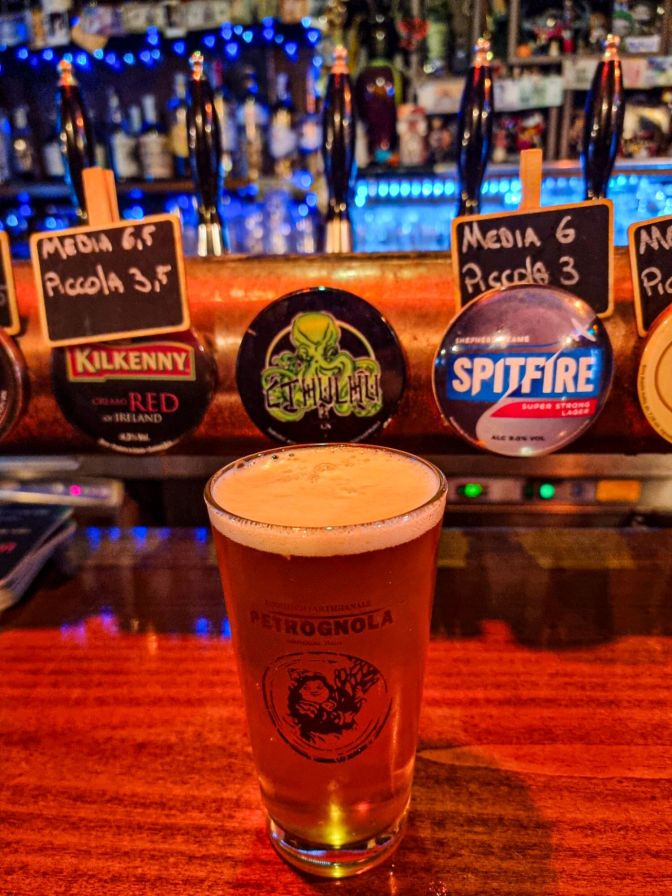
Archea Brewery
This brewpub has a great repertoire of self-brewed beer and beers from around Europe. I was quite impressed to see the La Moneuse tripel from Brasserie De Blaugies, a small family brewery found in a very remote corner of Belgium which was part of my Beer & Bike Van Gogh ride. I selected the Melissa IPA brewed by Archea.
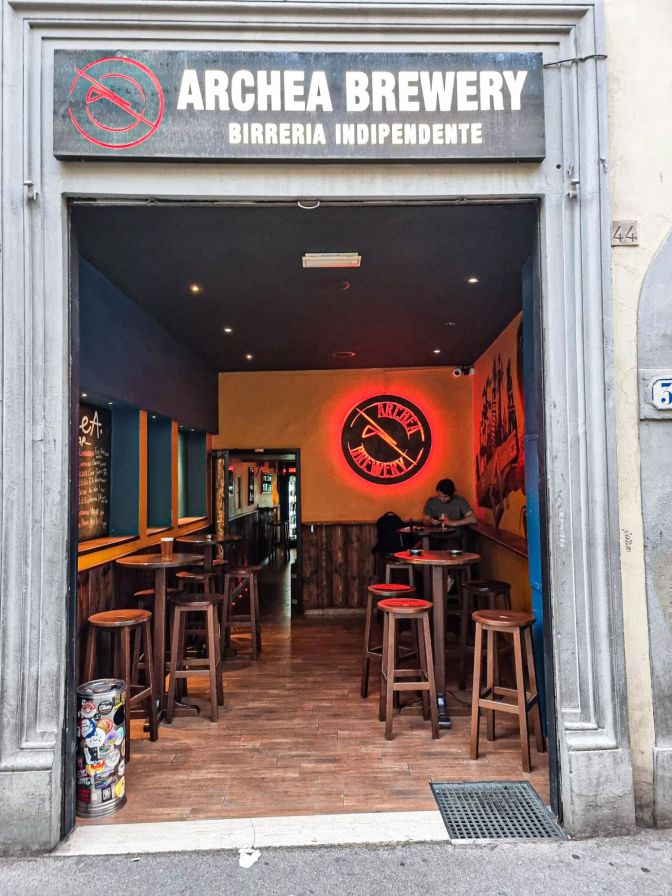

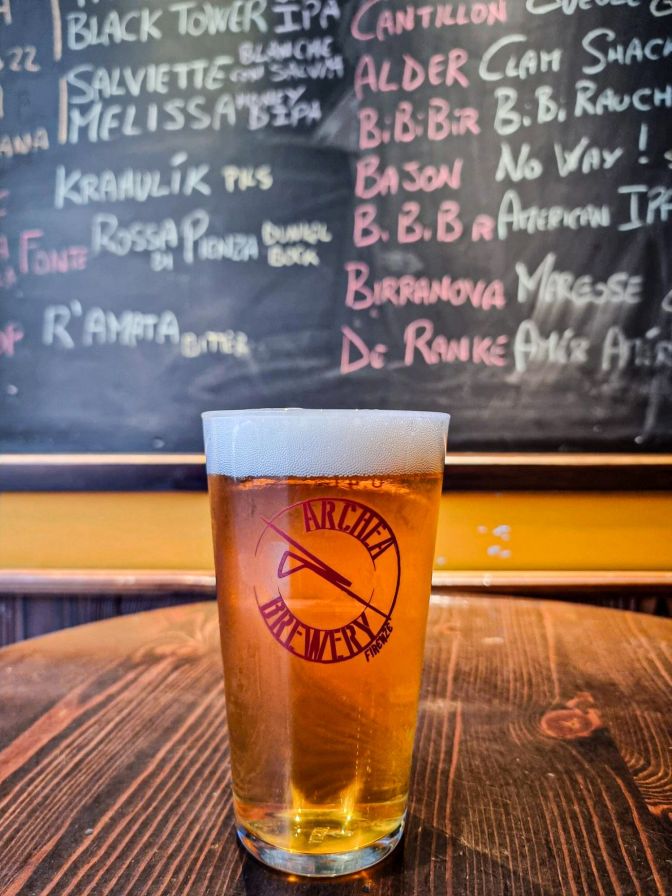
Final Words
There are so many great places to see in Florence that even in three installments of my Beer & Brunelleschi posts, I have barely covered them. Just on the south-side of the Arno, you have the Palazzo Pitti and the Boboli Gardens, the San Miniato Abbey, and the Piazzale Michelangelo with one of the best views of Florence’s skyline to name a few. In the heart of Florence, there is the Palazzo Vecchio, the Bargello Museum, and the Galleria dell’ Accademia where Michelangelo’s David can be seen just to name a few more. To consolidate so much into so few words would be foolhardy, just as it would be to try to take all of them on in a two or three-day visit. I believe that sacrificing some sites for the sake of letting others breathe is more rewarding than a madcap itinerary. But that is my opinion and perhaps tilted towards the fact that I have the luxury of living in Europe and more easily returning than those that don’t.
I was pleasantly surprised to find that the beer culture in Florence was not stagnant but simmering, and hopefully it will grow and thrive. Of course, for outsiders like me, it still comes with the inconvenience of the siesta culture of southern Europe or the late opening hours, but then that helps the beer culture to blend in and stay something of their own. So we should not expect or wish that to change. The beer culture is a luxury and should not detract from our ability to look at Florence through any lens and easily imagine Brunelleschi’s cranes hoisting stones up to the cathedral dome or him scurrying unkempt through the streets of Florence cursing the results of the Baptistery door competition. While this concludes my Brunelleschi theme, it does not completely conclude my visit to Florence. There is still one important matter of business to take care of. And it is called the Uffizi Gallery.

- Mornings in Florence by John Ruskin (1875) ↩︎
- Grant Allen’s Historical Guides: Florence (1897) ↩︎
- Florence & Tuscany by Rick Steves (Avalon Travel, 2007) ↩︎
- Grant Allen’s Historical Guides: Florence (1897) ↩︎
- April Blood: Florence and the Plot Against the Medici by Lauro Martines (Oxford University Press, 2003) ↩︎

 itsabrewtifulworld