
“As one walks about Florence, visiting this church and that, and peering into cool cloisters, one’s mind is always intent upon the sculpture or paintings that may be preserved there for the delectation of the eye. The tendency is to think little of the architect who made the buildings where they are treasured. Asked to name the greatest makers of this beautiful Florence, the ordinary visitor would say Michelangelo, Giotto, Raphael, Donatello, then della Robbias, Ghirlandaio, and Andrea del Sarto: all before Brunelleschi, even if he named him at all. But this is wrong. Not even Michelangelo did so much for Florence as he.”
Edward Verrall Lucas. “A Wanderer in Florence.” (1912)
Perhaps no other European city will immerse you into a whirlwind of names like Florence. Names which are the dignitaries of the Renaissance world in which Florence’s persona is forever preserved. Whether painters, sculptors, architects, politicians, saints or patrons, every stone, brick or piece of marble will tell a story of one or more of them. It is a city that wows at every turn and threatens to drown the naive in every glorious detail, putting any normal brain’s tolerance for history and facts to the test. Most churches and cathedrals in Europe can be enjoyed just for their aesthetic value. Not those in Florence. Here they are about the Who. Who designed and built them? Who paid for them? Who were they built for? Who is buried in them? Who decorated them? Florence can be overwhelming if you are not prepared for this level of immersion, especially if you have already experienced a ton of churches and art museums on your journey. Florence, in that respect, is better suited to be a person’s grand entry into a European itinerary rather than its conclusion.
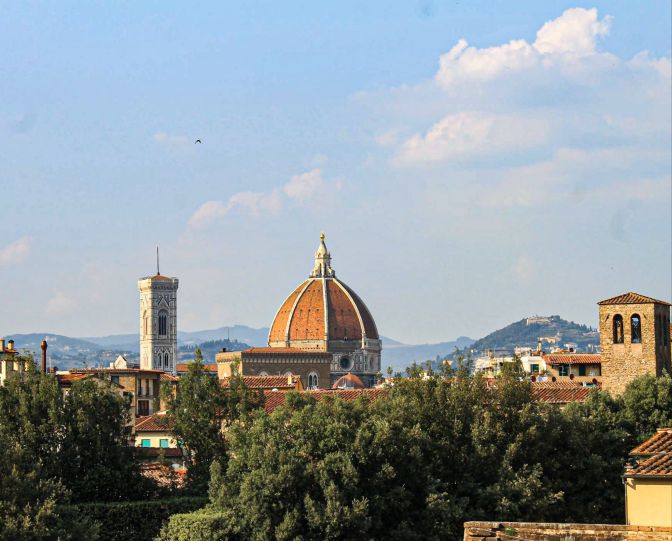
I have experienced Florence in all its beauty and also suffered under the weight of its historical celebrity. So when I returned to Florence in June of 2024, I wanted a visit that would breathe; where I controlled the dialogue. So rather than stay within its confines, I stayed in the nearby village of Pontassieve, a mere 25-minutes by train, where I could easily pace myself.
For this trip, I decided to create what I like to call a 4th Dimension of Travel. In this case, I chose to distance myself from museum time schedules as much as possible and follow in the footsteps of the Renaissance architect Filippo Brunelleschi who inspired much of my interest in Florence as I discussed in my previous post.
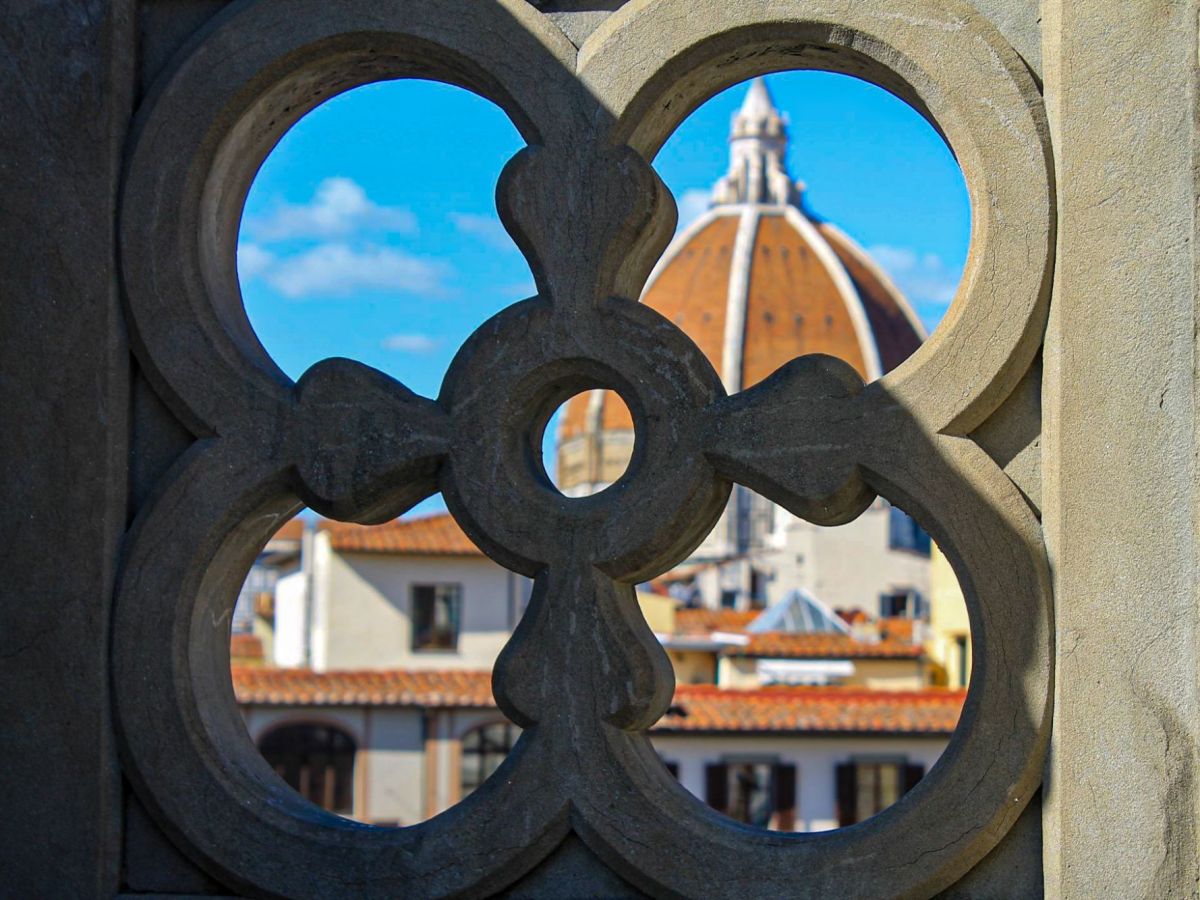

Along the way, of course, I would dabble in the likes of Lorenzo the Magnificent and Michelangelo, who are unavoidable in Florence, to add a few colorful threads into the story. All the while this was going on, I would be getting thirsty for beer. And what kind of beer culture exists in a Renaissance city in the world’s largest wine producing country? I decided to find that out.
Part I will focus on four sites and two pubs which you can practically draw a straight line through on the map.
- Palazzo Medici Riccardi
- Basilica di San Lorenzo
- The New Sacristy & Medici Tombs
- Alibi Craft Beer & Kitchen
- Santa Maria Novella
- The Joshua Tree Pub
- Final Words

Palazzo Medici Riccardi
“…here the most brilliant and cultured society of artists and scholars that the world had ever seen gathered round him and his family.”
Mediaeval Towns: The Story of Florence by Edmund G. Gardner (1900)
On January 1, 1449, Lorenzo de’ Medici was born in this palace into one of the ruling families of Florence. The palace was designed by Michelozzo using Roman-influenced designs inspired by Brunelleschi1. Lorenzo would go on to become a patron of the arts for a star-studded roster of Renaissance elite. Listen to these names. Michelangelo, da Vinci, Botticelli, Ghirlandaio, Verrocchio, and Lippi all thrived in his court as he helped them secure commissions2. Michelangelo even lived here for three years.


It is amazing to consider that Brunelleschi died in 1446, about 3 years before Lorenzo the Magnificent was even born. All of the great works that would sprout from his patronage did not even exist in Brunelleschi’s day. Michelangelo’s David, Botticelli’s The Birth of Venus, da Vinci’s Mona Lisa. All yet to come. Brunelleschi helped pave the way for the society where this genius would flourish. However, it was Lorenzo the Magnificent who made it happen. Nowhere is this magnificence better represented (or rather foreshadowed) than in the palace’s Magi Chapel where Lorenzo is portrayed as the youngest of the Three Kings of Bethlehem leading a procession to the birth of Christ. Lorenzo was only 10 years old when this fresco was painted by Gozzoli. It would still be some years before Lorenzo would literally be leading the procession of Renaissance art and thought.


Basilica di San Lorenzo
Just around the corner from the former palace of the Medici is this basilica, the principle church of the Medici family where many of them are also buried. It was designed by Brunelleschi. Altered much after his death, the primary remains of his architectural design is the Old Sacristy. If the façade looks curiously unfinished, that is because it is.
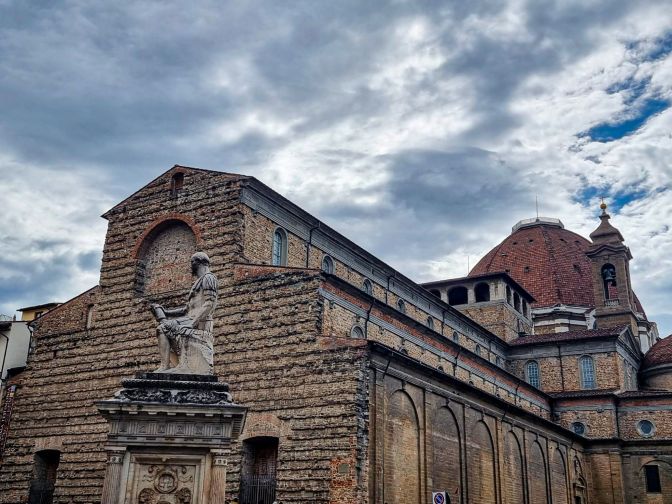
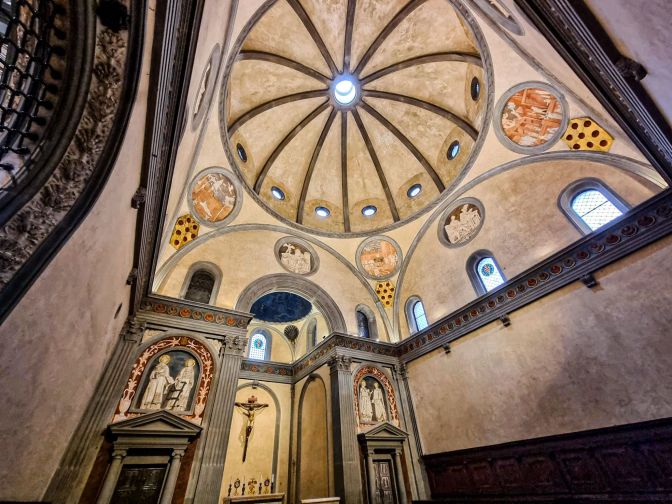
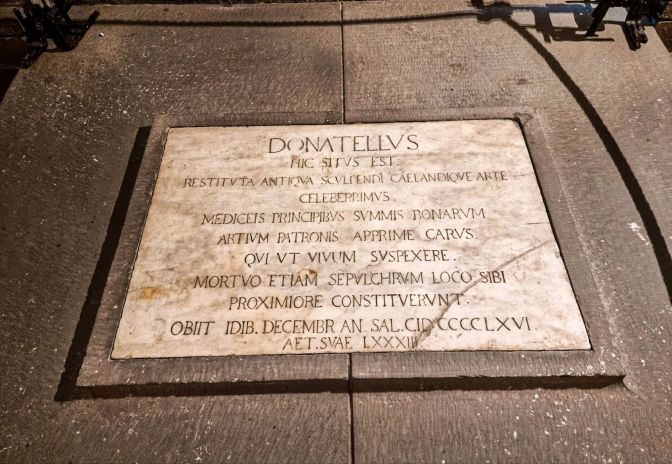
Donatello is buried in the basilica’s crypt.
The New Sacristy & Medici Tombs

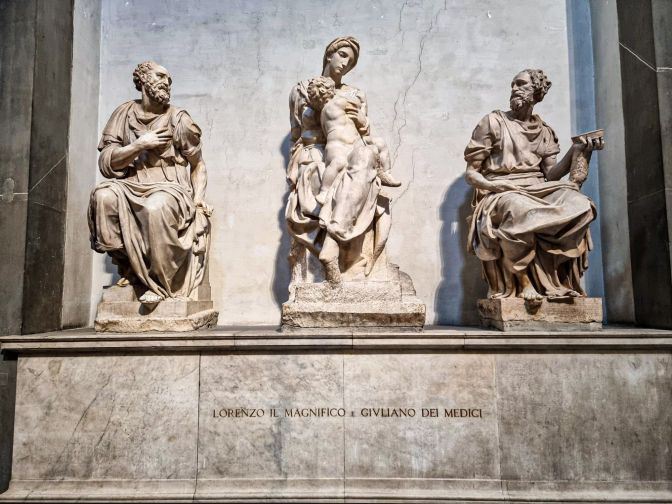
Just opposite the basilica is the domed New Sacristy designed by Michelangelo. The upper part, called the Cappella dei Principi is described as “vulgarly decorated in the usual gaudy taste of reigning families for mere preciousness of material.”3 It is the Medici Tombs below this which are considered to be one of Michelangelo’s finest masterpieces. Among others of the Medici family, you have the tomb of Lorenzo the Magnificent.

Alibi Craft Beer & Kitchen
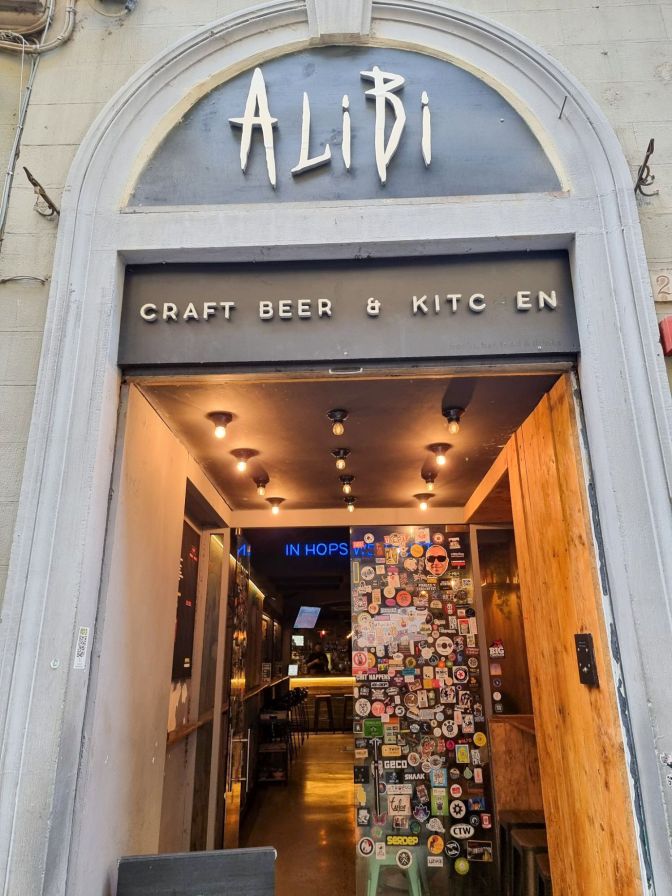
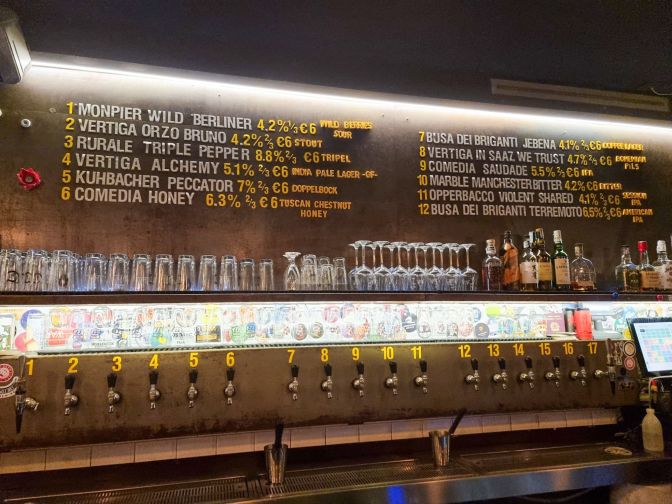
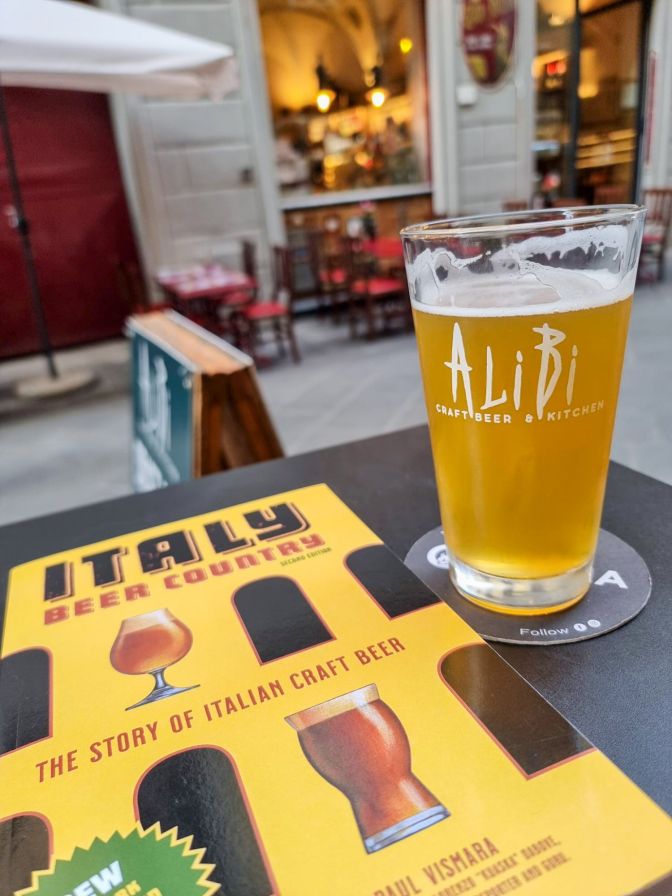
If you are visiting the San Lorenzo neighborhood, then there is no better place to stop for a beer than this craft beer bar. It is situated on a high foot-traffic pedestrian street which hopefully will give it enough business to stick around for a while. I was very impressed with the selection of Italian craft beers. I tried the Saudade IPA from Birrificio Comedia from the Florence region. If you can manage to get one of the street-side tables, it is a perfect spot for tourist watching.
Santa Maria Novella
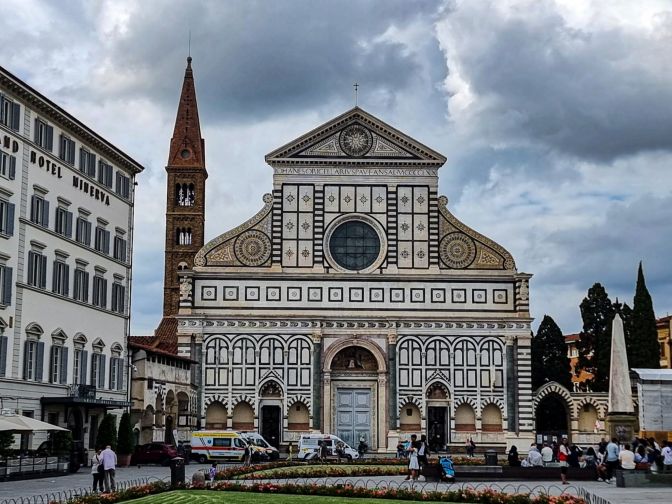
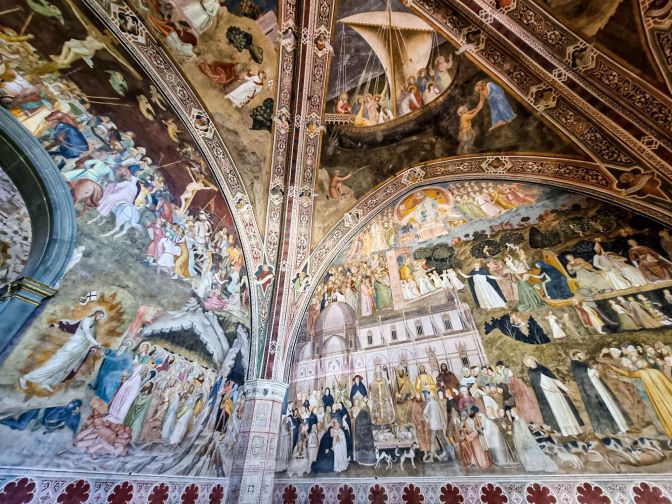
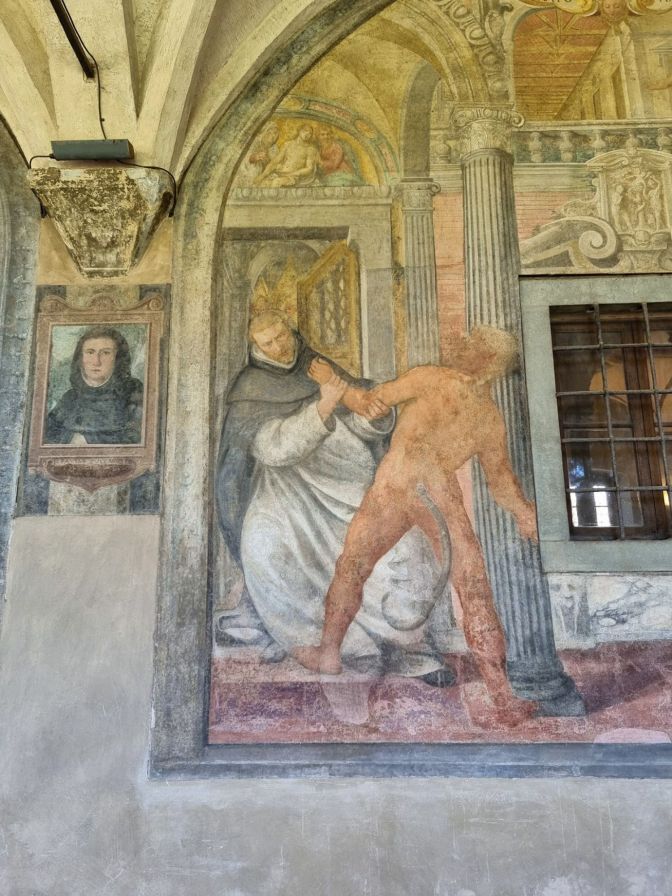
Santa Maria Novella is a Dominican church which means it will be decorated with images of the classic black and white robed monks whose purpose it was to protect the faithful from heresy. Brunelleschi was not one of the architects but he contributed a crucifix on display in one of the chapels.
“…a famous crucifix by Brunelleschi, which would seem to show that a crucifix, by whomever designed, is still a crucifix.”
Grant Allen’s Historical Guides: Florence (1907)

The Joshua Tree Pub
This cozy, dark well-worn Irish-style pub sits not far from the Santa Maria Novella. It has a great selection of craft beers including the Sorry Pier IPA from Birrificio Clandestino from Livorno, Italy. It’s dim interior makes it best suited as a retreat from the beating sun or an evening hang-out spot. This is a rare Florentine pub which opens early in the day (normally at 11:30am). Most pubs don’t open until 4pm or later.


Final Words
With a couple great Italian craft beers helping to process all the day’s Renaissance glory more fluidly, I couldn’t help contemplating how far things have come in Italy’s beer culture. Gone are the days when your choices were mainly beers like Peroni, Nastro Azzurro, Birra Moretti and Ichnusa. It was a very encouraging start to a trip in a country with little expectation of exciting beer experiences. It would be careless to use the term Renaissance to describe these times of flourishing Italian craft beer since it refers to a rebirth or rediscovery which does not apply to the Italian craft beer industry. Twenty years ago there were less than 20 craft breweries and today over 10004, so it is more correct to refer to it as a Naissance, the French word for birth or origination. One could argue that Brunelleschi inspired the naissance of the Renaissance. Whether he was designing some of the great buildings of Florence or a modest crucifix, it was part of a revival of styles and techniques already mastered by the Greeks and Romans. With Part One in the books, there were still many Brunelleschi works to explore and many Italian craft beers yet to discover.

- https://en.wikipedia.org/wiki/Palazzo_Medici_Riccardi ↩︎
- The Feud The Sparked the Renaissance by Paul Robert Walker (Perennial, 2003) ↩︎
- Grant Allen’s Historical Guides: Florence (1907) ↩︎
- Italy Beer Country by Bryan Jansing & Paul Vismara (Dog Ear Publishing, 2022) ↩︎

 itsabrewtifulworld
💛
LikeLiked by 1 person