
“Imagine a city of Gothic palaces, a little flushed hill-city, sleeping among vineyards and olive-gardens, sleeping and sleeping like a girl bewitched. And then imagine the soul of her awaking for a few hours—a day perhaps—in the summer of the year. That is Siena, dear gay Siena, with her indomitable spirit and her fickle careless heart, with her pageants and her saints, and her allegiance to Madonna. For first and foremost Siena is the city of the Virgin Mary.”
Olave M. Potter. “A Little Pilgrimage in Italy.” (1911)
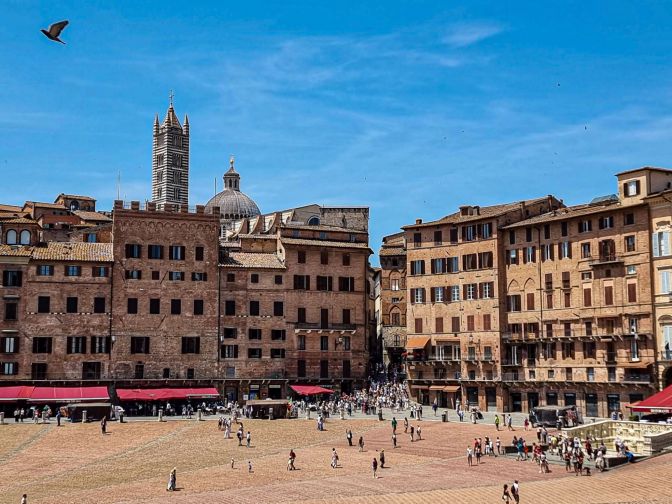
There are no cities that I have come across which exude such a wide-eyed enthusiastic exclamation of “Oh, I love ______!” immediately upon its mention more than Siena. Each time, it is as if some force that has built up from repressed memories suddenly has burst through a door in the mind. I also love Siena, and everytime I have visited the region, I have always made an effort to visit by train giving me the chance to experience “the soul of her awaking for a few hours”. All of my visits pretty much follow this pattern:
Arrive by train, head to the Piazza del Campo, have a sandwich lunch, climb the steep alley Chiasso del Bargello, visit the Duomo, descend and ascend the Via della Galluzza (a good alternative lunch spot), visit the Basilica San Domenico, take an amazing photo of Siena from the viewpoint there, random wanderings after that, return to train station, wash, rinse, and repeat.
I can highly recommend the above sequence. Yet after four visits, this method has led to a kind of Groundhog Day repetition of experiences. Even if it has gotten, dare I say, a little stale for me, Siena never fails to wow me.
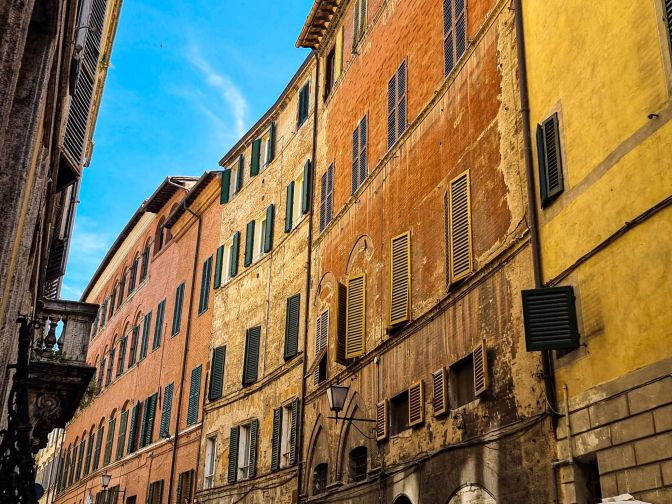
Siena, in my mind, is a city that accepts her role as window dressing. Most visitors will be coming by tour bus or train from Florence. What makes Siena unique and special is that she herself is the site. Here you find yourself strolling the quirky narrow streets, going up one and down another, often not knowing exactly where you are; looking up at medieval and Gothic buildings which loom and tilt and embrace you. Some of the streets bend around the curvature of the Piazza del Campo which makes your internal compass go nutty. When you look across from Basilica San Domenico, you see awe-inspiring beauty and chaos at how the buildings are arranged and stacked. Yet I doubt many but the most dedicated souls clinging to their guidebooks come to Siena knowing anything of her history… or leave knowing any more about it. In my opinion, with so much to be absorbed by the eyes, Siena can be thoroughly enjoyed without that. By contrast, a visit to Florence would greatly suffer if a person makes no effort to become familiar with the Medici or Brunelleschi or Michelangelo. About Siena, I couldn’t tell you a single historical figure important to the city. Perhaps, this is both the blessing and the curse of Siena’s existence; its superficiality. Easy to digest, but short-lived in our minds until someone brings her up. Then suddenly we remember her beauty. We will always remark how much we love her. But did we ever really get to know her?
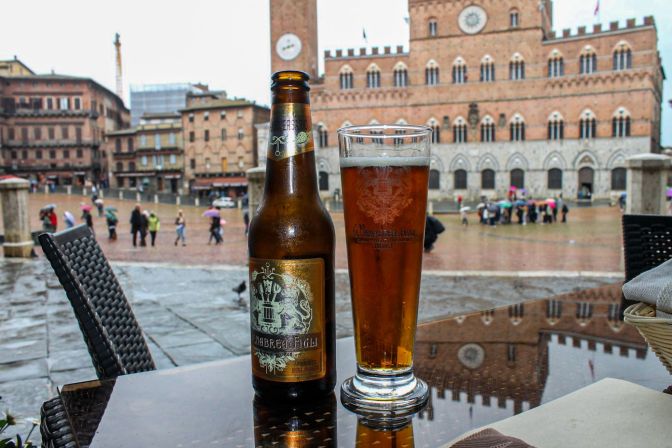
There is, however, at least one historical detail which you should know about:
The text at the beginning of this post is not, of course, referring to my daytrips, but to Siena’s Palio festival, described in the same text as “a (horse) race in honour of the Virgin Mary, ridden bareback round the chief piazza of Siena, by jockeys in mediaeval costume, who try to club each other off the course”.1 This race has been occurring twice a year, July 2 and August 16, since 17012, but its origins go back much further than that. I have never been to the Palio, but if you were ever going to take the next step to experience Siena, you cannot do better than visiting during those days.
My most recent visit to Siena was this past June, having previously visited in May 2004, May 2012, and July 2015. While my general routine changed little, I did try to spice up my most recent visit by looking for cool beer bars (naturally) and ratchet up my random wanderings. Let’s get to it. This will be my general itinerary, mostly from the recent visit and sprinkled with details from the past.
“Siena remains the most perfectly mediaeval of all the larger cities of Tuscany”
Edmund G. Gardner. “The Story of Siena and San Gimignano.” (1902)
Siena Station
Siena train station sits down in a valley. In the past, it was necessary either to take a taxi, bus, or walk up a long winding road to get to the city. Today, you will ride what seems to be the longest network of escalators you may ever see to reach the top of the hill and bring you out to a point where it is a much shorter walk to get to the city center.

Piazza del Campo
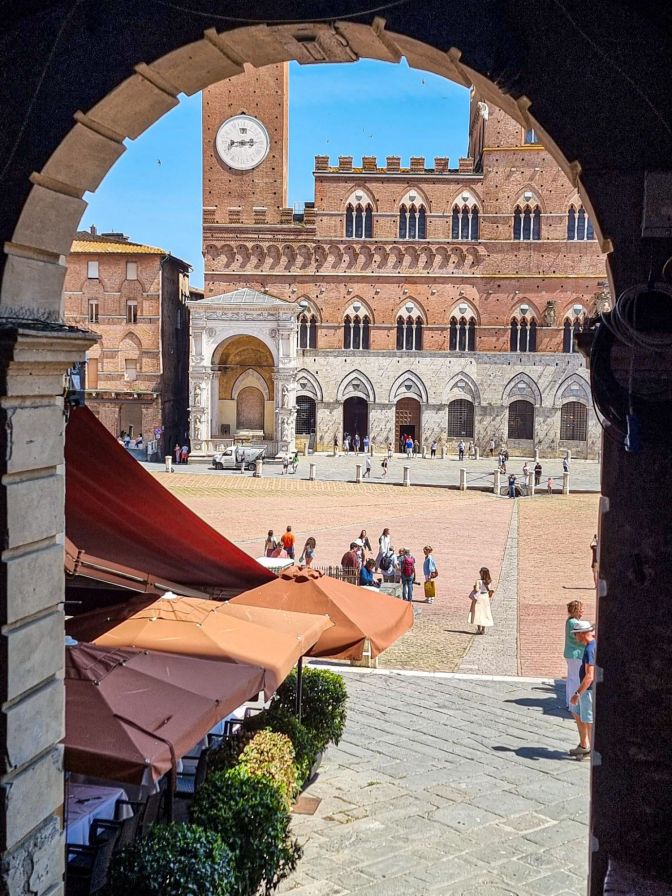
When I arrive, I head straight to the main square. There are a lot of tempting diversions along the way, but I like to come here and get oriented right away from the main square. This is one of the most beautiful squares in Europe and a bane to the average tourist trying to capture the essence of it in a single picture. Its ampitheatre-like trapezoidal design makes it also one of the most unique squares in Europe, and it is here that the Palio is run.
“Even Florence cannot show the like of this. It is so beautiful and characteristic that it is worthy of mention beside the Piazzetta of St. Mark’s at Venice.”
Olave M. Potter. “A Little Pilgrimage in Italy.” (1911) regarding Piazza del Campo
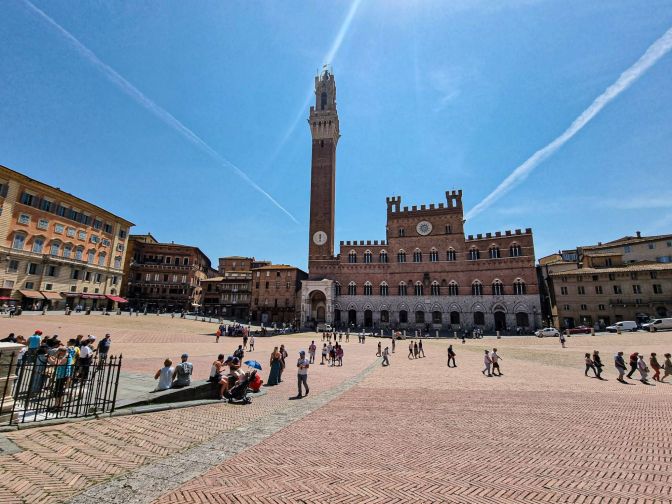
In one corner of the square are a couple of cafes which have a unique feature to them. I don’t know how much they are a secret gem anymore since Rick Steves features them in his Siena video, but they are cozy balcony seating areas which, for the price of a sandwich, will give you an unsurpassed view of the square. This is where I like to start my visit soaking in the views, getting a grip on any overeagerness and slowing myself down. Key Largo’s balcony is a little more comfortable and has some covering. Salumeria Il Cencio’s has a metal bar running along your back which prevents you from leaning back, but it is still comfortable enough to enjoy a sandwich and beer with an amazing view.

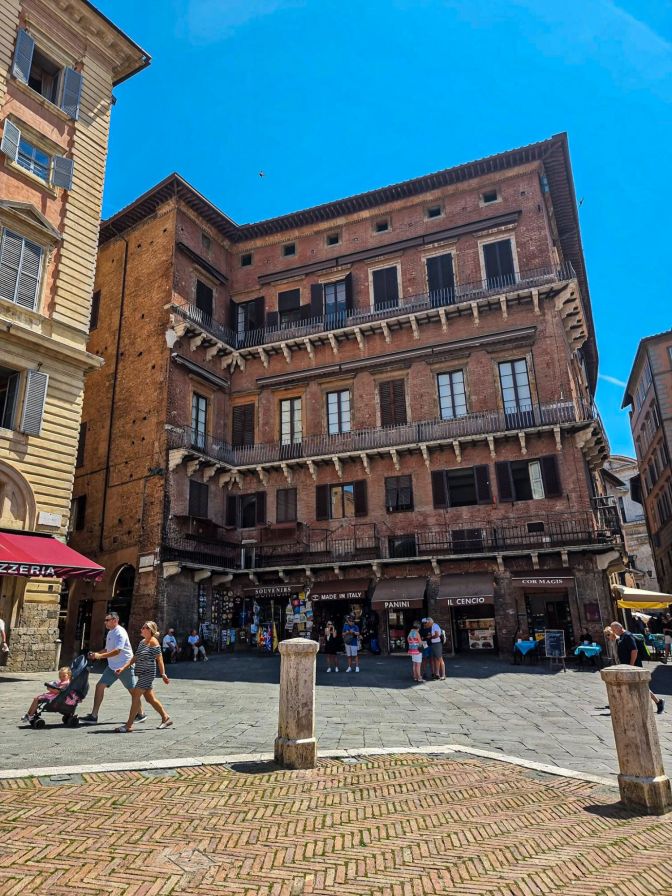
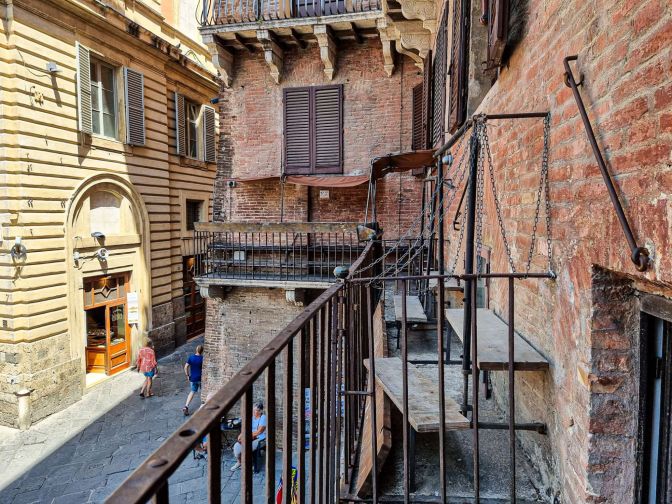
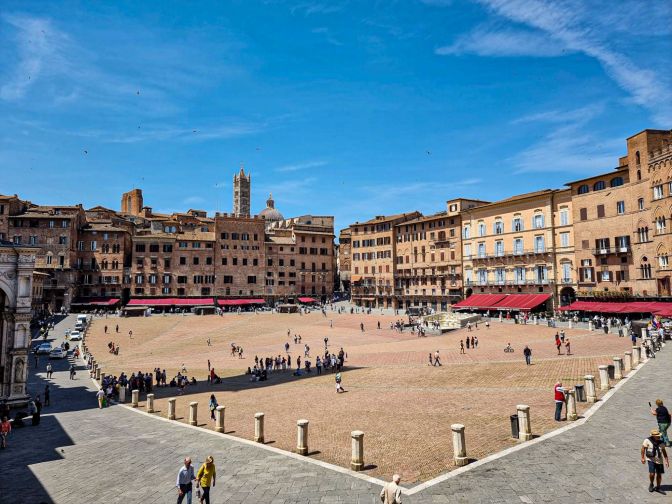
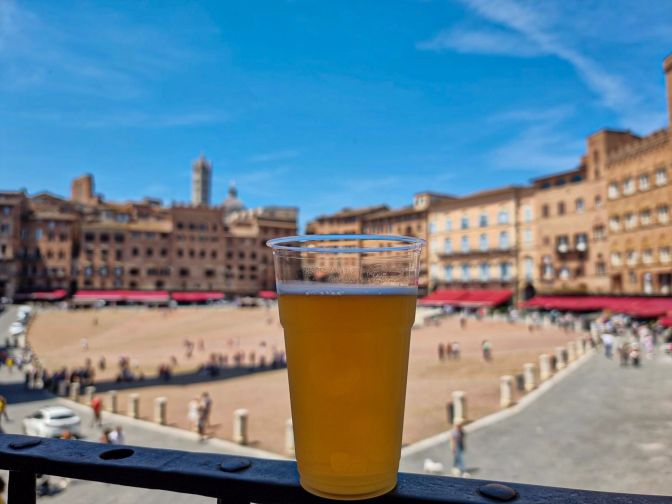
Due to the short nature of my visits, I am not well-versed in the restaurants of Siena. I would assume those on the Piazza del Campo are quite ordinary and over-priced as you would expect.
Here is where I would usually head across the Piazza and take the steep passageway known as Chiasso del Bargello.
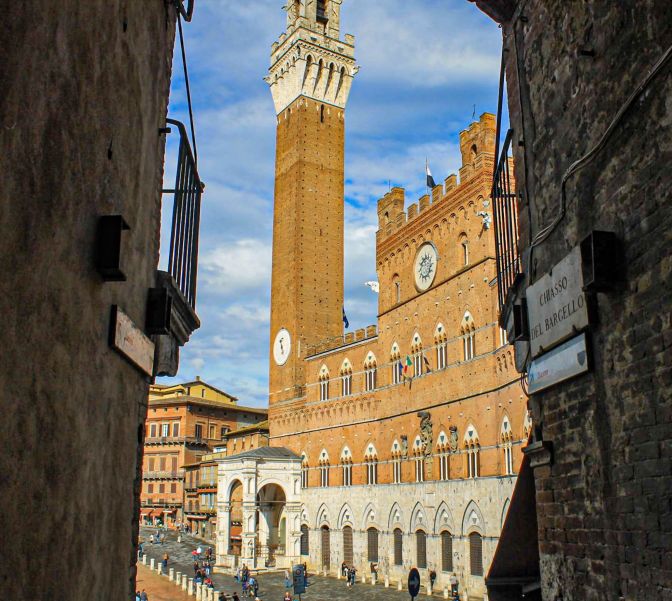


A turn here and a turn there and you arrive shortly at the glorious Duomo.
Duomo di Siena
The Siena Cathedral dates from the 13th century and has a spectacular interior with its characteristic black and white marble which are the colors of the Siena coat of arms4. It does require a ticket to enter which can be purchased at the box office next to the cathedral.
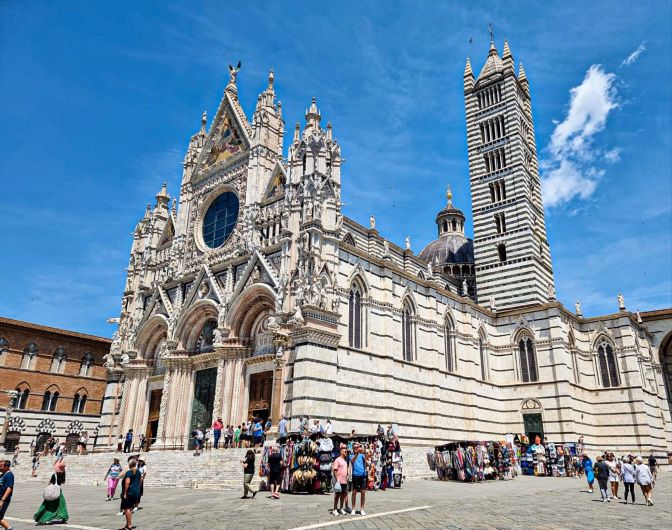
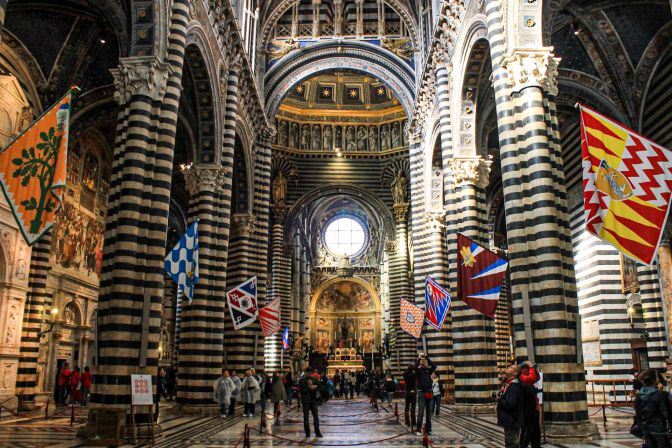
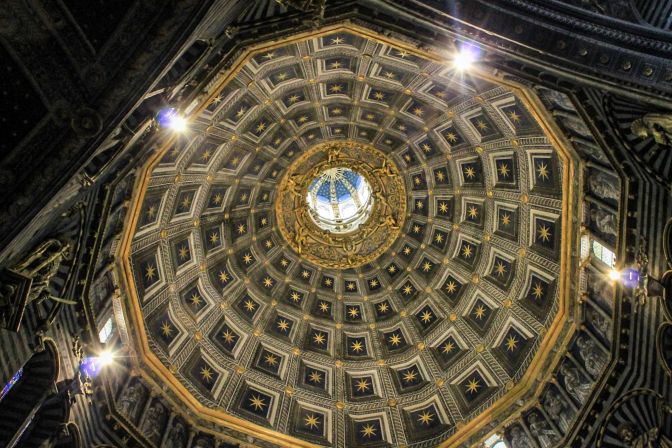
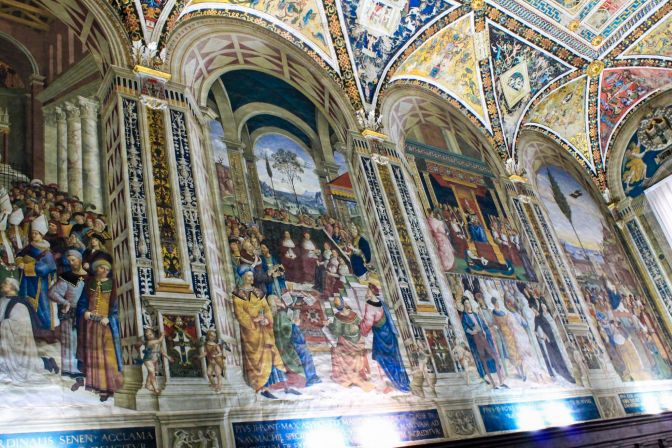
After the cathedral, wind around the backside until you find a small street called Via Diacceto. Follow this until you get to the spectular view of Basilica San Domenico.
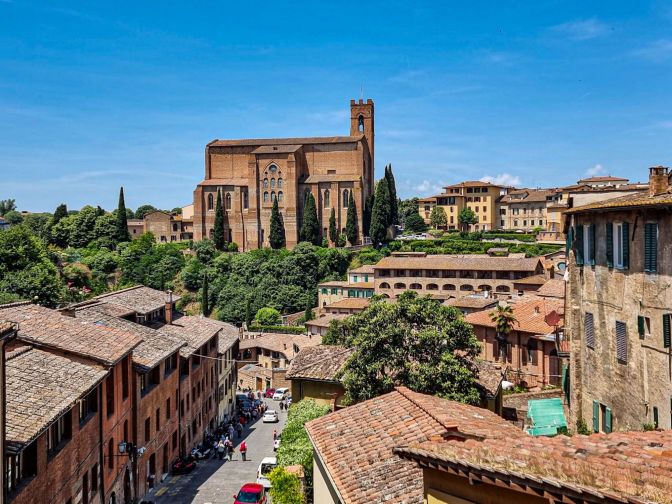
Follow the Via Diacceto a little further until you get to the unmistakeable next street.
Via Della Galluzza (& Costa Sant’Antonio)
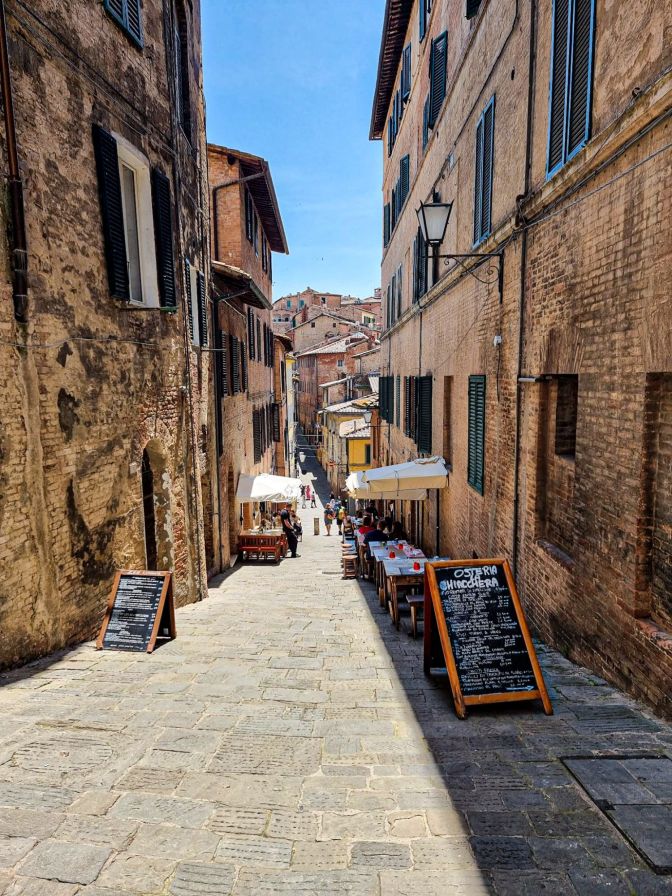
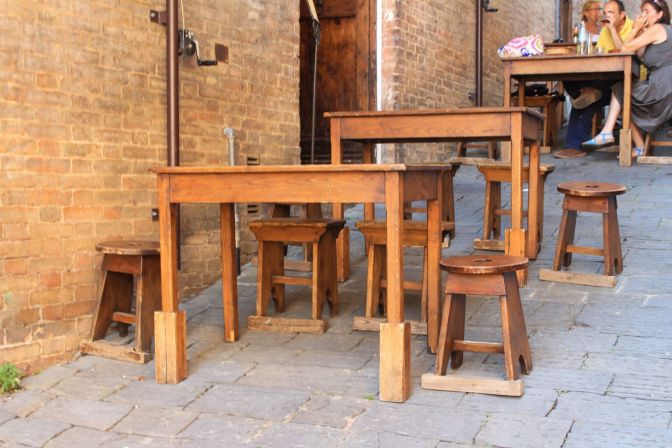
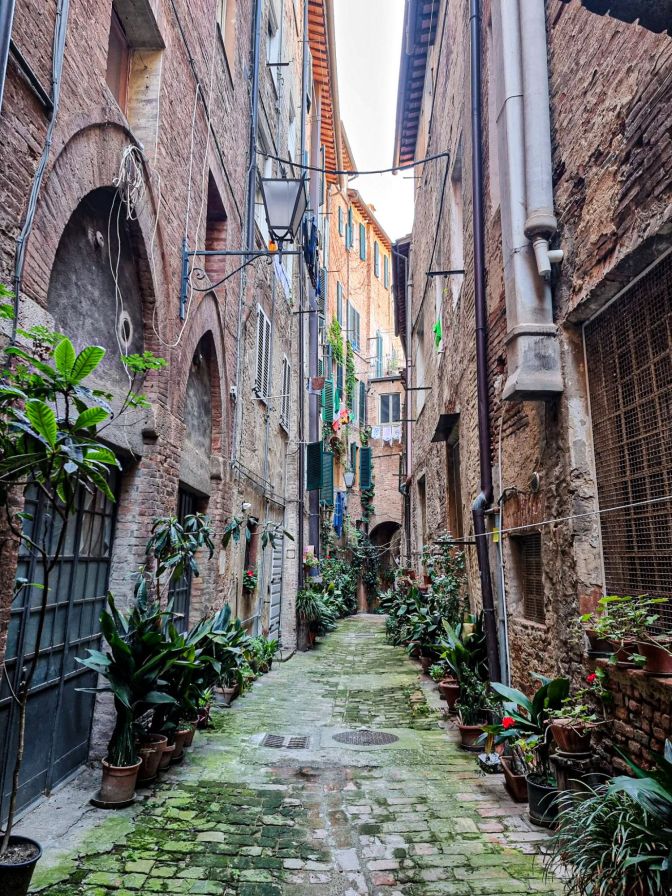
This steep street dips down and then rises again to become the Costa Sant’Antonio. From there you can follow another street to visit the Basilica San Domenico. The Via Della Galluzza is lined mostly with houses but there are also several quaint-looking bistrots which would pique my interest more than the restaurants on the Piazza del Campo.
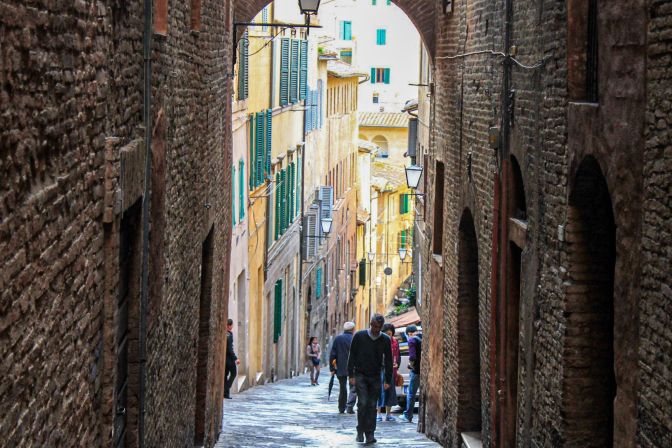
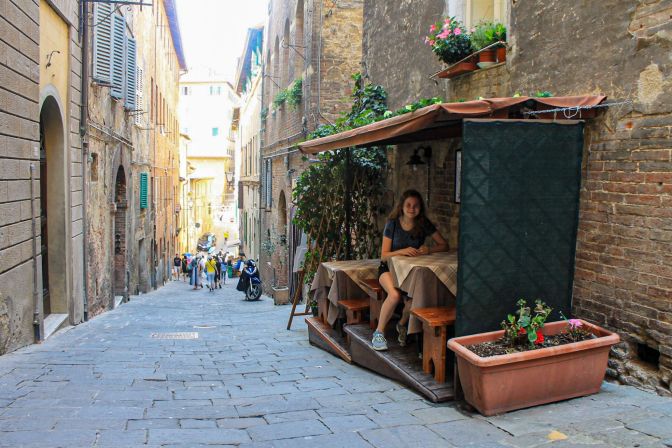
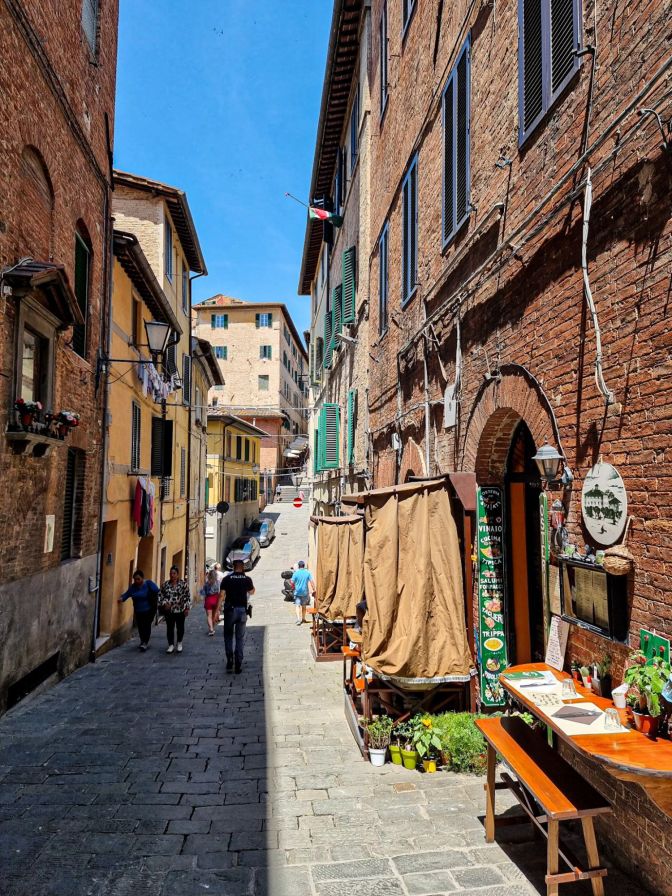
Viewpoint from Basilica San Domenico
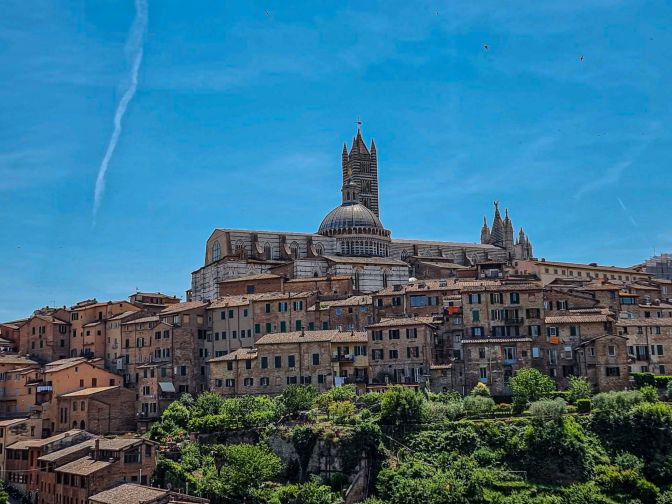
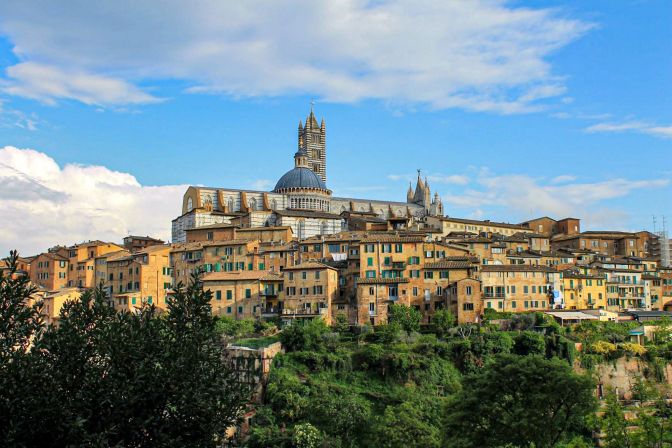
The basilica is free to enter, but oddly no photography allowed inside. To the side of the basilica, you get the best viewpoint of Siena. Here are the four versions of this photo from each of my visits. This is also a good spot to grab a gelato and sit in the shade of the basilica or in the adjoining yard beneath the trees.


Brewtiful Siena
Time for the random wandering part where I encourage you to try to get lost and find some nook and cranny to call your own. In the meantime, I wanted to create some beer experiences. However, I would find Italy to be quite inflexible to the concept of an afternoon pub crawl. Unlike places like the UK or Belgium, Italy doesn’t open most of its beer bars until around 6pm. But fortunately, there were two good ones open.
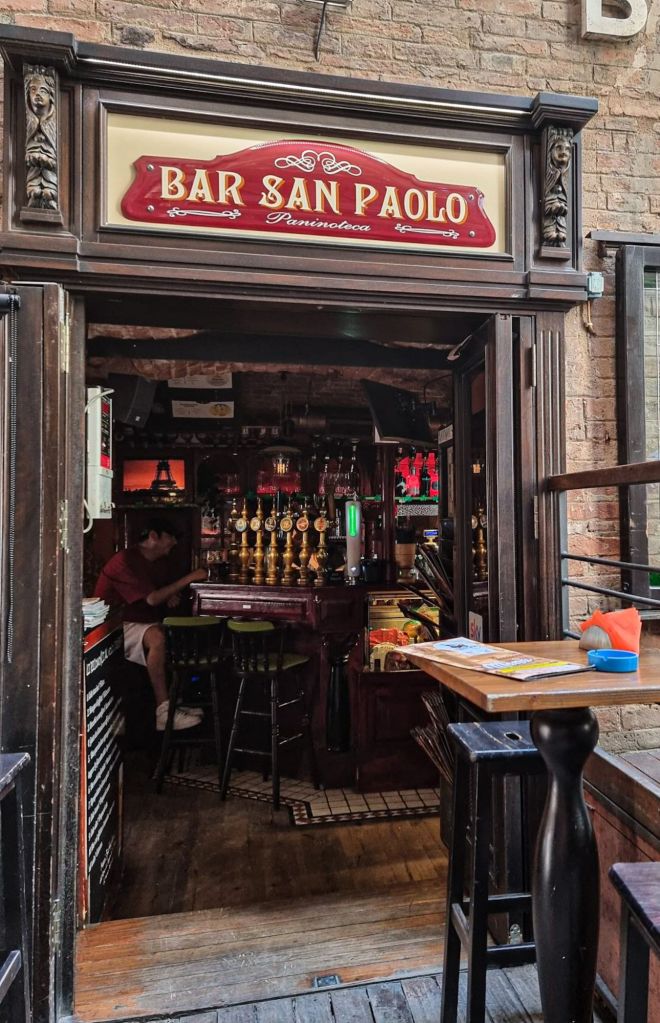
Bar San Paolo
This pub off of one of the spoke passageways leading from Piazza del Campo is a great pub to enjoy a beer. The interior is nice, but if you get the right table in the passageway, you have a view of the piazza along with the refreshing shadiness and breeziness it brings on a hot June day. The Schmucker hefeweißen, which I had never heard of, was quite delicious.
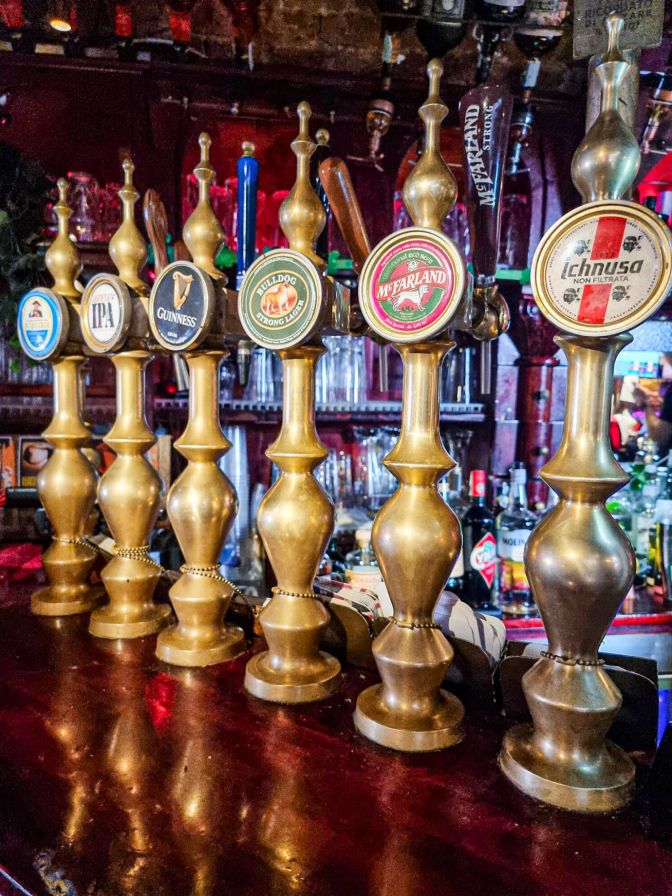

Sindie Craft Beer Bar
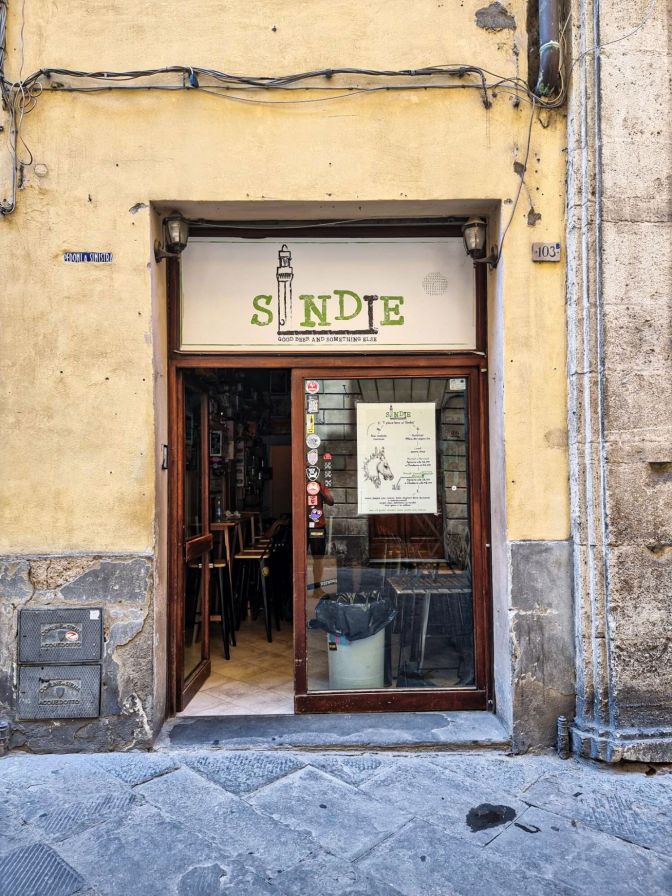
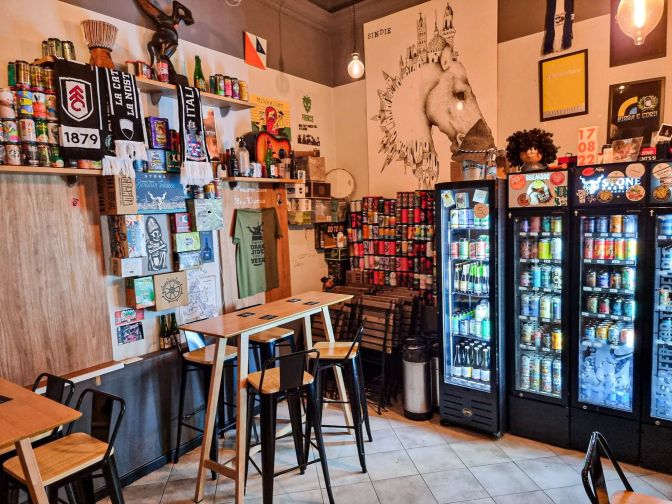
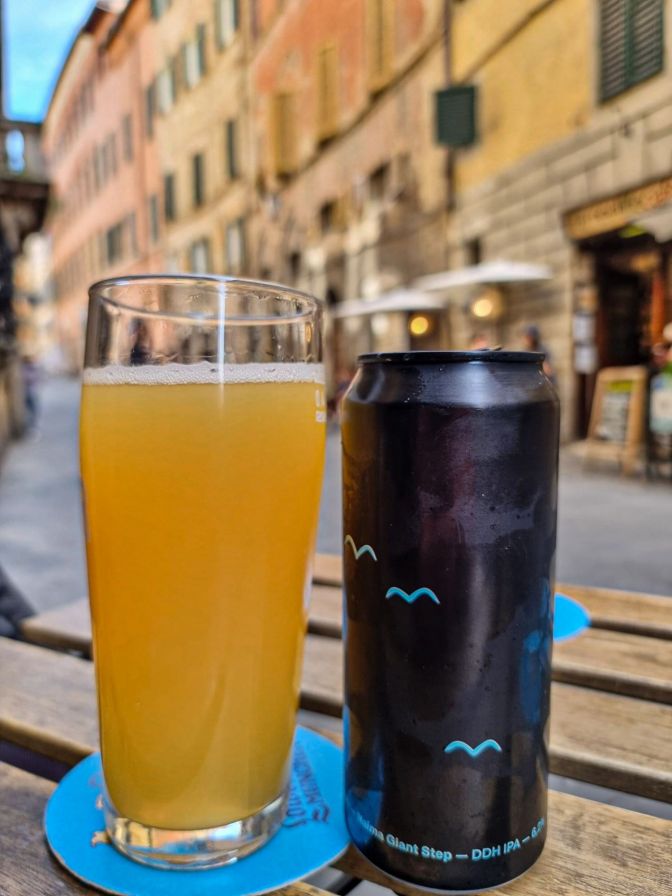
Sindie opened at 4pm which gave me a chance to try a couple Italian craft beers before needing to catch my train. They have a great selection on tap, a well-stocked refrigerator, and a few street-side tables which are great for people watching and soaking in the more residential atmosphere.
Honorable Mentions
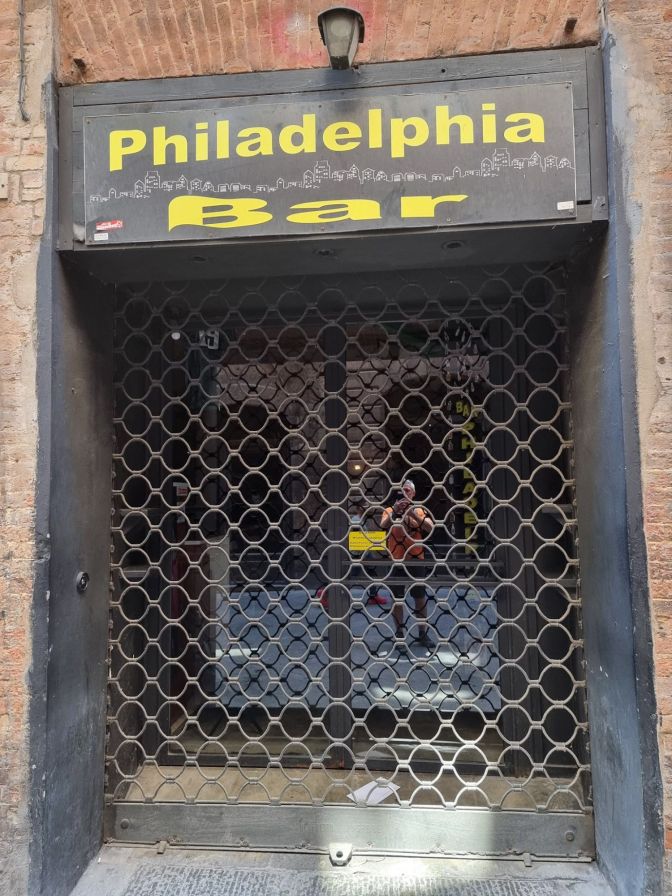
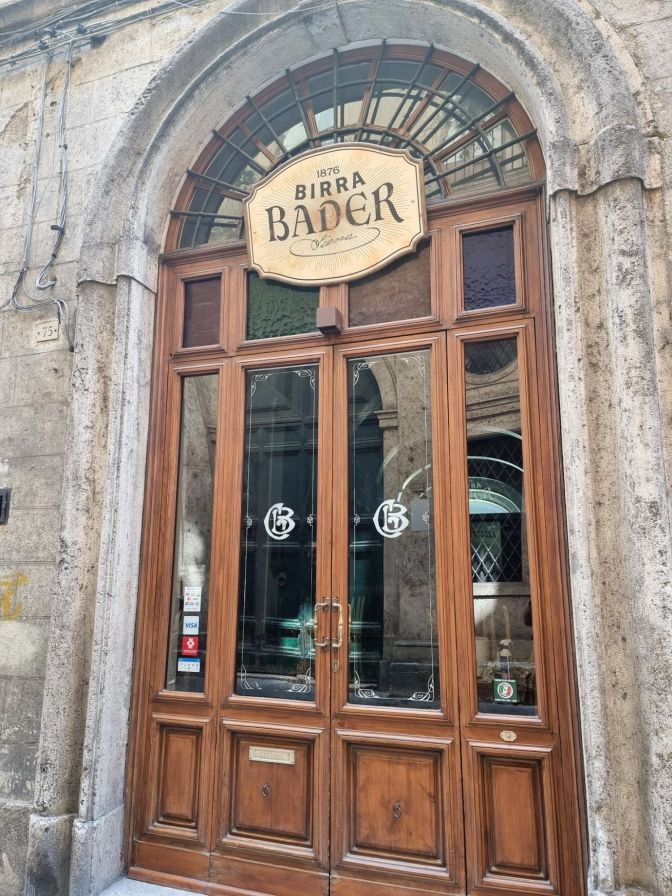
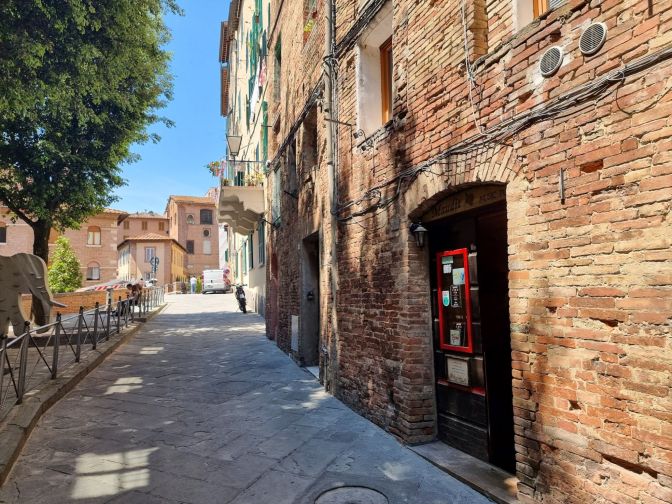
These bars were on my list but were opening too late for my visit.
Final Words
“Throughout the greater part of the twelfth and thirteenth centuries, Siena—usually more or less allied with Pisa, Pistoia and the Conti Guidi—was engaged in a series of wars with Florence, an intermittent struggle alternating with hollow, insincere treaties of peace. This was due to the antagonistic ideals of Guelf and Ghibelline”
Edmund G. Gardner. “The Story of Siena and San Gimignano.” (1902)
While those types of wars are long over, I am sure the competition between Florence and Siena remains in many parts of the culture. There is a famous meme of a guy walking with his girlfriend and looking back at another woman they just passed. I see Florence like the girlfriend and Siena as the other woman. Siena is seductive and enjoys drawing attention away from Florence. But she is probably rarely given the proper chance to introduce herself beyond her good looks and physical charms. Siena should be seen at night when the tour groups are gone and its lights glow against the yellow, orange, and brown walls and throw shadows at odd angles. Siena should be seen in the early morning where only the sounds of cooing pigeons might be heard echoing from its narrow streets, while shop owners start their humble daily lives preparing their wares for the locals before the inevitable hordes arrive. And somewhere in its hallowed walls is a connection with its history that is more than names just known to art scholars and obscure to the rest of us. Without that, maybe Siena can only be a city that delights us for a short time and disappears quickly into the distant recesses of our mind… until someone mentions it. And then suddenly it is the most beautiful city in Italy.

- Olave M. Potter. “A Little Pilgrimage in Italy.” (1911) ↩︎
- https://en.wikipedia.org/wiki/Palio_di_Siena ↩︎
- Olave M. Potter. “A Little Pilgrimage in Italy.” (1911) – illustration by Yoshio Markino ↩︎
- https://en.wikipedia.org/wiki/Siena_Cathedral ↩︎

 itsabrewtifulworld