
“Yes, if a poet could do for Winchester what Longfellow did for Bruges, and could conjure up the scenes of the past and the personages whose memories still linger here, what a rare series of absorbing pictures, what a medley of historic personalities, what a wealth of varied types should we see embodied before our eyes! ”
Winchester by Telford Varley (1910)
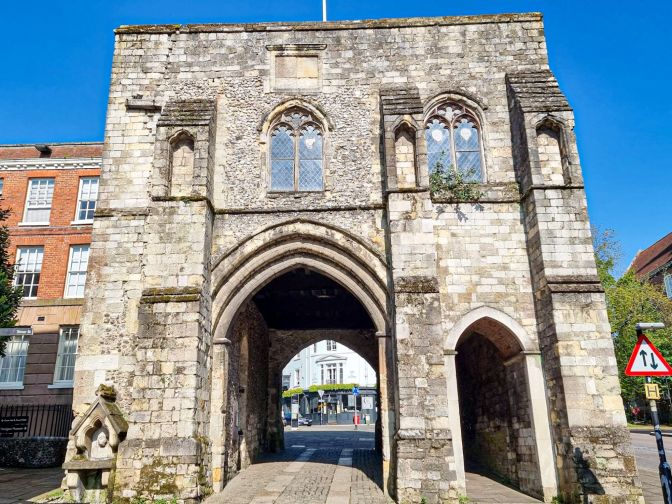
It was a perfect morning in May, the day after my drizzly low key introductory stroll around Winchester. I stood at the Westgate under a blue sky looking down High Street. Aside from its association with King Alfred, Winchester was still a blank slate, a city whose soul was yet unrevealed to me. I am not one who cares too much about names and dates when I explore. I am looking for that thread that I can weave into my ever-growing set of memories and experiences that gives me an emotional connection to a place. Traveling shouldn’t be about living the embodiment of a sterile set of paragraphs from a history text book. Yet, all throughout the day, I would find myself navigating through Henry’s and William’s, a Joan, a Jane, and a John and getting caught in their flow. While I could experience Salisbury with a certain airy nonchalance, Winchester wasn’t going to stand for that. She was the former capital of England, the seat of the Kings of Wessex. As I passed through Westgate, I was unknowingly entering a place that would enthrall me like a dusty library of old books and then reward me with several welcoming pubs. A pilgrimage extraordinaire.
Winchester Cathedral
“To deal adequately with Winchester Cathedral would be almost to write the history of England”
Winchester by Telford Varley (1910)
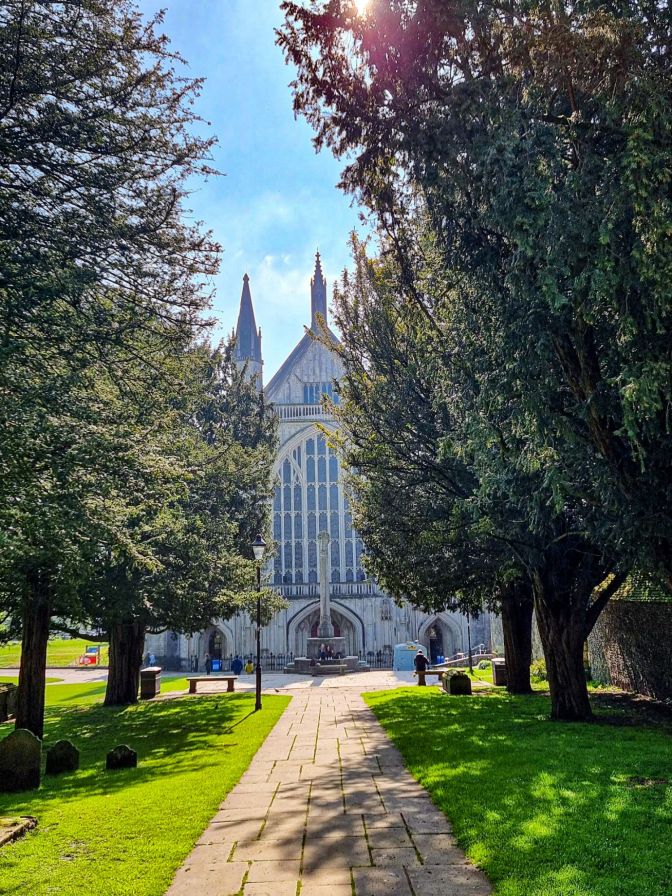
Winchester Cathedral rose up following the conquest of William the Conqueror when he was replacing many pre-existing churches with grand cathedrals of his own. I will not attempt to write the history of England, but if you are a fan of Anglo-Saxon Britain, this is hallowed ground on many levels. You will find here reliquaries containing the bones of several Anglo-Saxon and even Danish kings, many of which you will recognize if you are fans of The Vikings, including King Ecbert (Vikings, Seasons 2-4) and King Canute (Vikings Valhalla).
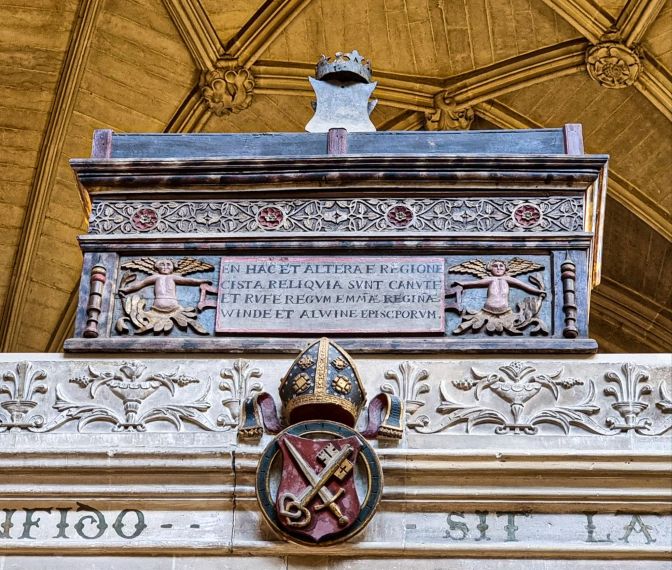
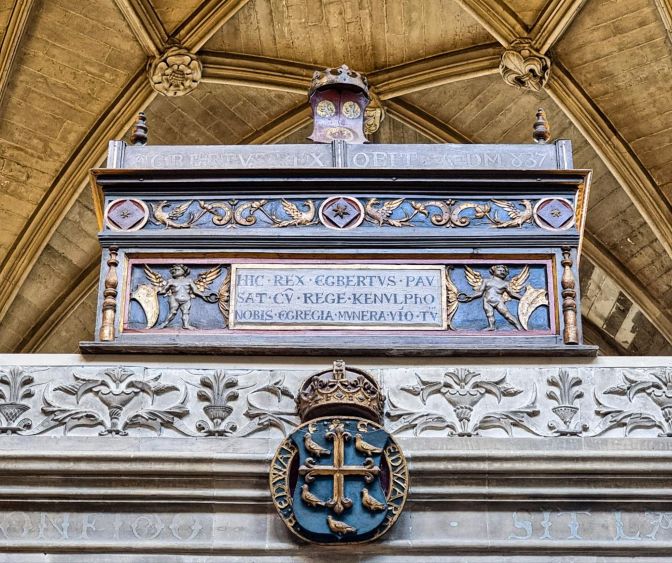
The cathedral museum also has some incredible exhibits including an original King James Bible and a King Alfred coin. Mind-boggling.
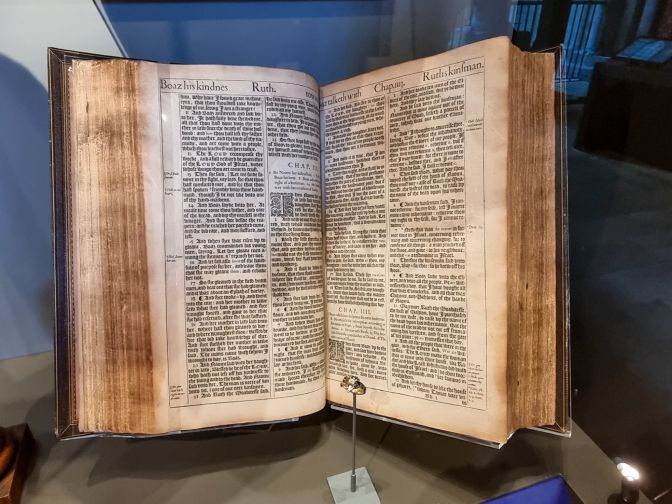
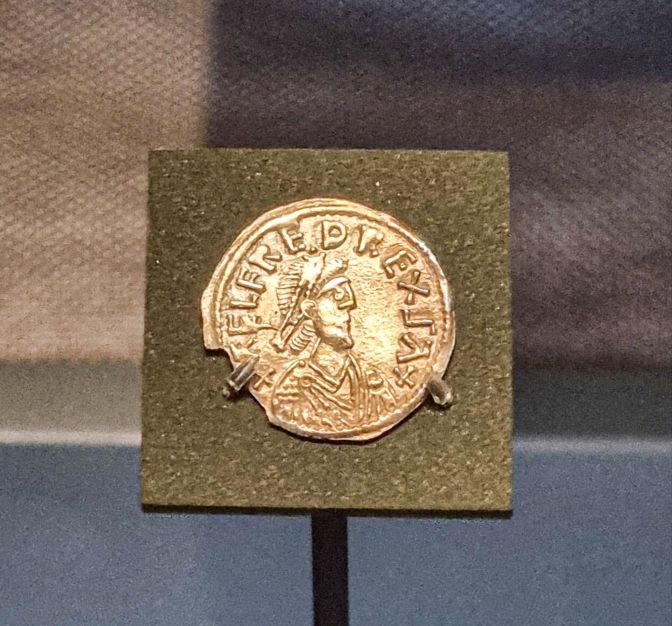
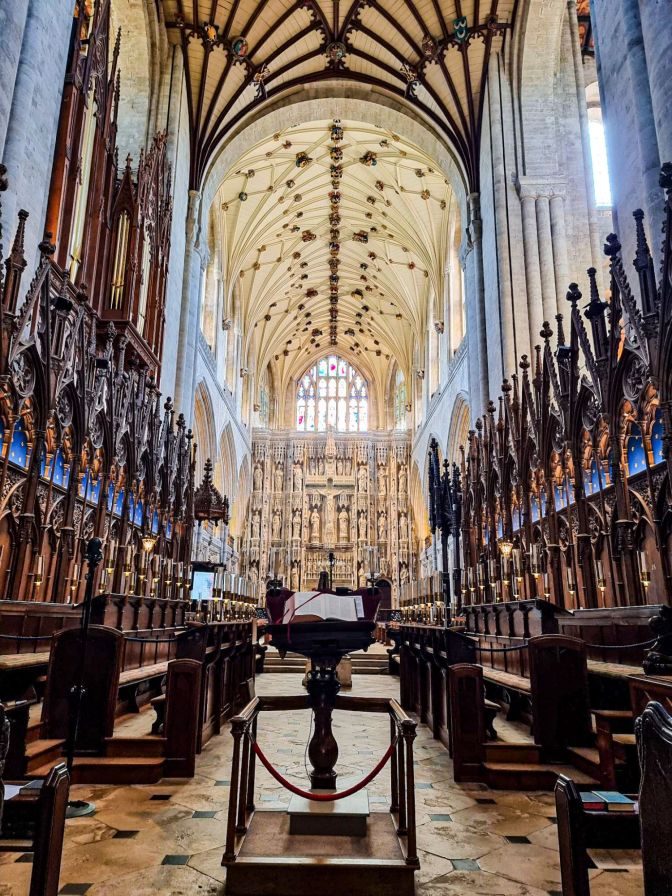
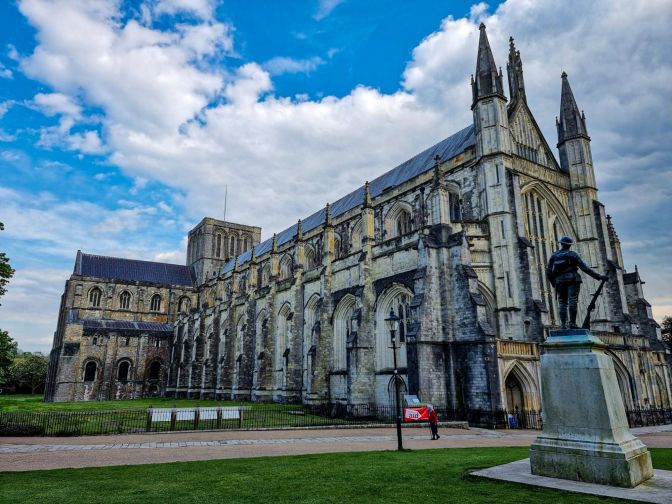
I will mention a few other highlights of the cathedral as I proceed with my walk.
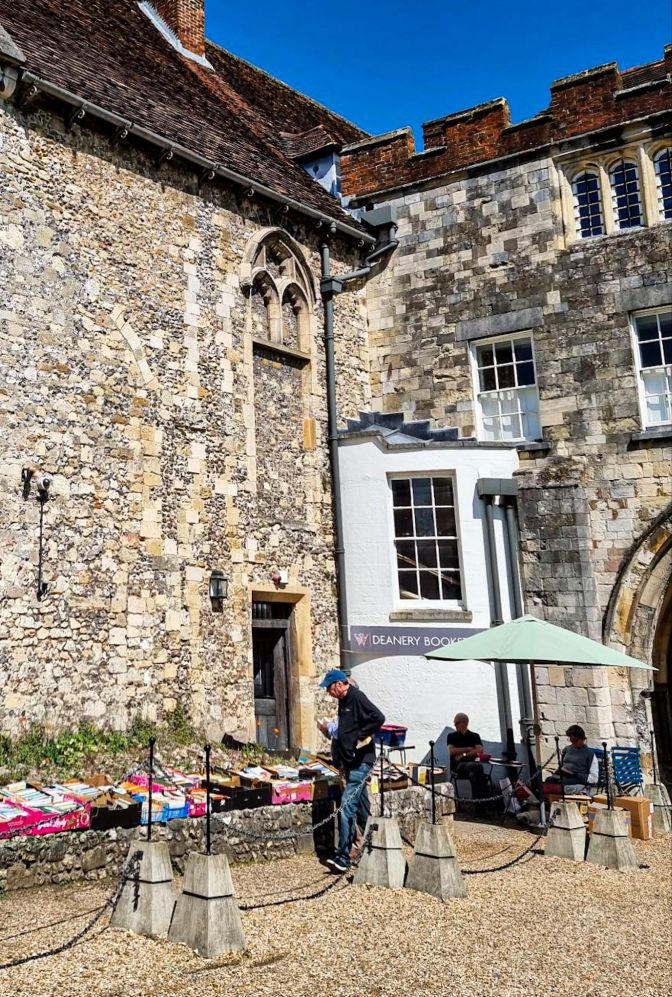
Adjacent to the cathedral is the Deanery Bookshop with plenty of old used books. It is here I picked up a copy of the book I have quoted above, Winchester by Telford Varley, as well as a couple books on the Scottish highlands from 1930-31, a 1946 Great Expectations, and a 1940’s vintage Pickwick Papers all for about ten quid. By the time I left the bookshop, I was having literary eurphoria and just around the corner from the Deanery is a literary landmark.
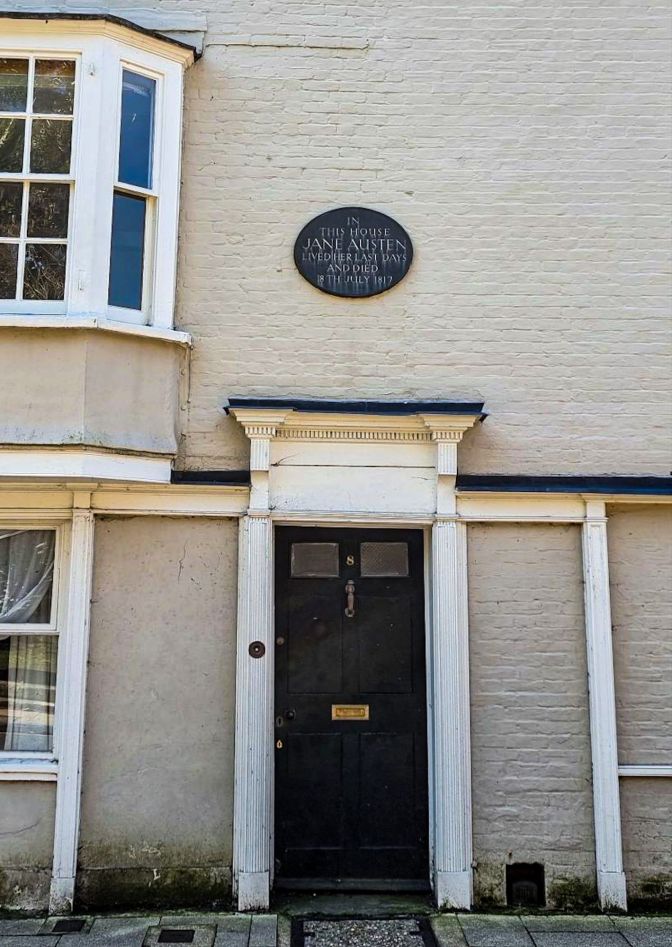
The Jane Austin House
Jane Austin lived her final days in this house where she passed away in 1817. She is buried in the cathedral.

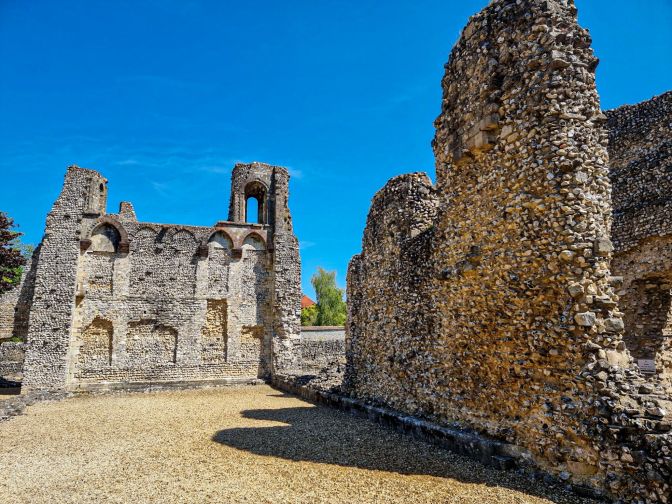
Just a few blocks from the Jane Austin house are the ruins of the Old Bishop’s Palace, otherwise known as Wolvesey Castle, built by one of Winchester’s biggest historical celebrities, Henry of Blois.
The Old Bishop’s Palace (Wolvesey Castle)
Why should I trouble you with Henry of Blois, who was Bishop of Winchester from 1129-1171? He did some things like build this palace, contribute to the construction of the cathedral, and build the next site we will visit (Hospital of St. Cross). But it was his connection to a couple of the historical figures that I encountered in last years trip to England that brought a fulfilling sense of cohesion. I will try to keep it short. First of all, he was the grandson of William the Conqueror. William the Conqueror was succeeded by his son Henry I. Henry I’s heir William Adelin died at the age of 17 during a fateful crossing of the English Channel, and Henry I never had another legitimate heir. After Henry I died, the succession ended up in a civil war between Stephen, a grandson of William the Conqueror and brother to Henry of Blois, and Matilda, Henry I’s daughter. Stephen would take the throne. But it was Matilda’s son who would succeed Stephen and become Henry II. This is the Henry II that would force the bishops of England, including Henry of Blois, to agree to restrictions on the powers of the church leading to the conflict with and eventual assassination of Thomas Becket. King Stephen was buried at Faversham Abbey not far from the oldest brewery in the UK and Becket, of course, was Archbishop of Canterbury.
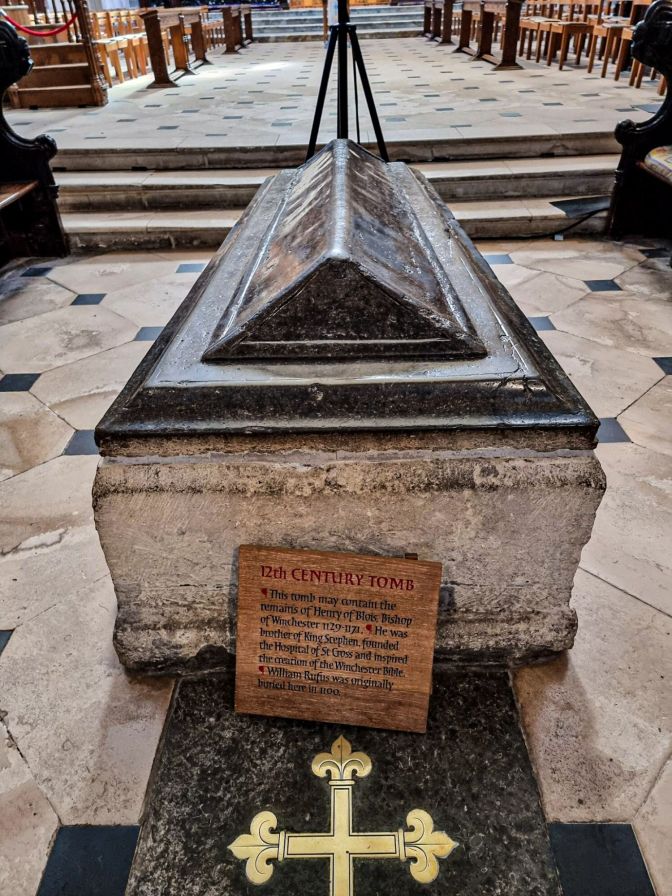
“In 1129 Henry of Blois… was made Bishop of Winchester by his uncle Henry I; and was for years the most prominent figure in the country.”
Historic Towns: Winchester by G.W.Kitchin (1890)
Keats’ Walk
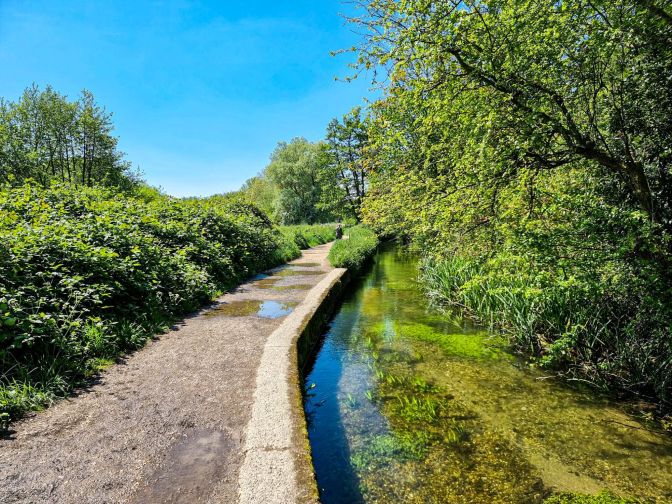
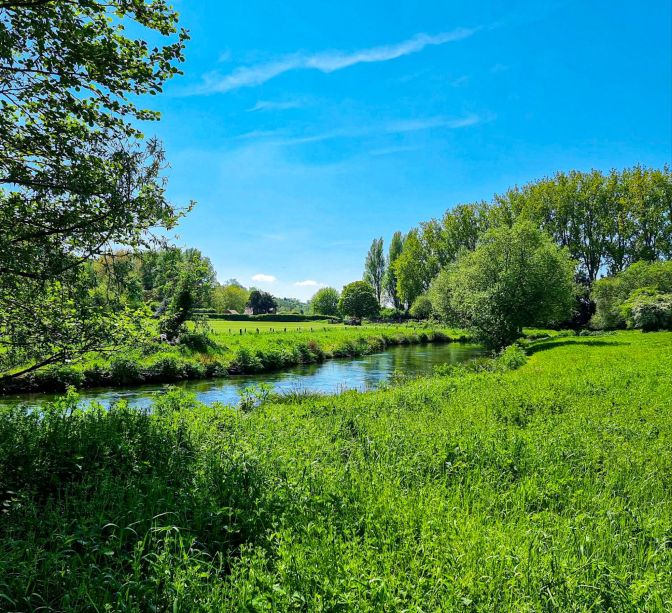
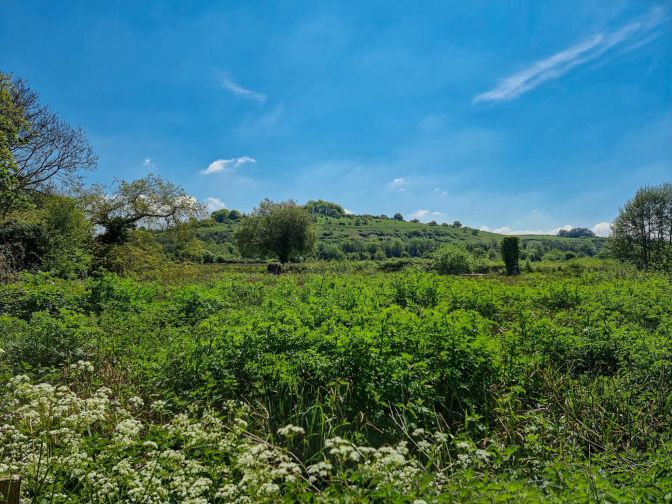
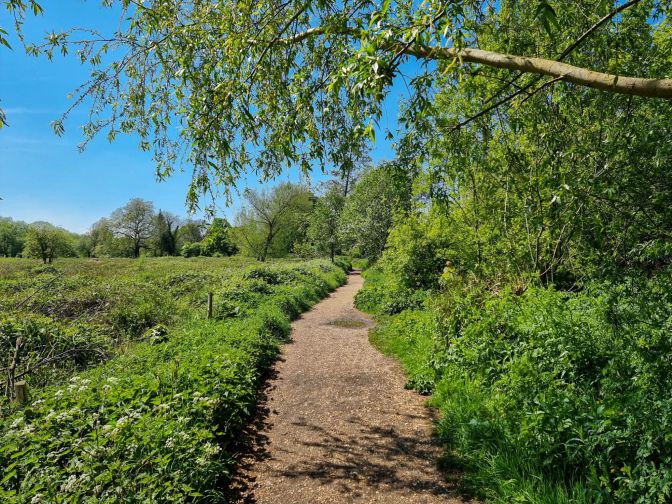
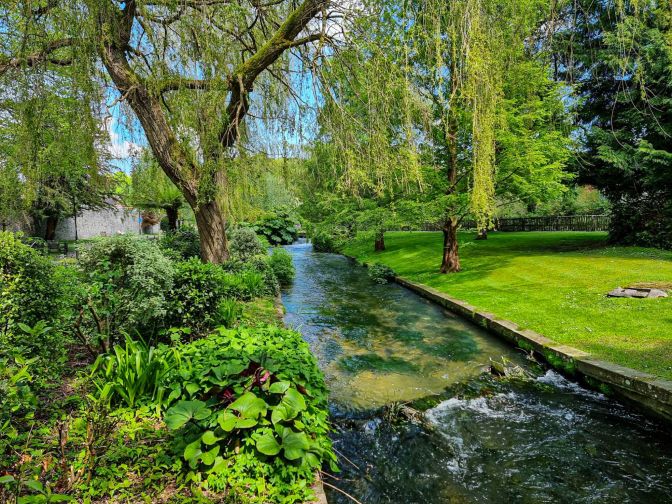
The Itchen river flows along the east side of Winchester. It divides itself many times over creating a charmingly confusing web of streams, some slow and lazy, others so rapid they defy even ducks to cross them, and all picturesque. Not far from the Old Bishop’s Palace, a signpost points to a footpath which follows the Itchen going south. It was here in the late Summer of 1819 that poet John Keats would walk every morning. If you look to the east, you will see St. Catherine’s Hill where tomorrow’s hike will culminate. Following this route will bring us to the next stop.

Hospital of St. Cross
“I was walking between Compton and Winchester in the morning when I came upon a tattered old man sitting by the side of the road. He was, he told me, “looking for odd jobs,” but there was something about his personality which told me that if an odd job showed itself he would look keenly enough, but in the opposite direction.
In Search of England by H.V. Morton (1929)
When we came to the outskirts of Winchester he caught sight of another shabby figure ahead, and began to hurry.
“I don’t wanter miss my beer,” he mumbled.
“Your beer?” I said. “You can’t get beer now; it’s not yet ten o’clock.”
“I can get beer alright,” he told me, “as long as those blinkin’ —– (he was a nasty-mouthed old man) don’t swill it all down first!”
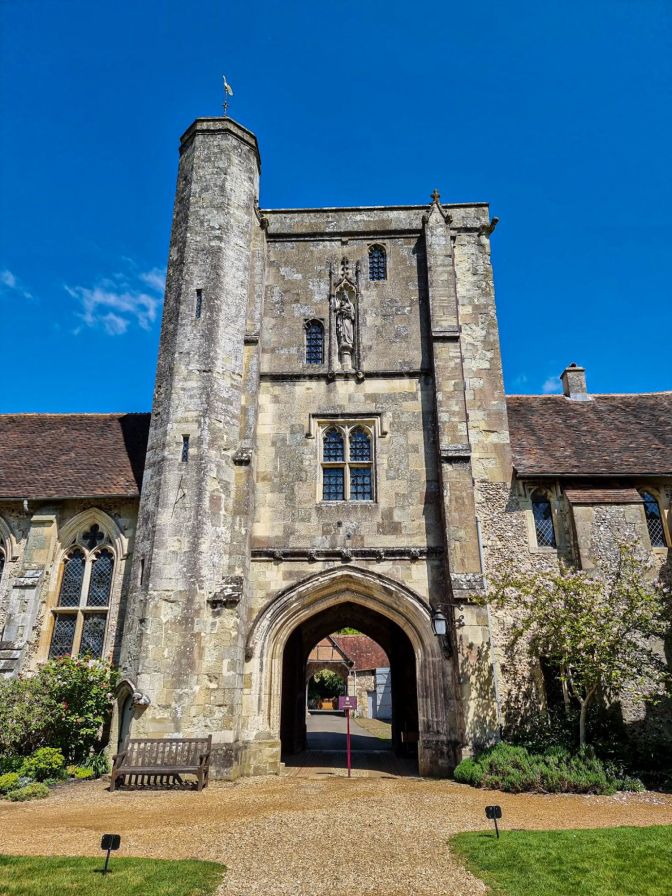
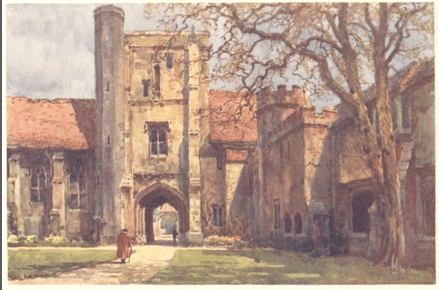
We came to a lane that led to the Itchen, and at the end of the lane was a lovely gray gatehouse leading to a courtyard…”
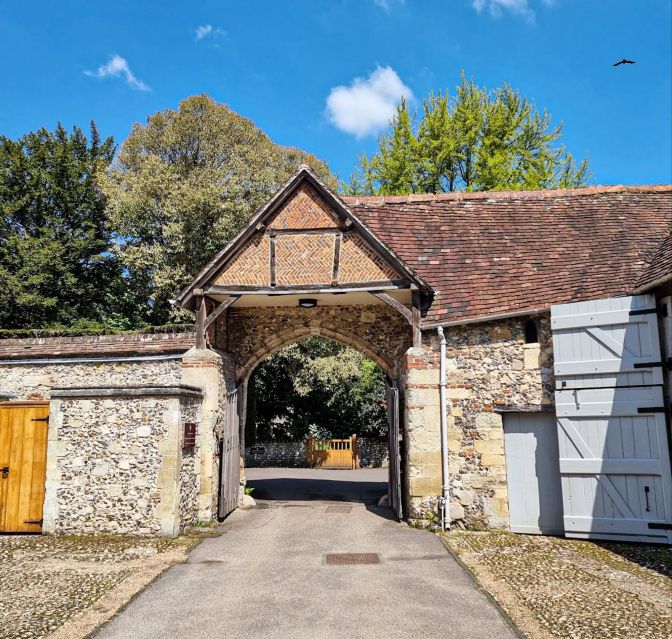
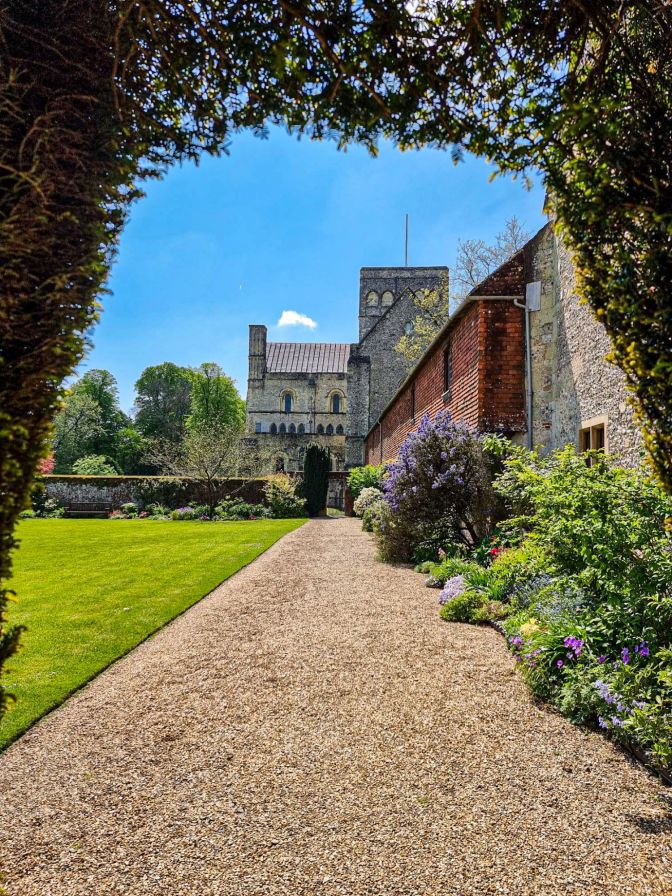
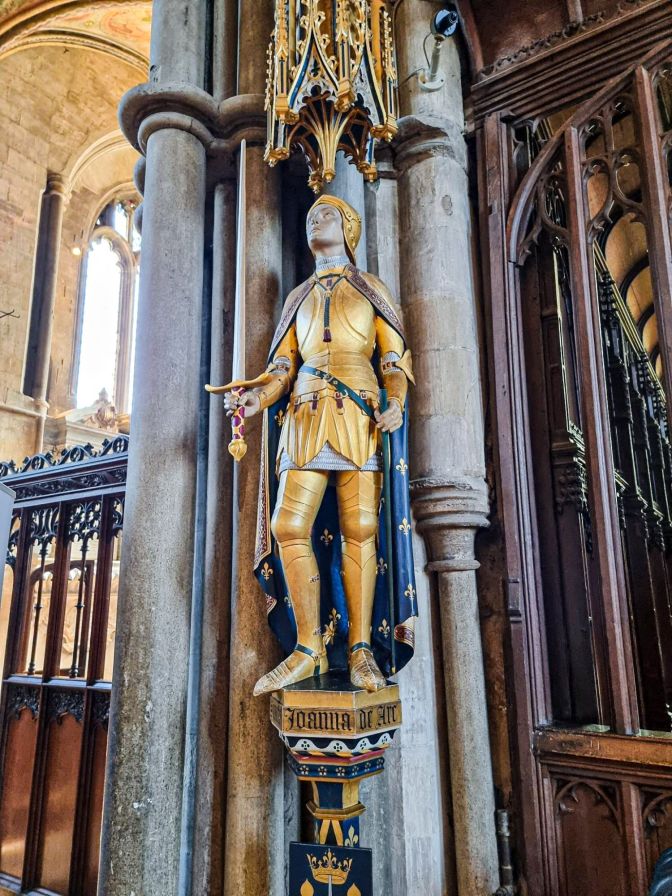
The Hospital of St. Cross is the oldest Almshouse in England. It was built by Henry of Blois in 1136. However, it was another Henry, Henry Beaufort, Bishop of Winchester in the early 1400’s who expanded it and founded a brewery. Pilgrims would come here for the Wayfarer’s Dole, a “horn of ale and a dole of bread.”1 This tradition still exists if you ask for it2. Stupid me didn’t find out until later. Henry Beaufort had a minor role in the trial and conviction of Joan of Arc, and to compensate for that, a monument to Joan of Arc was placed in Winchester Cathedral opposite of Beaufort’s tomb.
The Bell Inn
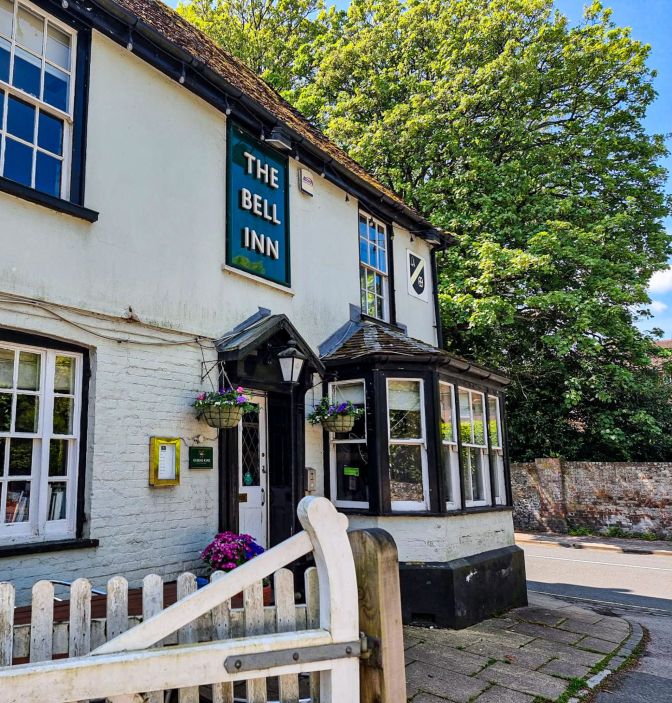
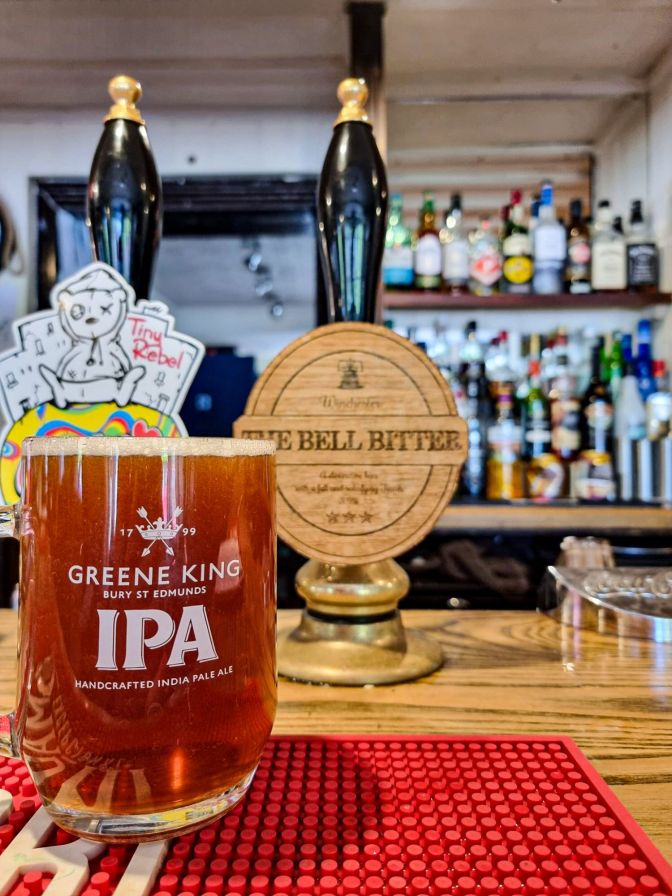
At the beginning of the lane leading to the gatehouse is this fine pub. It was lunch time and the house bitter and BLT hit just the right spot. There is a nice sunny garden in the back to enjoy the peaceful surroundings.
After lunch I followed the streets back towards the city and along the way visited what would be the only brewery I would find in Winchester.
The Queen Inn
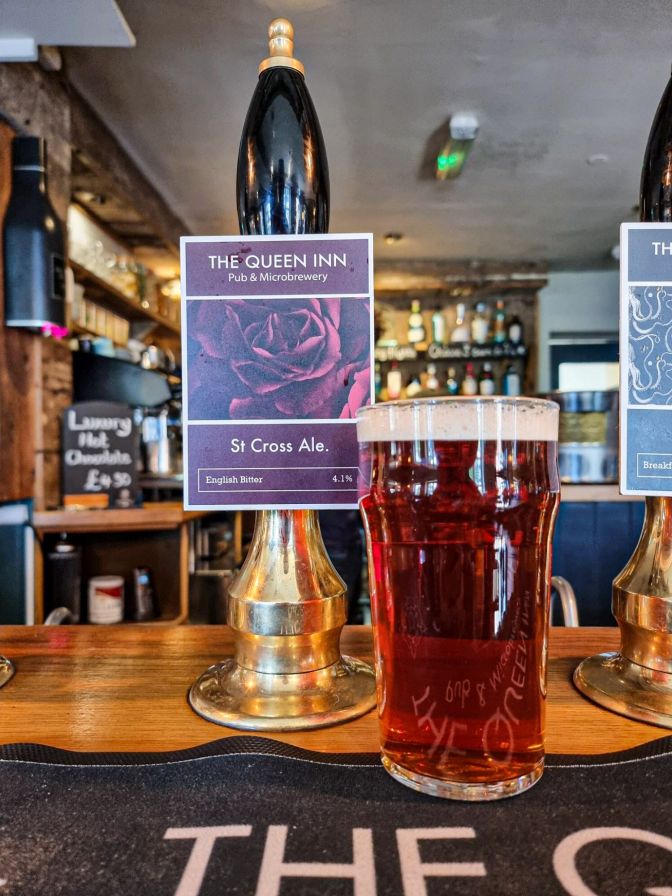
Highly recommended pub and microbrewery with a lot of outdoor seating and a great atmosphere. The appropriately named St. Cross Ale was a delicious smooth bitter to sip while soaking up what had already been an eventful day.

On the way to the next pub, you get some nice views of the Itchen.
The Black Boy
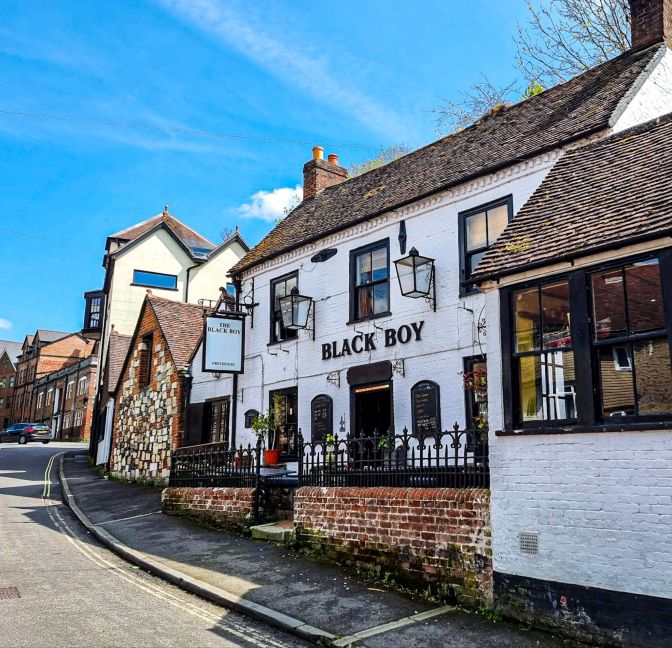
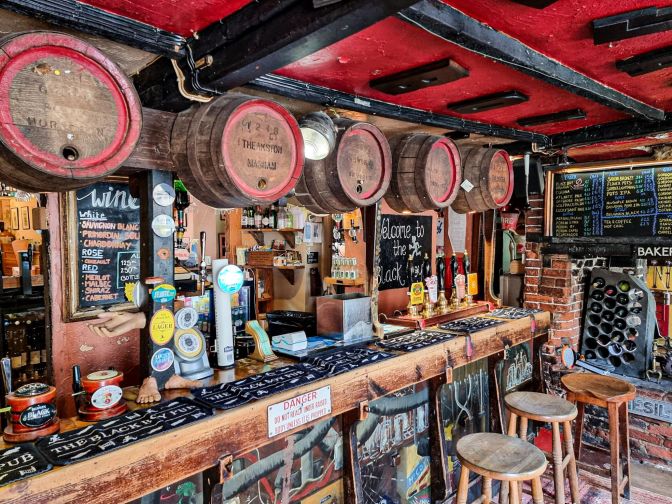
This awkwardly-named pub sits a little bit outside the center and was quiet on a Tuesday afternoon. This pub has the most over-the-top old timey feeling inside with lots of eclectic decorations. The garden in back is very nice.

From the Black Boy, we head back through the city center towards the Great Hall but first stopping into pub #4.
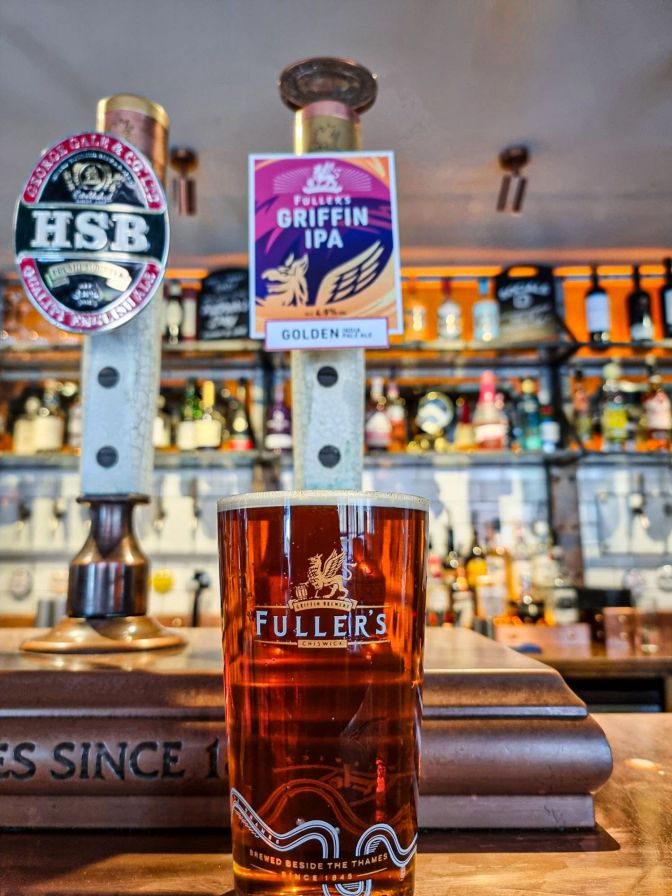
The William Walker
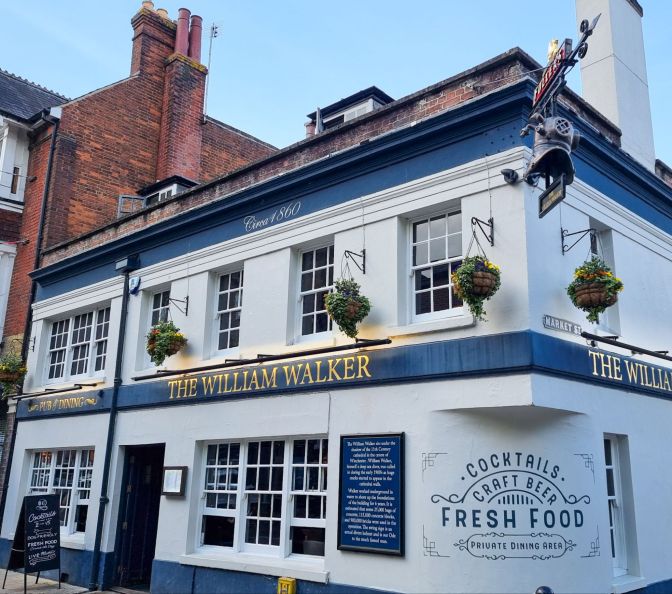
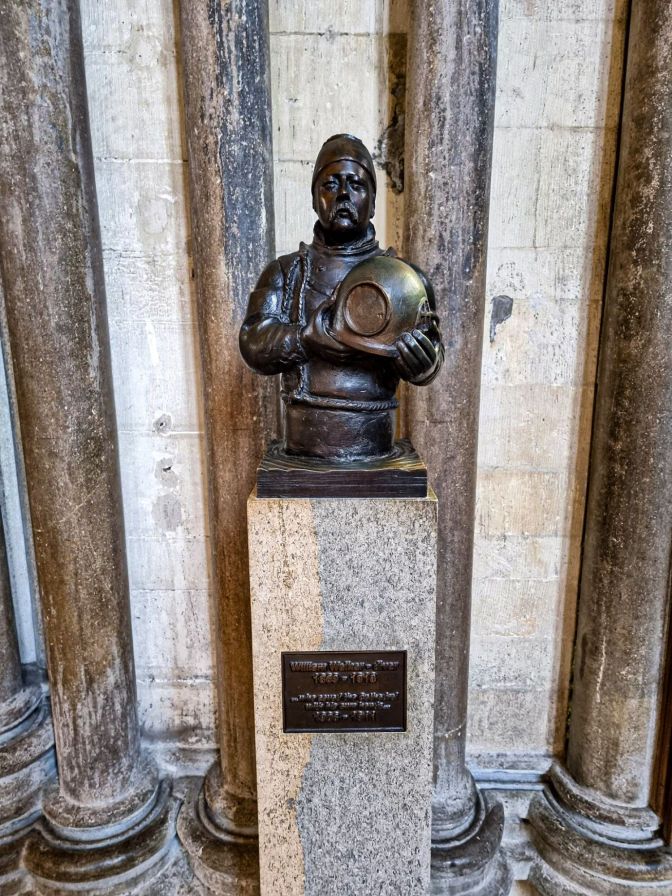
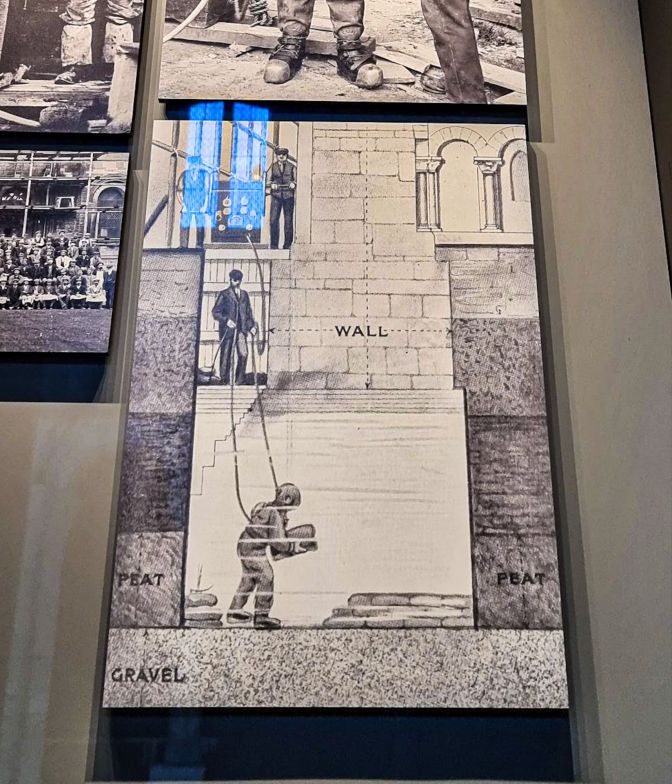
On the curious sign hanging outside the William Walker pub is an old-fashioned deep sea diving helmet, the likes of which conjures up images of movies like 20,000 Leagues Under the Sea. William Walker was a diver who rescued the cathedral from sinking by going beneath the water level and building up the foundations. His memorial is in the cathedral along with some images of his accomplishments. It is possible to visit a part of the crypt which is still flooded to this day. The pub is nice, but I was disappointed to find that it does not come with a William Walker house beer. He is truly deserving of one.

The Great Hall
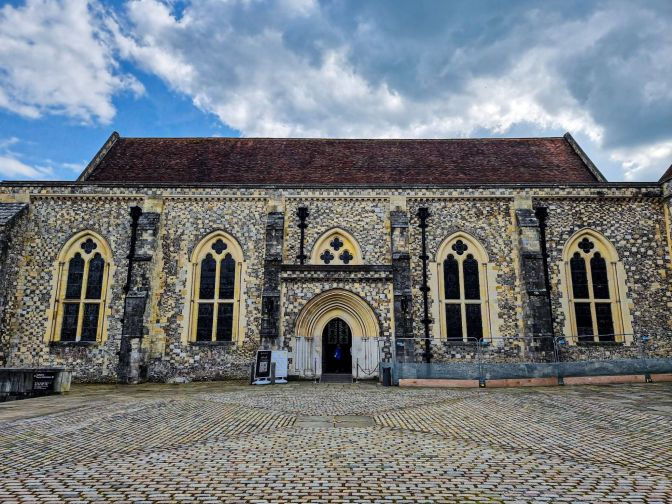
The Great Hall is all that is left of Winchester Castle. It was built in the early 1200’s by yet another Henry, Henry III, grandson of Henry II. The centerpiece of this hall is the huge Round Table of King Arthur believed to have also been made in the 13th century but painted and mounted in its present form by orders of the final Henry of the day, Henry VIII.
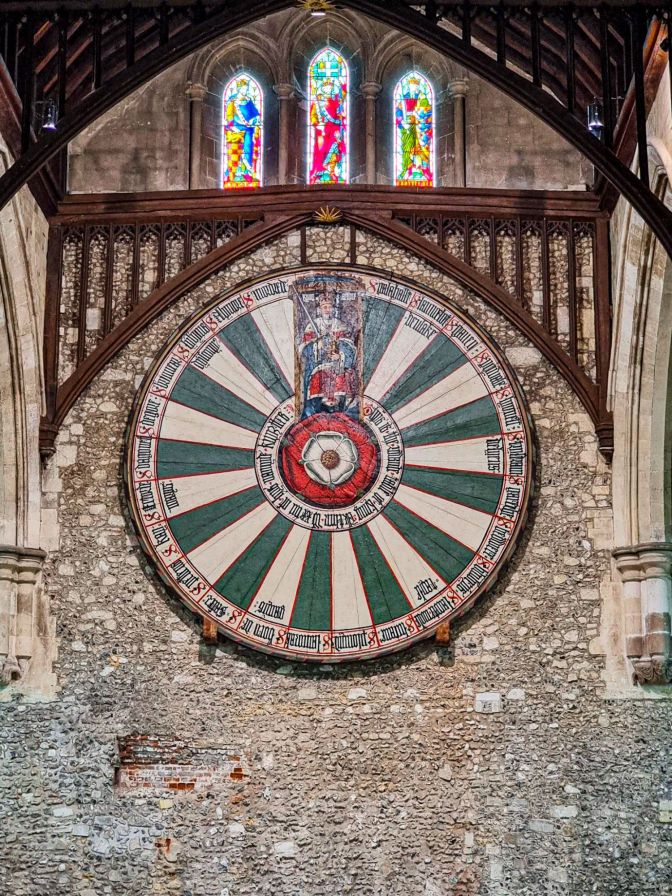
This brings us full circle back to the nearby Westgate and the Westgate pub.
The Westgate
A classy good all-around pub.
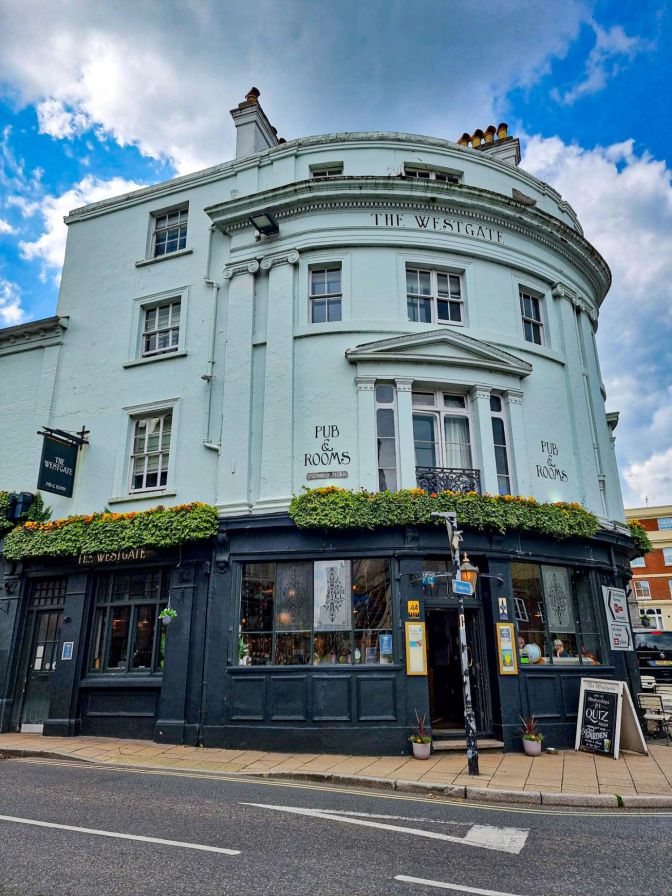
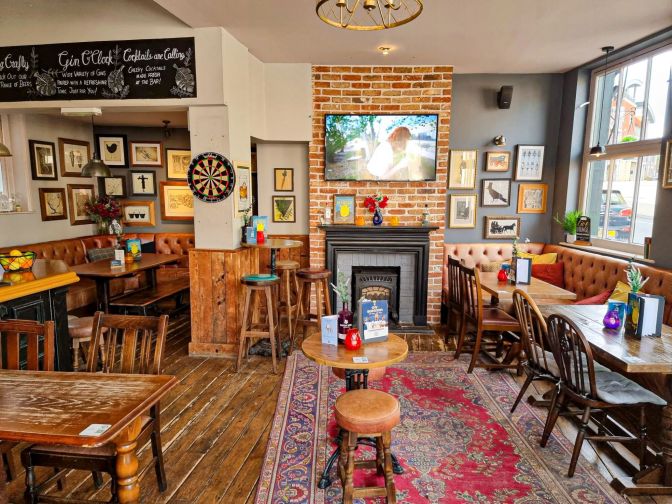
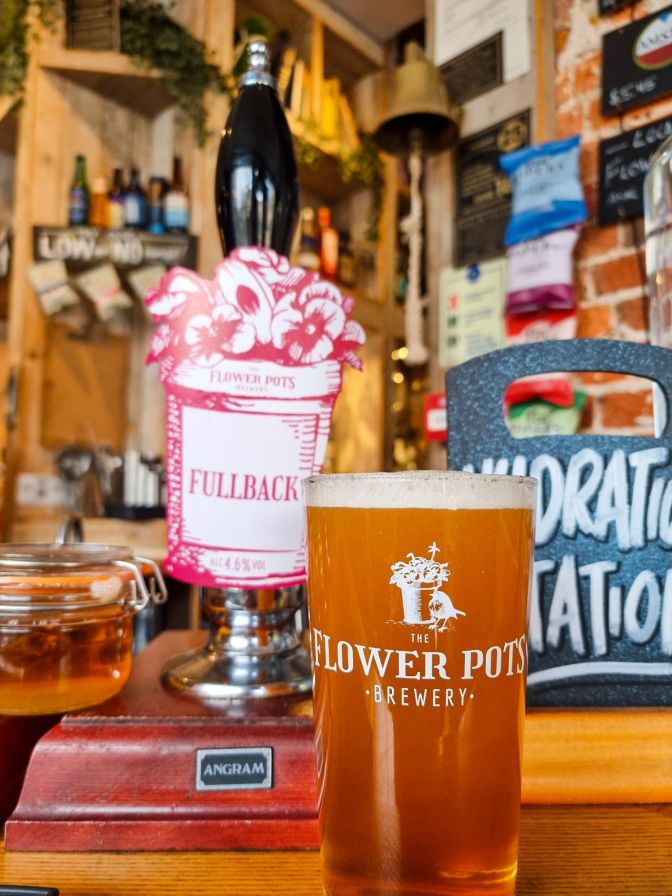
The final pub of the day brings us back to the Hyde neighborhood near where King Alfred’s body would have been buried at Hyde Abbey (see my previous post).
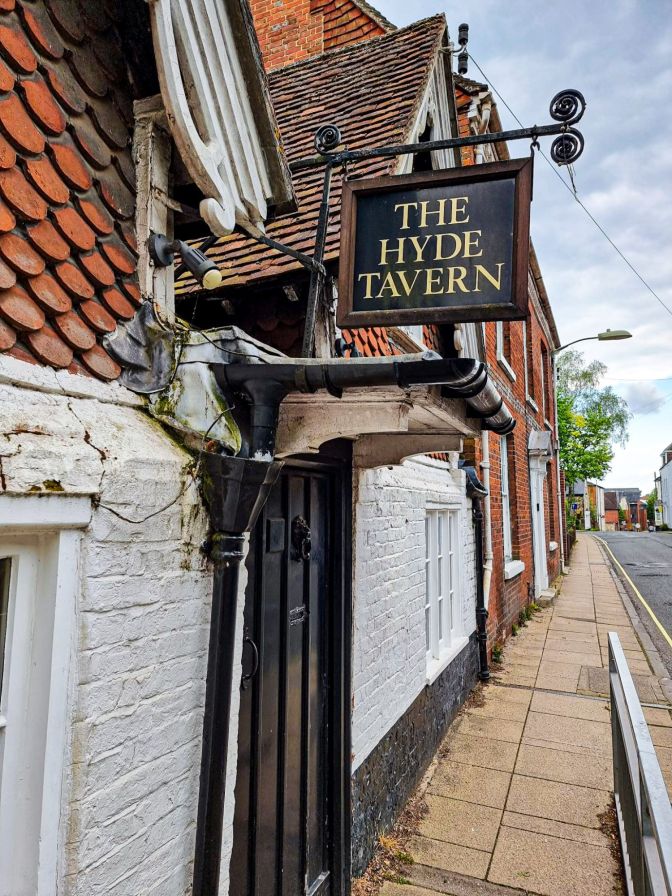
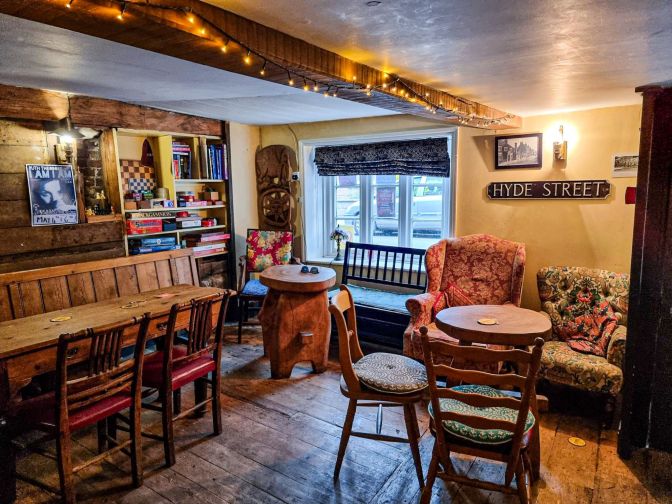
The Hyde Tavern
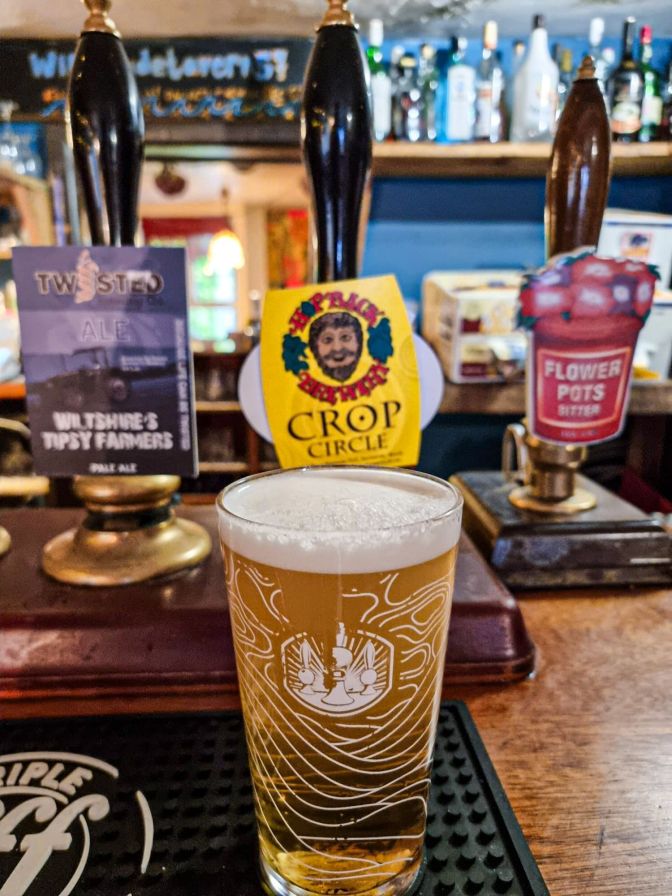
This cozy establishment gets the award for the quirkiest, low-ceilinged, uneven-floored charm in Winchester. You drop your marbles on this floor and good luck ever finding them again. The tap selection is also stellar.
Final Words
My, Winchester has a lot of nice pubs. And there were still two that I was saving for after the next day’s hike. How can I possibly over-hyperbolize such an amazing self-guided city and pub tour? I was up to my neck in Henrys but it all came together into a very satisfying buffet of cherry-picked snippets of history which tied in so well with my trip last year and the books I have been reading. The opening quote felt so appropriate and relatable. I am not sure I have experienced so pleasurably immersive of a journey through so many layers of a city’s history in a single consumable package than this day. With such a day to digest, the plans on tap for the following day would give me plenty of time to let these thoughts breathe as I would hike through the neighboring New Forest including a segment of the The Pilgrim’s Way. Which got me playing around with WordPress’s AI generated images.


Footnotes
- Winchester by Telford Varley (1910) ↩︎
- https://hospitalofstcross.co.uk/visiting-st-cross/ ↩︎

 itsabrewtifulworld