
“How did these same “few old stones” strike me on a first visit? It was one of the greatest disillusionments I ever experienced. Stonehenge looked small—pitiably small!”
Afoot in England by William Henry Hudson (1909)
Stonehenge, in one way or another, has been at the center of controversy for hundreds of years, not the least of which is in the variance of opinions regarding the impression it gives upon seeing it. As one author puts it, Stonehenge “often disappoints when first seen.”1 Stonehenge is a place best seen ignoring what you have read or what your friends have said and go into it with as pure a spirit of childlike wonder as possible. Several years ago during a short trip to London, I booked a seat on a tour bus and went to see it.
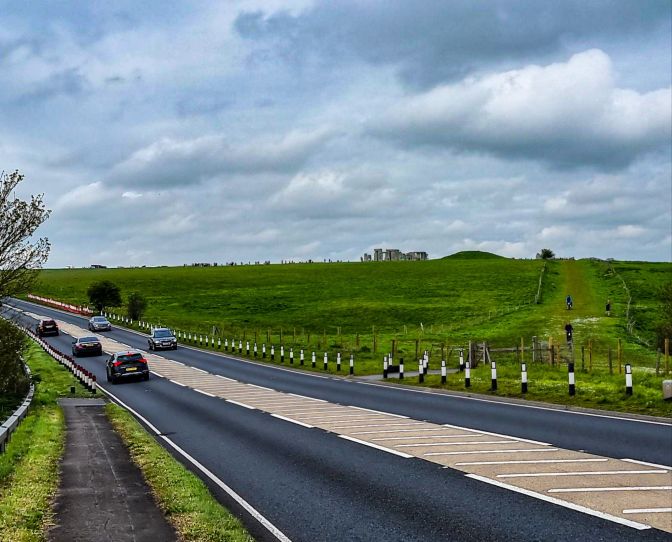
Stonehenge has always held an air of mystery for me from watching In Search Of episodes and reading cheesy books I would find in the school library where Stonehenge mingled on the fringes with UFO’s and Bigfoot. Later in life, Stonehenge would revisit my conscience via one of the best scenes of the movie This is Spinal Tap. Seeing it by a tour bus where you are shuffled off and on was, for me, not the right way to see it. It was too robotic of an experience. It was like seeing Stonehenge in the zoo. Stonehenge on film looks monumental and it is always presented with a sense of motion, whether because of a sweeping camera shot or the rising and setting of the sun occuring behind it. But in person, the sense of motion is gone and it is swallowed up by the vastness of the Salisbury plain. All that is left is what the experience means to you. When I got back on the bus that day, I acknowledged to myself that I’d seen it, check. But I knew it was hollow.
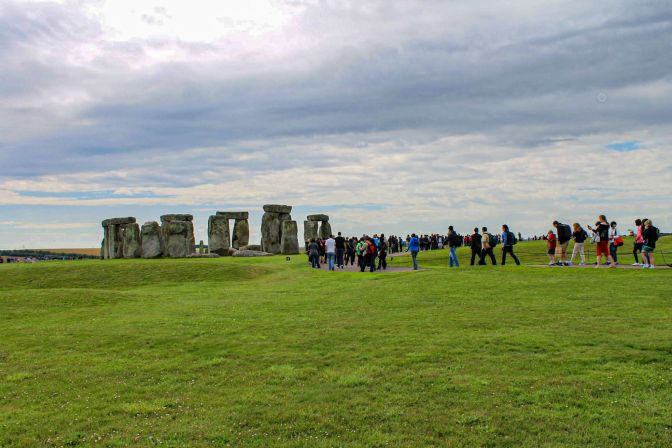
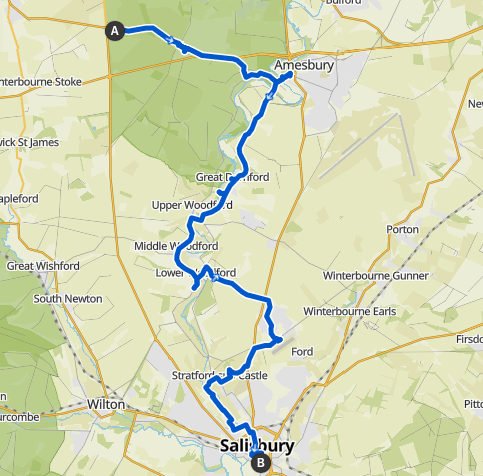
For many years, this memory sat in the throwaway bin of my mind. So on a windswept Sunday morning in May 2024, a taxi dropped me at the doorstep of the Stonehenge Visitor Center, and I set out to rekindle my childhood wonder and weave it into a proper memory. I was using Stonehenge as the starting point of a hike back to the city of Salisbury. Along the way, the hike includes a stop in the village of Amesbury, two classic pubs, one craft brewery taproom, and a brush with Salisbury’s former site, Old Sarum. And for good measure, there is also a Charles Dickens link to the hike.
Getting to Stonehenge from Salisbury
Google Maps will show you which public buses run to Stonehenge, but they take more than an hour. Taxis normally cost about 25 pounds and get you there in less than 30 minutes, but during my visit, the shortest route was blocked due to construction so the ride took about 45 minutes raising the price to about 40 pounds. Yikes. But in the end, the hike was well worth it.
“Stonehenge is unique whichever way one looks at it. In its age, its uncouth savage strength, and its secretiveness. That it will hold that secret to the end of time, notwithstanding the clever and plausible guesses of archaeologist and astronomer, is almost beyond any doubt, and it is well that it should be so.”
Wanderings in Wessex by Edric Holmes (early 1900’s)
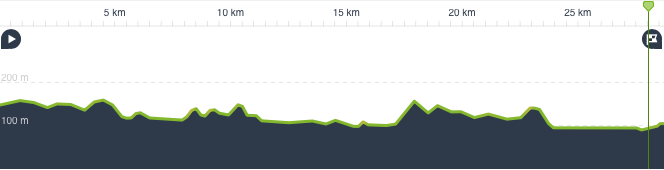
Hike Details
| Starting Point | Stonehenge Visitor Center |
| Ending Point | The White Hart Hotel |
| DIstance | 28.7 km |
| My Moving Time | 5h 55m |
| Comments | This is a day hike as most of my hikes are. But it has several places to stop for food and drink along the way. The train does not come through this area so there is no escape route except to call for a taxi or hitchhike. The terrain is not difficult but can be muddy in spots, so proper hiking shoes are recommended. |
It’s Not Just a Beer, It’s a Journey
Rather than take the shuttle bus from the visitor center to the Stonehenge site, I opted to do it by foot which accounts for the first 2.4km of the hike. But this gives you the perfect atmosphere and allows you to soak in the surrounding scenery. Strongly recommended.

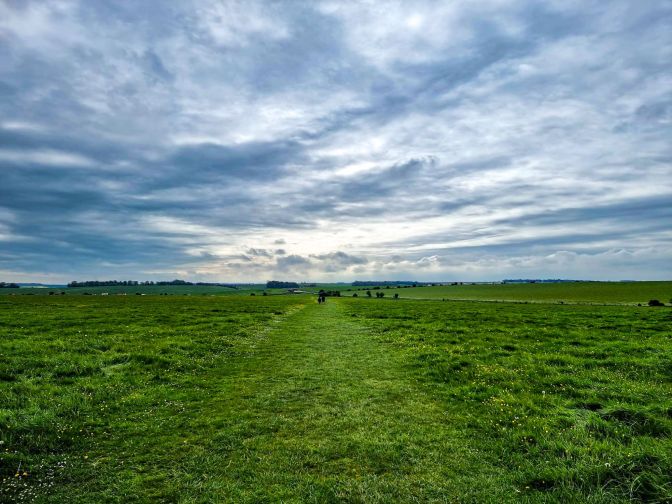
Stonehenge
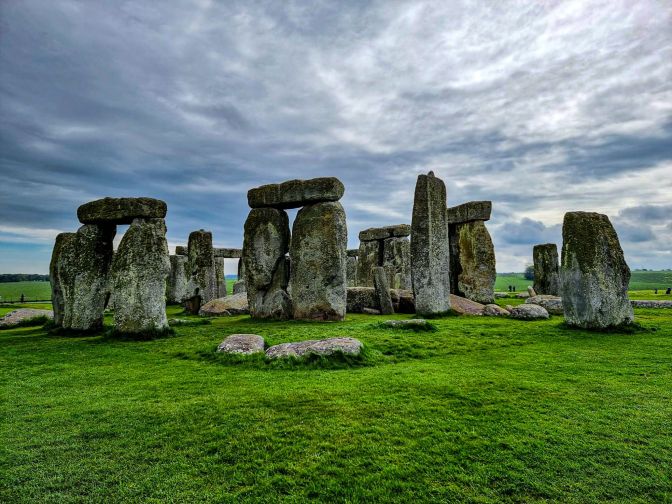
I am not going to bore you with rote historical details that you’ve read a thousand times. However, humor me for a moment on one point and that is regarding the controversy about the origin of Stonehenge. I have always grown up with the foregone conclusion that it came from ancient Britons, called the Druids. It was interesting to find a book written in 1655 by an architect named Inigo Jones which has a title peppered with a bit of sarcasm “The most notable Antiquity of Great Britain, vulgarly called Stone-Heng, on Salisbury Plain.” In this book, Jones claims to have “proved from Authentick Authors, and the rules of Art, Stoneheng anciently a Temple, dedicated to Cœlus, built by the Romans”. I had never heard the theory that it was a Roman site. Apparently, this book stood for some 85 years as the presiding scholarship on the matter. Then in 1740, a response to Jones’ claims was written by William Stuckley, Rector of All Saints in Stamford, called “Stonehenge A Temple Restor’d to the British Druids” where he writes:
“It was very disagreeable to me that I was forc’d to combat against a book publish’d in the name of the celebrated Inigo Jones, for whose memory I have the greatest regard. I wonder the publisher of that work did not think of a very easy method to convince himself that he was in an error.”
Yet today, neither of these theories is the predominantly accepted one. Both of these books can be found on the fantastic website Project Gutenburg.
As for seeing Stonehenge, don’t bother with an audioguide, if you want to know which stone is the Heel Stone, simply buy a beer from the giftshop. My childhood wonder was firing on all cylinders now.

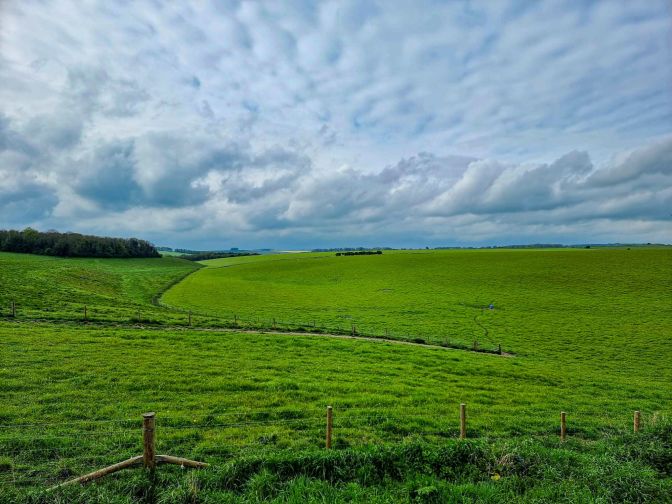
After carefully crossing the busy highway, the hike passes through some farmland towards the nearby village of Amesbury.
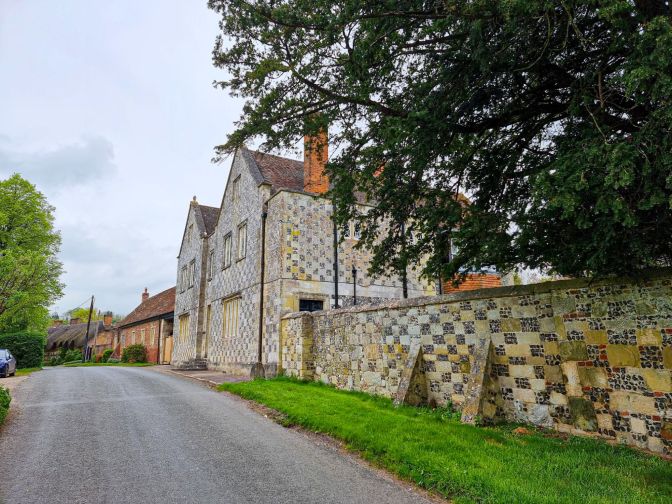
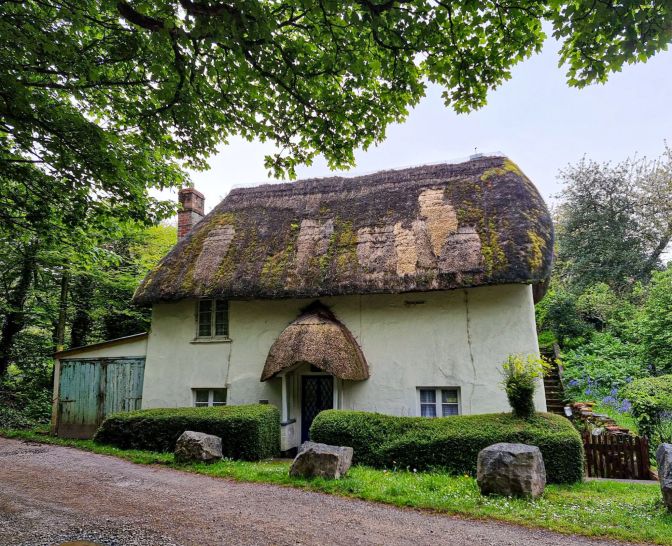
Mr. Pecksniff’s House
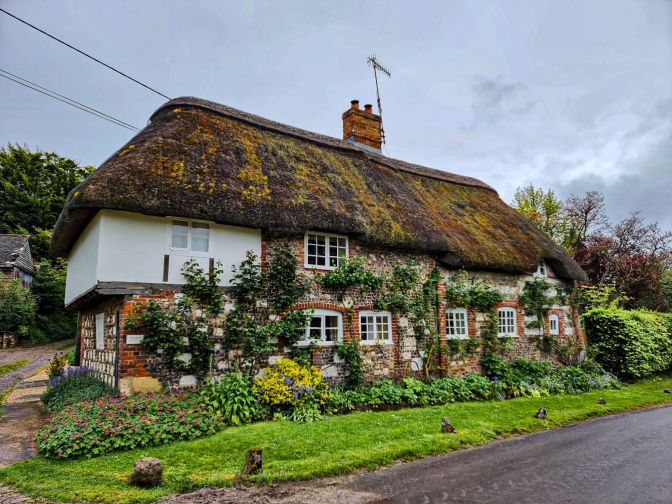
Arriving to Amesbury, one crosses into the semi-mythical world of Dickens Country. This part of Wiltshire including Salisbury was the key setting for the novel Martin Chuzzlewit. As usual, Dickens mixed real locations with imagined and the home of Mr. Pecksniff, an architect who takes in Martin as a pupil, is one of them. In The Real Dickens Land by H.Snowden and Catherine Ward (1904) they claim to have “located Mr. Pecksniff’s house on the road to Wilsford” but a few paragraphs earlier, the authors admitted that the house was one “we have selected for Mr. Pecksniff’s”. Wishful thinking but nevertheless fun. I wonder if the current owners even realize. You can find a poorly rendered scan of the photo provided in the book from the online version of The Real Dickens Land on page 156. This house like many structures including the churches are built predominantly from flint stone which you find all over the place in the Salisbury Plains.
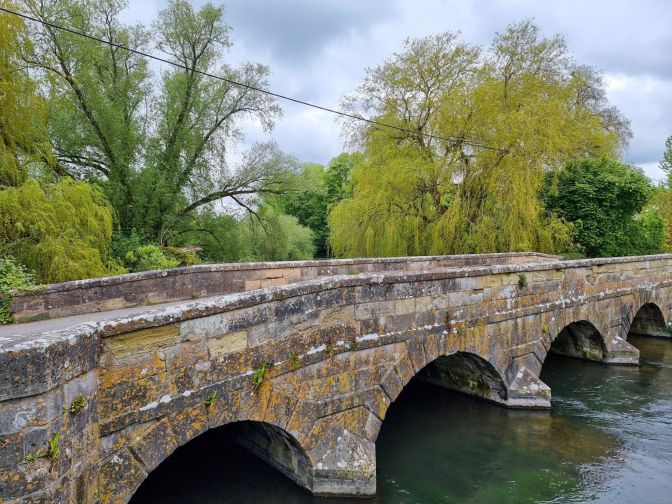
Turnpike House
The Real Dickens Land also indicates this small cottage which is situated near the Amesbury bridge as the Turnpike House where Tom Pinch, Pecksniff’s apprentice, is greeted by the Tollman and his family.
St. Mary and St. Melor Church
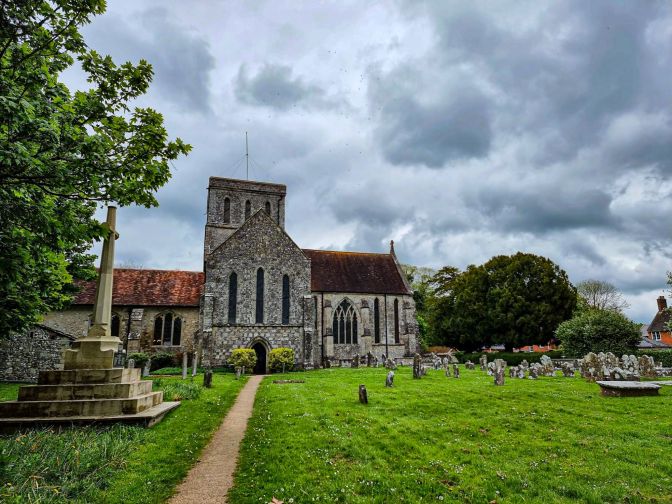
This church is all that is left of a former abbey made famous in the legends of King Arthur as the abbey where Lady Guinevere took refuge after her affair with Sir Lancelot was discovered. According to The Real Dickens Land, this is also the church where Tom Pinch played the organ.
“Almesbury, where Guenever died a nun, is a town in Wiltshire, seven and a half miles from Salisbury, where may still be seen the ruins of its celebrated abbey. The name was originally Ambrosebury, then Ambresbury, and lastly Amesbury, as it is now spelt.”
Essay included in an 1893 version of Le Morte d’Arthur by Sir Thomas Malory (15th century)
The George Hotel
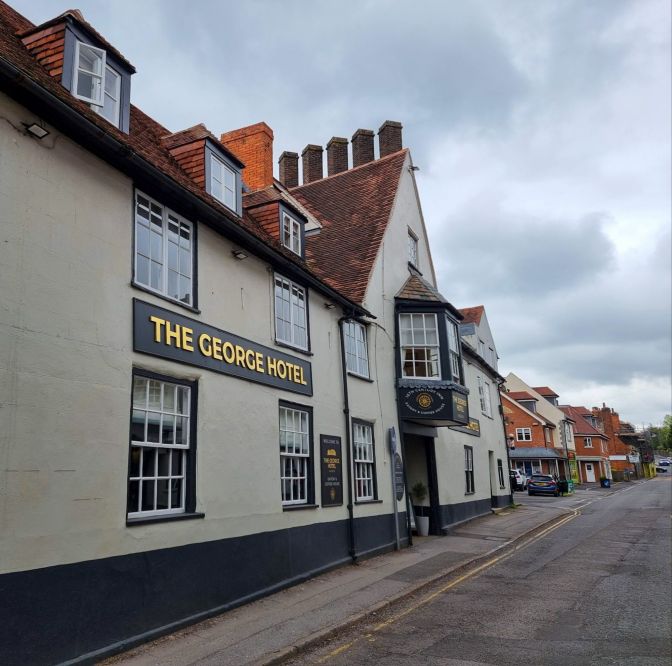
Of course, if there is a village described in a Dickens story, there is always an inn associated with that village. In the book, it is called The Blue Dragon and it is associated by several authors with the most historic inn in Amesbury, The George Hotel.
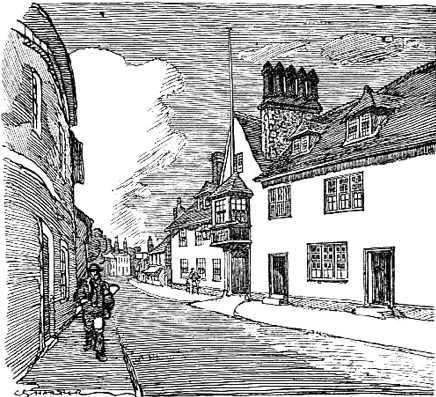
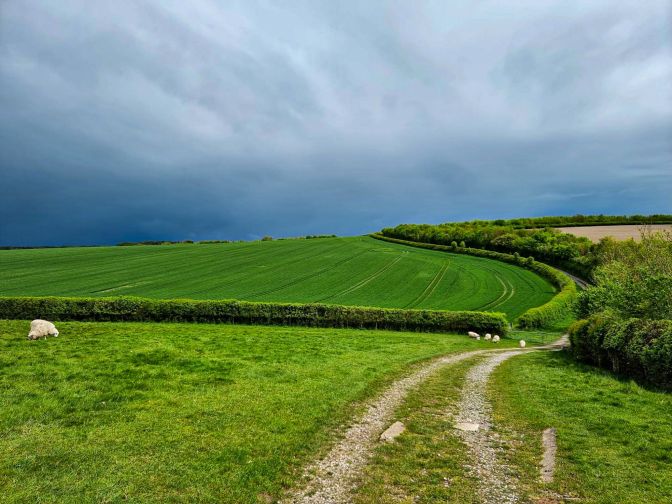
While strolling through Amesbury, the clouds started to release a fine drizzle which deterred me from visiting one of the open pubs for a much-too-soon beer and bite. I was afraid that the weather would make it harder to carry on if I already took a long break. So I put on a rain jacket and headed into the countryside. Fortunately, the drizzle was short-lived.

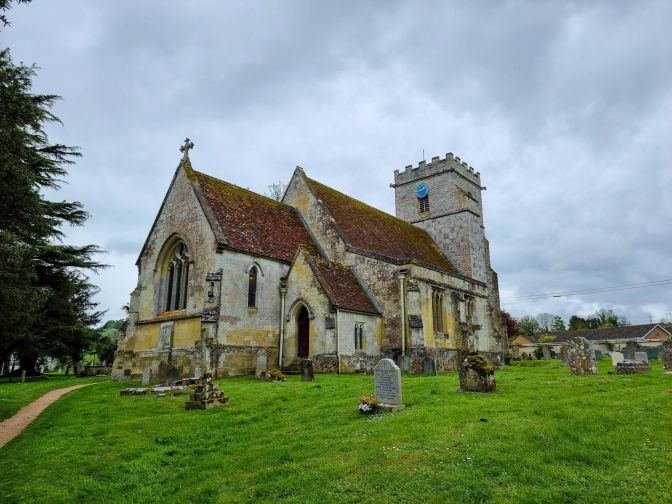
The next village is Great Durnford where you find a cozy little church, which was holding an Easter egg hunt inside it when I took a peek inside.
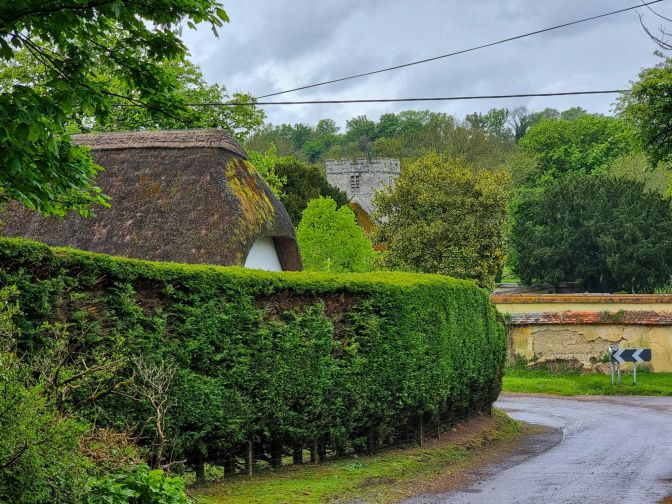
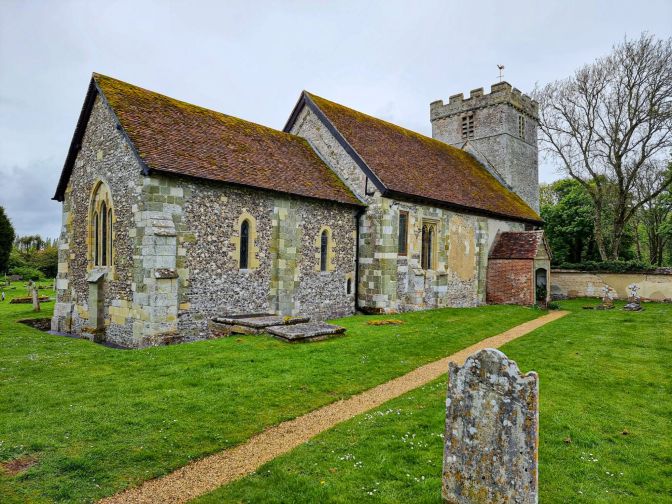

Shortly thereafter, the drizzle returned just in time for me to arrive and have lunch at the first pub of the day.
The Bridge Inn
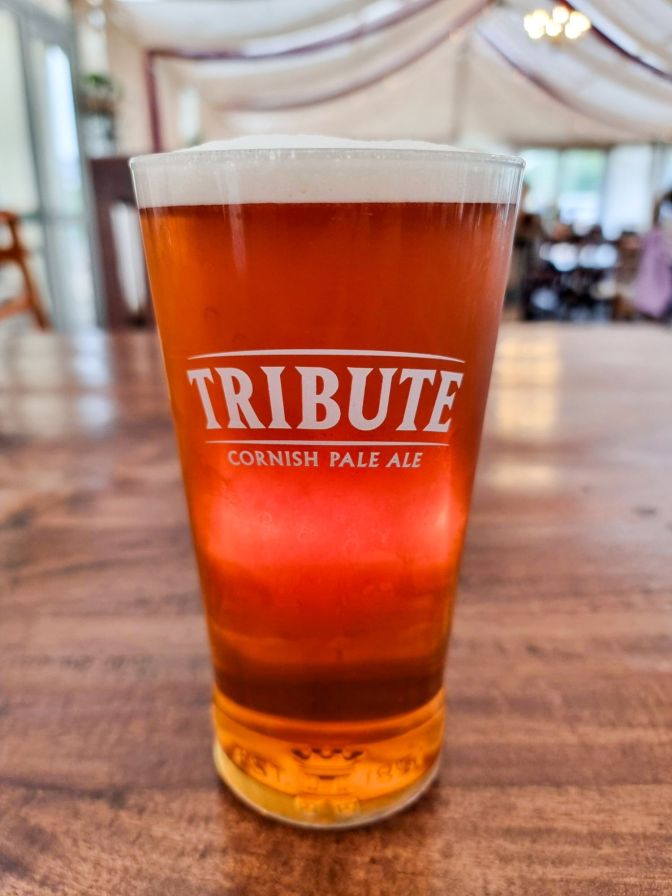
It was Sunday and a word of caution about these remote village pubs. Sunday is roast day for pubs. The Sunday roast means good hearty home-cooked style food, and the pubs get very busy. When I arrived, the restaurant was packed, and you could tell everybody knew everybody. Some were dressed in their Sunday best. The hostess seemed a bit annoyed that I showed up out of the blue without a reservation but fortunately could tell that I had come a long way by foot. She found a spot for me across the street in a tent they had set up to accommodate the crowds. If you are hiking on a Sunday, I would recommend making reservations.

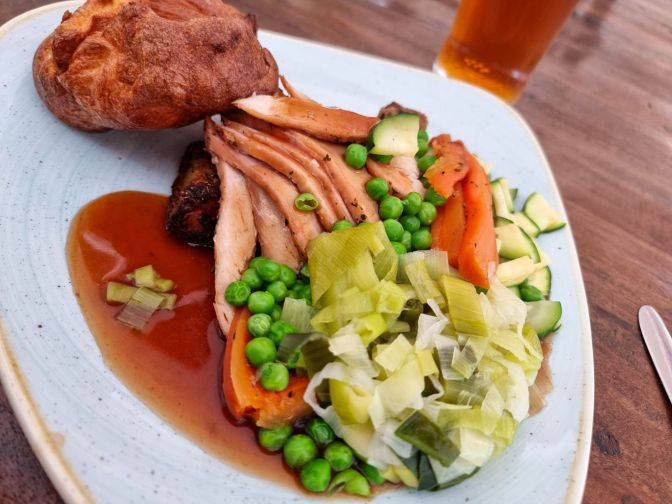
With a satisfied tummy full of roasted chicken and vegetables, I continued on through Middle Woodford and arrived into Lower Woodford for the second pub on my list.
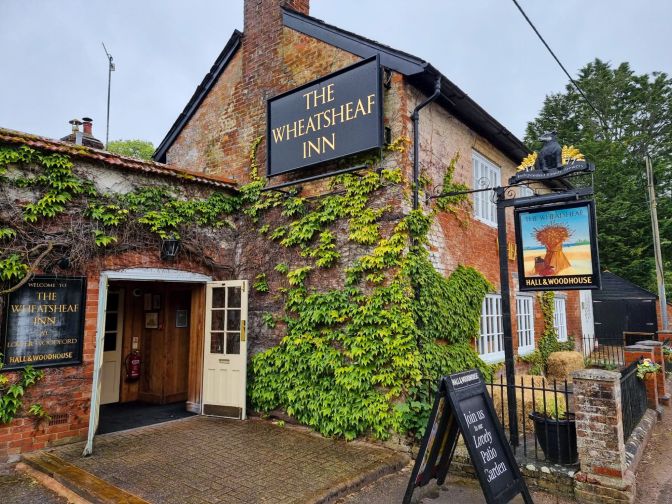
The Wheatsheaf Inn
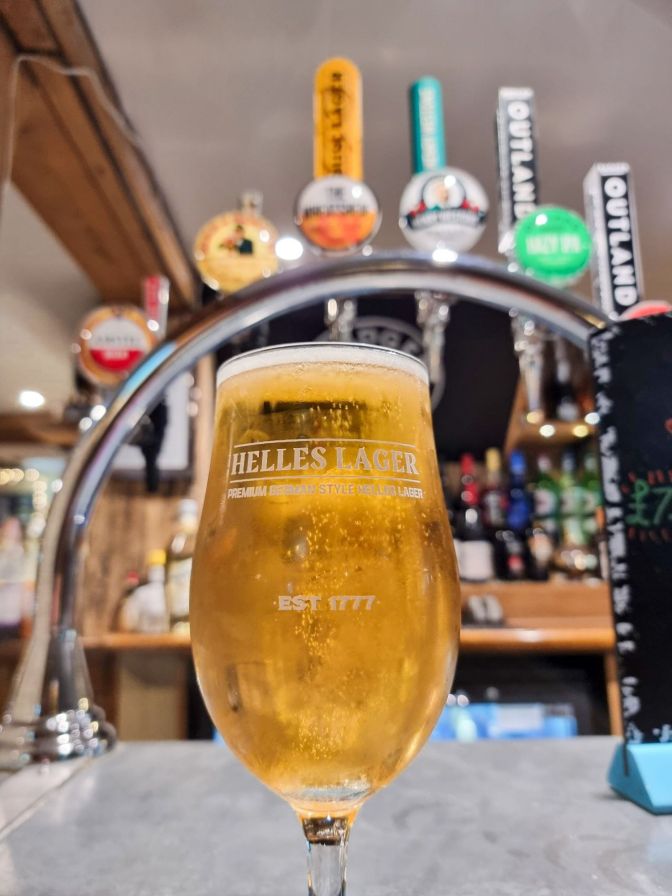
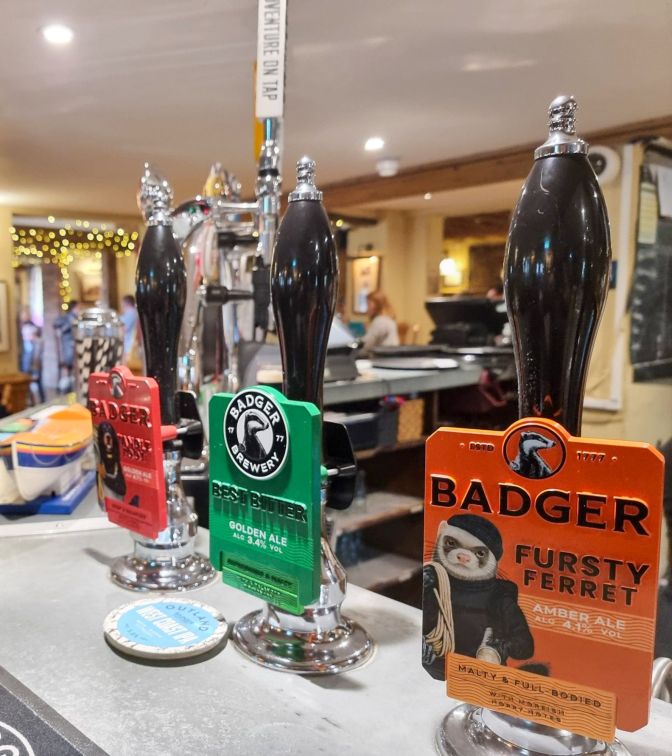
This beautiful inn looks small and cozy from the front, but has several rooms off to the back and is actually quite large. It was also buzzing from the Sunday roast crowd, but I was able to find a seat at the bar. I ordered their house lager. They had a whole row of taps from Badger Brewery which I wanted to try, but I still had quite a ways to go and the weather was constantly a threat.
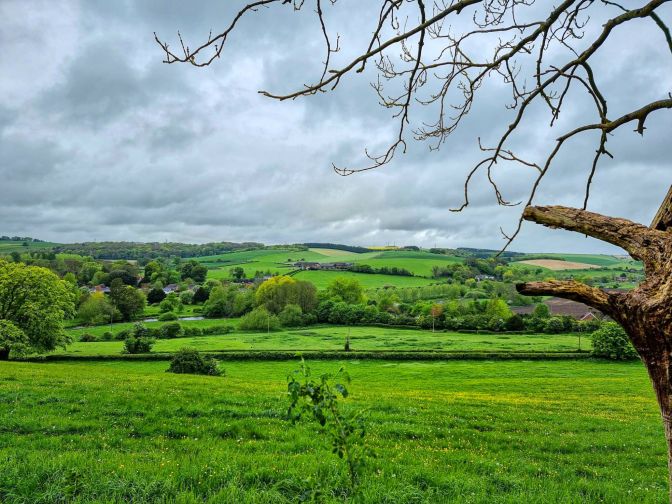
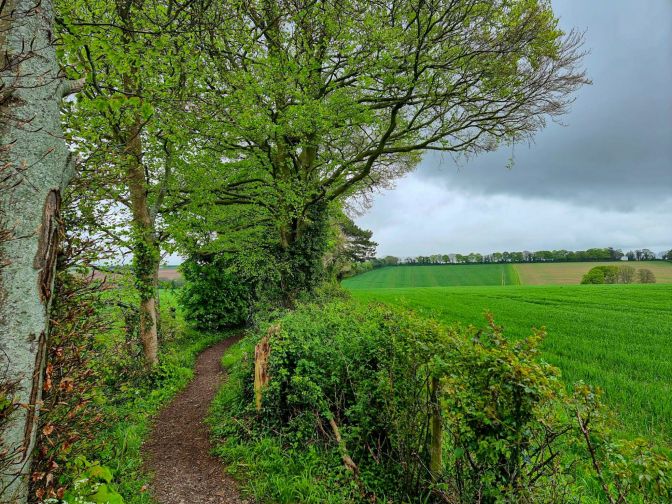
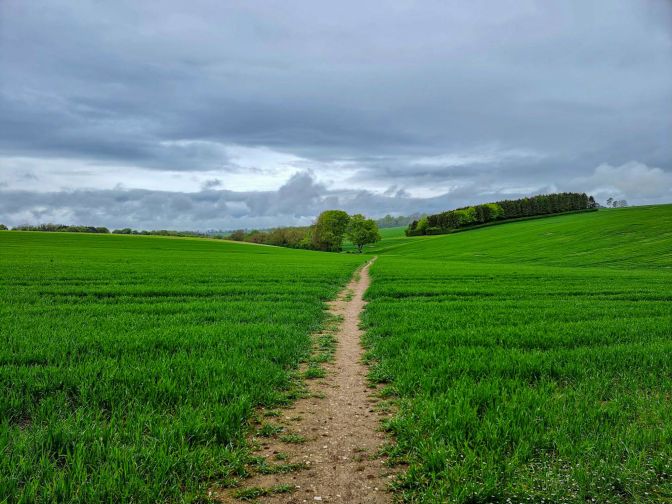
The hike follows some lonely but picturesque paths across the plains towards the village of Old Sarum (not to be mistaken for the historical site).
Dark Revolution Brewery
Great taproom where I had the Let’s Dance, Rave On, and Yonder Double Scoop. Yes, I was ready for the final stretch of the hike.


Old Sarum
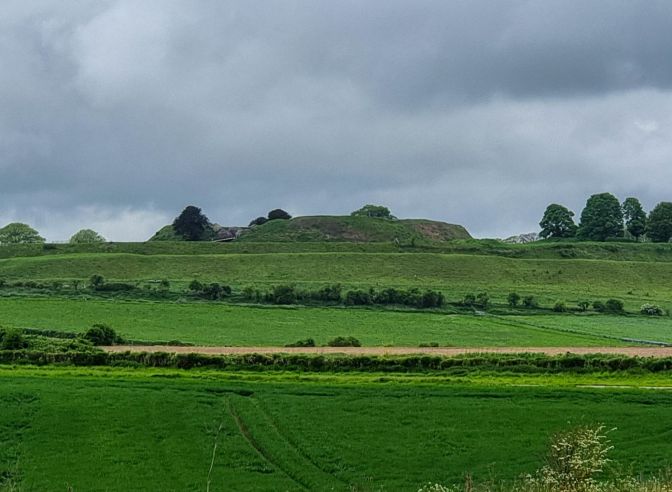
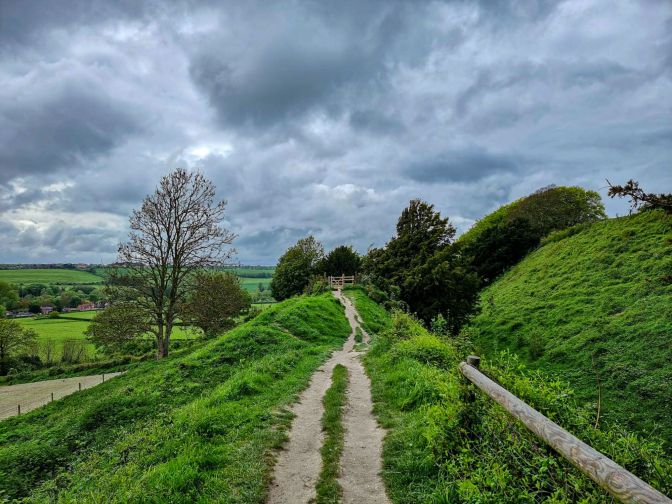
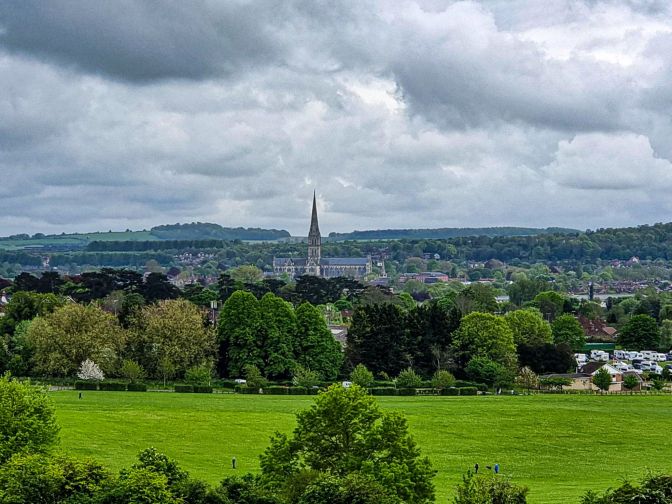
Old Sarum was the former site of the city of Salisbury before it was moved to the river plains of the Avon River starting in 1216. It was already after 5pm and it was not possible to explore the ruins, but I could follow the path along the old outer wall on my way back to Salisbury.
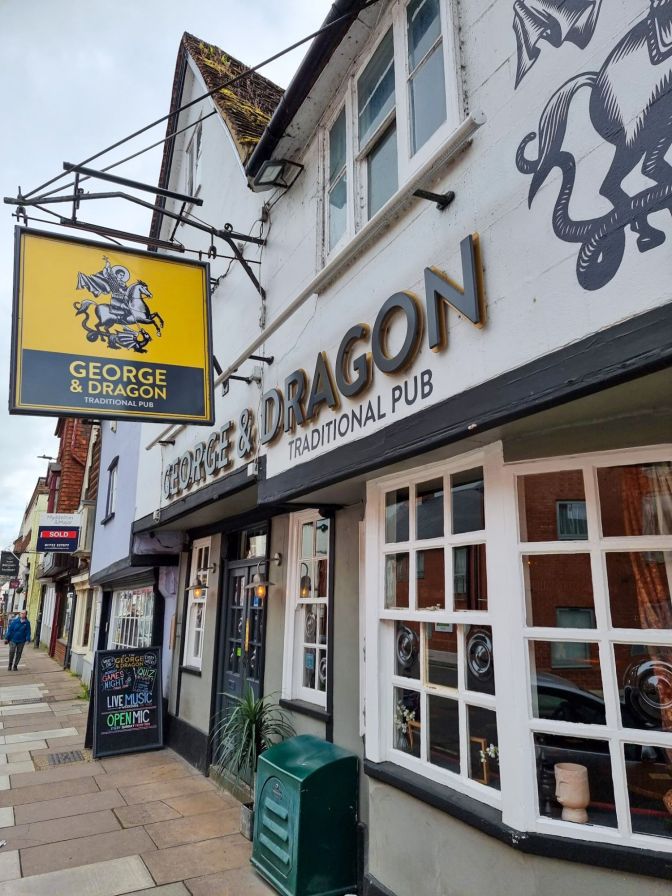
The George & Dragon
Back in the city, it was time for a couple of celebratory beers starting with this nice well-rounded pub.
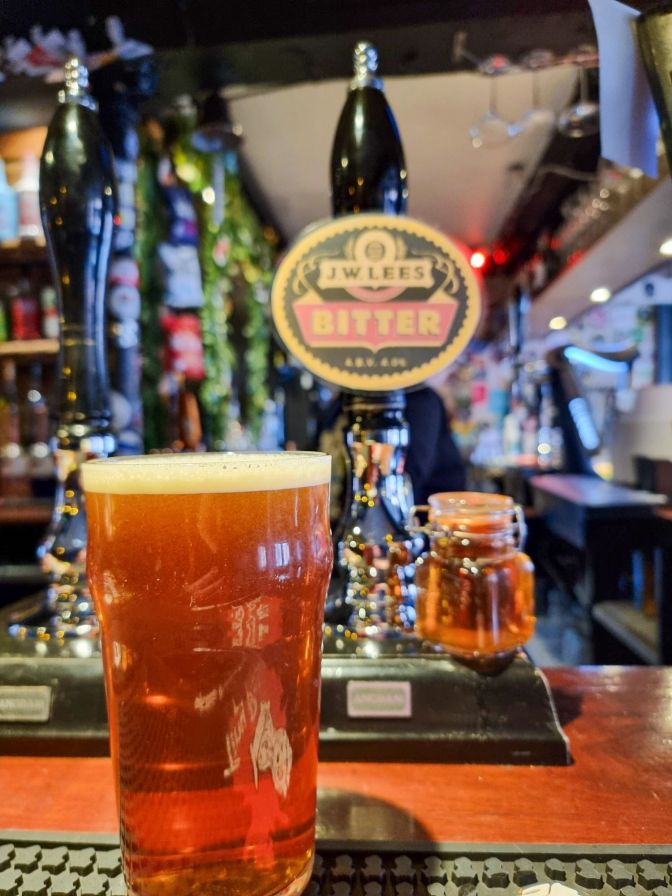
Sips
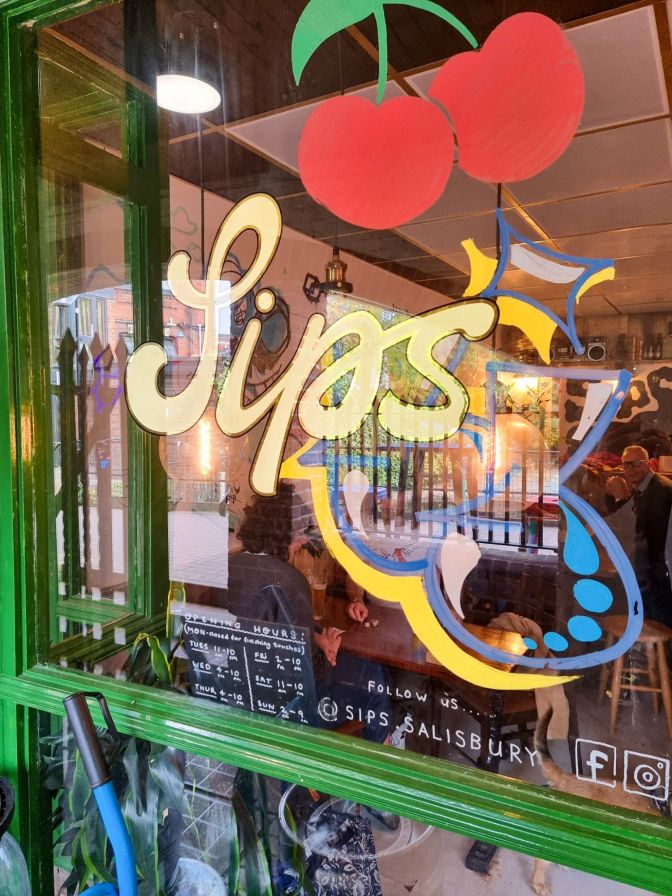
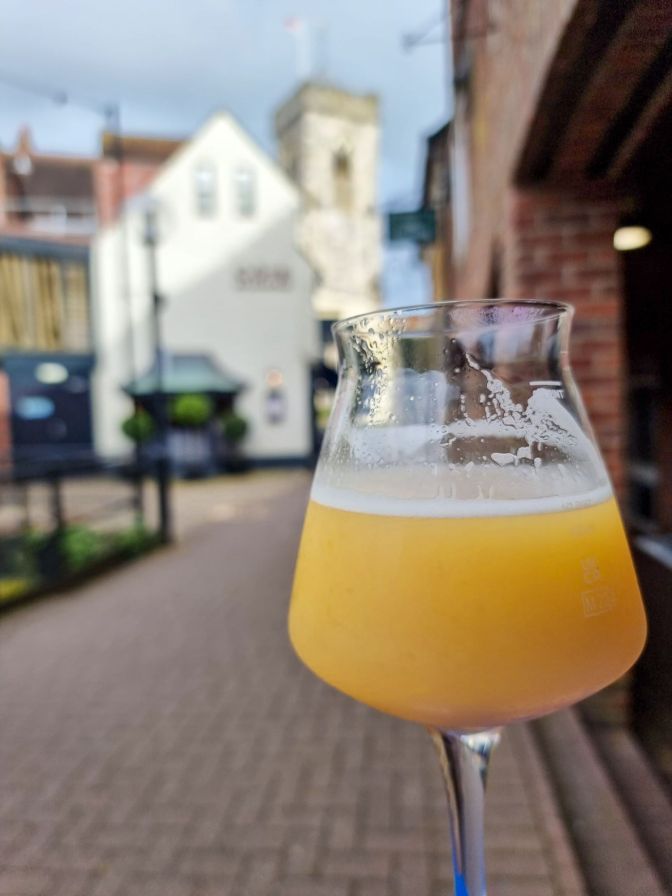
Sips is a top notch craft beer bar with an extensive selection on tap, a well-stocked shop, and scenic seating outdoors.
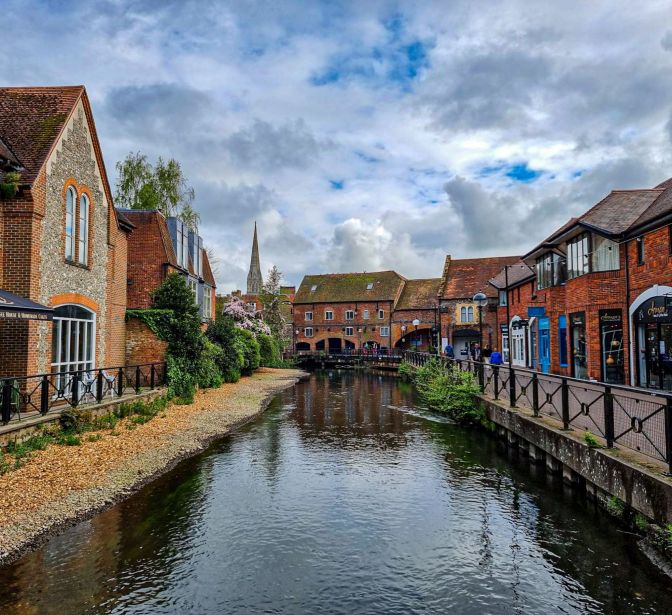

The Hike Conclusion at The White Hart
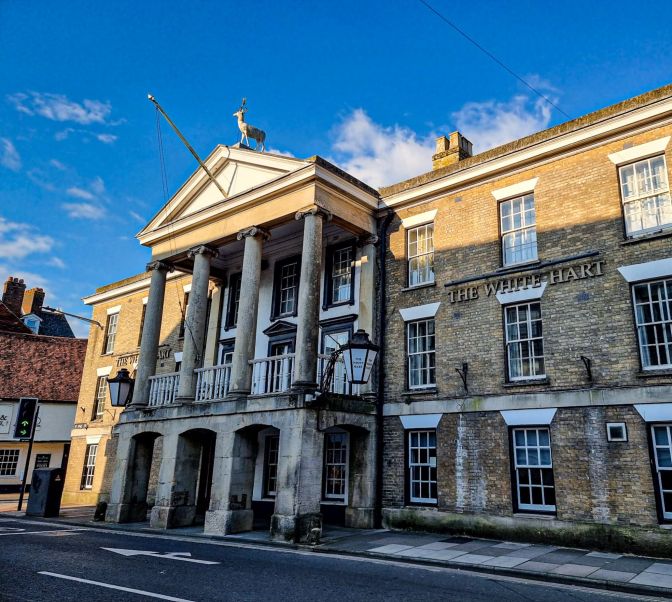
“A spirited account of the walk of Martin and Tom from Amesbury to Salisbury, ending at this inn (The White Hart), is given in Chapter XII.”
The England of Dickens by Walter Dexter (1925)
If you believe that Dickens intended Amesbury as the home and workplace of the character of Mr. Pecksniff, then the hike I just completed (minus the detour to Dark Revolution) would have come very close to matching the route of Martin Chuzzlewit and Tom Pinch. Along the way, Martin cheerily expounds on his preference to walking over the horse and carriage, which he calls a gig.
“Better than the gig! No man in a gig could have such interest in the milestones. No man in a gig could see, or feel, or think, like merry users of their legs. How, as the wind sweeps on, upon these breezy downs, it tracks its flight in darkening ripples on the grass, and smoothest shadows on the hills! Look round and round upon this bare bleak plain, and see even here, upon a winter’s day, how beautiful the shadows are! Alas! it is the nature of their kind to be so. The loveliest things in life, Tom, are but shadows; and they come and go, and change and fade away, as rapidly as these!”
Except from Chapter XII, Martin Chuzzlewit by Charles Dickens
I could not possibly describe the pleasure I took in my own hike any better than Dickens did in the above passage. For the first time, the mystique that Stonehenge held in my youth has been properly enhanced in my modern memory. Now it comes with the lush green rolling plains, the sound of my footfalls on flint covered earth, the pattern of flint stones churned up from these fields and turned into stately homes and church towers, the clatter of locals enjoying their Sunday gatherings at their cozy inns, and the crystal clarity of the Avon River as it accompanies travellers and leads them on a meandering path through this beautiful landscape. It is a hike that will sit in my own personal pantheon of greats. These thoughts and more lingered in my mind the following morning as I boarded the train for my next destination, Winchester, as the clouds once again continued to mask their smiles and frown down upon me.


 itsabrewtifulworld