
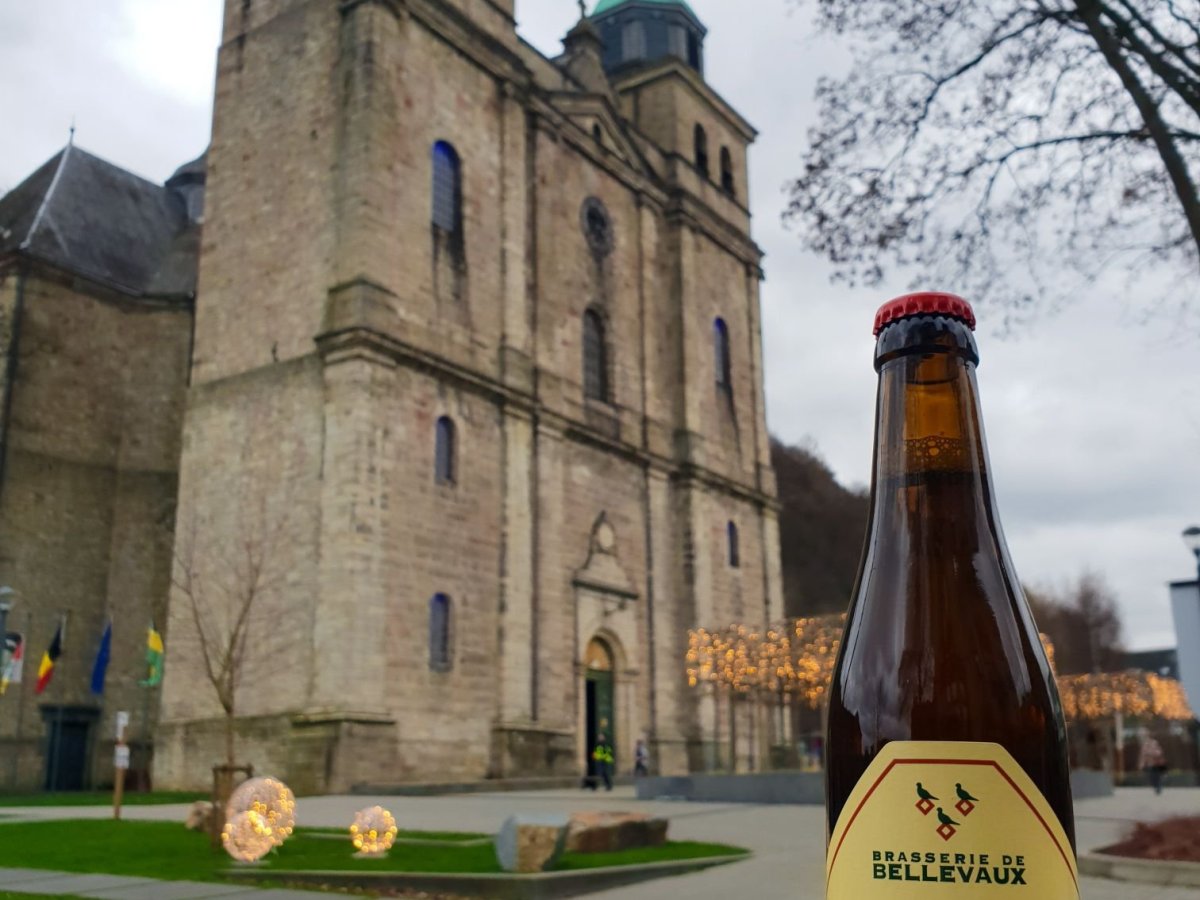
December 2020. That first Winter during covid was a mild one here in Belgium. Or that’s at least how I remember it. Amidst the dreariness of living with closed pubs and restaurants, the senses which were dulled by this also served to enhance the ones which remained. Appreciation of nature and of physical activity became the height of joy. I did a flurry of hikes that Winter, some anchored by brewery cafes which sat hauntingly dormant, evoking only the sound of rustling leaves in the wind rather than clinking glasses and laughter.
Today, over three years have passed and some of those hikes and missed opportunities have started to rise out of the slumber of my memory. They whisper like ghosts in the shadows; souls wandering in the purgatory of my psyche, unable to rest until their quest is finished. One of these was a hike involving the Brasserie de Bellevaux.
Beer & Hike: Brasserie de Bellevaux
Another December, another trip to Battle of the Bulge country. This time I take a closer look at the complex history of eastern Belgium.
Continue reading Beer & Hike: Brasserie de Bellevaux

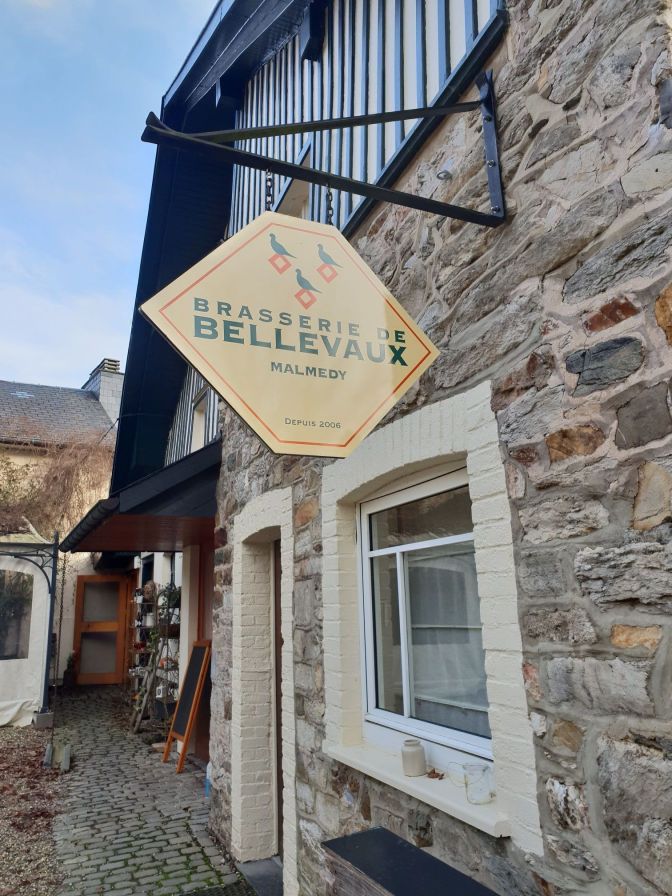
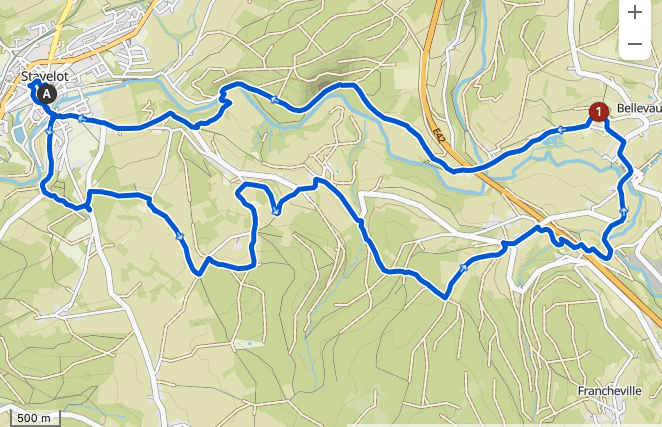
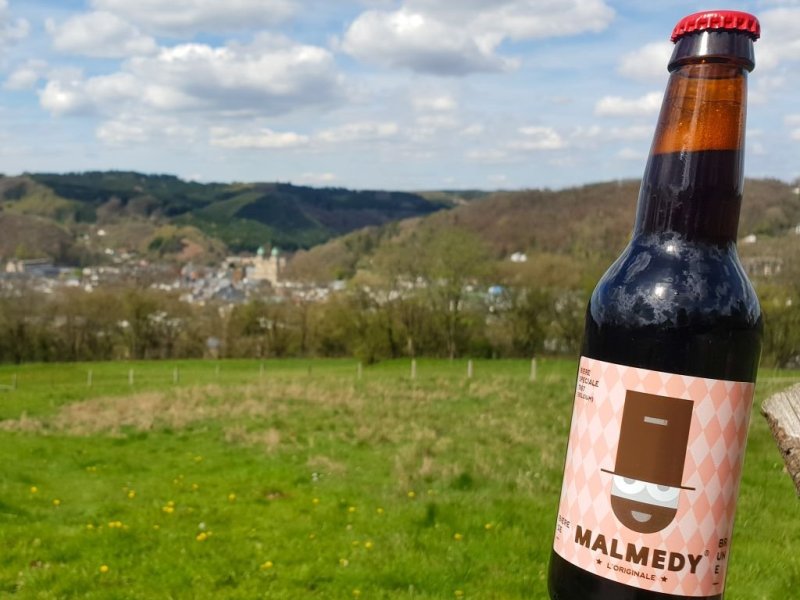
Brasserie de Bellevaux, in the tiny hamlet of Bellevaux, is one of the most geographically advantageous breweries in Belgium for lovers of the outdoors and the Ardennes. It sits nestled in the hills almost equidistant from the two major towns in the region, Malmedy and Stavelot. It can be reached by multiple popular hiking trails as well as roads which are renowned to cyclists. This allowed me to compose a completely different hiking route rather than following in my footsteps from December 2020. I would start this time from the village of Stavelot.
“Stavelot deserves attention. It dates from 651, when St. Remacle established himself and a Benedictine abbey, remains of whose tower still stand. It is a small, industrial town… and makes a capital centre for excursions in exhilarating country.”1
Hike Details
| Starting/Ending Point | Stavelot Free parking along the Basse Cour |
| Distance | 19.2 km |
| My Moving Time | 3h 55m |

It’s Not Just a Beer, It’s a Journey
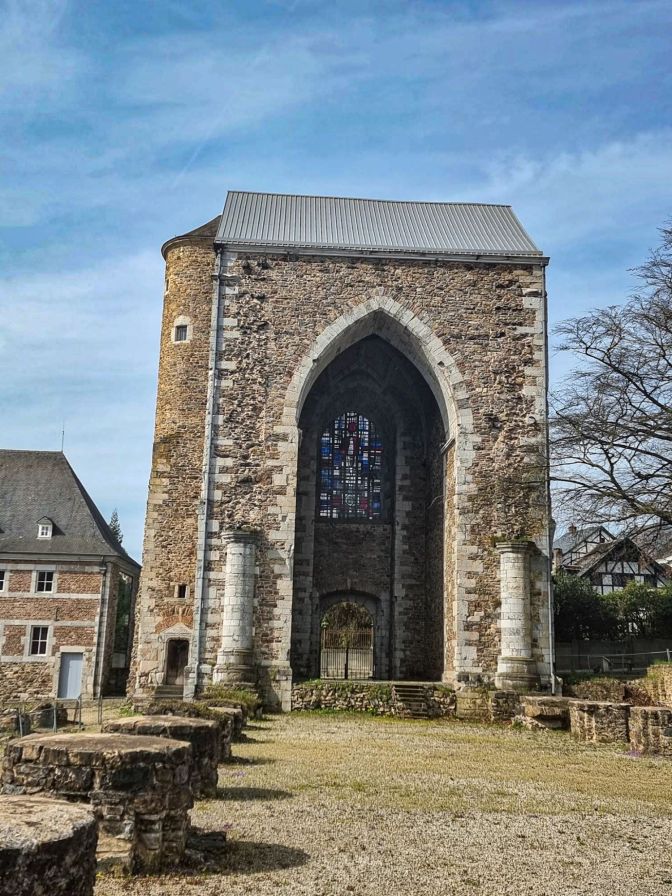
The hike starts at Stavelot’s most important site, the ruins of its abbey. Stavelot was part of an independent principality called Stavelot-Malmedy which consisted of two abbeys started by St. Remacle in 651. This independence remained until after the French Revolution when the abbey was destroyed.

Beer & The Bulge: Malmedy Massacre
What in St. Remacle are Boches? Malmedy is a place associated with one of the atrocities of WWII. Like the rest of its history, it adds to its complex identity.
Continue reading Beer & The Bulge: Malmedy Massacre
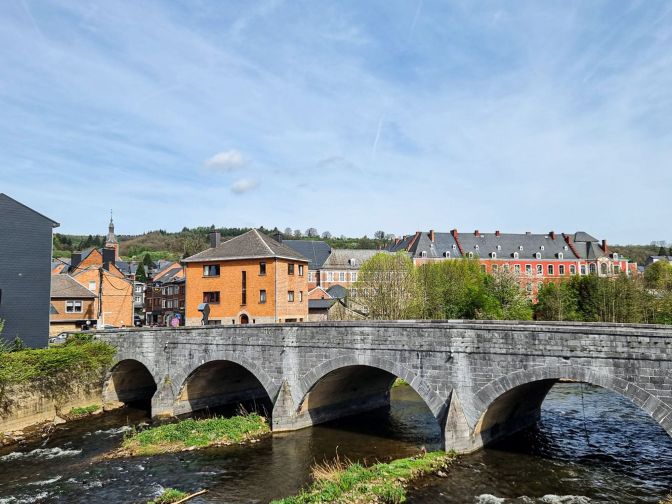
Behind the abbey, the hike crosses over an old bridge where one finds the city guarded on its southern side by an American half-track from World War II.
American Half-Track & Civilian Memorial
On the morning of December 18, 1944, a patrol of the US 526th Armored Infantry rode several of these half-tracks up the hill on the southern side of the bridge. They were completely unaware that they were about to ride headlong into Kampfgruppe Peiper fresh off the events of the Malmedy Massacre. All of the half-tracks were destroyed but some soldiers survived and made it back to Stavelot.2
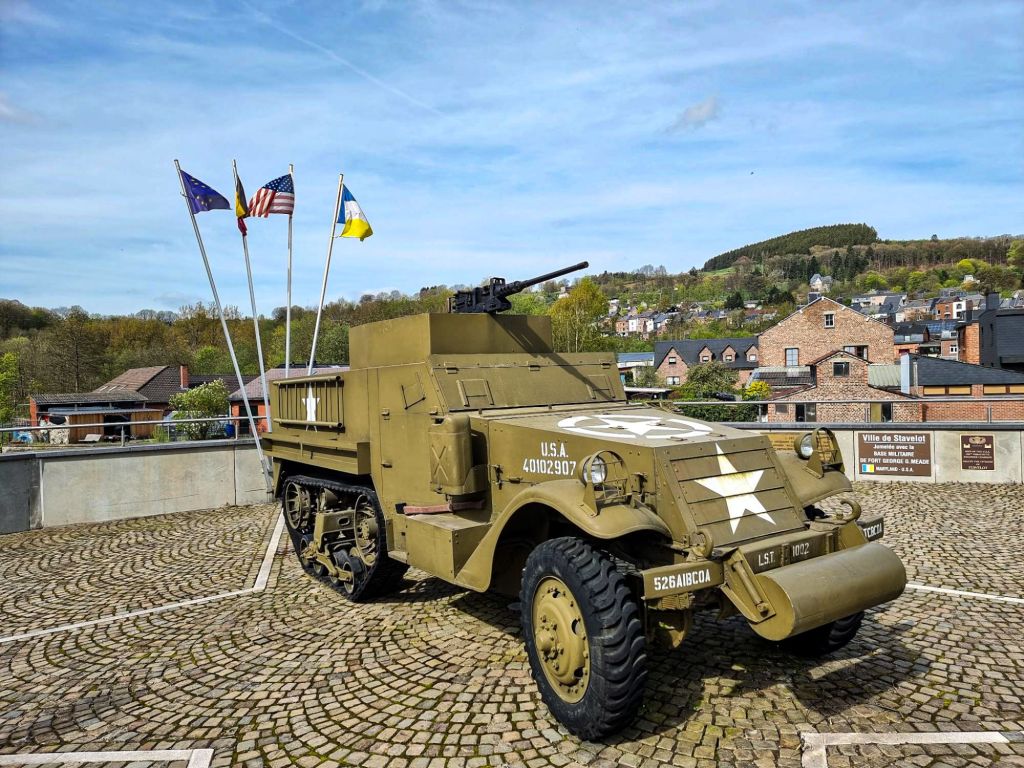
Due to the American’s failure to blow up the bridge, Kampfgruppe Peiper made it across and into the town. His men then went on a killing spree which was right out of a scene of an exploitation movie. Picture an SS officer “laughing hysterically”3 and shooting into the homes. Peiper and his men would later claim that civilians were firing upon them and that his men believed the homes were harboring American soldiers4. A memorial near the half-track commemorates the 138 civilian victims.

The hike ascends up a different road (but will come down Peiper’s route at the end) and then veers off into the woods uphill.
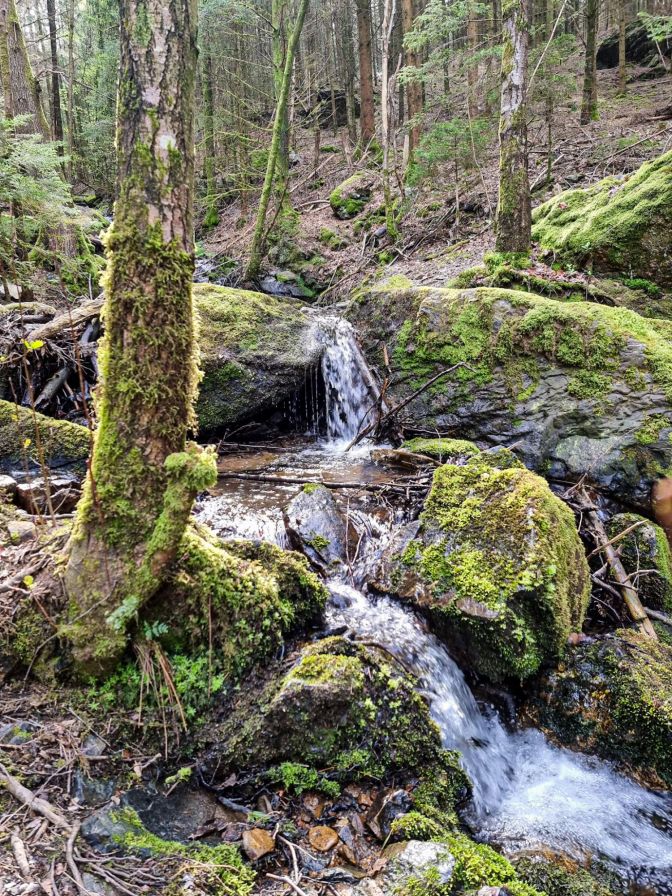
At the top of the hill may be one of the most sacred memorials in all of Belgium. A monument to perhaps their greatest athlete.
Eddy Merckx Monument
The roads and hills of the Ardennes are the proving grounds for Belgian cyclists. Nobody represents the tenacity and spirit of the Belgian cyclist than its 5-time Tour de France winner, Eddy Merckx. On this rare beautiful Saturday in April, cyclists were out in force to test their skills on the hills where Merckx did his training.
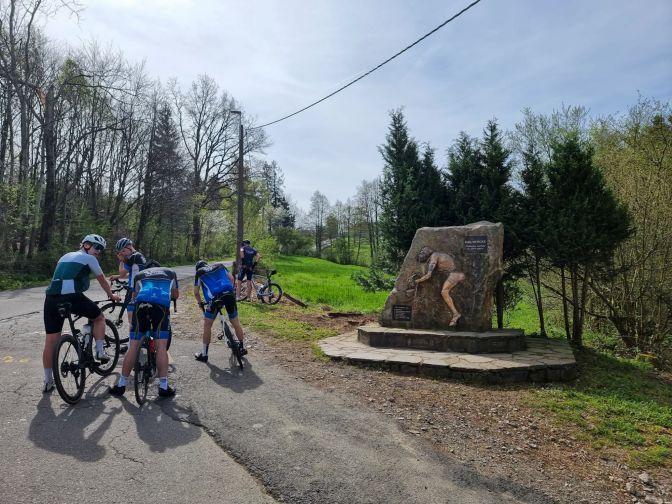
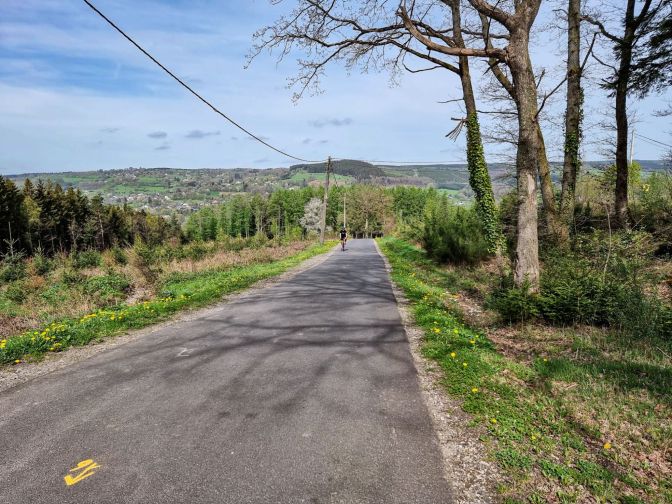
After paying a hiker’s respect to the ultimate Belgian cyclist, it was off into the beautiful countryside.
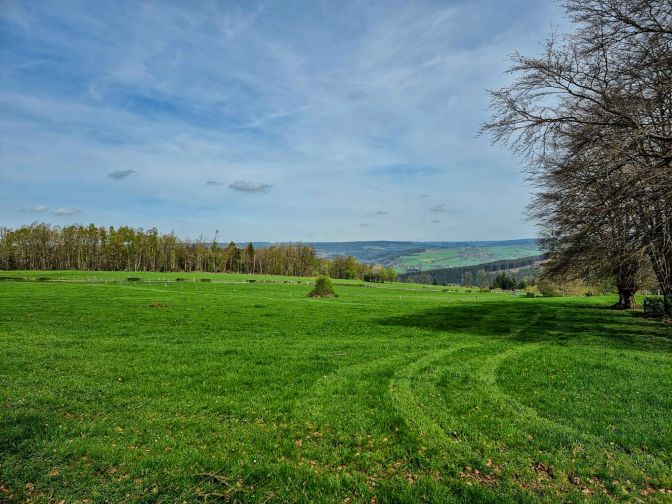
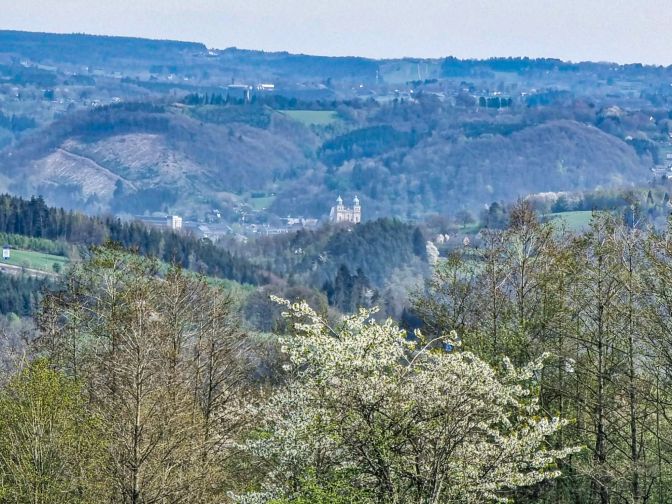
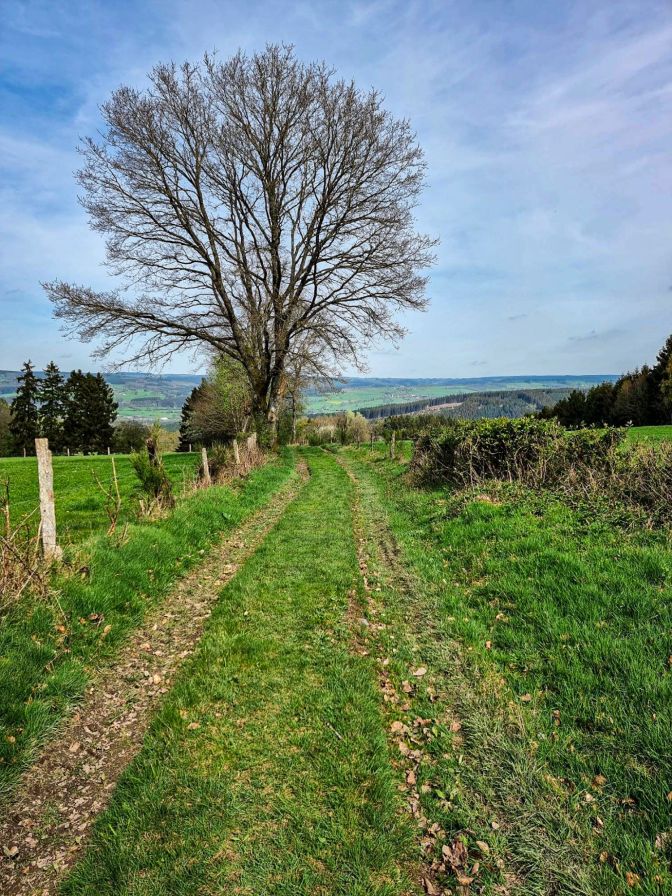
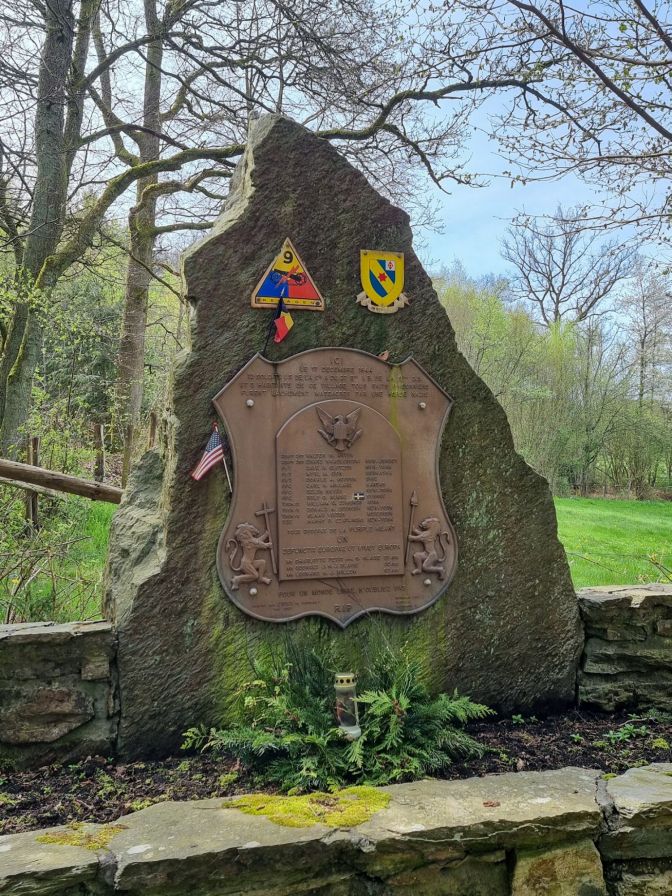
Just inside the edge of a forest near the village of La Vaulx Richard and situated away from any road where passersby can see it stands a lonely memorial stone.
Memorial to 27th Infantry Battalion & Civilian Casualties
On the spot of this stone were found twelve executed soldiers and three civilians who were murdered on December 17. One of the emblems above the plaque mentions Remagen, which was the German town with the bridge over the Rhine river secured in March 1946 by the same battalion.
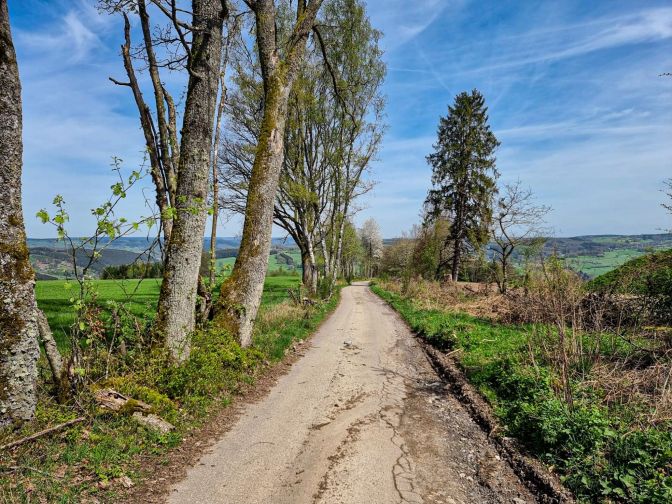
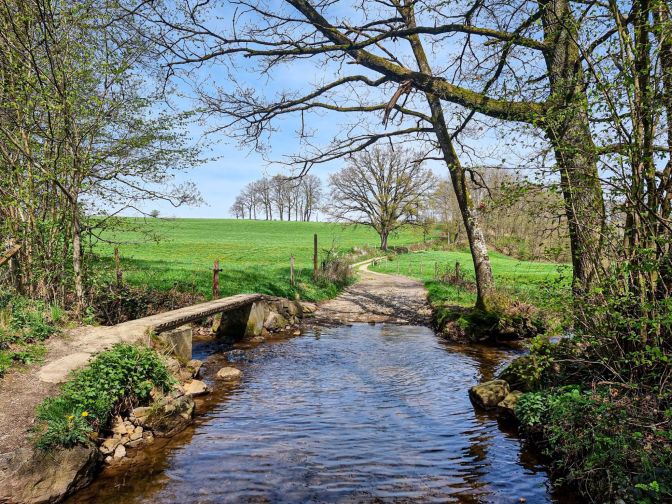
From there more beautiful countryside on the way to Bellevaux.
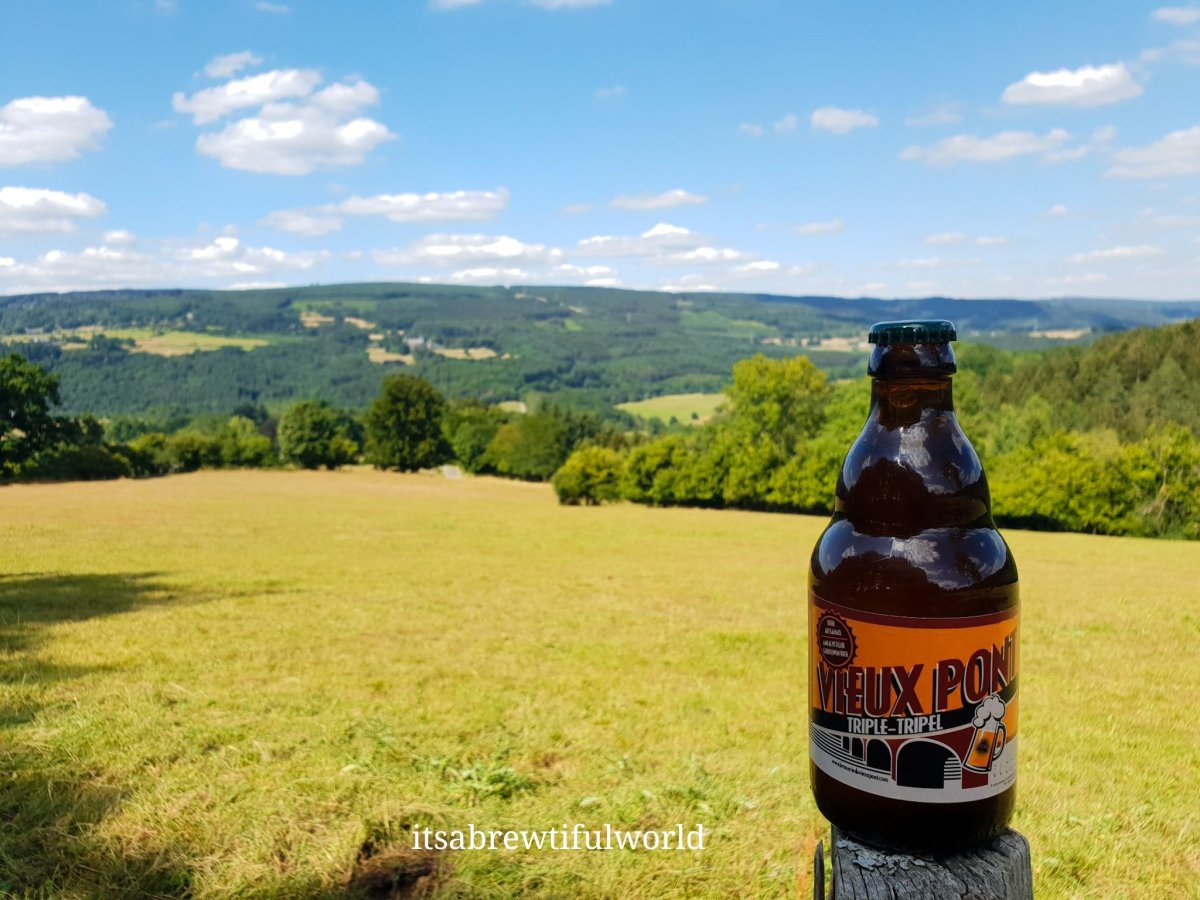
Brasserie de Bellevaux
Unlike December 2020, Brasserie de Bellevaux was buzzing with joyful revellers of all kinds. There were tables full of cyclists, hikers, and families spending the day out together. Several dogs meeting each other for the first time challenged the patience of their owners. A couple guys behind me were speaking German and I wondered if they were locals or visiting. Stavelot was part of Germany until the end of World War I but until now, people that I passed by were speaking French and Dutch. I sipped and savored a blond beer as I felt the restless ghosts starting to whisper their thanks and fading off into their blissful eternity. It was a good day.
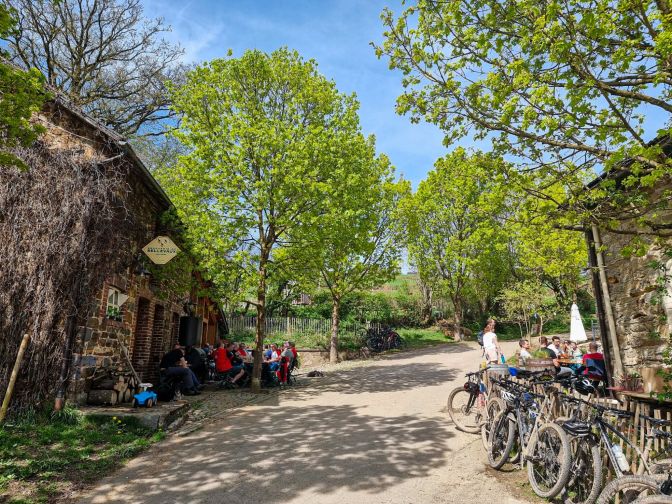
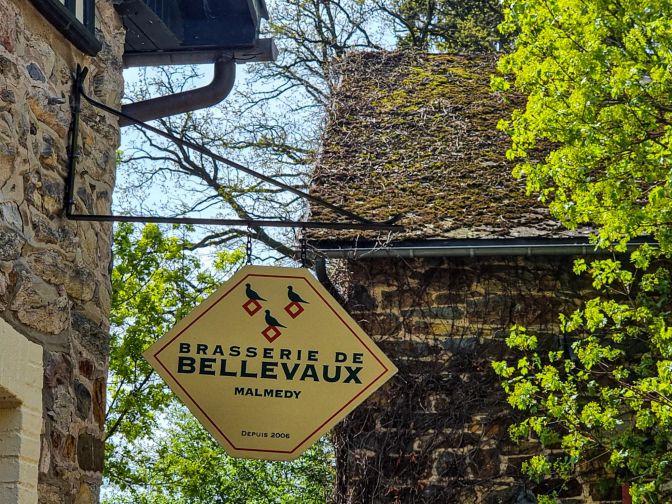
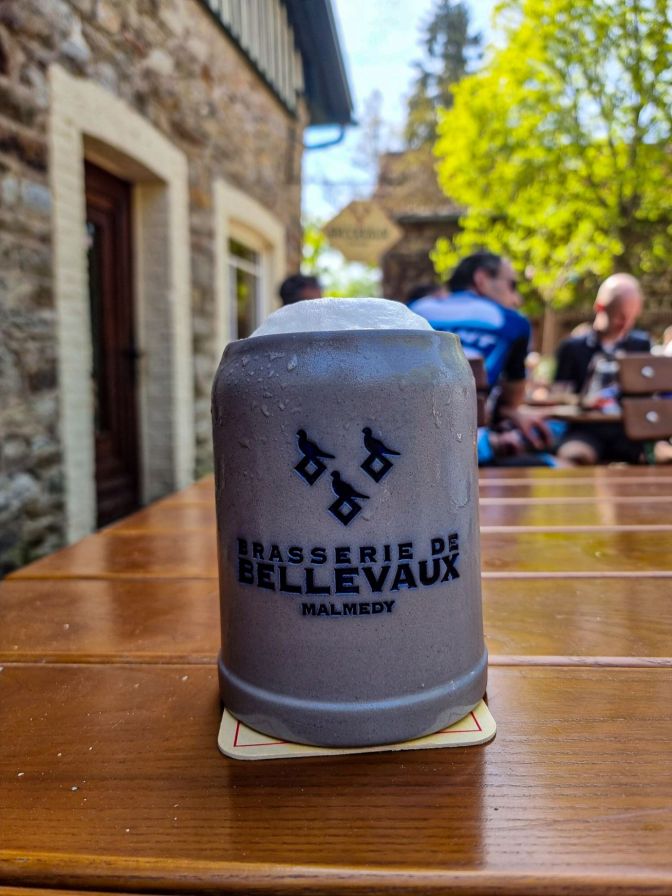
With a soothing beer buzz, I headed back out on my hike.
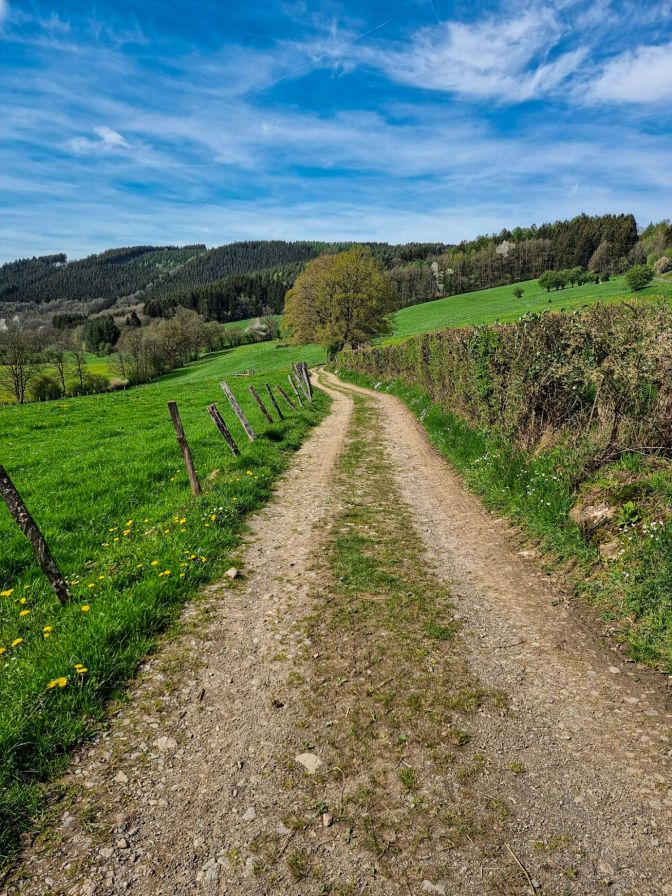
The trail meets up with the Ambleve River which was scattered with fishermen and families dipping their feet into the cold water.

Near the end of the hike as I started to come down the fateful hill traversed by Kampfgruppe Peiper, a view of Stavelot appeared.
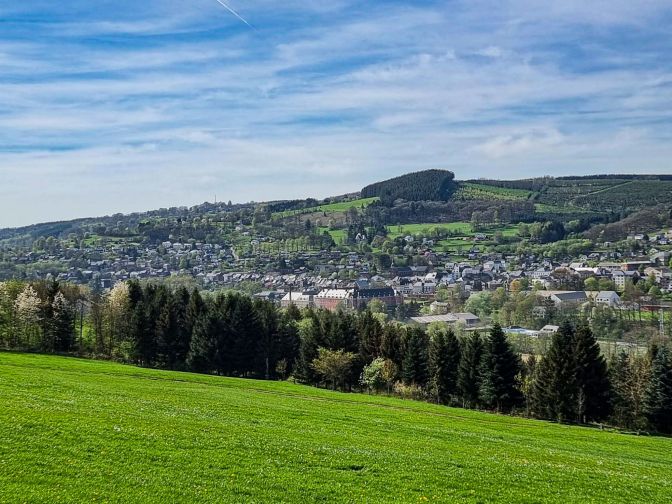
At the base of the hill, we return to the half-track and the bridge. After Kampfgruppe Peiper passed through Stavelot on their way to Trois-Ponts, the Americans demolished it, cutting off the supply route for Peiper, who was already starting to run low on fuel.
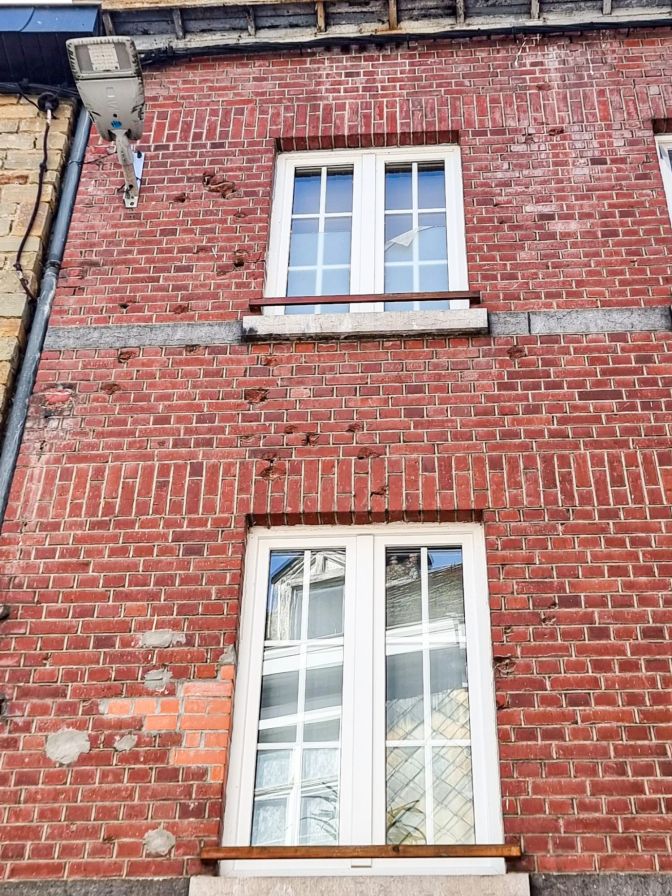
In the city, there are still buildings which show bulletholes from the fighting that occurred that day.
Beer & The Bulge: Trois-Ponts-Cheneux
Hiking where Kampfgruppe Peiper’s fate was changed at Trois-Ponts.
Continue reading Beer & The Bulge: Trois-Ponts-Cheneux
Next to the abbey ruins is the final memorial of the hike.
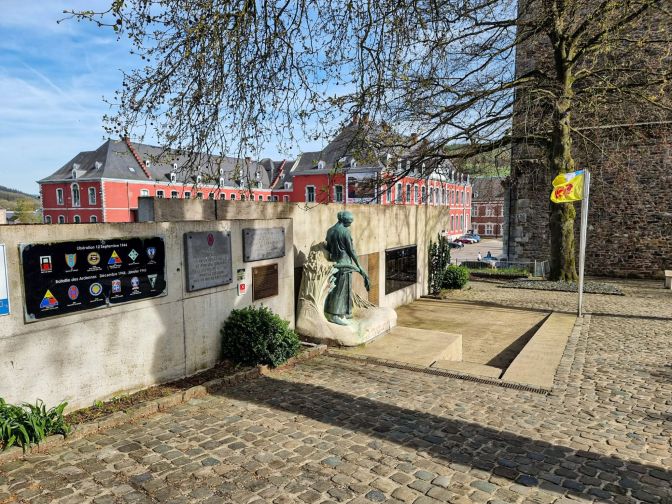
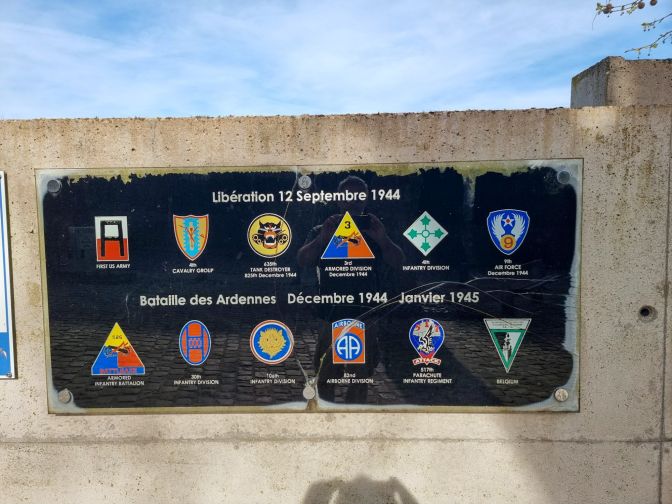
Stavelot War Memorial
This memorial commemorates all of the divisions which took part in the battle for Stavelot during the first liberation in September 1944 and then also during the Battle of the Bulge.
Cafe der Museen
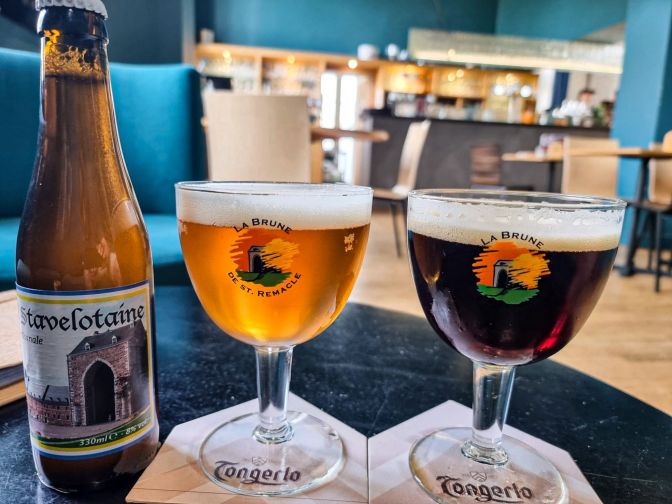
Stavelot has several history beers and the best place to buy them and enjoy them is in the cafe of the abbey. There is the Stavelotaine which is available in bottle at the gift shop and then the St. Remacle Blond and Brune which I tasted at the cafe. In the feature photo is the Pre-Messire which was the name of the meadows of the abbey. This is also available in bottle at the gift shop.
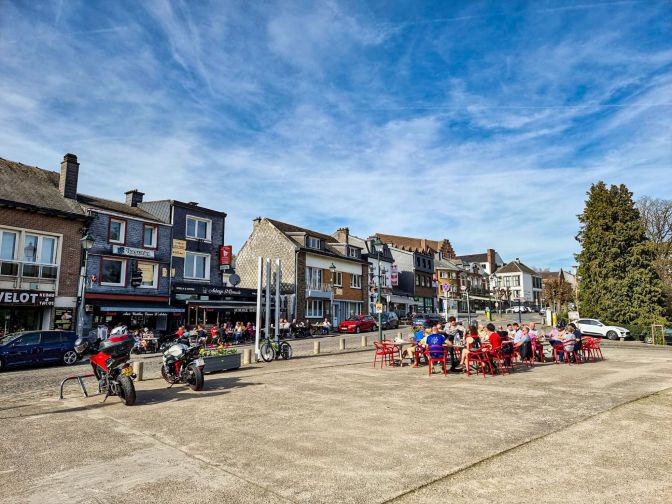
If you prefer to enjoy your final beer at an outdoor cafe with the Eddy Merckx worshippers, St. Remacle Square has plenty of good cafes.
Final Words
Whether you want to visit the brewery from Malmedy or Stavelot, each hike is equally enjoyable giving you the perfect combination of Ardennes scenery, World War history, and a cultural connection to the cycling passion that bonds Belgians of all languages while introducing you to the uniqueness of this historically German part of Belgium. Stavelot probably marks the final installment in the hikes I have done following the path of Kampfgruppe Peiper from their beginnings at Lanzerath through to their high-water mark at Stourmont. When we think of atrocities during this part of the war, the Malmedy Massacre is what normally comes to mind. But Stavelot was a massacre of a different kind, which should not be diminished simply because there is no catchy name for it. The Americans eventually recaptured Stavelot after they were able to cut Kampfgruppe Peiper off from behind. However, when the dust finally cleared…
“The GIs were appalled by the evidence of war crime upon war crime in and around Stavelot.”5
While I may leave the Kampfgruppe Peiper behind for a time, my explorations are far from over. I still have several Bulge locations to visit in the Ardennes such as St. Vith and La Roche. Meanwhile, there are a copious number of ghosts from the covid-era hikes needing to be given their proper state of peace. We will see where we go next. Wherever it is, it is always in the direction of the blue butterfly. Until then…

Footnotes
- A Wayfarer in Belgium by Fletcher Allen (Methuen & Co. Ltd. London, 1934) ↩︎
- Snow & Steel: The Battle of the Bulge 1944-45 by Peter Caddick-Adams (Arrow Books, 2014) ↩︎
- The Unknown Dead: Civilians in the Battle of the Bulge by Peter Schrijvers (University Press of Kentucky, 2005) ↩︎
- The Battle of the Bulge: Hitler’s Final Gamble in Western Europe by Martin King (Arcturus Publishing Ltd., 2019) ↩︎
- The Unknown Dead: Civilians in the Battle of the Bulge by Peter Schrijvers (University Press of Kentucky, 2005) ↩︎

 itsabrewtifulworld
Just tried searching again for newspaper clippings I’ve seen regarding my uncle, Everett Croes II (your great-uncle), who was a tank squadron commander through this area. No luck. Will keep trying.
LikeLike