
“I love the Ardennes. It’s a sedate and very tranquil place these days. A place of stunning pastoral scenery, where lush green forests, hills, and deep valleys are bisected by beautifully picturesque rivers and streams meandering through age-old towns, villages and hamlets. It’s a veritable haven of peace and relaxation. But it wasn’t always like this…”1
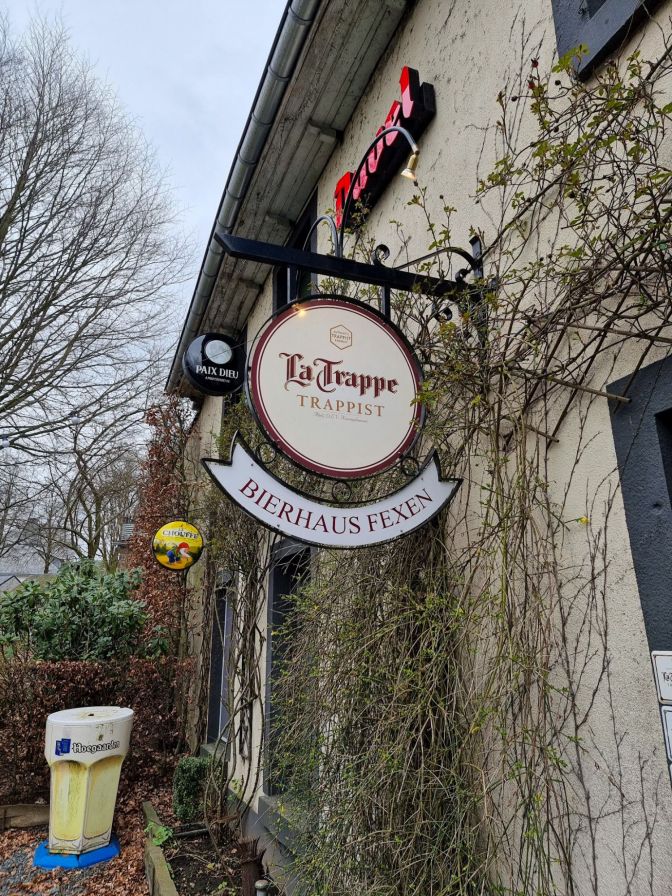
I parked my car by the cemetery in the small village of Krinkelt. After switching into my hiking shoes, I oriented myself around a single block area in what is essentially the heart of the twin villages of Rocherath-Krinkelt in the east of Belgium. Everything needed by a small village was there, a butcher shop, a bakery, and of course a great beer bar called Bierhaus Fexen. The Church of St. John the Baptist with its angularity and Romaneque arches, although not unattractive, seemed to me oddly out of place for a small village parish in the Ardennes, but this didn’t detract from the sleepiness. All was quiet except the occasional motorcycle or car zipping by on a Saturday joyride.

In December 1944, soldiers of the US 2nd Infantry had set up inside the church and several Sherman tanks were stationed around it.2 They had just arrived from the north and were now thrust into the surprise offensive of the German army. in front of this very church, a Sherman tank took a hit from a German Panzer and burst into flames which reached the height of the church3. Meanwhile, all throughout the twin villages, fighting was furious for about three days. American and German soldiers occupied the houses in a scattered array. There was no battle line.4 It was chaos, and for civilians it was even worse. Civilians would have been huddled in basements or trying to flee under American cover fire. They could try to escape to the next village in Wirtzfeld further behind the American lines, but these Belgians spoke German and this was not exactly the language a stressed American soldier wanted to hear. On one occasion, a civilian seeking sanctuary was struck on the head by a soldier and almost killed5. The alternative, though, was to cross the German lines and hope their German heritage brought sympathy. But it was just as likely they would be shot as traitors.
It is within the ghosts of this battlefield that I found myself on the last Saturday of March, under a bleak foreboding sky in Rocherath-Krinkelt. Just the day before, I hiked along the West Wall on the German side of the border immersing myself in the moments before the Germans launched their last ditch offensive codenamed Wacht am Rhein bringing Hell to these tiny villages in the eastern part of Belgium.
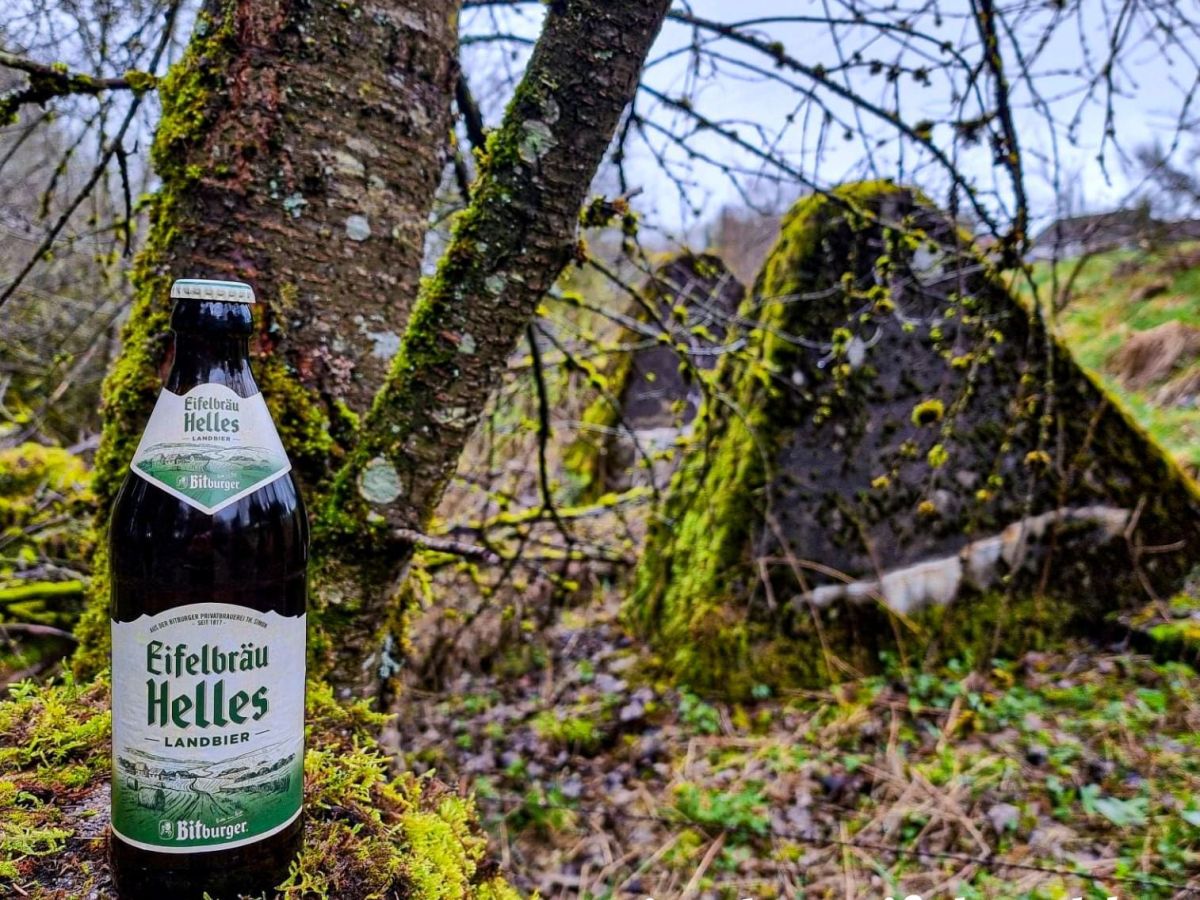
Beer & The Bulge: Dragon Teeth Along the West Wall
Where the Sixth Panzer Army waited in the mouth of the dragon.
Continue reading Beer & The Bulge: Dragon Teeth Along the West Wall

Rocherath-Krinkelt lay in the northern path of the German offensive and was the responsibility of, among other divisions, a division of former Hitler Youth, called Hitlerjugend, who formed the 12th SS Panzer Division. It was their job to clear out Kampfgruppe Peiper’s northern flank and secure a vital road network in the pursuit to get to the Meuse River. Kampfgruppe Peiper was the spearhead for this mission. Standing in the Hitlerjugend’s way, manning the lonely frigid Ghost Front in the forests between Rocherath-Krinkelt and the German border were regiments of untested soldiers who had just arrived to the frontlines in November 1944. They were the 393rd and 395th Regiments of the US 99th Infantry Division. Otherwise known as the Battle Babies. The 394th, meanwhile, were a few kilometers further south in Lanzerath dealing directly with Kampfgruppe Peiper, but that is a different story and a different hike.
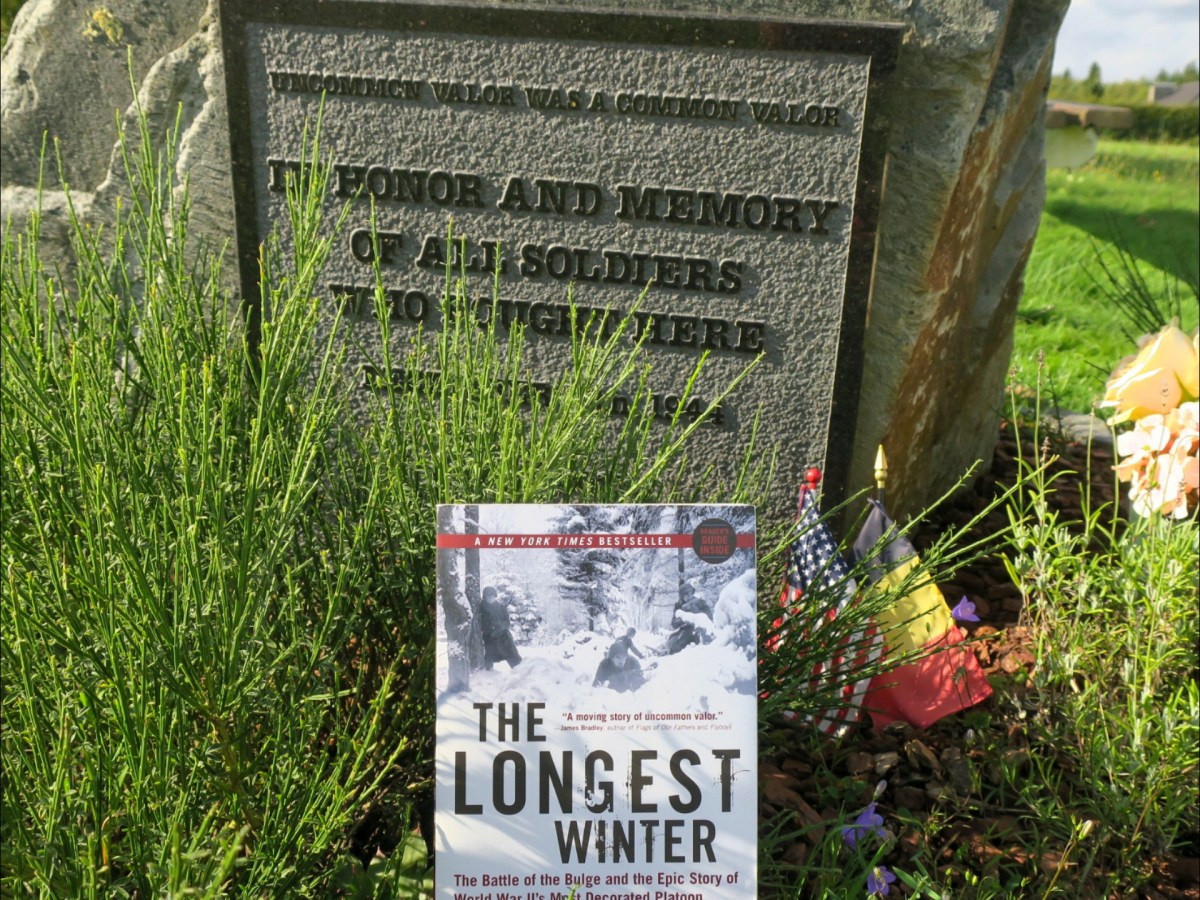
Beer & The Bulge: The Longest Winter
Having beers with the most decorated U.S. platoon in WWII.
Continue reading Beer & The Bulge: The Longest Winter
In the face of being out-manned and out-gunned, the 99th dug in around Rocherath-Krinkelt to try and hold the city. It was imperative that they hold that critical defensive position not just to stop the German advance but to support the 2nd Infantry Division who needed the road to reach Rocherath-Krinkelt on their way back to headquarters in Wirtzfeld just south of the twin villages6. One can only imagine the terror of those days between Dec 16-26, 1944 in what became known as The Battle of Elsenborn Ridge.
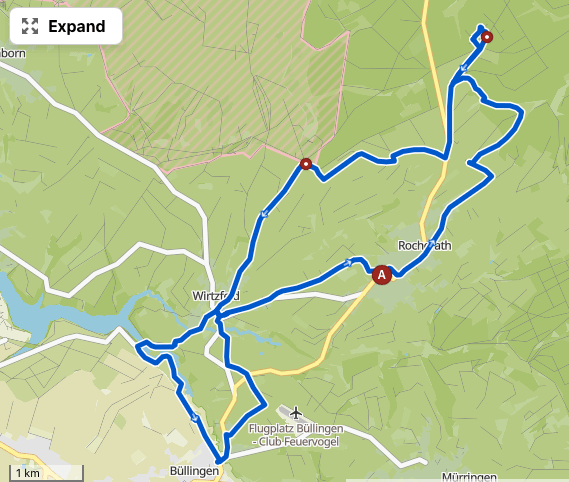
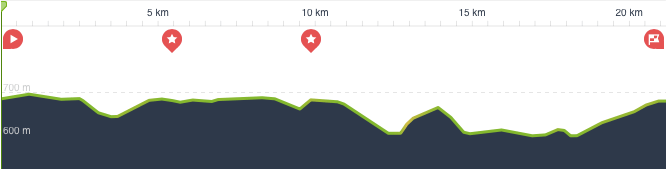
Hike Details
| Starting/Ending Point | Bierhaus Fexen |
| Distance | 21.1 km |
| My Moving Time | 4h 17m |
It’s Not Just a Beer, It’s a Journey
Memorials to the 99th Infantry Division and 2nd Infantry Division
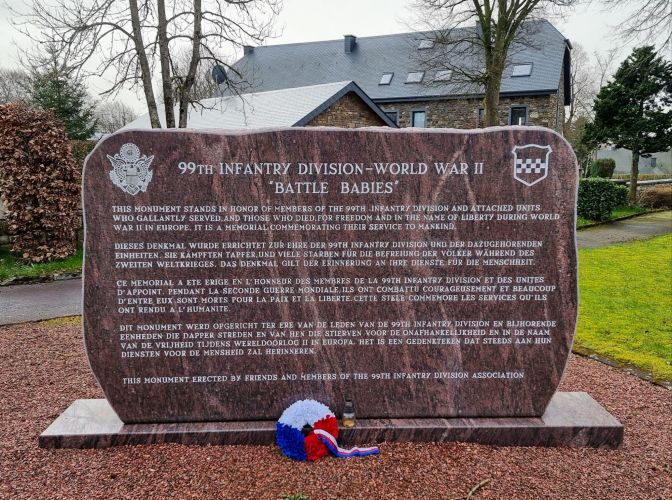
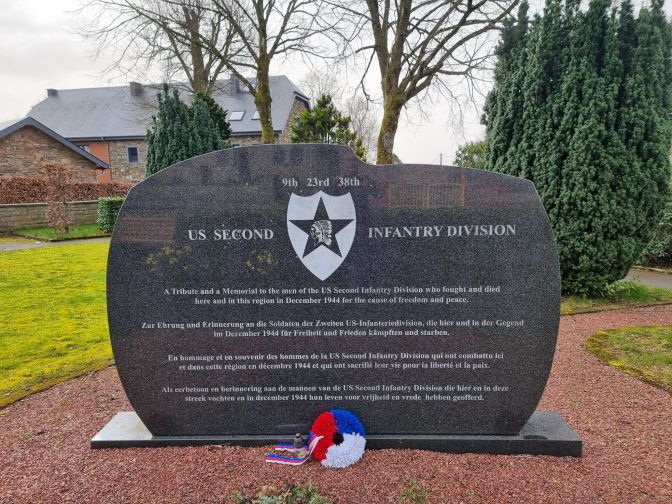
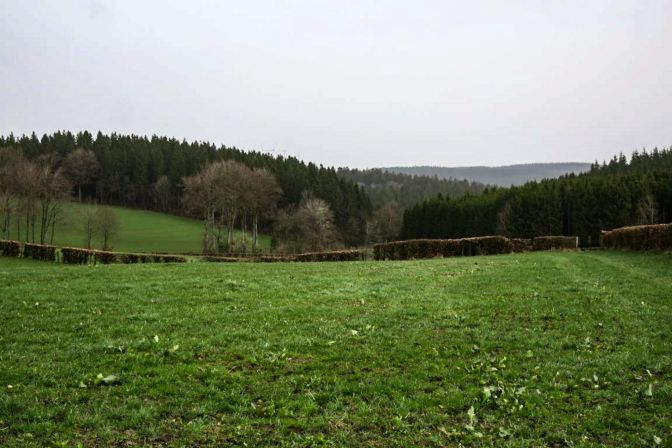
The short walk through the twin villages will by no means give off the impression of being high up in the Alps, but it does give a sensation of elevation. When you come out of the villages and see the surrounding landscape, you realize that depths and heights in this part of Belgium are subtle, unless you are a Panzer trying to climb up a marshy slope or soldiers trying to move artillery to a new position. This is terrain which will never adequately jump out in photographs, especially on a day as gray as this. But the elevation sensation is real. I would come to find out later from the owner of the Bierhaus Fexen that Krinkelt is the highest village in Belgium.

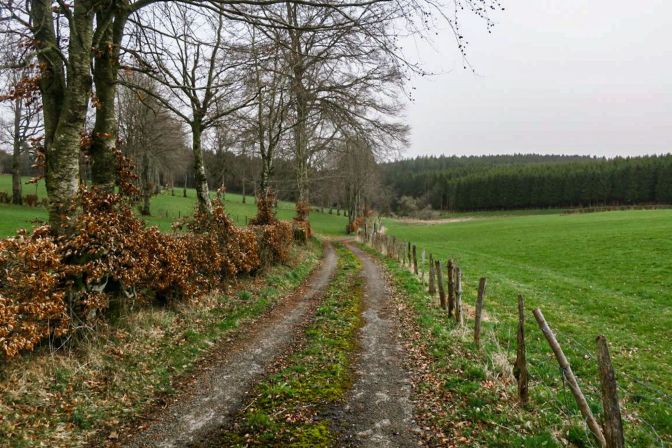
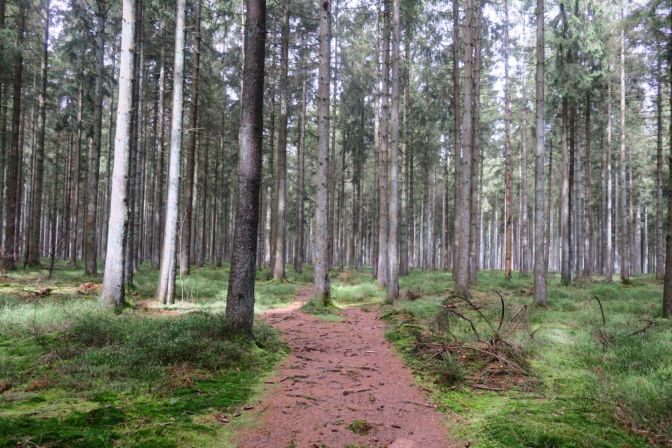
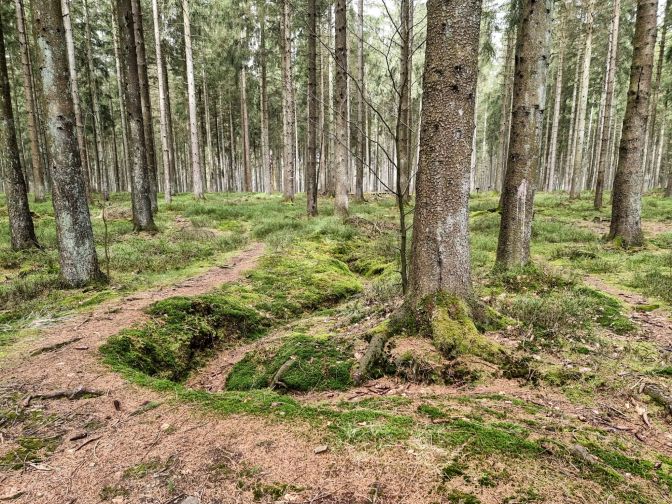
Not far from Rocherath-Krinkelt is a particularly interesting patch of forest.
Hasselpath Memorial
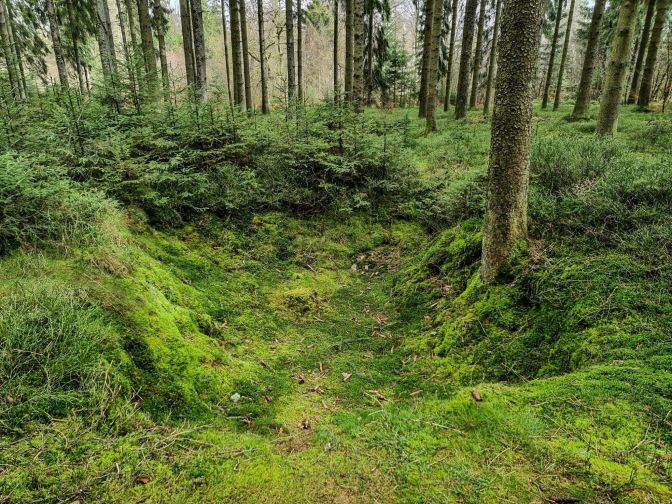
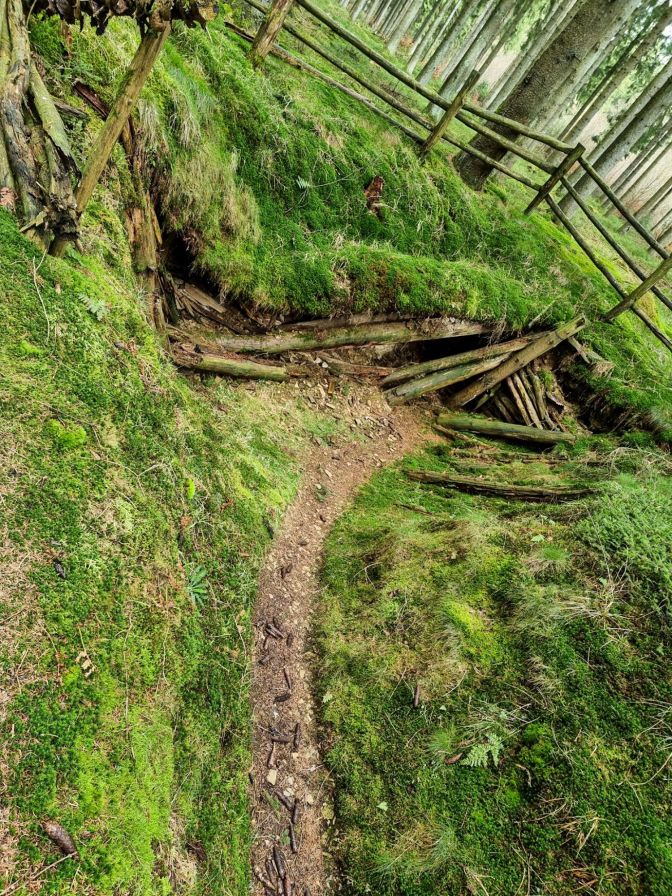
This preserved forest contains a path which weaves thru the remains of German trenches, American foxholes, artillery craters, and even a former American makeshift aid station. Unlike the Easy Company foxholes near Bastogne, the Hasselpath Memorial is completely open and free to access. There are no chainlink fences to put a blemish on the beauty of the forest.
Elsenborn Ridge
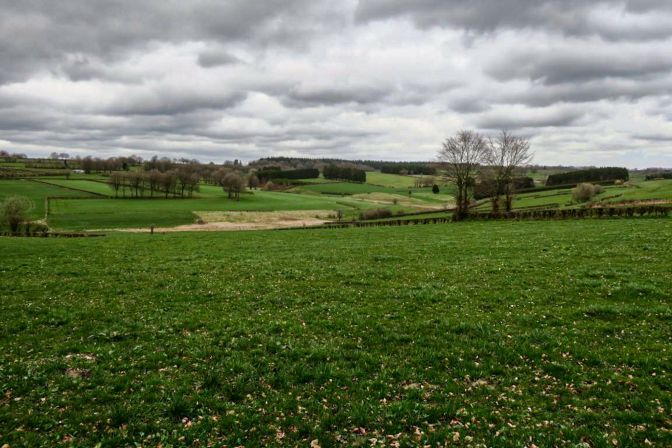
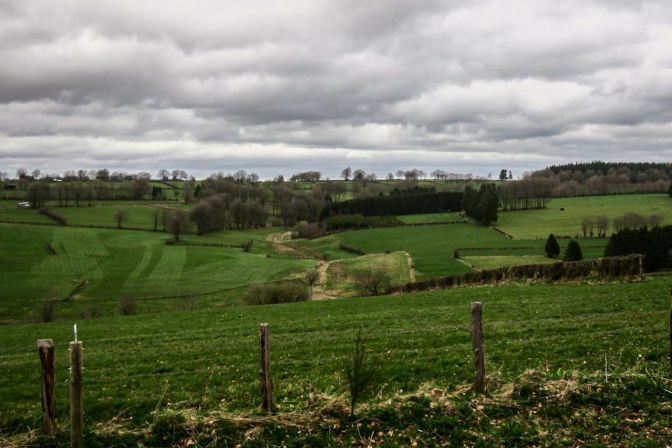
The ridge is to the west and north of Rocherath-Krinkelt, forming a boomerang shape. Leaving the Hasselpath, the hike deceptively dips in elevation briefly before rising back up to the ridge. Any hope of the sky clearing was being swept away by strong winds which made it uneasy walking beneath the leafless branches. The sky had become one textureless sea of gray.
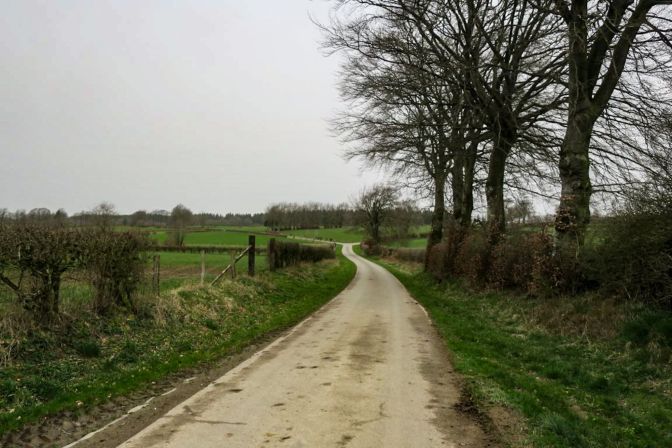
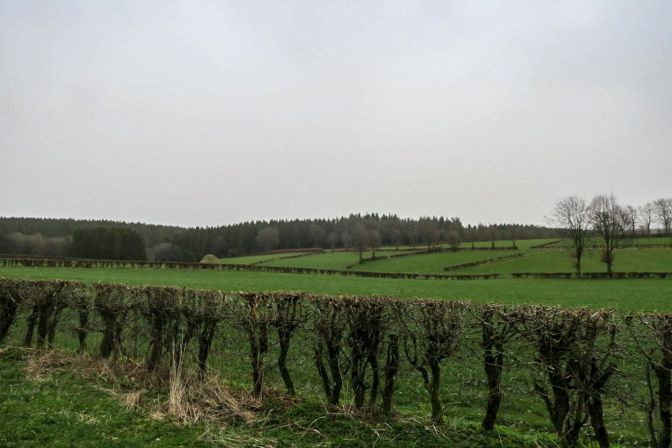
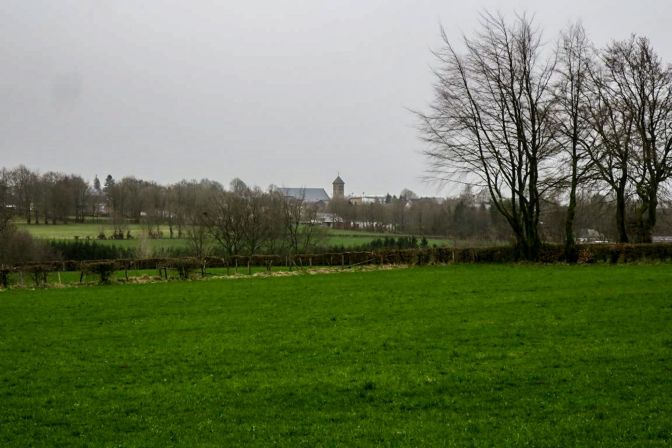
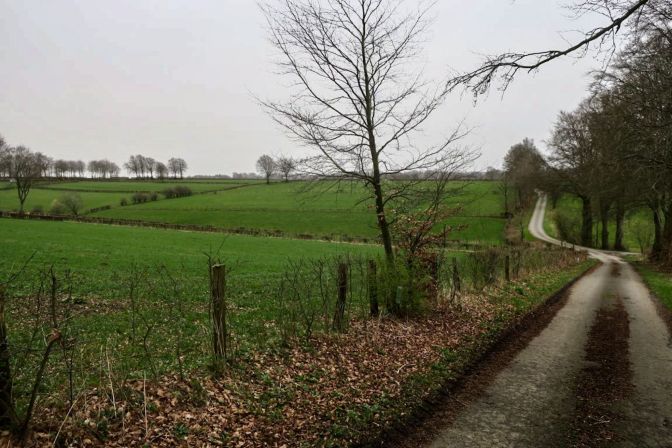
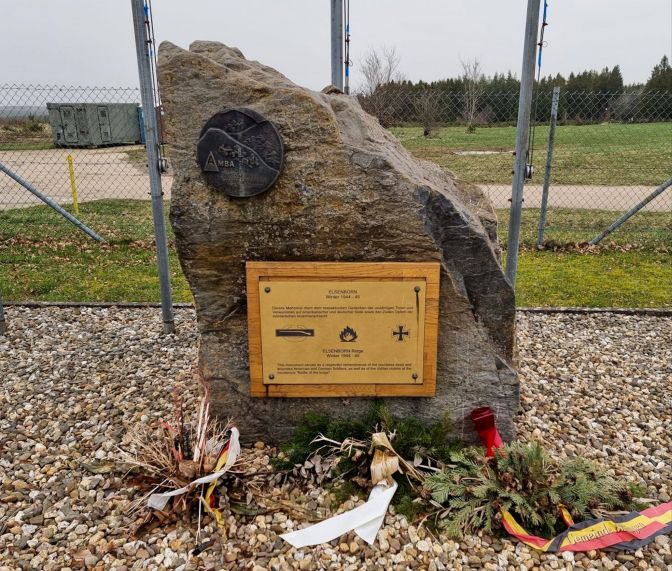
By the time the 2nd Infantry arrived in Rocherath-Krinkelt, the 99th had done their job and mostly dug in around the Elsenborn Ridge. After the furious fighting in the Rocherath-Krinkelt, the 2nd Infantry also withdrew to the ridge. American artillery set up on the ridge could now pound away at will on any German convoy or German-held village in the area.
The hike follows the ridge and comes down into the village of Wirtzfeld.
Wirtzfeld
Wirtzfeld was the headquarters of the 2nd Infantry Division at the time of attacks. When shooting was heard coming from Rocherath-Krinkelt, the commanding officer ordered every man, soldier or not, to grab a gun or man any weapon they could7. Within days, the headquarters would be moved to a safer location behind the ridge in the village of Elsenborn.
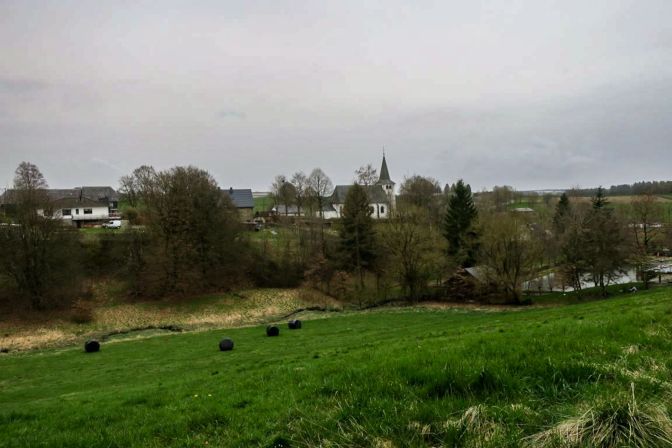
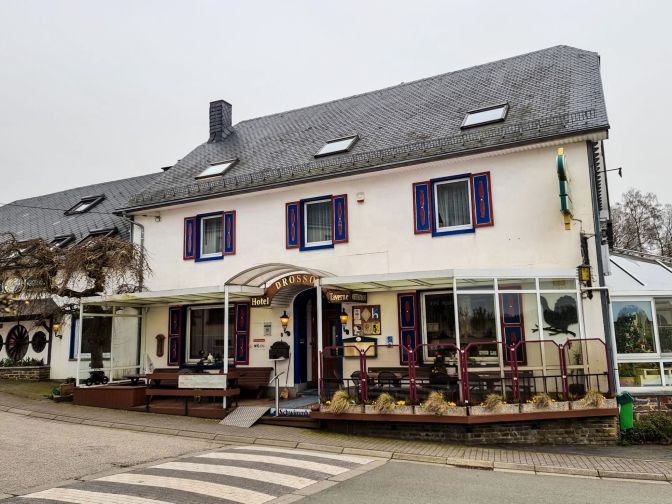
Today, Wirtzfeld snoozes peacefully between its farms. Hotel Restaurant Drosson offers a tempting respite from the gloomy weather, but I chose to forge on.
The hike reaches the village of Büllingen at its southern-most point where you can catch an easy-going ravel track which brings you around to an estuary of Lake Bütgenbach before doubling back to Wirtzfeld.

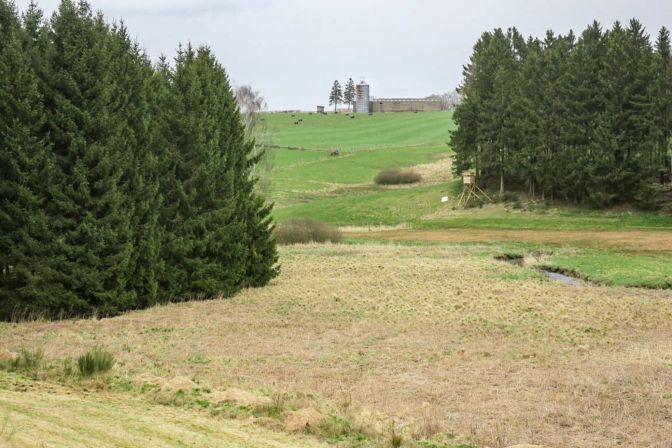
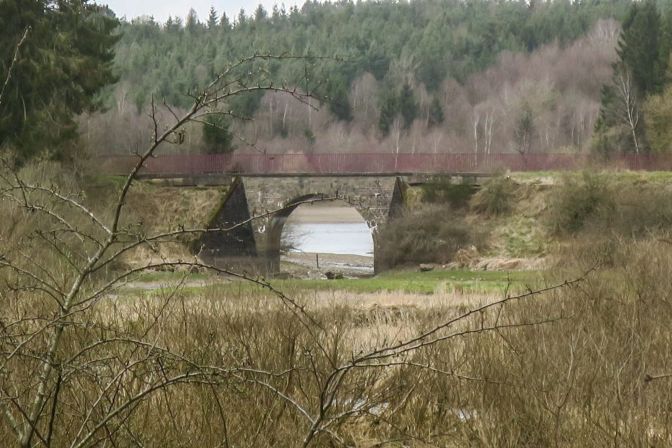

From Wirtzfeld, you can take a backroad to Krinkelt. From here you get the best view of the Elsenborn Ridge across the sculpted fields. By now, texture had returned to the sky.
Bierhaus Fexen
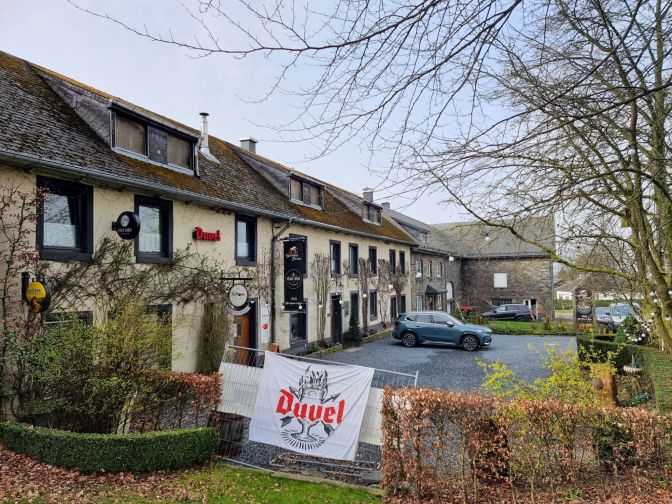
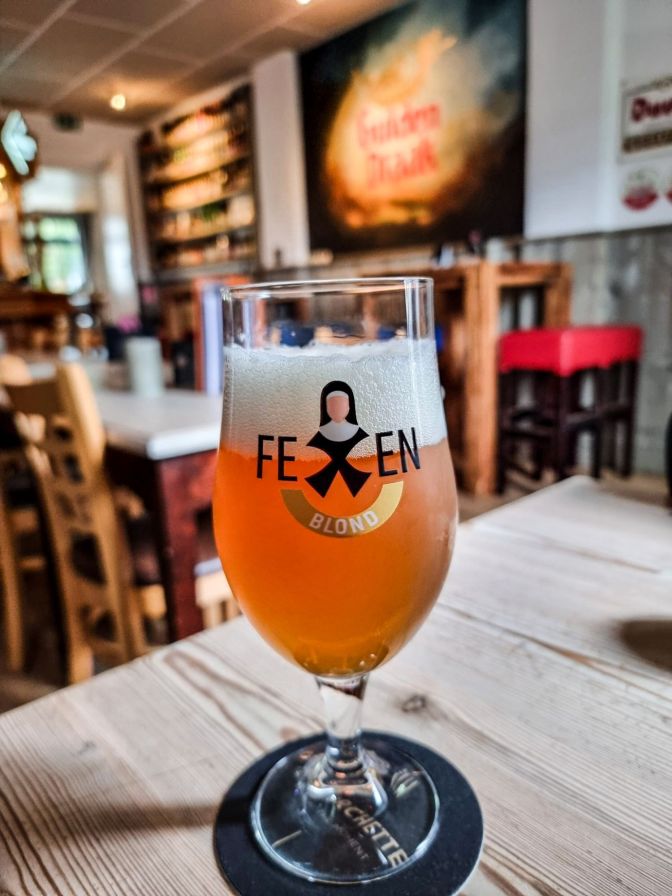
Bierhaus Fexen is an oasis in the middle of a very rural part of Belgium. It is affiliated with a Bed and Breakfast, aptly called B&B The Place 2 Beer, where each room has its own beer brand theme. They have an extensive beer menu, but with places like this, I am always hoping for a special house beer. I was not disappointed. I sipped my Fexen Blond (brewed by Brouwerij Het Nest in Turnhout) and chatted with the proprietor, finding it somewhat fascinating to think that this small patch of Belgium is still German-speaking. I asked them if they learned a 2nd language in school, assuming it would be English or Flemish. Instead, it was French. The proprietor shook his head sarcastically and said (I paraphrase) “We have to learn French because a few kilometers away, people are all French-speaking. They don’t know how to speak German or any other language.” Meanwhile, he gave me a great tip on a craft brewery that was open in the nearby village of Bütgenbach.
Side Trip: Bütgenbach
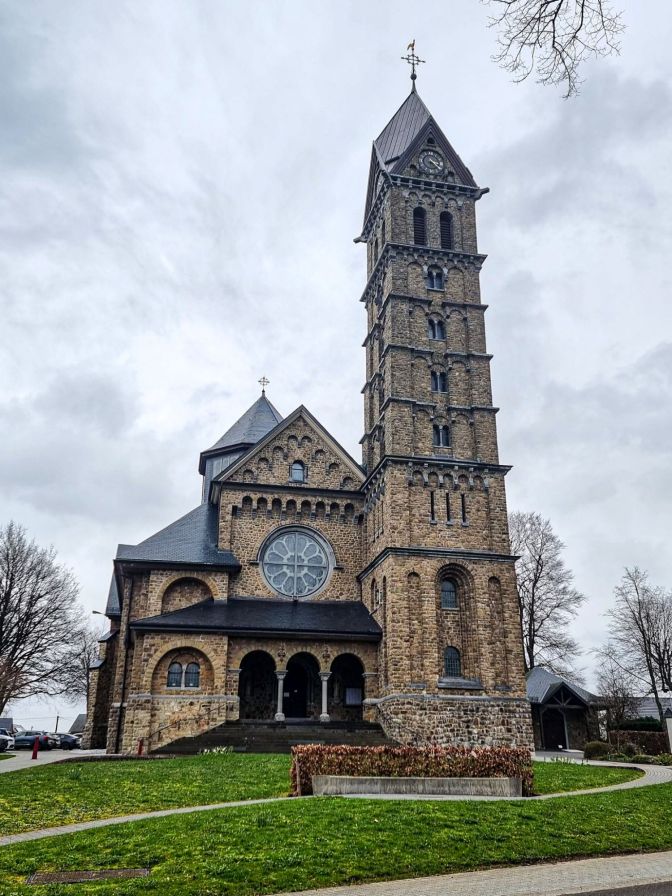
A short drive past the village of Wirtzfeld is the larger village of Bütgenbach with its distinctive St. Stephanus church. Bütgenbach sits on the shores of a man-made lake and therefore has a bit more to offer holiday-goers than the reclusive villages of Wirtzfeld and Rocherath-Krinkelt. Slightly hidden amongst some shops around the Marktplatz was a small taproom for the local craft brewery.
BrewTous’
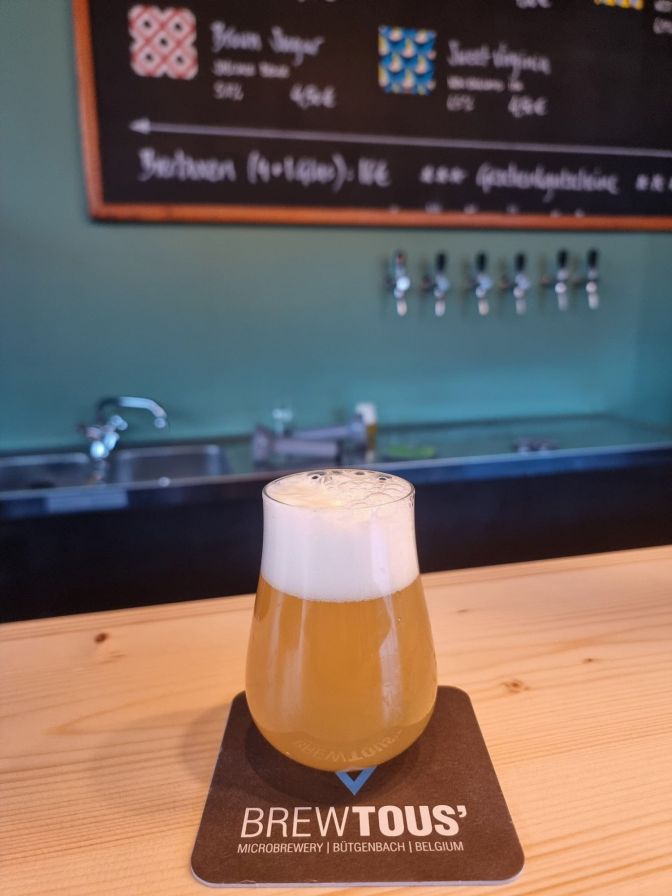
BrewTous’ features several beers named after songs of the Rolling Stones. It was a cozy family-run taproom. As an American, getting my beer served by a kid gave me a chuckle. In Belgium, these types of brewery taprooms are actually quite uncommon. Most craft breweries in Belgium don’t offer a regular taproom to taste their beers, especially in the heart of a town. It was good to see a craft brewery with some entreprenurial spirit. I wish them lots of success.
As I was chatting with the brewer’s wife and discussing the purpose of my visit to the area, she asked me if I was aware of the Eisenhower House in Bütgenbach. She gestured straight, left, then right, and before I knew it, I had a new mission to accomplish. I scurried on my phone to find out how I missed this.
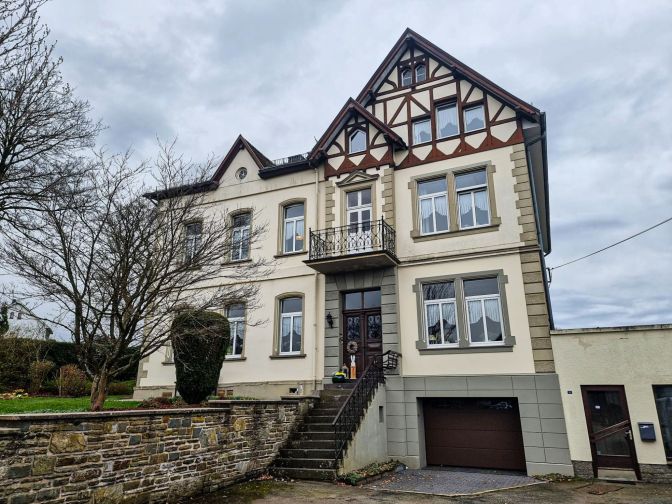
99th Division Headquarters
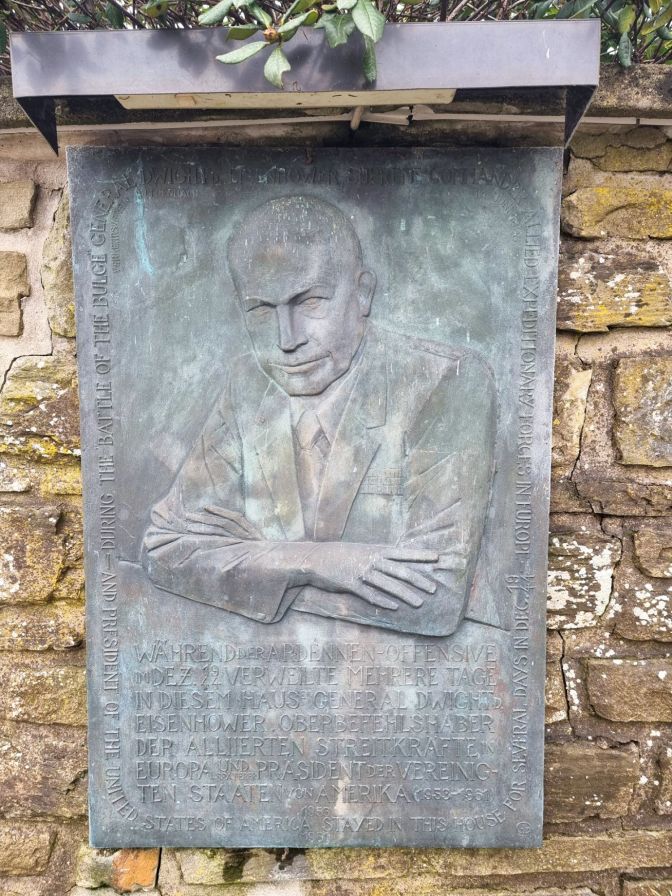
During the events described above, this villa was the headquarters for the US 99th Infantry. It is called the Eisenhower House because he visited briefly in November 1944. It is not open to the public. To be frank, the plaque outside which was placed here in 1955 looks nothing like Eisenhower.
Final Words
Because of the efforts of the 99th and 2nd Infantry Divisions on this northern shoulder of the bulge, Kampfgruppe Peiper’s route options were squeezed and Peiper made the fateful decision to change his course. This set off the chain of events that would result in the Malmedy Massacre and the battles in Trois-Ponts, Cheneux, La Gleize, and Stourmont. What it also accomplished was putting them behind schedule and allowing the Americans to regroup.
It is difficult to describe the privilege I feel being able to walk these remote windswept country roads where every stone in every farmhouse could tell a story. I watched Saving Private Ryan last night for, I guess, the fourth or fifth time to put myself in the right mindset for the final push of this blog post. It had been several years since the last time. Besides being the movie that never fails to bring me to tears, one other predictable moment in this movie that I always experience is that feeling I get of annoyance and shame at the Upham character in the final battle scene. My history of sympathy for this character is not a good one. Yet, I found myself humanizing him this time. I already knew he still wasn’t going to deliver the ammo in time to save Mellish and then let the smirking German soldier who killed him walk past him on the stairs. I am over that now. He became somewhat of a mirror to me to look into. In the un-battletested way, he was to his squad what the 99th Infantry was to the American military in the Battle of the Bulge.
“While most of the 99th fought valiantly in the desperate battles, ‘a few men broke under the strain’ an officer acknowledged, “wetting themselves repeatedly, or vomiting, or showing other severe physical symptoms’. And ‘the number of allegedly accidental rifle shots through hands and feet, usually while cleaning the weapon, rose sharply’.8
Who knows which side of that heroic fence we would fall under those circumstances. I am quite content never to be confronted with that test, and I won’t be so arrogant to answer that question. I could therefore see myself in Upham this time, and rather than look away in disgust, I looked inward. While we celebrate the heroism, we can also feel sorrow and pity for the human tragedies in one package of respect. Looking at the memorial of the 99th, let’s remember how they helped win the Battle of the Bulge, and let’s remember they were all humans thrust into a horrific situation that the great majority of us will thankfully never come close to experiencing.
“The Ardennes are now pretty and quaint — and peaceful. The summer months see the landscape swarming with hikers and picnickers. Yet the keen eye will find buildings that still bear the scars of shellfire. Foxholes and craters still litter the forest floors.”9
And thus begins the search for the next place to hike to seek out these subtle reminders of what happened that frigid December in 1944.

Citations
- The Battle of the Bulge: Hitler’s Final Gamble in Western Europe by Martin King (Arcturus Publishing Ltd., 2019) ↩︎
- The Unknown Dead: Civilians in the Battle of the Bulge by Peter Schrijvers (The University Press of Kentucky, 2005) ↩︎
- A Blood-Dimmed Tide by Gerald Astor (Dell Publishing, 1992) ↩︎
- A Blood-Dimmed Tide by Gerald Astor (Dell Publishing, 1992) ↩︎
- The Unknown Dead: Civilians in the Battle of the Bulge by Peter Schrijvers (The University Press of Kentucky, 2005) ↩︎
- Battle of the Bulge 1944-45 by Andrew Rawson (The History Press, 2022) ↩︎
- Ardennes 1944 by Antony Beevor (Penguin Books, 2015) ↩︎
- Ardennes 1944 by Antony Beevor (Penguin Books, 2015) ↩︎
- Snow & Steel: The Battle of the Bulge 1944-45 by Peter Caddick Adams (Arrow Books, 2014) ↩︎

 itsabrewtifulworld
Great post, Matthew!! 👏👏👏
LikeLike
What a fantastic write-up, we really enjoyed this. Putting this area on our list to check out someday. Cheers!
LikeLiked by 1 person
Glad you enjoyed it and thank you for reading 😊
LikeLiked by 1 person