
A Dickens of a Tramp
A day after tramping 21 km through the Kentish countryside between Rochester and Maidstone experiencing the walk that Charles Dickens found the most beautiful in England, I planned an even longer tramp perhaps with the most Dickensia I could cram into one single route without falling over dead. At a lengthy but leisurely 27km, this is not necessarily a route Dickens would have ever done end-to-end, but for sure he likely completed each part of it. If you have the extra days to explore more gradually or simply wish to break the hike down into smaller segments, there is a great book called Walking Charles Dickens’ Kent by Andy Bull where you can find recommendations.
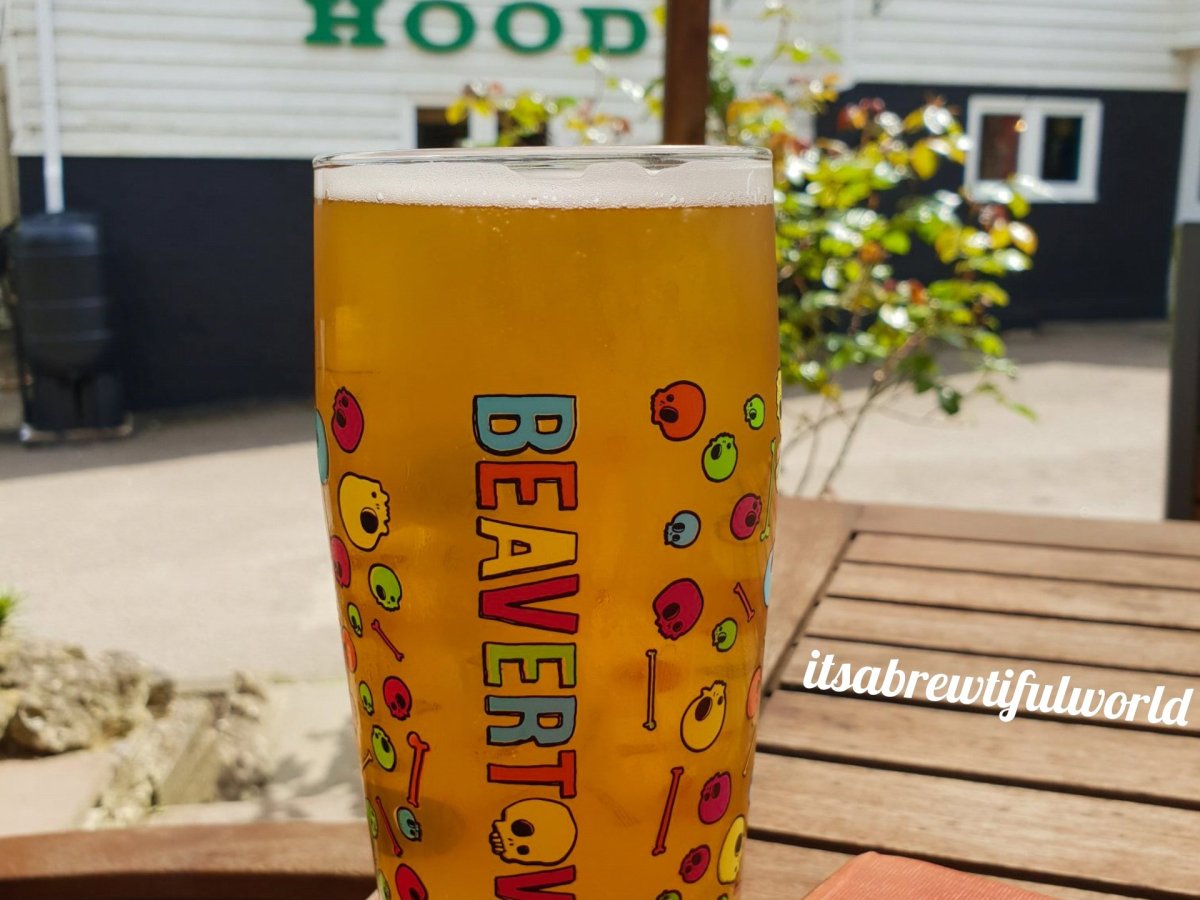
Beer & Dickens Hike: Rochester to Maidstone
Tramping through Dickens-Land and discovering the mythical town of Muggleton
Continue reading Beer & Dickens Hike: Rochester to Maidstone

Tramp Details
| Starting Point | Gravesend Station |
| Ending Point | The Crown pub in Rochester |
| Total Distance | 27.5 km |
| My Moving Time | 5h 16m |


The Tramp
Getting from Rochester to Gravesend is 15 minutes by train. The National Rail website is good for looking up schedules and buying tickets online in the UK.
Gravesend
Gravesend is mentioned frequently in Dickens’ novels. It is an old holiday town which sits on the bank of the Thames and is a pivot point on the old Dover Road between London and Dover. So as characters travel in his stories, there are many opportunities to pass through Gravesend. However, for me it was just the starting point of the hike and I did not spend any time exploring it.

Dickens’ Honeymoon Cottage (Chalk)
Just a short walk from Gravesend is the village of Chalk. Here in 1836, Dickens used a cash advance for installments on the Pickwick Papers to pay for his honeymoon in Chalk. By this time, two chapters of Pickwick had been published and the ever romantic Dickens would continue writing further chapters during the honeymoon.
“It will be remembered, that the first number of Pickwick appeared on the 31st March, 1836, and on the 2nd of April following Charles Dickens was married, and came to spend his honeymoon at Chalk”
A Week’s Tramp in Dickens-Land by William R. Hughes (1891)
“The honeymoon was passed in the neighborhood to which at all times of interest in his life he turned with a strange recurring fondness; and while the young couple are at the quiet little village of Chalk, on the road between Gravesend and Rochester.”
The Life of Charles Dickens by John Forster (1875)
Interestingly, the honeymoon cottage was not identified until 1905, so none of the books released prior to that year make mention of the cottage.
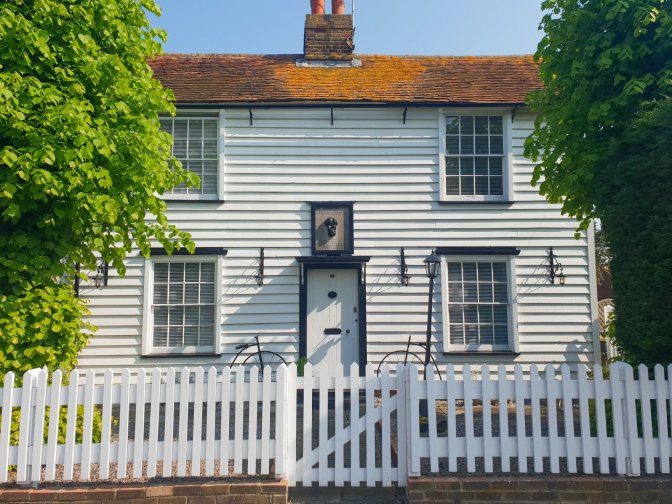
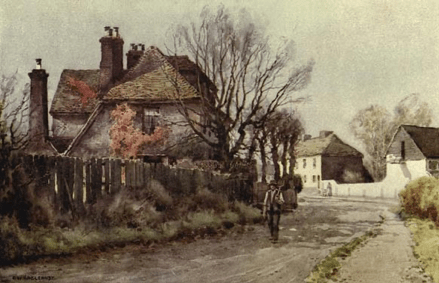
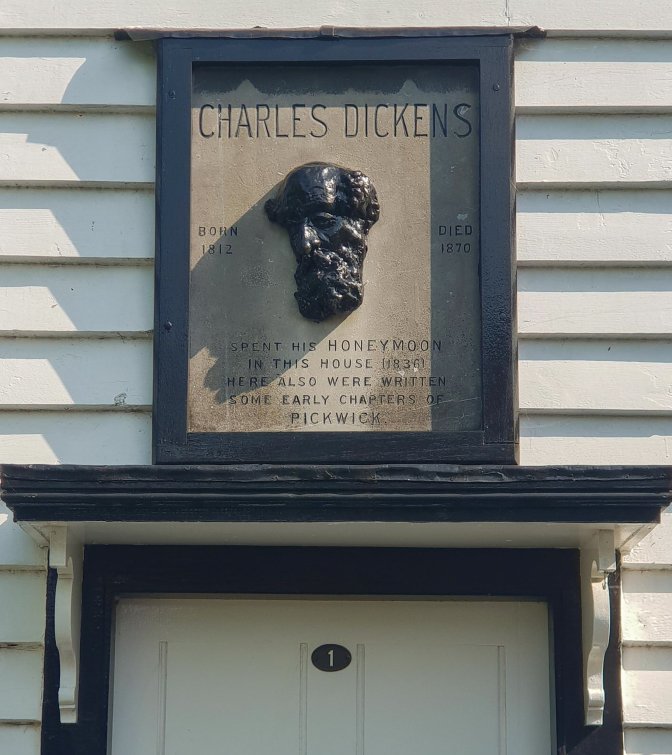
The plaque above the door was added in 1911 and has a short dedication from Percy Fitzgerald, one of the renowned Dickensia authors of the day. Naturally, over the years some doubt has been raised about whether this was actually the house1. But that is neither here nor there.
Chalk Church
Dickens and his wife returned to Chalk in 1837 while his wife was pregnant, and he would take off by himself for long walks around the area while she was resting1. It was during these walks that Chalk Church, which sits about a kilometer or so outside the village, would become preserved in Dickensiana for posterity.
“The walk to Chalk Church was much favoured by the novelist”
The Dickens Country by Frederic George Kitton (1905)
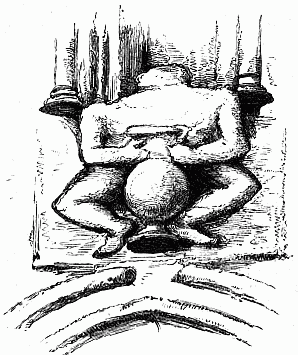
“he would walk through the marshes to Gravesend, return by Chalk church, and stop always to have greeting with a comical old monk who for some incomprehensible reason sits carved in stone, cross-legged with a jovial pot, over the porch of that sacred edifice.”
The Life of Charles Dickens by John Forster (1875)


The carving of the old monk has not had an undisturbed existence. During his visit in 1891, William R. Hughes sketched the carving and noted that it had been demolished2 perhaps following a complaint from a lady parishioner who found it offensive3. Today, it looks like the jovial face of the old monk has been restored.

Between Chalk and Shorne
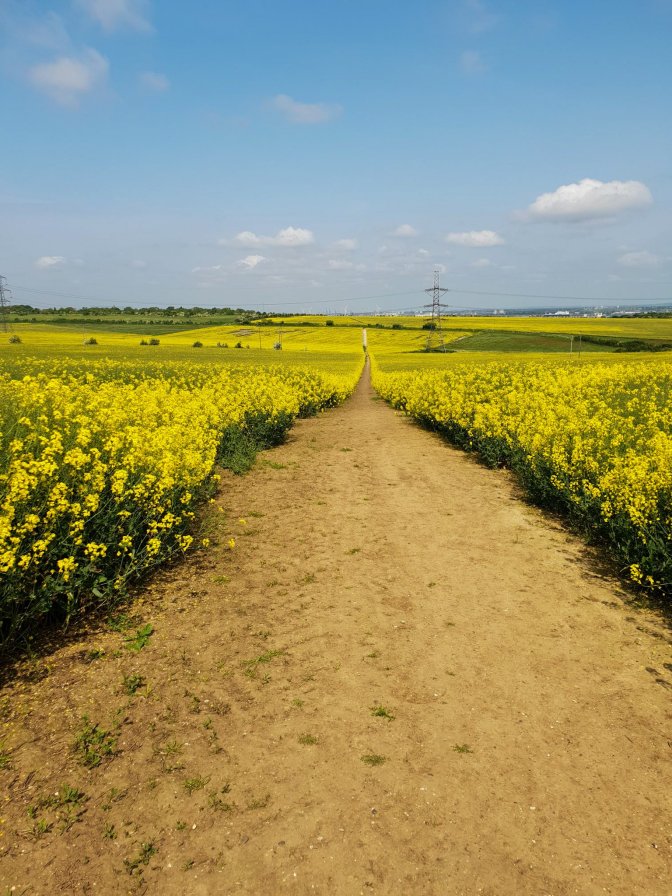
The walk from Chalk Church to the village of Shorne follows through a beautiful patchwork of fields, much of them covered in a sea of yellow rapeseed.


Shorne Church
Shorne is another one of those villages like Boxley which consists of a pub, a church and a timeless aura. I decided to take a rest in the churchyard like Dickens would have done in his day. It is a walled-in churchyard connected but isolated from the village at the same time. There is no doubt that within those walls, you feel the problems of life warded off. It is a peaceful out-of-time paradise.
“he was not less fond of going round the village of Shorne, and sitting on a hot afternoon in its pretty shaded churchyard”
The Life of Charles Dickens by John Forster (1875)
“Turning off at some distance on the left, and passing through the little village of Shorne, with its pretty churchyard, a very favourite spot of Charles Dickens, and probably described by him in Pickwick as “one of the most peaceful and secluded churchyards in Kent”
A Week’s Tramp in Dickens-Land by William R. Hughes (1891)

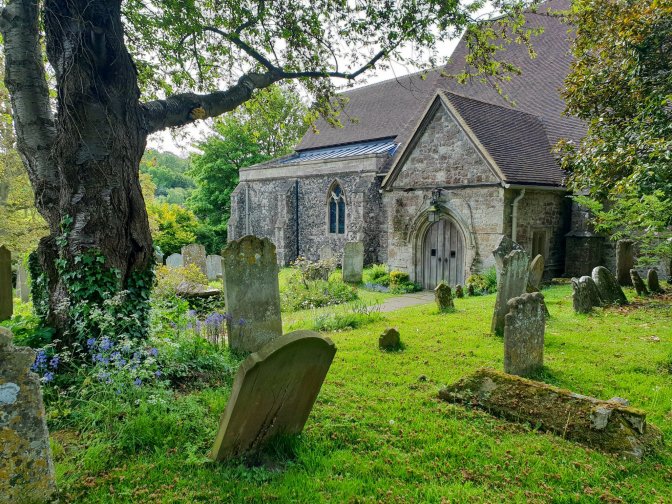

Shorne marks a pivot point in this hike where it essentially branches into a hike within a hike. From here I would head south to Cobham and loop back around, saving the pub stop in Shorne for later.
Shorne Wood
Between Shorne and Cobham, there are large tracts of beautiful forests with a labyrinth of trails. Besides the nature, keep your eye out for old WWII bunkers and ancient mounds.


When you finally come out of the nature into the village of Cobham, you quickly arrive to perhaps the most Dickensian of all Dickensian Inns.
The Leather Bottle
“The charming Kentish village of Cobham was familiar to Dickens in his early boyhood days, as was the whole delightful countryside surrounding it. That he loved it throughout his whole life there is ample evidence in his letters.”
The Inns and Taverns of “Pickwick” by Bernard Matz (1921)
When Tracy Tupman, one of the four main characters of the The Pickwick Club in The Pickwick Papers was spurned by his lady-friend, he chose the cozy atmosphere of the The Leather Bottle to wallow in his self pity. This link to Pickwick has become a legacy and the identity of the inn.
“The inn… still retains the title of the “Leather Bottle”, but has mounted for its sign a coloured portrait of Mr. Pickwick addressing the Club in characteristic attitude.”
Dickens-Land by John A. Nicklin (1911)
Dickens also stayed at the inn several times over the years including once with his biographer, John Forster.
“we passed a day and night there; a day and night in Cobham and its neighborhood, sleeping at the Leather Bottle”
The Life of Charles Dickens by John Forster (1875)
The result is that The Leather Bottle has become a Dickensian paradise. The walls are covered with prints, photographs, and many reminders of the inn’s place in Dickensiana.


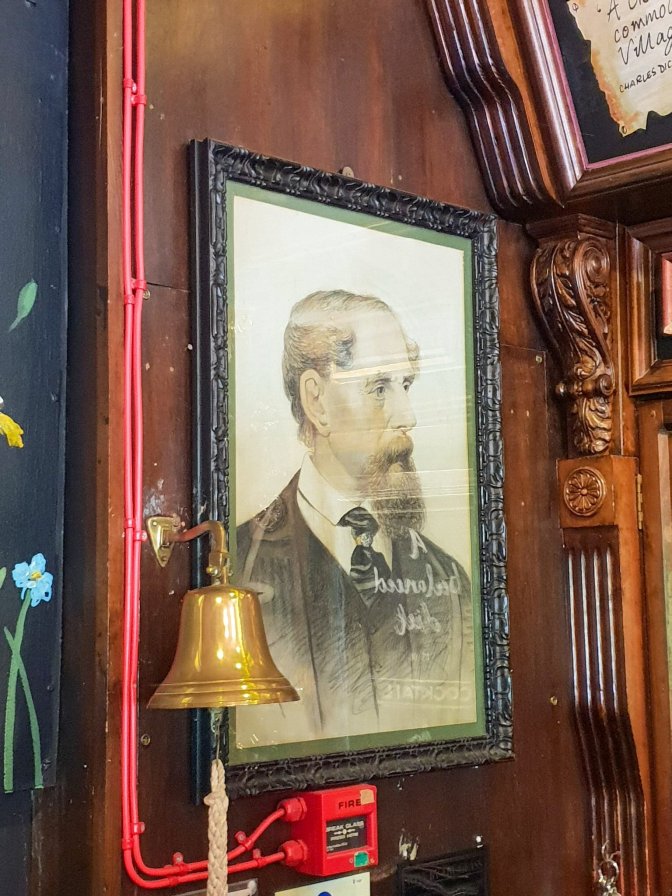


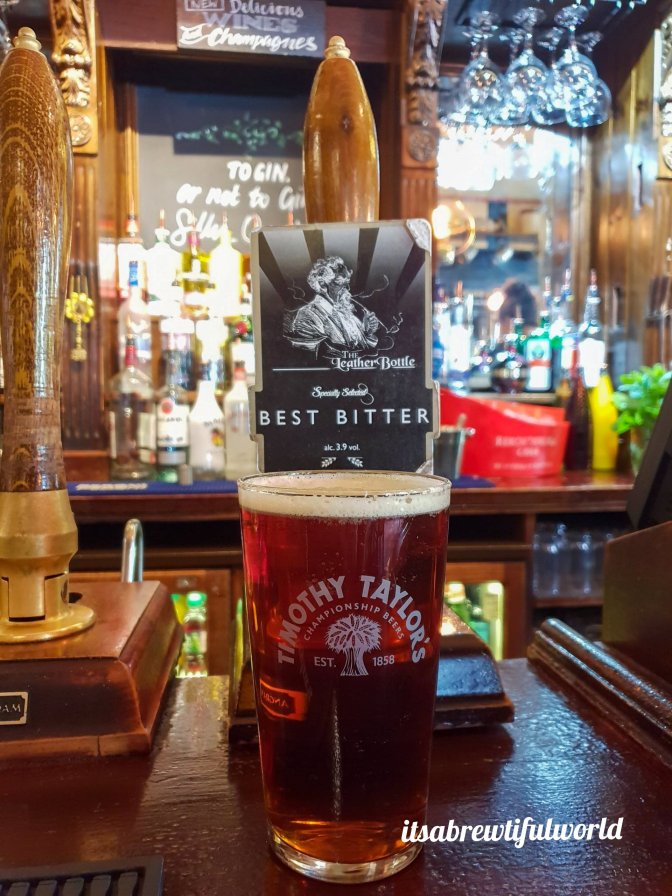
Naturally, the Leather Bottle house beer also comes with the image of Dickens on the tap. I stopped here for lunch and had a kind of deep-fried boiled egg over asparagus that was actually quite delicious.


Unrelated to Dickens are the amusing prints in the men’s room.

Cobham Church
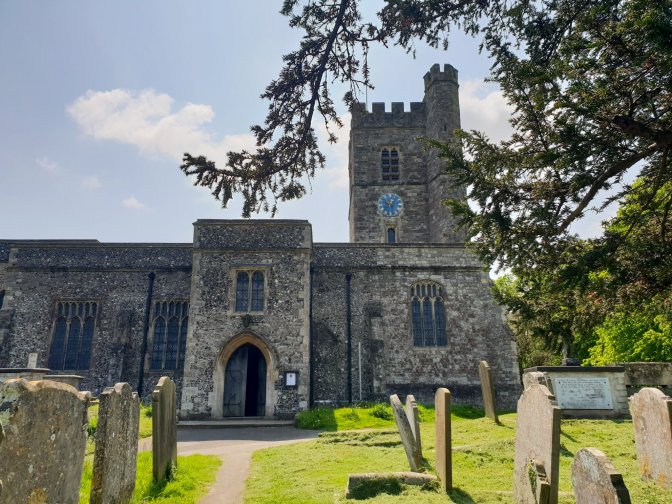
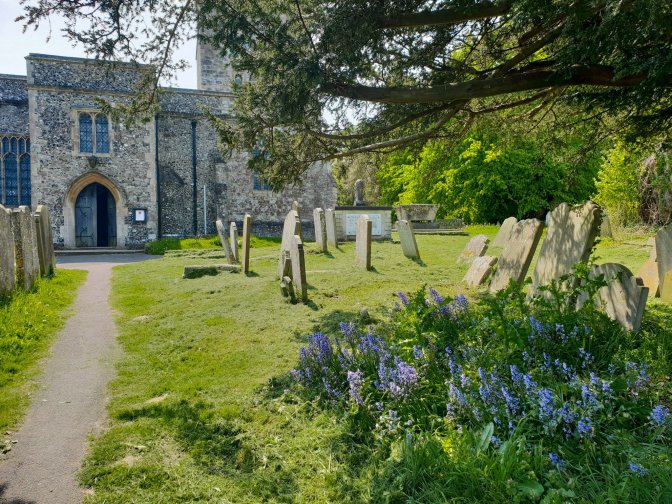
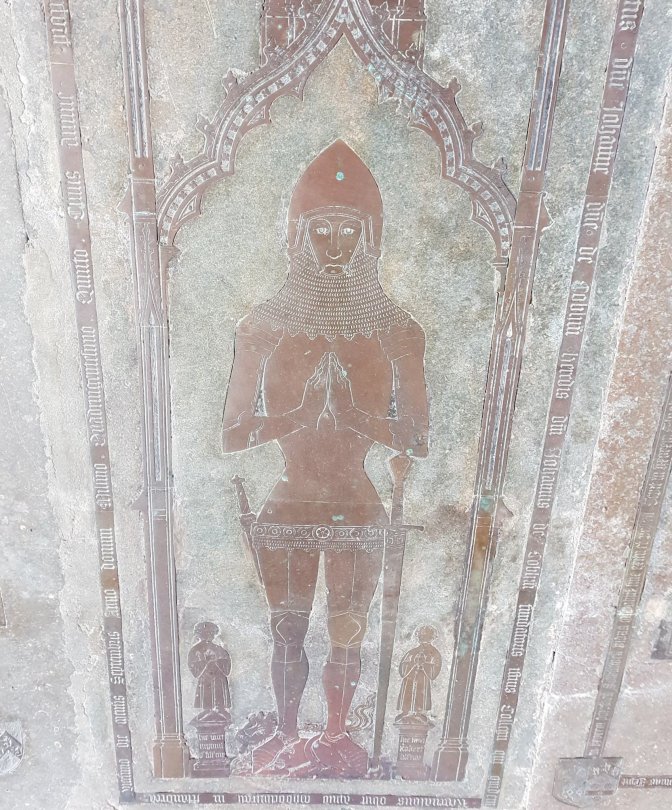
The third cute Kentish church of the day is renowned for its brass rubbings.

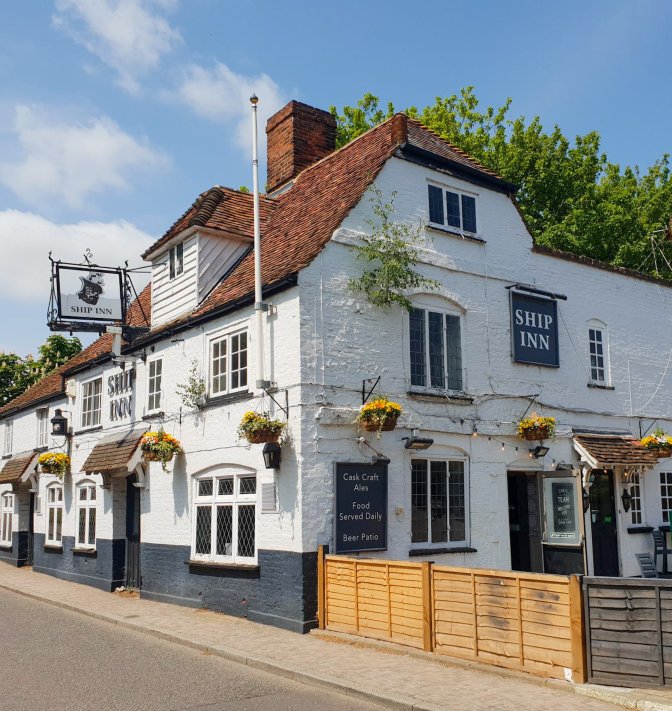
For as small as Cobham is, it is not a one-pub town.

The Butterfly
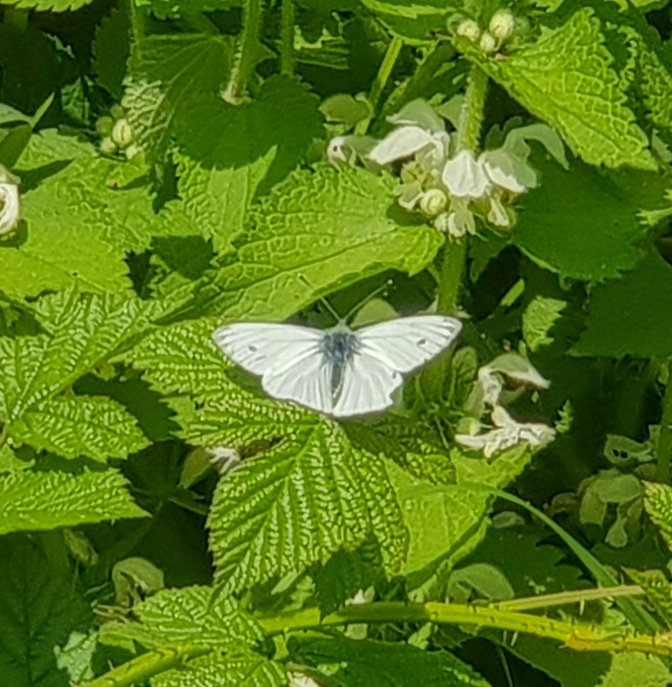
As I entered Cobham Park from the village of Cobham, I was greeted by a Green-veined White.
Cobham Park
On June 7, 1870, Dickens “drove to Cobhamwood with his sister-in-law, there dismissed the carriage, and walked round the park and back.”4 Cobham Park was one of the favorite walks of Dickens. But this walk was significant. It was the last he would ever do. Two days later in his chalet at Gad’s Hill, Dickens would slump over in his chair dead while writing letters.
When Samuel Pickwick and his friends went in search of Tracy Tupman who was at The Leather Bottle, they walked through Cobham Park. This gave Dickens the chance to describe it like a good Victorian author.
“A delightful walk it was; for it was a pleasant afternoon in June, and their way lay through a deep and shady wood, cooled by the light wind which gently rustled the thick foliage, and enlivened by the songs of the birds that perched upon the boughs. The ivy and moss crept in thick clusters over the old trees, and the soft green turf overspread the ground like a silken mat.”
Excerpt from The Pickwick Papers by Charles Dickens (1836)


As you come out into an opening in the forest, a very unique building appears in the landscape, a mausoleum. This mausoleum was built in the late 18th century to house the Earls of Darnley (who resided at nearby Cobham Hall). However, it was never consecrated and no bodies were ever buried there5. It remains under the care of the National Trust as a historical building.

A short distance after the mausoleum, the hike heads back north towards Shorne.
After leaving Cobham Park, the trails that I followed are less used. At one point, the overgrown stinging nettles squeezed me out into a neighboring farm field.


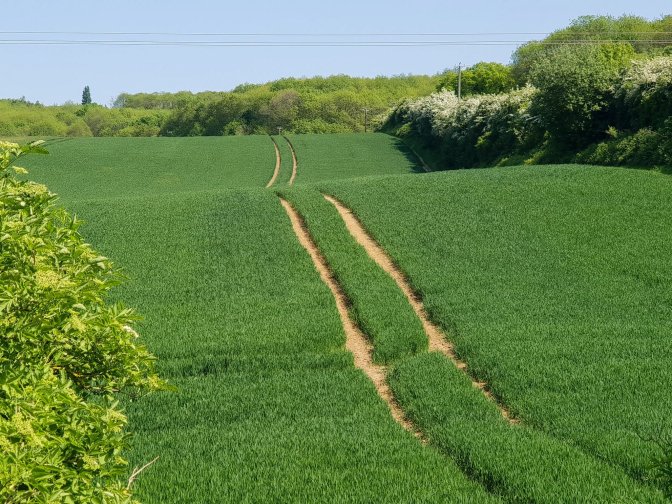
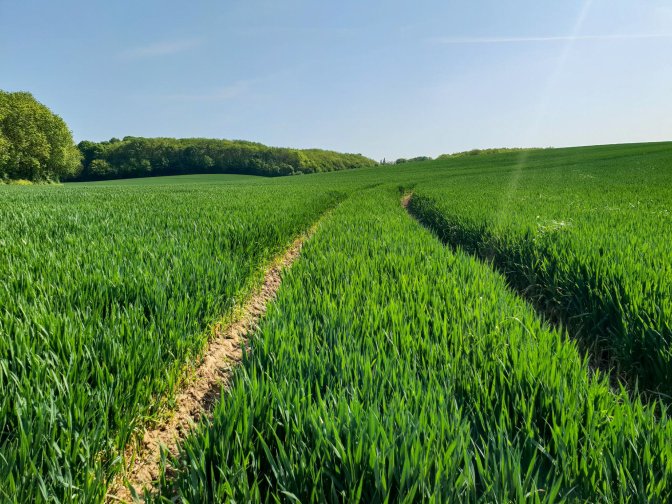
The farmland around Shorne is lush.
The Rose & Crown (Shorne)
This a great classic pub which has some nice old photographs on their website. I had the terrace to myself to sip my Iron Pier Wealdway IPA and nurse my stinging nettle stings. Between The Rose & Crown and the Shorne Churchyard, this village exudes tranquillity.


Gad’s Hill Place (Higham)
From Shorne, it is a nice walk through some farmland out to Gravesend Road and then a short walk from there. Higham isn’t shy about their association with Dickens.

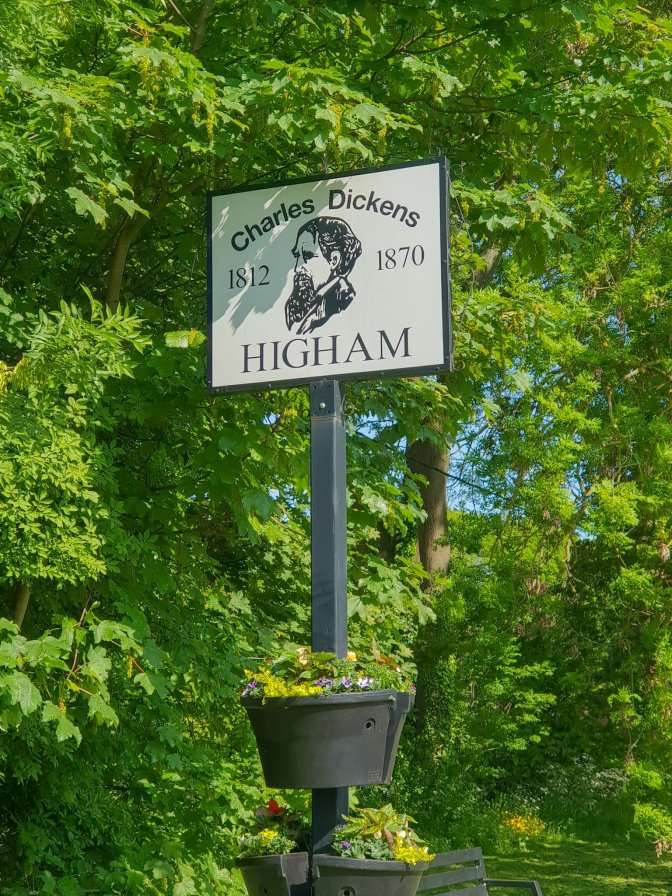
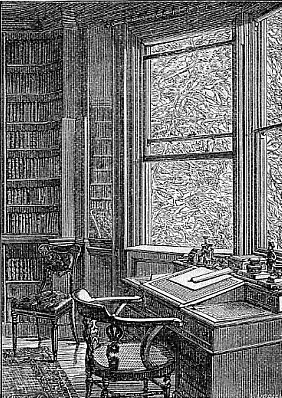
In Higham is Gad’s Hill Place which was Dickens’ final home. Today it is a private school. They do offer tours but require reservations. Fortunately, I found a friendly caretaker who allowed me to enter Dickens’ library which is the one room in the estate which is maintained in the state it was in when he died. This includes a false bookcase covering the door and his desk and chair.
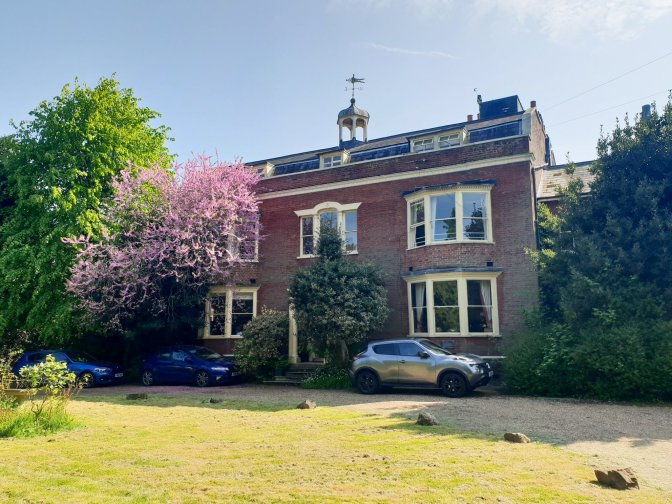

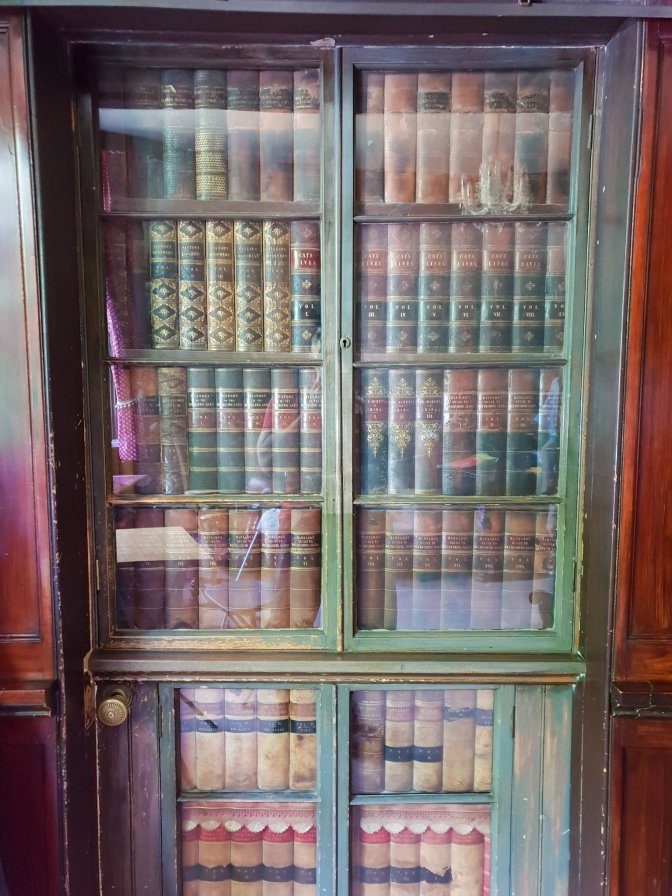
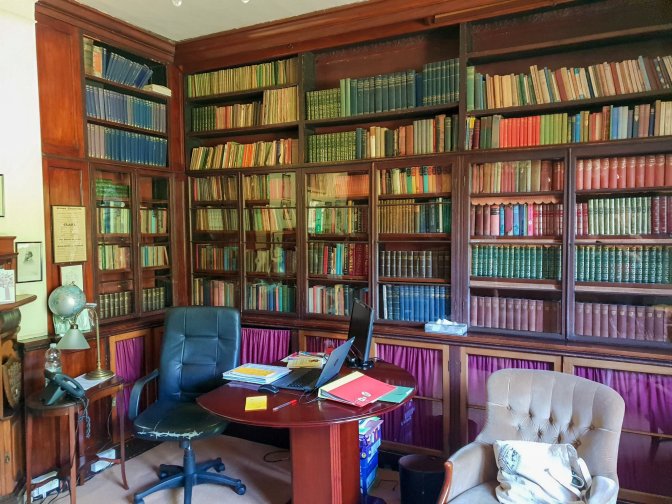
Sir John Falstaff
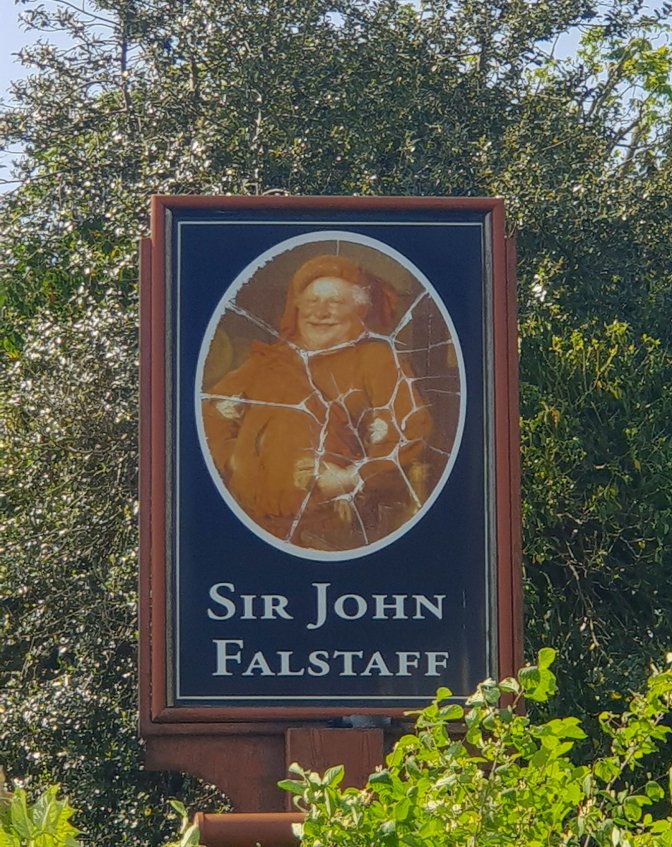
Just across the street is this Dickensian Inn with a famous anecdote related to Dickens’ death.
“A few days after Dickens’s death, an Englishman, deeply grieved at the event, made a sort of pilgrimage to Gad’s Hill—to the home of the great novelist. He went into the famous ‘Sir John Falstaff Inn’ near at hand, and in the effusiveness of his honest emotions, he could not avoid taking the country waiter into his confidence.
“‘A great loss this of Mr. Dickens,’ said the pilgrim.
“‘A very great loss to us, sir,’ replied the waiter, shaking his head; ‘he had all his ale sent in from this house!’”
Dickensiana by Frederic G. Kitton (1886)
Unfortunately, in the final stages of an amazing tramp, I would experience my first blunder.
“Sir John Falstaff”—”a delightfully old-fashioned roadside inn of the coaching days, which stands on the north side of the road a little below ‘Gad’s Hill Place,’ and which no man possessed of a penny was ever known to pass in warm weather.”
A Week’s Tramp in Dickens-Land by William R. Hughes (1891)
Unfortunately for me, I had no penny because as I walked into the pub with drool starting to form on my lip, I was greeted with the message that the bankcard machine was down. As a lover of hiking, I should know by now never to hike without cash. The Swiss Alps have taught me that. But all I could do was reveal the lint in my empty pockets; then turn around and walk out.

Strood
Strood is the town across the Medway from Rochester. Here there are some commanding views of Rochester.

Crispin & Crispianus
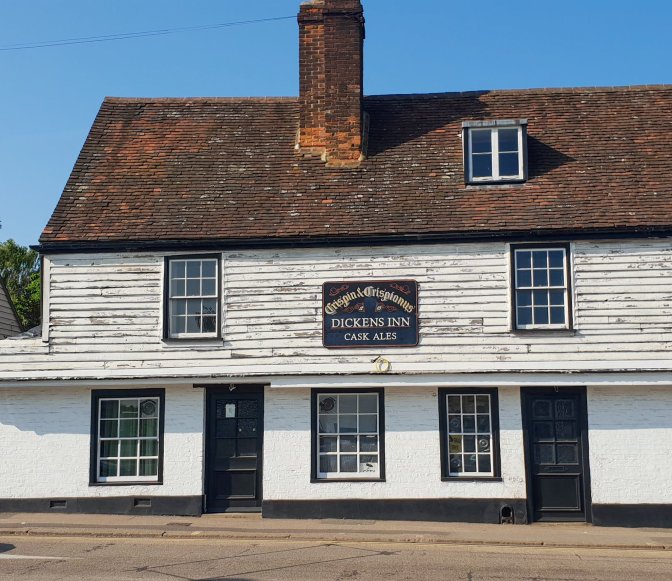
“The Crispin and Crispianus is a very old-fashioned inn still standing just outside Strood. It is a long building with an overhanging upper floor built with wood. How long the present house has existed we cannot tell, but its hanging sign speaks of St. Crispin’s Day, 1415, and it is said that it may probably have had its origin from the Battle of Agincourt fought on that day. Mr. Harper thinks the sign older than that, and probably was one of the very many religious inn-signs designed to attract the custom of thirsty wayfarers to Becket’s shrine.”
Dickensian Inns & Taverns by B.W. Matz (1922)
Unfortunately, this historic pub was destroyed by fire in 2011 while it was undergoing restoration.
View from Rochester Bridge
Connecting Strood to Rochester is the Rochester Bridge.

The Crown
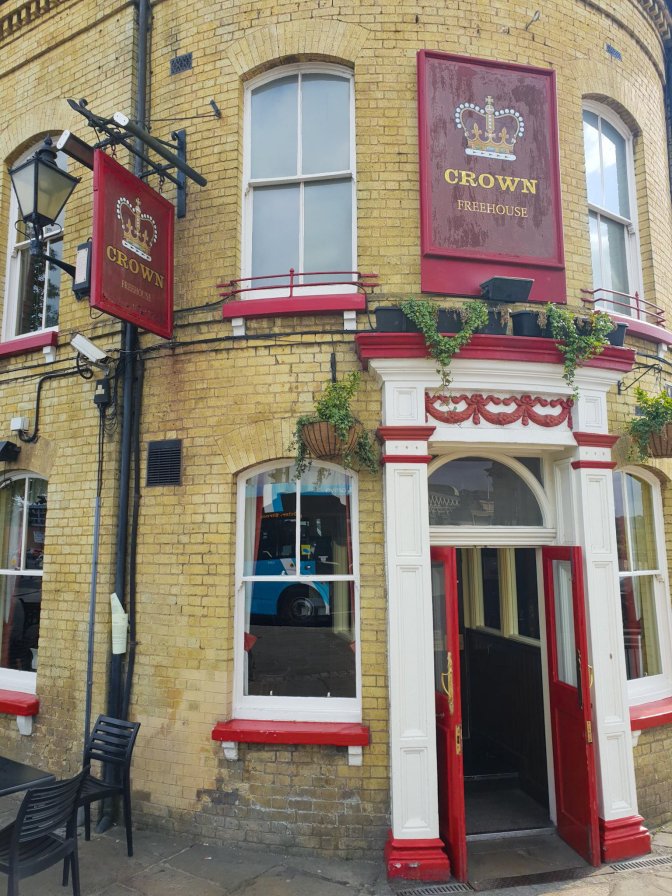
The Crown is not mentioned by name but alluded to in The Pickwick Papers.
“At the commencement of High Street on the right is the Crown Hotel,… referred to by Jingle on the arrival by the Pickwickians.”
The Kent of Dickens by Walter Dexter (1924)
I was again enjoying my beer in a rather lonely environment and it was here that the bartender mentioned that Spring and Summer were low seasons for Rochester with Rochester’s high season being Christmastime.


Final Words
As I sat there in the Crown, I was trying to soak in the fact that I had just covered 3 or 4 of Dickens’ favorite walks in one giant behemoth while exploring a part of his life from his honeymoon up until his death. It was as Pickwickian an adventure as I could imagine being a part of that didn’t include cricket. If only Samuel Pickwick had been present to defend my cashless mishap at The John Falstaff, giving a powerful oration to the landlord on my behalf, imploring them with Victorian flair to serve me a beer on the basis of my benevolence towards keeping the Dickensian spirit alive. As I look back, perhaps it was a sign. Perhaps it was one of those ways that life tells us that we have it too good and that I am naive to think that my business is finished in Dickens Land. Life doesn’t have to twist my arm that hard. I am already looking forward to going back.

References
- Dickens’s England by Michael and Mollie Hardwick (1976)
- A Weeks Tramp in Dickens-Land by William R. Hughes (1891)
- Dickens’s England by Tony Lynch (2012)
- The Life of Charles Dickens by John Forster (1875)
- https://en.wikipedia.org/wiki/Darnley_Mausoleum

 itsabrewtifulworld