
Arrival
There is no town in Great Britain — perhaps not in all the world — that has so fascinated a writer throughout his whole life as Rochester fascinated Dickens.
The Kent of Dickens by Walter Dexter (1924)
In all my travels, I never came across a city slumbering in quietude like Rochester in May. After arriving from Canterbury, I was peacefully savoring an orientation walk along Rochester’s main thoroughfare, High Street. If tumbleweed existed in England, it would not have felt out of place blowing in front of my path.
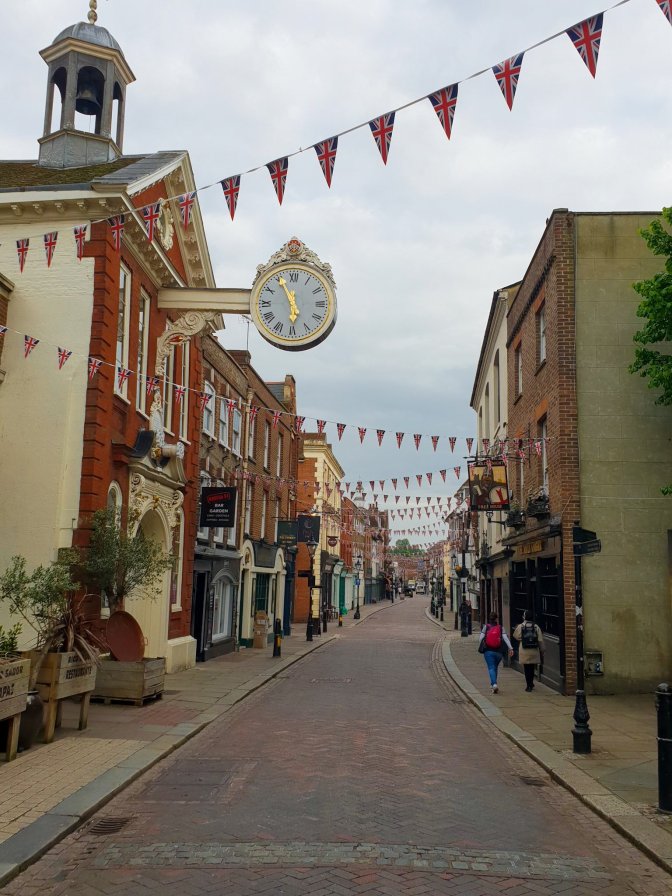
I would later learn that it seemed to be no different in Dickens’ day. In The Mystery of Edwin Drood, Dickens describes Rochester under the guise of the name Cloisterham. “So silent are the streets of Cloisterham (though prone to echo on the smallest provocation) that of a summer’s day the sun-blinds of the shops scarce dare to flap in the south wind”.
In The Seven Poor Travellers, Dickens writes “The silent High Street of Rochester is full of gables with old beams and timbers carved into strange faces. It is oddly garnished with a queer old clock that projects over the pavement out of a grave, red-brick building, as if Time carried on business and hung out this sign.”
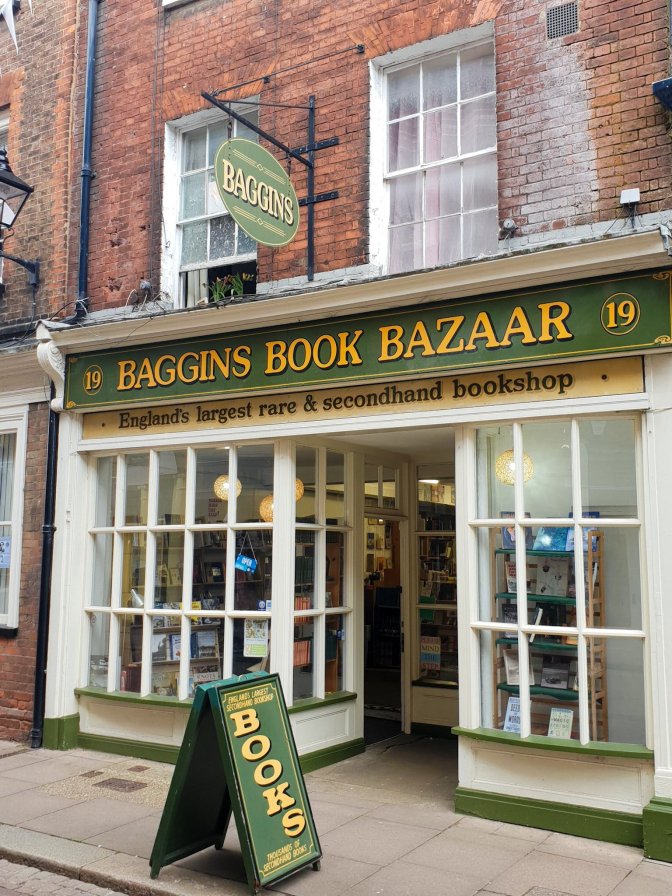
Today the façades are mostly brick-face such as this wonderful book store, daringly defiant by being named after a Tolkien character rather than fitting in with the Dickens theme.
Rochester is no historically insignificant city (although technically not a city since 19981). It lies on the road between London and Dover and is serviced by the Medway River which gave it importance going back to Roman times. However, its beacon to the outside world is faint. What would bring someone to Rochester today? Most likely the same thing that brought me. It’s connection to Charles Dickens, who weaved the essence of Rochester into several of his stories.
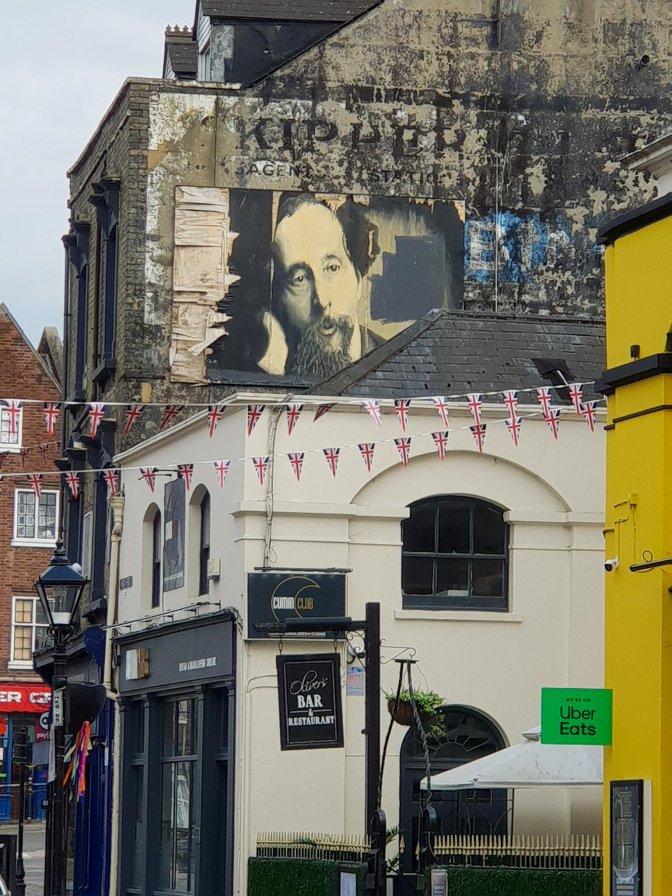
Standing on its own merits, Rochester probably would not entertain the average tourist, who may already be jaded by London, Canterbury, and the Cliffs of Dover, for more than a couple hours. It’s main attractions are the impressive ruins of it’s Norman fortress, the cathedral, and it’s pubs, not quite enough to make you wish you had booked a longer stay. However, Rochester is best viewed through the eyes of classic travel writers who themselves were viewing it through the eyes of Dickens and the characters of his books. That is precisely what brought Rochester to life for me. Rochester itself comes to life one weekend in December when thousands flock to celebrate the annual Dickens Christmas Festival. Outside of Christmas season, Rochester exists with a humble workaday demeanor. Without the voices of these classic travel books, Rochester in May would have been a lonely experience. Over the next 3 days and 4 nights, I would tramp the countryside by foot during the day and hang out with the ghosts of 19th century Dickensian Rochester in the evenings.
Dickens’ Rochester Pt. I
“Every reader of his works knows how well he loved it in early youth, and how he returned to it with increased affection during the years of his ripened wisdom.”
A Week’s Tramp in Dickens-Land by William Richard Hughes (1891)
In his biography of Dickens, John Forster writes about how Rochester left its indelible mark on Dickens as a child.
“That childhood exaggerates what it sees, too, has he not tenderly told? How he thought the Rochester High Street must be at least as wide as Regent Street, which he afterwards discovered to be little better than a lane; how the public clock in it, supposed to be the finest clock in the world, turned out to be as moon-faced and weak a clock as a man’s eyes ever saw; and how in its town-hall, which had appeared to him once so glorious a structure that he had set it up in his mind as the model on which the genie of the lamp built the palace for Aladdin, he had painfully to recognize a mere mean little heap of bricks, like a chapel gone demented.”
The Life of Charles Dickens by John Forster (1875)
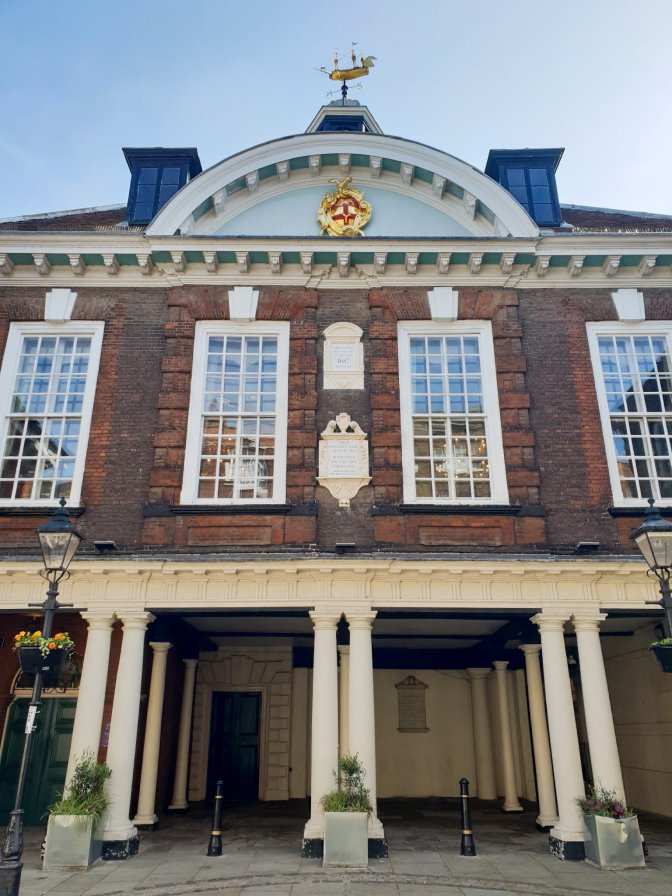
The romanticism of Rochester that colored Dickens’ love of the city played a role in Rochester being used as a setting in many of his stories, including David Copperfield, Great Expectations, Pickwick Papers, and the Mystery of Edwin Drood to name a few. Dickens was drawn back to the Rochester area later in life where he lived out his final years in nearby Gad’s Hill. It was even Dickens’ wish to be buried in Rochester Cathedral until the Bishop of Westminster Abbey convinced his family otherwise.
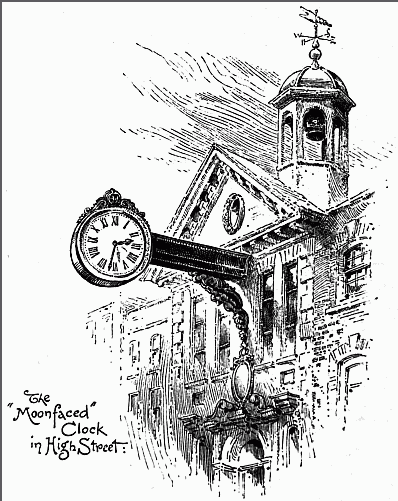
So where to start in Rochester? Let the classic travel writers decide.
“To the lover of Dickens, both the Castle and Cathedral of Rochester appeal with almost equal interest.”
A Week’s Tramp in Dickens-Land by William R. Hughes (1891)
Sounds good to me.
Rochester Castle
“Rochester Castle was of course in itself a charm to Mr. Pickwick, and though he may have seen it a hundred times before, it would always present itself again with the force of novelty. “Magnificent ruin!” said Mr. Augustus Snodgrass, with all the poetic fervour that distinguished him when they came in sight of the fine old castle. “What a study for an antiquarian!” were the very words which fell from Mr. Pickwick’s mouth…”
About England with Dickens by Alfred Rimmer (1883) quoting from Pickwick Papers by Charles Dickens
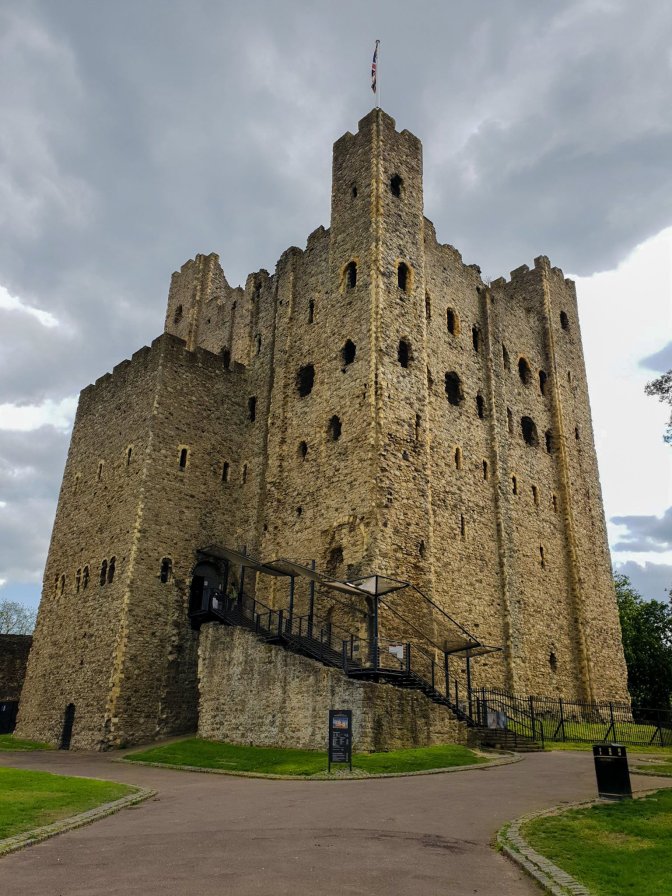
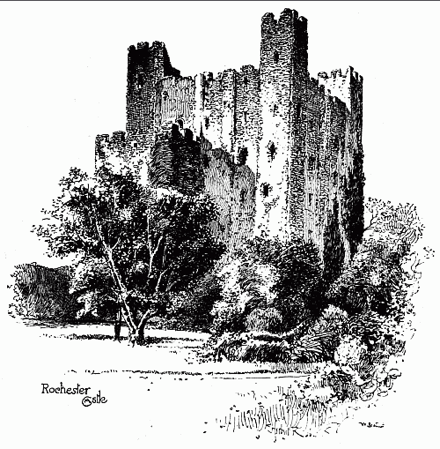
Rochester Castle is a solitary tower remaining from a larger castle complex. It’s square shape is typical of Norman architecture of the 11th century. Dover Castle and the White Tower of the Tower or London are other well-known examples.
I don’t normally get excited about visiting the interior of castles anymore but seeing one in ruins with all its architectural techniques stripped bare for the viewer makes this a fascinating exception. Additionally, the views from the top are worth the price of admission alone.
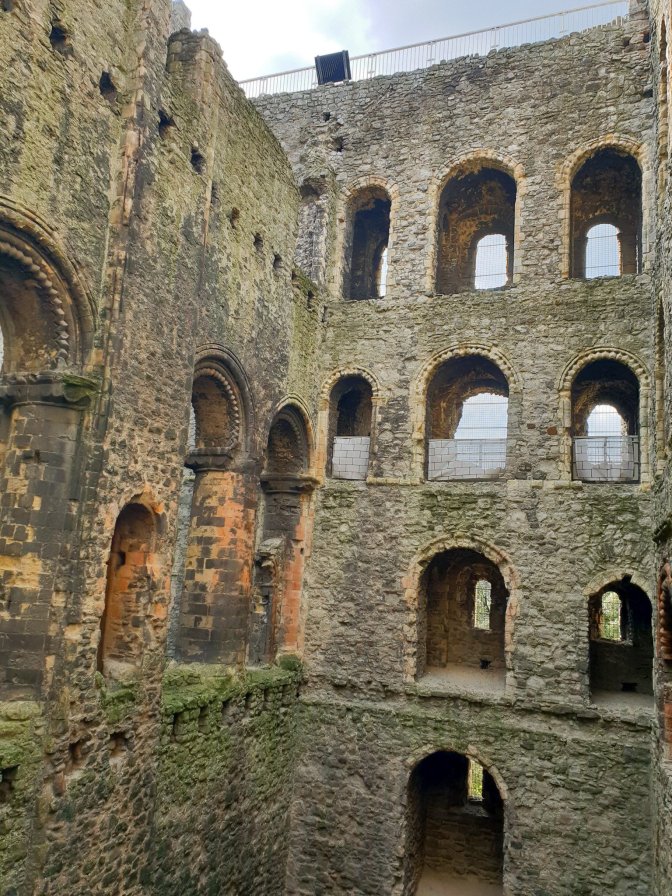

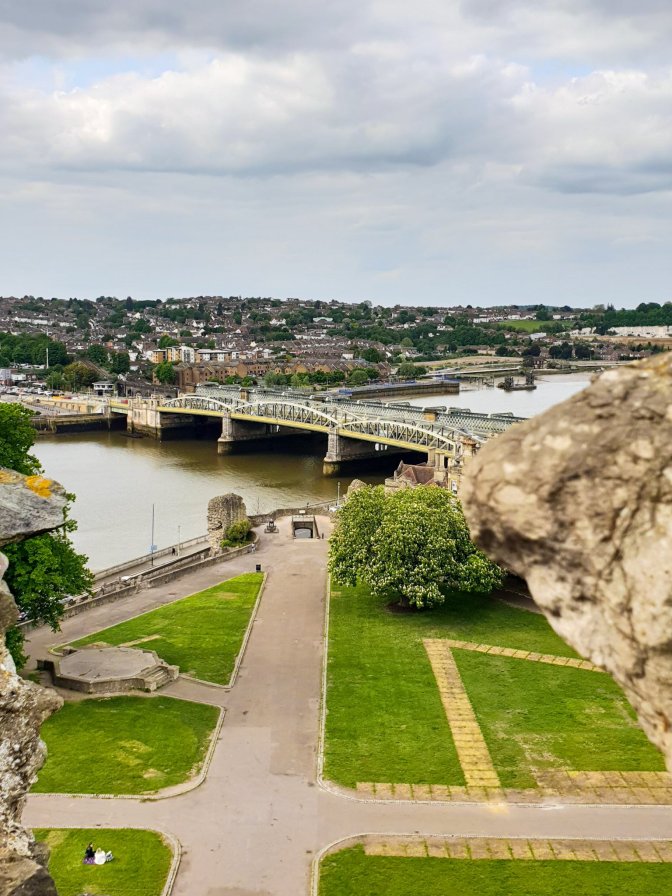
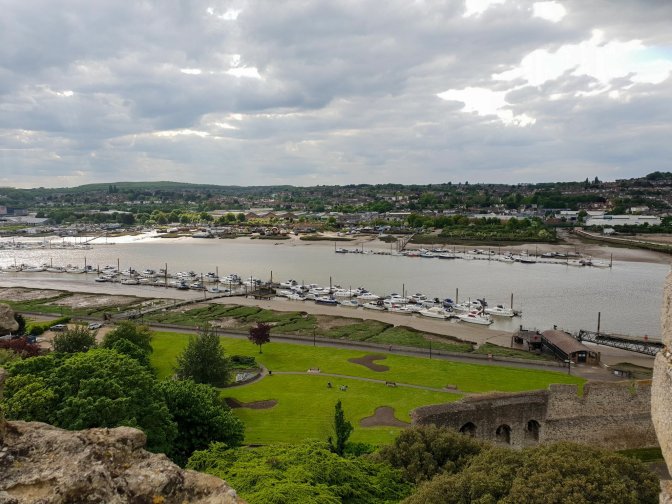

Rochester Cathedral
“The readers of Dickens are first introduced to Rochester Cathedral, in the early pages of the immortal Pickwick Papers, by that audacious raconteur, Mr. Alfred Jingle:—
A Week’s Tramp in Dickens-Land by William R. Hughes (1891) quoting from Pickwick Papers by Charles Dickens
“Old Cathedral too—earthy smell—pilgrims’ feet worn away the old steps—little Saxon doors—confessionals like money-takers’ boxes at theatres—queer customers those monks—Popes, and Lord Treasurers, and all sorts of old fellows, with great red faces, and broken noses, turning up every day—buff jerkins too—matchlocks—sarcophagus—fine place—old legends too—strange stories: capital.”

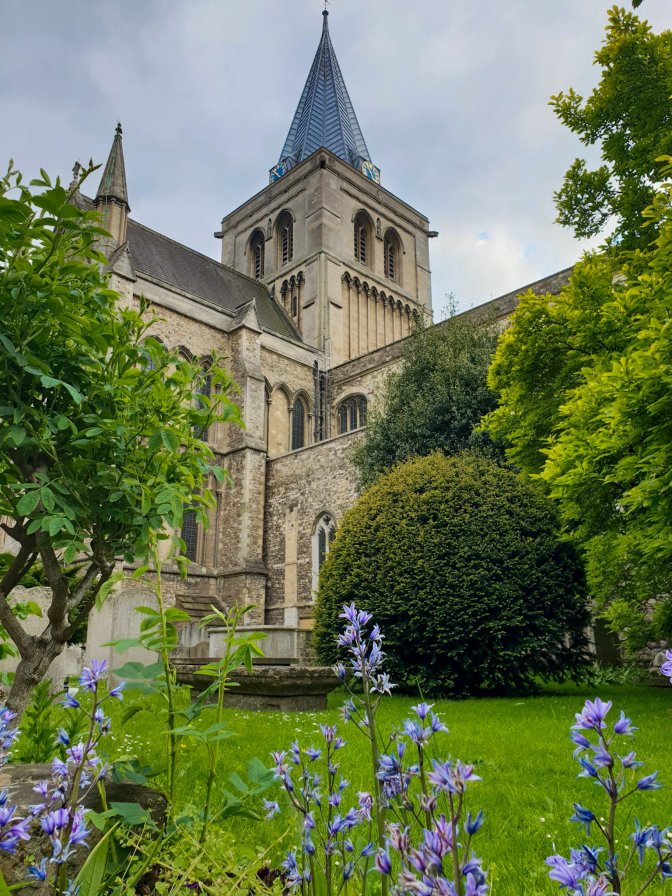
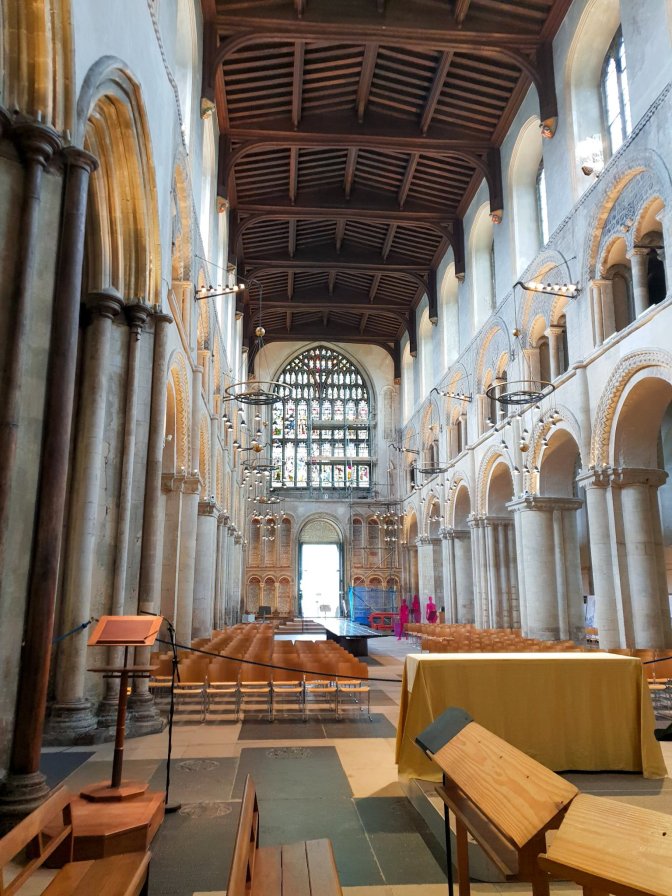
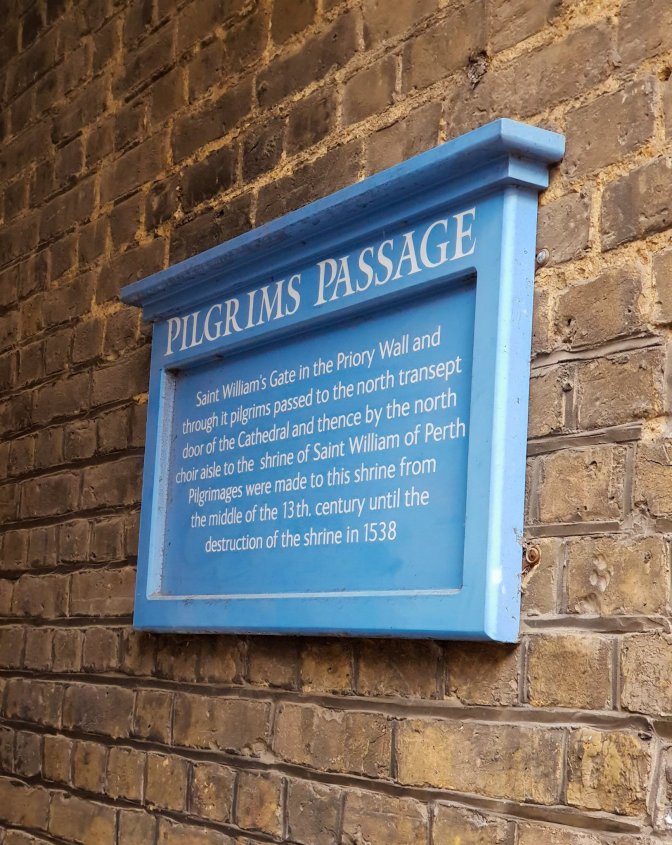
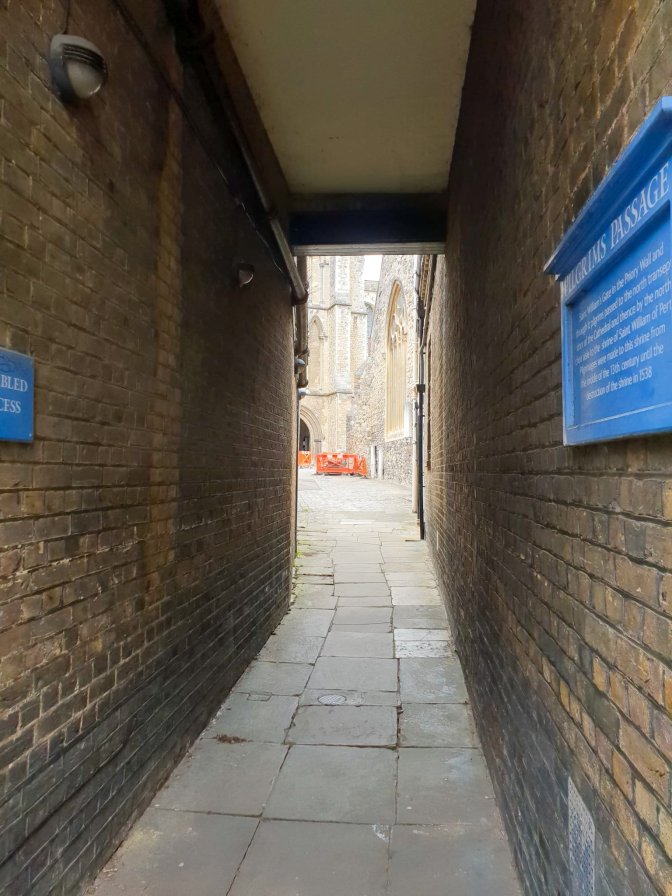
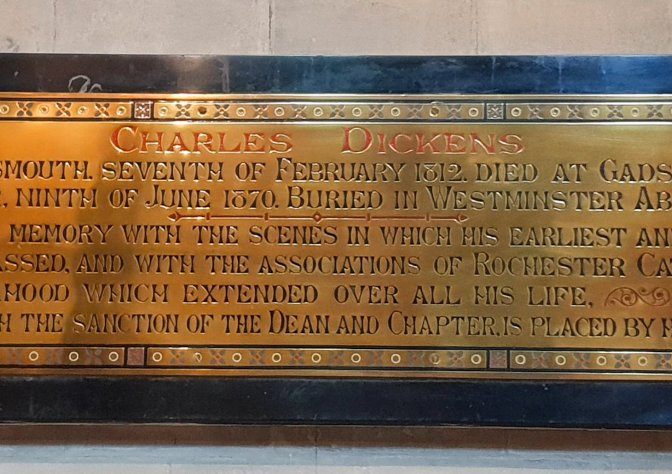
There are two significant shrines to fans of Dickens inside the cathedral. One is to Dickens himself who would have been buried here if it weren’t for the meddling of Westminster Abbey, and the other of Richard Watts, a philanthropist from Rochester, who figures prominently in Dickens’ story The Seven Poor Travellers.
Dickens Shrine
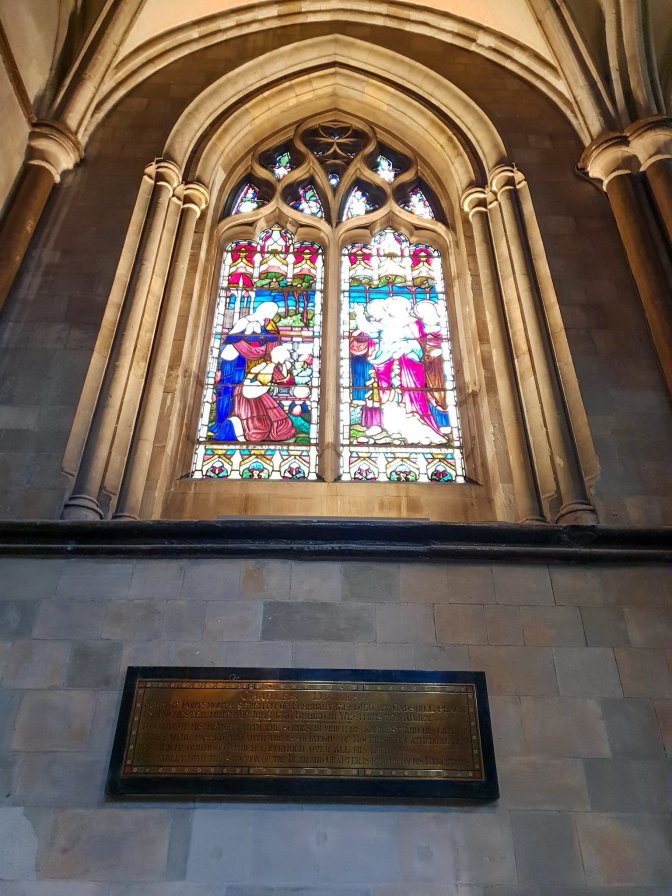
Richard Watts Shrine
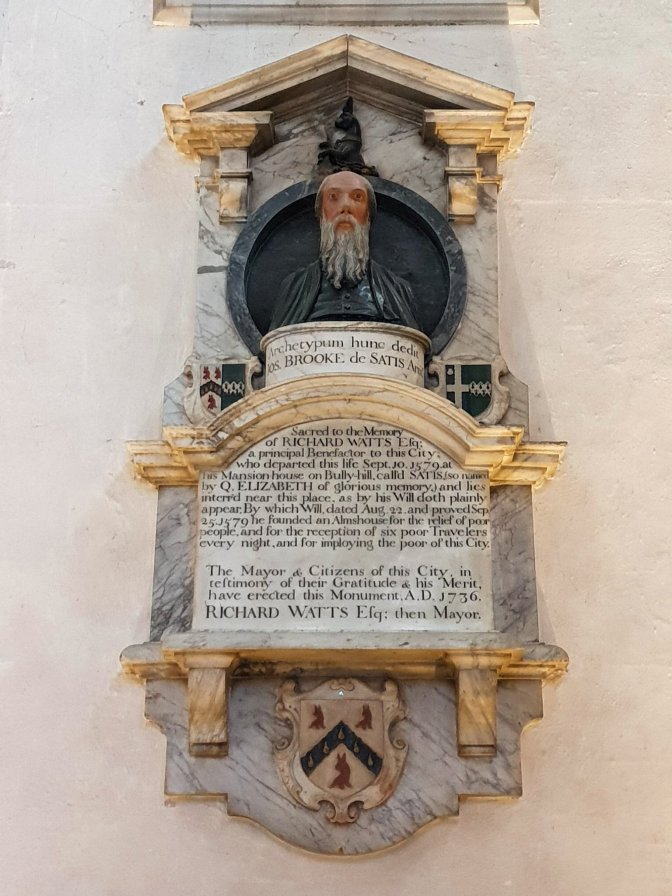
To find out a little more about Richard Watts, let’s head back to High Street.
The Poor Travellers House
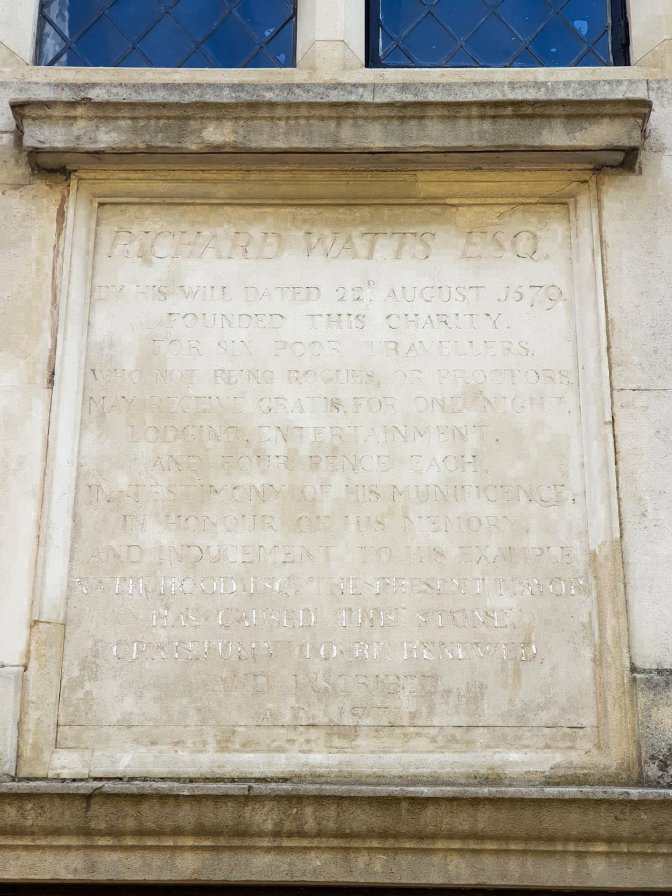
This house served as kind of hostel for travellers and pilgrims to stay for free. The engraving above the door reads in part:
“RICHARD WATTS, ESQ.,
by his will dated 22 August 1579,
founded this charity
for six poor travellers,
Who not being Rogues, or Proctors
may receive gratis for one night,
Lodging, Entertainment,
and four-pence each.”
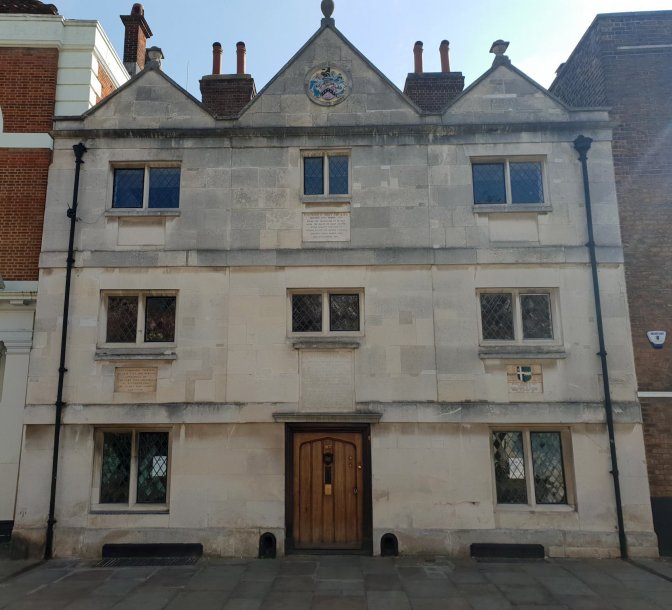
In the story The Seven Poor Travellers, Dickens portrays himself as a 7th traveller who stops to visit around Christmas time and decides to arrange a special Christmas dinner.
“It was settled that at nine o’clock that night a Turkey and a piece of Roast Beef should smoke upon the board, and that I, faint and unworthy minister for once of Master Richard Watts, should preside as the Christmas-supper host of the six Poor Travellers.”
The Poor Travellers house served in some variant of this charitable work up until 1940. Today it is a museum.
Miscellaneous Shops with Dickens-themed Names
Walking down High Street is almost akin to meandering between two columns of library shelves carrying Dickens’ book.

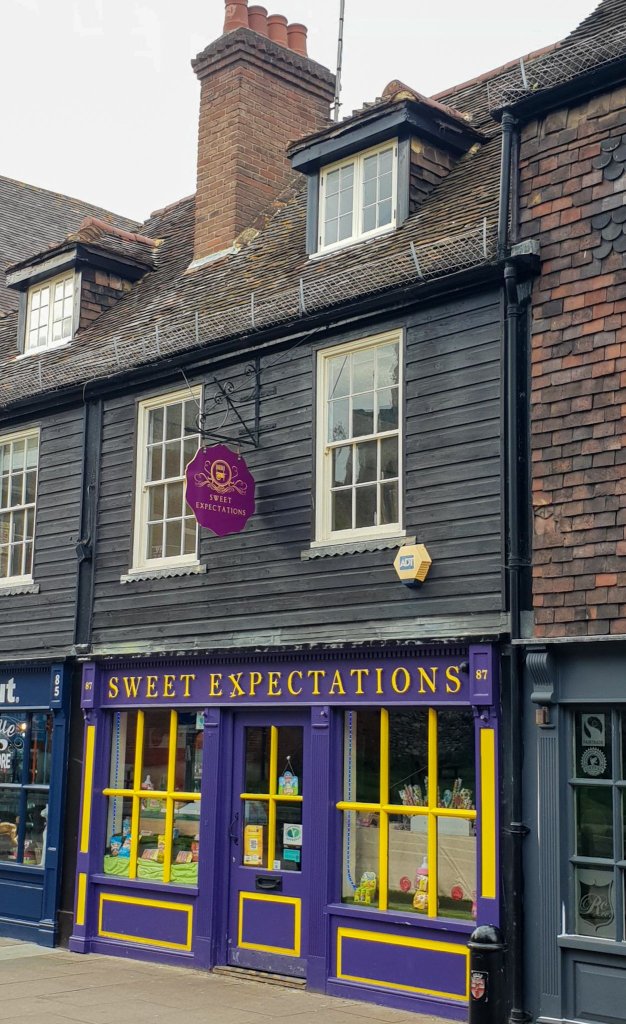
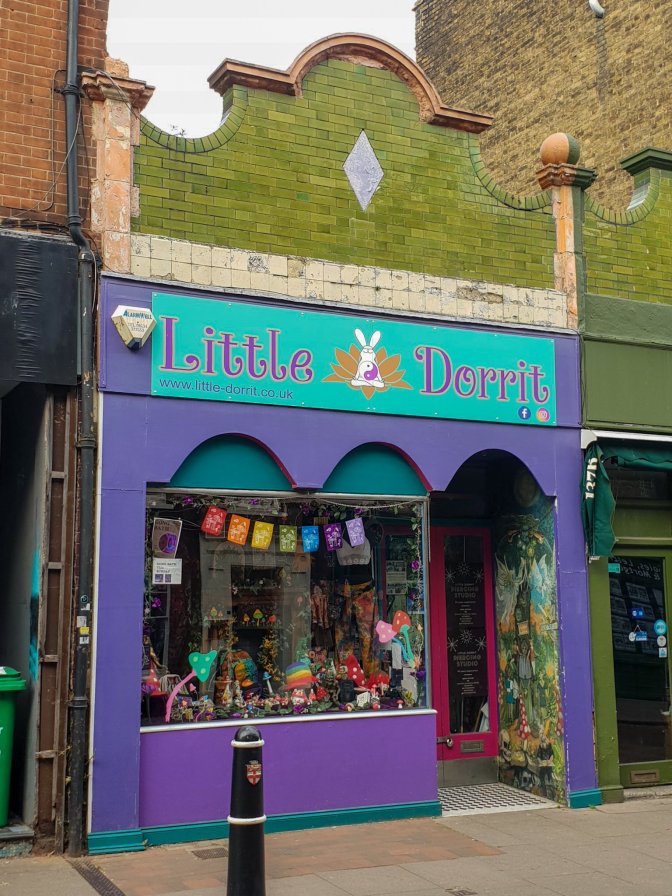
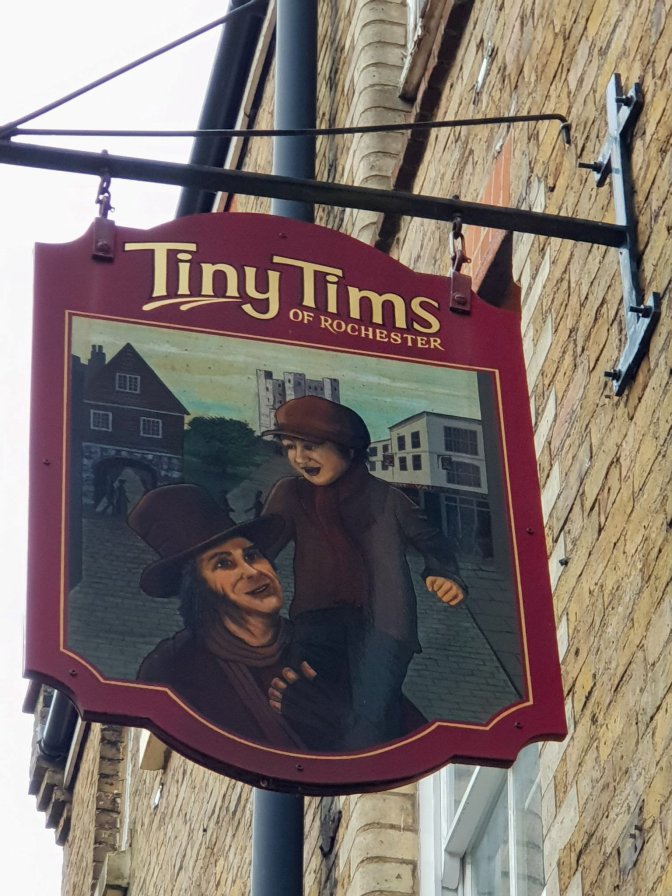
There are several other Dickens-related sites which I will cover in Pt. II. But I am getting thirsty and time to show you where I had beers on Tuesday, the evening of my arrival.
Beer & Dickens Pt. I
There are a lot of pubs up and down High Street. The following three are near the castle and within a square block of each other.
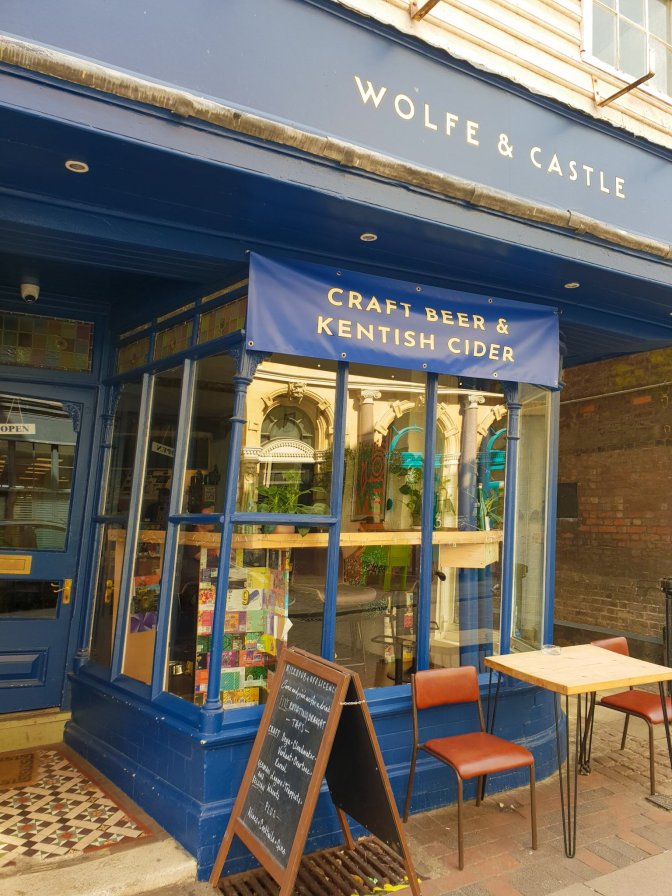
Wolfe & Castle
Despite the British pub-style name, this is a craft beer tasting shop. Ironically, I tried a delicious DIPA from a Canterbury brewery which I had missed during the previous two days of my trip.

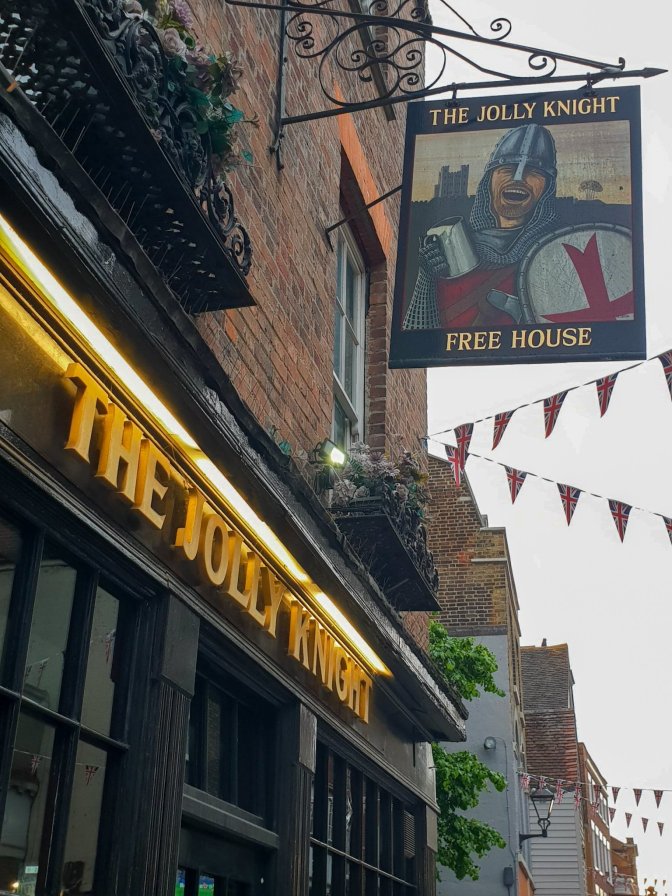
The Jolly Knight
Nothing flashy here. What it lacks in medieval flair interior-wise, it has in just being a steady locals kind of pub for hanging out after work and watching the football matches.

Ye Arrow
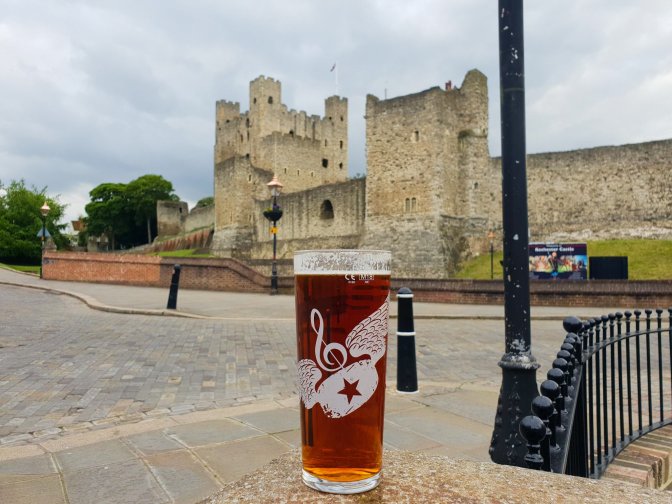
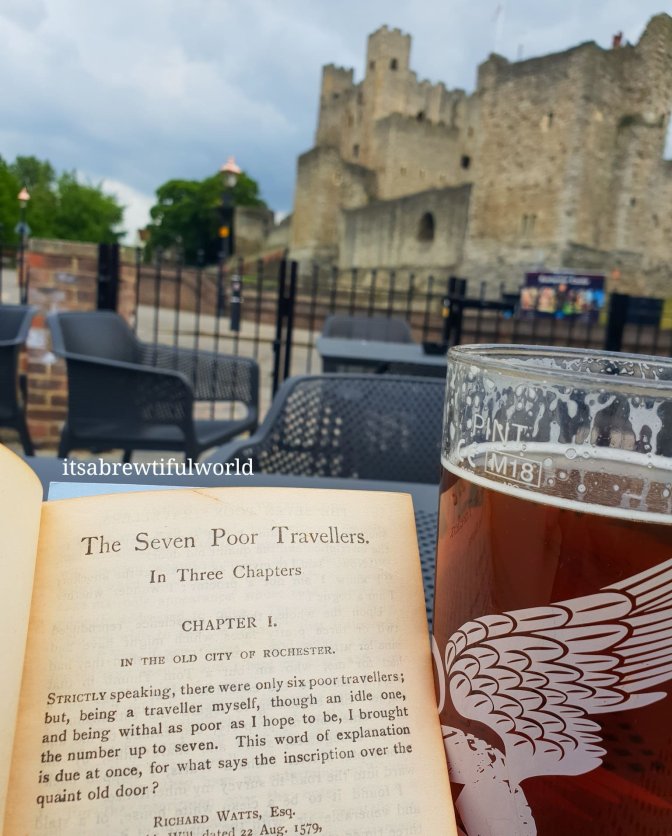
Connected to The Jolly Knight by a common restroom area, Ye Arrow also doesn’t ooze with medieval charm inside, but it has a wonderful terrace facing the castle and cathedral. This alone makes it a must stop. I enjoyed a Calendonian House Ale by the Caledonian House Brewery in Scotland. and tried to catch up on my reading.

Final Words
On my first night in Rochester, I couldn’t help but feel that it wasn’t what I expected. I expected it to be something more bustling like Canterbury. There are many homes and businesses and pubs, but I got the sensation that people simply appear as if God was turning knobs and switches trying to give the appearance of population to fool visitors like me; and as soon as I would return to my hotel, they would all suddenly vanish. Rochester is an “ancient city” as I have seen it called in almost every book that I have read on this subject. It has lived a long full life and presumably still lives. But I was growing more curious by the minute how it would be to walk from Rochester through the countryside to Maidstone tomorrow. Would I see the flaws in the fabric of whatever illusion I was feeling? Underlying these questions was still an excited feeling of discovery, of being off the beaten path. If only I could expect a warm turkey dinner and a four-pence allowance (about 14 pounds in today’s money) when I got back to my hotel.


 itsabrewtifulworld
“It is oddly garnished with a queer old clock that projects over the pavement out of a grave, red-brick building, as if Time carried on business and hung out this sign.”
And that’s still the case, apparently.
Wonderful post!
LikeLike